Fukuoka Yatai Tours
Fukuoka runs about 100 licensed yatai street food stalls, more than any other city in Japan, and every one of them takes walk-ins. So why do guided yatai tours exist at all? This guide separates what a tour genuinely buys you from what you can do alone for the price of a bowl of ramen.
Short answer
Fukuoka has about 100 licensed yatai stalls that take walk-ins and cannot be reserved, so nobody needs a tour to eat at one. A guided crawl, from $94 to $100 per person, buys language help, stall selection and context. Solo visits cost only what you order, and a city ordinance requires every stall to post its prices.
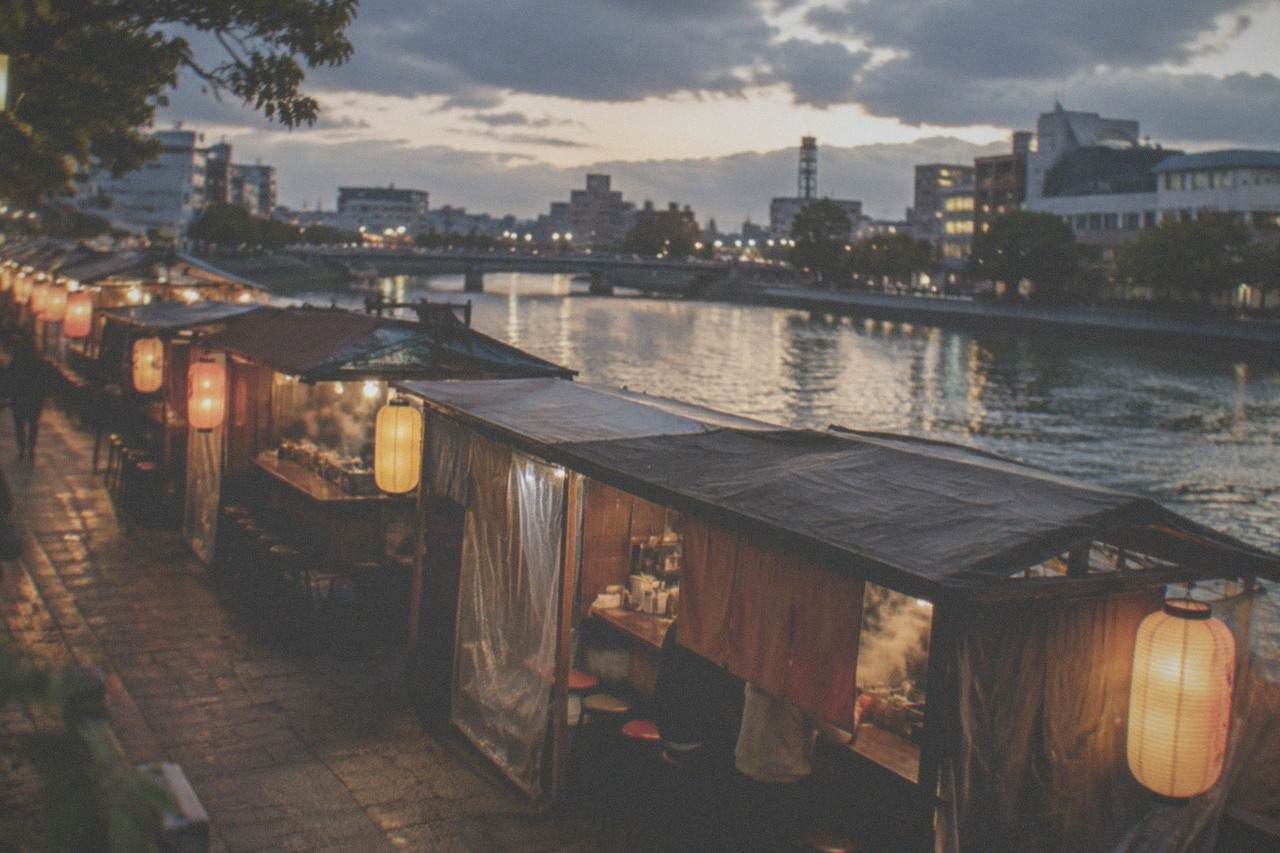
Fukuoka's yatai are the most photographed dinner tables in Japan, and they are also the most misunderstood. The city licenses about 100 of these mobile food stalls, more than anywhere else in the country, and every single one operates on a walk-in basis. No reservations, no booking systems, no queue apps. That fact sits awkwardly beside the existence of guided yatai tours, which this site sells and which cost real money. The honest answer, and the one this page is built around, is that a tour does not sell you access to the stalls. Access is free and universal. A tour sells navigation, translation and judgment, and whether those are worth paying for depends entirely on the kind of traveller you are. This Fukuoka Japan Travel Guide covers the stalls in depth precisely because they are the city's signature evening.
This guide walks through the difference in practice. It covers what the three stall areas are actually like, what the bookable crawls include and cost, how a guided evening compares financially to going alone, and the etiquette and timing questions that catch first-time visitors out. If you are still building the wider trip, the Fukuoka food guide and the food crawl itinerary cover the ground beyond the stalls.
What Does a Yatai Tour Buy You That Walking Into a Stall Alone Does Not?
A yatai tour buys three things a solo visit cannot: a guide who reads the menu and speaks to the owner in Japanese, a pre-made decision about which stalls to visit in which order, and the background stories that turn a bowl of tonkotsu into a piece of Hakata history. It does not buy entry, priority seating or a reserved spot, because stalls take walk-ins only and cannot be booked by anyone, tour operator included.
The stalls themselves are small. A typical yatai seats somewhere around seven to ten people on benches around a counter, which means you are always within conversation distance of the owner and of the strangers beside you. For a confident traveller who speaks even a little Japanese, or who is happy pointing at a neighbour's bowl and gesturing, that intimacy is the entire appeal. For someone who finds that scenario stressful at the end of a long travel day, the same intimacy is a wall.
The language gap is real and it is not just about ordering. Menus at yatai are frequently handwritten, in Japanese, sometimes on a board behind the cook. The city's own yatai Q&A page confirms that the ordinance requires prices to be displayed where customers can easily see them, which removes the classic fear of being overcharged, but a posted price does not tell you what motsunabe is, whether the mentaiko is the spicy one, or that kaedama means you are asking for extra noodles in your ramen. A guide closes that gap instantly. Alone, you close it with a translation app, patience, and a tolerant owner.
The third thing a tour sells is curation. About 100 stalls sounds like abundance, but they are spread across three separate areas of the city, they open at different times, they close when it rains, and no two serve the same food. A guide who works these streets regularly knows which Nagahama stall does the deepest tonkotsu broth and which Tenjin stall is a neo-yatai serving things an older generation of stall would never have touched. That knowledge is the product. It is also, to be fair, knowledge you can assemble yourself from this site's own Fukuoka yatai guide, given an evening of reading and a tolerance for wandering.
What a tour never sells is exclusivity. If a listing implies a stall is otherwise inaccessible, treat that as marketing. The stalls are public, the prices are posted by law, and the person beside you who paid nothing for a guide is eating the same ramen.
How Do the Three Yatai Areas Differ?
Nakasu is the photogenic riverside row along the Naka River, the cluster on every postcard and the most tourist-facing. Tenjin's stalls are scattered along Watanabe-dori and Showa-dori in the business district, drawing after-work locals and newer neo-yatai. Nagahama, near the old fish market, is the historically ramen-focused strip. The three are not interchangeable, and which suits you depends on what kind of evening you want.
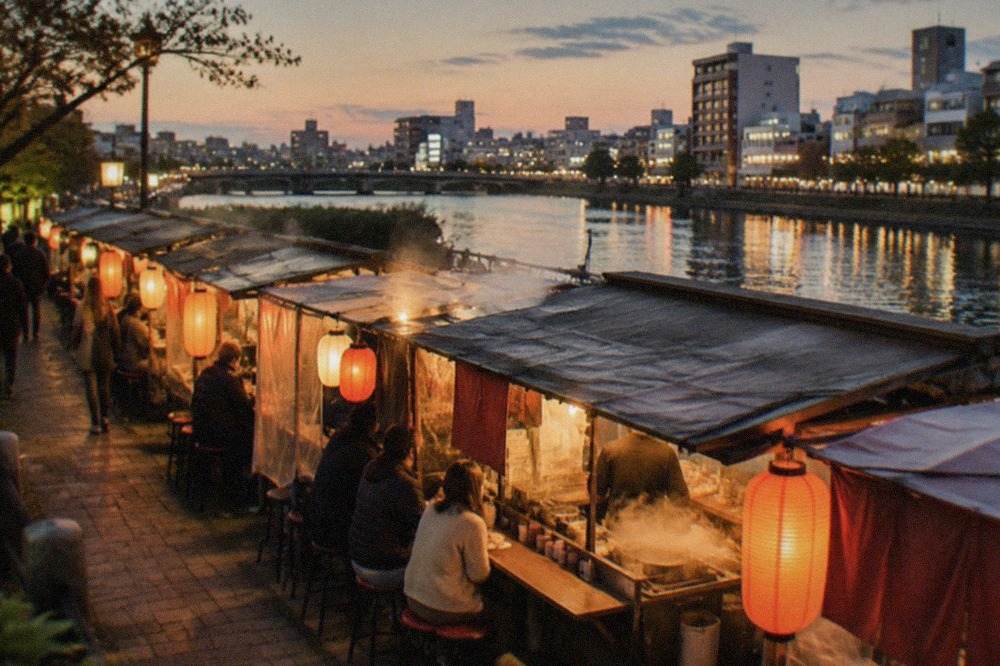
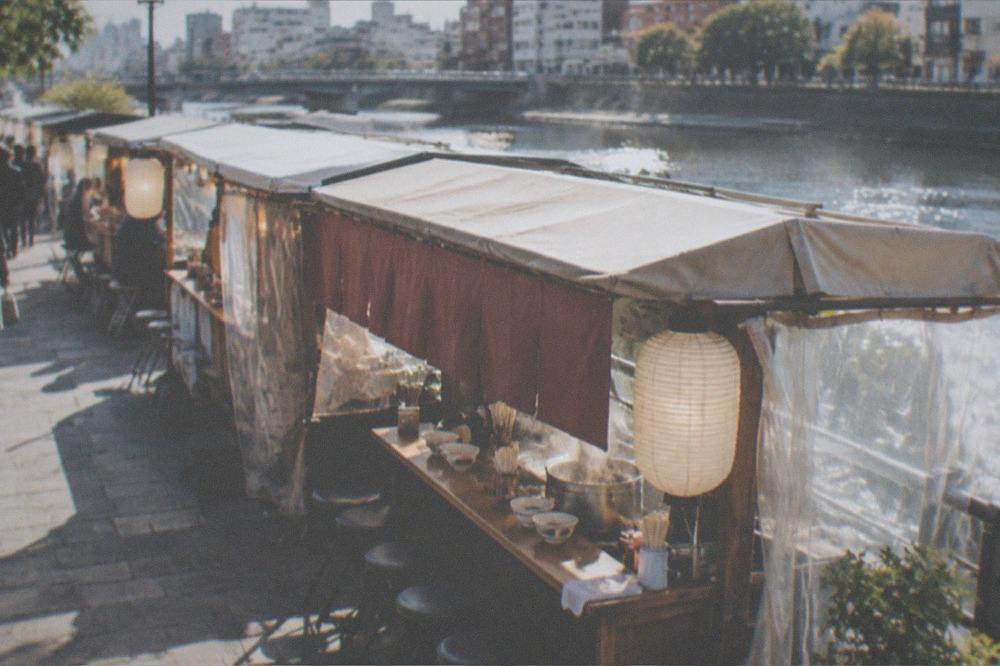
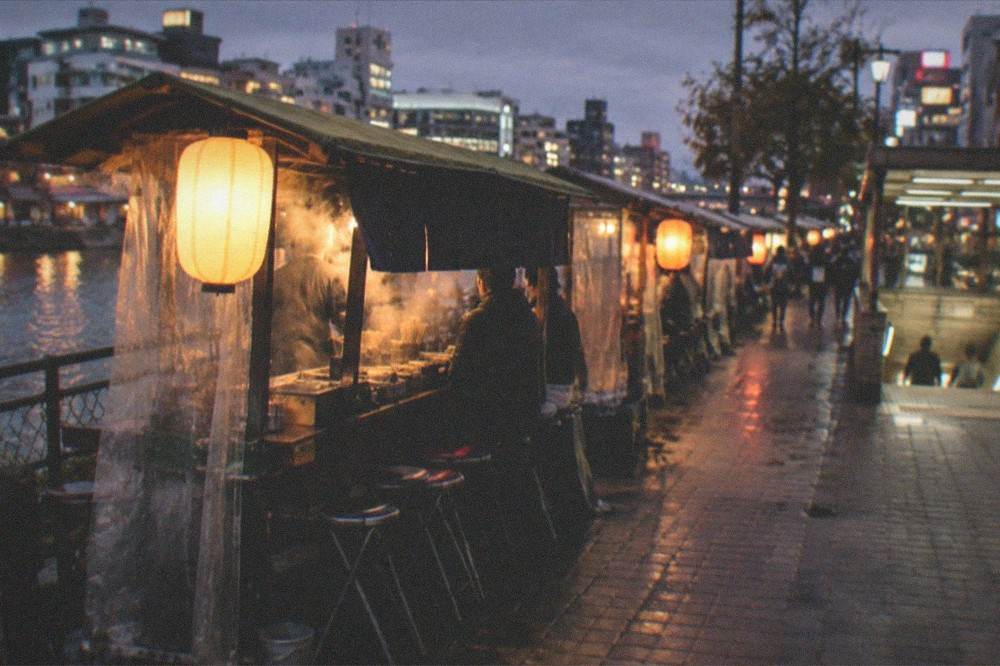
Nakasu's stalls sit along the water by Seiryu Park, and the collective glow of their lanterns reflecting off the Naka River is the single most published image of Fukuoka nightlife. That has consequences. Nakasu is where tour groups head, where the camera crowds gather, and where owners are most accustomed to visitors who do not speak Japanese. If your evening is about atmosphere first and food second, Nakasu delivers it in concentrated form. The Nakasu nightlife guide covers the wider district, which continues well after the stalls close.
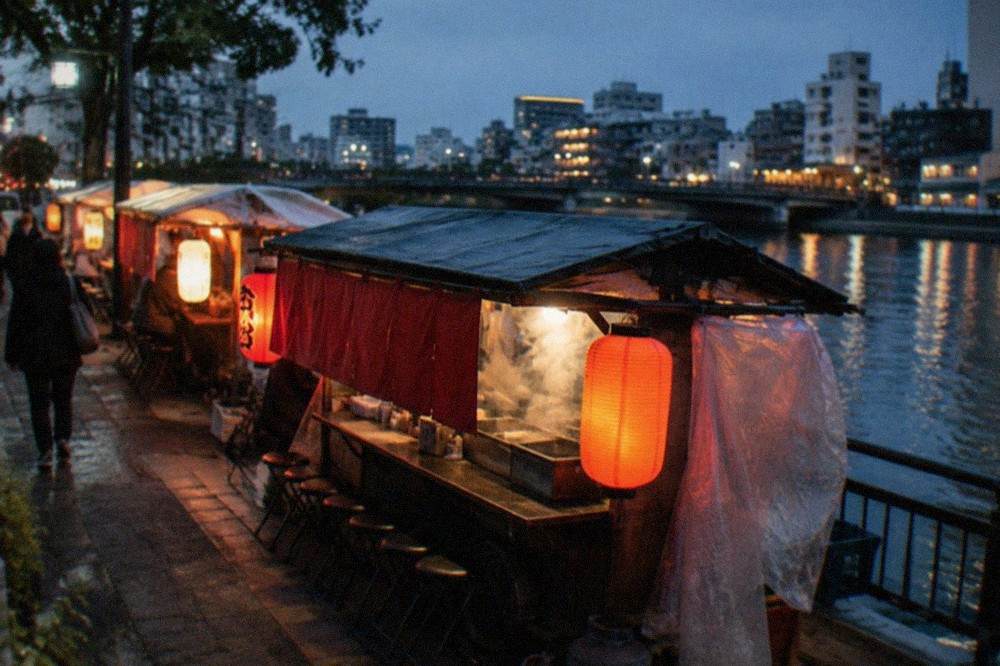
Tenjin is the business district, and its stalls reflect that. They are not gathered in one neat row but strung along the streets around Watanabe-dori and Showa-dori, and their customers are largely office workers decompressing. The food skews a little more adventurous, with newer neo-yatai stalls mixing things up. Tenjin rewards a visitor who enjoys the hunting as much as the eating, and it is the area where a guide's local knowledge pays off most, because finding five good stalls scattered across a business district is harder than finding five in a row.
Nagahama carries the oldest reputation. Historically the ramen strip, near the site of the former fish market, it is the one area whose fortunes are debated: some older sources describe decline, newer reporting describes renewed activity. The city's own position is the one worth repeating: about 100 stalls across the city, with a public recruitment system introduced around 2016 keeping the total steady as operators retire. A sixth recruitment round in 2026 covered 23 plots across Nakasu, Tenjin and Nagahama, with new operators starting from around April 2027. The system exists precisely so that no area quietly dies.
| Area | Setting | Character | Best for |
|---|---|---|---|
| Nakasu | Along the Naka River by Seiryu Park | The photogenic row, most tourist-facing | Atmosphere, first-time visitors, photography |
| Tenjin | Scattered along Watanabe-dori and Showa-dori | After-work locals, neo-yatai variety | Food-focused hunting, repeat visitors |
| Nagahama | Near the former fish market area | Historically the ramen-focused strip | Tonkotsu purists, a local, low-key scene |
Choosing between them is genuinely a decision point, and it is the first place a guided product earns its fee: the bookable crawls are built around stall selection and routing that would take a first-time visitor hours of research to replicate. The selection below contrasts a food-stall crawl with a private walking format and a full-day option, which is the honest spread of what the booking layer offers.
Which Guided Yatai Tours Can You Book?
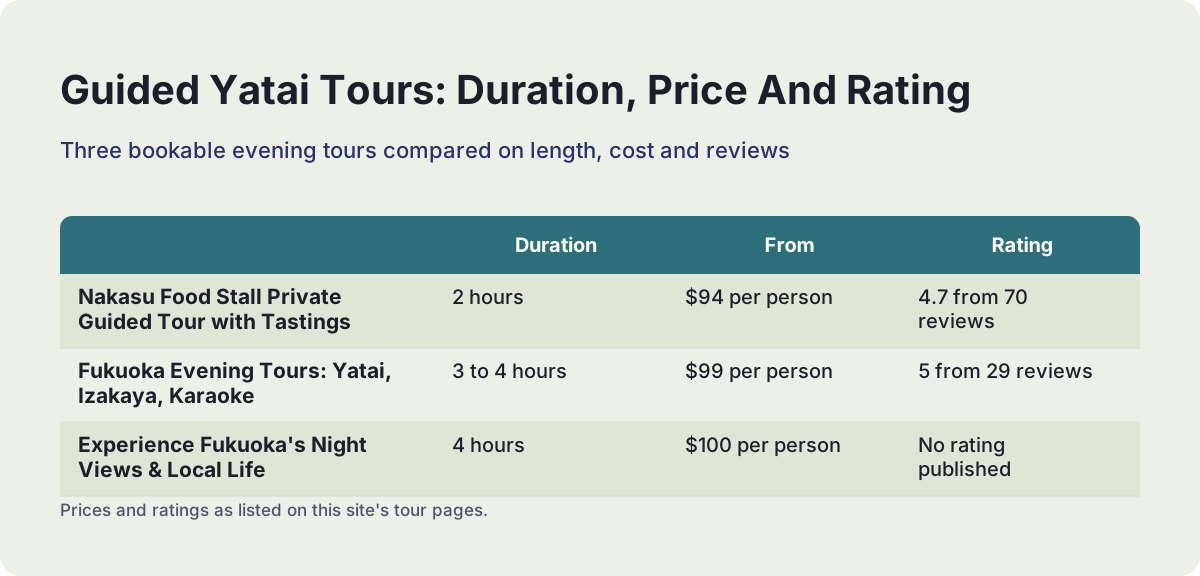
Three sellable products cover the yatai scene: the Nakasu food stall private guided tour with tastings at $94 per person rated 4.7 from 70 reviews, the Fukuoka Evening Tours yatai, izakaya and karaoke product at $99 rated 5 from 29 reviews, and the Experience Fukuoka's Night Views and Local Life tour at $100, which has no rating published yet. All are guided evenings, none reserves a stall, and none is required to eat at one.
The Nakasu food stall tour is the most directly on-topic product, and it has the deepest review pool of the three. It is a two-hour private format with tastings included, run in the postcard district, and its 4.7 rating from 70 reviews is a pool large enough to mean something. The private framing matters: at $94 per person you are buying a guide's full attention rather than a place in a crowd, which suits couples and small groups who want questions answered rather than a scripted walk.
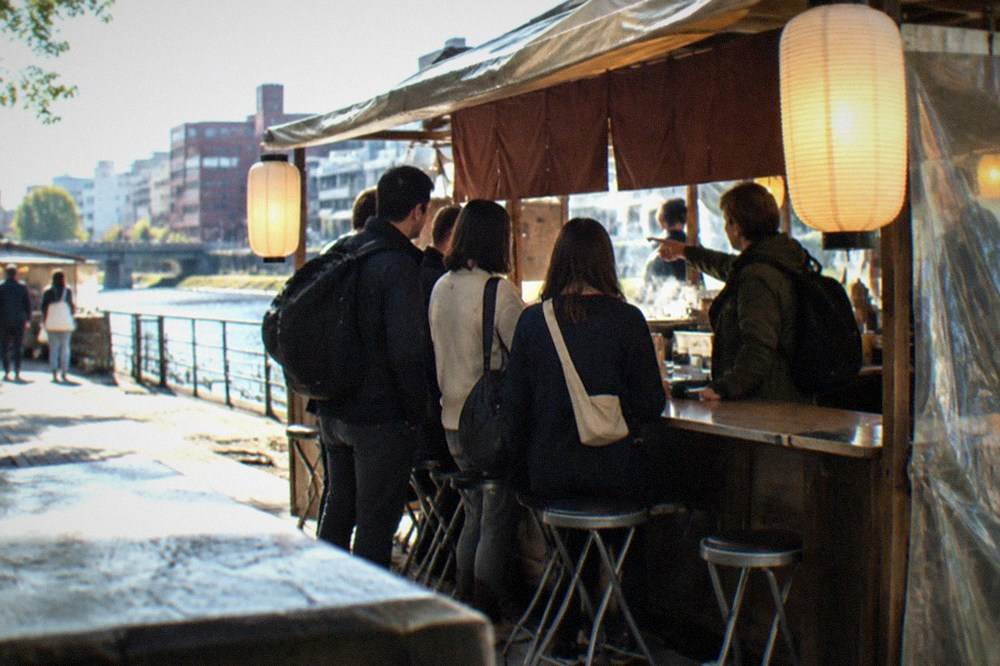
The Evening Tours product casts a wider net. At $99 per person with a 5 rating from 29 reviews, it runs three to four hours and moves through yatai, izakaya and karaoke, which makes it less a stall crawl and more a full evening plan. Travellers who want the night structured end to end, dinner through last song, get more hours per dollar here. Travellers who specifically want to linger at the stalls may find the itinerary moves on just as the conversation gets going.
The Night Views and Local Life tour, at $100 for four hours, is the newest of the three and has no rating published yet, which this site reports plainly rather than dressing up. A new listing with no published rating is neither a warning nor a promise. Its format pairs the food stops with viewpoint stops, which suits visitors whose priority is seeing Fukuoka at night rather than eating through it.
| Tour | Format | Duration | From | Rating |
|---|---|---|---|---|
| Fukuoka: Nakasu Food Stall Private Guided Tour with Tastings | Private stall crawl, tastings included | 2 hours | $94 per person | 4.7 from 70 reviews |
| Fukuoka Evening Tours: Yatai, Izakaya, Karaoke and more | Guided group evening | 3 to 4 hours | $99 per person | 5 from 29 reviews |
| Experience Fukuoka's Night Views & Local Life | Guided group evening with viewpoints | 4 hours | $100 per person | No rating published |
The wider booking layer around these is worth a glance too. The Fukuoka food tours guide covers cooking classes and market walks, the bar hopping guide covers the izakaya side of the evening, and the walking tours guide covers daytime formats that pair well with a stall evening.
What Does a Yatai Tour Cost Compared to Eating Solo?
A guided yatai evening costs between $94 and $100 per person, a fixed price known before you leave the hotel. Eating solo costs only what you order, stall by stall, with every price posted on the stall by law. The tour is a known quantity, the solo night is open-ended, and neither figure includes drinks beyond what the tour listing specifies.
The comparison is not as simple as tour price versus food price, because the two buy different evenings. The solo visitor pays per dish, per stall, and the total is whatever the night adds up to. The city publishes no average spend figure and neither does this site, so the honest framing is this: the ordinance that bans "market price" pricing means every dish's price is visible before you commit, and city inspectors check periodically. You cannot be quietly ripped off at a compliant stall. What you can be is uncertain, ordering conservatively because you cannot decode the menu.
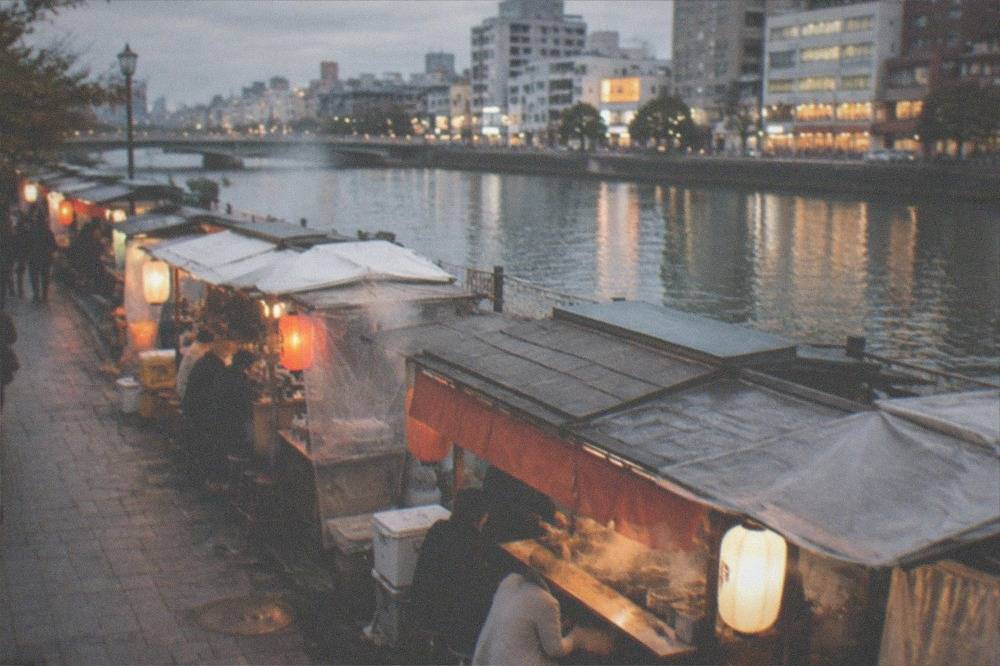
The tour price buys certainty in a different currency. For a fixed sum you get a defined number of stops, tastings included in the Nakasu product's case, and a guide absorbing the translation and ordering friction. For a visitor on a short trip, one evening in the city, the calculation is often about failure cost: a solo night that goes sideways cannot be repeated tomorrow. For a longer trip, a solo attempt that goes sideways is a story, and the next night is another chance.
| Factor | Guided tour | Solo visit |
|---|---|---|
| Upfront cost | $94 to $100 per person, fixed | Nothing until you order |
| Menu decoding | Guide translates and recommends | Translation app, gestures, luck |
| Stall selection | Pre-decided by a local | Your own research or wandering |
| Price transparency | Included in tour price | Posted on every stall by city ordinance |
| Flexibility | Fixed itinerary and start time | Stay as long as the stall will have you |
| Repeatable | Book another night | Just walk out the hotel door |
One cost neither option escapes is the evening itself: yatai open late, and a night built around them tends to end in the small hours. Budget the next morning accordingly, and see the Fukuoka trip cost guide for how the night fits the wider budget.
Can You Book a Yatai Stall Without a Tour?
No. Yatai take walk-ins only, no stall accepts reservations, and no tour operator holds seats. If a listing anywhere implies a stall is reserved for its group, that is a red flag about the listing, not a perk of the product. The only bookable yatai experiences are the guided crawls, where what you reserve is the guide's time, not a seat.
This is worth stating hard because the internet is full of soft implications otherwise. The stalls are licensed road-occupancy businesses under a city framework that runs from 17:00 to 04:00 the next day, and the transaction at the counter is cash-and-curry simple: you sit, you order, you pay. Some stalls now take cards or QR payments, but cash remains the safe assumption, and the money and cash guide covers how much to carry for a night out.
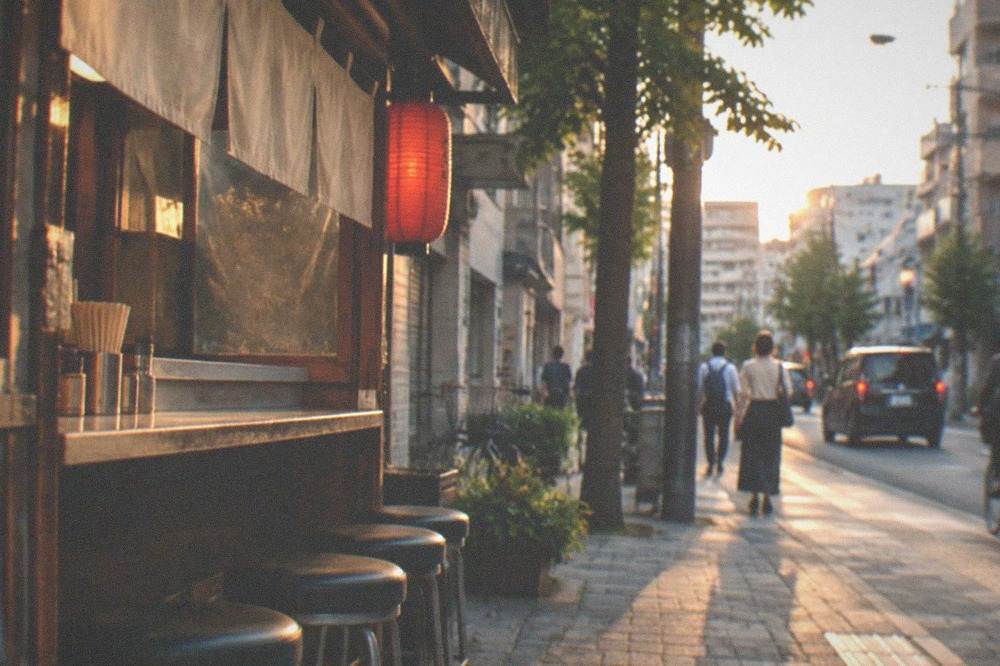
The practical consequence for planning is that a solo yatai night needs no advance work at all. You walk to Nakasu, Tenjin or Nagahama after dark, you find a stall with an open bench, and you sit down. The only genuine bottleneck is capacity: with roughly ten seats per stall and no reservations, a Friday night in Nakasu means waiting for a group to finish, and the wait is part of the culture. Locals queue cheerfully. The counter seats turn over faster than a restaurant because nobody lingers past their bowl.
For visitors who want the structure anyway, the evening formats fill that role. The Evening Tours product that moves through yatai, izakaya and karaoke is the clearest example of a tour that is not about stall access at all, but about a planned arc for the whole night, and its 5 rating from 29 reviews suggests the arc lands.
If your question is really "is a free walking tour an alternative", the honest local answer is that Fukuoka does not have the tip-based free walking tour scene some cities do, and the free walking tour answer page explains what the free options actually are: sights, not tours.
What Yatai Etiquette Applies on a Tour and on Your Own?
The etiquette is the same either way, because the rules belong to the stalls, not the tour: take the seat you are offered, order before you settle in, do not linger long after the last bowl, and expect to share the counter with strangers. A guide simply absorbs the parts of that exchange that cross a language line.
The shared-counter culture is the thing visitors most often misjudge. A yatai is not a restaurant with a view of the kitchen, it is dinner at the kitchen table, and the owner will introduce you to your bench-mates if the mood takes. Regulars talk across the counter. If that sounds like your kind of evening, it is one of the best cheap nights in Japan. If it sounds like a nightmare, a tour does not change the seating, and you should plan a restaurant instead.
The full code of conduct, from kaedama etiquette to what not to do with your used chopsticks, is laid out in the yatai etiquette guide, and it is worth ten minutes of reading before either a tour or a solo visit. A guide will coach the basics on the spot, which is a genuine service for the etiquette-anxious, but the underlying rules are public and learnable for free.
One thing a tour does change: pace. A guided crawl moves on a schedule, which means you will not be the last customer at any one stall, and you will not be adopted by a chatty owner for two hours. Solo visitors sometimes report that the best part of the night was exactly that, the stall that became a private party. That outcome cannot be bought, only lucked into, and it is the strongest argument for going alone at least once.
When Are Yatai Open, and What Closes Them?
Stalls may occupy their road space from 17:00 until 04:00 the next day under city rules, with typical opening around 18:00 to 18:30 and closing in the small hours. There is no city-mandated weekly closing day. The thing that actually closes stalls is weather: rain and strong wind put many of them away for the night.
The weather dependence deserves more emphasis than most guides give it. A yatai is a wheeled kitchen under a canvas roof, and the same shower that sends a restaurant's terrace chairs inside sends the entire stall home. Visitors who plan a yatai night weeks in advance, guided or not, should hold a backup plan, and the rainy day itinerary exists for exactly this. The city's own real-time channels track which stalls are out on a given evening.
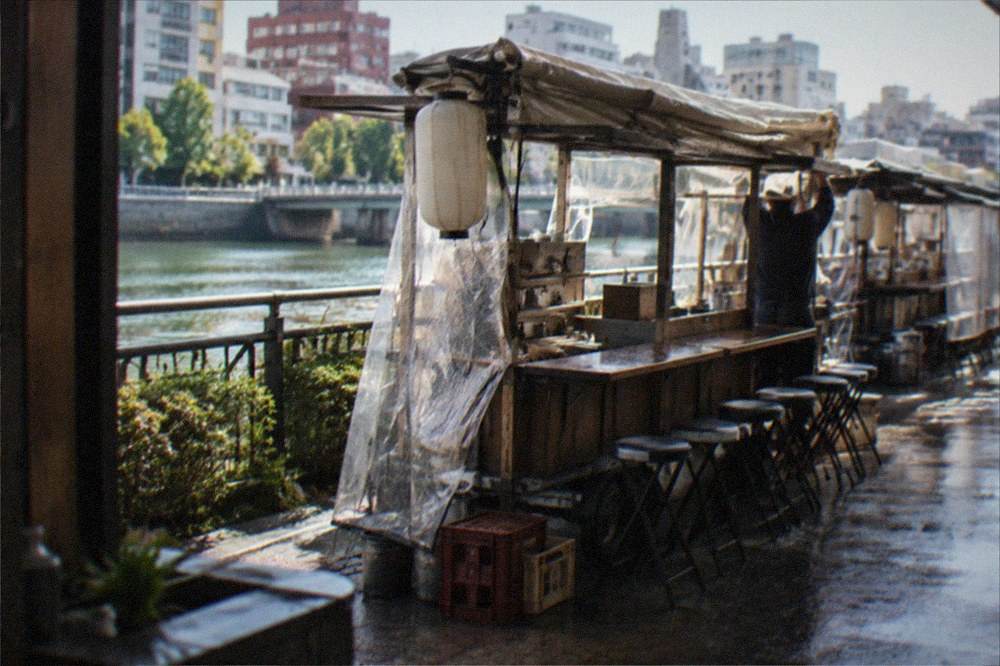
For tour bookers, weather cuts the other way: a guided evening has an operator with a phone, a plan B and a cancellation policy, while a solo walker just discovers the empty street. Check the cancellation terms on the operator's live listing before booking, because the terms are the operator's to set and this site does not restate them as promises.
The seasonal angle matters less than you would think. The stalls run year-round, though the July festival period changes the city's whole rhythm: Hakata Gion Yamakasa runs July 1 to 15 annually, and the area around Kushida Shrine becomes the festival's centre of gravity. The best time to visit guide covers how festival weeks, tsuyu rain and typhoon season, roughly July through October, shape a trip. None of it makes the city unvisitable; all of it rewards a plan.
How Do You Plan a Night Around a Yatai Tour?
Plan the night around one anchor area, get there by subway for between ¥210 and ¥380 depending on distance, and let the stalls or the tour fill the hours from roughly 18:30 onward. A subway day pass at ¥640 pays for itself after about three rides, and the Tourist City Pass at ¥2,500, or ¥2,800 with Dazaifu, covers subway, buses, trains and ferries for eligible overseas visitors with a passport check.
The transit side is simple and cheap. Fukuoka City Subway single fares run from ¥210 for up to 3 km to ¥380 beyond 19 km, and the airport-to-Hakata leg sits in the ¥260 band, which is the verified figure worth printing: the airport is unusually close to the city centre, though this site does not repeat the famous minutes figure no official page confirms. The getting around guide covers the full network, and the airport guide covers arrival itself.
The Tourist City Pass is worth a paragraph because most competing guides still quote the wrong, stale prices for it. The verified figures are ¥2,500 for the Fukuoka City version and ¥2,800 for the version extending to Dazaifu, with a passport checked at the counter because eligibility is limited to overseas visitors on short-stay visas. The official pass page lists the sale points and the coverage, which includes subway, Nishitetsu buses and trains, some JR lines and ferries.
| Transport option | Cost | Notes |
|---|---|---|
| Subway single fare | ¥210 to ¥380 adult | Distance-based, six zones |
| Subway 1-day pass | ¥640 adult, ¥320 child | All three lines, valid on day of purchase |
| Fukuoka Tourist City Pass | ¥2,500 adult | Overseas visitors on short-stay visas, passport checked |
| Fukuoka Tourist City Pass + Dazaifu | ¥2,800 adult | Adds Dazaifu coverage, Tabito liner excluded |
Beyond the stalls, the night city has more to give. The Fukuoka nightlife guide covers where the evening goes after the last bowl, and it pairs naturally with a stall night that starts in Nakasu or Tenjin.
And if the trip stretches beyond the city, the same booking layer that sells the crawls sells full days into Kyushu. The Mt. Aso and Takachiho Gorge tour with optional boat ride, from $48 per person and rated 4.7 from 674 reviews, is the highest-volume day trip in this site's roster and a natural contrast to a yatai evening: one day of volcano, gorge and grassland, then back to Hakata for a bowl at a lantern-lit counter. Pairing a full-day tour with an unguided stall night is a legitimate strategy, the guide for the day and the counter for the evening.
For a longer stay, the balance can tip the other way: do one guided crawl to learn the scene, then spend the remaining nights walking into stalls alone with the confidence the first night bought. That sequence, guided once, solo after, is what many repeat visitors describe as the best of both, and it is the pattern this guide would recommend to anyone staying three days or more.
Common Questions About Fukuoka Yatai Tours
Do I need a booking to eat at a yatai in Fukuoka?
No. All about 100 licensed stalls take walk-ins and none accepts reservations, including through a tour operator. A guided yatai tour books the guide's time and route, not a seat at a stall.
What does a Fukuoka yatai tour cost?
The three bookable guided evenings run from $94 to $100 per person. The Nakasu food stall private tour with tastings is $94, the Evening Tours yatai, izakaya and karaoke product is $99, and the Night Views and Local Life tour is $100.
Can I get ripped off at a yatai?
A Fukuoka City ordinance bans "market price" pricing and requires every stall to display its prices where customers can easily see them, with periodic city inspection. The price on the board is the price you pay.
Which yatai area is best for first-time visitors?
Nakasu, for the riverside setting and the concentration of stalls along the Naka River. Tenjin suits food-focused visitors who like hunting scattered stalls, and Nagahama is the historically ramen-focused strip near the old fish market.
What time do yatai open and close?
City rules allow stall road occupancy from 17:00 to 04:00 the next day. Typical stalls open around 18:00 to 18:30 and close in the small hours, with no city-mandated weekly closing day. Rain and strong wind close many stalls for the night.
Is a yatai tour worth it if I speak no Japanese?
That is the clearest case for one. A guide translates handwritten menus, orders with you and picks stalls you would not find, which removes the two biggest friction points of a solo visit. If you are comfortable with a translation app and pointing, the solo night costs only what you eat.