Fukuoka Food Tours
Fukuoka's food scene is unusually dense for a city of 1.66 million, and guided food tours have grown to match it. This guide breaks down which tour formats actually cover which foods, from the Nakasu yatai stalls to Yame tea country within the prefecture.
Short answer
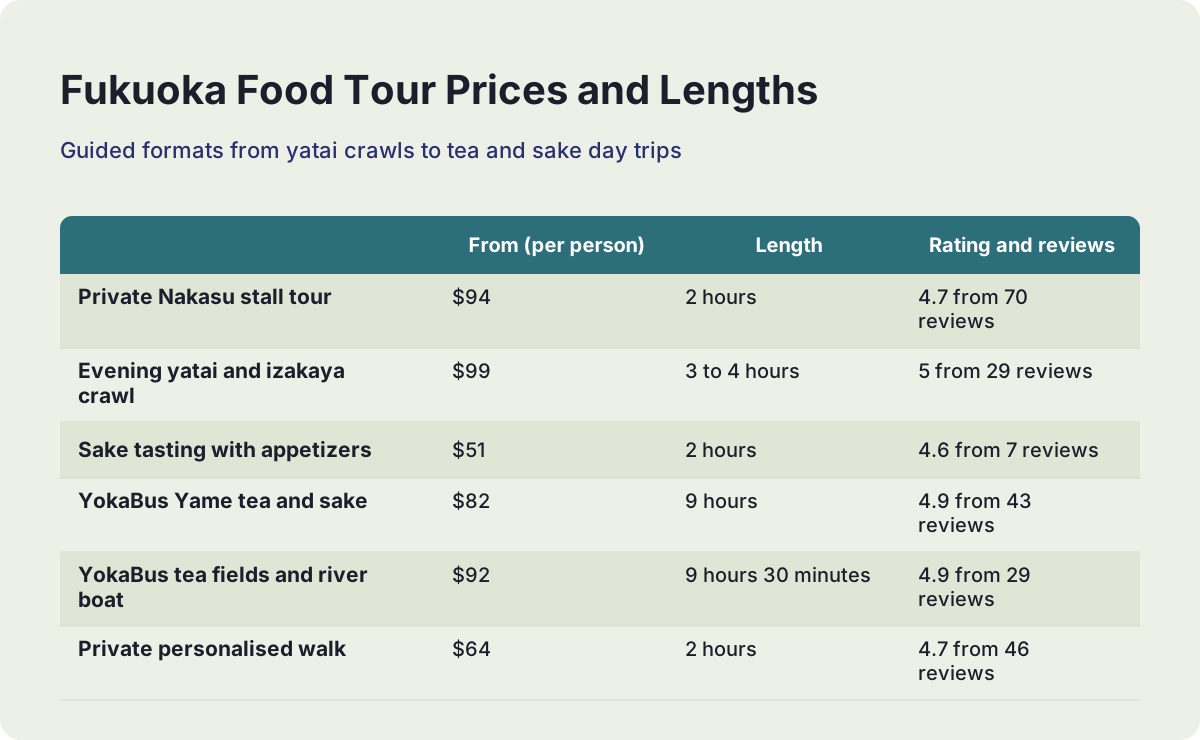
Guided food tours in Fukuoka cover yatai stall food and Nakasu tastings best, followed by sake tasting with appetizers, Yame tea and sake expeditions, and evening izakaya and karaoke crawls. The private Nakasu stall tour runs from $94 per person for two hours, rated 4.7 from 70 reviews.
Fukuoka eats differently from almost any other city in Japan. There are about 100 licensed yatai food stalls on the streets, more than any other Japanese city, concentrated in Nakasu, Tenjin and Nagahama, and a subway fare of ¥260 gets you from the airport into the middle of it, per the official subway fare table. Tonkotsu ramen, motsunabe, mentaiko and goma-saba all originate here or carry this city's name abroad. Guided tours have multiplied around that scene, and they are not interchangeable: some exist to get you seated at a stall, some to get you drunk responsibly, and some are full-day expeditions into Kyushu's tea country that happen to include lunch. This guide, from Fukuoka Japan Travel Guide, sorts the formats by the food they actually cover.
Which Fukuoka Foods Do Guided Tours Cover Best?
Yatai stall food in Nakasu is what Fukuoka guided food tours cover best, full stop. The private Nakasu food stall tour with tastings runs from $94 per person over two hours, rated 4.7 from 70 reviews, and puts a local guide between you and the stalls that are hardest to pick cold. Close behind are sake tasting with appetizers in Nishinakasu from $51, evening yatai and izakaya crawls from $99, and a nine-hour Yame tea and sake expedition from $82.
The reason stall food dominates the tour landscape is structural. A yatai seats only a handful of people at a time, the menus are Japanese, the seating etiquette is unfamiliar to most first-time visitors, and stalls close for rain or wind without notice. That friction is exactly what a guide dissolves. The city's own rules help too: the Fukuoka yatai ordinance requires every stall to display its prices where customers can easily see them, and any dish priced on the day's market cost must show that day's actual price rather than the vague "market price" wording, a rule the city enforces with periodic checks. So the fear of being overcharged at a stall, which stops a lot of visitors from sitting down, is largely a solved problem, and a guide can prove it to you on the first stop.
What tours cannot do is book you a stall. The yatai take walk-ins, full stop. Only guided crawls are sellable, and the distinction matters: you need a tour for the language, the navigation and the confidence, not for a reservation. The city counts about 100 stalls because a public recruitment system introduced around 2016 keeps replacing retiring operators, with a sixth recruitment round in 2026 covering 23 plots across Nakasu, Tenjin and Nagahama.
The foods themselves cluster around a short list. Tonkotsu ramen in its original setting, yakitori off a charcoal grill, oden in winter, tempura, gyoza and motsunabe if a tour moves indoors. For the deeper background on what each dish is and where it came from, the city food and dish guide is the reference page, and the question of what food Fukuoka is famous for has its own answer page on this site.
| Tour format | Foods covered best | Typical length | From (per person) |
|---|---|---|---|
| Private Nakasu stall tour | Yatai dishes with tastings | 2 hours | $94 |
| Evening yatai and izakaya crawl | Stall food plus izakaya dishes, karaoke | 3 to 4 hours | $99 |
| Sake tasting with appetizers | Three sake with paired appetizers | 2 hours | $51 |
| Yame tea and sake expedition | Tea tasting, sake, regional lunch | 9 hours | $82 |
| YokaBus tea fields and river boat | Tea fields, Yanagawa river town food | 9 hours 30 minutes | $92 |
Yatai and Nakasu: The Stall Tours
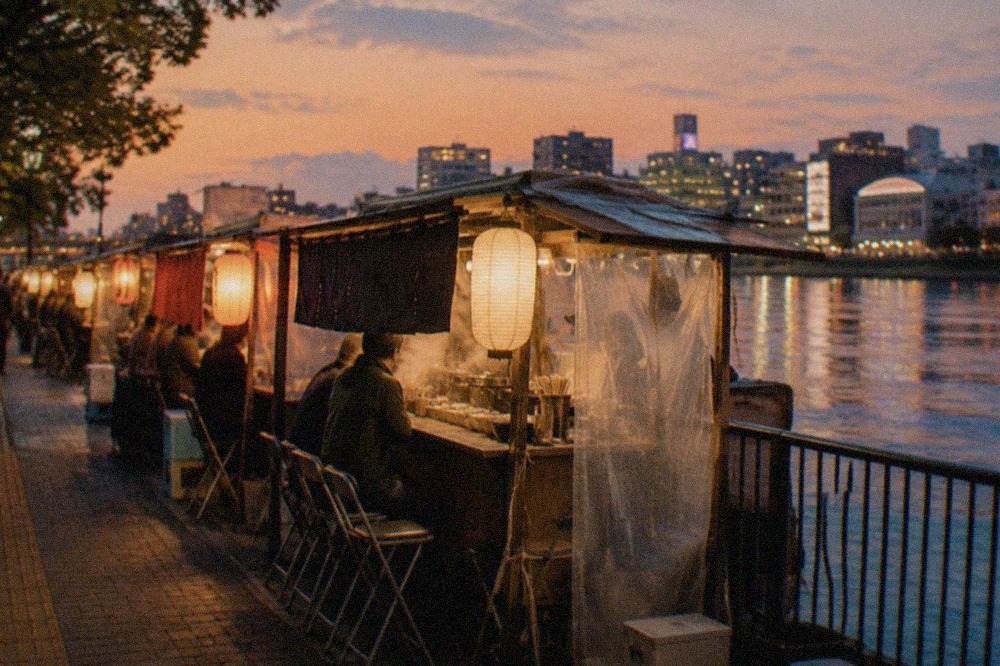
The stall tours concentrate on Nakasu, the riverside row along the Naka River by Seiryu Park, because that is the photogenic, tourist-facing strip and the one where a guide adds the most value. The private Nakasu food stall tour with tastings runs from $94 per person, rated 4.7 from 70 reviews, over two hours with multiple stall stops and tastings included. Beyond it, an evening tour format combining yatai, izakaya and karaoke runs from $99, rated a perfect 5 from 29 reviews.
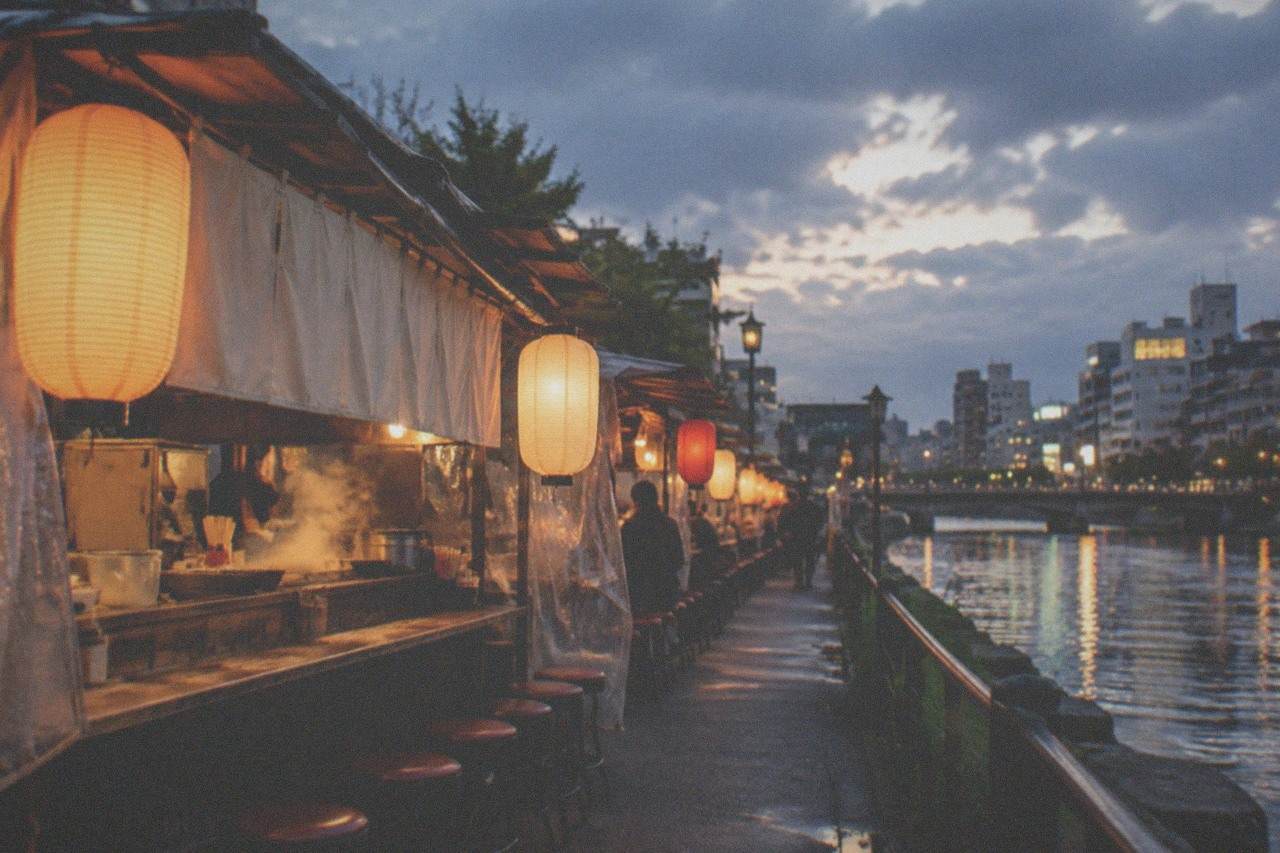
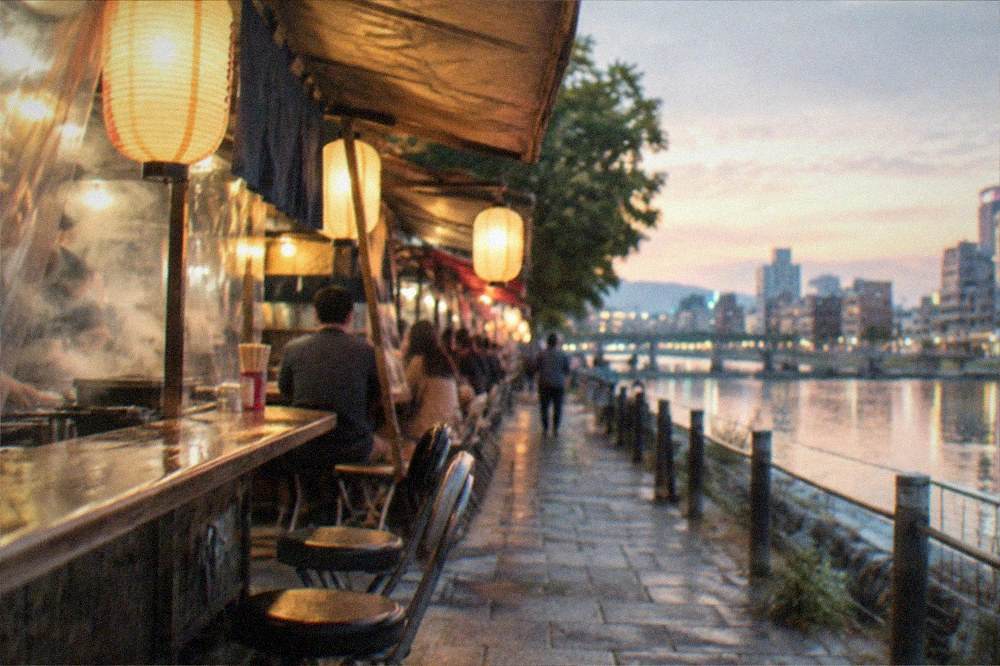
Nakasu is the stall district most visitors picture: lanterns reflecting off the Naka River, narrow counters, steam from ramen pots. Tenjin's stalls along Watanabe-dori and Showa-dori run more local, more after-work, with newer neo-yatai variety mixed in, and Nagahama near the old fish market is the historically ramen-focused row. A guide who knows which stall is open tonight, which one closes early and which one takes a card rather than cash only is doing real work, because none of that is published centrally and the stalls themselves decide night by night.
The ordinance detail is worth repeating here because it changes how you eat. Every stall must post its prices visibly, per the Fukuoka City yatai rules, and any market-priced dish must show that day's figure. City inspectors check periodically. That means the number you see on the board is the number you pay, which removes the single biggest anxiety visitors report about sitting down at a stall. A guided tasting walk makes the first stop easy; the posted prices make every stop after that easy.
Etiquette is the other thing tours earn their fee on. Ordering one dish and lingering, splitting a group across several stools, photographing the chef at work without asking: all of these are the small frictions a two-hour guided walk smooths out while you eat. The dedicated pages on yatai culture and on guided yatai tours specifically cover those rules in depth.
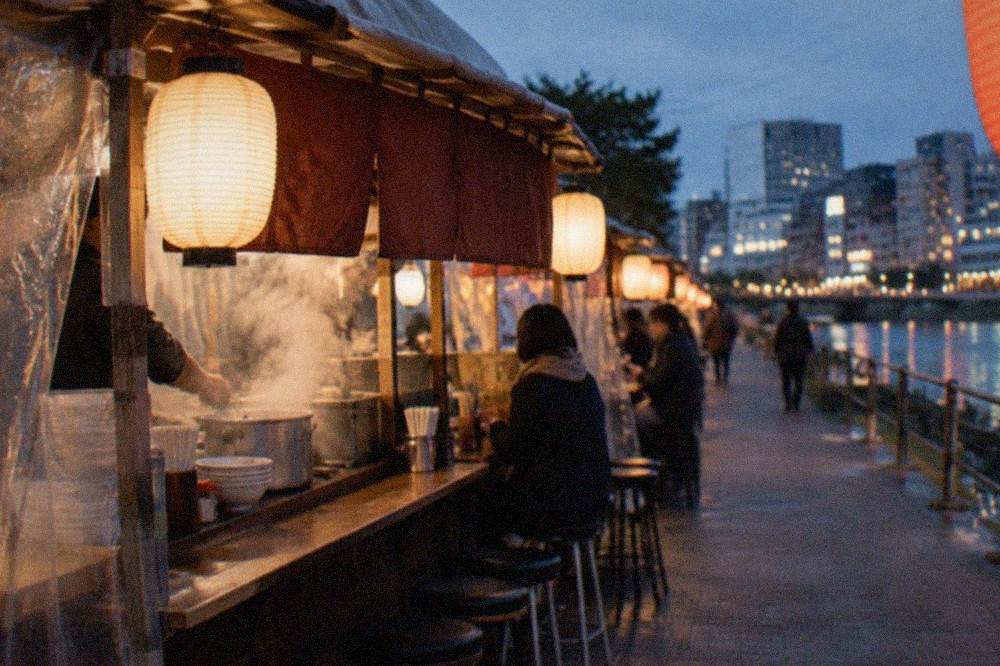
A private format is worth the premium for the stall districts specifically. Shared groups of eight cannot fit at one counter, so a shared tour fragments the experience into turn-taking. The private Nakasu tour keeps your party together, and its tastings mean you are not gambling your dinner on reading a menu cold. If you would rather structure the whole night around bars rather than stalls, the guided bar hopping options are the adjacent page.
Sake, Tea and Kyushu Drinks Tours
Drink-led tours are the second strongest food category in Fukuoka. The Nishinakasu sake tasting with three appetizers runs from $51 per person, rated 4.6 from 7 reviews, and the nine-hour YokaBus Heritage in a Cup expedition to Yame for tea and sake runs from $82, rated 4.9 from 43 reviews. A YokaBus tea fields and Yanagawa river boat day combining tea country with a river town runs from $92, rated 4.9 from 29 reviews.
The drink tours split cleanly into two types. The Nishinakasu tasting is a city evening: three sake, three appetizers, two hours, no travel. The YokaBus days are Kyushu expeditions that happen to be organised around what Yame produces, which is gyokuro-grade tea and sake brewed with that water. Yame is in Fukuoka Prefecture, roughly two hours south of the city, and the tour format exists because getting to the tea fields independently by bus is genuinely awkward. Nine hours sounds long until you account for the travel; the tea, the tastings and the Yanagawa river boat fill the middle.
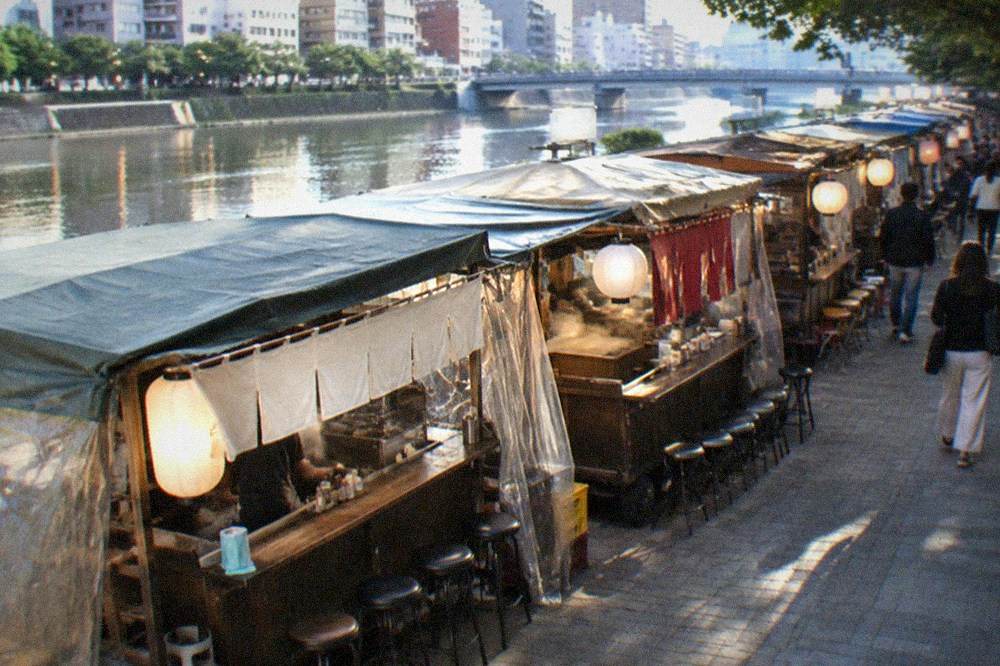
Kyushu as a brewing region is undersold in English-language coverage, which is a shame because Fukuoka Prefecture grows and brews both halves of the pairing. The tea side alone justifies the day: the shaded gyokuro fields around Yame are among the most photographed agricultural landscapes in the prefecture, and tasting the difference between shaded and unshaded leaf side by side is the sort of thing a self-guided visit rarely arranges. The regional sake context is worth reading up on before you book, since the tastings move fast and assume a little vocabulary.
Timing note that most calendars miss: September is a genuinely good month for the drink tours. The Hojoya festival at Hakozakigu runs September 12 to 18 with hundreds of food and game stalls along the approach, so a tasting evening in the city can be paired with festival street food on the same trip. And while July looks like the risky month for booking anything outdoors, the weather data cuts the other way: July is Fukuoka's wettest month at 299.1 mm against June's 249.6 mm, per the Japan Meteorological Agency's 1991 to 2020 normals, but that is exactly Yamakasa festival month, and the stalls run anyway. The honest framing is that rain closes individual stalls night by night, not the season.
| Drink tour | From | Rating and reviews | Length | What it covers |
|---|---|---|---|---|
| Nishinakasu sake tasting | $51 | 4.6 from 7 reviews | 2 hours | Three sake, three appetizers, city venue |
| YokaBus Yame tea and sake | $82 | 4.9 from 43 reviews | 9 hours | Tea tasting, sake, Yame region |
| YokaBus tea fields and river boat | $92 | 4.9 from 29 reviews | 9 hours 30 minutes | Tea fields, Yanagawa boat, regional food |
Evening Formats: Izakaya, Karaoke and Night Views
The evening tour format bundles food with the rest of a Fukuoka night. The Fukuoka Evening Tours option covering yatai, izakaya and karaoke runs from $99 per person, rated 5 from 29 reviews over three to four hours. A separate night views and local life format runs from $100 over four hours with no rating published yet, and a three-hour night cruise runs from $96, rated 5 from 4 reviews.
The evening bundle is the right call for visitors whose real goal is one good night out rather than a food education. You get the stall stop, an izakaya course that sits you down properly, and karaoke, which in Fukuoka is a room-based social activity rather than a bar gimmick. The rating pool deserves honesty: 29 reviews at a perfect score is a strong small pool, not a mass-market verdict, and the night views format with no published rating is a genuinely new listing, which cuts both ways, fresh format, no track record.
Nakasu after dark is the backdrop for all of these. The district sits between the Naka River and Tenjin, walkable from either, and the city's nightlife guide covers what to do on the nights you are not on a tour. If your evenings are spoken for but your mornings are open, the walking and cycling formats in the next section are the daylight equivalents.
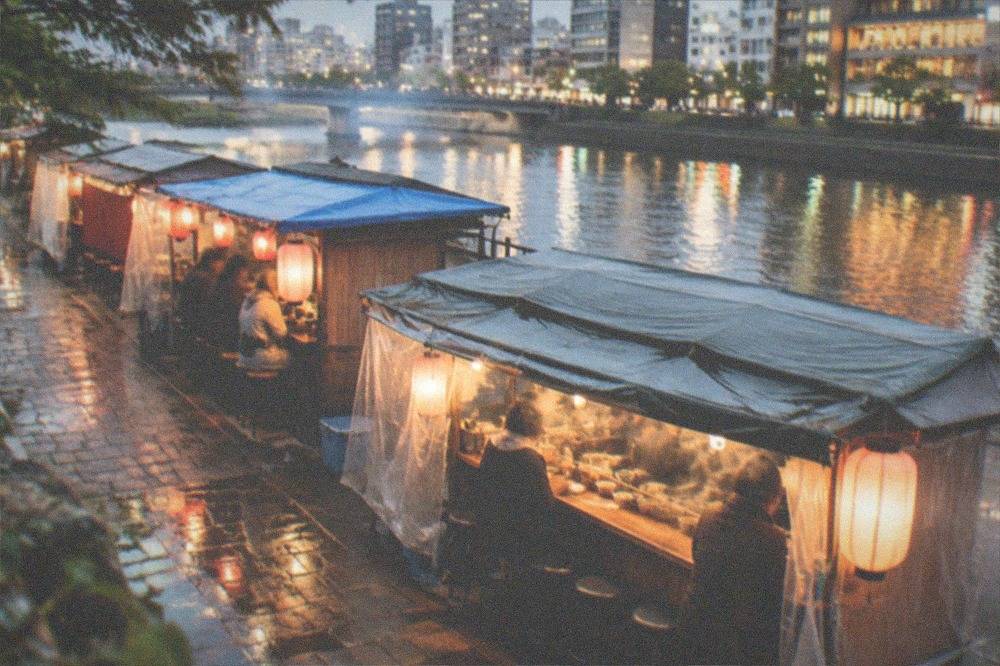
One practical warning that applies to every evening format: the yatai component is weather-exposed. Rain and strong wind close a lot of stalls, at the operator's discretion, and no tour operator controls that. The better-run evening tours have a covered izakaya as the fallback stop, which is another argument for the bundled format over trying to eat your way down the river alone on a marginal night.
Walking and Bike Tours with Food Along the Way
Half-day city tours are where food is a component rather than the subject. The Fukuoka Essentials history and culture walk runs from $74, rated 4.9 from 48 reviews over three to six hours, and the Hakata bike tour runs from $73, rated 4.7 from 22 reviews over 3 hours 30 minutes, both of which route through food districts and market streets without being tastings.
The bike format deserves more attention than it gets from food-focused visitors, because Hakata's food geography is unusually flat and compact. The old town temples, Kawabata arcade and the riverside stall strips sit within a couple of kilometres of each other, and a bike turns a full afternoon of eating stops into a single connected loop. Kawabata Shopping Arcade, the covered street running from Hakata station toward the river, is the natural snack corridor: the street food guide maps which stalls inside it are worth the calories.
The Essentials walk is the better fit if your food research and your sightseeing research are the same trip. It covers the Hakata old town, Kushida Shrine's neighbourhood and the food streets around them, and a guide who knows the district will point at the mentaiko shops and the motsunabe restaurants as they pass. For visitors who want to go deeper on customising, the private tour options page lays out the licensed-guide formats, and the walking tour comparison page ranks the city walks against each other.
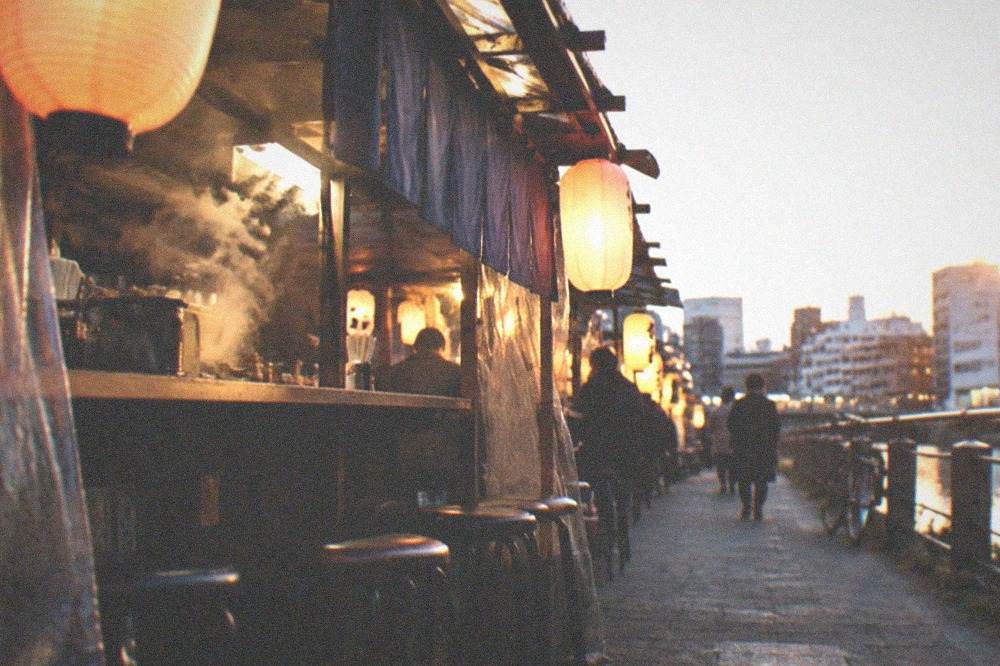
The honest framing for these formats: you will eat on them, but you are not buying a tasting itinerary. What you are buying is context. A guide explaining why Hakata's merchant food culture survived in the arcade while the surrounding city rebuilt, or why the stalls cluster where they do, changes what the food means when you go back to it alone the next night.
| Half-day city tour | From | Rating and reviews | Length | Food component |
|---|---|---|---|---|
| Fukuoka Essentials walk | $74 | 4.9 from 48 reviews | 3 to 6 hours | Routes through food districts |
| Hakata bike tour | $73 | 4.7 from 22 reviews | 3 hours 30 minutes | Riverside and arcade snack stops |
| Private personalised walk | $64 | 4.7 from 46 reviews | 2 hours | Customisable to food focus |
Dietary Needs: Vegetarian, Vegan and Halal Coverage
Guided food tours handle dietary needs better than independent stall-hopping does, but coverage varies by format, and no tour on the current roster is explicitly vegetarian or halal branded. The practical route is a private customisable tour, from $59 per person rated 4.9 from 106 reviews, where the route is built around your requirements, rather than a fixed tasting menu you hope has an option.
The stall districts are the hardest environment for restricted diets. Tonkotsu broth is pork-bone by definition, motsunabe is offal, and yakitori grills run on whatever the skewer says. A private guide solves this by steering to the stalls and izakaya that can actually feed you: sesame-based somen, vegetable tempura, the goma-saba and mentaiko shops that sell rather than serve, and the growing number of neo-yatai in Tenjin with more flexible menus. The background reading on vegetarian and vegan eating in Fukuoka and halal options in the city names the specific restaurants a private guide can be pointed at.
The tea and sake expedition formats are the safest default for plant-leaning eaters, incidentally, because the tasting core is tea and the meals sit in conventional regional restaurants with more vegetable dishes than a stall counter offers. That is a real planning insight: if your group is mixed on diet, the Yame day tour is the format least likely to leave anyone eating white rice alone.
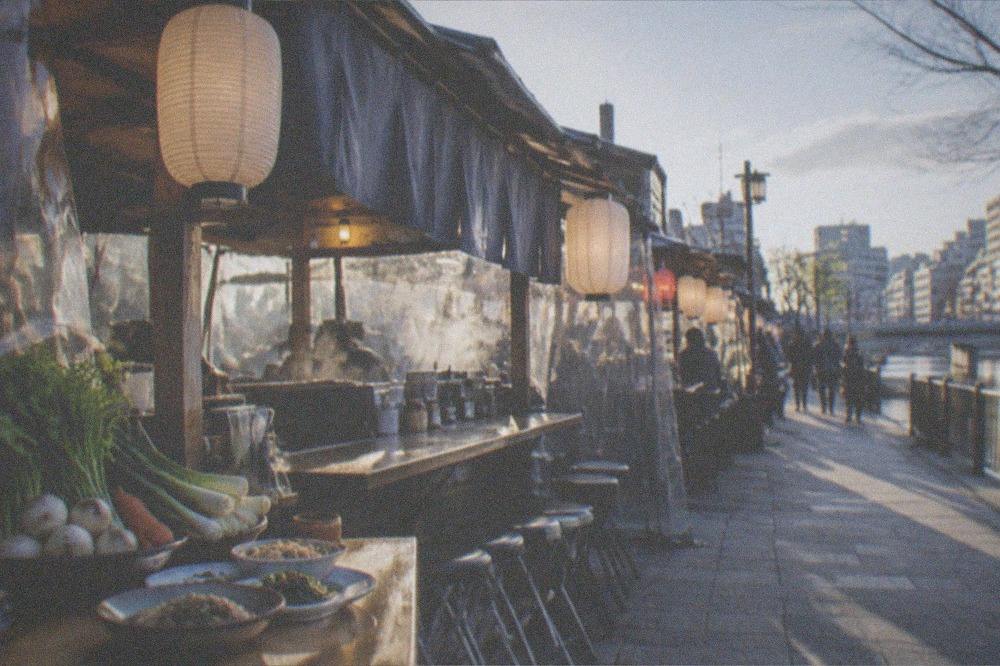
Communication is the real service being purchased. A guide who can ask a stall owner whether the oden broth contains dashi from fish, in Japanese, on the spot, is worth more than any English-language dietary card, and this is the single strongest argument for the private formats when diet is the constraint. State the requirement when booking rather than on arrival, because routes get built in advance.
What Fukuoka Food Tours Cost, and What You Get for It
Food tour pricing in Fukuoka runs from $18 for a tea ceremony to $96 for a night cruise, with the core food formats between $51 and $100 and the full-day Kyushu expeditions from $46 to $94. The private Nakasu stall tour sits at $94 for two hours. A single subway ride across the city is ¥210 to ¥380 depending on distance, so the tour fee is buying the guide, the tastings and the access, not transport.
The value question is fair and the answer is structural. A two-hour private stall tour with tastings costs less than a mediocre dinner for two at a tourist restaurant in most major cities, and it removes the single hardest food decision a first-time visitor faces, which stall, which dish, how to order, how to behave. The comparison that matters is not tour versus eating alone at random, it is tour versus eating alone well, and eating alone well in a city where the best counters seat seven people requires either luck, Japanese or a lot of prior research.
| Format | From (per person) | Length | Included in the fee |
|---|---|---|---|
| Tea ceremony with maiko | $18 | 1 hour | Ceremony, tea, sweets |
| Hakata doll painting | $28 | 1h 30m | Materials and instruction |
| Sake tasting, Nishinakasu | $51 | 2 hours | Three sake, three appetizers |
| Yame tea and sake expedition | $82 | 9 hours | Tea and sake tastings, regional stops |
| Private Nakasu stall tour | $94 | 2 hours | Guide, stall stops, tastings |
| Evening yatai and izakaya | $99 | 3 to 4 hours | Guide, food stops, karaoke |
The cheaper end of the table is worth noticing. The tea ceremony with maiko at $18, rated 4.9 from 11 reviews, is technically a culture format, but sweets and matcha are food, and pairing a low-cost culture booking with a self-guided evening at the stalls is a legitimate budget strategy. Daily food spending, from the cheap arcade counters to the full guided evening, is covered in this site's trip cost arithmetic.
Fitting a Food Tour Into Your Itinerary
Book the stall tour for your first or second night, not your last, because a guided first evening teaches you the geography and etiquette you will use every night after. Half-day formats slot best into late mornings, drink tours into the 5 p.m. window when stalls begin setting up, and full-day Kyushu expeditions deserve their own day with nothing else scheduled.
The first-night logic is the strongest scheduling advice in this guide and almost nobody follows it. A two-hour guided walk around Nakasu on night one leaves you knowing which streets hold which stalls, what things cost from the posted boards, and how the seating works. Every subsequent night is then self-guided but informed. Reversing that, saving the tour for the final evening, buys you nothing but a curated goodbye.
The full-day expeditions are the ones to schedule carefully. A nine or ten hour day trip to Yame, Itoshima or the Beppu hells leaves no energy for a stall crawl afterwards, so pair those days with a light izakaya dinner or an early night. The food crawl itinerary is the day-by-day version of this advice for visitors whose whole trip is organised around eating, and the five day Fukuoka itinerary slots the food nights against the sightseeing days in a workable order.
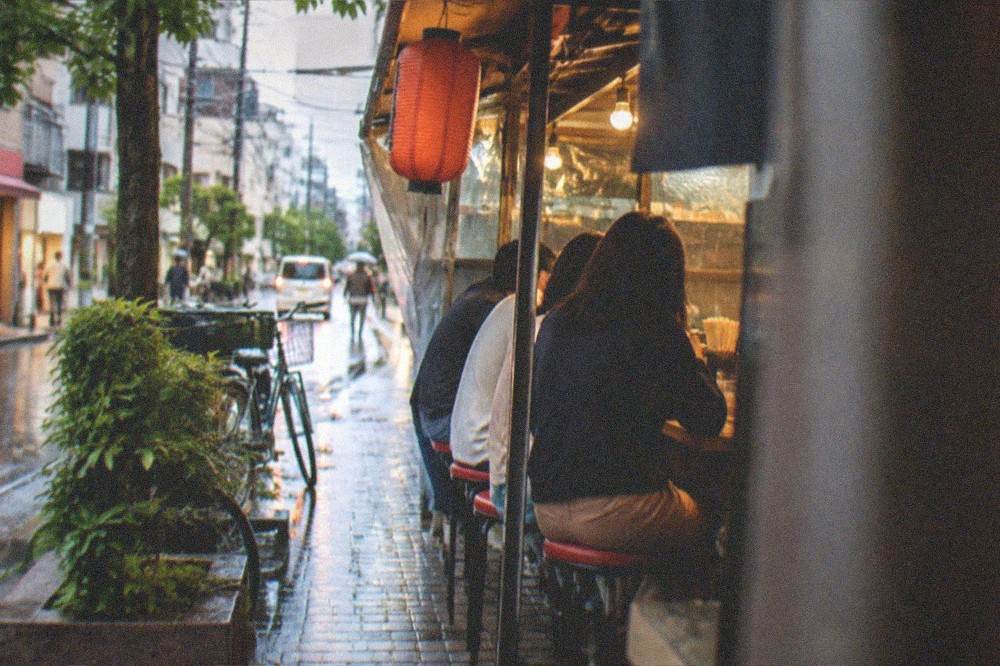
Season affects the food calendar more than the tour calendar. The tours run year round, but the dishes rotate: oden and motsunabe belong to the cold half of the year, while the summer months push the stalls toward tempura, yakitori and beer. Fukuoka's own numbers say the city averages 1,686.9 mm of rain a year with July the wettest single month, so the smart play for an evening tour booking is the free-cancellation window, book early, watch the forecast, decide late. The seasonal breakdown by month is on this site's best time to visit guide.
Choosing the Right Tour for Your Group
Match the format to the group, not to the food. Solo travellers and couples get the most from private stall walks and tasting formats; families with children do better on the half-day walks and the island or park days where food is one stop among many; and groups of five or more should avoid any tour with a single yatai counter at its centre, because the counters seat a handful.
The seating arithmetic is unforgiving and worth stating plainly. A yatai counter holds a handful of stools. A private tour for six is a private tour for six people who cannot all sit together at one stall, so the guide staggers the stops. That is fine, but know it going in. The bike tour, rated 4.7 from 22 reviews, is the format that scales best across group sizes, because bikes do not have a per-counter limit, and it doubles as the better choice for teenagers who want motion between snacks.
For visitors building a whole Kyushu trip, the day tour formats are where a food interest and a sightseeing interest finally merge. The Mt. Aso and Takachiho Gorge day, from $48 rated 4.7 from 674 reviews, is not a food tour, but it includes the meals and the region's food stops, and the same logic covers the wider day tour options from Fukuoka covered on this site. Food-first visitors should still eat the stall tour first; everything else is a beautiful detour.
If this is your first trip to the city rather than your fourth, the practical reading order on this site runs: the stall tour you just read about, the yatai etiquette basics before your first counter, and the where to stay guide so the stalls are walkable from your door rather than a subway ride away. Hakata and Fukuoka are the same city, one name for the ward and station, one for the city, so any hotel near Hakata Station or Tenjin puts you within walking distance of the food.
Common Questions About Fukuoka Food Tours
Which Fukuoka Foods Do Guided Tours Cover Best?
Yatai stall food in Nakasu, covered best by the private stall tour with tastings from $94 per person. Behind it: sake tasting with appetizers, the nine-hour Yame tea and sake expedition, and the evening izakaya and karaoke bundles. Ramen, motsunabe and mentaiko appear across nearly every format because they define the city's food identity.
Do I need to book a tour to eat at a yatai?
No. The yatai take walk-ins and cannot be booked. A guided crawl buys you navigation, language and confidence on your first night, not a reservation. The city's ordinance requires every stall to post prices visibly, so you can also walk in alone with that protection.
What does a Fukuoka food tour cost?
The core formats run from $51 for a two-hour sake tasting to $99 for an evening yatai, izakaya and karaoke bundle. The private Nakasu stall tour is $94 for two hours, and full-day Kyushu food expeditions run from $46 to $94 depending on destination.
Are there vegetarian or halal food tours in Fukuoka?
No tour on the current roster is explicitly vegetarian or halal branded. The workable route is a private customisable tour, from $59 per person, where the route is built around your diet, paired with the specific vegetarian, vegan and halal restaurants listed on this site's dedicated guides.
When should I take the food tour during my trip?
On your first or second night. A guided first evening teaches you the stall geography, etiquette and pricing you will use every night after, so the rest of the trip becomes informed self-guiding rather than guesswork.
Do food tours get cancelled for rain?
The yatai component can be, because individual stalls close for rain or strong wind at the operator's discretion. Evening formats with a covered izakaya fallback usually proceed. Booking within a free-cancellation window lets you decide late against the forecast.