Yatai Etiquette
Fukuoka runs about 100 licensed yatai food stalls, more than any other city in Japan, and they take walk-ins only. Here is how ordering, eating and paying actually work at one.
Short answer
Fukuoka has about 100 licensed yatai, and every one takes walk-ins, no reservation possible. A city ordinance requires each stall to post its prices visibly, so ordering is a matter of pointing at the menu board. Seats are shared, meals are short, and cash is still the safest way to pay. Expect one drink and a couple of dishes, then move on.
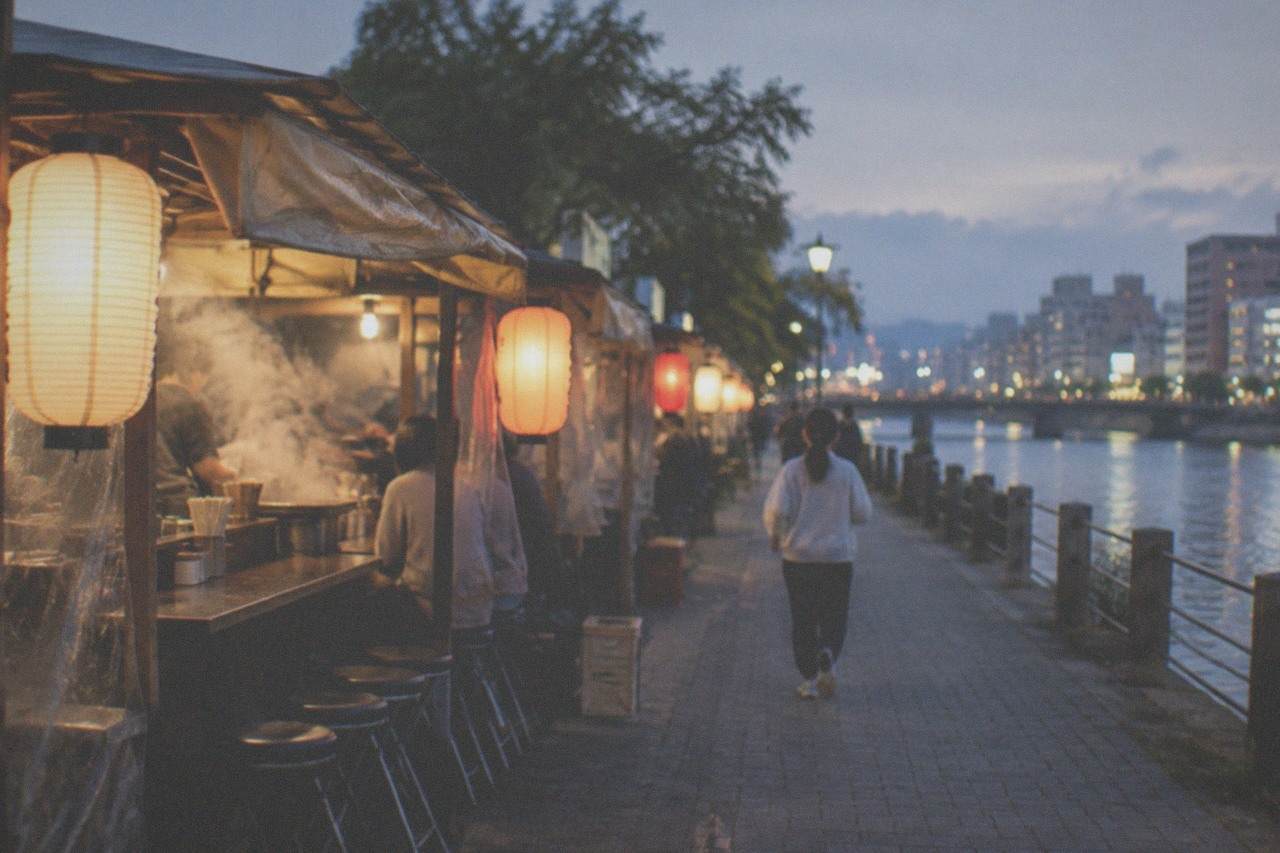
Fukuoka is the only Japanese city where the yatai, the open-air food stall, is still a working part of everyday nightlife rather than a festival curiosity. The city counts about 100 licensed stalls, and they are regulated by their own municipal ordinance, which is unusual enough that the rules shape how you order, what you pay and how long you stay. Most first-time visitors worry about the wrong things: hidden prices, unwritten seating charges, the fear of committing a faux pas in a space the size of a garden shed. Almost none of those worries survive contact with how a stall actually runs.
This page walks through the whole encounter: how to get a seat, how to order, what etiquette genuinely asks of you, how payment works, and what to eat first. If you want the broader food picture, the site's Fukuoka food guide covers the restaurant side of the city, and Fukuoka yatai: the full guide covers the history and the stall-finding side. This page is about behaviour at the counter.
How Do You Order at a Fukuoka Yatai?
You walk up, wait for a nod, take the seat you are offered, and order from the posted menu, by pointing if needed. There is no host, no queue system and no reservation. A typical stall seats seven or eight people on stools around three small counters, and the owner cooks a few steps away, so ordering is a conversation, not a transaction with a tablet. Prices are posted, dishes come as they are ready, and you ask for the bill when you are done.
The mechanics are simpler than most guides make them sound. Stalls are tiny, and the owner can see exactly how many seats are free. If the counter is full, you wait at the edge, visibly, until the owner makes eye contact and waves you in. Do not hover behind seated diners or squeeze in uninvited; the owner controls seating because the space only allows it. Once you are on a stool, the menu is either a board on the stall or a laminated sheet. The city's own yatai Q&A page confirms that the ordinance requires prices to be displayed where customers can easily see them, so you can read before you point.
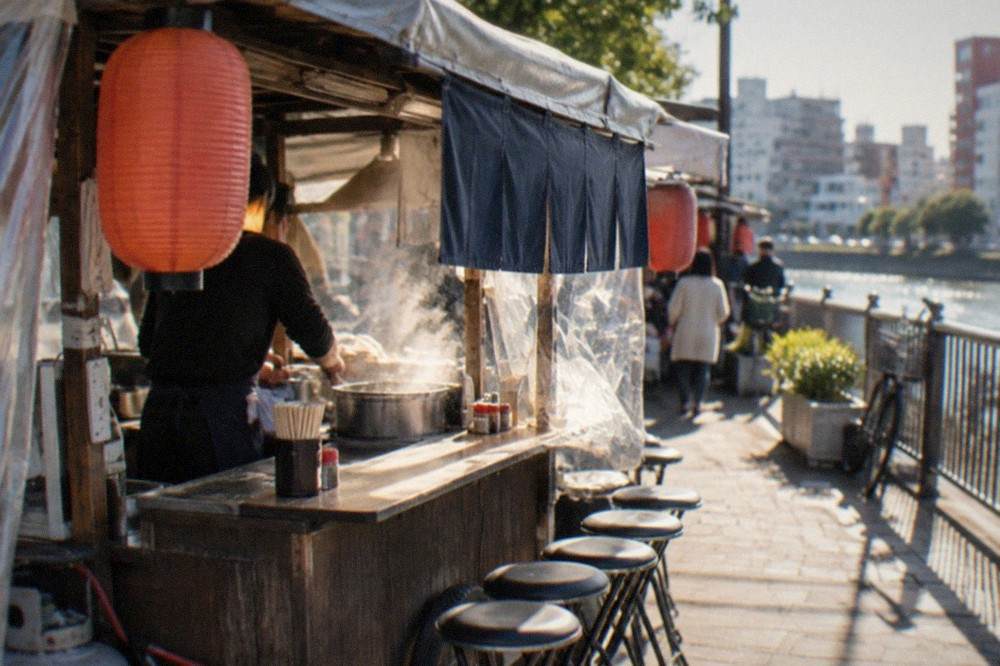
Ordering by pointing is completely normal, and most owners handle a mix of Japanese, gestures and translation apps every night. A short "sumimasen" gets the owner's attention, and "kore o kudasai" means "this one, please". If you cannot read the board, point at what the person next to you is eating; at a yatai that is a compliment, not an intrusion. Start with one drink and one or two dishes. Portions are small on purpose, the kitchen is one person, and the stall turns over its few seats several times a night. A yatai meal is a stop, not a sitting.
One habit worth dropping before you arrive: the instinct to order everything at once. Dishes come out in the order the owner can manage them, and a stall is not a restaurant with a pass. Order a drink, order one dish, see how the rhythm works, then add. If you want a deeper background on how the stall system came to exist at all, the answers page on yatai etiquette covers the same ground in a shorter format, and the general Fukuoka etiquette guide extends the same manners to restaurants and public spaces.
Nakasu, Tenjin or Nagahama: Which Stall Area Fits You?
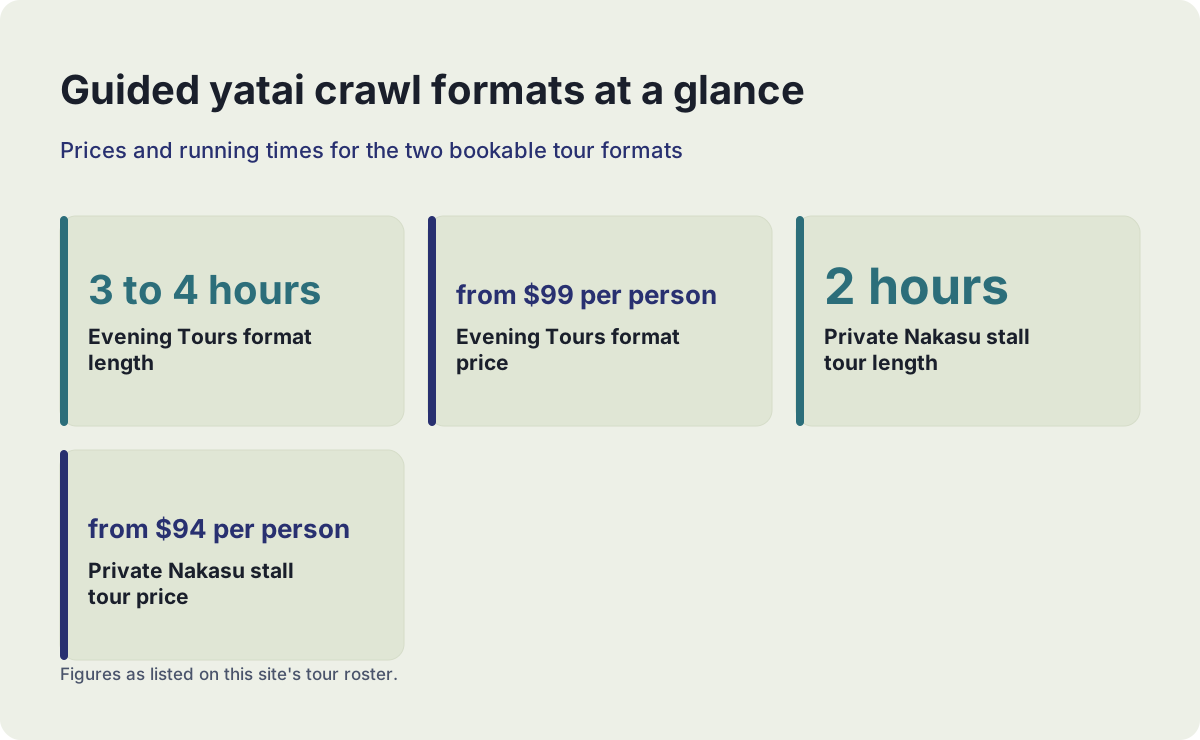
The three clusters are genuinely different, and choosing between them is the first real decision. Nakasu, along the Naka River by Seiryu Park, is the photogenic, tourist-facing row. Tenjin's stalls are scattered through the business district and skew toward after-work locals. Nagahama, near the old fish market, is the historic ramen row. All three operate under the same ordinance, but the atmosphere, the crowd and the food on offer differ enough to plan around.
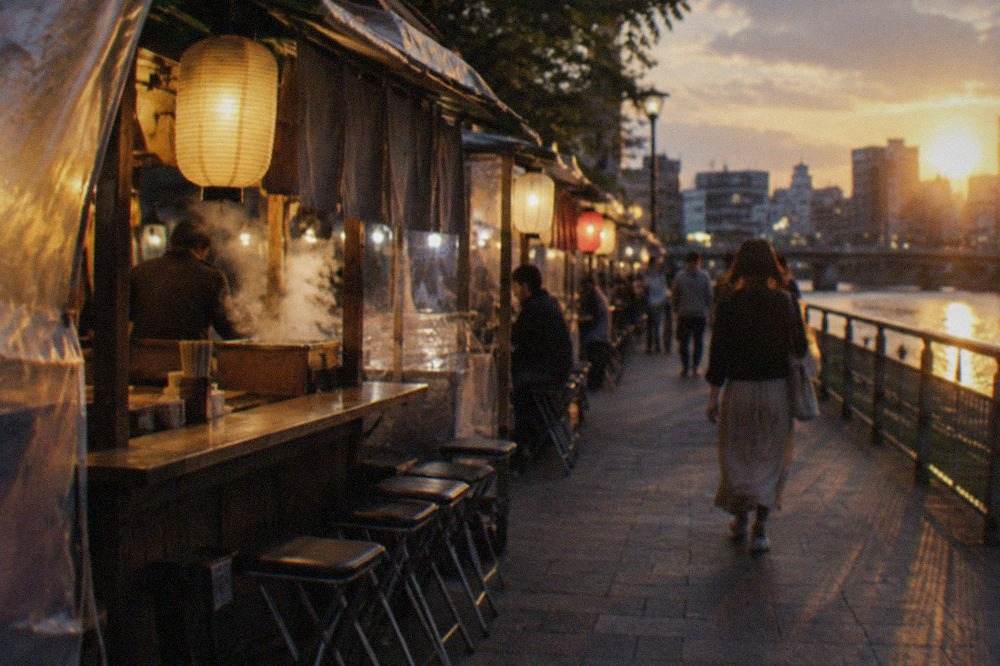
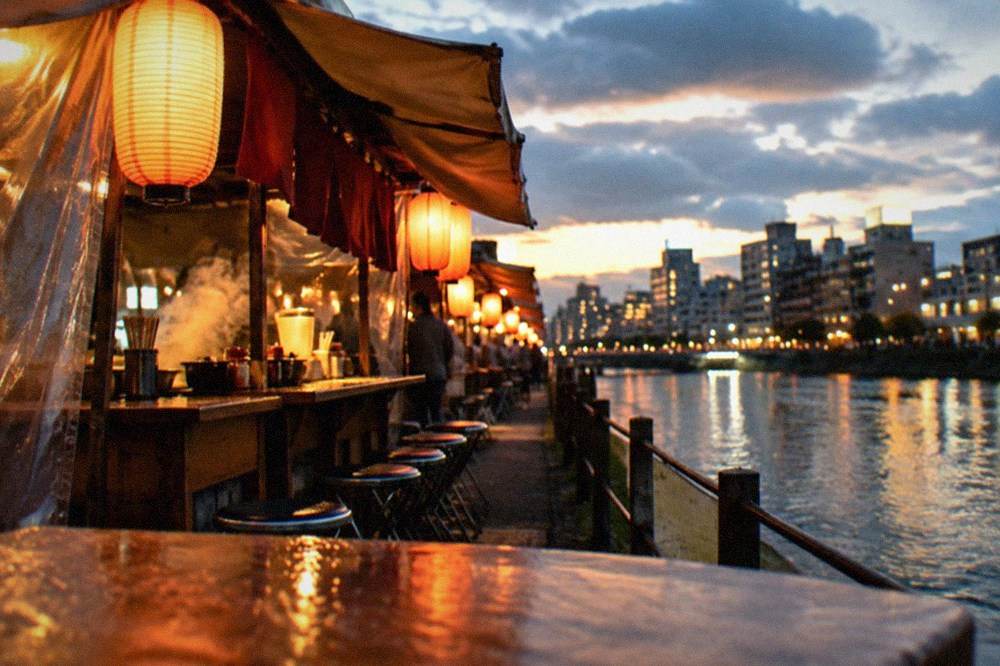
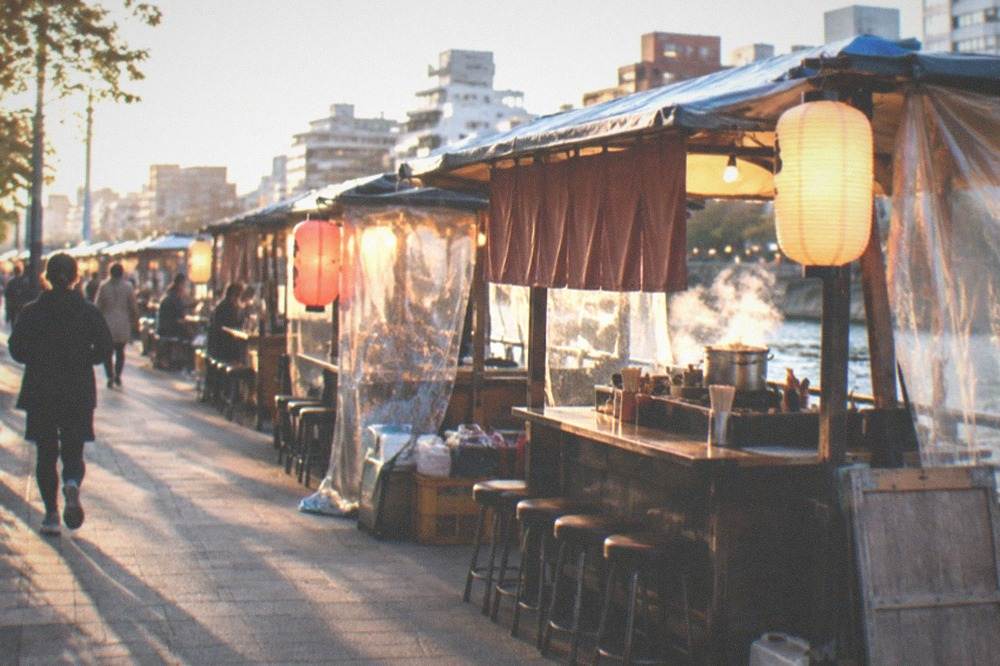
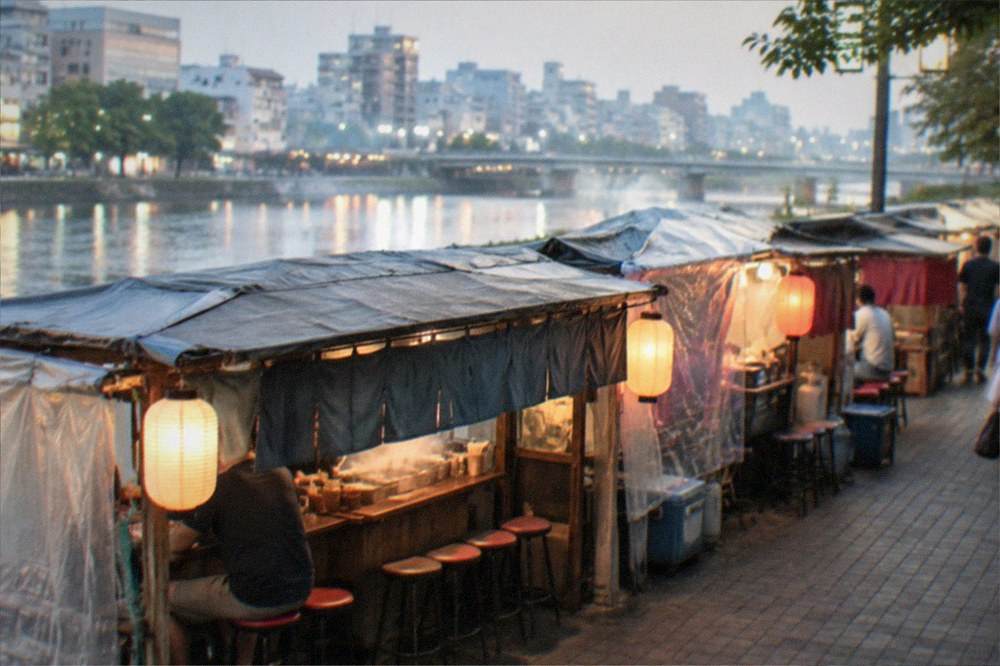
Nakasu is the version you have seen in photographs: stalls strung with lanterns reflecting off the river, a mixed crowd of visitors and locals, and owners used to first-timers. This is the easiest place to eat at a yatai if you do not speak Japanese, because the stalls here handle the most international traffic. Tenjin is the opposite energy: stalls tucked along Watanabe-dori and Showa-dori serve office workers, and the food leans more experimental in places, including newer so-called neo-yatai. Nagahama is the traditional ramen territory, closest to the old fish market, and it draws a local crowd late at night.
| Area | Setting | Crowd | Best for |
|---|---|---|---|
| Nakasu | Riverside row by Seiryu Park | Visitors and locals mixed | A first yatai visit, photographs, English-friendly owners |
| Tenjin | Scattered stalls in the business district | After-work locals | Variety, newer stalls, a drink-and-snack stop |
| Nagahama | Near the former fish market | Late-night local crowd | Tonkotsu ramen, the traditional stall experience |
If you are planning a whole evening rather than a single stop, geography matters. Nakasu sits between Hakata and Tenjin, so it pairs naturally with a bar in Nakasu nightlife territory or with the izakaya scene a few streets over. Tenjin works if your hotel is in the business district and you want a short walk home; the where to stay in Fukuoka rundown explains the trade-off between the two districts. A guided crawl solves the choosing for you, and the three options below cover the main formats: a hosted evening, a countryside day out, and a private local guide.
What Does Yatai Etiquette Actually Ask of You?
Three things, and none of them are exotic: keep the visit short, share the space, and treat the stall as someone's workplace. Seats are communal, so you may be seated beside strangers, and the etiquette is to make room rather than spread out. The unwritten time limit is roughly an hour, less if people are waiting. Smoking, loud phone calls and lingering after paying are the behaviours owners notice negatively. Everything else is ordinary Japanese table manners.
The communal seating is the part that surprises people. A stall's counter seats whoever arrives, so you will often end up elbow to elbow with strangers. That is the design, not a shortage of tables. The etiquette that follows from it is simple: keep bags on your lap or behind you, not on a neighbouring stool; do not put a bag or coat on the counter; and if the stall fills up, be ready to tighten up. Conversation with neighbours is welcome and common, but it is offered, not imposed. If the person beside you wants to talk, they will start it.
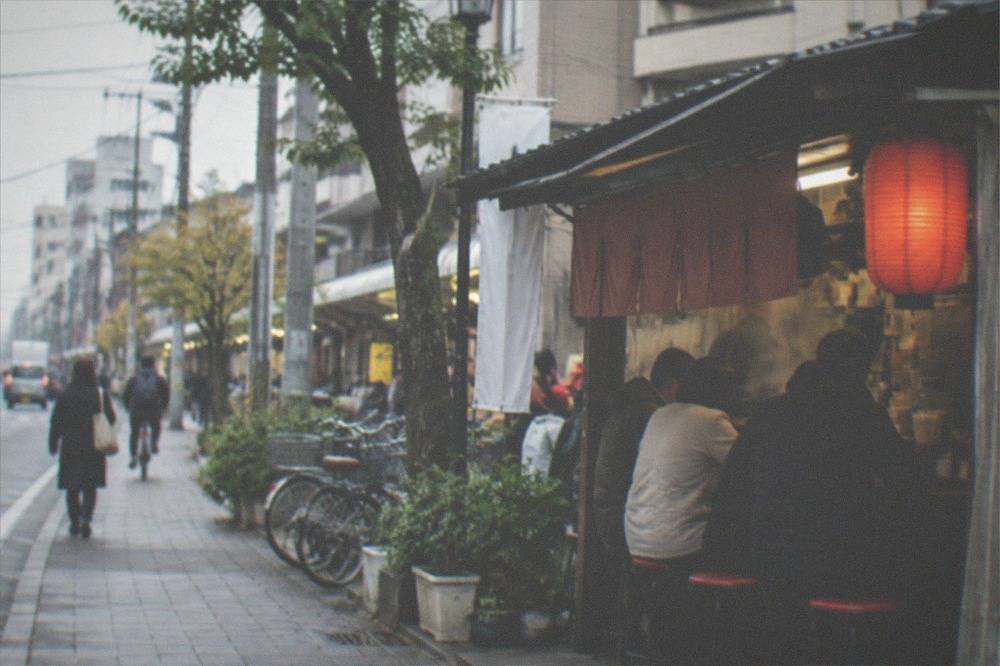
The time limit deserves emphasis because it is the one rule visitors break most often without realising. A stall has a handful of seats and one cook; the economics only work if they turn over. Order, eat, chat, pay, and leave. If the stall is empty and the owner is chatting, stay as long as the conversation runs; if a queue is forming at the edge, wrap up. Owners will almost never ask a customer to leave, which makes it your job to notice. Finishing your drink within a reasonable window after eating is the standard.
| Situation | What etiquette asks | Why |
|---|---|---|
| Counter is full when you arrive | Wait at the edge, visible, until waved in | The owner controls seating in a space of a few square metres |
| Seated beside strangers | Make room, keep bags off the counter | Seats are communal by design |
| Finished eating, people waiting | Order a last drink or ask for the bill | The stall's economics depend on turning seats over |
| Owner is busy cooking | Order in one go, then wait patiently | One person runs kitchen and counter |
| Rain or strong wind | Check whether stalls are open at all | Stalls close for weather at the operator's discretion |
Smoking policy varies by stall, so ask before lighting up; the space is small enough that it is genuinely a question for the whole counter. Phone calls are best kept short and quiet, and photo etiquette is worth one sentence: photograph your own food and the stall freely, but ask before photographing other customers or the owner's face. The site's publisher, Fukuoka Japan Travel Guide, keeps a fuller treatment of general manners in the etiquette guide linked above, and the same instincts carry over to restaurant dining.
If reading a room in a foreign language sounds like work, a hosted evening takes that weight off entirely. The question below is whether a guide is worth it for you.
Do You Need a Reservation to Eat at a Yatai?
No, and you cannot make one. Yatai take walk-ins only; there is no booking system, no waiting list and no way to reserve a stool in advance. This is not an oversight, it is how the format works. The only thing you can book in the yatai world is a guided crawl, where a local walks a small group between stalls and handles the ordering. If a site offers to "reserve a yatai seat" for you, it is selling you something the stalls themselves do not sell.
This is worth stating plainly because the question comes up constantly. The stalls are licensed to occupy the road, not to run a restaurant with a floor plan, and their few seats are first-come, first-served from the moment the shutters go up in the early evening. The city's recruitment rules let a stall occupy its plot from 17:00 into the small hours, and most open around 18:00 to 18:30. What you control about seating is timing: arrive at opening for an easy seat, or after 21:00 in Nakasu for the fullest atmosphere and the longest wait.
The bookable product is the guided crawl, and there are three on this site's roster. The Evening Tours format (yatai, izakaya, karaoke) runs 3 to 4 hours from $99 per person and is rated 5 from 29 reviews; it strings stalls and a sit-down bar together with a host who translates. A private Nakasu stall tour with tastings, 2 hours from $94 per person, rated 4.7 from 70 reviews, concentrates on the riverside row with a guide who orders for the group. The distinction matters: the crawl books, the stalls do not.
Whether a crawl is worth it depends on your confidence at a counter. If you are comfortable pointing at a menu board, walk in alone; the stalls are built for it. If you want the food explained, the history told and the language handled, the yatai tours roundup compares the guided options, and the broader food tours guide covers cooking classes and market walks as well.
How Does Paying Work at a Yatai?
You pay at the end, at the counter, in cash in most cases. The ordinance requires every stall to post its prices visibly, and it bans "market price" pricing for variable dishes, so the number on the board is the number on your bill. There is no evidence of a standard seating charge or cover charge at yatai, and the city publishes no average spend, so ignore any guide that quotes one. Bring cash, ask for the total when you are ready, and pay the owner directly.
The posted-price rule is the single most useful thing to know about yatai money, and it inverts the warning most travel advice gives. The Fukuoka City Yatai Basic Ordinance, in force since 2013, requires prices to be displayed where customers can easily see them, and any dish priced on the day's market cost must show that day's actual price rather than a vague "market price" tag. City inspectors check periodically. The practical effect: you can read the full cost of your meal before you sit down, which is more than most restaurants offer.
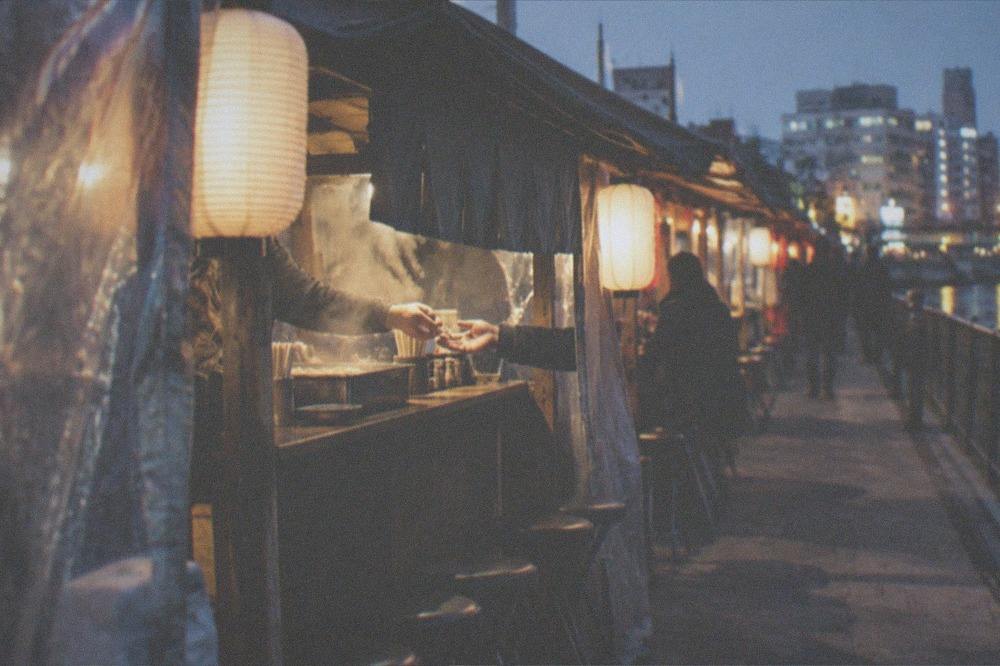
Payment methods vary stall to stall. Cash has always been the default, and some stalls now take cards or QR payment through point-of-sale apps, but there is no city-wide standard, so the safe assumption is cash. The money and cash guide covers withdrawal tactics and how much cash to carry in Fukuoka generally. When you are finished, catch the owner's eye and say "o-kaikei o onegaishimasu", or simply "okaikei". The total is totted up on the spot. Tipping is not part of the format; put the exact amount on the counter and that is the whole transaction.
| Payment question | The honest answer |
|---|---|
| Is there a cover or seating charge? | No standard charge appears in any official source; the posted dish prices are the menu |
| Can I see prices before ordering? | Yes, the ordinance requires visible price display, and "market price" tags are banned |
| Card or cash? | Varies by stall; assume cash and you will never be caught out |
| When do I pay? | At the end, when you ask for the bill |
| Is tipping expected? | No; it is not part of the format |
One caution about the numbers you read elsewhere: the city publishes no average price per dish or per person, and this site will not invent one. What is verifiable is the mechanism, posted prices, an end-of-meal tally, and a cash-first culture. That is enough to plan an evening around.
What If You Do Not Speak Japanese?
You will manage, and the stalls are used to it. Pointing at the menu board is a complete ordering method, translation apps cover the rest, and the highest-traffic stalls in Nakasu deal with non-Japanese speakers every night. A handful of phrases helps: "sumimasen" for attention, "kore o kudasai" to order, "okaikei" for the bill. Allergies are the one case where you should not rely on gestures alone.
The vocabulary burden is small because the format is small. A stall serves a short menu, often a dozen items, and the board is in front of you. Translation apps work well on a laminated menu, and owners are patient with them. What does not translate well is substitution requests: a yatai kitchen is one person with a two-burner setup, so "no garlic, sauce on the side" is a bigger ask at a stall than in a restaurant. Order the dish as it comes, or pick a different dish.
| Phrase | Say it like | It means |
|---|---|---|
| Sumimasen | soo-mee-mah-sen | Excuse me / sorry (gets attention) |
| Kore o kudasai | koh-reh oh koo-dah-sai | This one, please |
| Osusume wa? | oh-soo-soo-meh wa | What do you recommend? |
| Oishikatta desu | oy-shee-kat-tah dess | That was delicious |
| Okaikei o onegaishimasu | oh-kai-keh oh oh-neh-guy-shee-mass | The bill, please |
Allergies are the exception to the pointing method. If you cannot eat shellfish, sesame or pork, write it in Japanese on your phone before you go, show the owner, and accept that some stalls will honestly say they cannot guarantee a dish. Cross-contamination in a tiny kitchen is real. The same logic applies to dietary needs generally; the vegetarian and halal dining picture in the food guide notes that yatai are the hardest place in the city to eat plant-based, because tonkotsu broth and pork define the format. That is not a reason to skip the stalls, just a reason to pick your stall with intent.
When Are Yatai Open, and When Do They Close?
Stalls set up from 17:00 and may occupy their plot until 04:00, with most opening around 18:00 to 18:30 and closing in the small hours. There is no city-mandated closing day: individual owners close for weather, rest days and their own reasons, so no area is reliably "open every night". Rain and strong wind empty the rows. The practical pattern is early evening for families and an easy seat, late evening for the full atmosphere.
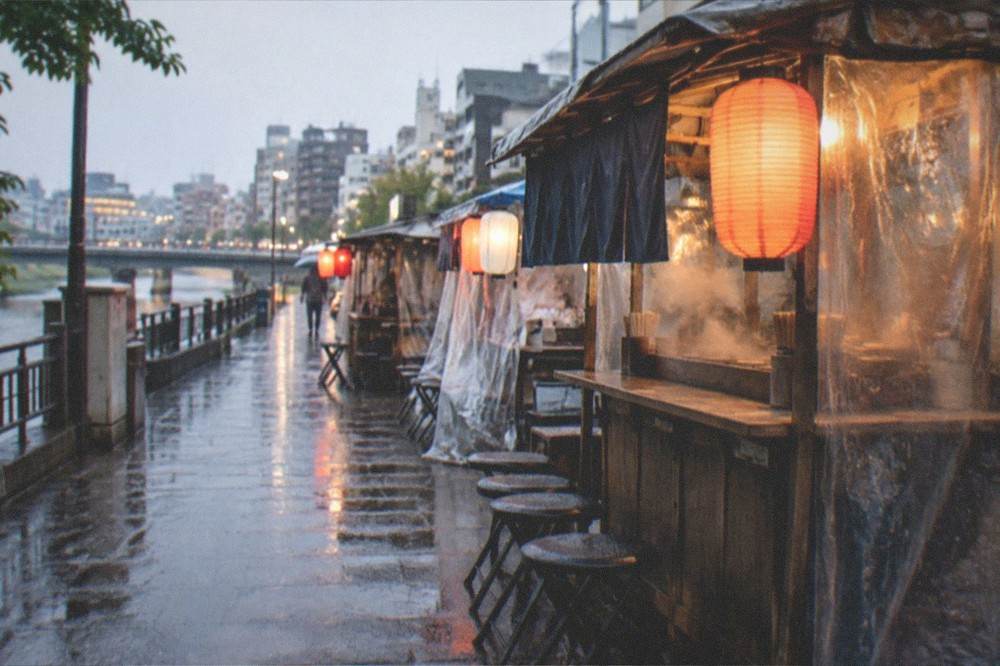
The city's recruitment rules define the road-occupancy window, but within it each owner keeps their own hours, and the honest framing is that a stall opens when the owner opens it. Weather is the big variable: a yatai is an open cart under an awning, and rain or a strong wind closes a lot of them for the night. Typhoon season, roughly July through October, makes this a real planning factor rather than a footnote, and the best time to visit Fukuoka guide puts the weather windows in context. If a typhoon is in the forecast, assume the stalls are dark.
The city keeps the count stable through a public recruitment system: as owners retire, new operators are recruited to fill the plots, and the sixth round, run in 2026, covers 23 plots across Nakasu, Tenjin and Nagahama with new stalls starting from around April 2027. That is why "about 100" has stayed true for years while individual stalls change. For a visitor, none of this changes your evening; it just explains why a stall you loved on an earlier trip may have a new owner now.
If your evening plan is stalls plus bars plus a viewpoint, a hosted night out bundles the logistics. The option below pairs night views with local life over four hours, with no rating published yet, which reflects how new the listing is rather than anything about the tour itself.
What Should You Order on Your First Yatai Visit?
Order what the stall is known for, not what you recognise. Each stall has a speciality, often written on a sign or obvious from what regulars are eating, and the tonkotsu ramen, yakitori and oden staples are safe anchors. One drink, one or two dishes is the rhythm. If you are stuck, ask "osusume wa?", what do you recommend, and take the answer. The owner's recommendation at a seven-seat stall is the entire business model working in your favour.
The canon is small and worth knowing before you point. Tonkotsu ramen is Fukuoka's signature and Nagahama's core trade; a pork-bone broth that the city argues about the way other cities argue about football. Yakitori, grilled chicken skewers, is the other universal stall food, cooked in front of you and ordered by the skewer. Oden, the simmered winter stew, shows up in colder months. Tempura, gyoza and motsunabe appear on some stalls but are restaurant foods first; the motsunabe guide covers that dish properly. The stall versions of anything are lighter, faster and meant to be eaten standing-still-while-sitting.
| Dish | What it is | Why order it at a stall |
|---|---|---|
| Tonkotsu ramen | Pork-bone broth ramen, often with kaedama noodle refills | The signature; Nagahama's reason to exist |
| Yakitori | Chicken skewers grilled over charcoal | Cooked in front of you, ordered one at a time |
| Oden | Fish cakes, daikon and egg simmered in broth | Cold-weather comfort, ladled from a shared pot |
| Tempura | Light battered vegetables and shrimp | Fast, shareable, easy to order by pointing |
The kaedama refill deserves a line of its own because it is a small etiquette test. At a tonkotsu stall, "kaedama" means a second serving of noodles into your remaining broth, and it is ordered while you are still eating, not after. It costs a small posted amount, it is completely normal, and asking for it is a sign you are enjoying the bowl. Declining is equally fine. What is not fine is the restaurant instinct to customise: no broth substitutions, no build-your-own ramen. The stall serves the bowl it serves.
By now you know the whole encounter: pick your area, walk up, wait for the nod, point, eat, pay in cash, leave within the hour. The three options below are the bookable side of the yatai world, the guided crawls, alongside the two formats visitors most often pair with them.
Common Questions About Yatai Etiquette
How do you order at a Fukuoka yatai?
Walk up, wait at the edge until the owner waves you in, take the seat you are offered, and order from the posted menu by pointing or with a translation app. Prices must be displayed visibly under the city ordinance, so you can read the cost before you commit. Order one drink and one or two dishes, and ask for the bill with "okaikei" when you are done.
Do you need a book a yatai in advance?
No. Yatai take walk-ins only and have no reservation system. The only bookable product in the yatai world is a guided crawl, where a local guide takes a small group between stalls and handles ordering. If you want a guided evening, check availability on the operator's live listing; the stalls themselves you simply walk up to.
Will I get ripped off at a yatai?
The ordinance is on your side here. Every stall must post its prices visibly, and "market price" tags are banned, so a variable dish has to show that day's actual price. City inspectors check periodically. You will see the price before you order, which is more transparency than most restaurants offer.
How long can you stay at a yatai?
Roughly an hour is the working norm, less if people are waiting. A stall has a handful of seats and one cook, so it only works economically if the seats turn over. Owners will rarely ask a customer to leave, so watch the queue at the edge and wrap up when one forms.
Is a yatai cash only?
Not always, but assume cash. Some stalls now take cards or QR payment, and there is no city-wide standard, so the safe move is to carry yen. Pay at the end, at the counter, when you ask for the bill. Tipping is not part of the format.
Can you sit with strangers at a yatai?
Yes, and you usually will. Counter seats are communal, and the owner seats whoever arrives. The etiquette is to make room, keep bags off the counter, and treat a neighbour's conversation as an offer rather than an obligation.