What Food Is Fukuoka Famous For?
The foods Fukuoka is famous for, from Hakata tonkotsu ramen and yatai food stalls to motsunabe, mentaiko and goma saba, with where to eat each one.
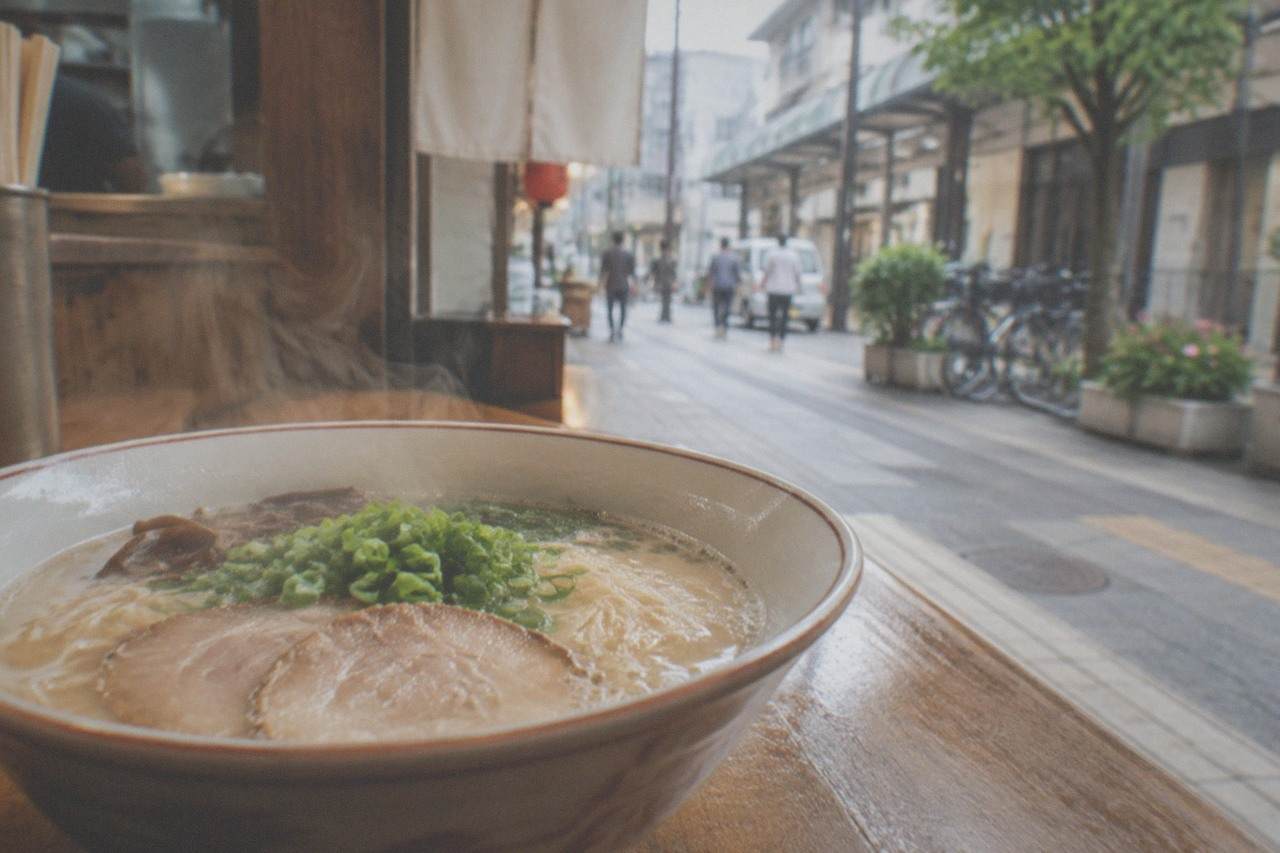
Fukuoka eats better than almost any city its size in Japan, and it does it without ceremony. The city on Hakata Bay is the birthplace of tonkotsu ramen, the last Japanese city with a real street-stall culture, and the place where motsunabe, a beef offal hot pot, went from cheap workers' food to a signature dish. Ask a local what to eat here and the answer comes in one breath: ramen, yatai, motsunabe, mentaiko. This page breaks each of those down, tells you where to find them, and answers the practical questions that come with eating in a city where some of the best kitchens have wheels. This Fukuoka Japan Travel Guide article is part of a set covering the city's food, transport and sights dish by dish.
What Food Is Fukuoka Famous For?
Fukuoka is famous for four foods above all others: Hakata tonkotsu ramen, a rich pork-bone noodle soup born in the city's stall rows; yatai, the mobile food stalls that line the Naka River and downtown streets; motsunabe, a beef offal hot pot with garlic and chives; and mentaiko, spicy cod or pollock roe that started here and now ships nationwide. Goma saba, sesame mackerel, and hitokuchi gyoza, one-bite dumplings, round out the local canon.
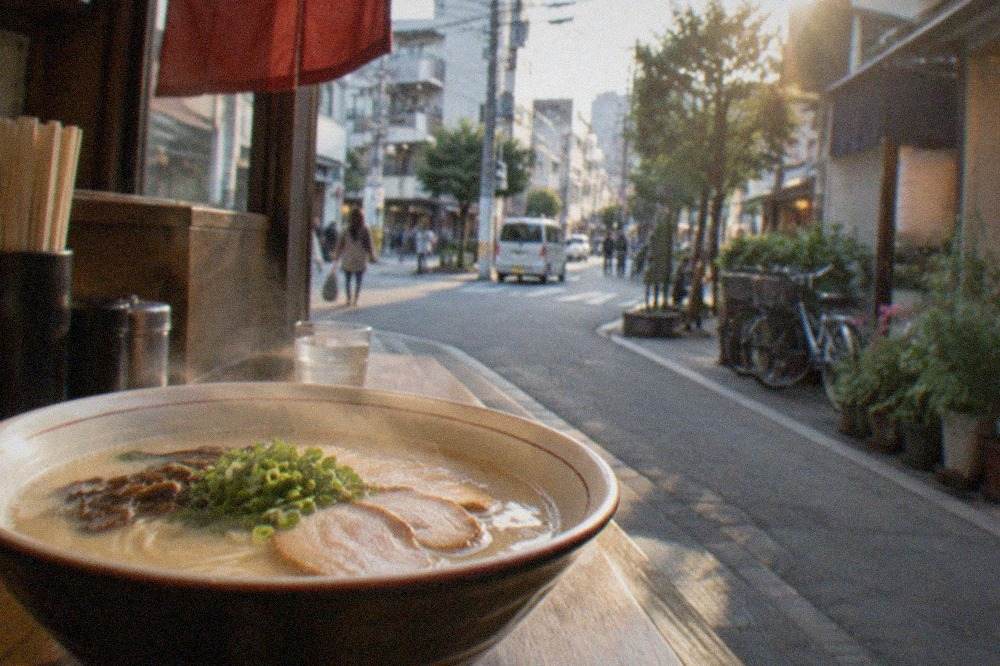
Hakata ramen is the headline. Its broth is made by boiling pork bones for hours until the soup turns opaque, rich and faintly sweet, and the noodles are thin and straight so they cook fast and drink up the broth. The style was born in the Nagahama stall area, near the old fish market, and it spread from there to the whole country. The dish has its own customs too: kaedama, the practice of ordering a refill of noodles into your remaining broth, exists because the thin noodles go soft quickly, so a bowl is designed to be finished fast and topped up. If you want the full story of the broth, the noodle width and where to eat it, the Hakata ramen and local food background covers the city's food scene dish by dish.
Motsunabe is the other winter heavyweight. Beef or pork offal simmers in a soy or miso broth with garlic, chives and cabbage, and the city embraced it in the post-war years when cheap cuts were what the markets had. It is a shared, boiling-pot meal, the kind of thing groups order in izakaya in Nakasu and Tenjin from autumn through spring.
Mentaiko is the quiet export. Salted pollock roe, seasoned with chilli, was industrialised in Fukuoka after the war and it now sits on rice, in onigiri and on pasta across Japan. Goma saba, raw mackerel cured in sesame and vinegar, is a Hakata izakaya starter you will meet everywhere. Hitokuchi gyoza, small single-bite dumplings, are the standard bar snack. For a dish-by-dish eating route through the city, the food crawl itinerary strings the classics into one walking day.
| Dish | What it is | Where to eat it |
|---|---|---|
| Hakata tonkotsu ramen | Thin noodles in a long-boiled pork-bone broth | Stall rows and dedicated ramen shops citywide |
| Yatai stall food | Ramen, yakitori, oden and more from mobile kitchens | Nakasu, Tenjin and Nagahama stall rows |
| Motsunabe | Beef or pork offal hot pot with garlic and chives | Izakaya in Nakasu and Tenjin, autumn to spring |
| Mentaiko | Chilli-seasoned pollock roe | On rice at breakfast, in onigiri, as a souvenir |
| Goma saba | Mackerel cured in sesame and vinegar | Izakaya starters across the city |
| Hitokuchi gyoza | One-bite pan-fried dumplings | Bars in Tenjin and Hakata |
Yatai Stalls: Where Do You Actually Eat Them?
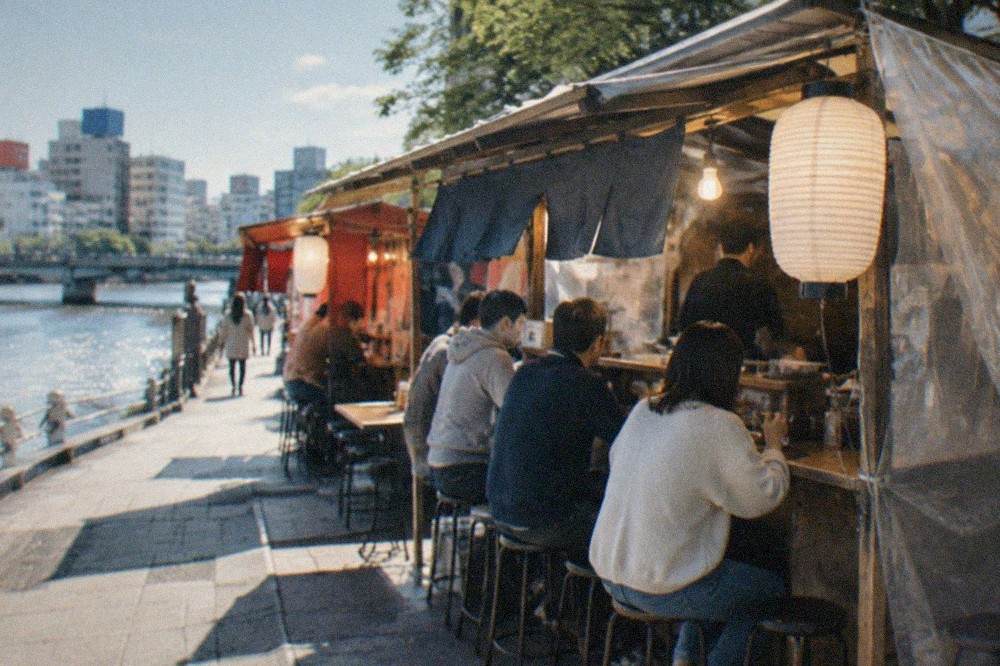
You eat at yatai in three main areas: Nakasu, the photogenic row along the Naka River by Seiryu Park; Tenjin, where stalls scatter along Watanabe-dori and Showa-dori among the after-work crowds; and Nagahama, the historic ramen row near the old fish market. Fukuoka has about 100 licensed stalls, more than any other Japanese city, and they open from around 18:00 into the small hours.
The stall is the setting that makes food here feel different from Tokyo or Osaka. You sit elbow to elbow with strangers at a counter on wheels, order a bowl of ramen or a few skewers, and the owner cooks a metre away. The city's own figures put the count at about 100 stalls, a number held steady since a public recruitment system began admitting new operators. The sixth recruitment round, run in 2026, covers 23 plots across Nakasu, Tenjin and Nagahama, with new stalls starting from around April 2027.
One rule matters more than any other, and almost no guide mentions it. A Fukuoka City ordinance, in force since 2013, requires every stall to display its prices where customers can easily see them, and it bans 時価, "market price", labelling: any dish priced on the day's market cost must show that day's actual price. City inspectors check periodically. The worry that a stall will quietly overcharge a foreigner is the most common question visitors have about yatai, and the honest answer is that the law is on your side. The city's yatai Q&A page states the rules in full, and the ordinance background explains what operators must post and why.
Two practical notes. Stalls are weather-sensitive: a rainy evening can empty a whole row, and no stall opens every night. And payment is still mostly cash, though a growing number take cards and QR codes, so carry yen for the counter. Etiquette is simple, seat count is small, and a party of four may be asked to split up. For the customs in detail, the yatai guide covers seating, ordering and kaedama etiquette.
A guided crawl removes most of the friction. The Nakasu Food Stall Private Guided Tour is a private walk with tastings built in, from $94 per person and rated 4.7 from 70 reviews, and it suits a first night when the rows look busiest and the ordering feels least obvious.
The stalls take walk-ins and always have. You cannot book a seat at a yatai, and you do not need to: the only bookable product here is a guided crawl, which is a different thing from a stall itself. A crawl gets you a guide who translates the menu, a route through the rows and a few tastings you would probably not order on your own.
What Makes Hakata Ramen Different from Other Ramen?
Hakata ramen uses a tonkotsu broth, pork bones boiled for many hours until the soup turns creamy white, paired with thin, straight, low-water noodles that cook in seconds. The style was born in Fukuoka's stall rows, and its two signature customs, kaedama noodle refills and ordering noodle firmness by name, exist because of that thin noodle.
The broth is the definition. Tonkotsu soup is opaque, heavier than the clear chicken or fish broths of Tokyo styles, and it carries a faint sweetness from the long boil. The noodles are the counterpart: thin, straight and cut firm, they absorb broth fast, which is why a Hakata bowl is eaten quickly and why kaedama exists. You order a refill of noodles, the kae, and the staff drop them into the soup you have not finished. It costs a fraction of a full bowl and it is the local way to eat.
Firmness is ordered by word. Katame means hard noodles, the local default preference for many, and yawame means soft. Men no kataomoi, "noodles only", is the order for someone who wants soup without toppings. None of this is written anywhere for foreigners; you learn it by watching the person beside you, which is exactly what a stall counter is good for.
The stall connection matters historically. Nagahama, near the old fish market, is where the style took shape, cooked fast for market workers, and the dish spread out from there to chain shops and the rest of Japan. Fukuoka's ramen shops now range from original stalls to polished chains, and the honest advice is to eat both: one bowl at a stall for the atmosphere, one at a dedicated shop for the broth at its most refined.
Motsunabe, Mentaiko and the Rest of the Local Canon
Motsunabe is a boiling hot pot of beef or pork offal, garlic, chives and cabbage in a miso or soy broth, eaten in winter and best in groups. Mentaiko is chilli-seasoned pollock roe, served on rice or inside onigiri. Goma saba is vinegar-and-sesame-cured mackerel, and hitokuchi gyoza are one-bite dumplings served by the plate in bars. All four are everyday Fukuoka eating, not special-occasion food.
Motsunabe earns its place because it is the one big local dish you cannot get in the same form elsewhere. The offal is prepped clean, simmered at the table, and finished with champon noodles in the remaining broth. It is a cold-months dish, autumn to spring, and izakaya in Nakasu and Tenjin are where groups order it. Solo travellers can find single-portion pots, but it is fundamentally a shared pan.
Mentaiko you will meet at breakfast, on rice in a hotel morning spread, and in every convenience store in the region as onigiri filling. It is the taste most visitors carry home, and it is a standard souvenir, sold vacuum-packed at Hakata Station. Goma saba is the izakaya opener: mackerel cured in sesame and vinegar until it is safe and silken, served cold. Hitokuchi gyoza, tiny pan-fried dumplings served five or six to a plate, are the drinking food of Tenjin's back streets.
If tasting your way through the canon with someone who can translate the menu appeals, the food tours overview lists the guided options across the city, from stall crawls to sake tastings, and the Fukuoka food tours guide compares them by length and price.
Sweets, Sake and Eating Beyond the City
Fukuoka's sweet and drinking side is quieter than its ramen fame but just as local: umegae mochi, a grilled rice cake filled with red bean paste, is the signature snack of Dazaifu to the south, while the city's izakaya pour Kyushu sake and shochu alongside the food. Yame tea country and the Itoshima seafood coast sit within day-trip range, so the eating does not stop at the city boundary.
Umegae mochi is the sweet to know. A small grilled rice cake filled with sweet red bean paste, it is the signature snack of Dazaifu, the shrine town a short train ride south, and the shops along Dazaifu's approach street sell it fresh off the griddle. Closer in, the Kawabata Shopping Arcade, running from the Hakata river down toward Nakasu, mixes old kissaten coffee shops with newer dessert cafes. The what is Fukuoka famous for page covers the non-food side of that question.
Sake is the local pour. Fukuoka Prefecture's Yame and Itoshima regions grow tea and brew well, and the city's izakaya pour local Kyushu labels alongside shochu, the distilled spirit southern Japan is known for. A guided tasting makes the prefecture's brewing reachable in one evening: the YokaBus tea and sake tasting expedition runs a full day into Yame, from $82 per person and rated 4.9 from 43 reviews, and the Nishinakasu sake tasting pairs three local pours with appetizers from $51 per person, rated 4.6 from 7 reviews.
Day trips widen the menu further. Itoshima, the peninsula west of the city, is the seafood and oyster coast, and its food scene is the reason many visitors give the area a full day. The street food guide picks up the snacking side of the city in more detail.
Eating with Dietary Restrictions in Fukuoka
Fukuoka is workable for vegetarians and halal eaters but it demands a little planning. Tonkotsu broth is pork-based and off-limits to both, motsunabe is offal, and yatai menus are short and meat-heavy. Shojin ryori temple cooking, udon shops with vegetable toppings and the city's growing cafe scene fill the gaps, and dedicated guides list the specific addresses.
The honest warning is that the three most famous foods are all restrictions-unfriendly. Tonkotsu is pork bone, mentaiko is fish roe, motsunabe is offal. None of that means going hungry. Fukuoka udon, a softer noodle in a mild dashi broth that is itself a local tradition, is the easiest fallback, and vegetable tempura and tofu dishes are everywhere once you look past the ramen signs. The vegetarian and vegan guide and the halal food guide list verified addresses, and both are worth reading before you arrive rather than after.
At a yatai, the workable order is yakitori without sauce, grilled vegetables or oden, the simmered dashi pot that many stalls keep. English menus are rare at stalls, so a card with your restriction written in Japanese, or a guide on the first night, does more than any app.
Common Questions About Food in Fukuoka
What Food Is Fukuoka Famous For?
Hakata tonkotsu ramen, yatai street stalls, motsunabe hot pot, mentaiko pollock roe, goma saba and hitokuchi gyoza. Ramen is the dish the city is named for in food circles, and the yatai stall is the setting most visitors remember longest.
Do I need to book a yatai stall in advance?
No. Yatai take walk-ins only and cannot be booked. The only bookable product is a guided stall crawl, which is a walking tour with tastings, not a reserved seat.
Will a yatai stall overcharge me?
The city ordinance requires every stall to display prices visibly and bans "market price" labelling, and inspectors check periodically. The posted price is the price you pay.
What is kaedama?
A noodle refill. Hakata ramen noodles are thin and soften quickly, so you eat the first serving fast and order extra noodles, dropped into your remaining broth, for less than the cost of a new bowl.
When should I eat motsunabe?
Autumn through spring. It is a boiling hot pot built for cold months, and many izakaya only feature it on seasonal menus.
Is Fukuoka good for vegetarian or halal eaters?
Yes with planning. The famous dishes are pork, offal and fish roe, but the city has a solid udon tradition, temple cooking and a growing cafe scene, and dedicated vegetarian, vegan and halal guides list verified addresses.