Fukuoka Street Food
Fukuoka eats late, cheap and standing up. Tonkotsu ramen born here, about 100 licensed yatai stalls, mentaiko by the spoonful and a city ordinance that forces every stall to post its prices.
Short answer
Fukuoka is Japan's street food capital by most measures: it invented tonkotsu ramen, it runs about 100 licensed yatai stalls, more than any other Japanese city, and its lanes around Nakasu, Tenjin and Nagahama serve everything from mentaiko to grilled motsunabe skewers. Stalls take walk-ins, post prices by law, and open from around 18:00 into the small hours.
Fukuoka is the rare Japanese city where dinner at a plastic stool on a public pavement is not a novelty but a weekly habit. The city counts about 100 licensed yatai, mobile food stalls licensed by Fukuoka City itself, more than any other city in Japan, and the ramen served inside them, tonkotsu, was born a few kilometres from where most of them stand. Between those two facts sits a whole street food culture: mentaiko scooped from market counters, hitokuchi gyoza fried six at a time, grilled squid on the Hakata waterfront and yakitori smoke drifting down Watanabe-dori until two in the morning.
This guide walks through what to eat, where the clusters differ, how the stalls work, and how to plan the evening. It is written with the verified facts the Fukuoka Japan Travel Guide research desk could confirm: fares, prices, rules and hours from official sources rather than from copy-paste guides. The companion pieces worth reading alongside it are the complete Fukuoka food guide and the deep guide to Hakata ramen, which covers bowl-by-bowl detail this page only sketches.
Where to Find the Best Street Food in Fukuoka
Fukuoka's street food concentrates in three clusters, Nakasu along the Naka River, Tenjin in the business district, and Nagahama near the old fish market, with about 100 licensed stalls across the city plus fixed counters in the arcades around Hakata Station. Each cluster has its own character: photogenic and tourist-friendly at Nakasu, local and after-work at Tenjin, ramen-focused and old-school at Nagahama, so the honest answer depends on the evening you want.
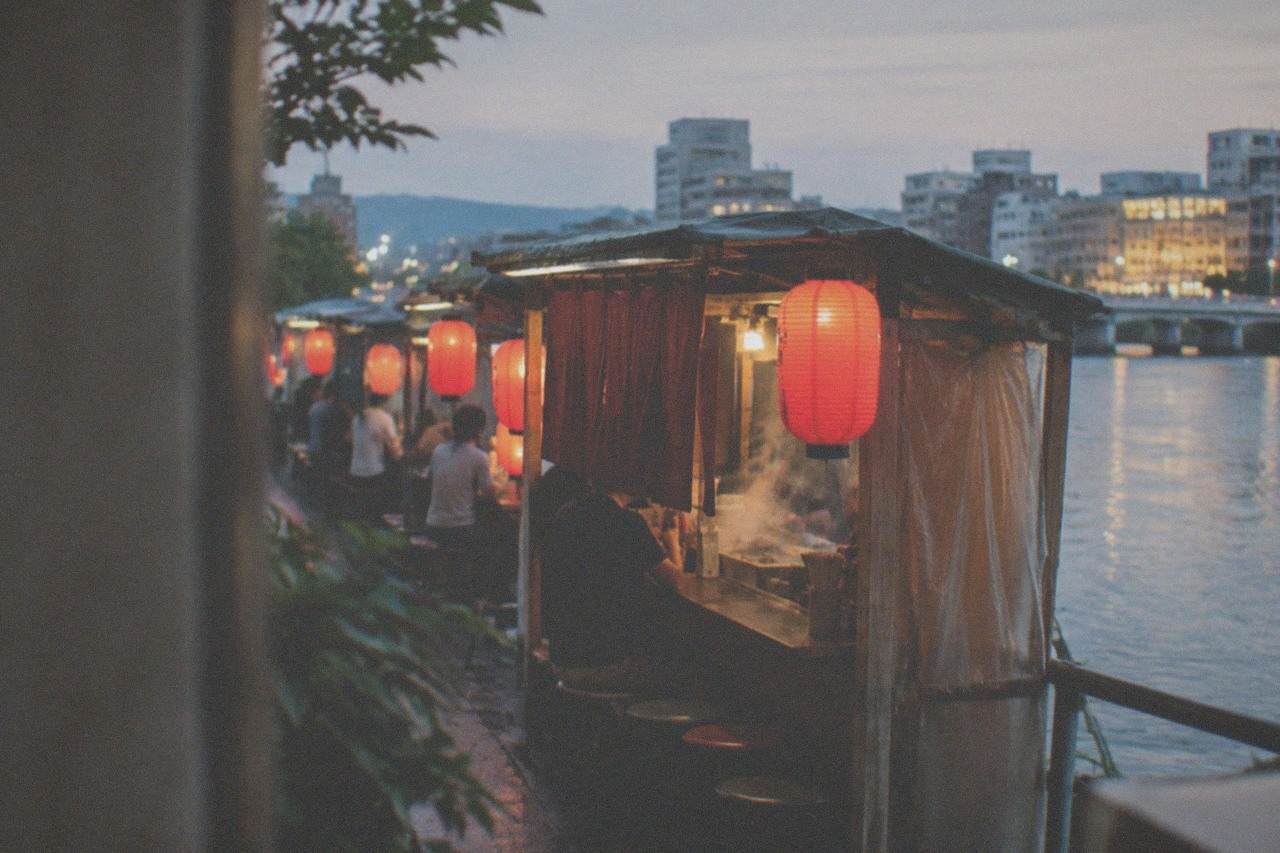
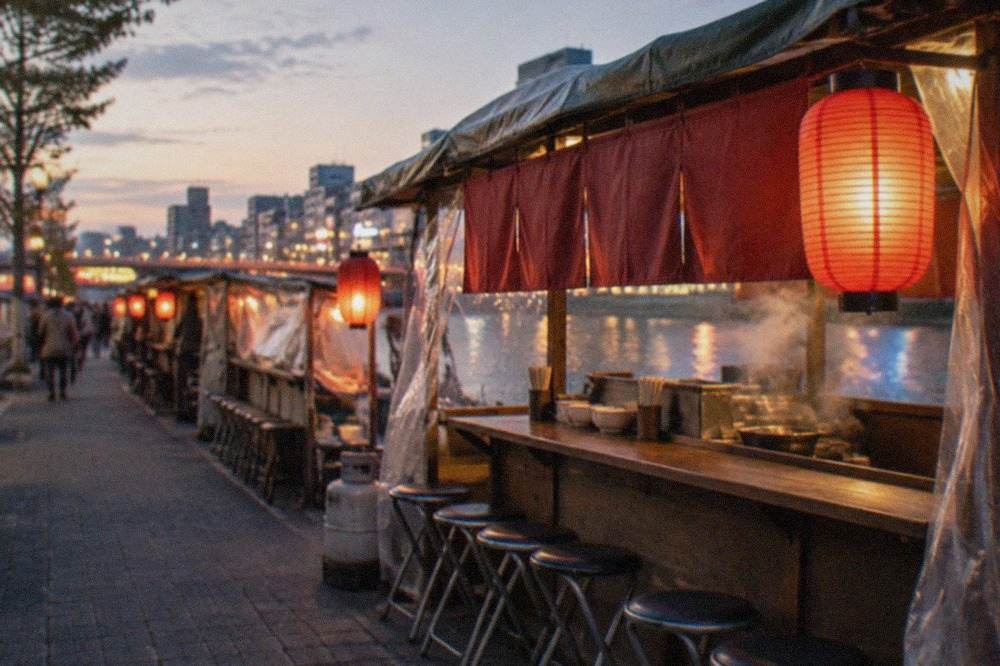
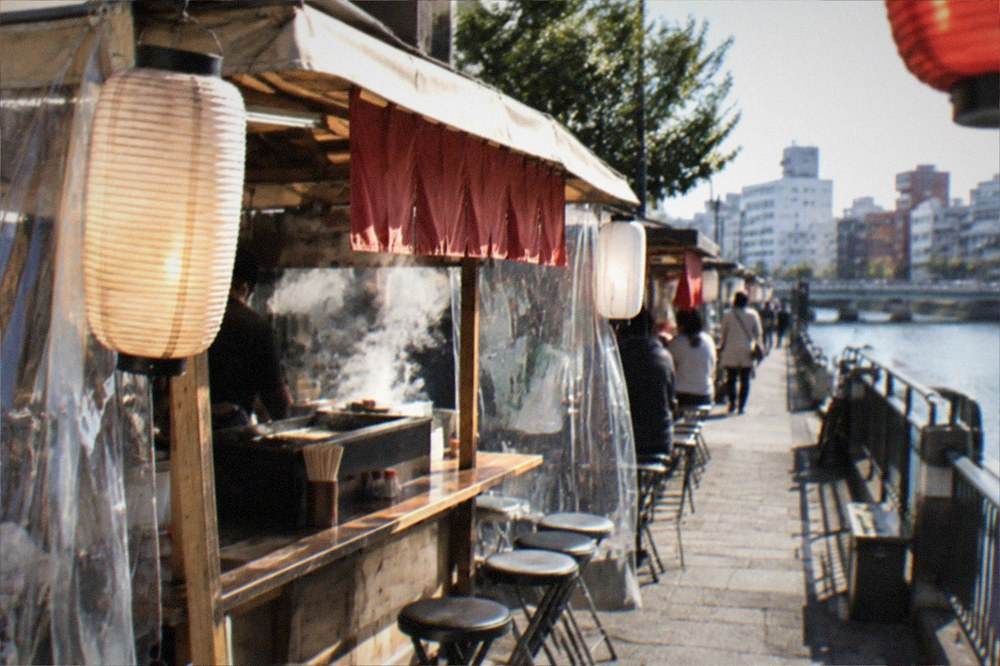
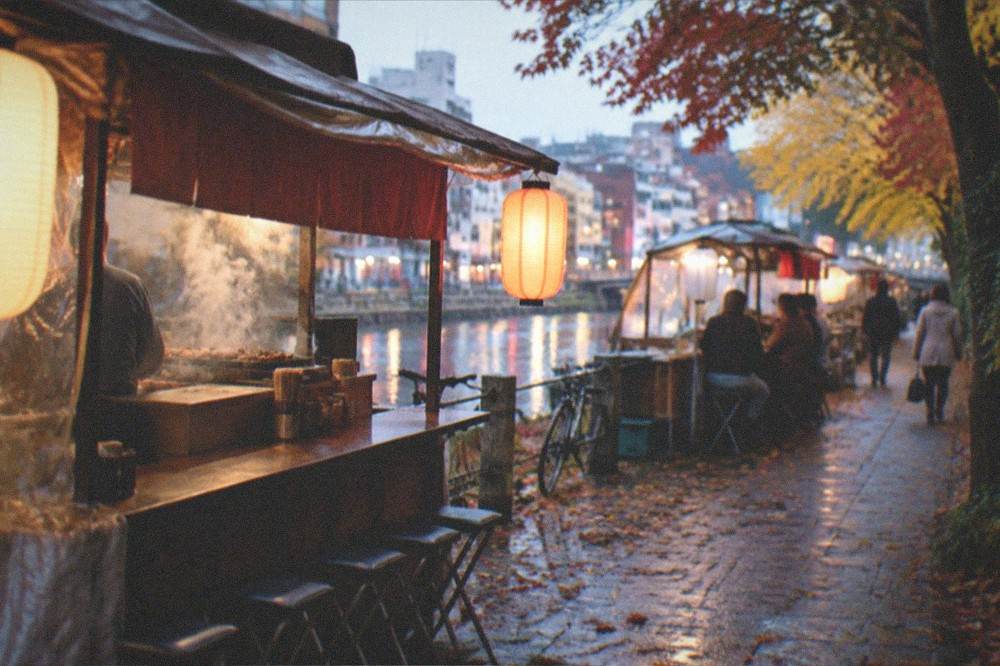
The Nakasu row, strung along the river by Seiryu Park, is the one on every postcard. Lanterns reflect off the water, stalls sit cheek by jowl, and the ratio of visitors to locals runs high, which brings both English menus and slightly slower service. Tenjin's stalls scatter along Watanabe-dori and Showa-dori, where office workers crowd in after the last train is safely caught, and the newer "neo-yatai" style, stalls serving craft beer or oden alongside the classics, appears here more than anywhere. Nagahama, near where the fish market used to sit, is historically the ramen row, the place where tonkotsu broth was boiled to a white thickness and ladled to dock workers.
Fixed street food counters matter too. Yanagibashi market, a ten minute walk from Hakata Station, has a row of counters where you can eat tuna bowls and grilled fish minutes from the stall that sold it. The kawabata shopping arcade, running from Nakasu toward the shrine district, hides gyoza counters and a famous taiyaki shop. Canal City Hakata, the canal-side mall between Tenjin and Hakata, has a ramen concourse on its fifth floor that functions as an indoor street food alley with air conditioning, a real option on a typhoon evening.
| Cluster | Character | Best for | Typical opening |
|---|---|---|---|
| Nakasu riverside | Photogenic, tourist-facing, dense | First yatai visit, photos, groups | Evenings from around 18:00 |
| Tenjin (Watanabe-dori, Showa-dori) | Local, after-work, neo-yatai variety | A second or third stall, craft drinks | Evenings, later crowd |
| Nagahama | Ramen-focused, old-school, local | A serious tonkotsu sitting | Evening into the small hours |
| Kawabata arcade | Fixed counters, covered, retro | Bad weather, daytime grazing | Day and evening |
| Yanagibashi market | Market counters, fresh fish | Lunch or early dinner | Daytime |
Planning the night matters because the stalls do not open until evening. Set-up is permitted from 17:00 under the city's occupancy rules, most stalls light their lanterns around 18:00 or 18:30, and the last ones pack up in the small hours. A street food evening in Fukuoka starts late by most travellers' standards, which is worth knowing before you schedule a 9 p.m. bedtime.
What Is Hakata Ramen and What Makes It Special?
Hakata ramen is the tonkotsu style: a broth boiled from pork bones for hours until it turns opaque and milky, served in thin, straight noodles that cook in seconds, and topped with chashu pork, pickled ginger, sesame and scallion. It was born in Fukuoka, credited to the Nagahama district's ramen stalls, and its noodle portions are deliberately small so the bowl stays hot, which is why the kaedama refill system exists. Order the bowl, then add noodles for a couple of hundred yen when you finish the first serving.
The specialness is engineering. Thin Hakata noodles go soft in a rich broth fast, so shops serve less of them and cook them harder than anywhere else in Japan, and the kaedama refill, a fresh ball of noodles dropped into your remaining broth, keeps every mouthful as springy as the first. Diners customise firmness, "katame" for hard noodles is the local order, and oil level, at many counters before the bowl is built. The full history, the shops worth queuing for and the etiquette of ordering are covered in the dedicated Hakata ramen guide, and the question "What Is Hakata Ramen And What Makes It Special?" has its own answer page for readers who want the short version.
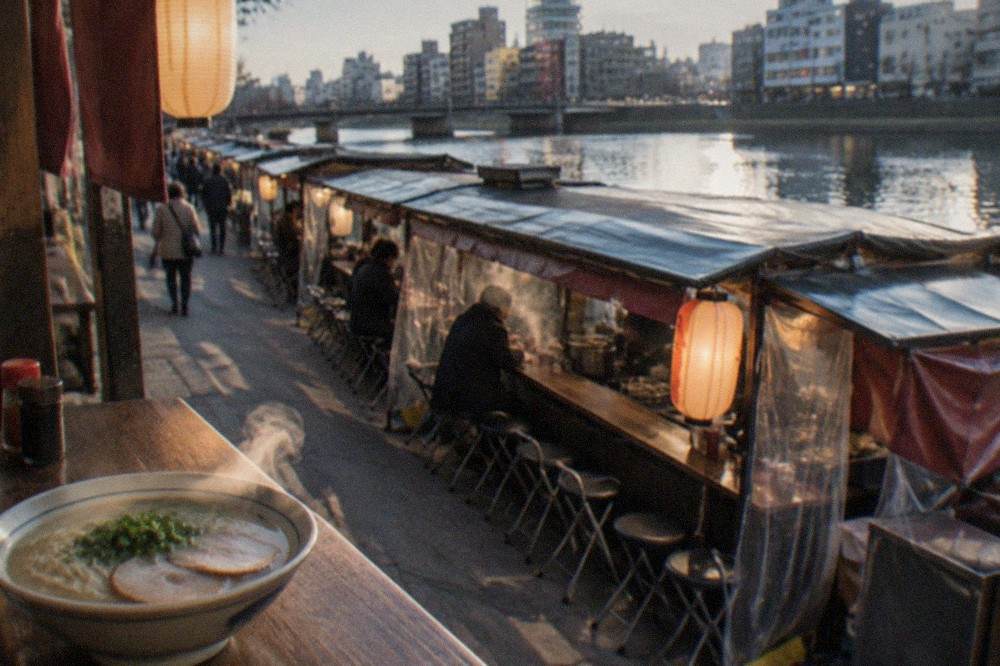
What the street adds is the setting. At a Nagahama stall or a counter off the arcade, the broth is boiled metres from your seat, the master asks your noodle preference before you have sat down, and the kaedama call is shouted rather than typed into a tablet. Fukuoka's ramen culture also stretches far beyond the city: Kyushu as a region has its own ramen map, from Kumamoto's garlic-heavy tonkotsu to Kagoshima's lighter blended broths, and that regional story is worth planning a trip around.
A guided stall visit is one way to shortcut the ordering barrier, but the ramen counters themselves need no help: most take walk-ins, most have picture menus, and the kaedama system needs one learned word.
How Do the Yatai Food Stalls Actually Work?
A yatai is a licensed mobile kitchen, limited by city rules to around seven customers at a time, and you cannot book one: they take walk-ins, you queue or move on, and the honest times are early, before 20:00, or late, after 22:00. Every licensed stall must post its prices visibly, a rule enforced by a city ordinance that bans "market price" charges entirely, so the tourist-trap warnings that fill other guides do not apply here. Cash is the safe assumption.
The mechanics are simpler than the mythology. Seats are stools around a counter, elbow to elbow with strangers, and the etiquette is short: order when the master nods at you, eat and then leave, since a queue may be standing behind you, and keep conversation with strangers light. The full manners, from the seat you should take to whether you may photograph the food, are laid out in the yatai etiquette guide, and the wider culture of the stalls, including the recruitment system that keeps their numbers steady, is in the Fukuoka yatai guide.
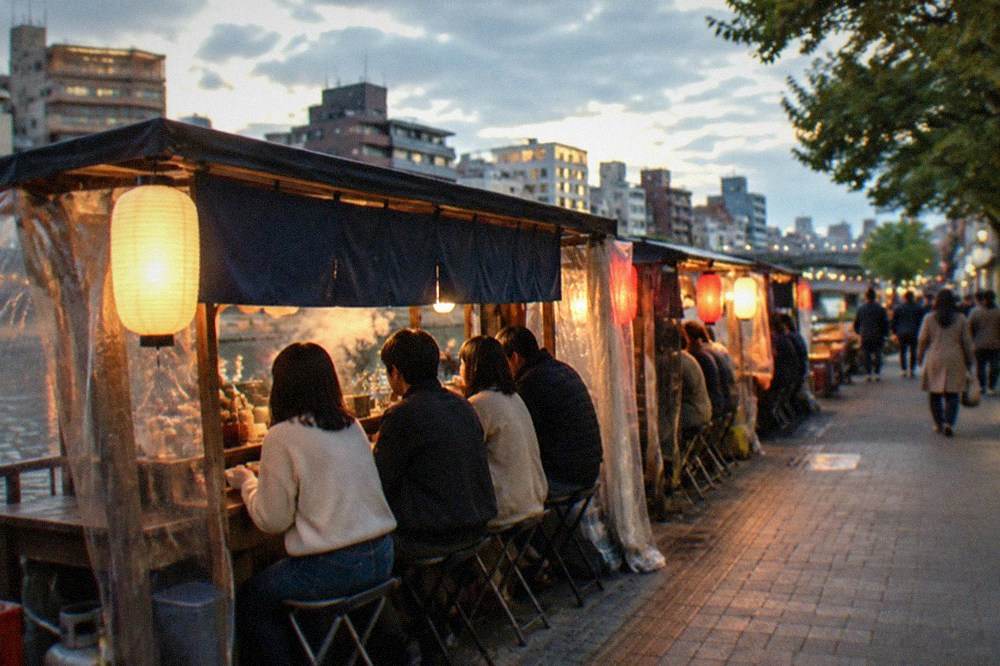
The price-posting rule deserves its own paragraph, because it reverses the advice in nearly every competing guide. The Fukuoka City yatai rules require every licensed stall to display prices where customers can see them, and any dish that varies with the market must show that day's actual figure, not the word "market price". City inspectors check periodically. A traveller at a licensed stall can therefore read the cost of the meal before sitting down, which is more price transparency than most restaurants anywhere offer.
Weather closes stalls, and there is no city-mandated weekly closing day. Rain and strong wind take a large share of the stalls offline for the night, since the kitchens sit open to the street, and each operator decides independently when to open and when to pack up. If a yatai evening is the centrepiece of your trip, keep a covered backup, the Canal City ramen concourse or the arcade counters, in your pocket.
The walk-in rule is absolute, and worth repeating plainly: nobody needs a reservation to eat at a yatai. Only guided crawls, where a local walks a small group from stall to stall and handles the ordering, are sold as bookable products, and this site's roster carries three of them.
What Should You Eat Beyond Ramen?
The must-try list runs mentaiko, the spicy or plain pollock roe Fukuoka consumes more of than anywhere, hitokuchi gyoza, the tiny five-yen-coin dumplings served at hole-in-the-wall counters, motsunabe offal hot pot at sit-down stalls, grilled squid and skewers, taiyaki pastries, and goma-saba, mackerel cured in sesame, at standing sushi bars. Most of these exist as counter food rather than true street-side takeaway, and several have dedicated guide pages on this site with shop-by-shop detail.
Mentaiko is the one that surprises visitors most. It looks like an unlikely souvenir, balls of pollock roe marinated in chilli and yuzu, but it is Fukuoka's most exported food after the ramen, sold by weight in market counters and eaten on rice, in onigiri or as a topping inside the city's own udon bowls. The local udon style, which is startlingly soft noodles in a clear, gentle dashi, is covered elsewhere on this site, and the mentaiko page explains the grading if you want to buy some home. Goma-saba, raw mackerel cured in sesame and soy, is the standing-bar classic, and the goma-saba guide lists the counters near Hakata Station famous for it.
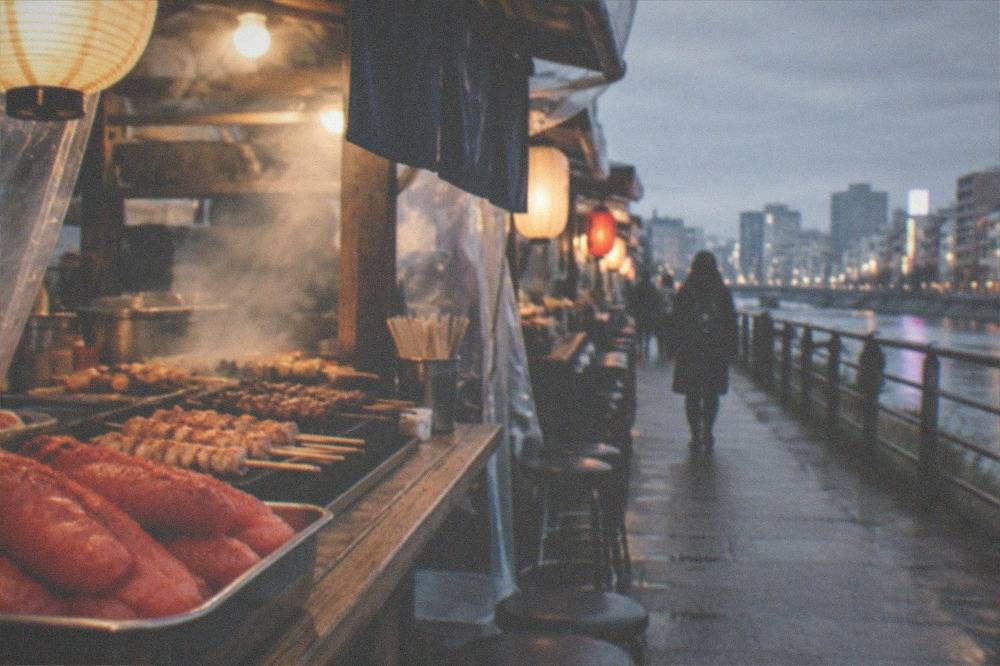
Hitokuchi gyoza, "one-bite dumplings", are the grazing food of the arcade lanes: tiny, five to a plate, fried crisp and priced so low that a plate of them plus a beer is a legitimate dinner course. Motsunabe, beef or pork offal hot pot with cabbage and garlic, is Fukuoka's other signature dish and is usually a seated, shared affair rather than street food, but some yatai serve a grilled skewer version of the same cuts. The motsunabe guide explains the whole category, and the counter manners are the same ones the etiquette page covers for the stalls.
| Dish | What it is | Where to find it | Difficulty for a first-timer |
|---|---|---|---|
| Tonkotsu ramen | Boiled pork bone broth, thin noodles | Nagahama stalls, station counters, ramen concourse | Easy, picture menus |
| Mentaiko | Marinated pollock roe | Market counters, souvenir shops, udon toppings | Easy, sold by weight |
| Hitokuchi gyoza | Tiny one-bite fried dumplings | Kawabata arcade counters | Easy, point and pay |
| Goma-saba | Sesame-cured raw mackerel | Standing sushi bars near Hakata Station | Moderate, menu reading helps |
| Yaki-tori / skewers | Grilled chicken skewers | Yatai stalls in all three clusters | Easy |
| Taiyaki | Fish-shaped filled pastry | Arcade sweet shops, day stalls | Easy |
Vegetarian and halal travellers have thinner options at the stalls but not none, and the site's vegetarian and vegan guide and halal food guide list the counters that work. Fish-free and meat-free eaters will find udon shops the easiest entry point, since the local broth is dashi-based rather than pork-based.
Which Street Food Neighbourhood Fits Your Evening?
Choose Nakasu for the photogenic riverside row and the highest density of stalls within 200 metres, Tenjin for a local after-work crowd and the widest variety including newer stall concepts, and Nagahama for the historic tonkotsu experience. Base the decision on where you are staying and how late you eat: stalls near Hakata Station suit a 20:00 dinner, Tenjin suits a post-drink 23:00 bowl, and Nakasu bridges both, being a short walk from either.
The clusters are not interchangeable, and treating them as one big "yatai area" is the common planning mistake. Nakasu sits between Tenjin and Hakata Station on the Naka River, walkable from both, and the stalls there run the most tourist-friendly menus with English and picture ordering common. Tenjin's scattered stalls reward the walker willing to leave the river: one or two on each street, each with its own regulars, and the neo-yatai style appears here, stalls run by younger operators pouring craft beer next to the yakitori grill. Nagahama's ramen identity is the deepest of the three, and a visitor with one serious tonkotsu ambition should aim there first.
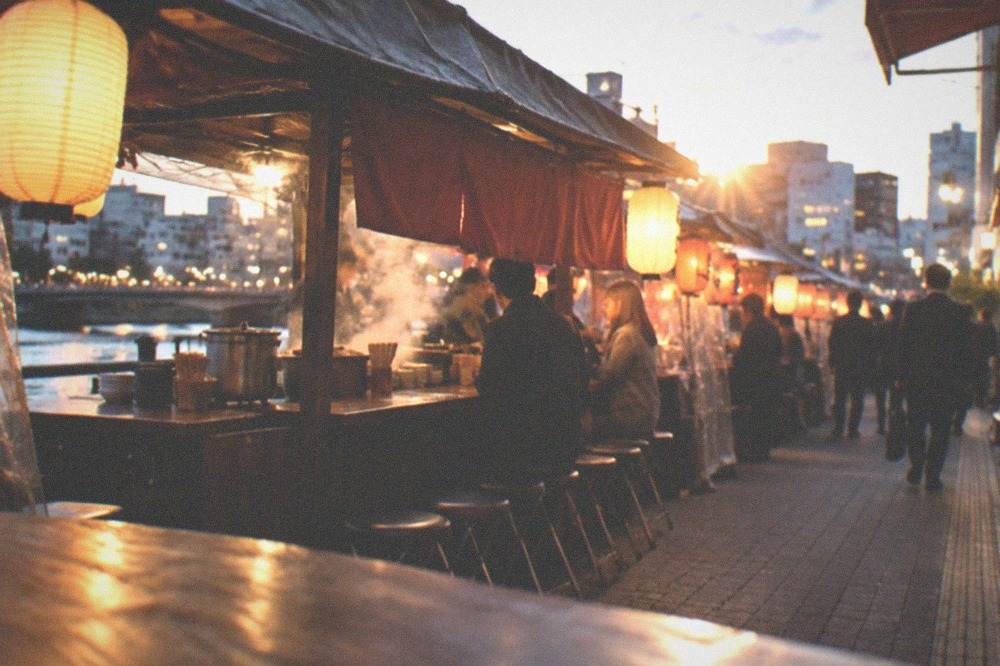
Rainy evenings shift the map. The stalls fold in bad weather, but the arcades and market counters stay open, which makes the rainy day itinerary the natural companion for a wet season trip. And if the whole evening is shaped around food rather than sights, the food crawl itinerary sequences a realistic route through these neighbourhoods in one night.
Getting between them is trivial: the subway fare between any two city centre stations falls in the lowest fare bands, a single ride from ¥210 up to ¥300 for most cross-town hops, and the flat city centre bus fare covers the same ground. A 2-day plan that builds in one street food evening is sketched in the two day itinerary, with the stalls anchored on the second night.
An evening tour that strings stalls, izakaya and karaoke together suits travellers who want the night handled end to end rather than self-navigated, and it removes the language friction at three different counters in a row.
Do You Need a Guided Street Food Tour?
No, you do not need a guided tour to eat street food in Fukuoka: the stalls take walk-ins, the prices are posted by law, and picture menus carry most transactions. A guided walk earns its price when it buys access, ordering help, or stalls you would not find alone. This site's roster carries yatai-focused products plus wider food tours, from a private Nakasu stall walk with tastings at $94 per person, rated 4.7 from 70 reviews, to an evening tour from $99.
The private Nakasu walk, Fukuoka: Nakasu Food Stall Private Guided Tour with Tastings, is the one this guide recommends most often to first-time visitors, because it pairs the photogenic riverside row with someone who can read the menus, translate the master's questions and explain what is in front of you. It runs about two hours. The wider food tour options are compared in their own guide, including the cooking class alternatives for travellers who would rather make the food than order it.
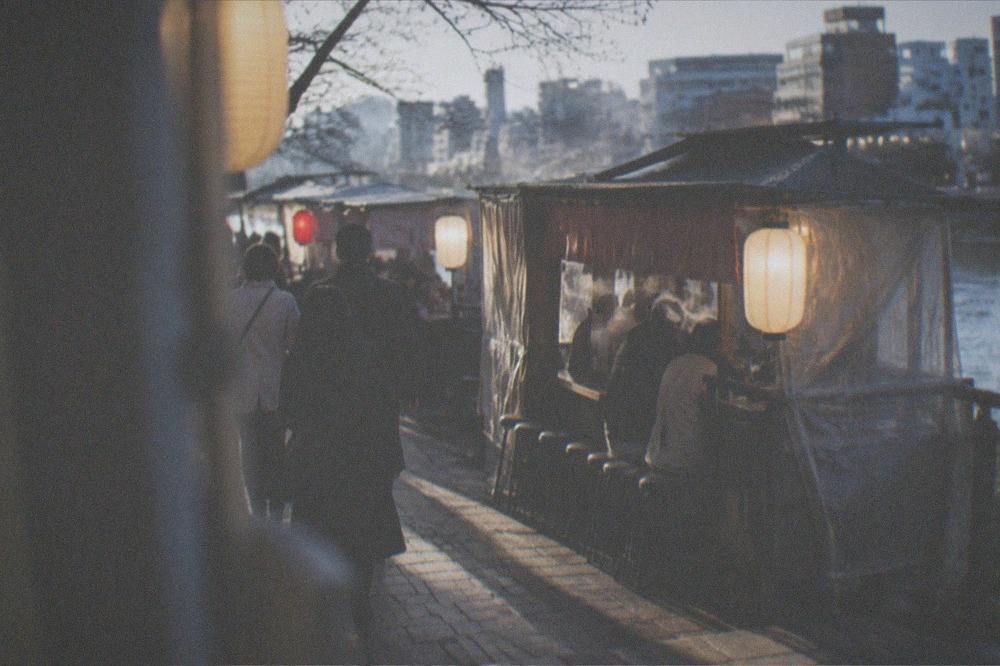
Honest framing matters here, and this site holds to it: a tour is a convenience, not a requirement. The stall culture was built for walk-ins, and the price-posting ordinance makes independent eating safer here than in most street food cities on earth. What a guide genuinely adds is context, the history of the stall you are sitting at, the reason the broth in this district is richer than the one across town, and the confidence to order the thing that is not on the picture menu.
For travellers whose food curiosity stretches past the city, a tea and sake tasting expedition into Yame, a nine hour day from $82 per person rated 4.9 from 43 reviews, turns the tasting habit into a full countryside day.
How Much Does Street Food in Fukuoka Cost?
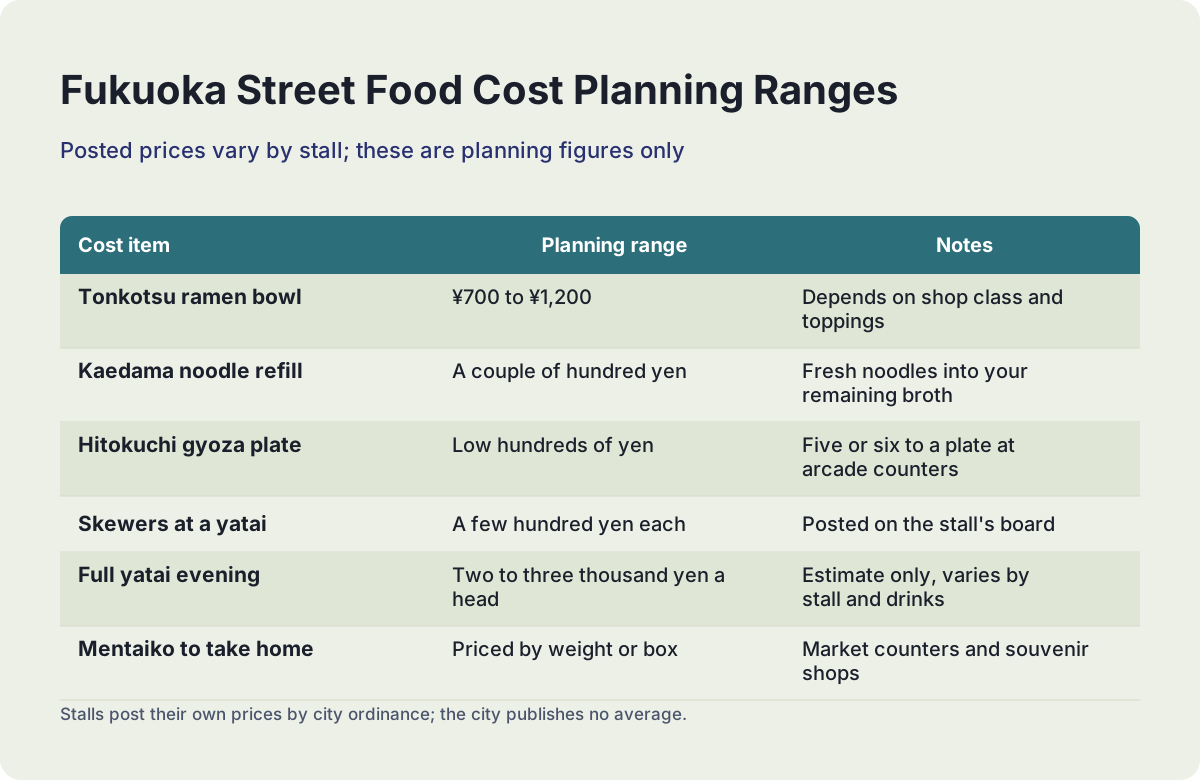
Budget a ramen bowl at ¥700 to ¥1,200 at the counter styles most visitors use, gyoza plates and skewers in the low hundreds of yen each, and a yatai evening with a few dishes and drinks at roughly two to three thousand yen a head. The city publishes no average and stalls post their own prices by law, so treat every figure here as a planning range and read the board, which the ordinance requires each licensed stall to keep visible.
The per-dish structure is what keeps the evening affordable. A bowl of tonkotsu, a plate of one-bite gyoza, a couple of skewers and a beer is a full dinner across two or three stops, and the kaedama noodle refill, the system that defines Hakata ramen, adds a fresh serving of noodles to your existing broth for a couple of hundred yen. Fixed counters and market stalls price by the item, mentaiko by weight, taiyaki by the piece, and the souvenir-grade mentaiko packs are priced by the box on the shelf.
| Cost item | Planning range | Notes |
|---|---|---|
| Tonkotsu ramen bowl | ¥700 to ¥1,200 | Depends on shop class and toppings |
| Kaedama noodle refill | A couple of hundred yen | Fresh noodles into your remaining broth |
| Hitokuchi gyoza plate | Low hundreds of yen | Five or six to a plate at arcade counters |
| Skewers at a yatai | A few hundred yen each | Posted on the stall's board |
| Full yatai evening | Two to three thousand yen a head | Estimate only, varies by stall and drinks |
| Mentaiko to take home | Priced by weight or box | Market counters and souvenir shops |
Money mechanics: carry cash. The subway ride that connects the food districts is cash or IC card, the fare between the airport and Hakata Station is ¥260, and the airport itself, covered in the Fukuoka Airport guide, is unusually close to the centre, which puts you within a short subway hop of the stalls on arrival night. The airport-to-city transfer options are laid out in the airport to city guide, and they matter mostly on the first evening, when hunger and luggage arrive together.
When Is the Best Time for Street Food in Fukuoka?
Stalls open from around 18:00 and run into the small hours, so street food in Fukuoka is an evening activity by nature, with the best crowd balance either side of 20:00. Seasonally, nothing is off limits: July is statistically the wettest month at 299.1 mm against June's 249.6 mm, which catches planners who assume the rainy-season month is the wet one, and typhoon season runs roughly July to October, so keep a covered backup.
The July figure deserves a second reading. The Japan Meteorological Agency's 1991 to 2020 climate normals put July rainfall in Fukuoka at 299.1 mm and June at 249.6 mm, even though June is the tsuyu rainy season, and July is also the month of the city's biggest festival, Hakata Gion Yamakasa, whose floats are hauled through the streets from July 1 to 15. A traveller picking June as "the rainy month to avoid" and July as safe is working from the wrong assumption, and the month-by-month detail sits in the site's weather and seasonal pages.
Within a single evening, timing changes the experience more than season does. Before 20:00 the stalls are quieter, seats are available and the masters have time to talk, even with limited shared language. Between 21:00 and midnight the crowds peak, queues form at the best-known stalls, and the noise and steam are at their height. After midnight, the serious regulars have the stools, and the last bowls of the night are served to people who know the menu by heart. Arriving hungry at 18:30 or settling in at 22:00 are both good plans; 19:30 on a Friday is the one window to be sceptical about.
What to Pack for a Street Food Evening
Bring cash in small notes, an IC card or coins for the subway, and nothing sharp, tall or bulky: stall seats are tight, elbows touch strangers, and a large backpack makes you the least popular person on the stool. A phone with a translation app and a photo menu solves most ordering friction, and a pocket tissue pack covers the paper-thin napkin economy of the stalls. Umbrellas are worth carrying from June through October, given the rainfall figures above.
The practical list is short, and the site's full packing guide covers the trip-level version. Cash remains the headline item: even as QR and card payments spread through the stall economy, a wallet of ¥1,000 notes and coins moves you through every counter in the city without a question. Small shoes-off moments are rare at yatai, common at sit-down izakaya, so slip-on shoes quietly earn their place.
The morning after a stall evening is a Fukuoka institution in itself, and the breakfast guide and coffee and cafe guide sequence the recovery: a morning set at a kissaten or a bakery counter in the arcade, both of which open before most of the stall masters have finished cleaning their grills. Finishing a street food trip is also the moment to compare notes honestly, and a budget plan that prices stalls alongside everything else will usually show the eating is the cheapest good part of the week.
Between the three options above, the private stall walk is the closest fit for this page, the doll painting session is the rainy-evening alternative, and the bike ride covers the daytime half of the same city. All three take bookings with free cancellation.
Common Questions About Fukuoka Street Food
What Is Hakata Ramen And What Makes It Special?
Hakata ramen is the tonkotsu style born in Fukuoka: pork bones boiled for hours into a rich, opaque broth, thin straight noodles cooked firm, and small bowls by design so the noodles stay hot, with the kaedama refill system adding fresh noodles to your remaining broth for a couple of hundred yen. It is special because the whole format, the noodle gauge, the firmness ordering, the refill, was engineered around that one broth.
Can you book a yatai food stall in Fukuoka?
No. The stalls take walk-ins only, there is no reservation system, and only guided yatai crawls, where a local leads a small group, are sold as bookable products. Turn up, queue briefly or move to the next stall.
Do I need cash at Fukuoka food stalls?
Carry cash as the default. Some stalls now accept cards, QR or IC payments, but acceptance varies stall to stall and cash works everywhere. Small notes are easier for the low per-dish prices.
Will I get ripped off at a yatai stall?
The Fukuoka City Yatai Basic Ordinance bans "market price" charging: every licensed stall must post each dish's actual price where customers can easily see it, any market-variable dish must show that day's real figure, and city inspectors check periodically. You can read the full cost of your meal before you sit down.
What time do the food stalls open?
Road occupancy runs from 17:00, most stalls light up around 18:00 to 18:30, and the last ones pack up in the small hours. There is no city-mandated closing day, and stalls close for rain, strong wind, or at the operator's discretion.
Is Fukuoka the best city in Japan for street food?
By the yatai count, it leads the country: about 100 licensed stalls, more than any other Japanese city, concentrated in Nakasu, Tenjin and Nagahama. It also invented tonkotsu ramen. Whether the food is "the best" is a matter of taste, but the infrastructure for eating on the street is unmatched in Japan.