Saga Day Trip
Saga Prefecture begins almost where Fukuoka ends, a short ride west of Hakata Station on the Genkai Sea side of Kyushu, and most visitors from Fukuoka arrive for the porcelain towns, the ruins and the hot springs without ever needing an overnight bag.
Short answer
Saga sits directly west of Fukuoka, reached by JR train from Hakata Station or by highway bus, with a subway ride to Hakata costing between ¥210 and ¥380 depending on distance. One day covers one corner well: Arita and Imari for porcelain, Yoshinogari for archaeology, or Takeo and Ureshino for hot springs. Multi-stop guided day tours from Fukuoka run from $48 per person.
Fukuoka Prefecture and Saga Prefecture share a land border and a coastline, and the two are close enough that a day trip across it barely registers as travel. The catch is that Saga rewards planning more than most neighbouring prefectures: its headline attractions, the porcelain towns of Arita and Imari, the Yoshinogari archaeological site, the onsen resorts of Takeo and Ureshino, sit on different rail branches, and trying to see all of them in one day is how people end up seeing none of them properly. This guide sets out what a realistic Saga day trip from Fukuoka looks like, how the transport works, and where a guided tour earns its fee.
One framing note before anything else: Hakata and Fukuoka are the same city. Hakata is the ward and the station name, Fukuoka is the city, so every departure in this guide leaves from Hakata Station. There is no JR Fukuoka Station; if a timetable or ticket site asks where you are starting from in this city, the answer is Hakata.
What Makes Saga Worth a Day Trip from Fukuoka?
Saga is Japan's quiet ceramics and onsen prefecture, wrapped around farmland a short ride west of Fukuoka, and its three signature draws, porcelain, archaeology and hot springs, are things Fukuoka itself cannot match. Arita and Imari produced Japan's first porcelain and still work it today, Yoshinogari holds a reconstructed Yayoi-period settlement, and Takeo and Ureshino are onsen towns with centuries of bathing behind them. It is a low-key, low-cost, low-crowd alternative to the better-known day trips east and south.
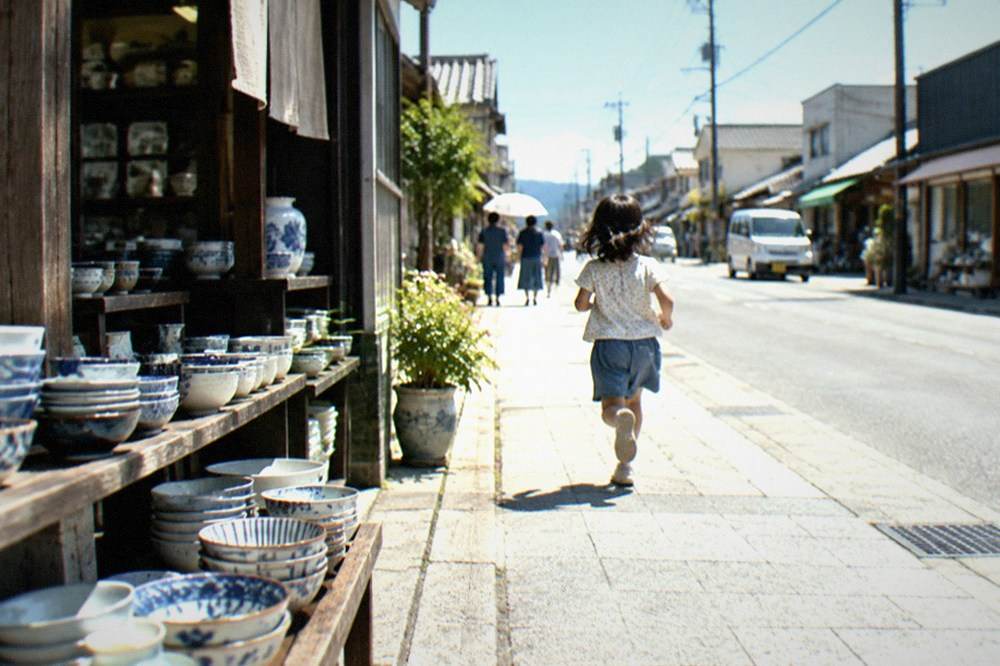
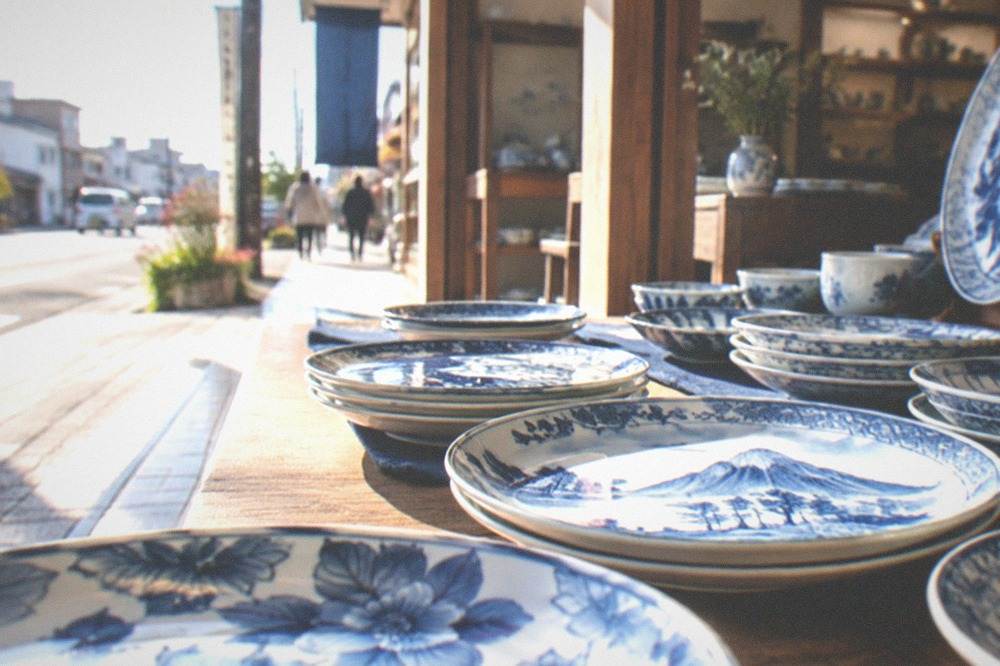
The porcelain story is the one most visitors come for. Porcelain firing began in the Arita area in the early 17th century, after kaolin deposits were found in the local Izumi mountain, and the kilns of Arita and the port of Imari together supplied both domestic ware and a substantial export trade to Europe. The evidence is everywhere in the two towns: working kilns, painter studios, museum collections and streets of ceramics shops. The Kyushu Ceramic Museum in Arita holds a serious permanent collection, and the town's kiln sites and historic shrines tied to the pottery families sit within walking or short-bus distance of the station area.
Yoshinogari is the second reason people cross the border. The site, in the hills of the Kanzaki area, preserves and reconstructs a large moated Yayoi-period village, with raised-floor storehouses, burial mounds and watchtowers rebuilt on their original footprints. For travellers whose image of Japan starts with castles and temples, it is a useful corrective: this is a functioning settlement site from a period more than two thousand years back, and the scale surprises people.
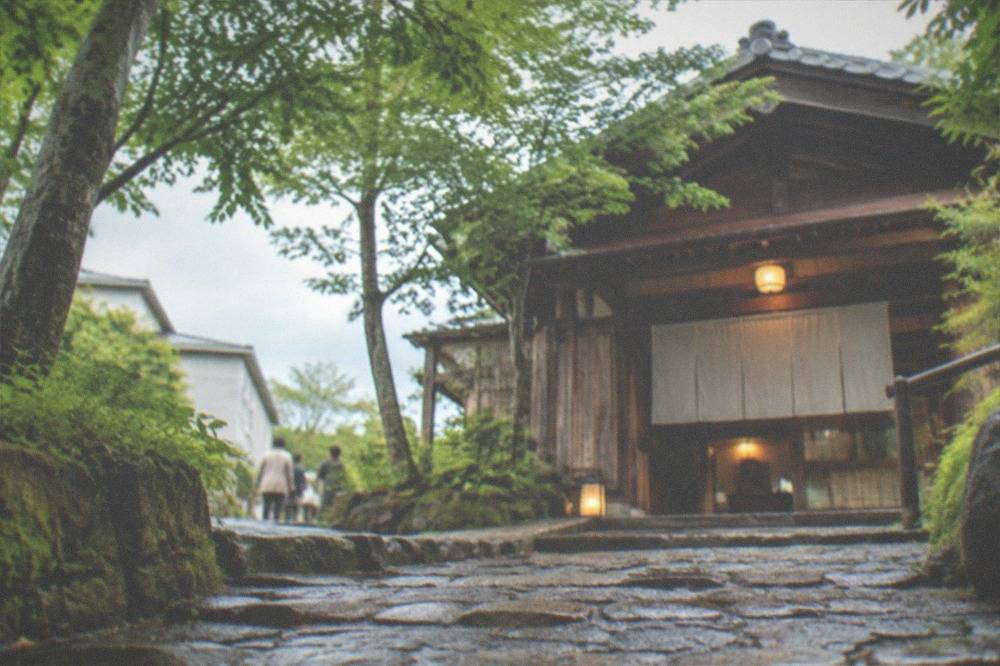
Third, the onsen. Takeo Onsen is one of Kyushu's older hot spring resorts and is known for its soft, skin-friendly water, while Ureshino, further south, is famous for its smooth, milky baths that local tradition credits with skin benefits. Neither is a splurge destination. Both are small, walkable towns where a bathing stop slots neatly into the middle or end of a day trip. If you are mapping the wider region, our day trips from Fukuoka overview places Saga alongside its neighbours, and the Kitakyushu day trip covers the other direction along the coast.
How Do You Get to Saga from Fukuoka?
Trains from Hakata Station are the standard way in: JR limited express services run directly to Saga Station and onward toward Arita, Imari and Takeo, while slower local trains cost less and stop more often. Highway buses link Fukuoka with Saga City, and a rental car is the honest answer for anyone stitching together Arita, Yoshinogari and an onsen town in a single day, because the branch lines between them are thin.
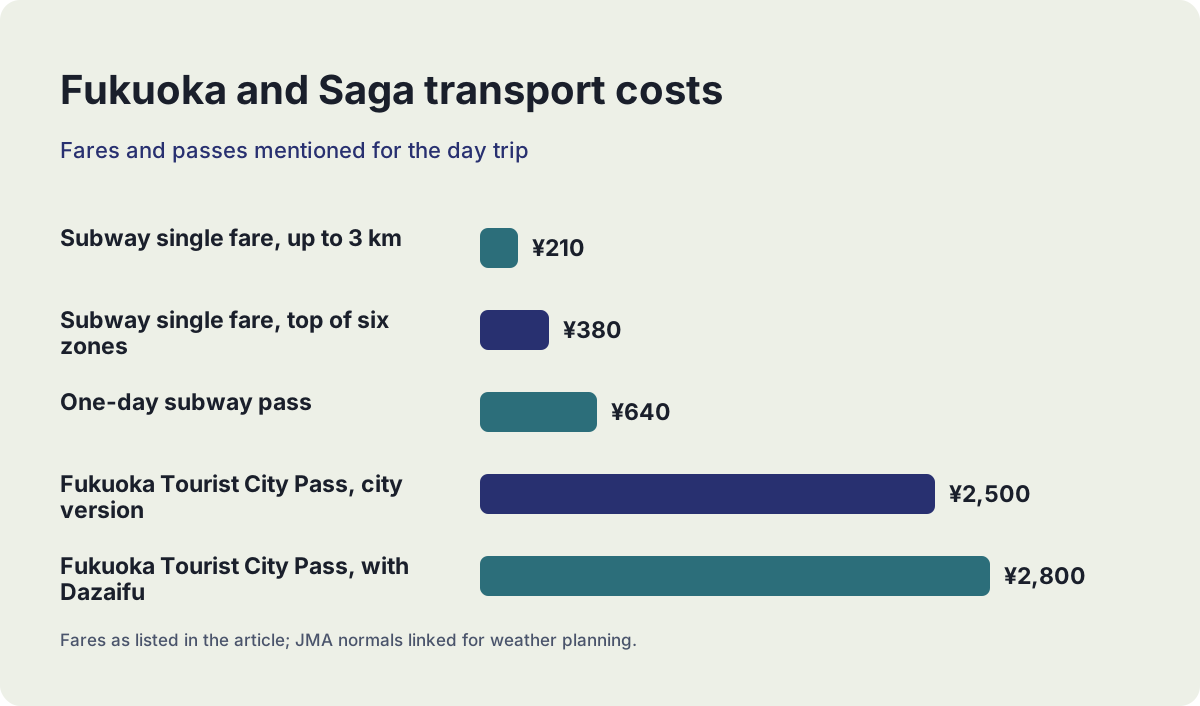
Reaching Hakata Station itself from a hotel in Tenjin, Nakasu or elsewhere in the city centre is a short subway ride: Fukuoka City Subway single fares run from ¥210 for trips up to 3 km up to ¥380 at the top of the six-zone distance table, and a one-day subway pass costs ¥640 if you are moving around the city before or after the trip. From Hakata, the JR Kyushu network handles everything east of the border. The two-seat option is the Nishitetsu network from Tenjin, which serves its own western branch, though the porcelain and onsen towns sit on JR lines rather than Nishitetsu ones.
| Option | Board at | Best for | What to know |
|---|---|---|---|
| JR limited express | Hakata Station | Fastest base for Saga City, Arita, Takeo | Reserved seats; the comfortable choice for a tight day |
| JR local / rapid trains | Hakata Station | Budget travel, short hops between Saga towns | More stops, more time, no reservation needed |
| Highway bus | Hakata Bus Terminal or Tenjin | Saga City and major towns without rail detours | Cheaper than express trains, road-dependent |
| Rental car | Central Fukuoka pick-up | Arita plus Yoshinogari plus an onsen in one day | Rural bus frequencies are the reason to consider it |
| Guided day tour | Hotel or station pick-up | First visits, multi-stop ambition, zero planning | See the tour section below |
Two passes deserve a mention because the marketing around them is misleading for Saga specifically. The Fukuoka Tourist City Pass, at ¥2,500 for the city version and ¥2,800 with Dazaifu included, with a passport check at the counter, covers transport inside Fukuoka City and to Dazaifu, not the run into Saga; it is a city pass, and Saga is outside it. JR Kyushu's own regional rail pass is a different animal and its official rail pass page sets out the current terms; whether it pays off for a single Saga day is doubtful, since a pass only earns its price across multiple long rides. Check live fares and timetables on the operator pages before committing to either, because fares have been revised in recent years.
Weather is the one thing that can genuinely disrupt the plan. Typhoon season runs roughly July through October across western Japan and Kyushu, and the June tsuyu rainy season brings steady rain to the region. Neither makes Saga unvisitable, but rural bus services and onsen towns lose much of their charm in heavy rain, so a wet forecast is a fair reason to keep the trip flexible or pick a museums-and-kilns day over an outdoor ruins day. Our Fukuoka rainy day itinerary is a decent template if the forecast forces a change of plan.
What Are the Best Stops on a Saga Day Trip?
Choose one anchor and one or two satellites. Arita is the strongest single anchor: kilns, the Kyushu Ceramic Museum, painter studios and shopping streets all cluster near the station area. Pair it with Imari for the historic port and kilns, or with Takeo Onsen for a bath before the ride back. Yoshinogari works as an anchor for history-minded travellers, and Ureshino as a half-day bathing stop. Attempting all of these in one day is the classic mistake.
| Stop | Known for | Best for | Realistic time |
|---|---|---|---|
| Arita | Porcelain town, museum, kilns and studios | Shoppers, craft lovers, first visits | Half day |
| Imari | Historic port town of the porcelain trade, old kiln sites | A second stop after Arita | Two to three hours |
| Yoshinogari | Reconstructed Yayoi-period moated village | Families, history, wide outdoor space | Two to three hours |
| Takeo Onsen | Old onsen resort town, baths, gardens | A bathing stop mid-route | Two hours plus bath time |
| Ureshino | Milky onsen water, tea fields nearby | Onsen-focused trips | Half day |
| Saga City | Prefectural capital, castle ruins, comfort stop | Lunch, museum, logistics | One to two hours |
Arita deserves the half-day it asks for. The town's spring porcelain festival is its biggest event of the year, but on an ordinary day the Kyushu Ceramic Museum, the shrines tied to the pottery families and the studio shops fill the hours without effort. Imari, further along the line, was the port through which the ware shipped and gives the story its commercial half; its old town and kiln-related sites are quieter and reward a slower walk. The pairing of Arita and Imari is the natural ceramics day.
Yoshinogari sits on the Nagasaki line branch from Saga City and is a different mood entirely: open ground, reconstructed timber structures, and museum displays explaining what the Yayoi period was. It suits families unusually well, because children can burn energy on the paths while adults read the signage. Takeo Onsen, on the same western corridor as Arita, is the classic pairing for a bath, and its town onsen and garden make an unhurried late afternoon. Karatsu, on the coast, technically also sits inside Saga Prefecture, and it is covered in full in its own Karatsu day trip guide, including the castle and the beach; it is a coastal alternative to the inland route described here.
For a sense of how Saga fits into the bigger regional picture, the Kumamoto day trip and Yufuin day trip guides cover the two most popular full-day excursions south of Fukuoka, and both are heavier days than anything in Saga. That is precisely the appeal. A Saga day can be bent to your energy level in a way the big-name destinations cannot.
How Long Should You Spend in Saga?
One well-shaped day is enough for one corner of Saga, and two days are needed only if you insist on pairing ceramics with deep onsen time. A single day covers Arita plus Imari, or Yoshinogari plus Ureshino, or Arita plus Takeo, at a comfortable pace. Attempting the porcelain towns, the ruins and an onsen in the same day produces a trip made entirely of transitions. Travellers with a second day should overnight at Takeo or Ureshino and slow the whole thing down.
The arithmetic behind that advice is rural transit. The towns sit on separate JR branches radiating from Saga City, and the frequencies between them are thinner than anything a visitor from Tokyo or Osaka would expect from a train timetable. Each transfer costs more waiting than riding, so a day with two transfers spends much of its afternoon on platforms. A rental car or a guided tour compresses the same geography considerably, which is why both appear repeatedly in this guide.
Solo travellers and pairs get the most out of a one-day format, because the flexibility is what makes it work: you leave Arita when the shops close rather than when a bus leaves, and you extend the bath for as long as it feels good. Families with younger children will find Yoshinogari the most forgiving stop, since it is open ground with covered rest areas, while the ceramics towns are more constrained. If your trip to the region is short overall, the honest comparison is one day in Saga versus a second day inside Fukuoka City itself, and the Fukuoka 2-day itinerary shows exactly what that competing day looks like.
What Does a One-Day Saga Itinerary Look Like?
A proven single-day shape is the western ceramics and onsen route: leave Hakata in the morning, spend the late morning and early afternoon in Arita, ride on to Takeo Onsen for a bath in the late afternoon, and return to Hakata in the evening. It uses one rail corridor, has one transfer at most, and ends the day with a soak instead of a scramble. The alternative Yoshinogari day goes out and back on the southern corridor with a stop in Saga City for lunch.
| Time of day | Stop | What you do there |
|---|---|---|
| Early morning | Hakata Station | Coffee, ticket or pass sorted, express train west |
| Late morning | Arita | Museum, kiln sites, studio shopping |
| Midday | Arita or en route | Lunch in the station area or a local shop |
| Early afternoon | Transfer toward Takeo | Short ride, keep it simple |
| Late afternoon | Takeo Onsen | Bath, garden, a walk through the old town |
| Evening | Return to Hakata | Dinner back in Fukuoka, or a yatai stall |
The beauty of this shape is that it degrades gracefully. If Arita holds your attention, you skip Takeo and stay for the afternoon studios; if the weather turns, the museum and the bath are both indoor hours. Booking nothing in advance except the train seat keeps every option open, and the plan needs no car. Evening back in Fukuoka lands you in a city with about 100 licensed yatai food stalls, where a bowl of tonkotsu ramen at a counter is the standard close to a long day; the stalls take walk-ins and cannot be booked, and by city ordinance every one of them must post its prices where customers can see them, so a late dinner needs no planning either. Other pages covering the same trip are gathered on Fukuoka Japan Travel Guide.
When Is the Best Time of Year for a Saga Day Trip?
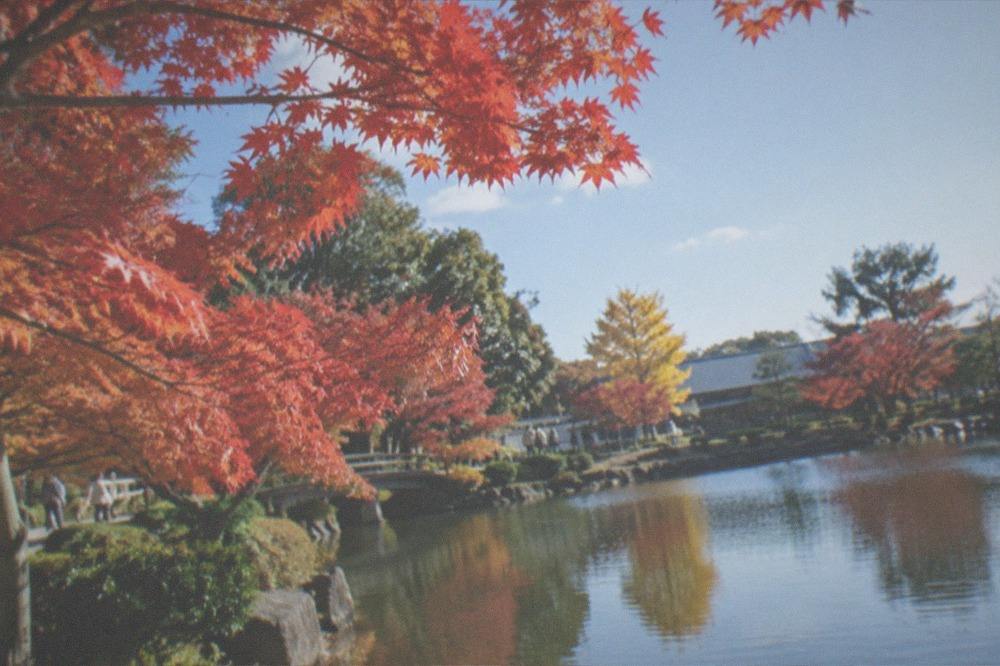
Spring and autumn are the best seasons for a Saga day trip, and the reason is partly the weather you would expect and partly one that is not. The Japan Meteorological Agency's 1991-2020 normals for Fukuoka, just across the prefectural border, show July as the wettest month of the year at 299.1 mm, wetter even than June's 249.6 mm, despite June being the tsuyu rainy season. Arita's spring porcelain festival and the autumn colour around the onsen towns make those two windows the most rewarding visits.
The JMA station normals give the honest month-by-month picture for the region, and the surprise inside it is worth planning around. July looks like a summer festival month, and Fukuoka's Hakata Gion Yamakasa does indeed fill the first half of it, but it also carries the heaviest average rainfall of the year. August, by contrast, is hotter, with a mean daily maximum of 32.5 degrees Celsius, but considerably drier at 210.0 mm and the second sunniest month after May. A late-summer Saga trip is better judged than most guides assume.
| Month | Mean temp | Mean daily max | Rainfall |
|---|---|---|---|
| March | 10.8 C | 15.0 C | 103.7 mm |
| April | 15.4 C | 19.9 C | 118.2 mm |
| May | 19.9 C | 24.4 C | 133.7 mm |
| June | 23.3 C | 27.2 C | 249.6 mm |
| July | 27.4 C | 31.2 C | 299.1 mm |
| September | 24.7 C | 28.6 C | 175.1 mm |
| October | 19.6 C | 23.7 C | 94.5 mm |
| November | 14.2 C | 18.2 C | 91.4 mm |
October, at 94.5 mm of rain and a mean maximum of 23.7 degrees, is arguably the single best month in the table for an outdoor day of ruins and garden walking, and November adds autumn colour to the onsen towns while staying nearly as dry. Winter, from December through February, is cool rather than cold, with January means around 6.9 degrees, and it is the quietest and cheapest window, well suited to a kilns-and-museums day with an onsen bath attached. Typhoon season, roughly July through October, calls for nothing more dramatic than a check of the forecast a day or two ahead.
What Should You Eat and Drink in Saga?
Saga's food identity is built on its land and coast: Saga beef is the prefecture's best-known export, while the Ariake Sea tidelands supply nori seaweed in serious volume and the inland areas grow tea around Ureshino. A day trip eats well on local beef dishes, nori-accented rice bowls and teas picked in the hills you are passing through, and the onsen towns add onsen-steamed dishes and simple bathhouse meals. None of it requires booking ahead outside festival weekends.
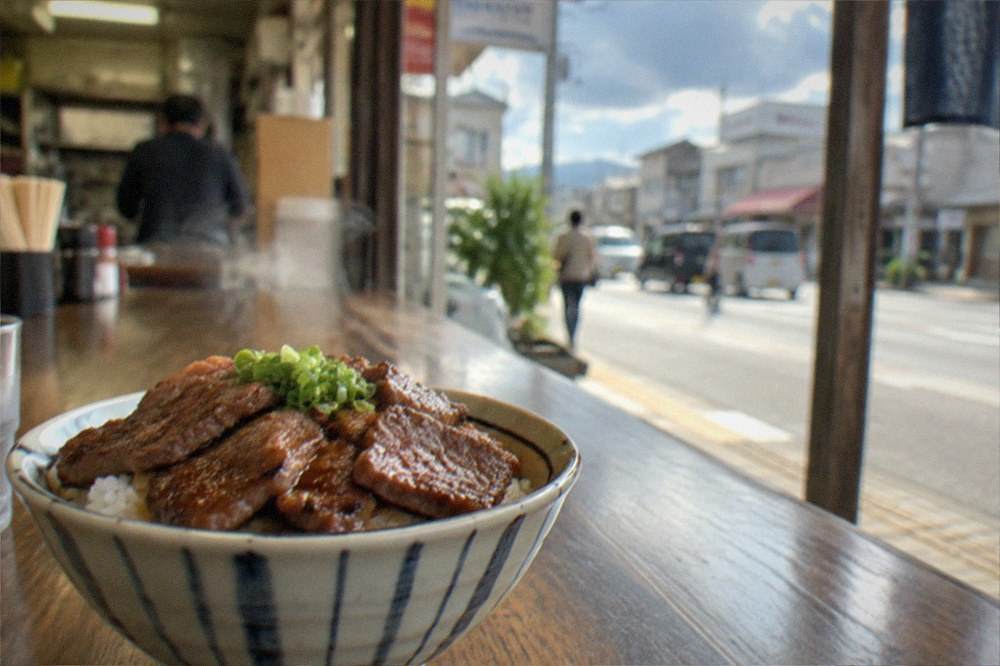
The beef is the headline. Saga beef is a branded local wagyu, and the honest budget versions of it, a beef bowl at lunch or a small set meal near the station in Saga City, cost a fraction of what a full dinner does while showing exactly what the region is proud of. Nori from the Ariake Sea appears everywhere, on rice, in soups and as a topping, and its quality is the quiet flex of the prefecture's coastal kitchen. In Ureshino, the tea fields that surround the town show up in the cup at every meal, and the town has a long tradition of green tea production alongside its baths.
Practical eating advice for a one-day trip is simple. Lunch near Arita Station or in Saga City is the easiest slot to fill, since both have ordinary station-adjacent restaurants in numbers. A late onsen-town dinner is harder, because small onsen towns quiet down early, so the safer pattern is a proper meal before the bath or back in Fukuoka, where dinner options run deep into the night. If you are choosing between a thin dinner in Takeo and a late bowl of Hakata tonkotsu, the tonkotsu usually wins, and getting back to the stalls needs no reservation at any hour.
Is a Guided Saga or Kyushu Tour Worth It?
A guided tour is worth it for any traveller trying to see more than one corner of Saga in a day, because the rural connections are exactly where the day quietly falls apart. Guided departures from Fukuoka into northern Kyushu run from $48 per person, and the strongest-reviewed options carry ratings in the high fours with hundreds of reviews behind them. Independent travel remains fully viable for the single-anchor days described above, and it is the cheaper choice for a confident rail rider doing one town.
| Tour | From | Rating | Duration |
|---|---|---|---|
| Takachiho Gorge and Amaterasu Railway with optional boat | $48 | 4.8 from 713 reviews | 11 hours |
| North Kyushu Tour: Akiyoshido Cave and Motonosumi Inari Shrine | $65 | 4.8 from 56 reviews | 10 hours |
| YokaBus Tea Fields, Yame and Yanagawa River Boat | $92 | 4.9 from 29 reviews | 9 hours 30 minutes |
| Fukuoka Customized Private Tour in 1 Day with Licensed Guide | $160 | 4.9 from 71 reviews | 6 hours |
| Yufuin no Mori and Dazaifu Day Tour | $70 | 4.7 from 54 reviews | 8 hours |
The honest caveat on that table is that none of the guided departures is a Saga-only product. Saga is served incidentally, as part of broader northern Kyushu routes, or through a private guide who can be pointed at Arita and Yoshinogari directly. The Takachiho Gorge and Amaterasu Railway tour, rated 4.8 across 713 reviews from $48 per person, runs a long loop into the interior with an optional boat ride on the gorge, and it shares the same early-morning Hakata departure rhythm a Saga day needs.
Tea-minded travellers have a different angle: the YokaBus tea and sake tasting expedition, from $92 per person and rated 4.9 from 43 reviews over 9 hours, spends its day in the tea country of Yame and the river town of Yanagawa, which is a neighbouring-flavour alternative to Ureshino's tea scene for travellers who want the drink without the drive. It is a fully guided, multi-stop rural day, which is exactly the format a Saga food-and-crafts itinerary would take if it existed as a scheduled product.
For a purely private, fully directed day, the customized private tour with a licensed guide remains the strongest fit for the ceramics route, since Arita's studios and Yoshinogari's grounds are exactly the kind of place where context changes what you are looking at. From $160 per person at 4.9 from 71 reviews, it goes exactly where you point it, and the licensed-guide framing matters for travellers who want deep historical commentary rather than logistics alone. If you want to broaden the comparison before deciding, the Nagasaki day trip guide covers the other major western excursion from Fukuoka and sets the two against each other.
Common Questions About a Saga Day Trip
How Do You Get To Saga From Fukuoka?
Take a JR train from Hakata Station, either a limited express to Saga Station and onward, or a local service with more stops. Highway buses run from Fukuoka to Saga City as a cheaper alternative, and a rental car suits multi-town days. Hakata and Fukuoka are the same city, so every departure starts at Hakata Station; there is no JR Fukuoka Station.
Can you visit Arita and Imari in one day from Fukuoka?
Yes. Arita and Imari sit on the same western corridor, and the pairing is the natural single-day ceramics route: the museum and studios of Arita in the morning and early afternoon, then the historic port town of Imari before returning. Add Takeo Onsen only if you accept a tighter schedule, and skip Yoshinogari entirely on this route.
Is Saga worth visiting compared with better-known Kyushu day trips?
Saga is the low-crowd, low-cost option. It cannot match the single-famous-view pull of Takachiho or the onsen village atmosphere of Yufuin, but it combines porcelain history, a major archaeological site and working hot spring towns with fewer visitors and easier trains. It suits a second or third trip to Kyushu, or a first trip that avoids big-name crowds.
Do you need a car for a Saga day trip?
You do not need one for a single-anchor day such as Arita or Yoshinogari, both reachable by rail. A car, or a guided tour with transport included, earns its cost when you want to combine two or more of Arita, Imari, Yoshinogari, Takeo and Ureshino, because the branch lines and rural buses between them are infrequent.
When is the worst time to do a Saga day trip?
July is the wettest month in the region by the Japan Meteorological Agency's 1991-2020 normals, averaging 299.1 mm of rain, more than the June rainy season, and typhoon season runs roughly July through October. Any day in that window needs a forecast check and an indoor fallback such as the Kyushu Ceramic Museum or an onsen bath.
Are the Saga onsen towns suitable for a quick bath?
Yes. Takeo Onsen and Ureshino both offer day-use bathing at town facilities and onsen inns, so a one to two hour soak fits at the end of an afternoon without an overnight stay. Towels are typically available to rent where towels are not provided, and the towns are small enough to walk between bath, garden and station.