Fukuoka in Two Days
Two days is enough to see Fukuoka's core if you split the city sensibly: Hakata's old town, shrines and yatai on day one, Tenjin's parks, museums and shopping on day two, or a day trip out into Kyushu.
Short answer
Spend day one in Hakata: Kushida Shrine, the Kawabata arcade, Tochoji and the yatai stalls along the Naka River. Give day two to Tenjin and its neighbours: Ohori Park, the art museums, Tenjin shopping and the evening food scene. The subway links it all for ¥210 to ¥300 a ride, and a ¥2,500 Tourist City Pass covers a full day of transport for overseas visitors.
Fukuoka rewards a tight plan. The city is compact, the subway is simple, and most of what first-time visitors want sits inside a triangle between Hakata Station, Tenjin and the waterfront. Two days will not cover Kyushu, but they will cover Fukuoka's core: the shrine district and old merchant lanes of Hakata, the parks and museums around Tenjin, the yatai food stalls that line the Naka River after dark, and, if you are willing to trade a city day for a coach seat, one of the great day trips on the island.
One thing to settle before anything else: Hakata and Fukuoka are the same city. Hakata is a ward and the name of the main station; Fukuoka is the city around it. You will never travel "from Hakata to Fukuoka", and there is no JR Fukuoka Station, the rail hub is Hakata Station. Getting that straight makes every map and train board on your trip easier to read.
How Do You Split Two Days Between Hakata and Tenjin?
The cleanest split is chronological and geographical: give day one entirely to Hakata and the riverside east of Tenjin, and day two to Tenjin, Ohori Park and the waterfront to the west. The two districts sit two subway stops or a 15-minute walk apart, so nothing on this plan requires backtracking, and each day ends near its own dinner scene: yatai stalls in Nakasu on night one, Tenjin's izakaya lanes on night two.
Hakata is the older half of the city, the merchant town that grew around its shrines and temples. Tenjin, a short hop west, is the modern centre: department stores, the underground mall, the art museums and the big parks. Splitting your days along that line means each day has a coherent character rather than a scattered checklist.
It also matches how the city eats. Hakata's evening runs on riverside yatai and the Kawabata arcade; Tenjin's runs on izakaya backstreets and the Daimyo district. If you are still weighing whether two days is enough at all, our piece on whether 2 days is enough in Fukuoka works through the trade-offs, and there is a longer three-day Fukuoka itinerary if you find a spare 24 hours.
What Should Day One Look Like?
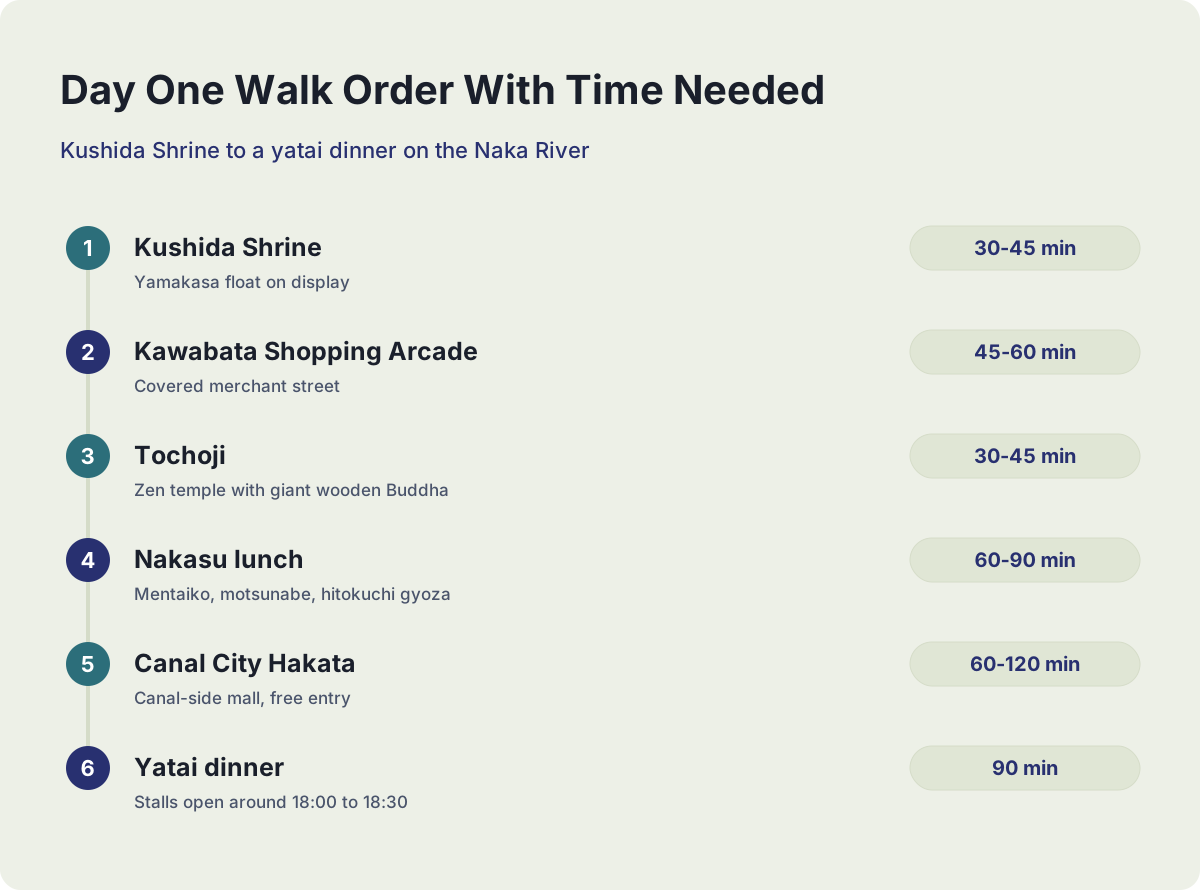
Start at Kushida Shrine, Fukuoka's most important shrine and the spiritual home of the Yamakasa festival, then walk the Kawabata Shopping Arcade to Tochoji's Great Buddha, cross into Nakasu for lunch, and finish with canal-side Canal City Hakata and a yatai stall dinner along the Naka River. Everything on this day is within a 20-minute walk of Hakata Station, and none of it needs a ticket booked in advance.
Kushida Shrine is the right first stop because it anchors everything else you will see. The shrine is dedicated to the deities of Hakata's merchant families, and its grounds hold the tall decorative kazariyama float that stays on display between summer festivals. From July 1 to 15 the whole district orbits this shrine during Hakata Gion Yamakasa, when teams race roughly one-ton floats over a 5 km course before dawn. Visit outside those two weeks and you get the quiet version: free grounds, incense smoke, and the float hall.
Walk north from the shrine and you land in the Kawabata Shopping Arcade, the old merchant street that runs parallel to the river. It is a covered lane of small shops, tea sellers and Hakata doll studios, useful both as a sight and as a rain plan. At its northern end sits Tochoji, a temple founded, according to its own tradition, by a monk returning from China, and home to one of the largest seated wooden Buddhas in Japan. The temple does not publish verified hours on an official English page, so treat a daytime visit as the safe plan. Our Tochoji temple guide covers what to look for, and the wider temples and shrines overview puts the whole cluster in context.
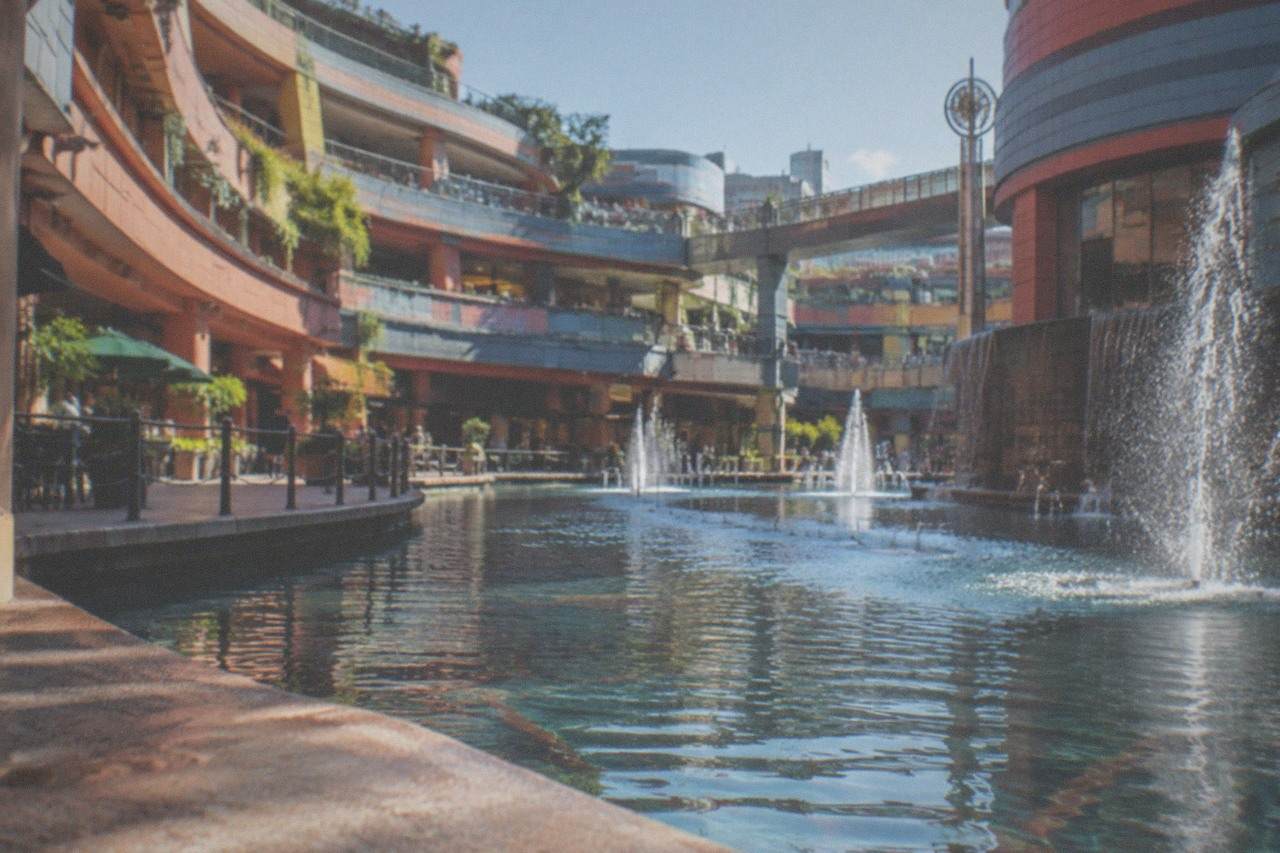
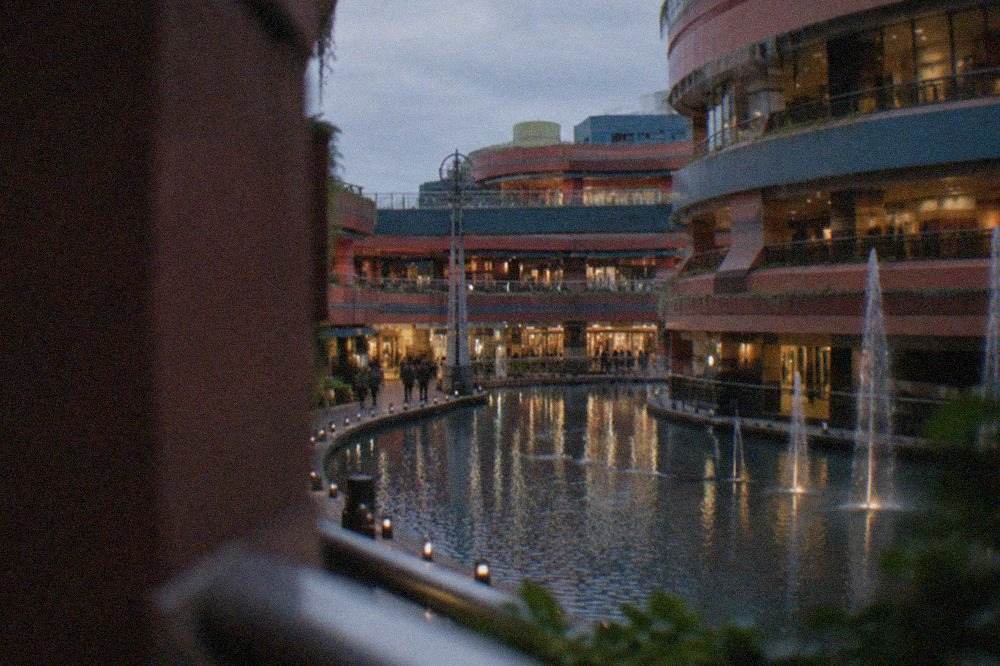
Cross the river at Nakasu and the afternoon opens up. Nakasu is Fukuoka's entertainment district on its own island between two rivers, and by day it is quieter than you might expect, which makes it a good lunch stop: mentaiko (spicy pollock roe) is the local specialty, and motsunabe, the beef-offal hot pot Fukuoka invented, appears on menus all over the island. Canal City Hakata, the canal-threaded shopping complex a few minutes south, is free to enter, open every day of the year, with shops generally from 10:00 to 21:00 and restaurants from 11:00 to 23:00. Its full guide explains the layout, the fountain shows and where to eat.
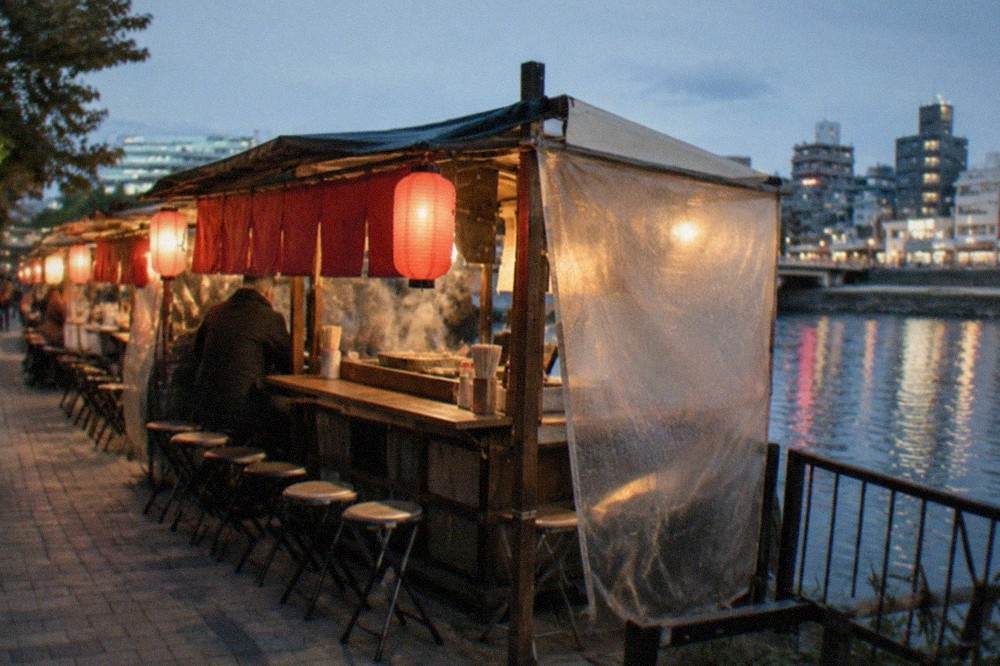
The evening belongs to the yatai. Fukuoka runs about 100 licensed food stalls, more than any other Japanese city, and the ordinance that governs them requires prices to be posted where customers can see them, with no vague "market price" labels allowed. That makes a yatai dinner one of the more transparent cheap meals in Japan. Stalls set up from 17:00, typically open around 18:00 to 18:30, and close in the small hours, though rain or strong wind shuts many of them, and no stall is obliged to open any given night. The Nakasu row along the Naka River is the photogenic one; our yatai guide and the etiquette primer cover how the seating, ordering and payment actually work. You cannot book a stall, you simply show up.
Here is day one compressed, with the walking logic visible:
| Stop | Area | What It Is | Time Needed |
|---|---|---|---|
| Kushida Shrine | Hakata old town | Fukuoka's main shrine, Yamakasa float on display | 30-45 min |
| Kawabata Shopping Arcade | Hakata | Covered merchant street, tea and crafts | 45-60 min |
| Tochoji | Hakata | Zen temple with a giant seated wooden Buddha | 30-45 min |
| Nakasu lunch | Nakasu | Mentaiko, motsunabe, hitokuchi gyoza | 60-90 min |
| Canal City Hakata | Nakasu/Hakata | Canal-side mall, fountains, free entry | 60-120 min |
| Yatai dinner | Naka River | Open-air food stalls, posted prices | 90 min |
Where Should Day Two Take You?
Day two heads west: Ohori Park and its Japanese garden in the morning, the Fukuoka Art Museum inside the same park, then Tenjin's shopping and underground mall in the afternoon, with an evening in the Daimyo district's bars and izakaya. If you would rather trade the city for scenery, a guided day tour into Kyushu, such as the Takachiho Gorge railway trip, can absorb the whole second day instead.
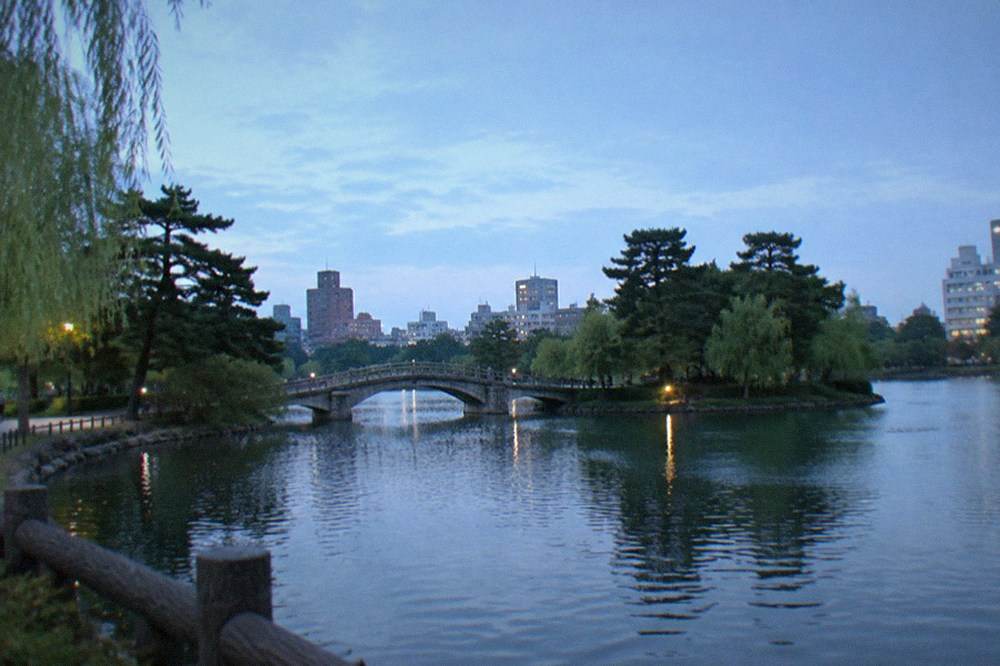
Ohori Park is Fukuoka's central park, built around a large pond that was once the outer moat of the castle, and it is free to enter. The 2 km loop around the water is the city's default morning walk. Inside the park sits the Ohori Park Japanese Garden, a separate, ticketed landscape garden: adults pay ¥250, children ¥120, under-6s and visitors 65 and over enter free, and the last entry is 17:45 in the May to September season, 16:45 from October to April. The garden's own page has the seasonal details.
Adjoining the park to the east is Maizuru Park, the site of Fukuoka Castle's ruins. The grounds are free, but note one live closure: the Tenshudai, the stone base of the main keep, is closed to entry from 26 May until the end of December 2026 for an archaeological excavation. The dig was prompted by a document found in December 2024 describing a keep that may never have been built, and the city has since tripled the excavation area. Whether the "phantom keep" existed is still an open question. The rest of the park remains walkable, and the castle ruins guide tracks what is open.
The Fukuoka Art Museum sits at the park's southern edge. Collection admission is ¥200 for adults, ¥150 for high school and university students, free for junior high and under, and free for visitors 65 and over resident in Fukuoka, Kitakyushu, Kumamoto or Kagoshima with ID. It opens 9:30 to 17:30, with Friday and Saturday evening hours to 20:00 from July to October, and closes Mondays plus 28 December to 4 January. The Fukuoka Asian Art Museum, a few subway stops east in the Riverain building, is free to enter, with only its Asia Gallery charging, at the same ¥200 / ¥150 scale. Our museums overview compares them.
The afternoon swings back to Tenjin. This is Kyushu's biggest shopping district: department stores, the Tenjin underground mall and a dense web of side streets. If the weather turns, the underground mall plus Canal City from day one is a complete wet-day plan, and our rainy-day itinerary builds a full day around them. For the evening, drift south into Daimyo, where converted houses hold bars, record shops and small izakaya, a 10-minute walk from the department stores and a different city in feel.
Day two has a fork in it. If the city plan above feels too urban, swap it for a day trip: the Beppu day trip reaches the famous "hells" hot springs, the Kumamoto day trip pairs a castle with Mount Aso, and our day trips from Fukuoka page ranks all of them. The most popular guided option is the Takachiho Gorge trip, which runs about 11 hours and includes the Amaterasu Railway with an optional boat ride through the gorge, from $48 per person, rated 4.8 across 713 reviews.
Here is the city version of day two in the same compressed form, so you can weigh it against the day-trip fork on equal terms:
| Stop | Area | What It Is | Time Needed |
|---|---|---|---|
| Ohori Park loop | Ohori | Free 2 km waterside walk, former castle moat | 45-60 min |
| Ohori Park Japanese Garden | Ohori | Ticketed landscape garden, ¥250 adult | 45-60 min |
| Maizuru Park / castle ruins | Maizuru | Free castle grounds, Tenshudai closed to Dec 2026 | 45-60 min |
| Fukuoka Art Museum | Ohori | ¥200 collection, free under high school | 60-90 min |
| Tenjin shopping and underground mall | Tenjin | Department stores, covered mall | 2-3 hours |
| Daimyo dinner | Daimyo | Izakaya and bars in converted houses | Evening |
How Much Does Two Days in Fukuoka Cost?
Budget roughly ¥210 to ¥300 per subway ride, ¥640 for a one-day subway pass if you make three or more trips, ¥250 for the Ohori Japanese Garden, ¥200 per art museum collection, and dinner at a yatai with posted, regulated prices. The ¥2,500 Fukuoka Tourist City Pass covers a full day of subway, bus, train and ferry travel for overseas visitors, but only with a passport check at the counter.
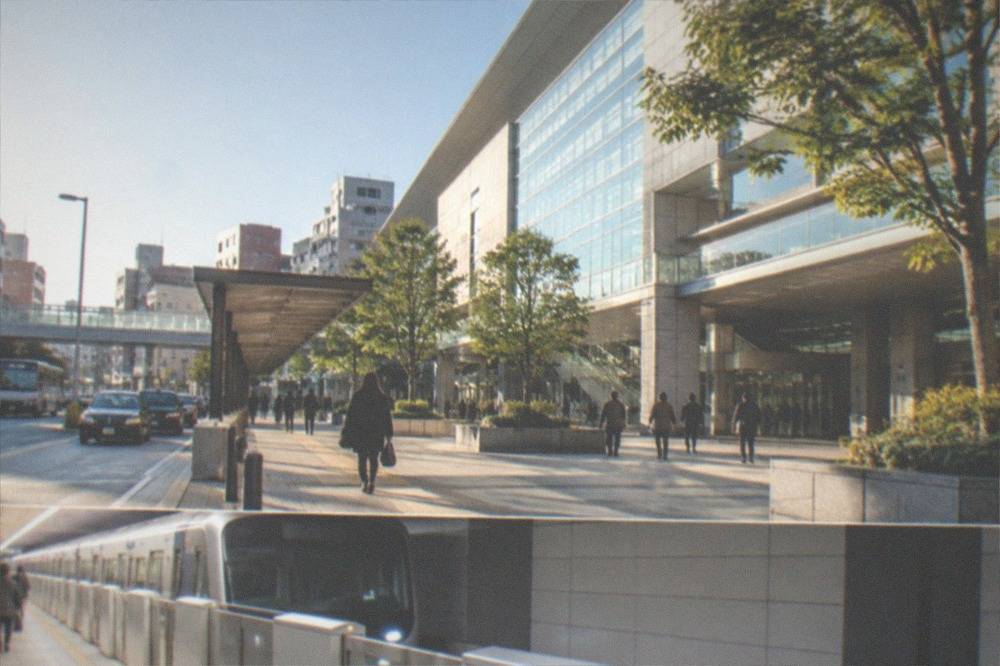
The subway is the spine of both days. Single fares run by distance zone: ¥210 for trips up to 3 km, ¥260 for 3 to 7 km, ¥300 for 7 to 11 km, up to ¥380 for the longest legs, with children paying half. The official fare table is published by the Fukuoka City Subway. If you will ride three or more times in a day, the 1-day pass at ¥640 for adults, ¥320 for children, pays for itself; it covers all three lines and is sold at station machines and the tourist information desks at Tenjin, Hakata Station and the airport.
The Tourist City Pass is the one most visitors miss, and the one most guides price wrongly. The current figures, published by the city's own tourism office, are ¥2,500 for the Fukuoka City version and ¥2,800 for the version that adds Dazaifu, with children at half. It is restricted to overseas tourists on a short-stay visa, a passport is checked at the counter, and it covers subway, Nishitetsu trains and buses, some JR lines and ferries for one day. Full conditions are on the official city pass page. If your second day is a guided coach tour, you likely do not need it; if your second day is the Tenjin plan above with a museum and a ferry, it probably wins.
Here is a realistic two-day budget for one adult, using verified figures only. Yatai dinner appears as a range because the city publishes no average, only the rule that prices must be posted; you will see the menu before you commit.
| Item | Cost | Notes |
|---|---|---|
| Subway single fare | ¥210-¥300 | Most city-centre trips |
| Subway 1-day pass | ¥640 | Pays off from 3 rides |
| Tourist City Pass | ¥2,500 | Overseas visitors, passport check, one day |
| Ohori Park Japanese Garden | ¥250 | Under 6 and 65+ free |
| Fukuoka Art Museum collection | ¥200 | Junior high and under free |
| Fukuoka Tower | ¥1,000 | Elementary/junior high ¥500, age 4+ ¥200 |
| Yatai dinner | Posted prices | Varies by stall and order |
Fukuoka Tower, if you slot it into day two's evening, costs ¥1,000 for high school age and up, ¥500 for elementary and junior high, ¥200 from age 4. It opens 9:30 to 22:00 with last admission at 21:30, and closes for its annual maintenance on 28 and 29 June 2027. For a fuller cost breakdown including accommodation tiers, the site's trip-cost page does the arithmetic.
Should You Swap Day Two for a Day Trip?
Yes, if your two days are your only days in Kyushu: a guided day trip to Takachiho Gorge, Beppu or Mount Aso shows you scenery the city cannot, and the best-rated options run from $48 to $94 per person with 9 to 11-hour schedules. Keep the city plan if this is your first visit and you have never seen Hakata's shrine district or Ohori Park, because those are the sights Fukuoka is actually about.
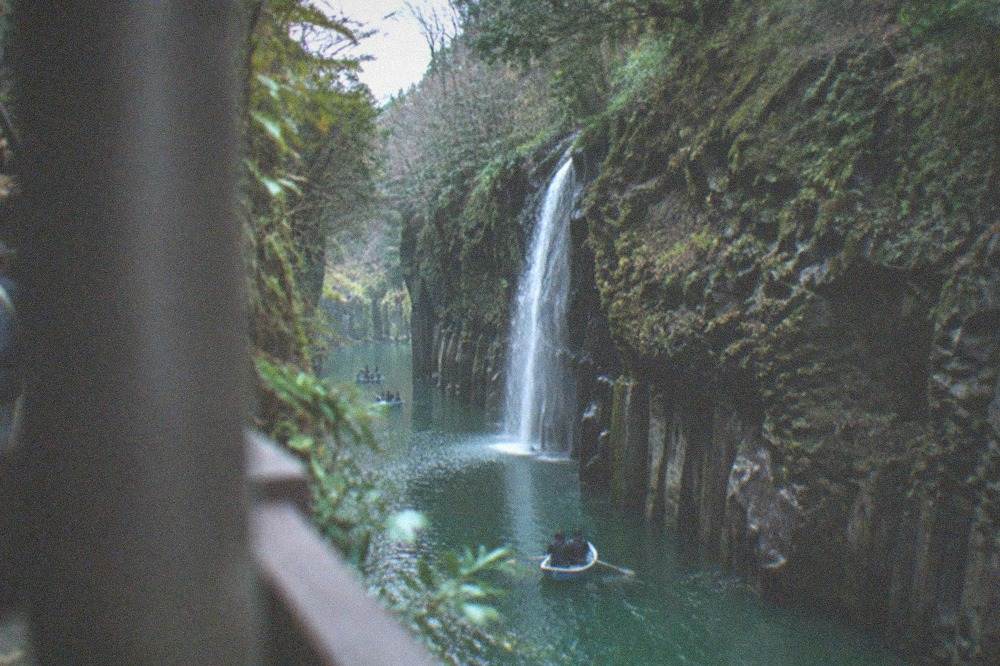
The trade is real. Two days in the city gives you depth: unhurried mornings, yatai dinners both nights, time in the museums. One city day plus one day trip gives you range: gorge, volcano or hot-spring town, things that are hours away and genuinely different. Travellers who take the day-trip fork overwhelmingly choose Takachiho, the Miyazaki gorge where the Amaterasu Railway traces the cliff edge and rowing boats cross the water below a waterfall. The guided version from Fukuoka runs about 11 hours from $48 per person, rated 4.8 across 713 reviews, with an optional boat ride you select on the day.
If you would rather design your own second day with a local, a private licensed guide costs more but bends entirely around you. The customized full-day private tour runs about 6 hours from $160 per person, rated 4.9 from 71 reviews, and the guide builds the route with you in advance, which suits families and anyone with mobility constraints. It is a different product from the coach tours: no fixed itinerary, no other passengers, and a pace you set yourself.
That flexibility is why the two formats sit at such different price points, and it is worth being honest about who each one suits. A coach day trip to Takachiho or Beppu is the efficient choice for a solo traveller or a pair who want the headline scenery without route-planning. A private licensed-guide day is the choice for a family with small children, a group with mixed mobility, or anyone whose interests run specific, whether that is a particular temple, a ceramics district or a food market the coach routes never touch.
A middle path exists, and it is worth naming: take the morning Yufuin no Mori sightseeing train to the onsen town of Yufuin, or spend a half-day in Dazaifu at the Tenmangu shrine, whose grounds have no entrance fee and whose approach street is one of Kyushu's nicest. The combined guided tour that includes the Yufuin no Mori train and Dazaifu runs about 8 hours from $70 per person, rated 4.7 from 54 reviews. The Dazaifu day trip guide covers the independent version, which costs ¥480 each way on the Nishitetsu train from Tenjin with one easy change at Futsukaichi.
What If You Have an Evening Flight or an Early Start?
Fukuoka Airport sits unusually close to the city centre, a ¥260 subway ride from Hakata Station on the Kuko line, so a late-evening departure still allows most of day two. If you arrive early instead, drop bags at a station locker and run a compressed version of day one; the airport's proximity means a 48-hour visit loses almost nothing to logistics.
The airport's closeness is the quiet reason a two-day Fukuoka trip works so well. The subway fare from the airport to Hakata is ¥260, sitting in the official 3 to 7 km fare band, and the airport to Tenjin is the same. Avoid repeating a number you may have read elsewhere about the journey time in minutes: no official page verifies it, and the honest statement is simply that the airport is one of the closest major-city airports to its own downtown in Japan. A free inter-terminal shuttle runs about 10 minutes between the international and domestic terminals.
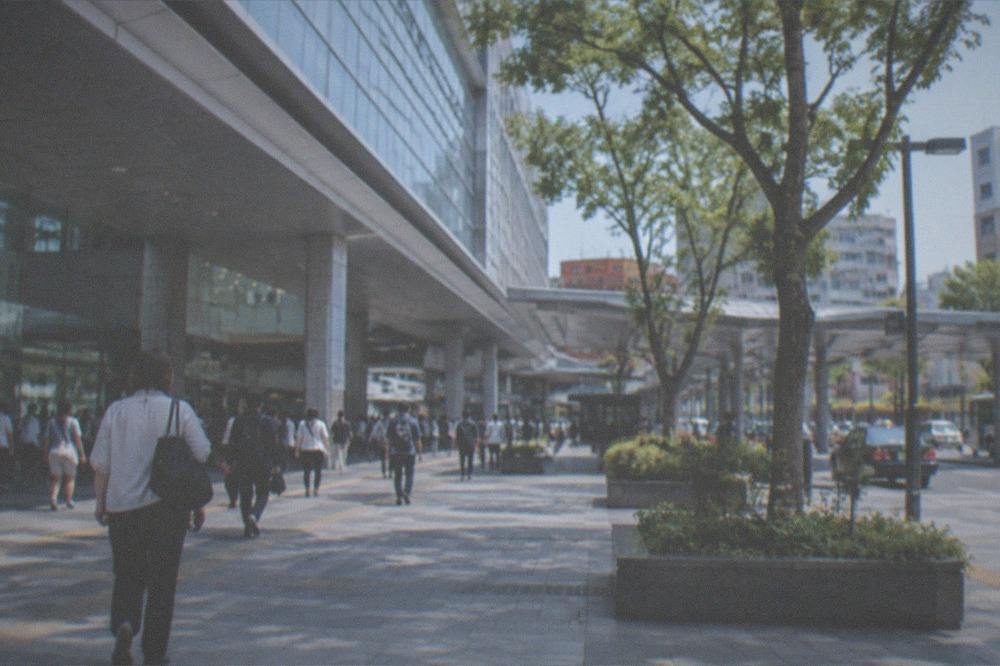
Luggage is the other logistics question. Coin lockers at Hakata Station and Tenjin Station handle day-trip bags, and the station staff can point you to the overflow storage counters when the small lockers fill up, which happens on weekends and festival days. If your second day is a guided coach tour, most depart from a fixed Hakata or Tenjin meeting point, so staying on the Hakata side on night two saves a morning scramble.
Two timing notes shape a two-day plan. First, the season matters more here than in most Japanese cities: July is Fukuoka's wettest month at 299.1 mm of rain against June's 249.6 mm, despite June being the tsuyu rainy season, and typhoon season runs roughly July through October, so a summer visit should carry a rain plan. Second, museums close on fixed weekdays: the Fukuoka Art Museum on Mondays, the Asian Art Museum on Wednesdays, so check your day two against the calendar before locking the plan.
Where Should You Stay for a Two-Day Visit?
Hakata Station is the right base for a two-day visit: it is the transport hub for both subway days and every day-trip coach, it sits 10 minutes' walk from day one's shrine district, and the station area carries the widest range of hotel prices. Tenjin suits a second-time visitor who wants the dining and shopping district on the doorstep, and the trade-off comes down to whether you value coach departures or evening atmosphere more.
The honest answer for most first-timers is Hakata. Every plan on this page starts or ends within walking distance of the station, and the day-trip coaches and the airport subway all leave from it. Tenjin wins on evening atmosphere and on the underground mall, but it adds a transfer to every day trip. The trade-off is genuinely close, and the deciding factor is usually what day two looks like: a city day favours Tenjin, a coach day favours Hakata.
If your two days fall on a weekend, the same plan trims neatly to the days that matter, and a food-first restructure of day two, built entirely around eating your way from Tenjin to Hakata, is a legitimate strategy in a city with this many signature dishes. Families get more out of the parks-and-aquarium version of the plan, and solo travellers will find the evening districts among the easiest in Japan to eat in alone, since yatai counters seat everyone side by side.
Common Questions About Two Days in Fukuoka
How do you split two days between Hakata and Tenjin?
Give day one to Hakata: Kushida Shrine, the Kawabata arcade, Tochoji, Nakasu lunch, Canal City Hakata and a yatai dinner on the Naka River. Give day two to Tenjin and the west: Ohori Park, the Japanese Garden, the art museums, Tenjin shopping and a Daimyo evening. The districts are two subway stops apart, so the split costs no travel time.
Is two days enough in Fukuoka?
Two days covers the city's core comfortably: the shrine district, Ohori Park, both art museums, the yatai and the main shopping areas. It does not cover Kyushu, so if Takachiho, Beppu or Mount Aso are priorities, either extend to a three or four-day plan or accept that day two becomes a day trip and the city gets one day.
Do I need a tour for two days in Fukuoka?
No. Both city days work entirely on foot and the subway, and nothing in the core plan requires pre-booking. A guided tour earns its cost on the second day if you swap it for a day trip: the Takachiho Gorge railway tour runs about 11 hours from $48 per person, rated 4.8 from 713 reviews, and private licensed-guide days start higher but follow your route.
What does the Fukuoka Tourist City Pass cost?
¥2,500 for the Fukuoka City version and ¥2,800 for the version that adds Dazaifu, with children at half price. It is limited to overseas tourists on a short-stay visa, a passport is checked at purchase, and it covers one day of subway, Nishitetsu trains and buses, some JR lines and ferries. The Dazaifu Liner Bus is excluded.
Can you eat at a yatai without booking?
Yes, and there is no other way: yatai take walk-ins and cannot be booked. About 100 licensed stalls operate across the city, mostly in Nakasu, Tenjin and Nagahama, and the city ordinance requires every stall to post its prices visibly. Stalls open around 18:00 to 18:30 and close in the small hours, and rain closes many of them.
Is Fukuoka Airport far from the city centre?
No, it is unusually close, on the subway's Kuko line. The fare to Hakata Station is ¥260, and to Tenjin the same, both within the official 3 to 7 km fare band. The airport is one of the reasons a short Fukuoka visit loses so little time to logistics.
Two days, split between Hakata and Tenjin, is enough to understand why Fukuoka keeps turning up on lists of Japan's most liveable cities: a walkable shrine district, a park with a castle mystery in it, regulated street food, and a transport network that never fights you. If the plan leaves you wanting more, the natural next steps are longer itineraries that add Kyushu's headline sights, or, for a shorter stop, a compressed one-day version of the same logic. This page is part of the Fukuoka Japan Travel Guide, which covers every district, dish and day trip in the city.