Fukuoka Solo Travel Itinerary
Fukuoka is one of Japan's easiest cities to explore alone: compact, walkable, cheap to move around, and built around counter dining where a party of one is the norm rather than the exception. This itinerary lays out three days, the passes that make them cheap, and the parts of solo travel here that genuinely need planning.
Short answer
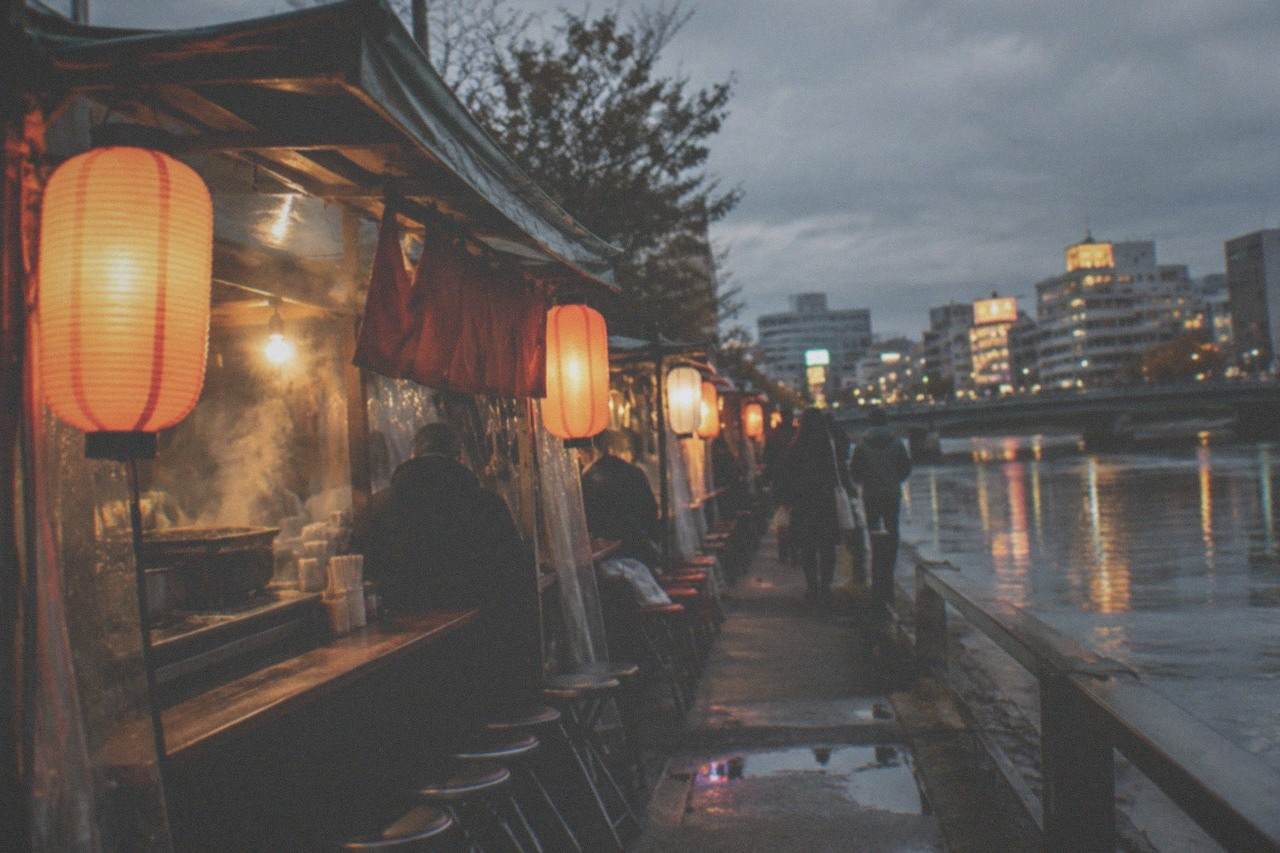
Fukuoka suits solo travel because everything sits within a ¥210 to ¥380 subway ride, about 100 licensed yatai stalls serve counter meals designed for one diner, and the city's main sights are free or under ¥1,000. Three days covers Hakata, Tenjin, Ohori Park and one day trip to Dazaifu or the Kyushu countryside.
Fukuoka rewards people travelling alone in a way few Japanese cities manage. The centre is compact enough that a subway fare never exceeds ¥380, the food culture runs on counter seating where nobody expects a group, and the two biggest expenses in most Japan itineraries, sightseeing and transit, are unusually cheap here. A solo visitor can see the main shrines, walk a castle ruin, eat at a riverside stall and still spend less in a day than a single dinner costs in Tokyo.
This itinerary spreads three days across Hakata's old town, the Ohori Park museum district and a day trip beyond the city, then covers the practical questions solo travellers actually ask: which pass to buy, where to eat alone without awkwardness, and where to base yourself. It works as a standalone trip or as the Fukuoka leg of a longer Kyushu route.
Why Is Fukuoka a Good City for Solo Travel?
Fukuoka works for solo travellers because about 100 licensed yatai stalls, free shrine and castle grounds, and a subway where the longest single ride costs ¥380 all sit inside one compact bay-side centre. Counter eating is the default here, not a workaround, and a city ordinance requires every stall to post its prices visibly, so a person dining alone never has to negotiate or guess. The airport is unusually close to the centre, with a ¥260 subway fare into town.
The food culture is the core reason. Tonkotsu ramen, motsunabe and mentaiko all grew up as quick, counter-friendly foods, and the yatai stalls that serve them seat roughly seven people at a stretch of counter. There is no table for two waiting awkwardly beside you. The city's yatai Q&A page confirms the count at about 100 stalls city-wide, held steady by a public recruitment system that replaced retiring operators.
The geography helps too. Hakata and Fukuoka are the same city, a point worth internalising early because competitor guides routinely treat them as two places. Hakata is the ward, the station and the port; Fukuoka is the city around it. You never travel "from Hakata to Fukuoka", you walk from one district of one city to another. That single fact shrinks the mental map considerably.
For a first-time visitor who wants more structure on day one, the Fukuoka Essentials history and culture tour pattern of a half-day guided walk is worth considering alongside this site's deeper guide to solo travel in the city.
The tour above is a half-day walk with a local, which many solo visitors book precisely because it turns day one into an orientation session rather than a scramble. Everything after that point in this itinerary assumes you are moving on your own.
Day One: Hakata Old Town, Kushida Shrine and the Riverside Stalls
Spend day one inside Hakata's old town, which packs Kushida Shrine, Tochoji and its Great Buddha, and Shofukuji, Japan's first Zen temple, into a walkable grid east of Hakata Station, all of it free to enter. Finish after dark along the Naka River in Nakasu, where the photogenic row of yatai stalls serves ramen, yakitori and oden to a mixed crowd of locals and visitors. Budget the sightseeing day at close to nothing.
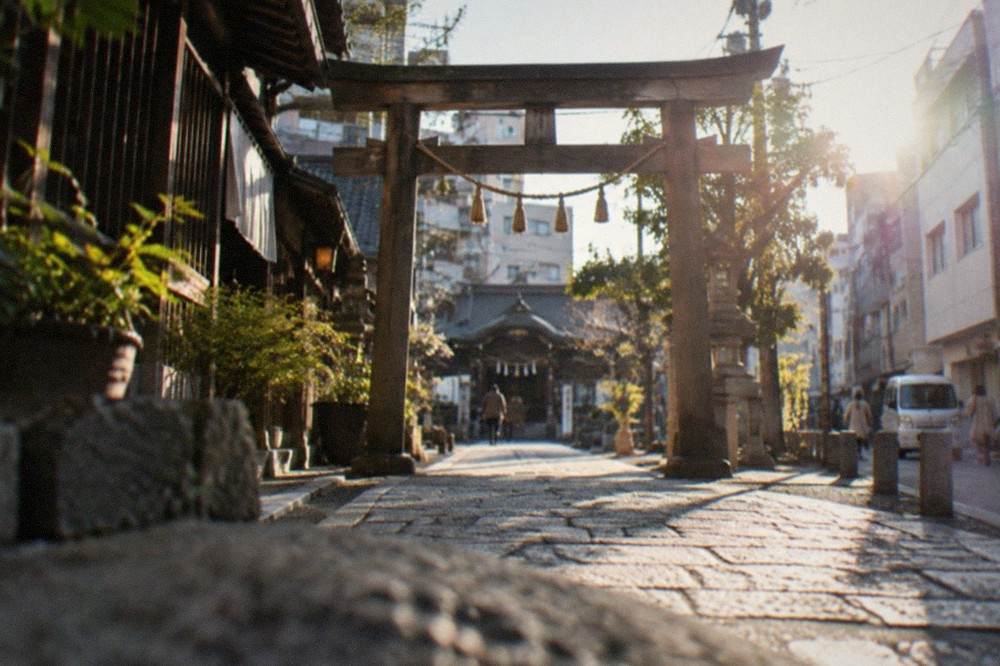
Start at Kushida Shrine, Hakata's guardian shrine and the anchor of the July Yamakasa festival. The grounds are free and open long hours, and the festival floats displayed on site explain the July race better than any signboard elsewhere. From there it is a short walk to Tochoji, home of the Fukuoka Daibutsu, one of the largest seated Buddha statues in Japan, and then to Shofukuji, founded in the twelfth century and considered the first Zen monastery in the country.
The afternoon belongs to the Hakata Machiya Folk Museum area and the Kawabata Shopping Arcade, a covered street of small shops that connects the old town to the river. Neither demands a schedule, which is the point: solo travel in Fukuoka works best when half the day is left loose.
| Time block | What to do | Solo-friendly note |
|---|---|---|
| Morning | Kushida Shrine, Tochoji, Shofukuji | All free, all walkable in one loop |
| Midday | Kawabata Shopping Arcade, lunch counter | Standing and counter eating is normal here |
| Afternoon | Hakata Machiya Folk Museum, riverside walk | Small enough to enjoy at your own pace |
| Evening | Nakasu yatai stalls along the Naka River | Counter seating built for parties of one |
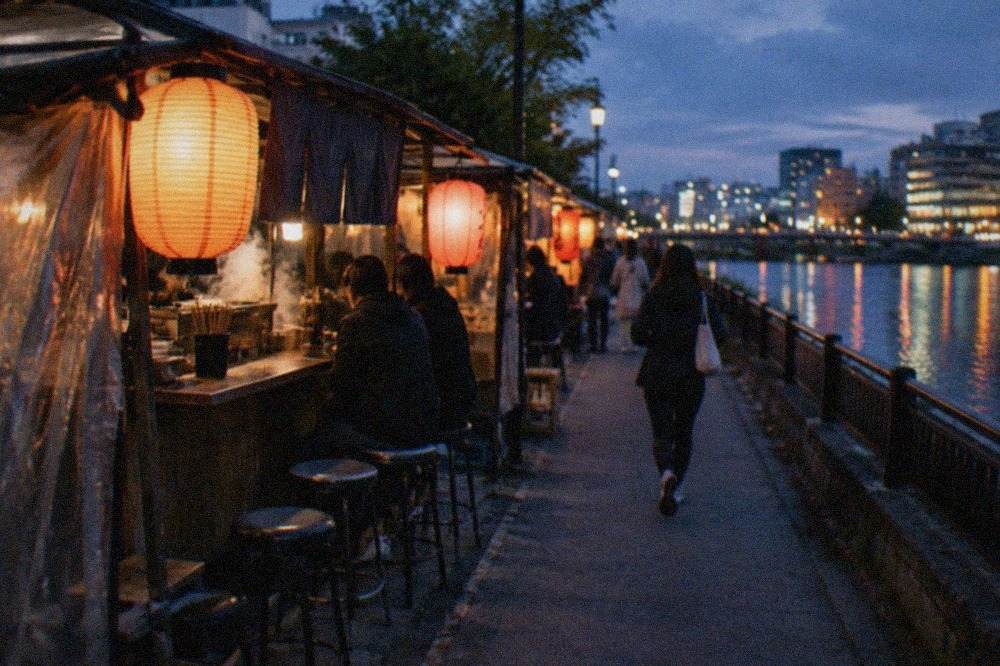
When evening comes, cross to Nakasu. The stalls along the river are the postcard row, and a solo diner who arrives around 18:30, when most stalls open, will usually be waved into a seat beside strangers who become conversation partners within a bowl of ramen. The Fukuoka evening tours combining yatai, izakaya and karaoke idea suits travellers who want the night guided; a self-guided crawl works just as well.
A guided evening removes the one genuine anxiety of solo yatai dining, which is choosing a stall cold. The listing for this one runs three to four hours and covers multiple stops, so it doubles as dinner and a night out in one booking.
Day Two: Ohori Park, the Museums and Tenjin
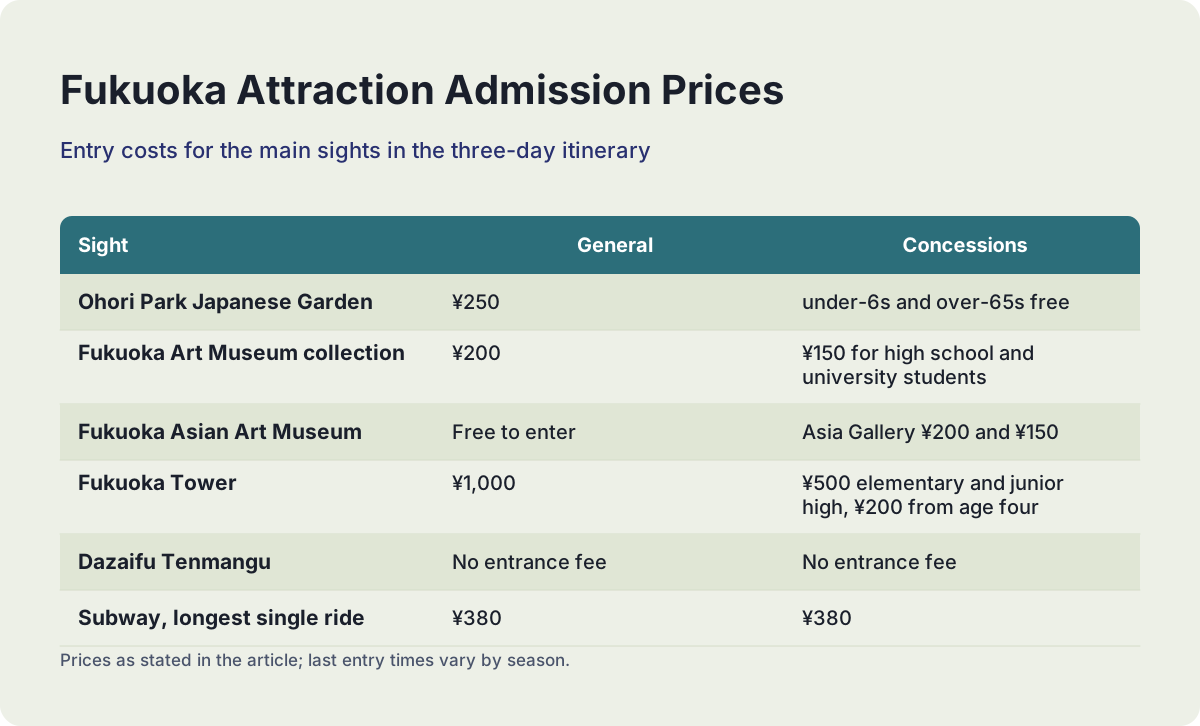
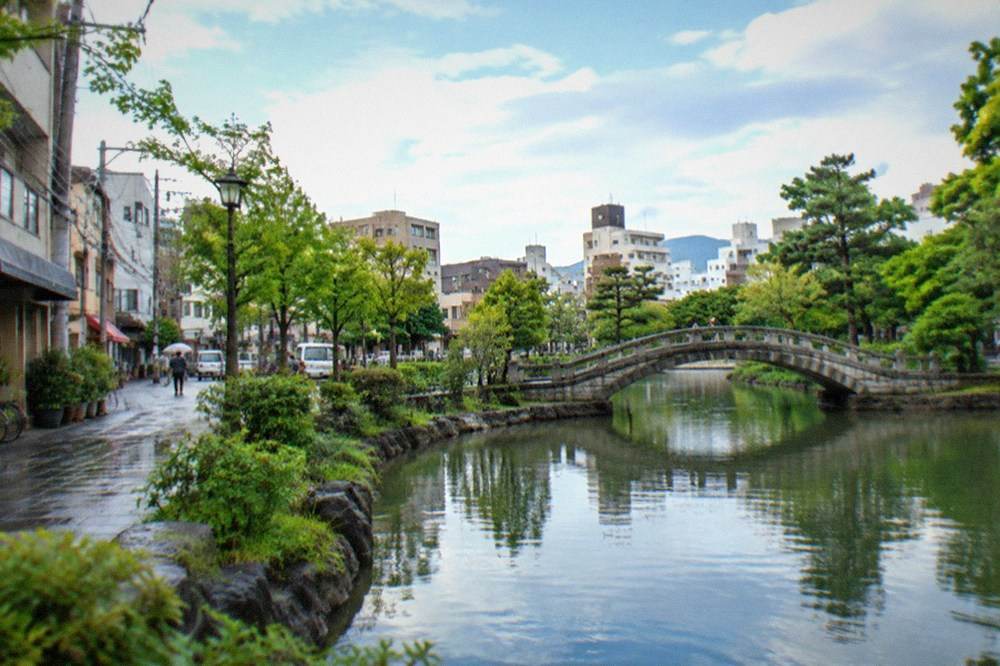
Day two moves west to Ohori Park, a large pond-and-path park around a former castle moat, paired with the Fukuoka Art Museum on its shore and the Fukuoka Asian Art Museum a short subway ride away. Entry to both museum buildings is free, the collection exhibitions cost ¥200, and the Japanese Garden inside Ohori Park charges ¥250 with under-6s and over-65s free. It is the quiet, restorative day of the three, and the one solo travellers tend to rank highest afterwards.
Ohori Park itself costs nothing and never closes. The two-kilometre path around the pond is the city's default walking loop, and the Japanese Garden on the museum side is the best-value ¥250 in Fukuoka: a compact stroll garden with last entry at 17:45 in the May to September season and 16:45 from October to April, closed Mondays and over the New Year break.
The Fukuoka Art Museum sits at the park's edge with collection admission at ¥200 general and ¥150 for high school and university students, free for junior high and under, and free for residents over 65 from Fukuoka, Kitakyushu, Kumamoto or Kagoshima with ID. Across town in the Riverain Center Building, the Fukuoka Asian Art Museum is free to enter, with only the Asia Gallery charging, at the same ¥200 and ¥150 rates. Its collection holds about 5,000 works from 23 Asian countries and regions, which makes it the most internationally minded museum in the city.
After the museums, take the subway to Tenjin for the evening. The Tenjin underground mall is one of the largest in Japan, and it exists precisely for the kind of weather that can derail a solo plan: it connects a web of shops and restaurants without ever going outside. Solo visitors consistently report it as the easiest place in the city to spend a rainy hour, and the Fukuoka rainy day itinerary extends the idea across a full day.
If energy remains, Fukuoka Tower stays open until 22:00 with last admission at 21:30. Admission runs ¥1,000 for high school age and above, ¥500 for elementary and junior high, and ¥200 from age four, and the tower closes only two days a year, 28 and 29 June 2027 on the current calendar. The 234-metre tower looks west over Hakata Bay and the Momochi district, and the evening view is the city's best.
Day Three: Dazaifu, or a Full Day Into Kyushu
Day three leaves the city. Dazaifu Tenmangu, the scholarly shrine a short Nishitetsu ride from Tenjin, has no entrance fee and pairs with the Kyushu National Museum for a half-day of quiet lanes and approach-street snacks. Travellers with more appetite for distance can instead join a full-day coach tour into Kyushu, to the Beppu hells, Yufuin or the Aso grasslands, all of which run 10 hours or more and depart from central Fukuoka.
Dazaifu Tenmangu's own FAQ states plainly that there is no entrance fee. The shrine opens from 6:00 or 6:30 depending on season and closes between 18:30 and 19:30 across the year, and the approach street selling Umegae Mochi cakes is a slow, snack-paced walk that suits a solo pace perfectly. The Kyushu National Museum sits behind the shrine, and the whole outing is a half-day unless you linger. The full index of guides sits on Fukuoka Japan Travel Guide.
The coach-tour alternative suits solo travellers for a different reason: a full day into rural Kyushu is genuinely awkward without a car, and tours solve the transport, the timing and the lunch stop in one booking. The Beppu hells circuit, which this site's roster covers through a day trip combining the hot springs, a temple and Yufuin, runs about 10 hours, as do the Aso volcano and Takachiho options. Full-day means full-day here; none of these is a half-day trip, so plan no evening activity beyond dinner.
| Day trip option | Travel style | Time needed | Solo fit |
|---|---|---|---|
| Dazaifu Tenmangu | Nishitetsu train, self-guided | Half day | Easy, cheap, no booking |
| Beppu hells and Yufuin | Coach tour | About 10 hours | Removes rural transport hassle |
| Itoshima coast | Coach tour or rental car | 8 to 10 hours | Best for coast and café stops |
| Yanagawa river boat | Train plus boat | Half to full day | Slow-paced, boat seating is shared |
Solo travellers building a longer Kyushu route can chain these into the three-day Fukuoka itinerary or extend with the Kyushu itinerary from Fukuoka, which sequences the prefectures beyond.
Getting Around Solo: Fares and Passes That Actually Pay Off
Fukuoka's subway charges ¥210 for rides up to 3 km and ¥380 for anything over 19 km, with a ¥640 adult day pass covering all three lines. The Fukuoka Tourist City Pass costs ¥2,500 for the city version and ¥2,800 with Dazaifu included, but it is sold only to overseas visitors on short-stay visas, with a passport checked at the counter. For a solo traveller making three or more subway trips, the ¥640 day pass is the default.
The official fare table from the city subway's fare page sets six distance zones, and almost every trip a visitor makes falls in the ¥210 to ¥300 range. The airport-to-Hakata fare is ¥260, sitting in the 3 to 7 km band. The airport is genuinely close to the centre, close enough that the subway ride feels like a cross-town hop rather than an airport transfer, though the widely repeated "five minutes" claim does not appear on any official page this site could verify, so no minute figure is printed here.
The Tourist City Pass, detailed on the city's official pass page, covers subway, Nishitetsu trains and buses, some JR lines and ferries for one day, with attraction discounts attached. The Dazaifu version excludes the Tabito liner bus, which matters if Dazaifu is your day-three plan. Most competing guides still quote the old ¥820 and ¥1,340 prices, which are years out of date.
| Pass or fare | Price | Covers | Solo verdict |
|---|---|---|---|
| Subway single fare | ¥210 to ¥380 | One ride by distance | The everyday default |
| Subway 1-day pass | ¥640 adult, ¥320 child | All three subway lines, all day | Pays off from trip three onward |
| Fukuoka City 1-Day Free Pass | ¥1,200 adult, ¥600 child | City buses | Only for bus-heavy days |
| Tourist City Pass (city) | ¥2,500 adult, ¥1,250 child | Subway, buses, trains, ferries | Passport required, tourists only |
| Tourist City Pass (+Dazaifu) | ¥2,800 adult, ¥1,400 child | Adds Nishitetsu to Dazaifu | Best value on a Dazaifu day |
There is no JR Fukuoka Station; the rail hub is Hakata, and the subway's Kuko line is the airport line. Solo travellers arriving late or hauling luggage sometimes book a private arrival transfer instead of the subway, which is a matter of comfort rather than necessity at these distances. More on the airport to city options covers every route.
Eating Alone: Yatai, Ramen Counters and the Price-Display Rule
Eating alone in Fukuoka is easier than in almost any other Japanese city because about 100 licensed yatai stalls operate here, more than anywhere else in Japan, and the city's yatai ordinance requires every stall to display its prices where customers can easily see them, banning vague "market price" labelling on dishes priced by the day. A solo diner can read the board, sit down, order and pay without a moment of ambiguity.
The ordinance is the detail worth knowing. Enacted in 2013, it formalised responsibilities for operators and the city, required visible pricing, and set up the recruitment system that keeps the stall count stable as owners retire. City inspectors check compliance periodically. The practical effect for a solo traveller is that the fear of an unmarked bill, which puts many people off street food elsewhere, simply does not apply here.
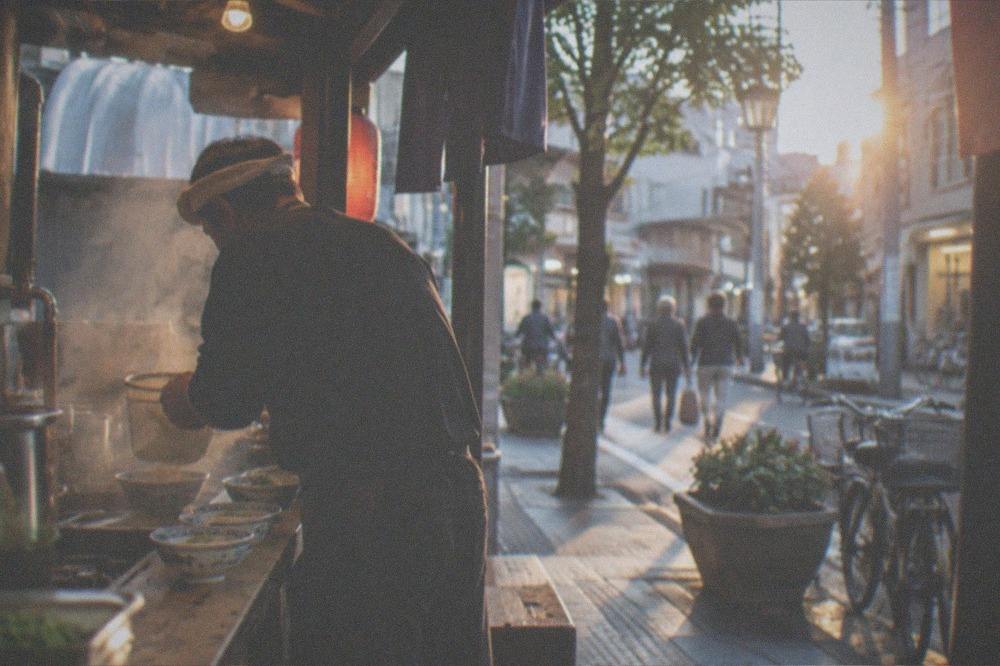
The three stall areas have distinct characters. Nakasu, along the Naka River by Seiryu Park, is the photogenic, tourist-facing row. Tenjin's stalls scatter along Watanabe-dori and Showa-dori with an after-work, office-crowd feel. Nagahama, near the old fish market, is the traditional ramen row. Stalls typically set up from 17:00, open around 18:00 to 18:30 and run into the small hours, but there is no city-mandated closing day and no guaranteed nightly opening: rain and strong wind close many stalls, and each operator decides their own schedule.
Payment varies stall to stall. Cash remains the safe assumption, though some stalls now accept cards and QR payments. The city publishes no average price per dish or per person, so this itinerary deliberately prints no figure; the posted board at each stall is the only honest source.
Where to Base Yourself: Hakata or Tenjin
Hakata is the better solo base for a first visit because the station area, the old town, the subway's airport line and the Nakasu stalls all sit within a short walk of each other, while Tenjin suits a second visit centred on shopping, cafés and nightlife. Hakata Station's shinkansen and subway platforms make day trips painless, and the evening walk from Nakasu back to a Hakata hotel is short and well-lit. Splitting a stay across both areas rarely pays off in a three-day trip.
The practical test is what you do last each evening. If your nights end at yatai counters and riverside stalls, stay in Hakata or Nakasu. If they end in the bars of Daimyo and Imaizumi, stay in Tenjin and accept a short subway ride to the old town each morning. Either way, the subway fare between the two is at the bottom of the fare table.
Solo travellers with dietary constraints should read the vegetarian and vegan guide before locking in restaurant plans, since tonkotsu broth and mentaiko dominate the default menus. English support is thin at some stalls but strong at the tourist information counters in Hakata Station and Tenjin, as the English in Fukuoka guide explains in detail.
Weather, Timing and the Solo Budget
A three-day solo trip in Fukuoka costs very little to run: the main sights are free or under ¥1,000, transport runs ¥210 to ¥380 per ride, and the two paid gardens and museums together total under ¥1,000 a day. The timing question matters more than the budget question. July is the city's wettest month at 299.1 mm against June's 249.6 mm, despite June being the tsuyu rainy season, and typhoon season runs roughly July through October, so spring and autumn are the comfortable windows.
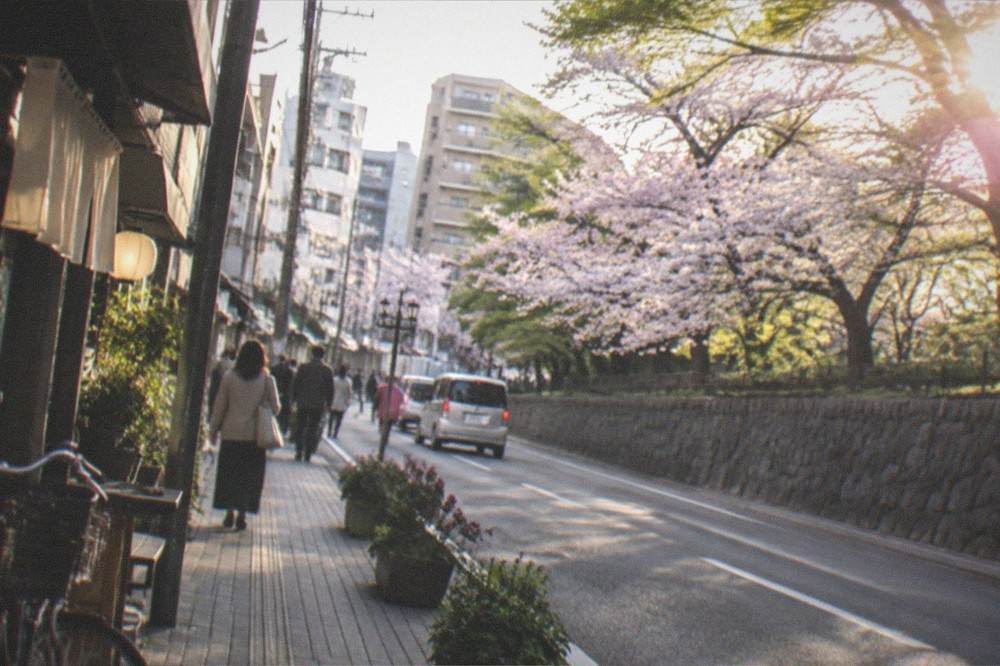
The climate record for Fukuoka shows a mild city: January averages 6.9°C and August 28.4°C, with the year rounding out at 17.3°C mean. August is actually hotter than July and considerably drier, banking 200.9 sunshine hours, the second sunniest month after May. Spring brings the cherry blossoms from late March, with peak viewing into early April at Maizuru Park and Nishi Park, and autumn colour peaks mid to late November into early December.
One time-limited item matters to day two of this itinerary: the Tenshudai, the main keep base at the Fukuoka Castle ruins in Maizuru Park, is closed to entry from 26 May 2026 until the end of December 2026 for an archaeological excavation. The dig was prompted by a document found in December 2024 describing a keep that may never have been built, and whether the "phantom keep" existed is still an open question. The park grounds themselves remain free and open, and the sakura season there is unaffected.
| Budget line | Typical cost | Notes |
|---|---|---|
| Subway day of riding | ¥640 with day pass | Or ¥210 to ¥380 per single ride |
| Ohori Park Japanese Garden | ¥250 adult, ¥120 child | Under 6 and over 65 free |
| Art museum collections | ¥200 general, ¥150 student | Junior high and under free |
| Fukuoka Tower | ¥1,000, ¥500, ¥200 by age | Open to 22:00, last entry 21:30 |
| Yatai dinner | Posted board prices only | City publishes no average |
Travellers stretching the trip can move on with the where to go after Fukuoka routes, or compare the city against Hiroshima before committing, via the Fukuoka versus Hiroshima breakdown.
Common Questions About Solo Travel in Fukuoka
Why Is Fukuoka A Good City For Solo Travel?
Compact geography, cheap transport with single fares from ¥210 to ¥380, free major sights, and a food culture built on counter seating make Fukuoka unusually solo-friendly. About 100 licensed yatai stalls serve one-diner meals, and a city ordinance requires every stall to post prices visibly, so eating alone carries no ambiguity.
Is Fukuoka safe for solo travellers?
Fukuoka is a mid-sized Japanese city of ordinary urban character, and the same everyday precautions that apply anywhere apply here. This site does not publish safety statistics it could not verify against official sources, so the honest advice is standard: keep valuables sensible, note that stalls and small shops may be cash-only, and use the well-signed subway after dark.
How many days does a solo trip to Fukuoka need?
Three days covers the old town, Ohori Park, the museums and one day trip. Two days works if you drop the day trip; five lets you add Itoshima, Yanagawa and a second Kyushu excursion. The day trips into Kyushu run 8 to 10 hours or more, so budget a full day for each.
Can I eat at a yatai stall alone if I do not speak Japanese?
Yes. Stalls seat a handful of people at a counter, prices are posted visibly by ordinance, and pointing at the board works. Arrive around 18:30 when stalls open, expect cash to be the safest payment, and check that a stall is actually open, since rain and wind close many and there is no mandated nightly schedule.
Should I buy a transport pass as a solo traveller?
The ¥640 subway day pass pays for itself on the third ride and covers all three lines. The Fukuoka Tourist City Pass at ¥2,500, or ¥2,800 with Dazaifu, covers subway, buses, trains and ferries for one day but is sold only to overseas visitors on short-stay visas, with a passport checked at purchase.
What is the best area to stay in as a solo traveller?
Hakata, for a first visit. The station, the old town, the airport subway line and the Nakasu stalls all sit within a short walk of each other, which minimises late-night solo travel. Tenjin suits a second visit focused on shopping, cafés and the Daimyo bar district.