Ohori Park
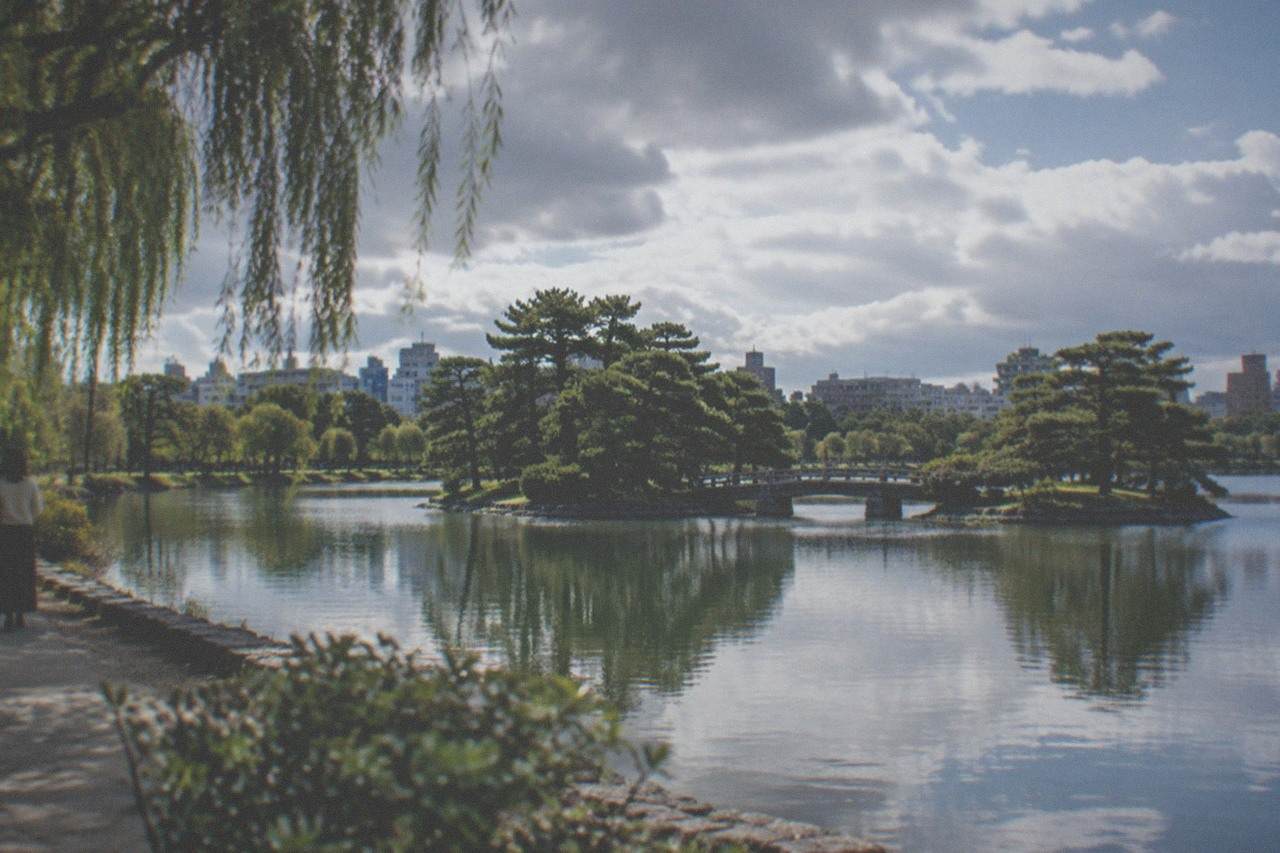
Ohori Park is the pond at the centre of Fukuoka: a former castle moat turned 2 kilometre waterside walk, with a pay-to-enter Japanese garden on its shore and the city's main art museum beside it.
Short answer
Ohori Park is free to enter and open from dawn. The 40 hectare park is the old moat of Fukuoka Castle, now a 2 kilometre pond circuit. The Japanese Garden inside charges ¥250 adult and ¥120 child, open 9:00 to 18:00 in summer and 9:00 to 17:00 in winter, closed Mondays.
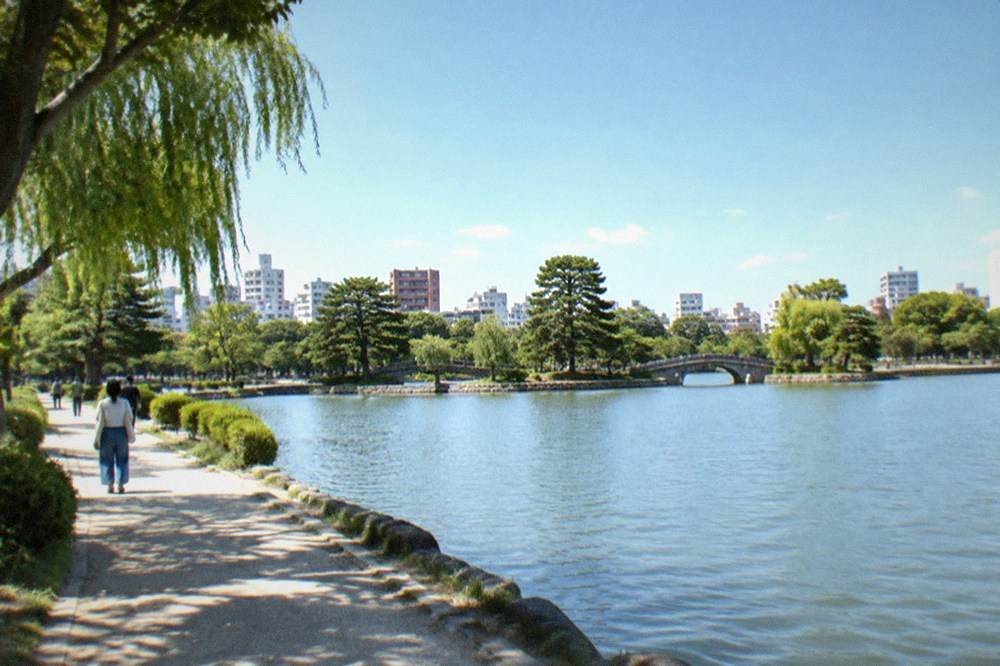
The pond at Ohori Park was dug as the outer moat of Fukuoka Castle in the Edo period, and it has outlived the castle it was built to defend. Today the water sits inside a 40 hectare public park in the Ohori and Ohori Akasaka area, a 2 kilometre walking circuit from Fukuoka Castle ruins, with pine-covered islands, three stone and wooden bridges, a row of swan-shaped pedal boats and the city's principal art museum on its western shore. Entry to the park costs nothing. The city treats it as its front room: joggers use the circuit before work, families feed koi on weekends, and the calendar of festivals, illumination events and outdoor concerts runs through the year.
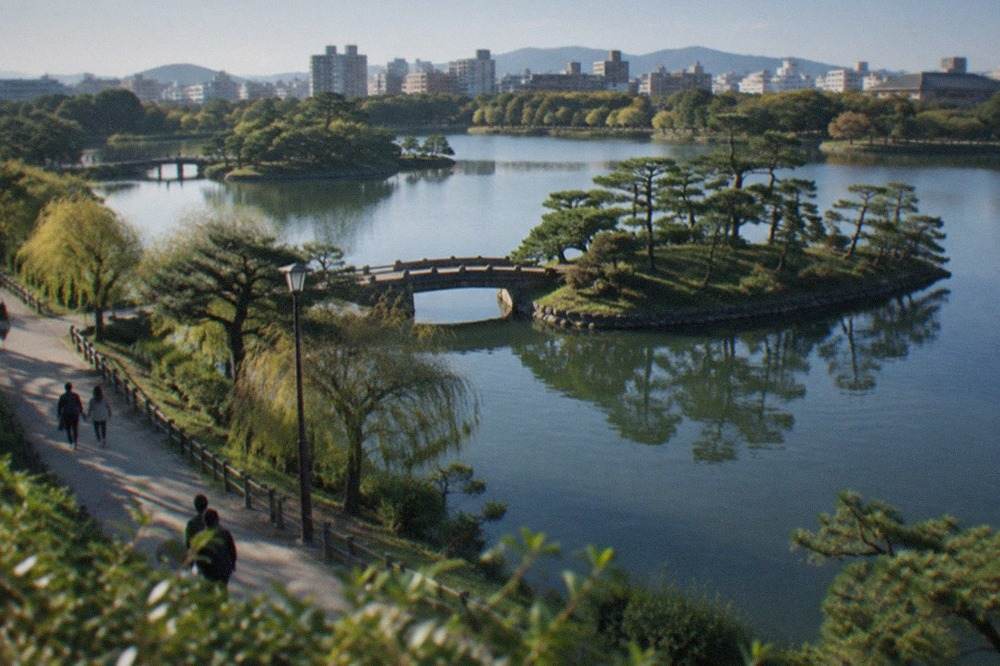
The park's position in the city is the reason it works so well. It sits two subway stops west of Tenjin, on the Airport Line, at Ohori Koen Station or Tojinmachi Station, either of which puts you at the water's edge within a short walk. For a visitor deciding how to spend a half day in Fukuoka, the honest framing is that Ohori Park is not a single attraction you visit so much as a district you pass through, and most people end up staying far longer than they planned. The rest of this guide answers the practical questions: what it costs, how to get there, what the Japanese Garden inside charges, which season rewards the trip and what to pair with it.
Is Ohori Park Worth Visiting?
Yes, for almost every traveller, and the reason is density. Ohori Park is free, central, open all day and it concentrates four paid or notable sights on its shores: the Ohori Park Japanese Garden, Fukuoka Art Museum, the Fukuoka Asian Art Museum's sister cultural buildings and the castle ruins next door. The pond circuit alone is a 2 kilometre walk that most visitors complete in under an hour, which makes the park the most efficient free half day in the city. The only visitor who should skip it is someone with a single evening in Hakata and no interest in leaving the station area, and even then the subway fare to get here is ¥210 to ¥300 from the city centre.
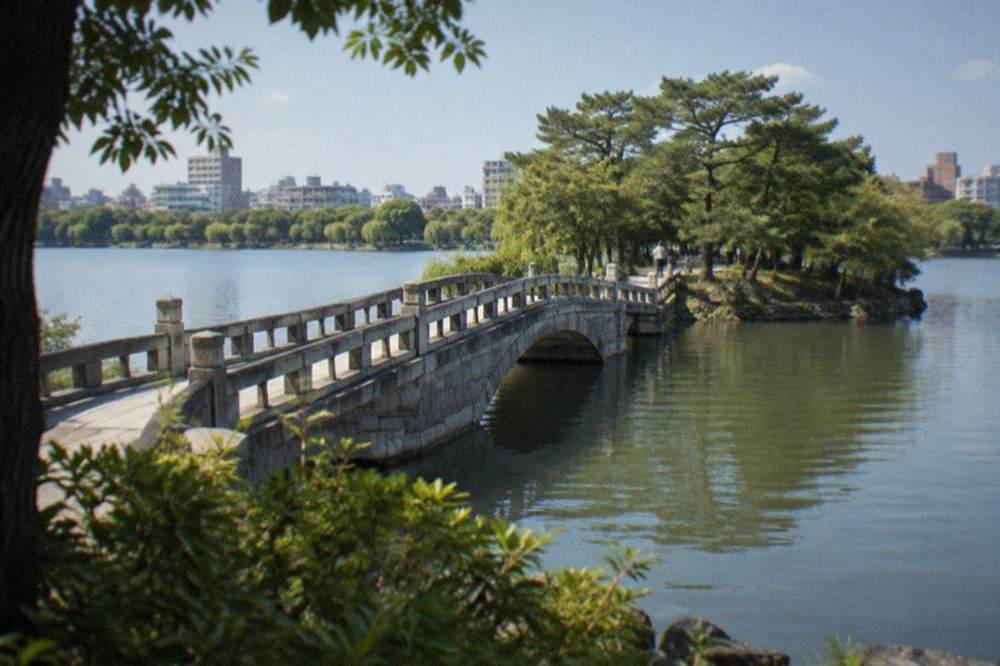
Worth, of course, depends on what you came to Fukuoka for. If the answer is food, the park still earns its place: the walk to it from Tojinmachi or from the castle passes some of the city's most reliable lunch streets, and the Ohori area around the park holds cafés and coffee roasters that locals queue for on weekends. If the answer is history, the park is the moat of the castle, which makes the two sites one story, and the castle ruins are the reason the pond exists at all. The lords who built the moat could not have imagined pedal boats, but they would recognise the view from the bridges instantly.
The park also carries weight as a piece of city life that costs nothing to observe. Roughly 1.66 million people live in Fukuoka City as of the October 2025 census count, the fastest-growing of Japan's designated cities, and on a Saturday afternoon a good portion of the growth is visible here: tai chi groups near the boathouse, violin buskers on the bridges, amateur painters at the north end where the willows lean over the water. None of it is staged for visitors. That distinction, a real city park rather than a visitor attraction, is what separates Ohori from the more polished sights on most itineraries.
How Do You Get to Ohori Park?
Take the subway to Ohori Koen Station or Tojinmachi Station on the Airport Line, both on the park's north side, or Ohori Station on the Nanakuma Line at the south west corner. A single fare from Tenjin or Hakata costs ¥210 to ¥300 per adult depending on distance, and the subway 1-day pass at ¥640 covers the round trip plus any other subway riding you do that day. Both Airport Line stations sit within a few minutes' walk of the water, and the station exits are signed in English.
The subway fare table is distance based, and it is worth understanding before you ride, because the same zones that price your trip to the park price every other subway ride in the city:
| Zone | Distance | Adult fare | Child fare |
|---|---|---|---|
| 1 | up to 3 km | ¥210 | ¥110 |
| 2 | 3 to 7 km | ¥260 | ¥130 |
| 3 | 7 to 11 km | ¥300 | ¥150 |
| 4 | 11 to 15 km | ¥340 | ¥170 |
| 5 | 15 to 19 km | ¥360 | ¥180 |
| 6 | over 19 km | ¥380 | ¥190 |
Ohori Koen sits in Zone 2 from the airport and most central hotels, so budget ¥260 each way if you are coming from Hakata Station or the airport direction. IC cards work at the gates: the local Hayakaken card, nimoca, SUGOCA and the national interoperable cards such as Suica, PASMO and ICOCA are all accepted on the Fukuoka City Subway, and contactless credit cards tap through at the blue gates with a daily cap equal to the 1-day pass price. The airport itself is unusually close to the centre, and the airport leg to Hakata costs the same ¥260 zone fare, though no official page states a journey time in minutes and this guide will not guess one.
Buses are the second option. Nishitetsu city buses run along Komeiji and Ohori avenues on the park's north and east sides, and the Nishitetsu day pass for the city's local buses costs ¥1,200 adult and ¥600 child if you plan to ride more than the subway covers. Most visitors, though, find the subway faster and simpler, and the honest advice is to take the train to the park and the bus only if you are already on one. For a fuller treatment of fares, passes and IC cards across the city, the city-wide transport guides cover it, and the airport-to-city guide handles that specific leg.
What Does It Cost to Visit Ohori Park?
The park itself is free, all day, every day: no gate, no ticket, no closing time beyond dawn to dusk for the grounds. The only charges inside the fence are the Japanese Garden at ¥250 adult and ¥120 child, the pedal boats at the boathouse, and the museums on the shore, of which Fukuoka Art Museum's collection exhibition is ¥200 general and ¥150 for high school and university students. A half day at Ohori Park can therefore cost nothing at all, or about ¥450 per adult if you add the garden and the museum collection.
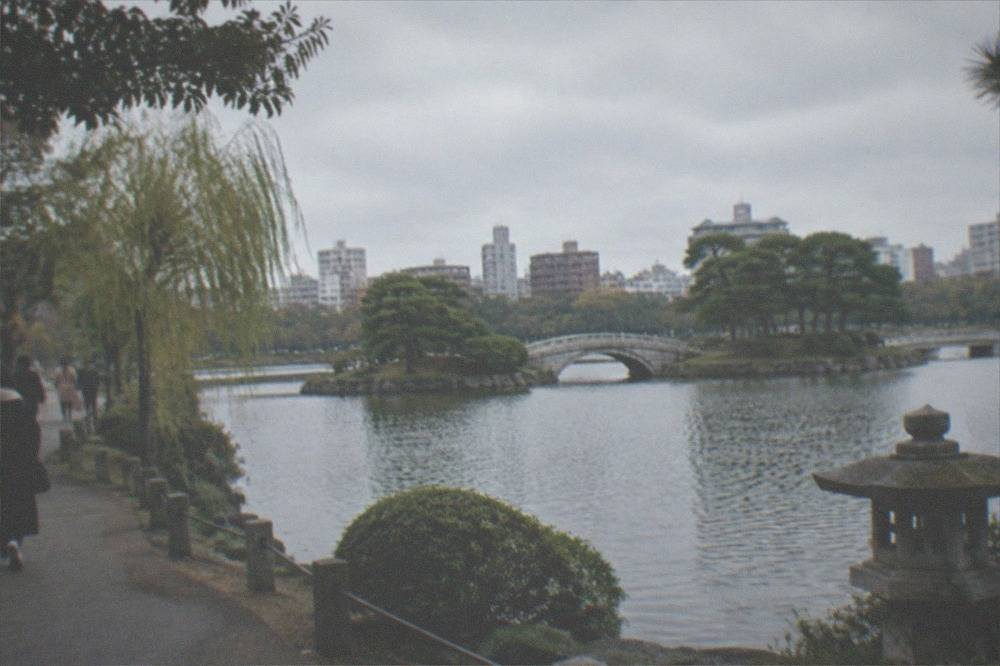
The Japanese Garden is the only pay-to-enter landscape inside the park, and it is the item most worth the money. Built on the site of a former inner garden of the castle, it compresses the classic elements, a pond, streams, waterfalls and a dry landscape garden, into a 4.1 hectare walk that takes 30 to 45 unhurried minutes. The official site publishes the fees plainly: adult ¥250, child ¥120, group rates of ¥200 and ¥100, free entry under 6, free at 65 and over, and free entry for visitors with a disability certificate plus one carer. Tour guides who bring groups pay their own admission. Last entry is 17:45 in the summer season and 16:45 in the winter season, which effectively sets a closing time of 18:00 and 17:00 respectively.
| Item | Price | Notes |
|---|---|---|
| Ohori Park grounds | Free | Open all day, no gate |
| Japanese Garden adult | ¥250 | Under 6 free, 65 and over free |
| Japanese Garden child | ¥120 | Group child rate ¥100 |
| Pedal boat rental | Per boat, at the boathouse | Seasonal, cash friendly |
| Fukuoka Art Museum collection | ¥200 | Junior high and under free |
| Fukuoka Art Museum, high school and university | ¥150 | Groups ¥100 |
The museums deserve their own line in the budget. Fukuoka Art Museum, the white modernist building on the west shore, charges ¥200 for its collection exhibition and stays open until 20:00 on Fridays and Saturdays from July to October, which pairs neatly with a summer evening walk around the pond. The Fukuoka Asian Art Museum is not on the pond itself but sits across the district in the Riverain Center building by Nakasu, and its building entry is free with only the Asia Gallery charged, at ¥200 general. Both city art museums are free for junior high school age and younger, and both are free for residents aged 65 and over from Fukuoka, Kitakyushu, Kumamoto and Kagoshima with proof of address.
One honest cost note: food inside the park is limited. The boathouse café by the south shore sells drinks and light snacks, and the restaurants at the Mizuho PayPay Dome side of the district, near the ballpark, are the nearest proper sit-down options. If you are planning a full morning here, eating before you arrive or budgeting a walk out for lunch is the realistic move.
What Is There to Do Around Ohori Park?
Four distinct sights sit within a 15 minute walk of the pond: the Japanese Garden inside the park, Fukuoka Art Museum on its shore, the Fukuoka Castle ruins through Maizuru Park to the south east, and the Ohori Akasaka café district to the north. Together they fill a half day comfortably and a full day slowly, which is exactly how most first time visitors should schedule it. The castle is the anchor: Maizuru Park and the ruins are a continuous green space with Ohori Park, and the two are usually walked together.
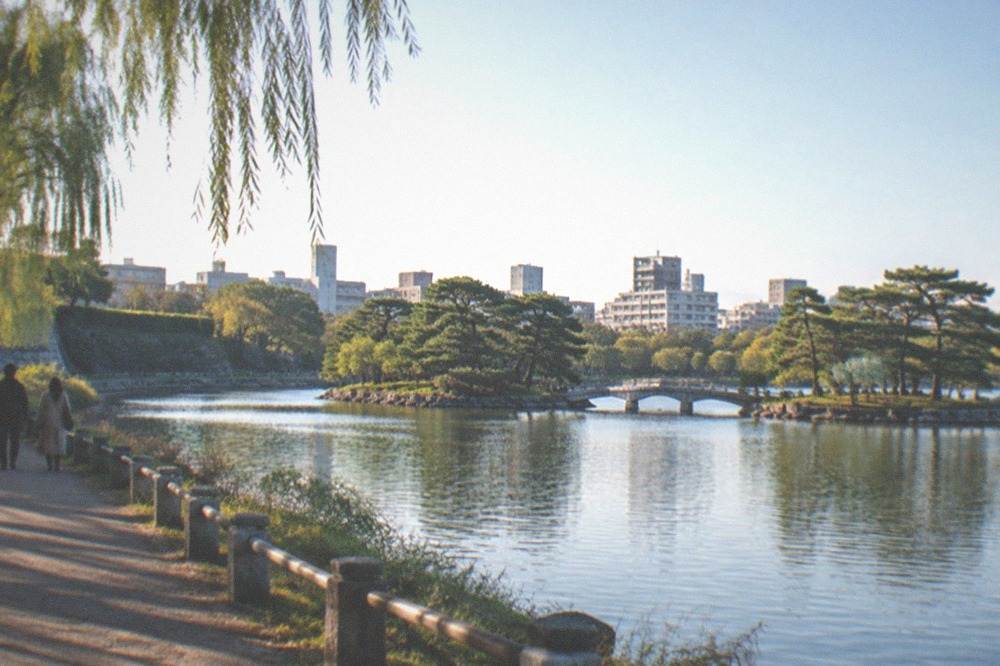
The castle ruins are free to walk, and they carry the best story in central Fukuoka at the moment. The Tenshudai, the stone base of the main keep, has been closed to entry since May 26, 2026 and will remain closed until the end of December 2026 for an archaeological excavation. The reason is remarkable: a document found in December 2024 describes a keep that may never have existed, and the city has since tripled the excavation area to settle whether the "phantom keep" was ever built. Until the dig reports, nobody knows. The closure is temporary and expires at the end of 2026, but the rest of the ruins, the stone walls, the Korokan remains and the lawns, are open as normal and free.
A sensible circuit for a half day starts at Ohori Koen Station, walks the pond counter-clockwise, enters the Japanese Garden at the north west gate, exits toward the art museum, then follows the path south east into Maizuru Park and the castle walls, and ends at the Akasaka side for coffee. Done at walking pace with stops, that route is three to four hours. Families with children usually reverse it, starting at the castle lawns while energy is high and ending at the pedal boats.
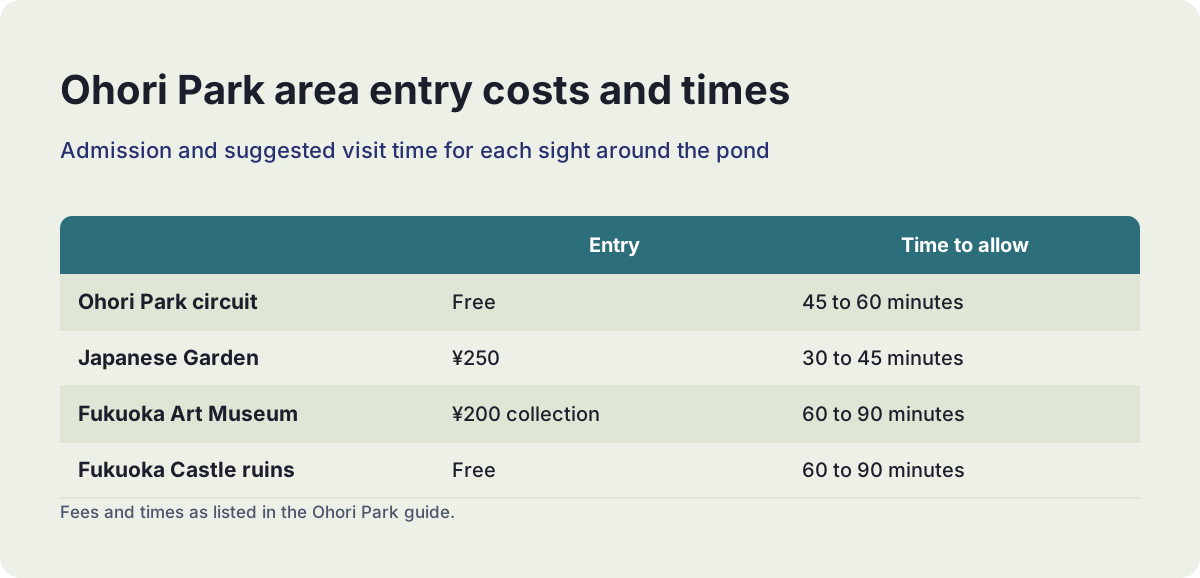
| Sight | Direction from pond | Entry | Time to allow |
|---|---|---|---|
| Ohori Park circuit | The pond itself | Free | 45 to 60 minutes |
| Japanese Garden | North west shore | ¥250 | 30 to 45 minutes |
| Fukuoka Art Museum | West shore | ¥200 collection | 60 to 90 minutes |
| Fukuoka Castle ruins | South east, through Maizuru Park | Free | 60 to 90 minutes |
| Ohori Akasaka cafés | North, across Komeiji avenue | Free to browse | As long as you like |
If you have already spent your city days and want the countryside version of the same slow rhythm, the coast tours from the same operator family are the natural next booking. The Colors of Japan tour to Nokonoshima Island Park pairs the island park's flower terraces with a Wagyu barbecue lunch, from $152 per person and rated 5 from 17 reviews over 4 to 6 hours, which is the closest thing the roster has to a guaranteed-good full afternoon outside the city.
For travellers based in the city longer, the pairing question changes. Yufuin and Beppu, the onsen towns over the mountains in Oita, are full day trips from Fukuoka, and the day tour covering Yufuin, the Beppu hells and an animal park runs from $59 per person with a 5 rating from 7 reviews on a 10 hour schedule. It is a long day, and it should be booked as a full day, not squeezed beside an afternoon at Ohori Park.
When Is the Best Time to Visit Ohori Park?
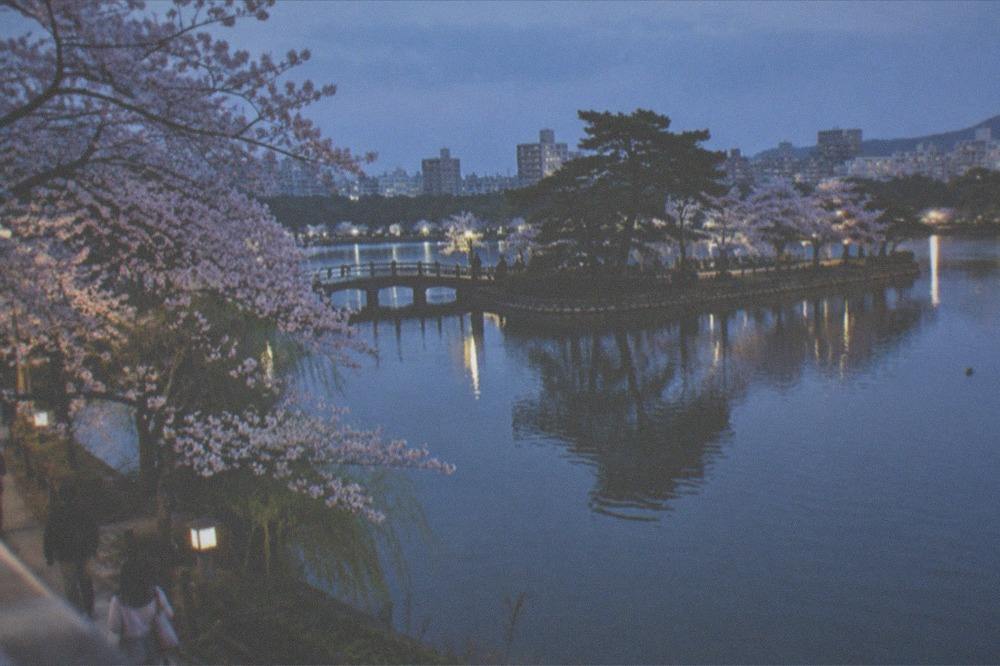
Late March to early April for cherry blossoms and mid to late November into early December for autumn colour are the two peaks, and the park is unusual in that both are good: roughly 1,000 cherry trees ring the water with the castle ruins blooming alongside, and the maples and ginkgos in the city parks hold their colour well into December. For quiet, weekday mornings before 9:00 a.m. are the park's emptiest hours in any season.
The climate numbers come from the Japan Meteorological Agency's normals for Fukuoka station, and they reward a close read. July is the wettest month, 299.1 mm against June's 249.6 mm, which surprises most people because June is the tsuyu rainy season month and July is the festival month. August is hotter than July and drier than both, at 210.0 mm of rain and 200.9 hours of sunshine, the second sunniest month of the year after May. What this means for Ohori Park specifically is that summer evenings are better than summer afternoons: the pond glows after sunset during the illumination events, and the walk stays warm late.
| Month | Mean temp | Rain | Sunshine | Park verdict |
|---|---|---|---|---|
| March | 10.8 C | 103.7 mm | 161.2 h | Blossom season begins |
| April | 15.4 C | 118.2 mm | 188.1 h | Peak blossom, busiest |
| July | 27.4 C | 299.1 mm | 172.2 h | Wettest month, evening walks |
| August | 28.4 C | 210.0 mm | 200.9 h | Hot, sunny, festival lights |
| November | 14.2 C | 91.4 mm | 137.3 h | Peak autumn colour |
| December | 9.1 C | 67.5 mm | 112.2 h | Quiet, colour lingers |
Typhoon season runs roughly July through October and is a real planning factor for Kyushu, though it should be written as a schedule-checking habit rather than a warning: the park closes its bridges and boat dock when a storm approaches, and the pond's water level visibly rises after a heavy one. Winter, by contrast, is the park's most underrated season. December and January are the driest months on the normals table, 67.5 mm and 74.4 mm, and the light off the water at midday in winter is the best of the year for photographs.
Where Do You Eat Near Ohori Park?
The honest answer is that Ohori Park itself has almost no food, so plan to eat before or after: the Ohori Akasaka district on the north side is the café quarter, the castle side has the machiya-style restaurants, and the subway ride back to Tenjin or Hakata puts you within minutes of the city's main eating streets. Bringing a convenience store picnic and taking one of the pond-side benches is the local move, and it costs whatever the store charges.
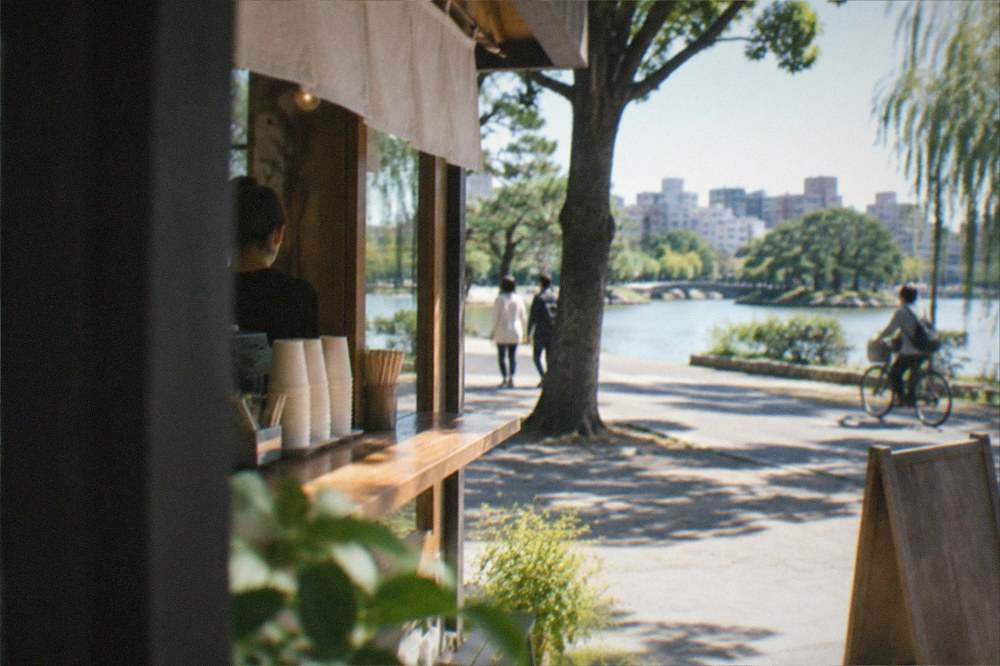
Ohori Akasaka is worth naming because it is the park's food culture in miniature. The district's streets a few minutes north of the water hold a dense strip of independent coffee roasters, bakeries that open for the morning only and a handful of long-running kissaten, old style cafés, that locals treat as institutions. It is a morning neighbourhood rather than a night one, which suits the park's own rhythm: most visitors eat after their walk, not before it.
For the evening, the calculus changes. Tenjin is two subway stops away, Nakasu with its riverside yatai stalls is three, and Hakata's restaurant rows run past midnight. Fukuoka has about 100 licensed yatai stalls across the city, the largest count of any Japanese city, and the ordinance that governs them requires prices to be displayed where customers can easily see them, with any market-priced item showing that day's actual price rather than the vague "market price" wording. That posted-price rule is the honest answer to the question of whether a stall will overcharge a visitor: the city inspects for it, so the price you can read is the price you pay.
How Does Ohori Park Fit a Fukuoka Itinerary?
As the afternoon of day one, most naturally. The classic first day in Fukuoka pairs a morning at the shrines and temples of Hakata old town, Kushida Shrine and Tochoji among them, with an afternoon walk from Ohori Park to the castle ruins, then an evening of food in Nakasu or Tenjin. That day is entirely walkable apart from two subway hops, and every element in it is free except the Japanese Garden and any food.
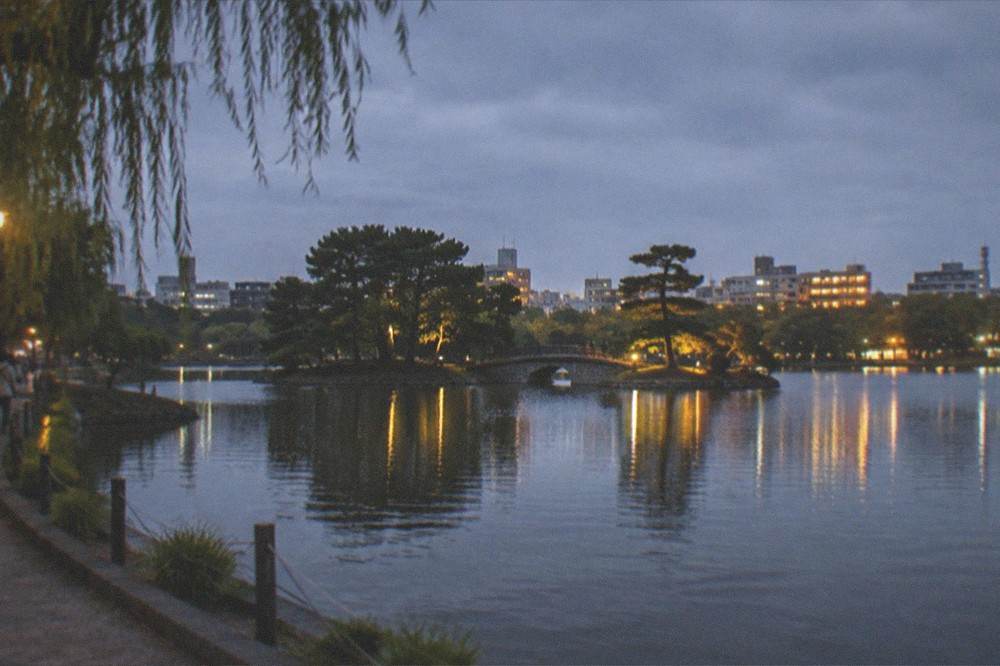
The park's role changes for longer stays. On a second day it becomes the warm-up for Momochi Seaside Park and the bay side, via the Tojinmachi and Nishijin direction, and on a rain day it is the fallback that still works: the museums take the afternoon, the Japanese Garden holds up in drizzle, and the subway connections mean you are never more than a few minutes from a covered arcade. For the travellers whose Fukuoka days feed into a wider Kyushu circuit, the park is also the last calm spot before the long day tours depart, most of which leave from Hakata Station in the morning and return after dark.
One itinerary principle is worth stating plainly because the competing guides blur it: Dazaifu is a separate half day, not an add-on to Ohori Park. The Nishitetsu train from Tenjin toward Dazaifu takes about 30 minutes with one transfer, and the return fare plus a famous mochi voucher comes as a combined ticket. Squeezing Dazaifu and Ohori Park into one day leaves both short-changed. Give the pond an unhurried afternoon and take Dazaifu on its own morning.
If your trip stretches beyond the city limits, the coast and strait tours are the strongest complements to the park's calm. The Motonosumi Shrine and Kanmon Bridge day trip from Fukuoka runs from $50 per person, rated 4.7 from 37 reviews over 9 hours, and covers the shrine's red torii gates stacked on the cliff and the view under the bridge between Honshu and Kyushu, sights that no city itinerary can imitate.
For the fuller question of whether Fukuoka as a whole earns its place on a Japan route, the honest weighing of the city's strengths and the numbers behind them is laid out in our answer on whether Fukuoka is worth visiting, and the broader Fukuoka Japan Travel Guide covers the rest of the region, day trip by day trip.
Common Questions About Ohori Park
Is Ohori Park Worth Visiting?
Yes. It is free, central and open all day, it concentrates the Japanese Garden, Fukuoka Art Museum and the castle ruins on its shores, and the 2 kilometre pond circuit is one of the best free walks in any Japanese city. Most visitors spend two to four hours here without trying.
How much does Ohori Park cost?
The park grounds are free. The Japanese Garden inside charges ¥250 for adults and ¥120 for children, with free entry for under 6s and for visitors aged 65 and over. Fukuoka Art Museum on the shore charges ¥200 for its collection exhibition.
What are the Ohori Park Japanese Garden hours?
The garden opens 9:00 to 18:00 from May to September and 9:00 to 17:00 from October to April, with last entry 45 minutes before closing in each season. It closes Mondays and over the New Year break. The park itself stays open around the clock.
Which subway station is Ohori Park?
Ohori Koen Station and Tojinmachi Station, both on the Airport Line, sit on the park's north side within a few minutes' walk of the water. Ohori Station on the Nanakuma Line serves the south west corner. A fare from the city centre costs ¥210 to ¥300 per adult.
When is cherry blossom season at Ohori Park?
First bloom in Fukuoka typically falls in late March and full bloom follows at the end of March into the first days of April. The trees by the pond and in the neighbouring castle ruins park light up in the evenings during the blossom festival. Exact dates shift year to year, so check the forecast close to your travel dates.
Can you walk from Ohori Park to Fukuoka Castle ruins?
Yes, and you should. Maizuru Park and the castle ruins connect directly to Ohori Park as one continuous green space, roughly 2 km from the pond to the main ruins entrance. Note that the castle's Tenshudai keep base is closed to entry until the end of December 2026 for an archaeological excavation, though the rest of the ruins stay open and free.