Where to Stay in Fukuoka
Fukuoka is compact enough that almost anywhere in the city centre works, but the district you pick changes your trip: Hakata puts you beside the station, Tenjin puts you in the shopping and dining core, Nakasu puts you in the middle of the night action.
Short answer
Most first-time visitors should stay near Hakata Station or in Tenjin. Hakata is the transport hub, with the subway, the Shinkansen and the airport connection in one place. Tenjin is the shopping, restaurant and bar core. Nakasu suits nightlife lovers, and Ohori Park and Momochi suit travellers who want quiet and waterfront walks. All four are within a short subway ride of each other.
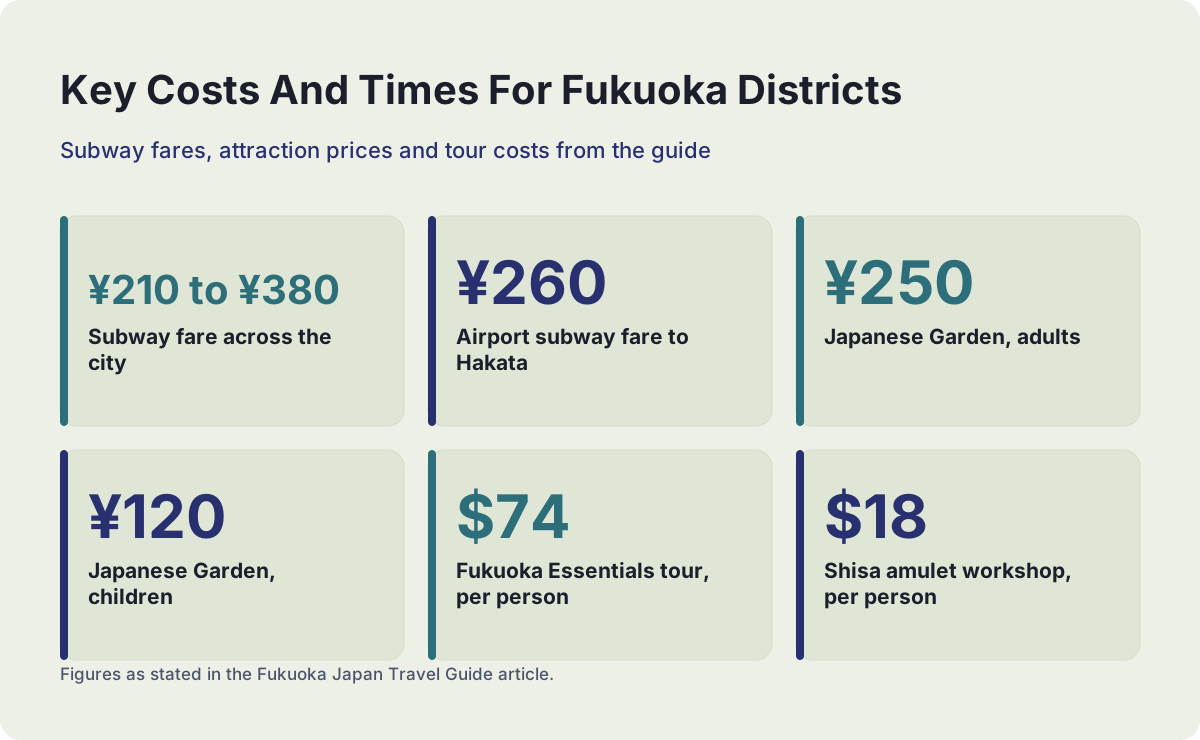
Fukuoka is one of the easiest big cities in Japan to choose a hotel in, because the choice effectively comes down to four central districts, all of them connected by a subway system that crosses the city in minutes for fares between ¥210 and ¥380. The city sits on Hakata Bay on the Genkai Sea side of northern Kyushu, and its centre folds neatly into a strip you can walk end to end in under an hour: Hakata Station in the east, Tenjin in the middle, Ohori Park in the west, with Nakasu and the Naka River between them. One thing worth clearing up before anything else, because competing guides get it wrong constantly: Hakata is not a separate city from Fukuoka. Hakata is a ward of Fukuoka and the name of its main station, so a hotel "in Hakata" and a hotel "in Fukuoka" are the same destination, just different neighbourhoods of it.
This guide walks through each candidate district, matches them to trip types, and covers the airport transfer and transit passes that shape where it is genuinely convenient to sleep. If you want the short version of the whole debate, the dedicated answer page on the best area to stay in Fukuoka compresses it further.
What Is the Best Area to Stay in Fukuoka?
For most visitors the best area to stay in Fukuoka is either the Hakata Station district or Tenjin, and the tiebreaker is what you plan to do after dark. Hakata wins for transport, since the subway, the Shinkansen and the airport link all converge there, and the Hakata Station area holds the largest concentration of hotels. Tenjin wins for walking, with the department stores, the underground mall, and the restaurants and bars of Daimyo all close by.
The reason this question has a real answer, rather than being a matter of taste, is geography. Fukuoka's centre is linear. Hakata Station sits at the east end, Tenjin roughly 2 km west along Watanabe-dori, and Ohori Park another short hop beyond that. The subway's Airport Line runs through all of them, so no central hotel is ever more than a few stops from anything. What changes from district to district is the texture of your evenings and the length of your morning walk to breakfast.
It also depends on the shape of your trip. Travellers using Fukuoka purely as a base for day trips across Kyushu, which is a common pattern given how much of the island you can reach from the city, get the most out of Hakata, since the Shinkansen, the highway buses and the JR conventional lines all leave from there. Travellers spending their whole stay inside the city tend to prefer Tenjin, where the eating and shopping density means you can go two or three days without needing a train.
A quick orientation table before the district-by-district detail:
| District | Nearest subway station | Subway line | Best for |
|---|---|---|---|
| Hakata Station area | Hakata | Airport Line, Nanakuma Line terminus | Transport, day trips, first-timers |
| Tenjin and Daimyo | Tenjin | Airport Line | Shopping, restaurants, bars |
| Nakasu | Nakasu-Kawabata | Airport Line, Hakozaki Line | Nightlife, yatai stalls |
| Ohori Park and Momochi | Ohori Park | Airport Line | Quiet, families, waterfront walks |
Hakata: The Transport Hub and the Safest First Choice
Hakata, the district around Fukuoka's main station, is the best base for first-time visitors, rail pass holders and day-trippers, since every major transport line in the region converges within a few hundred metres of the hotel towers. The station area is dense with restaurants, food halls and shopping, and the atmospheric lanes of old Hakata lie just south. Its main weakness is character: parts feel like any Japanese station city, and the nightlife is thinner than Tenjin's or Nakasu's.
Start with the station itself, because it defines the district. There is no JR Fukuoka Station; the city's main rail hub is Hakata, and every hotel that markets itself as "Hakata Station front" is selling the same thing: walking access to the Shinkansen, the Fukuoka City Subway, Nishitetsu trains toward Dazaifu and Yanagawa, and the highway bus terminal. Our Hakata Station guide covers the concourses, the exits and the food floors in detail, but the short version for a hotel decision is that the station is large enough that "near Hakata Station" can mean a ten minute walk, so check the exit number before booking.
South of the tracks is where the district earns its keep beyond transit. The old lanes around Kushida Shrine, Tochoji and the Kawabata shopping arcade give the area its historical texture, and they are all within a 10 to 15 minute walk of most station-side hotels. That combination, brand-new hotel towers a short stroll from temple lanes and a shrine, is genuinely unusual among Japanese cities, and it means a Hakata base does not feel as sterile as station districts often do.
The eating case for Hakata is strong too. Tonkotsu ramen originated here, and the station's ramen street and surrounding blocks hold decades-old shops alongside the stalls of the yatai. If you are planning evenings around the food stalls, our Fukuoka yatai guide maps the three main areas, two of which, Nakasu and Nagahama, are an easy walk or one subway stop from a Hakata hotel.
One practical way to test the district before committing your evenings to it is a guided half-day walk. The Fukuoka Essentials tour, from $74 per person and rated 4.9 from 48 reviews over 3 to 6 hours, covers the history and culture core with a guide, and it starts from the centre, which makes it a natural first-afternoon activity for a Hakata-based traveller who has just dropped bags.
Tenjin: The Shopping and Dining Core
Tenjin is Fukuoka's central business and shopping district and the best base if you plan to spend your evenings eating and drinking rather than riding trains, because the department stores, the Tenjin underground mall, the Daimyo and Imaizumi side streets and the Naka River yatai are all within walking radius of a Tenjin hotel. It is the city's densest concentration of restaurants, bars and boutiques. Its trade-off is distance from the Shinkansen: day-trippers change trains or ride a few subway stops first.
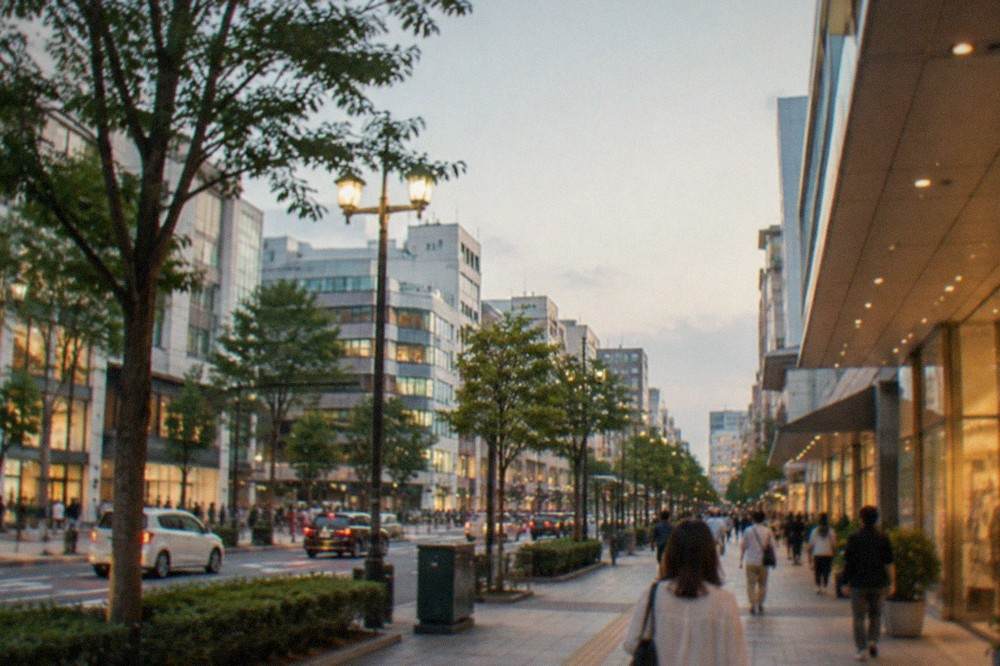
Tenjin is what locals mean when they say "the centre of Fukuoka". The Tenjin area guide covers the neighbourhood block by block, but the hotel logic is simple: everything worth doing after 6 p.m. in this city is either in Tenjin or a short walk from it. The underground mall keeps you dry in rain, the department store food floors solve dinner on a tired evening, and the lanes of Daimyo and Imaizumi hold the kind of small bars and independent shops that make a district feel lived-in rather than staged.
The comparison most travellers actually face is Tenjin versus Hakata, and it is close enough that we give it its own question page. The honest summary: Hakata is better if you will ride trains daily, Tenjin is better if you will walk everywhere and eat late. Tenjin also wins for travellers who want izakaya variety, since the heaviest concentration of the city's restaurants and small bars sits within Tenjin and its side streets.
Families and long-stay travellers should note one more Tenjin advantage: the district sits between Hakata and Ohori Park on the subway, so it is the natural midpoint base. You give up nothing by staying here that you cannot reach in ten minutes, and you gain the ability to skip the last train entirely, because your hotel is above the restaurants.
Nakasu: The Island That Never Sleeps Early
Nakasu is Fukuoka's entertainment district, an island between the Naka River and the Hakata Canal, and it is the best base specifically for travellers whose main priority is nightlife, because the island holds the city's densest cluster of bars, clubs, restaurants and the photogenic riverside row of yatai food stalls. It is loud late, it is bright, and it is the wrong choice for anyone who values silence. For everyone else it puts the night out on your doorstep and the subway one stop from Hakata.
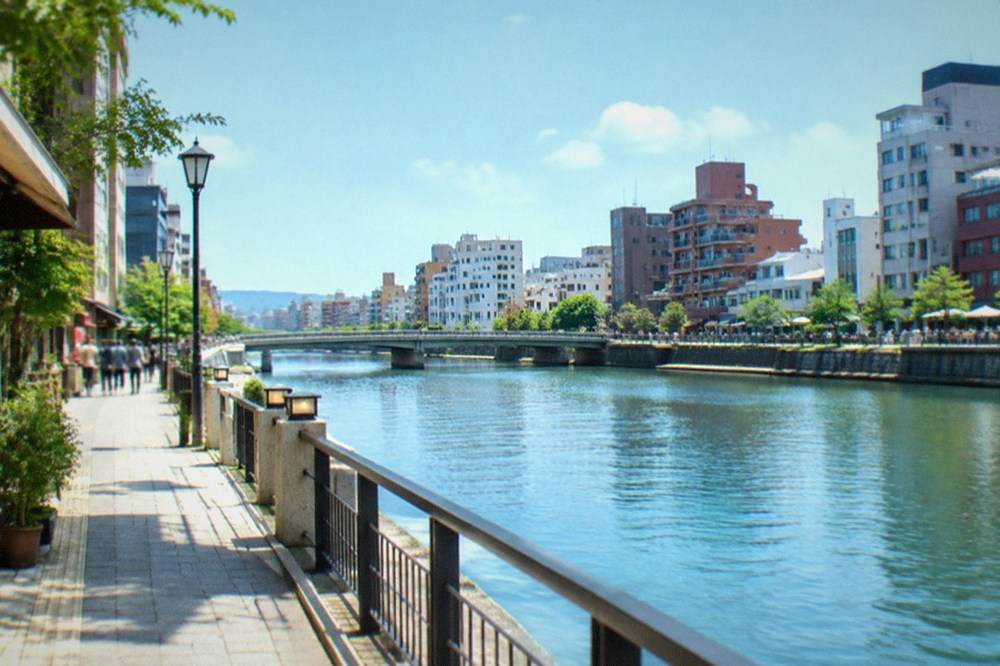
The Nakasu yatai street guide covers the riverside stall row along Seiryu Park, the most photographed stretch of food stalls in the city. About 100 licensed yatai operate across Fukuoka, more than any other Japanese city, and the Nakasu row is the most tourist-facing of the three main concentrations. A city ordinance requires every stall to display its prices where customers can easily see them, and bans vague "market price" labelling, so a first-time visitor can read a menu without worrying about a surprise bill.
Hotels on and around the island skew business and mid-range, and the practical case for staying here is purely logistical: last trains stop around midnight, and if your night is on the island, you never need one. The district is one subway stop from Hakata Station on the Nakasu-Kawabata station, and the walk from Tenjin across the river takes ten minutes.
The honest caveat is the flip side of the convenience. Nakasu does not quiet down early, and the streets stay busy into the small hours. Light sleepers should book a room on a high floor facing away from the river, or simply choose Tenjin, which keeps most of the nightlife within walking distance while sleeping quieter.
Ohori Park and Momochi: The Quiet West Side
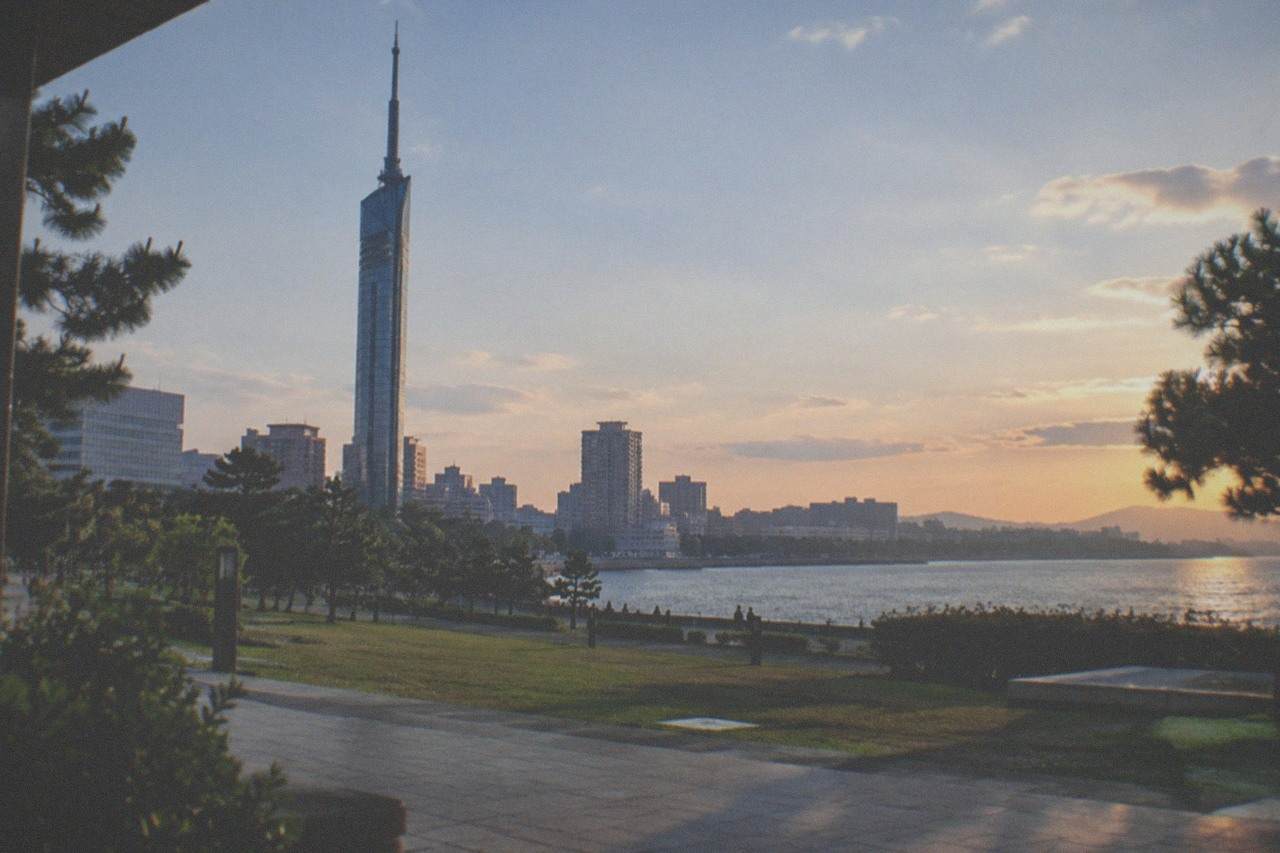
Ohori Park and Momochi are the best areas for travellers who want calm, water and green space over nightlife, sitting on the city's west side around a large pond park and the Hakata Bay waterfront. Ohori Park is the traditional residential favourite, with the castle ruins, the art museum and the Japanese garden as neighbours. Momochi adds the seaside promenade, the tower and the beach. Both are a short subway ride from Tenjin and Hakata, so you trade evening density for morning quiet.
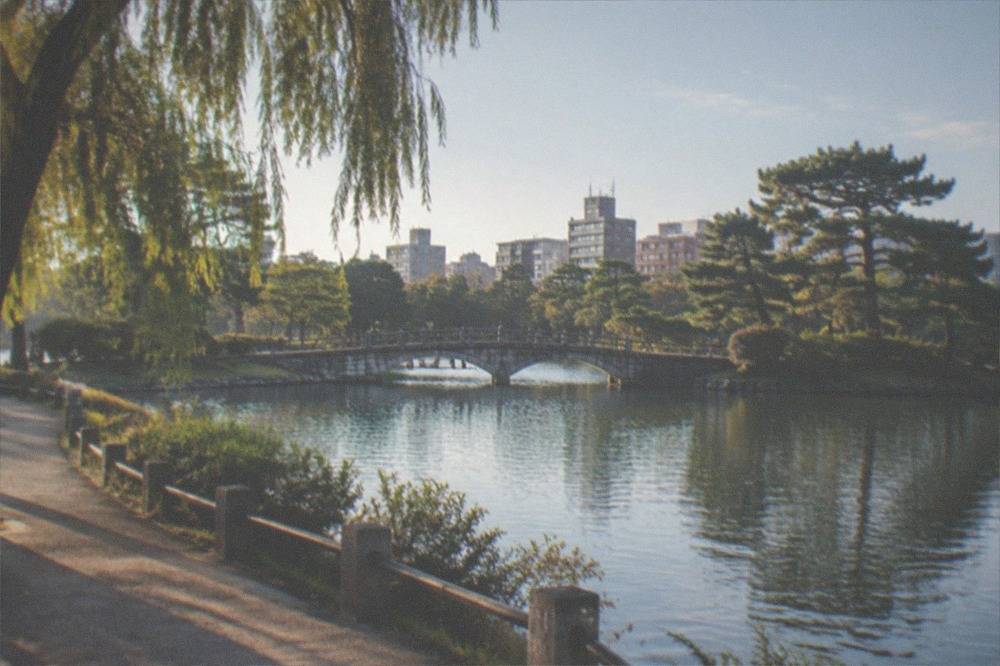
The Ohori Park guide covers the park itself, which is free to enter and anchors one of the pleasantest residential quarters in the city. The Japanese Garden inside charges ¥250 for adults and ¥120 for children, and the surrounding Ohori and Akasaka blocks hold a mix of apartment hotels and small properties aimed at longer stays. Fukuoka Art Museum sits on the park's edge, and the Maizuru Park castle ruins adjoin it, so the west side stacks more walkable sightseeing per square kilometre than anywhere else in the city.
Momochi, further north on the bay, is the modern waterfront: the beach promenade, the museums and Fukuoka Tower, which charges ¥1,000 for adults and stays open until 22:00 with last admission at 21:30. The Momochi Seaside Park guide covers the waterfront. Families will find this district pairs naturally with the parks, the zoo and the seaside, all of which sit on this side of the city.
The trade-off is honest and simple: fewer restaurants within immediate walking radius, and a subway ride, a short one, to Nakasu or Tenjin for the evening. Travellers who stay west tend to be the ones who have already done Fukuoka's nights elsewhere, or who value a morning run around the pond over a midnight last train.
A small bonus for culture-minded guests on the west side: workshop-style experiences cluster in the central districts but are easy to reach, and the Okinawa-style shisa amulet making workshop, from $18 per person and rated 5 from 13 reviews, runs about an hour, which slots neatly into a quiet morning before the museums open.
Which Area Suits Your Trip Type?
Match the district to the trip, not to a single "best" label: rail-based day-trippers and first-timers should book Hakata, food-and-shopping city breaks belong in Tenjin, nightlife-first trips belong in Nakasu, and families, runners and long-stay travellers are happiest around Ohori Park or Momochi. The city is compact enough that a "wrong" choice costs a few minutes on the subway, so this is a decision about texture and evenings rather than access.
The table below compresses the matching logic. Treat it as a planning aid rather than a rulebook, because the honest truth about Fukuoka is that the subway makes almost any central choice workable.
| Trip type | Recommended base | Why it works |
|---|---|---|
| First visit, 2 to 3 days | Hakata Station area | Transport hub, old town walkable, yatai nearby |
| Food and shopping city break | Tenjin or Daimyo | Densest restaurant and retail core, no last-train anxiety |
| Nightlife priority | Nakasu | Bars, clubs and riverside stalls on the doorstep |
| Family trip | Ohori Park or Momochi | Parks, zoo, seaside and museums on the west side |
| Kyushu day-trip base | Hakata Station area | Shinkansen, JR and highway buses in one terminal |
| Long stay, work and travel | Ohori and Akasaka | Quieter, more residential, apartment hotels |
Two refinements worth knowing. First, budget travellers often do best in the blocks just west of Hakata Station rather than in Tenjin, where the same money buys a smaller room; the trade is a five minute longer walk to the department stores. Second, anyone visiting in the best months to visit Fukuoka should book early around the two monster festivals: Hakata Dontaku on May 3 and 4 draws crowds in the millions across two days, and Hakata Gion Yamakasa runs July 1 to 15 with its climax race on the morning of July 15, when central hotels fill with spectators. One planning wrinkle most guides miss: July, not June, is statistically Fukuoka's wettest month, with 299.1 mm of rain against June's 249.6 mm in the 1991 to 2020 normals published by the Japan Meteorological Agency.
Getting from Fukuoka Airport to Your Hotel
Fukuoka Airport (FUK) sits on the subway's Kuko line and is unusually close to the city centre, a genuine rarity among Japanese cities, with the fare into Hakata a verified ¥260 on the official 3 to 7 km fare band. From the domestic terminal the subway runs straight to Hakata and on to Tenjin; from the international terminal a free inter-terminal shuttle bus connects you to the station first, which the airport states takes about ten minutes. Allow a comfortable margin rather than a tight one.
The airport's closeness to the centre is the single most under-appreciated fact about visiting this city, and it shapes hotel strategy more than people expect: you do not need to sleep near the airport, because the airport is effectively inside the city already. The Fukuoka Airport guide and the airport to city guide cover the transfer in full, including the subway fare table, which runs from ¥210 for the shortest hops up to ¥380 for the longest single rides on the network, per the official Fukuoka City Subway fare page.
| Subway ride from the airport | Approximate fare | Notes |
|---|---|---|
| Fukuoka Airport to Hakata | ¥260 | Official 3 to 7 km fare band |
| Fukuoka Airport to Tenjin | ¥260 | Same band, a few stops further |
| Any single ride, network-wide | ¥210 to ¥380 | Distance-based zones 1 to 6 |
| 1-day subway pass | ¥640 adult, ¥320 child | Unlimited rides, all three lines |
For travellers arriving late, with luggage, or in a group, the private arrival transfer from Fukuoka Airport to the city, from $149 per person and rated 5 from 2 reviews, removes the terminal shuttle and the stairs entirely and runs about 30 minutes to an hour door to door.
Once you are based, the local IC cards Hayakaken, nimoca and SUGOCA all work across the subway and Nishitetsu network, and nationwide cards are accepted too. Rail pass holders planning heavy Kyushu circuits should also weigh whether a hotel near the station fits their pass coverage before committing.
Where to Stay If You Are Coming from Tokyo, Osaka or Kyoto
Travellers arriving by Shinkansen from Tokyo, Osaka or Kyoto should default to the Hakata Station district, because the bullet train from all three terminates at Hakata, making a station-side hotel the only choice that lets you walk from the platform to check-in. Coming from Osaka or Kyoto the ride is short enough that Hakata-based day-trip logic works in reverse too, and the station district absorbs a late arrival better than anywhere else in the city.
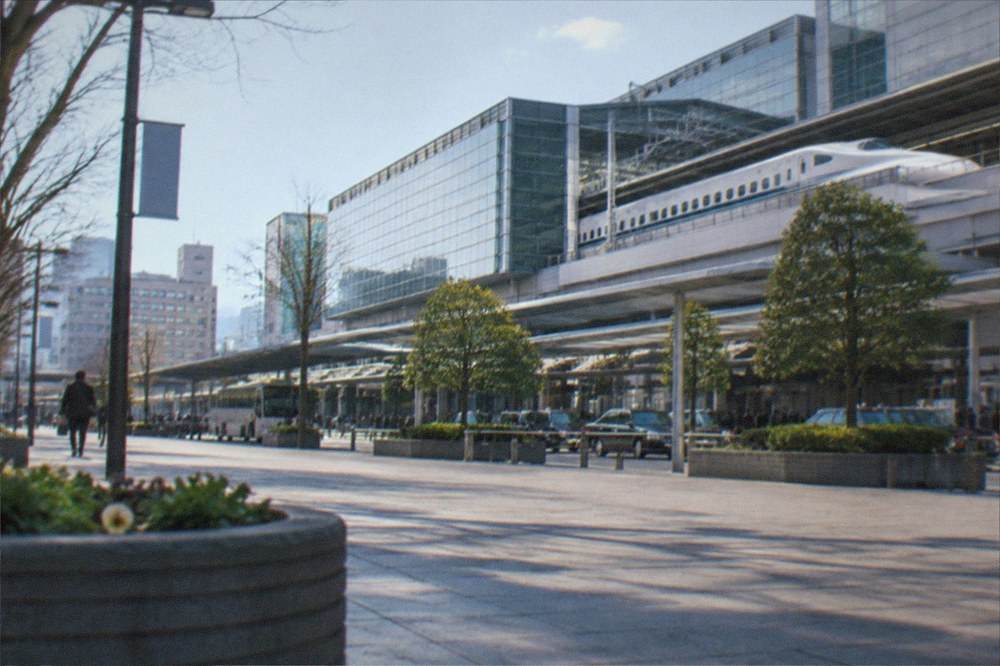
The route guides, Tokyo to Fukuoka and Osaka to Fukuoka, all end at the same platform, and the practical implication is that the Hakata-versus-Tenjin decision is really a question about what you do after you drop your bags. Arrive in the evening, and a station hotel plus a ramen dinner in the station's food floors is the lowest-friction first night in Japan you can design. Arrive in the morning, and the calculus flips: check in later, spend the day walking Tenjin and Daimyo, and let the station district simply be your departure point.
One pattern worth flagging for multi-city itineraries: Fukuoka rewards travellers who treat it as a hub rather than a single stop. Between the Shinkansen, the JR lines into Kyushu, and the ferries and buses toward Itoshima and the coast, a Hakata base supports a week of day trips without ever changing hotels. Travellers who plan that way should weight the station district heavily; travellers who plan to sit inside the city should not.
Common Questions About Where to Stay in Fukuoka
What Is The Best Area To Stay In Fukuoka?
For most visitors, the Hakata Station district or Tenjin. Hakata is the transport hub with the largest hotel stock and the old town within walking distance; Tenjin is the shopping and dining core. Nakasu suits nightlife-first trips, and Ohori Park and Momochi suit travellers who want quiet and green space.
Is Hakata a good place to stay in Fukuoka?
Yes, for most trip types. Hakata is a ward of Fukuoka, not a separate city, and its station district combines the Shinkansen, the subway and the airport link with a walkable old town. The fuller answer, including the caveats, is on our page asking is Hakata a good place to stay in Fukuoka.
Is it better to stay in Hakata or Tenjin?
Stay in Hakata if you will ride trains daily or take day trips; stay in Tenjin if your evenings will be spent eating and drinking within walking distance. The two districts are a few subway stops apart, so neither choice strands you. We compare them directly in Hakata or Tenjin.
How close is the airport to the hotels?
Unusually close. Fukuoka Airport sits on the subway's Kuko line, and the fare into Hakata is ¥260 on the official fare table. The airport is closer to the city centre than in almost any other Japanese city, so there is no need to sleep near it.
Where should families stay in Fukuoka?
Around Ohori Park or Momochi, on the quiet west side, where the park, the zoo, the seaside promenade and the museums cluster together. Tenjin is a workable alternative for its underground mall and restaurant density.
Which area is best for nightlife?
Nakasu, the entertainment island between the Naka River and the canal, with the riverside yatai stalls, bars and clubs on the doorstep. Tenjin's Daimyo and Imaizumi lanes are the more relaxed alternative.
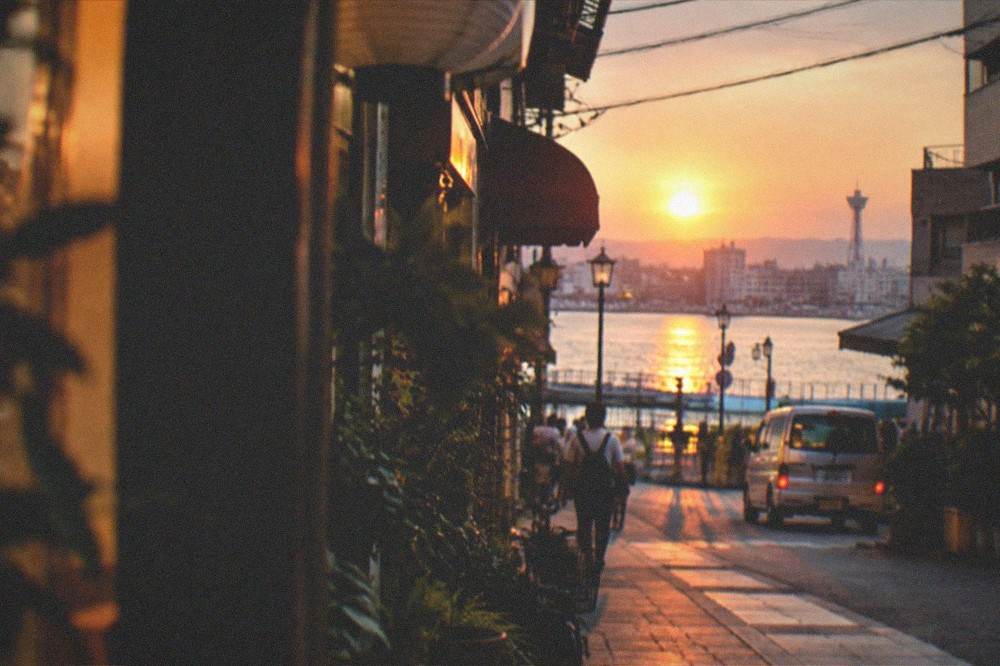
Whichever district you choose, the decision is forgiving. Fukuoka's subway crosses the whole centre for a few hundred yen, the Fukuoka food tours guide and the rest of this site's neighbourhood pages will keep your evenings full wherever you sleep, and the one mistake to avoid is the one this Fukuoka Japan Travel Guide repeats everywhere: treating Hakata and Fukuoka as two places, when they are one city with a station that borrowed the older name.