What Is the Etiquette for Eating at a Yatai?
How to eat at a Fukuoka yatai without misstepping: seating, ordering, posted prices, payment and the unwritten rules of the counter.
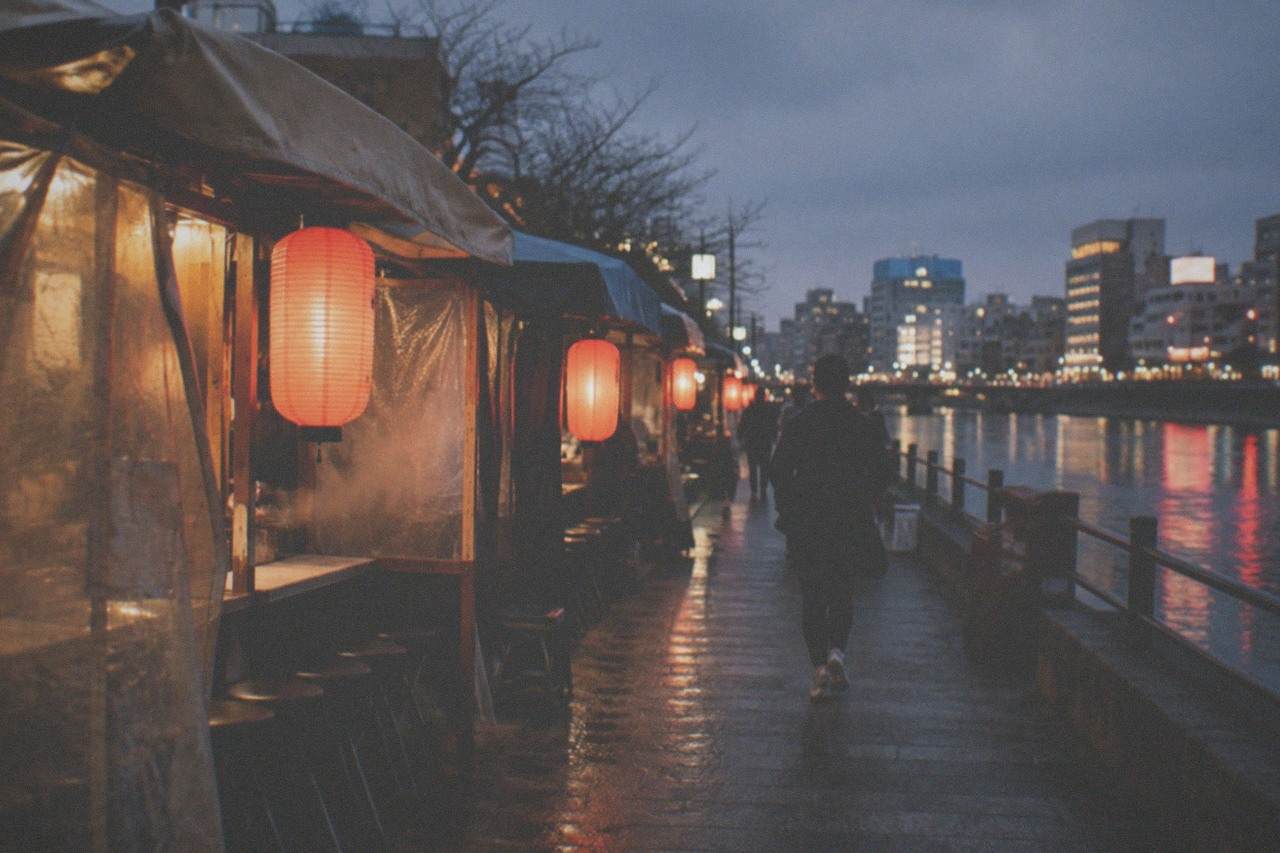
Fukuoka runs on about 100 licensed yatai, more food stalls than any other city in Japan, and each one is a tiny restaurant with a handful of seats, a single cook and a set of customs that regulars never spell out. Nobody hands you a rulebook. You are expected to ask before you sit, to order rather than merely occupy, and to leave when the last customer leaves, because the stall is someone's workplace and the counter closes when the night does. Get it right and a yatai is one of the friendliest places to eat in the country. Get it wrong and the seat beside you stays empty all evening.
What Is the Etiquette for Eating at a Yatai?
The core etiquette is simple: ask if a seat is free before sitting, order food and not just a drink, keep conversation to your own group, pay when you leave, and do not linger after the stall's last customer has gone. Stalls are walk-in only, they seat very few people at a time, and the city's own ordinance requires every price to be posted where you can see it. Everything else, from kaedama noodles to smoking manners, builds on those basics.
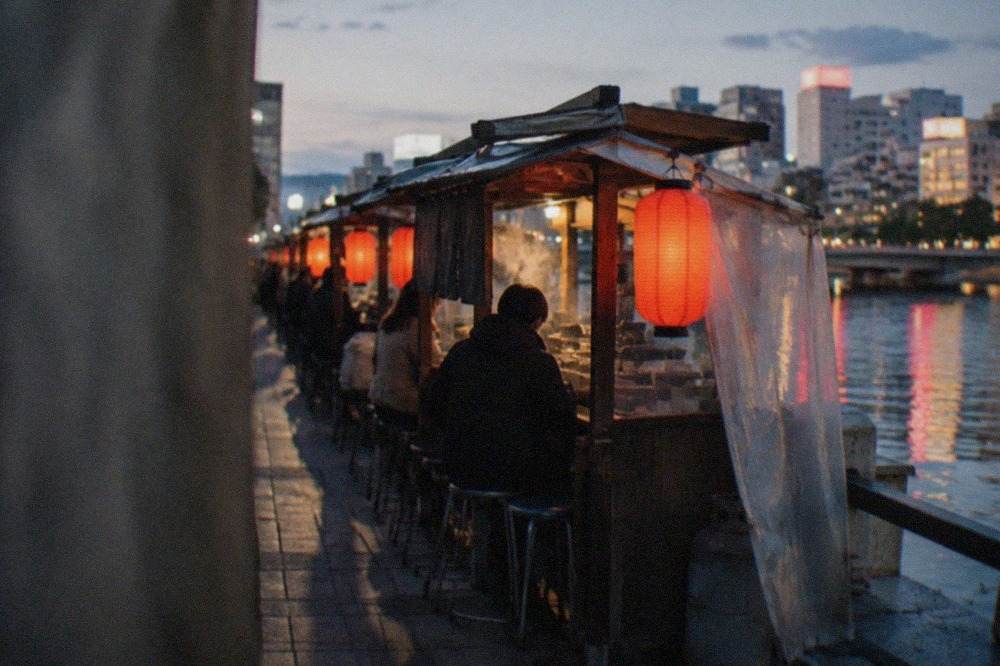
The reason the etiquette exists at all is space. A typical stall seats somewhere around seven to ten people on benches that were never designed for spreading out. That means you will be sitting close to strangers, sharing a counter with the owner working two metres away, and the whole arrangement only functions if everyone follows the same small courtesies. The full rundown of customs lives in the site's yatai etiquette guide, and this page answers the question directly, piece by piece.
One point worth clearing up immediately, because most overseas guides get it backwards: you are far more protected at a yatai than their reputation suggests. Fukuoka City's Yatai Basic Ordinance, in force since September 2013, bans 時价, "market price", menu wording outright. A stall must post its prices where customers can easily see them, and any dish priced on the day's market cost has to show that day's actual figure. The city's own yatai Q&A page confirms inspectors check this periodically. The tourist scam warning that appears in every other guide is describing a Japan that this city legislated away more than a decade ago.
How Do You Get a Seat at a Yatai?
Walk up, and if the benches are not full, say "ii desu ka", is this seat free, before you sit down. There is no booking system for any yatai in Fukuoka, no reservation line and no waiting list; the only way in is to turn up. If the stall is full you move on to the next one, and if the owner waves you in you sit where you are pointed to rather than choosing your spot.
The walk-in rule is absolute and it cuts both ways. You cannot reserve a stall, and the owner cannot hold a seat for a friend who might show up later. Stalls open in the early evening, often around 18:00 to 18:30 after preparation from about 17:00, and the city's road-occupancy rules let them operate until 4:00 the next morning, though most close well before that. Rain and strong wind shut many of them, and there is no city-mandated closing night, so whether a given stall is open depends entirely on the operator and the weather.
Because seating is first come, first served, timing matters more than planning. A bench that is impossible at 20:00 on a Friday often has space at 19:00 on a Tuesday. Solo diners have an advantage here, since one free seat is much easier to find than four together, and groups larger than three or four should expect to split across stalls rather than wait. If you are travelling as a pair, take whatever seats exist and treat the strangers beside you as part of the evening.
If reading the room in a second language feels like work, a guided crawl does the decoding for you. A local guide handles the introductions, translates the menu and explains each custom as it happens, which is the fastest way to learn the etiquette rather than memorise it.
What Are the Unwritten Rules at the Counter?
Order food, not just a drink. Keep your voice at counter level, do not take calls at the bench, ask before photographing the owner or other customers, and expect to pay the whole bill in one go when you stand up. Do not bring in food or drink from outside, do not seat-hop once you are placed, and leave when the stall winds down, because the owner packs up with the last customer.
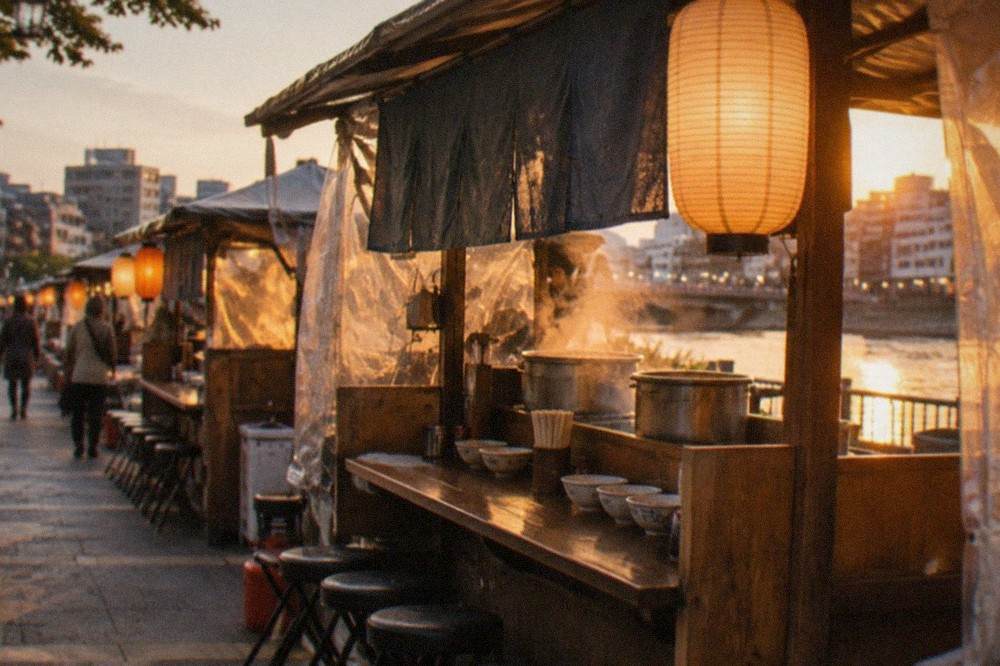
The first order is the one that matters most. A yatai is a restaurant, not a bar, and a customer who sits down and orders nothing but a beer is taking a seat that the cook needs for someone eating. It is the single most cited complaint owners raise, and it is easy to avoid: order a bowl of ramen, some yakitori or a plate of oden alongside whatever you are drinking. Tonkotsu ramen is the default at many stalls, and if you want more noodles you ask for kaedama rather than ordering a second bowl, since the soup stays and only the noodles are replaced.
Conversation etiquette is quieter than most visitors expect. Talk to your own group, answer the owner if they chat with you, and do not force the strangers beside you into a group discussion unless they lean in first. Phone calls at the counter are poor form; step away if you must take one. Photography is generally tolerated of your own food and the stall's exterior, but ask before pointing a camera at the owner working or at other customers eating, and never use a flash in a space the size of a small van.
Time is the last unwritten rule. A stall is not a bar you hold a seat in for four hours. Eat, drink, talk, and when the pace slows or the owner starts packing up, settle up and go. There is no standard seating charge and no otoshi table charge documented by the city, so your bill is simply what you ordered, and the honest answer to whether a stall meal is expensive is covered in is yatai ramen expensive. The deeper background on what makes the broth and the format distinct is in what makes yatai ramen unique.
For visitors who want the customs demonstrated rather than described, the private guided tour of the Nakasu stalls with tastings is the roster's most direct fit, since a guide sits with you at the counter and narrates the etiquette as each dish arrives.
It is worth being clear about what that kind of tour adds beyond the tastings themselves. The etiquette on this page is short enough to memorise on the walk over, but the judgement calls, when to join a conversation, how to read an owner's signal that the bench is closing, what to do when a stranger offers you a bite, are the parts a guide can translate in real time. For many visitors one guided evening is enough to feel comfortable returning alone the next night.
How Does Payment Work at a Yatai?
You pay once, at the end, when you stand up to leave, and you should carry cash because many stalls still do not take cards even though some now accept IC and QR payment. The bill is what you ordered, read off the posted prices, and there is no tipping in Japan, so do not leave extra money on the counter; it creates confusion rather than gratitude.
The cash question deserves real planning. Traditional operation was cash-focused, and while city-supported digital initiatives have brought card and QR readers to some participating stalls, acceptance varies stall to stall and there is no way to know before you sit down. The practical move is to enter a yatai evening with enough yen in small notes, which also makes splitting a bill with a bench-mate painless. The site's page on money and cash in Fukuoka covers how much to carry and where to withdraw it.
Payment etiquette at the moment of leaving is worth two sentences. Hand the money over rather than leaving it on the counter if the owner reaches for it, wait for change rather than waving it away, and say "gochisosama" as you stand, the standard thank-you to a cook. Do not ask for an itemised receipt unless you need one for expenses; the owner totals the bill aloud or on a pad, and the posted prices let you check it. The wider set of guides lives on Fukuoka Japan Travel Guide.
| Situation | What to do | What not to do |
|---|---|---|
| Arriving at a stall | Ask "ii desu ka" before sitting | Sit down uninvited on a full bench |
| First order | Order food with your drink | Nurse one beer for an hour |
| Wanting more noodles | Ask for kaedama | Order a second full bowl |
| Photographing | Shoot your own food, ask first for people | Flash photos of other customers |
| Paying | Cash, one payment, exact or wait for change | Tip, or leave money on the counter |
| Leaving | Say gochisosama and go | Linger after the last customer |
Which Yatai Area Should You Choose?
Nakasu is the photogenic riverside row and the most tourist-facing, Tenjin's scattered stalls in the business district pull more after-work locals and newer operators, and Nagahama near the old fish market is historically the ramen-focused strip. The three areas are not interchangeable, and the etiquette is the same at all of them, only the atmosphere and the crowd differ.
Nakasu, along the Naka River by Seiryu Park, is the row on every postcard, and it is where most first-time visitors end up. The setting is the draw, and the stalls here are the most used to overseas guests, which makes it the gentlest place to learn the customs. The full area guide is at Nakasu yatai street. Tenjin's stalls, scattered along Watanabe-dori and Showa-dori, sit among offices and bars, so the benches fill with people straight from work, and the atmosphere is more local and more varied, including newer-style stalls. Nagahama, near the former fish market, built its reputation on ramen and keeps a more working, less decorated feel.
| Area | Character | Best for |
|---|---|---|
| Nakasu | Riverside row by Seiryu Park, lanterns on the water | First-timers, photos, visitors who want the classic scene |
| Tenjin | Scattered stalls along office streets | After-work atmosphere, variety, newer stall styles |
| Nagahama | Near the old fish market, ramen heritage | Ramen focus, a more local, less touristy bench |
Whichever strip you pick, the same rules apply: ask, order, keep it down, pay on leaving. The differences between the areas are about who is sitting beside you, not about how you behave. General manners beyond the stalls, from shoes to shrines, are covered in the wider Fukuoka etiquette guide, and the full stall-by-stall background lives in the Fukuoka yatai guide.
Do You Need to Book a Yatai in Advance?
No, and you cannot. Every yatai in Fukuoka takes walk-ins only, there is no reservation system and no way to book a bench, so planning means choosing an area and an evening, not securing a table. The only thing that can be booked is a guided crawl, where a local guide walks a small group between stalls with tastings arranged in advance.
This is the point where many visitors over-plan, and it is worth being blunt: a yatai evening cannot be engineered. Stalls close for rain, open late, run out of dishes, and the best seat is the one that happens to be free when you walk past. Build the evening loosely, pick a starting area, and let the night choose the stall. What you can fix in advance is the learning: a guided crawl puts the etiquette in context while you eat, and the trio below covers the stall tour plus two very different ways to spend another evening in the city.
Common Questions About Yatai Etiquette
What Is The Etiquette For Eating At A Yatai?
Ask before you sit, order food and not just a drink, keep your voice at counter level, ask before photographing people, pay the whole bill when you stand up, and leave with the last customers. Stalls are walk-in only, prices must be posted by city ordinance, and there is no tipping.
Can I reserve a seat at a yatai?
No. Every stall in Fukuoka operates walk-in only, with no booking system of any kind. If a stall is full you move to the next one. The only bookable product is a guided crawl, where a guide takes a small group between stalls.
Do yatai take credit cards?
Some do now, but many still do not. Acceptance varies stall to stall, and there is no way to tell before you sit down. Carry enough cash in small notes to cover the evening.
Will I get ripped off at a yatai?
The city's Yatai Basic Ordinance, in force since September 2013, bans "market price" wording and requires every price to be displayed where customers can easily see it, with periodic city inspections. Your bill should match the posted prices, and you can check it as items arrive.
Is there a time limit at a yatai?
There is no formal limit, but a stall is a small workspace, not a bar. Order, eat, talk, and leave when the pace slows or the owner begins packing up, which is typically in the small hours at the latest.
What should I say when I leave?
"Gochisosama", the standard thanks to a cook, said as you stand. Hand the money over rather than leaving it on the counter, wait for your change, and do not tip.