Etiquette in Fukuoka
Fukuoka rewards visitors who learn a handful of local customs before they arrive, from the temizu rinse at a shrine gate to the posted prices at a yatai stall.
Short answer
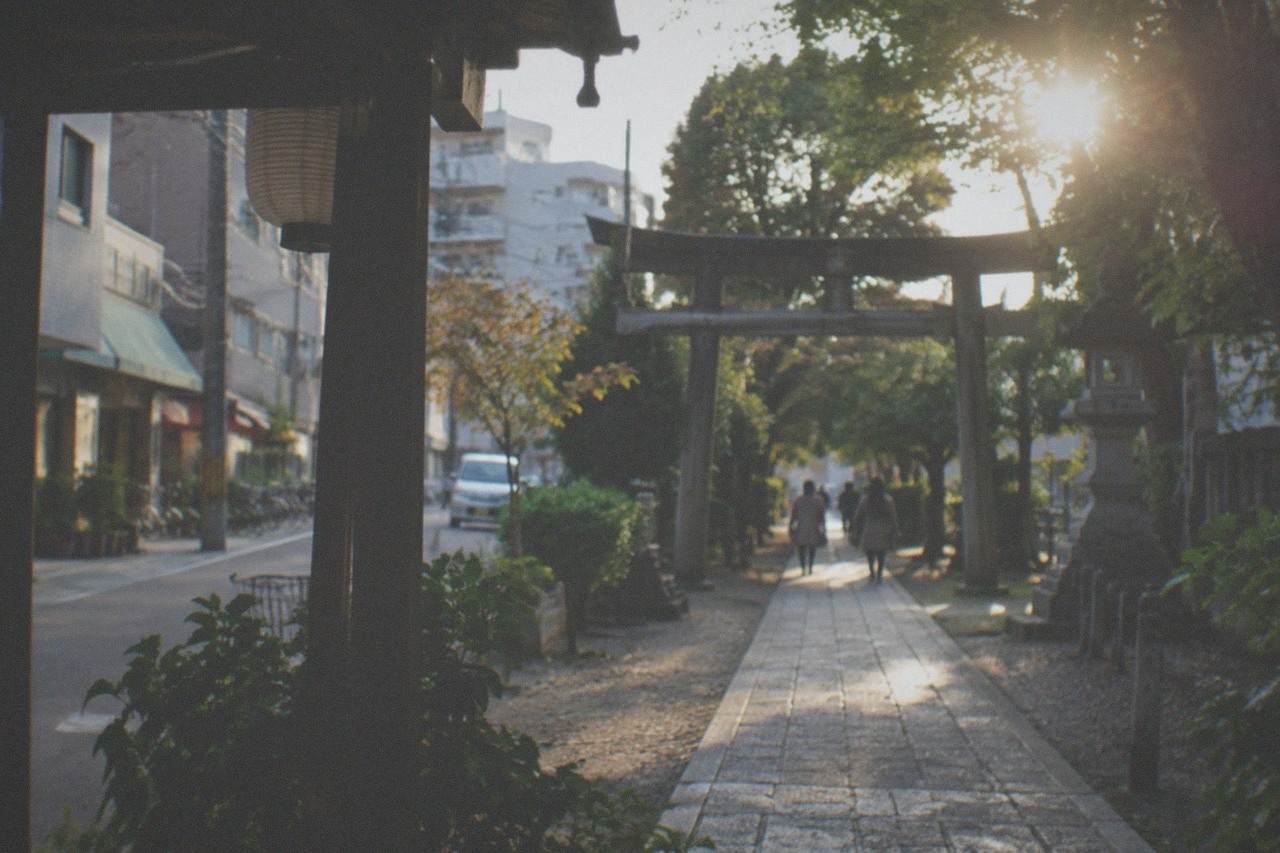
Etiquette in Fukuoka follows standard Japanese shrine and dining customs with a few local twists. Rinse your hands at the temizu pavilion before entering shrine grounds, bow at the gate, and keep your voice low. At the city's roughly 100 yatai stalls, prices must be posted by city ordinance, so check the sign before you order. Queue neatly, carry some cash, and take your shoes off where required.
Fukuoka is one of the most relaxed cities in Japan, and visitors consistently describe locals as patient with newcomers who get the small things wrong. That patience is not a licence to skip the customs entirely. A visitor who rinses their hands correctly at a shrine gate, waits for a seat at a yatai stall instead of hovering over diners, and keeps their voice down on the subway will notice doors opening that stay closed for louder guests. This guide covers the etiquette that actually matters in Fukuoka: shrine and temple behaviour, food stall customs, dining manners, and the everyday rules of shoes, queues and public space. None of it is difficult, and most of it takes less than a minute to learn.
What Should You Know About Shrine Etiquette in Fukuoka?
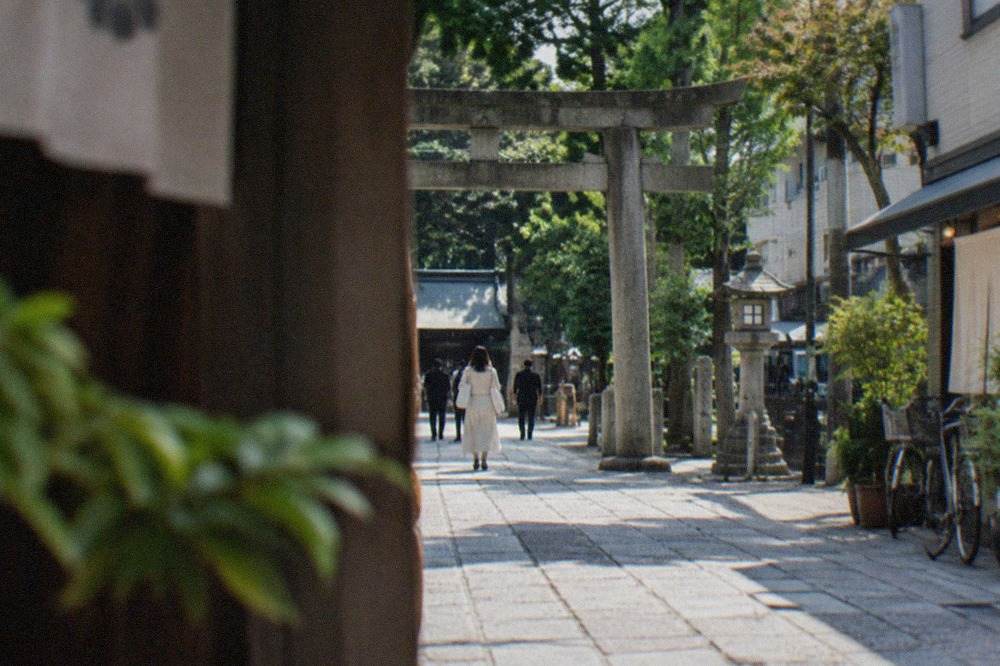
Shrine etiquette in Fukuoka asks for three things before anything else: rinse your hands and mouth at the temizu pavilion, bow once at the torii gate as you pass under it, and keep noise and photography discreet near the main hall. Entry to the city's major shrines, including Dazaifu Tenmangu, is free, so there is no ticket ritual to learn. Beyond that, the customs are the same ones practised across Japan, applied in a city where the shrines sit in the middle of shopping streets rather than on remote mountainsides.
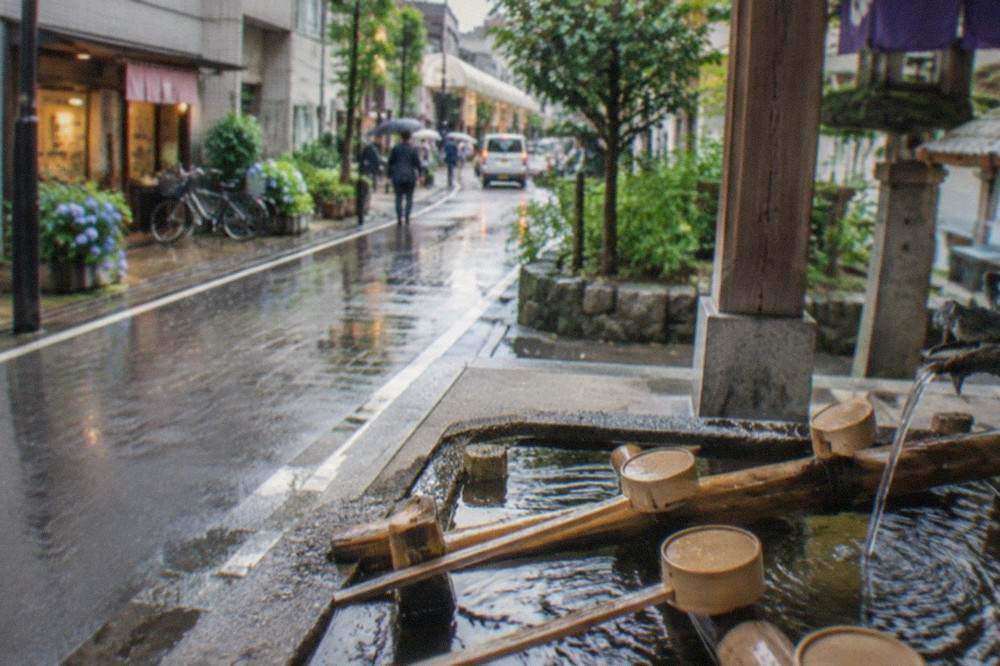
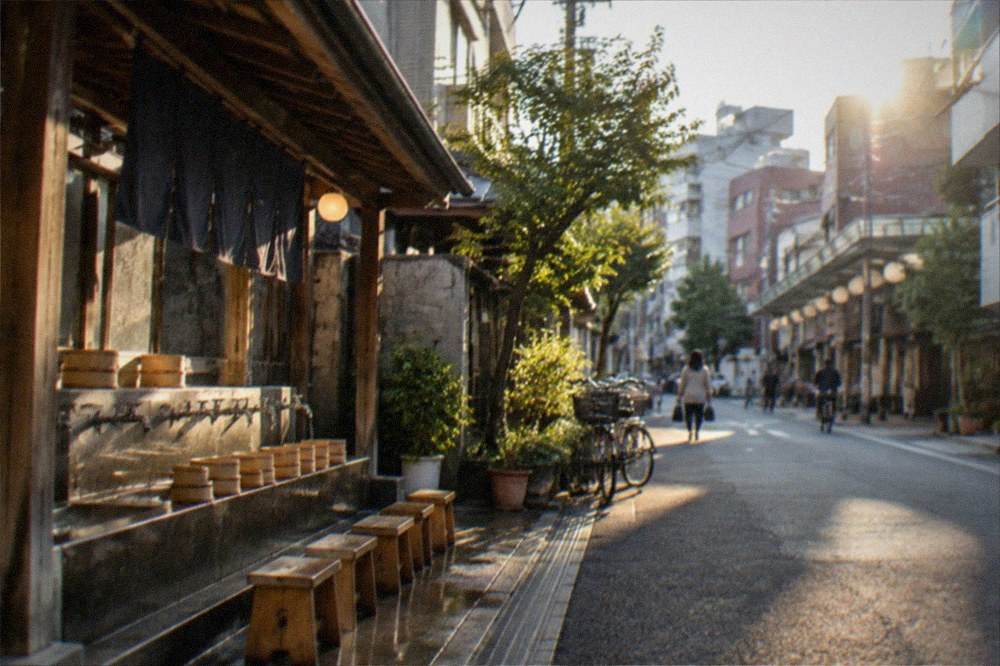
The sequence at a Shinto shrine is short. Approach the torii gate, give a small bow, and walk to the temizu pavilion, the stone water basin just inside the entrance. Take the ladle in your right hand, scoop water, and pour it over your left hand. Switch hands and rinse the right. Pour a little water into your cupped left hand, rinse your mouth with it, and spit the water back into your hand, never directly into the basin. Tip the ladle upright to rinse the handle, and set it back. That is the entire ritual, and it takes about thirty seconds.
At the main hall, the standard prayer pattern is two bows, two claps, one bow. This is a Shinto custom; Buddhist temples such as Tochoji and Shofukuji do not use clapping. At a temple you simply bow quietly, or join your hands in front of your chest without clapping. Fukuoka makes the distinction easy to practise because Shinto shrines and Buddhist temples sit within walking distance of each other in Hakata's old temple district, so a visitor can compare the two rituals on the same afternoon.
A few behaviours matter more than precision. Do not walk down the centre of the path leading to a shrine's main hall; the middle is traditionally reserved for the deities, so keep to one side. Do not photograph inside a worship hall or of people mid-prayer, and if a sign bans photography in a particular courtyard, obey it. Remove hats and sunglasses at the main hall. If you are carrying a large backpack, hold it in front of you in crowded shrine approaches, which is standard practice across Japan and especially sensible during festival season.
Fukuoka-specific note: the city's biggest shrine event, Hakata Gion Yamakasa, fills the streets around Kushida Shrine every July, and the etiquette during it is simply to stand back and let the float teams through. The racing teams carry floats weighing about a ton, and spectators who crowd the course are the single biggest friction point each year. Watch from behind the barriers, keep your arms inside them, and let the city's own tradition happen in front of you.
How Do You Behave at a Yatai Food Stall?
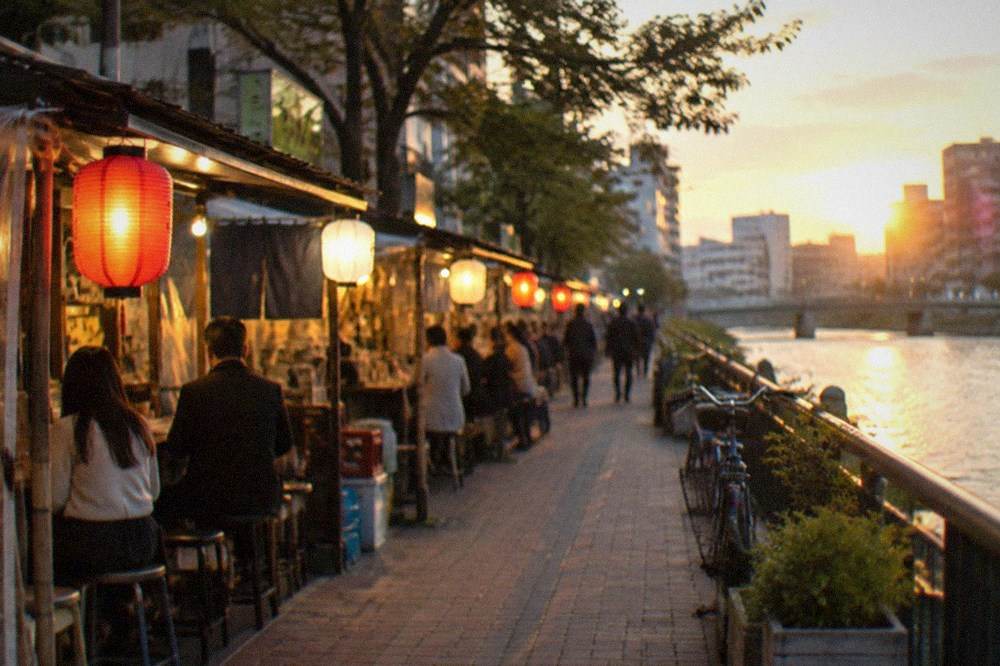
Yatai etiquette in Fukuoka comes down to reading the posted prices, asking before you sit, and accepting that a stall seats a handful of people in close quarters. The city's own ordinance requires every stall to display its prices where customers can easily see them, and bans vague "market price" pricing, so a well-run stall shows you exactly what a dish costs before you order. There are about 100 licensed yatai across the city, concentrated in Nakasu, Tenjin and Nagahama, and they take walk-ins only.
The Fukuoka City yatai ordinance, in force since 2013, is the reason this etiquette is easier here than anywhere else in Japan. The city requires visible pricing and inspectors check periodically, which answers the question most visitors are too polite to ask: will I get ripped off at a stall? The city's own answer is that you should not, and that any dish priced on the day's market must show that day's actual price rather than a vague marker. You can read the requirements on the city's official yatai Q&A page.
The practical sequence at a stall: greet the owner with a simple "konbanwa" (good evening), glance at the posted menu, and ask "wa ariemasu ka?" (is there a seat?) if the stools look full. Wait to be seated rather than sliding in uninvited, because regulars often have assigned spots and the owner knows the map better than you do. Once seated, you are in a shared space about the width of a small kitchen counter. Keep bags on your lap or hung where offered, not on the counter, and avoid stretching, pointing across other diners, or taking phone calls.
Ordering is easiest with a pointed finger and the posted prices. Ramen, yakitori, oden and tempura are the standard yatai dishes, and many owners will happily walk a first-timer through the options. Cash has traditionally been the default, though some stalls now accept cards and QR payments; do not assume either way and carry yen. When you finish, do not linger long over an empty bowl on a busy night, since the stall's income depends on turnover. Thank the owner, settle up, and step out the way you came in.
Stalls are weather-sensitive and close at the owner's discretion; there is no city-mandated closing day, and rain or strong wind shuts many of them. If a row looks quiet, that is likely why, not a sign of a bad stall. The deeper customs of yatai dining, from the otoshi question to tipping (which is not part of the practice) are covered in the site's dedicated yatai etiquette guide, which goes dish by dish.
Which Fukuoka Shrines Should First-Time Visitors Practise At?
The best shrines for a first practice run are Kushida Shrine in Hakata, Sumiyoshi Shrine a short walk west, and Dazaifu Tenmangu on the city's edge, reached by Nishitetsu train. All three have free entry to the grounds, so there is no ticket anxiety, and all three see enough tourists that staff and regulars are used to visitors learning the ropes. Atago Shrine on the hill above the city adds stairs and a view, and rewards anyone comfortable with the basics already.
Kushida Shrine is the natural starting point. It sits inside Hakata's old town, a few minutes on foot from Kawabata Shopping Arcade, and it is the spiritual home of the Yamakasa festival. The grounds are free, the approach is short, and the temizu pavilion sits right by the entrance where you can watch locals do the rinse and copy them. Because the shrine is compact, you can complete the full sequence, gate bow, temizu, main hall prayer, in ten unhurried minutes. The shrine's own details are on the site's Kushida Shrine page.
Sumiyoshi Shrine offers a quieter rehearsal. It is one of the city's oldest shrines, set back from the road with trees softening the traffic noise, and it sees far fewer tour groups. This is where the centre-path rule matters most: the approach is long and formal, and walking its edges rather than its middle is the clearest signal to anyone watching that you know what you are doing. Details and access notes are in the site's Sumiyoshi Shrine guide.
Dazaifu Tenmangu is the big one, and the etiquette stakes feel higher only because the approach street is a tourist corridor of shops and tea houses. The shrine itself states plainly that there is no entrance fee, per its own official FAQ page. The sequence is unchanged: bow at the gate, rinse at the pavilion, keep to the sides of the approach. Two arched bridges cross the pond on the way in; crossing them is part of the visit, and pausing for photos on them is fine as long as you keep the walkway clear. The full logistics, including the Nishitetsu train from Tenjin, are in the site's Dazaifu Tenmangu guide.
Atago Shrine, on a hilltop reached by a long stairway, is where etiquette and effort combine. The climb is part of the visit, and the view over Hakata Bay from the top is the reward. Dressed-down visitors in hiking sandals are common and welcome; what matters at the top is the same quiet behaviour as everywhere else. The site's Atago Shrine page covers the stairs and access in detail.
| Shrine | Where | Entry cost | Best for |
|---|---|---|---|
| Kushida Shrine | Hakata old town | Free grounds | First temizu practice, festival history |
| Sumiyoshi Shrine | East of Tenjin | Free grounds | Quiet practice, old architecture |
| Dazaifu Tenmangu | Dazaifu, by Nishitetsu train | Free grounds | The full pilgrimage experience |
| Atago Shrine | Hilltop above the city | Free grounds | Stairs, views, testing the basics |
For visitors who want the customs explained while they stand in front of the real thing, a guided day out can shortcut the learning curve. The From Fukuoka: Mount Aso, Kurokawa Onsen, and Shrine Tour pairs a shrine visit with onsen etiquette, which has its own rules about washing before bathing, and it runs about 10 hours from the city.
How Do You Behave at Temples Rather Than Shrines?
At Buddhist temples such as Tochoji and Shofukuji in Hakata, skip the clapping, join your hands quietly in front of your chest, and bow. Incense is often offered at a temple burner: buy a stick if offered for sale, light it, extinguish the flame by waving rather than blowing, and place it in the burner with the smoke toward you. Entry to both temples is free, and both sit within a short walk of each other in Hakata's temple quarter.
Tochoji is home to the Fukuoka Daibutsu, one of the largest seated Buddha statues in Japan, and the interior hall asks for exactly the behaviour you would expect: quiet voices, no flash photography where posted, and a moment of stillness rather than a quick photo circuit. Shofukuji, founded in the twelfth century as Japan's first Zen temple, is even quieter. Its grounds are open but its interiors are generally not, so the etiquette there is simply to walk the paths calmly and treat the site as a working monastery rather than an attraction. The site's Shofukuji guide covers what to expect.
The distinction visitors most often fumble is the prayer itself. At a shrine, two bows, two claps, one bow. At a temple, no clapping at all: place your palms together without sound, bow your head, and move on. If you see locals clapping, you are at a shrine; if they are silent with joined hands, you are at a temple. Fukuoka's compact temple quarter makes it easy to visit both kinds in one walk and let the difference sink in.
What Are the Dining Manners That Matter in Fukuoka?
Fukuoka dining etiquette is Japanese dining etiquette with a local menu: say "itadakimasu" before eating, keep chopsticks out of shared dishes unless serving chopsticks are provided, do not stick them upright in rice, and slurping noodles is acceptable and even normal. Hakata ramen's kaedama system, where you order a noodle refill for your remaining broth, has its own small rule: order it while broth remains, not after. Tipping is not part of the practice anywhere in the city.
The kaedama custom is the one genuinely Fukuoka-specific rule on this list. Tonkotsu ramen shops in the city serve a small bowl of noodles by default, on the assumption that you will order a refill, a kaedama, when you are two-thirds through. The waiter will explain it if you look puzzled, and the refill arrives in under a minute. Ordering it after you have finished the broth does not work; the point is to combine fresh noodles with the soup you already have. The site's Hakata ramen guide covers where to try it.
Chopstick rules are the same as elsewhere in Japan: do not pass food chopstick to chopstick, do not spear food, and rest them across the bowl or on a holder rather than standing them in rice. Slurping noodles is not rude. Lifting your bowl close to your mouth is fine. At an izakaya, an otoshi, a small appetiser that arrives unasked, is often added to the bill as a cover charge; it is not a scam, and asking what it is will get an honest answer.
Motsunabe, the city's signature offal hotpot, is a shared dish with shared rules. Raw ingredients go into the pot in the order the staff suggests, everyone serves from the pot with the provided tools rather than their own chopsticks, and the finishing move, adding rice or noodles to the leftover broth, is the part locals care about most, so ask before pouring. The site's motsunabe guide explains the full sequence.
| Situation | Do | Avoid |
|---|---|---|
| Before eating | Say "itadakimasu" | Starting before the host |
| Noodle soup | Slurp freely | Worrying about noise |
| Hakata ramen | Order kaedama mid-bowl | Ordering it after the broth is gone |
| Shared hotpot | Use serving chopsticks | Dipping personal chopsticks in the pot |
| Chopsticks | Rest on a holder | Standing them upright in rice |
| End of meal | Say "gochisosama deshita" | Tipping |
What About Shoes, Queues and Public Behaviour?
Shoes come off at temples' inner halls, some restaurants, any tatami floor and every ryokan; look for a raised floor edge or a shoe shelf and follow the locals. Queues form single-file everywhere, on subway platforms, at ramen shops and at bus stops, and cutting in is the fastest way to earn a cold stare in a city that rarely shows one. On trains, keep phone calls off, bags off seats, and conversation at library volume.
The shoe rule is simpler than visitors fear. If the floor level rises at the doorway and you can see slippers or a shoe cabinet, take your shoes off. In temples, worship halls often require it. In restaurants, a quick scan for whether staff and other diners are shod answers the question. Bare feet are never expected; clean socks are the quiet uniform of travel in Japan, and a wardrobe that plans for them is a wardrobe that never has to think about this twice.
Queueing is where Fukuoka's politeness is most visible. Subway platforms have marked boarding positions, and everyone lines up behind them, lets passengers off first, then boards in order. The same discipline applies outside a popular ramen shop at lunch. If you leave a queue to check the menu, tell the person behind you; the system runs on small declarations.
Public behaviour rules worth knowing: eating while walking is tolerated in festival crowds but frowned on in ordinary streets, so stand and finish near the stall or shop. Bins are scarce, so carry a small bag for your rubbish. Escalator etiquette in Fukuoka follows the regional pattern of standing, since much of Kyushu does not have a strict stand-left, walk-right convention the way Tokyo does; when in doubt, stand still and let anyone in a hurry pass. The site's getting around guide covers the transit side of all this.
For visitors who would rather have the city's customs demonstrated than decoded from a list, a half-day guided walk such as Fukuoka Essentials: History, Culture, & Charms covers the old town's temples and shrines with a guide who can answer etiquette questions on the spot.
How Does Onsen Etiquette Work?
Onsen etiquette is strict and simple: wash your whole body at the shower stations before you enter the bath, enter the water clean and naked, no swimsuits, no towels in the water, and tie long hair up. The washing-before-bathing rule is the one that matters most; the bath is for soaking after you are already clean, and skipping the shower is the faux pas Japanese bathers notice first. Small tattoos are accepted at some facilities and not others, so check ahead.
The sequence at a sento or onsen: remove shoes at the entrance, pay, undress fully in the changing room, and take only a small modesty towel to the bath area. Sit on a stool at a shower station, wash thoroughly with soap and rinse completely, then step into the bath. The towel goes on your head or the edge of the water, never into it. When you leave, wipe off at the bathside with the towel before returning to the changing room.
Fukuoka's own onsen culture is modest compared with Beppu or Yufuin down the coast, but the city makes a good base for a bath-focused day trip, and the etiquette travels with you. The site's Fukuoka onsen guide covers the city's bathhouses.
When Do Festivals Change the Rules?
During Fukuoka's major festivals, etiquette shifts from quiet reverence to crowd discipline. Yamakasa in July and Dontaku in early May each draw enormous crowds into the same streets, and the rules that matter become: hold your position behind barriers, follow police and steward directions instantly, keep bags close, and expect the ordinary quiet norms of temples and trains to be suspended for the duration. Neither festival has any ticketing; both are free public events.
Yamakasa's finale race starts before dawn on July 15, and the crowd etiquette around it is genuinely functional: the float teams are running a roughly 5 km course carrying about a ton of timber, and a spectator who steps out for a photo is a hazard rather than a nuisance. Dontaku, held over May 3 and 4, is a parade festival, and its etiquette is simply street-festival behaviour: watch from the kerbs, let performers through, and expect the So Odori finale to invite participation, which is one of the few moments in Japan where joining in is the correct move rather than a breach.
One planning note that belongs in any etiquette discussion: July is Fukuoka's wettest month, 299.1 mm against June's 249.6 mm in the official 1991 to 2020 normals, despite June being the tsuyu rainy season. Visitors who assume July is the dry festival month and pack accordingly get soaked. The site's best time to visit guide carries the full monthly breakdown.
| Festival | When | Etiquette shift |
|---|---|---|
| Hakata Gion Yamakasa | July 1 to 15 | Stay behind barriers during float races |
| Hakata Dontaku | May 3 and 4 | Kerbside viewing; joining the So Odori is welcome |
| Hojoya at Hakozakigu | September 12 to 18 | Normal shrine manners apply at the rituals |
| Tamaseseri | January 3 | Watch the ball scramble from the designated areas |
What Should You Know About Gifts, Greetings and Everyday Politeness?
Everyday politeness in Fukuoka runs on a small set of fixed phrases and a default of understatement: "sumimasen" covers excuse me, sorry and getting attention, "arigato gozaimasu" is the safe thank-you, and a slight bow accompanies both. Gifts are given and received with two hands, business cards likewise, and shoes-off invitations to someone's space are honoured without being asked twice. English levels vary, and a patient smile plus a translation app opens more doors than volume does.
The bow is not theatrical. A small head-nod bow of a few degrees accompanies greetings, thanks and apologies, and visitors who adopt it lightly will find it returned. Depth signals weight: a quick nod for a shop transaction, a deeper bow for a real apology. Nobody expects a foreign visitor to get the calibration right, only to make the gesture.
Gift culture matters if you are visiting someone or returning a favour. Present and receive with both hands, and expect a gift you give to be set aside unopened, which is correct behaviour rather than coldness. Souvenirs from your home region carry more weight than expensive items, and Fukuoka's own omiyage culture, boxes of sweets bought for colleagues, follows the same logic in reverse.
Language anxiety is the most common etiquette worry visitors bring, and Fukuoka is one of the easier cities in Japan for it. The site's English-friendliness guide covers what to expect. A spoken "sumimasen" before any question, in any language, is the single most useful etiquette tool a visitor can carry.
For a structured introduction to Japanese formal manners, the Fukuoka Special Japanese Tea Ceremony with Maiko runs about an hour and walks first-timers through the seated etiquette of a tea gathering, from entering the room to receiving the bowl.
How Do You Plan a Trip Around All This?
Plan around etiquette by matching your days to your confidence: start with the easy, free shrines inside the city, add the yatai stalls once the ordering customs feel natural, and save Dazaifu and the Kyushu day trips for when the basics are automatic. Getting in is simple, the subway from the airport costs ¥260, and the city's compact centre means most etiquette situations occur within walking distance of each other. A first visit of two or three days is enough to cover the core customs.
The airport point deserves one clarification because so many guides get it wrong: there is no JR Fukuoka Station, the station is Hakata, and Hakata and Fukuoka are the same city, not two places you travel between. The subway ride from the airport to Hakata costs ¥260, and the airport is unusually close to the centre, which is true and verified even though the famous five-minute figure is not. The site's airport guide covers arrival logistics.
For a longer stay, the etiquette-heavy experiences, shrine mornings, yatai evenings, a tea ceremony, an onsen day, slot naturally into a multi-day plan, and the Kyushu itinerary from Fukuoka extends the same customs to the wider region. The site behind this page, Fukuoka Japan Travel Guide, keeps a full set of itinerary, food and area guides for planning the rest of the trip.
Common Questions About Etiquette in Fukuoka
What Should You Know About Shrine Etiquette In Fukuoka?
Bow at the torii gate, rinse your hands and mouth at the temizu pavilion, keep to the sides of the approach path, and at the main hall perform two bows, two claps and a final bow. Entry to the major shrines, including Dazaifu Tenmangu, is free. Keep photography discreet and your voice low, and save the clapping for shrines, since Buddhist temples use silent joined hands instead.
Do I need to tip in Fukuoka?
Tipping is not part of the practice anywhere in Fukuoka, at restaurants, yatai stalls, hotels or taxis. Leaving money on the table creates confusion rather than gratitude. The correct way to show appreciation is a verbal thank-you, "gochisosama deshita" at a meal, and a small bow.
Can I take photos at shrines and temples?
Grounds and exteriors are generally fine. Do not photograph inside worship halls, people mid-prayer, or any area with a posted ban. At festival time, keep your lens behind the barriers and never step into the course during Yamakasa float races.
Is slurping noodles rude in Fukuoka?
No. Slurping ramen and udon is normal and signals enjoyment. Hakata ramen's kaedama refill system has its own rule: order the extra noodles while broth still remains in the bowl, not after you have finished it.
What do I do at a yatai if I cannot read Japanese?
The city ordinance requires every stall to post its prices visibly, so point at the posted menu and prices. Greet the owner, ask about a seat before sitting, and carry cash, since card acceptance varies stall to stall. Stalls take walk-ins only and cannot be reserved.
Are tattoos a problem at baths in Fukuoka?
Rules vary by facility. Some baths accept small tattoos, others do not, and the honest answer is to check each facility's policy before you go. Onsen etiquette itself is fixed: wash fully at the shower stations before entering the water, and keep towels out of the bath.