Fukuoka Izakaya Guide
Izakaya are where Fukuoka eats after dark, and the ordering ritual confuses more first-time visitors than any other part of a Japan trip. Here is exactly how it works.
Short answer
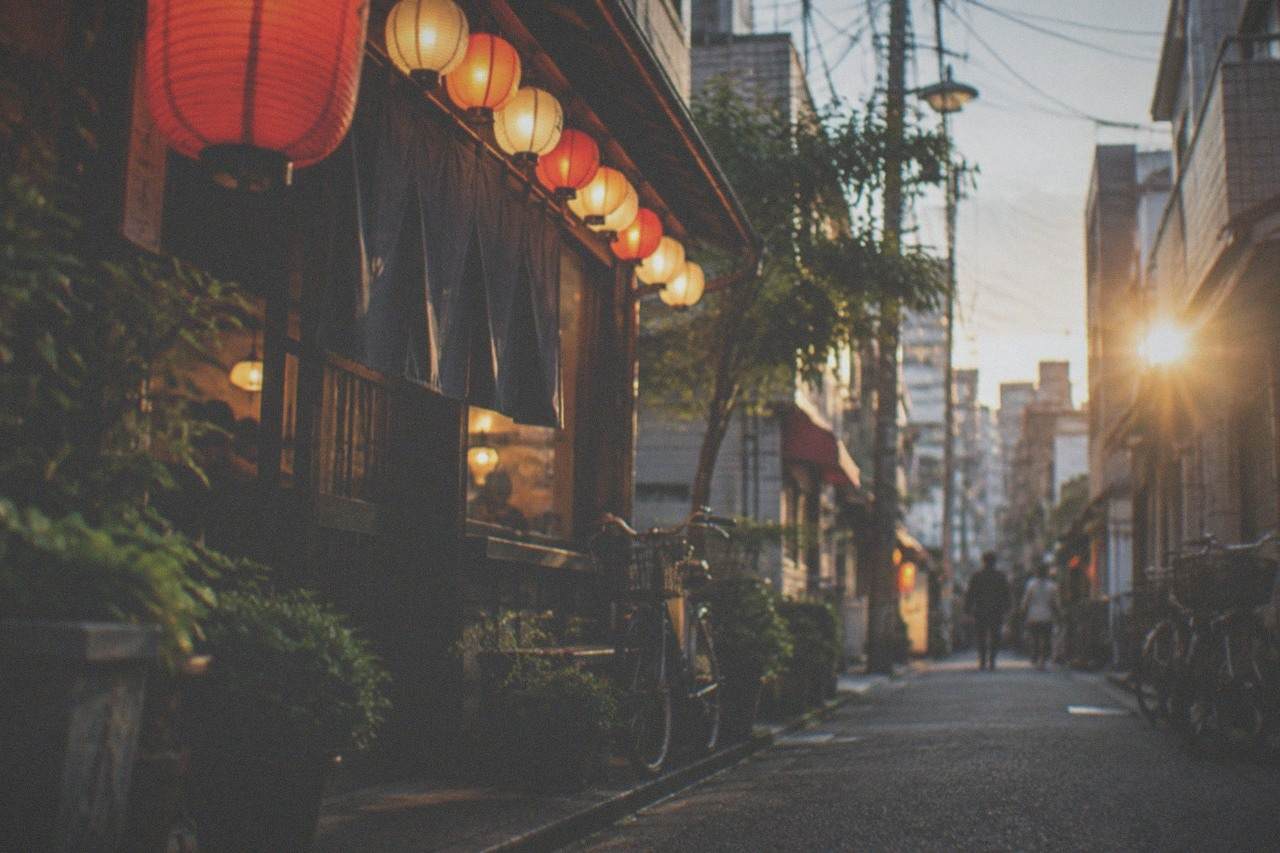
At a Fukuoka izakaya you order drinks first, accept the small otoshi appetizer that arrives unasked, then order small dishes in waves rather than all at once. Menus are often Japanese-only, but pointing works, picture menus are common, and the cover charge is a set per-seat fee, not a scam. Neighbourhoods like Nakasu, Tenjin and Daimyo each have a distinct scene.
Fukuoka eats late and it eats loudly. The city's izakaya, those cramped lantern-lit bars where grilled fish, motsunabe and cold beer share a table with strangers, are the engine room of its food culture, and the ordering ritual inside them defeats more first-time visitors than the subway, the language and the tax-free paperwork combined. The good news is that the ritual is small, learnable and the same almost everywhere. Master the sequence in this guide and you can walk into any counter joint in Nakasu or Daimyo and eat like you have been doing it for years.
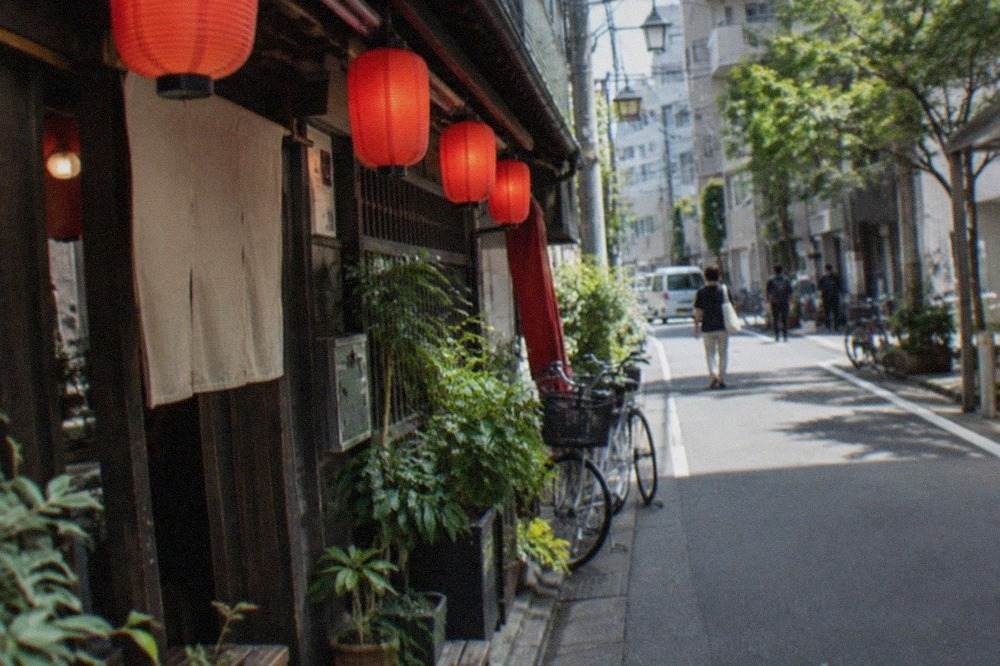
This page explains how ordering actually works, phrase by phrase, dish by dish, and it names the neighbourhoods where each style of izakaya clusters. It also covers the customs that quietly trip people up: the seating charge, the otoshi appetizer you never ordered, the way bills are tallied, and whether you need a reservation at all. For the street-food counterpart to all this, read our Fukuoka yatai guide, and for the wider food picture, start with the Fukuoka food guide.
What Is an Izakaya and How Is It Different from a Yatai?
An izakaya is a licensed, seated, indoor bar-restaurant where you order small dishes across a whole evening, while a yatai is a mobile street stall with a handful of counter seats and a short menu. Fukuoka is unusual in having both at world-class density. The city officially counts about 100 yatai, more than any other Japanese city, while its izakaya run from centuries-old Hakata institutions to tiny Daimyo counter bars. They share the same spirit, casual drinking with food, but the ordering mechanics differ.
The word izakaya breaks down as "stay-in sake shop": originally liquor stores where customers lingered to drink on the spot. Today it means a pub that serves food designed to accompany alcohol, and the format is flexible. A big chain izakaya in Hakata will hand you a tablet menu with photos in four languages. A nine-seat counter bar in Daimyo may have a handwritten menu on the wall, a single cook and no English at all. Both are izakaya, and both follow the same basic rhythm: sit, drink, order a little, order more, settle up at the end.
The yatai comparison matters in Fukuoka specifically because the two scenes sit side by side. The stalls along the Naka River in Nakasu are the postcard image, and the city regulates them closely. Under the Fukuoka City Yatai Basic Ordinance, every stall must display its prices where customers can easily see them, and a dish priced on the day's market must show that day's actual price rather than a vague "market price" label. City inspectors check periodically, which is a stronger consumer protection than most visitors expect. The ordinance and the stall count are published on the city's official yatai Q&A page.
Izakaya follow general Japanese licensing and customs instead, and that is where the confusion starts. There is no posted-price ordinance for indoor restaurants, there is a customary seat charge, and the menu structure assumes you already know how the evening is supposed to unfold. The rest of this guide unpacks that structure.
| Feature | Izakaya | Yatai |
|---|---|---|
| Setting | Indoor, licensed premises | Street stall, roughly 7 to 10 counter seats |
| Menu size | Dozens of dishes, seasonal changes | Short, often ramen, yakitori, oden, tempura |
| Price display | Printed menu, no ordinance requirement | Must be displayed visibly under city ordinance |
| Seat charge | Common, per person, called a seat fee | Not standard at stalls |
| Weather | Unaffected | Rain and strong wind close many stalls |
| Hours | Typically evening into late night | Setup permitted from 17:00, stalls typically open from around 18:00 |
If you are weighing the two experiences, our yatai etiquette guide covers the street-stall side in detail, including the customs that differ from indoor dining.
How Do You Order at a Fukuoka Izakaya?
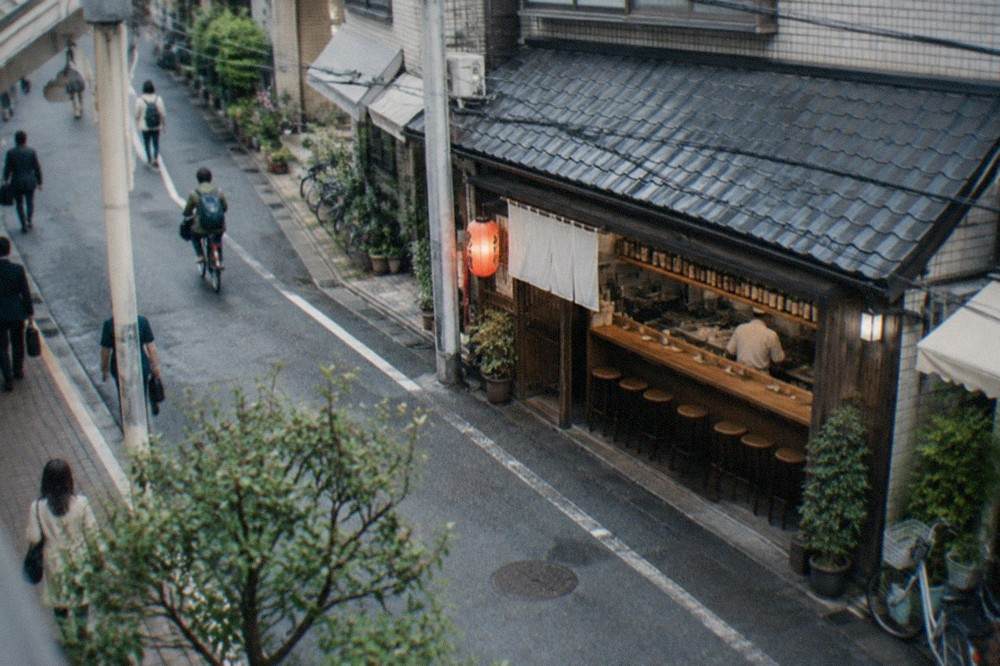
Order a drink first, before any food. A server will ask what you want within a minute or two of seating you, and the correct answer is a beverage: beer, highball, sake or tea. Food comes in waves after that. Say "toriaezu biiru" for a first round of beer, point at the picture menu for dishes, and order two or three small plates at a time rather than everything at once. The kitchen expects a rolling evening, not a single order.
That opening drink order is more socially loaded than it looks. "Toriaezu biiru", roughly "a beer for now", is the phrase that signals you understand the format. Even if you do not drink beer, ordering something immediately, anything, tells the staff you have joined the evening. Ordering nothing while you study the menu for ten minutes reads as hesitation, and in a busy counter bar the server may simply move on and come back much later. Choose fast, even if the choice is oolong tea.
Food ordering is next, and it is deliberately incremental. Izakaya dishes are small and meant to arrive as they are ready, out of sequence. A typical first wave is one or two things to nibble with the drink: edamame, a cold tofu dish, hitokuchi gyoza, which Fukuoka claims as its own one-bite version, or a sashimi moriawase, an assorted platter. When the first wave is half gone, order the second: the motsunabe if the house specializes in it, a grilled fish, the seasonal vegetable dish chalked on the board. This pacing is why the menu is organized the way it is, in small categories rather than courses.
When the menu is Japanese-only, three tools work. First, pointing, which is completely normal and offends nobody. Second, the plastic food models or photo panels near the entrance, which many places use as their real menu. Third, the phrase "osusume wa?", "what do you recommend?", which hands the decision to the kitchen and reliably produces the thing the cook is proudest of that week. In a city that takes its motsunabe and its mentaiko this seriously, asking for the recommendation is often the best order you will make all night.
| Step | What you do | Useful phrase |
|---|---|---|
| 1 | Sit, take the wet towel (oshibori) offered | "Arigato gozaimasu" |
| 2 | Order a first drink immediately | "Toriaezu biiru kudasai" |
| 3 | Accept the otoshi appetizer when it arrives | No phrase needed, it is automatic |
| 4 | Order two or three small dishes | "Kore to kore kudasai" (this and this, please) |
| 5 | Order the next wave when ready | "Osusume wa?" (what do you recommend?) |
| 6 | Ask for the bill when finished | "Okaikei onegaishimasu" |
| 7 | Pay at the counter or your seat | Say "gochisosama deshita" on leaving |
If all of this sounds like a lot to manage in an unfamiliar language on your first night, a guided evening removes the friction entirely. The options below pair you with a local who handles the ordering and the route.
The customisable private tour in that band is the one most readers here gravitate toward: you tell the guide what you want the evening to be, izakaya-heavy, yatai-forward, or a mix, and the route bends around you. The evening tour with yatai, izakaya and karaoke is the fixed-format alternative for people who would rather not plan anything, and the YokaBus tea and river-boat day out is the daylight counterweight if your trip has room for one full-day excursion into Kyushu's countryside.
What Is the Otoshi, and Why Did Food Arrive You Did Not Order?
The otoshi is a small appetizer that arrives automatically at many izakaya, and it is not a mistake or a scam. It functions as an edible seat charge: the price, typically a few hundred yen per person, is added to your bill whether you eat it or not. It is listed on the bill as a seat fee or appetizer charge. Refusing it does not remove the charge, and in most places you cannot opt out. Eat it, or quietly leave it.
This is the single most common point of confusion for visitors, and it deserves a plain explanation. The otoshi, sometimes called tsukidashi, is usually a small plate: marinated cucumber, a bite of oden, some chilled vegetables in dashi. Its legal framing in Japan is that you are agreeing to a seat, and the seat comes with a cover charge that happens to be served as food. The amount is set by the restaurant, printed on the bill, and not negotiable. If you have dietary restrictions, tell the server before it arrives, but expect the charge to stand.
The honest framing is that it is a good deal more often than not. The charge is small, the dish is frequently one of the better things on the table, and it buys you a seat in a city where the good counter bars fill by 7 p.m. Treat it as the entry ticket to the evening rather than an unwanted appetizer and the whole transaction makes sense.
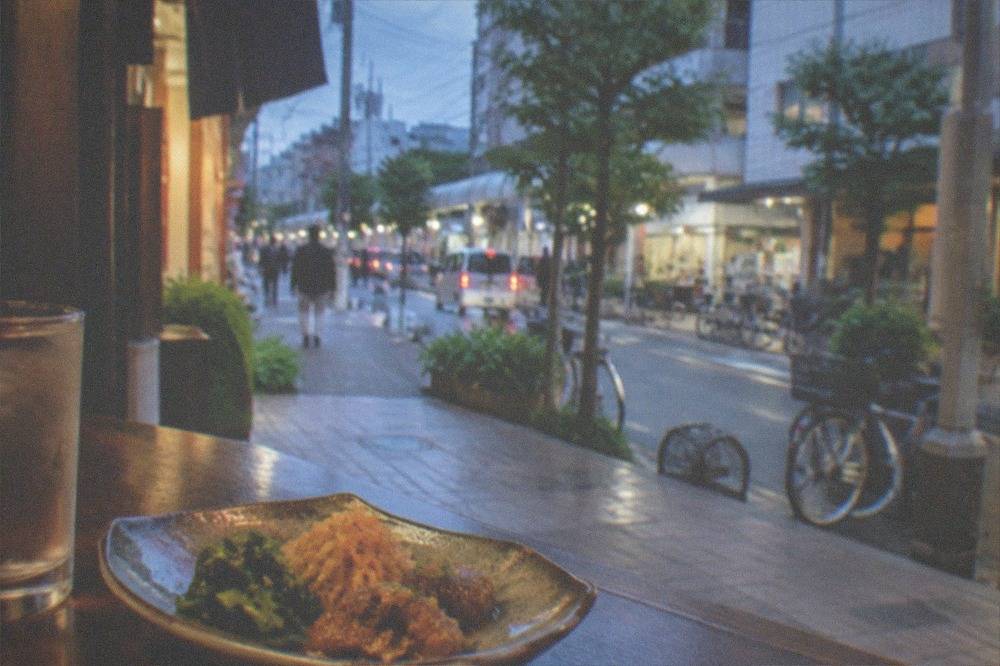
A few related customs travel with the otoshi. The oshibori, the wet hand towel offered when you sit, is for your hands, not your face, and it gets refolded when you leave. Shoes come off at some old-style places with tatami seating, and your shoes point outward at the entrance step. Bills are usually presented as a single tally at the end, not per round, and payment is generally at the counter on the way out rather than at the table. Nobody tips, and attempting to do so creates genuine confusion rather than gratitude.
Which Fukuoka Neighbourhoods Are Best for Izakaya?
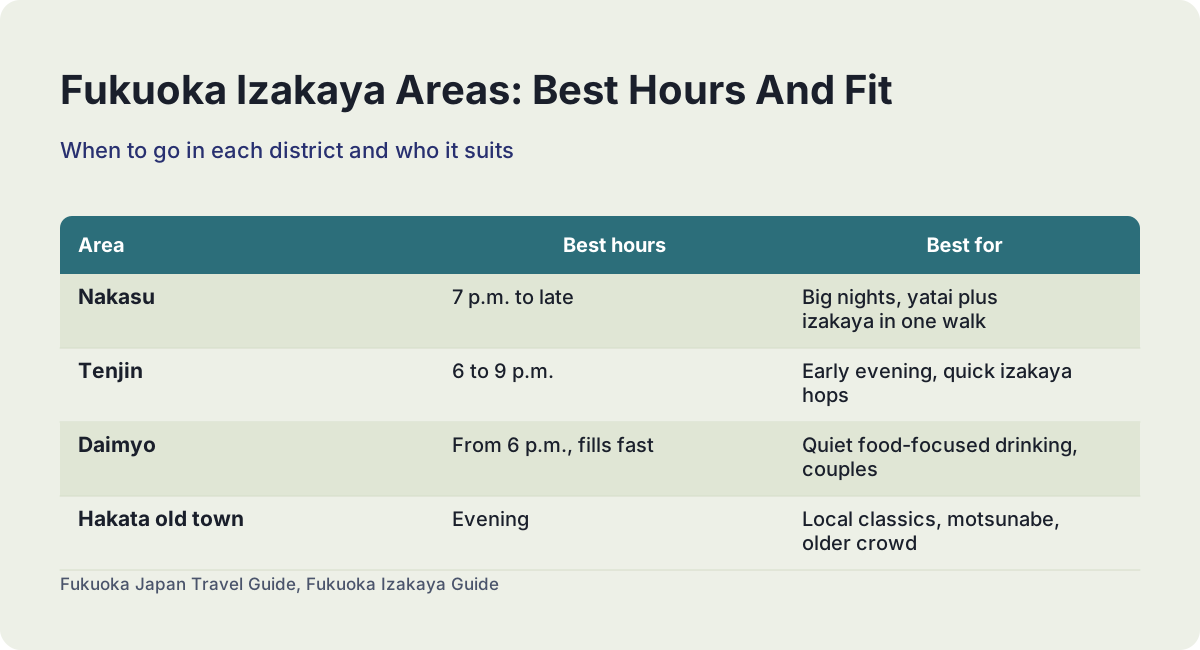
Nakasu is the flashy riverside entertainment district with the densest concentration of izakaya and the yatai row along the Naka River. Tenjin, the business core, has after-work drinking spots that start early and empty by last train. Daimyo, just west of Tenjin, is the stylish quarter of tiny counter bars and second-floor hideaways. Hakata's old town around Gion holds the traditional Hakata-style institutions. Each area peaks at a different hour, so pick by the mood you want.
Nakasu is where most visitors start, and it earns that. The district sits on the sandbar between the Naka River and the Hakata canal, and from early evening the whole strip lights up: multi-floor izakaya buildings, the yatai stalls along the water, host bars and snack bars stacked above. It is the loudest, most tourist-facing and most expensive of the four, and it runs latest. Our Nakasu nightlife guide maps the district in detail.
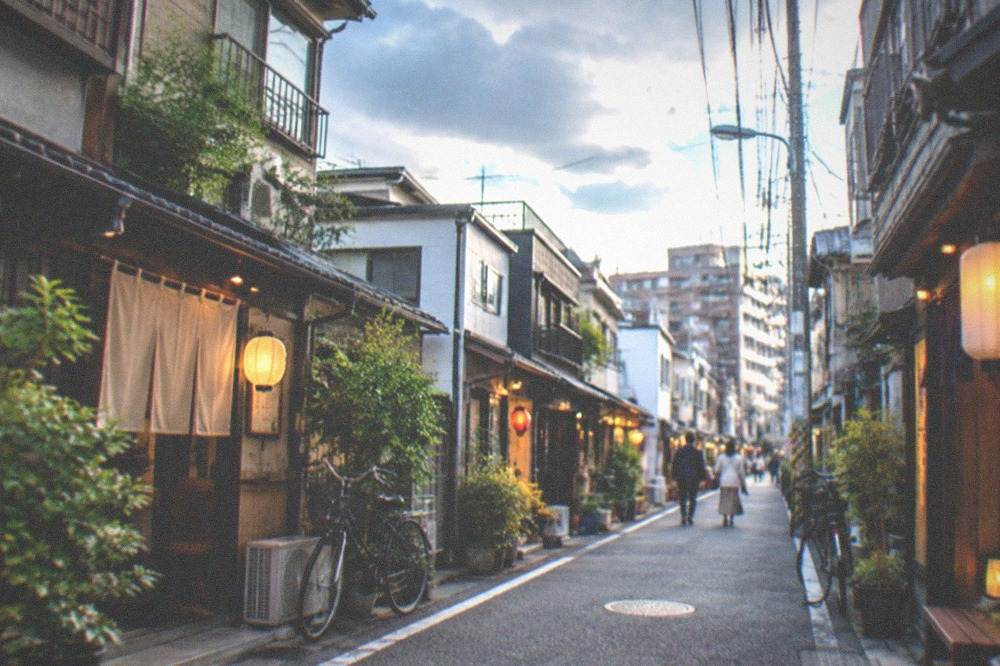
Daimyo is the opposite temperament. A low-rise grid of former residential streets just west of Tenjin, it specializes in small, chef-driven places: nine seats, a single menu, natural wine or craft beer, a young crowd. These bars are the ones where a reservation or an early arrival matters, because the room physically cannot take walk-ins after it fills. Tenjin itself is the salaryman engine room, at its best between 6 and 9 p.m. when the offices empty, and quieter after. Hakata old town, around Gion and the temples, holds the traditional end of the spectrum: long-established Hakata izakaya serving motsunabe, grilled fish and mentaiko dishes to a local, older clientele.
| Area | Character | Best hours | Best for |
|---|---|---|---|
| Nakasu | Riverside entertainment district, densest cluster | 7 p.m. to late | Big nights, yatai plus izakaya in one walk |
| Tenjin | Business core, after-work bars | 6 to 9 p.m. | Early evening, quick izakaya hops |
| Daimyo | Small chef-driven counter bars | From 6 p.m., fills fast | Quiet food-focused drinking, couples |
| Hakata old town | Traditional Hakata institutions | Evening | Local classics, motsunabe, older crowd |
Getting between them is trivial. Nakasu, Tenjin and Daimyo sit within about 15 minutes' walk of each other, and Hakata old town is one or two subway stops from either. If you are basing the evening around the stations, our getting around Fukuoka guide covers the subway, buses and IC cards, and the Hakata station area guide is the reference for the station side of the city. For where to sleep at the end of the night, see where to stay in Fukuoka.
The private Nakasu food stall tour below is built exactly for this patch of the city: a guided walk through the stalls with tastings included, rated 4.7 from 70 reviews, which takes the language problem off the table entirely in the district where it is most fun to have a guide.
What Japanese Phrases Do You Need at an Izakaya?
You need about ten phrases, and three of them carry most of the evening. "Toriaezu biiru kudasai" gets you a first drink, "osusume wa?" gets you the kitchen's best dish, and "okaikei onegaishimasu" gets you the bill. Everything else, pointing and "kore kudasai", this one please, covers. Staff do not expect sentences, and a single word plus a gesture works everywhere from a chain izakaya to a nine-seat counter.
Pronunciation is on your side: Japanese is spoken in even syllables, and every vowel has one sound. "Kudasai" is koo-da-sigh. "Onegaishimasu" is oh-neg-eye-she-mass, said quickly. Do not stress syllables the way English does. Effort is appreciated out of proportion to accuracy, and a bad attempt at "osusume" gets a warmer reaction in Fukuoka than a fluent English sentence in most food cities.
| Japanese | Reading | Meaning | When to use it |
|---|---|---|---|
| とりあえずビールください | Toriaezu biiru kudasai | A beer to start, please | The opening order |
| おすすめは? | Osusume wa? | What do you recommend? | Any time you are stuck |
| これください | Kore kudasai | This one, please | While pointing at the menu |
| 生ビール | Nama biiru | Draft beer | Ordering beer |
| お水ください | Omizu kudasai | Water, please | Free water, normal request |
| 辛いのは食べられません | Karai no wa tabemasen | I cannot eat spicy food | Dietary limits |
| アレルギーがあります | Arerugii ga arimasu | I have an allergy | State it before the otoshi arrives |
| お会計お願いします | Okaikei onegaishimasu | The bill, please | End of the night |
| ごちそうさまでした | Gochisosama deshita | Thank you for the meal | Leaving |
One Fukuoka-specific note: the local dialect, Hakata-ben, replaces standard polite forms with shorter, blunter ones, and you will hear it constantly behind the counter. You do not need to learn it. But knowing it exists stops you panicking when "nan shiyo to?" turns out to mean "what are you having?", and it explains why Fukuoka service can feel brisker than Tokyo's while being no less warm.
How Does Izakaya Etiquette Work in Practice?
The rules that matter are few: pour for others and let them pour for you rather than filling your own glass, never stick chopsticks upright in rice, keep the oshibori for hands only, and do not walk while drinking on the street in the immediate station areas. Loud conversation is fine, phone calls are not. Finishing your drink completely signals you want another, and the last order call is announced, not assumed.
The pouring custom is the one with real social weight. In a group, you top up your companion's glass and they top up yours; filling your own glass is reserved for solo drinking and even then it reads as slightly odd in company. When someone pours for you, lift your glass slightly with both hands. This is also the mechanism by which a nomikai, a group drinking party, maintains its rhythm, and if you are ever pulled into one at a neighboring table's invitation, follow the pouring and the evening steers itself.
Everything else is low-stakes. Chopsticks go across the dish or on a rest, never upright in rice, which mirrors a funeral offering. Passing food chopstick-to-chopstick is avoided for the same reason. Slurping noodles is fine, expected even. Splitting a bill is normal and unremarkable in modern izakaya, though many places prefer one payment at the counter. Loud is fine, slumped-over drunk is not, and the staff will quietly manage anyone who crosses the line. For the street-stall versions of these customs, the yatai etiquette page covers the extra rules that apply at a counter facing the pavement.
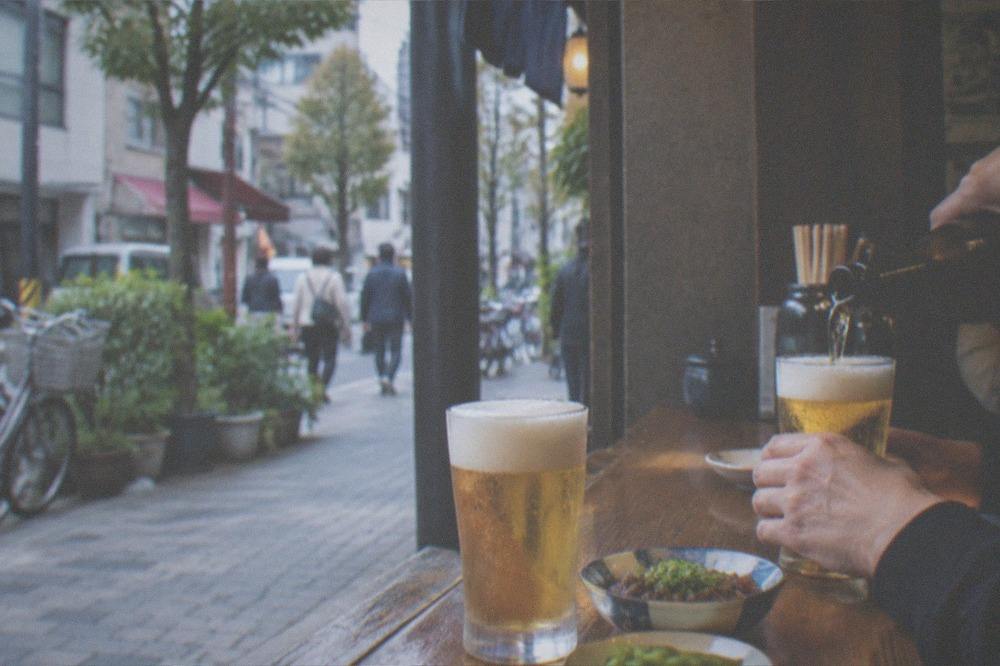
The one legal edge worth knowing: public drinking is not prohibited in Japan the way it is in many countries, and you will see people with cans in parks and on the riverbank. That said, drinking while walking through crowded entertainment streets is frowned on, and open containers on local trains are poor form. Inside the izakaya, none of this applies. It is simply the difference between the venue being the drinking space and the street being a corridor between drinking spaces.
Do You Need a Reservation, or Can You Walk In?
Walk-ins work at most izakaya on a weeknight before 7 p.m., and at chain and larger places almost any time. Small counter bars in Daimyo and popular Nakasu spots fill by 7 to 8 p.m. on Fridays and Saturdays, and those are worth booking, usually by phone through your hotel. Same-day reservations are often possible. Groups of four or more should always book, because many izakaya physically seat fewer than ten people.
The arithmetic is the reason. A nine-seat counter bar cannot absorb a walk-in party of three once eight regulars have settled, and no amount of charm changes the seat count. Solo diners and pairs have it easiest: counter seats are the natural habitat of the solo drinker in Japan, and eating alone at an izakaya counter is so normal that many places are laid out for exactly that customer. If you are travelling solo, our Fukuoka solo travel guide covers the wider evening landscape.
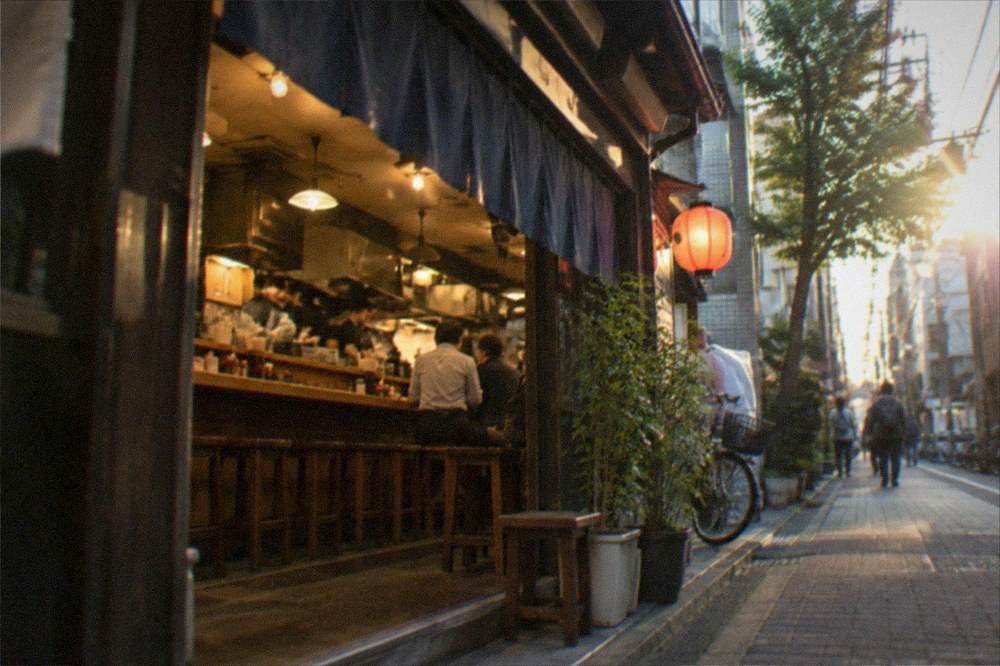
Timing beats booking for most visitors. Arrive at 6 p.m. and even the famous places have room; arrive at 8:30 p.m. on a Saturday and you will be quoting the wait time to yourself. The Fukuoka evening also starts earlier than Tokyo's: Tenjin empties toward last train, and while Nakasu runs late, the sweet spot for food quality is early, when the kitchen is fresh and the sashimi board is full. If your evening matters to the trip, the fixed-format evening tour below solves both problems at once, with the guide handling the timing, the queueing and the ordering.
What Should You Actually Order in Fukuoka?
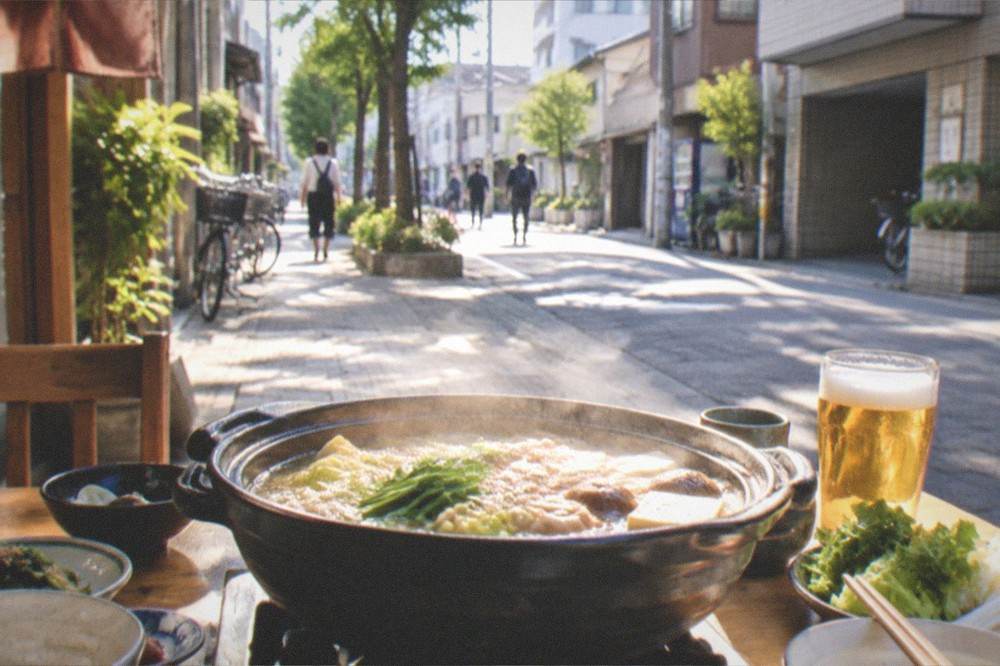
Order the local dishes Fukuoka built its reputation on: motsunabe, the beef offal hot pot that is the city's signature winter dish; mentaiko, spiced pollock roe served plain or on everything; hitokuchi gyoza, one-bite dumplings; and fresh fish from the Genkai Sea. Add goma saba, sesame mackerel, and ask what the kitchen recommends that day. The regional menu is the reason to choose a Fukuoka izakaya over a generic one.
Motsunabe is the headline. A bubbling pot of beef or pork offal, cabbage, garlic and chili, cooked at your table and finished with noodles in the broth, it is a Fukuoka invention that spread nationwide from here. It is also the dish most visitors are nervous about, and the honest description is that it tastes like a rich, garlicky stew, with the offal contributing texture more than any strong flavour. It is a shared pot, so it suits groups, and many places require it as a minimum order of two portions.
The cold dishes are the quiet stars. Goma saba, raw mackerel in sesame and vinegar, is a Kyushu classic that appears on nearly every local menu. Mentaiko, the lightly spiced cod or pollock roe, is served as a small dish, on rice, or inside onigiri, and Fukuoka is its Japanese home. Hitokuchi gyoza, the one-bite pan-fried dumpling, is a Hakata bar snack with its own dedicated following. Around all of these, put your trust in "osusume wa?": the daily fish from the Genkai Sea, the northern sea that Fukuoka fronts onto, is often the best thing in the building and never on the printed menu.
| Dish | What it is | How it arrives | Notes |
|---|---|---|---|
| Motsunabe | Beef or pork offal hot pot with garlic and chili | Cooked at your table, noodles finish the broth | City signature, usually a two-portion minimum |
| Mentaiko | Spiced pollock or cod roe | Small dish, or on rice | Fukuoka is its home |
| Goma saba | Raw mackerel in sesame vinegar | Cold starter | Kyushu classic, near-universal locally |
| Hitokuchi gyoza | One-bite pan-fried dumplings | Hot, in twos and threes | Hakata bar snack |
| Sashimi moriawase | Assorted raw fish platter | Cold, seasonal selection | Ask what is fresh from the Genkai Sea |
| Yakitori | Grilled chicken skewers | Hot, salted or sauced | Order by the skewer |
For the deeper background on each of these, the Fukuoka motsunabe guide and the mentaiko page go dish by dish, and the wider Fukuoka street food guide covers what you will find between the izakaya stops.
Can a Guide Help You Navigate the Izakaya Scene?
Yes, and in Fukuoka it is unusually good value, because the guide solves the two problems that actually block people: the language barrier at Japanese-only counters and the choice paralysis across four neighbourhoods. A private customisable tour from $59 per person lets you set the evening's shape, while fixed-format evening tours handle everything for people who would rather not decide at all. Neither is required to eat well here, but both compress the learning curve into one night.
The private option is the flexible one. The Fukuoka Your Way customisable private tour, rated 4.9 from 106 reviews, is built around exactly the kind of evening this guide describes: you tell the guide the mood, the budget and the food limits, and the route assembles itself. It runs 2 to 6 hours, so it can be a gentle introduction to two counter bars or a full crawl from Tenjin to Nakasu. For travellers who want the same thing without the planning conversation, the fixed evening tour covers yatai, izakaya and karaoke in one guided arc.
The honest caveat is that plenty of visitors eat brilliantly with no guide at all. The phrases in the table above, an early start time and a willingness to point will carry you through 90 percent of Fukuoka's counters. What a guide adds is access: the unmarked second-floor places, the stalls with a queue, the dishes never printed in any language. If your trip is short, that compression is worth the price; if it is long, teach yourself the ritual above and save the guided evening for another city. Whichever way you go, the Fukuoka Japan Travel Guide has the neighbourhood, transport and dish pages to plan the rest of the trip around it.
Common Questions About Ordering at a Fukuoka Izakaya
How Do You Order At A Fukuoka Izakaya?
Order a drink first, using "toriaezu biiru kudasai" for a beer or pointing at the drink menu for anything else. Then order two or three small dishes, pointing at the menu or asking "osusume wa?" for the recommendation. Order further dishes in waves as the evening goes on, and ask for the bill with "okaikei onegaishimasu" when you are done.
What is the otoshi appetizer that arrives without being ordered?
It is an edible seat charge. A small dish arrives automatically at many izakaya and its per-person price is added to your bill whether or not you eat it. It is not a mistake, and refusing it does not remove the charge. Most of the time it is a decent little dish, so the practical advice is to eat it.
Do you need to speak Japanese to eat at an izakaya?
No. Picture menus, plastic food models and pointing cover most situations, and the three phrases in this guide, a first drink order, the recommendation question and the bill request, handle the rest. Staff do not expect full sentences, and effort is warmly received even when the pronunciation is rough.
Is it rude to eat at an izakaya counter alone?
The opposite. Counter seating is the natural format for solo drinkers in Japan, and many izakaya are physically laid out around single seats. Solo visitors often get better conversation with the chef and faster service, since a single seat can be slotted in anywhere.
Can you walk into an izakaya without a reservation?
Usually yes, if you arrive before 7 p.m. or stick to larger and chain places. Small counter bars in Daimyo and popular Nakasu spots fill early on weekends, and any group of four or more should book because many places seat fewer than ten people in total.
What should you order first in Fukuoka specifically?
A drink, then the local dishes: motsunabe if the house does it, goma saba as a cold starter, mentaiko, hitokuchi gyoza, and whatever fish the kitchen recommends that day. Asking "osusume wa?" reliably produces the best thing on the menu, which in a port city on the Genkai Sea is often the daily sashimi.