Momochi Seaside Park
Momochi Seaside Park is Fukuoka's purpose-built beachfront on Hakata Bay, a stretch of imported sand, pine shading and promenade that faces the Genkai Sea rather than the Pacific, with the city's tallest building standing directly behind it. This guide covers what is actually there, when the weather cooperates, how to arrive, and whether it beats the other waterfronts within reach of the city.
Short answer
Yes, for a half-day of beach, promenade walking and the observation deck of Fukuoka Tower, which stands 234 m tall, charges ¥1,000 for adults and stays open until 22:00. Momochi is at its best from late spring through early autumn, though July is Fukuoka's wettest month at 299.1 mm of rain.
Momochi Seaside Park is the strip of reclaimed waterfront on the western edge of Hakata Bay where Fukuoka decided to give its residents a beach within city limits. The sand here was brought in rather than deposited by the sea, the pine trees were planted, and the promenade was laid out to connect the district to Fukuoka Tower, the 234 m structure that remains the tallest building in the city. Today the area is part beach, part wedding-venue backdrop, part baseball fan zone when the stadium next door has a game on. It is the closest thing Fukuoka has to a resort district, and it sits only a few kilometres from Hakata Station.
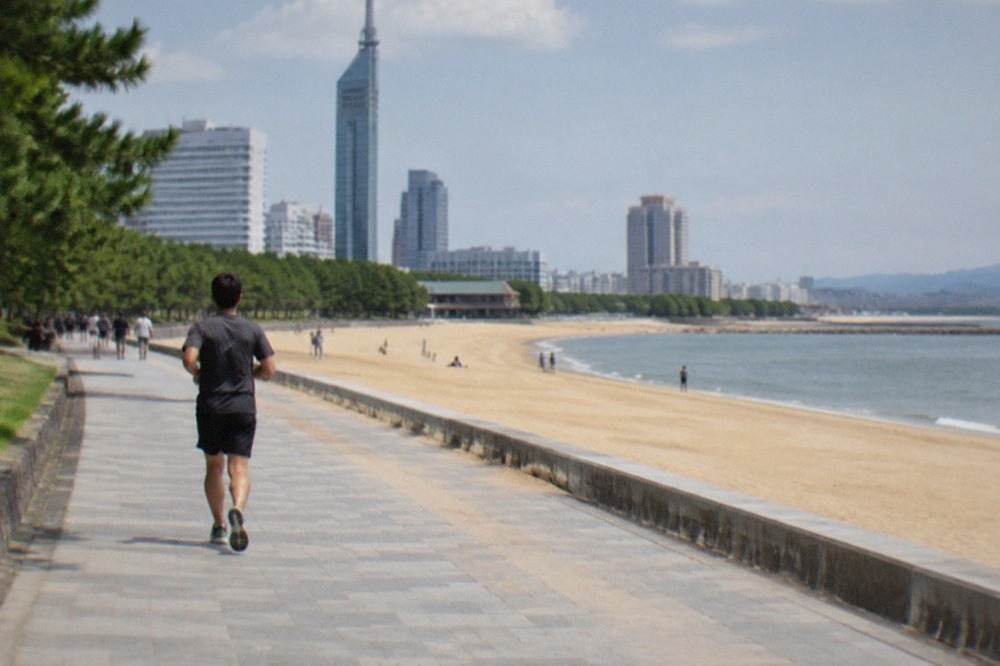
One honest framing before anything else: Hakata is a ward of Fukuoka and the name of its main station, not a separate city, so nothing in this guide involves travelling "from Hakata to Fukuoka". Momochi sits inside the city, in the Sawara ward area along the bay front, and every distance quoted below is a city-internal one. That distinction matters because a remarkable number of published guides treat the two names as separate destinations, and it is the single most common error in English-language writing about this city. The bay Momochi faces is Hakata Bay, opening onto the Genkai Sea on the northern coast of Kyushu.
Is Momochi Seaside Park Worth Visiting?
For most travellers the answer is yes, as a half-day: the beach is pleasant, the promenade walk is easy, and Fukuoka Tower next door is one of the city's better paid viewpoints, running 9:30 to 22:00 with adult admission at ¥1,000. What Momochi is not is a tropical resort. The sand is imported, the swimming season is short, and the payoff is the skyline-and-bay panorama rather than the water itself. Treat it as a waterfront stroll with a tower attached and it delivers.
The honest case for Momochi starts with geography. Very few Japanese cities this size have a usable beach this close to the commercial core, reachable by a short bus or subway-plus-walk trip without a car. Fukuoka grew around its port, and the Momochi reclamation turned an industrial-facing shoreline into a district of towers, hotels, wedding chapels and sand. If your trip is built around Hakata ramen, yatai stalls and temple hopping, Momochi adds a genuinely different texture to the itinerary: open sky, sea horizon and long sightlines instead of arcade ceilings.
The honest case against it is equally simple. This is not Okinawa. The sea is the Genkai Sea, the water is cool for most of the year, and outside the summer months the beach functions mainly as a very wide walkway. Travellers who arrive in January expecting beach weather leave cold and slightly confused. The district also empties noticeably when nothing is on at the baseball stadium, and parts of it feel designed for wedding photography above all else.
That balance is why this page exists. Whether Momochi earns a slot in your itinerary depends almost entirely on when you are visiting, what you pair it with, and whether you also want the tower, the stadium atmosphere or the evening illumination. The rest of this guide works through each of those questions in turn, using verified figures for everything numeric, and flagging plainly where the sources go quiet.
What Can You Actually Do at Momochi Seaside Park?
The core activities are the beach itself, the seaside promenade, the observation decks of Fukuoka Tower next door, baseball at Mizuho PayPay Dome a short walk inland, and teamLab Forest, the immersive digital-art space in the same district. The promenade costs nothing to wander, the tower charges ¥1,000 for adults, and the dome and teamLab each have their own ticketing. Add restaurants, a wedding-hall backdrop and seasonal illumination and you have a full afternoon.
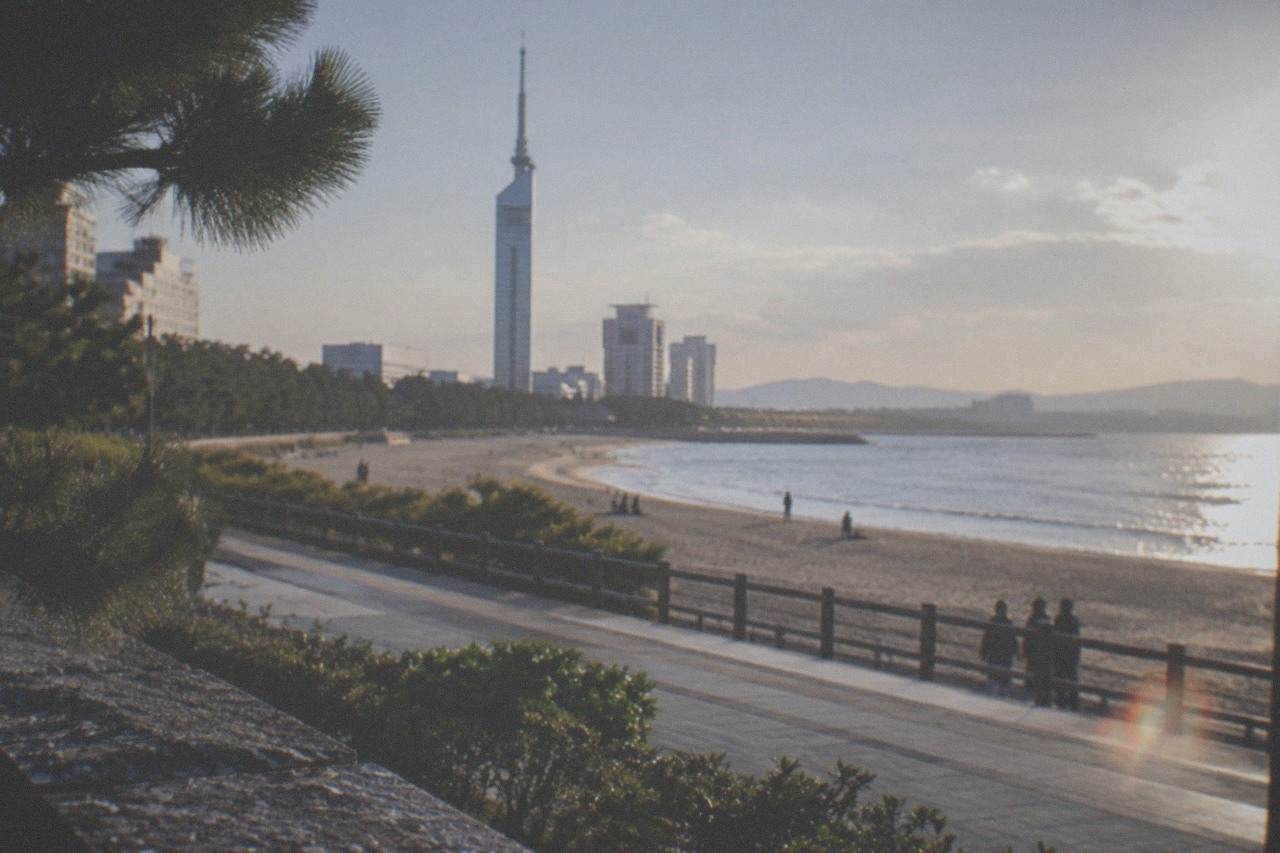
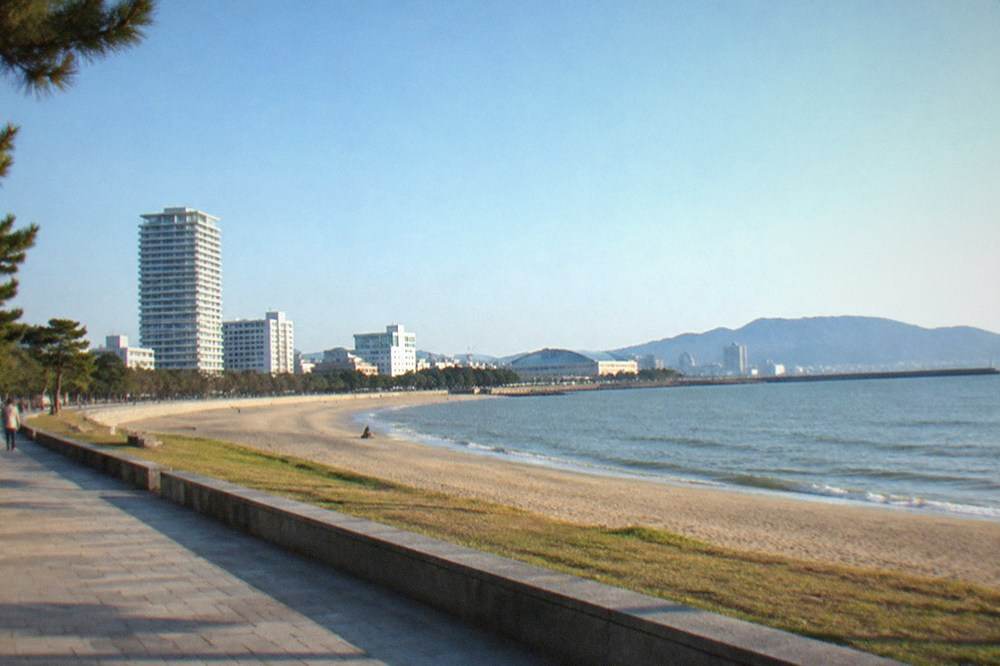
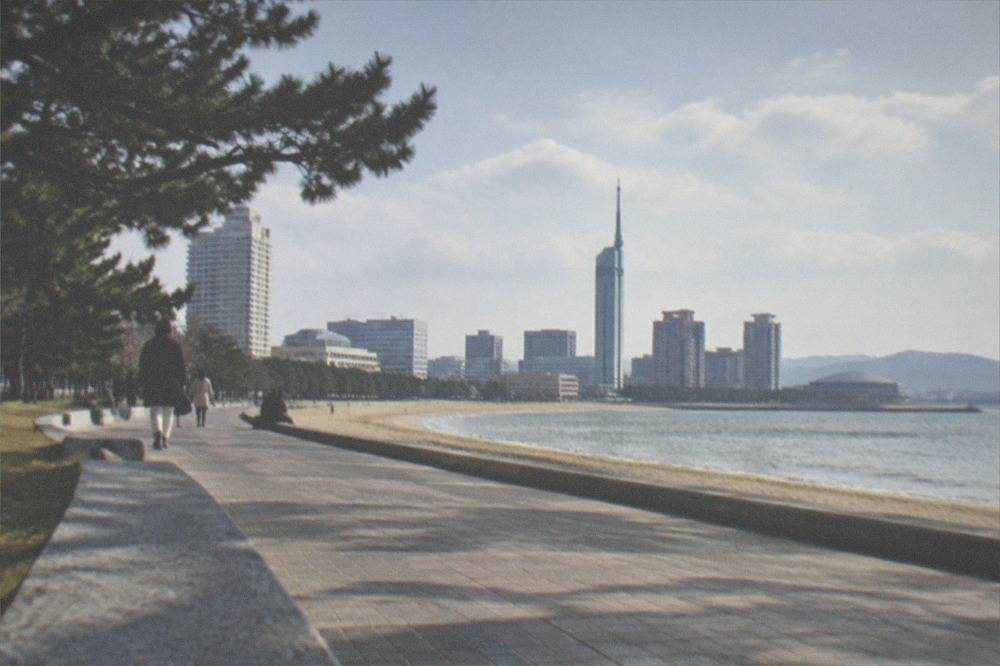
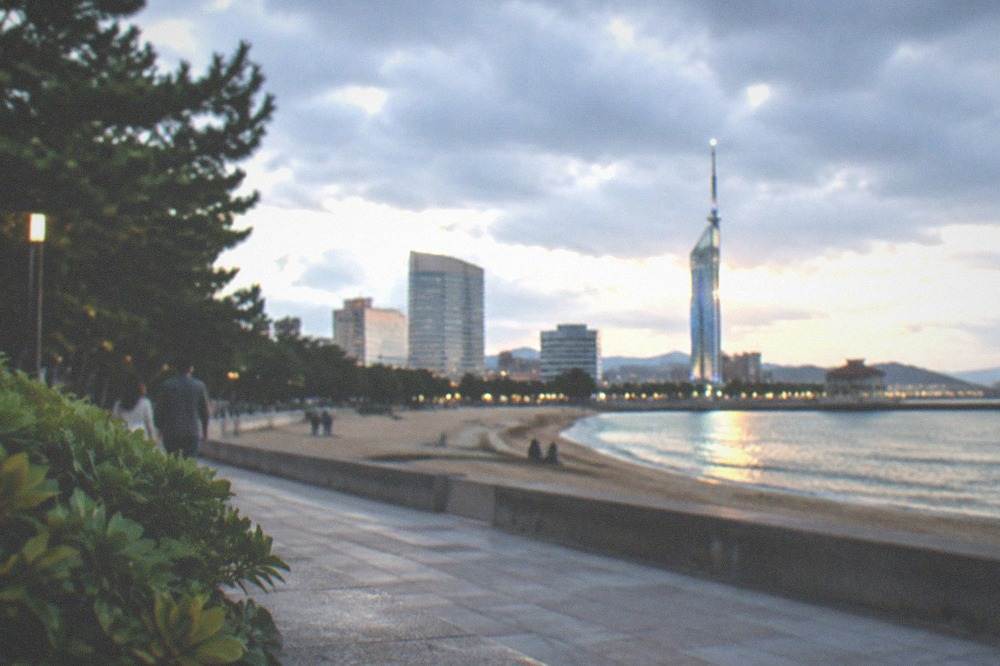
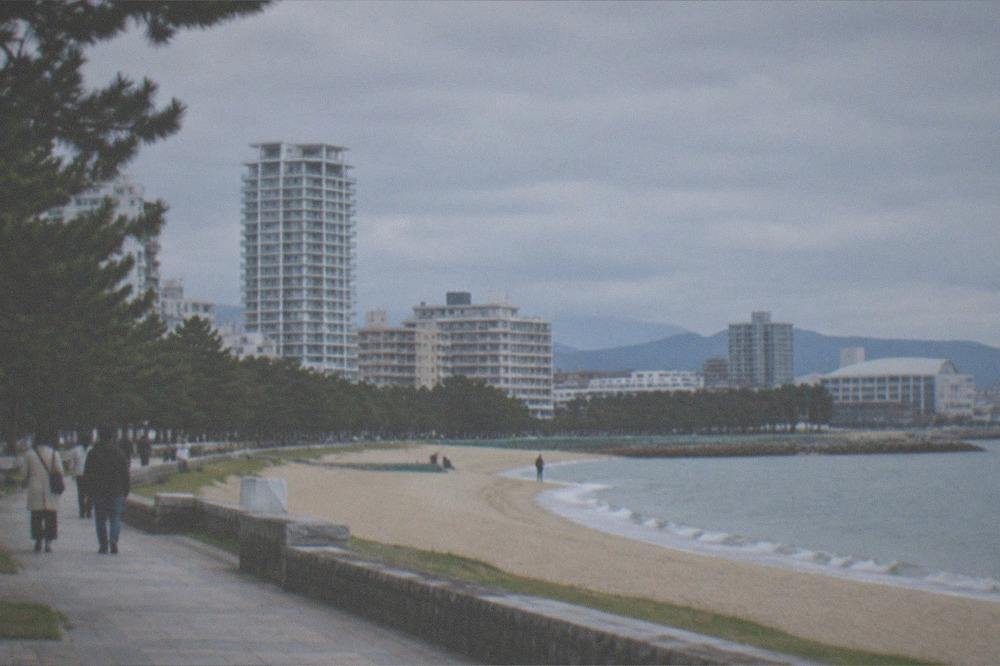
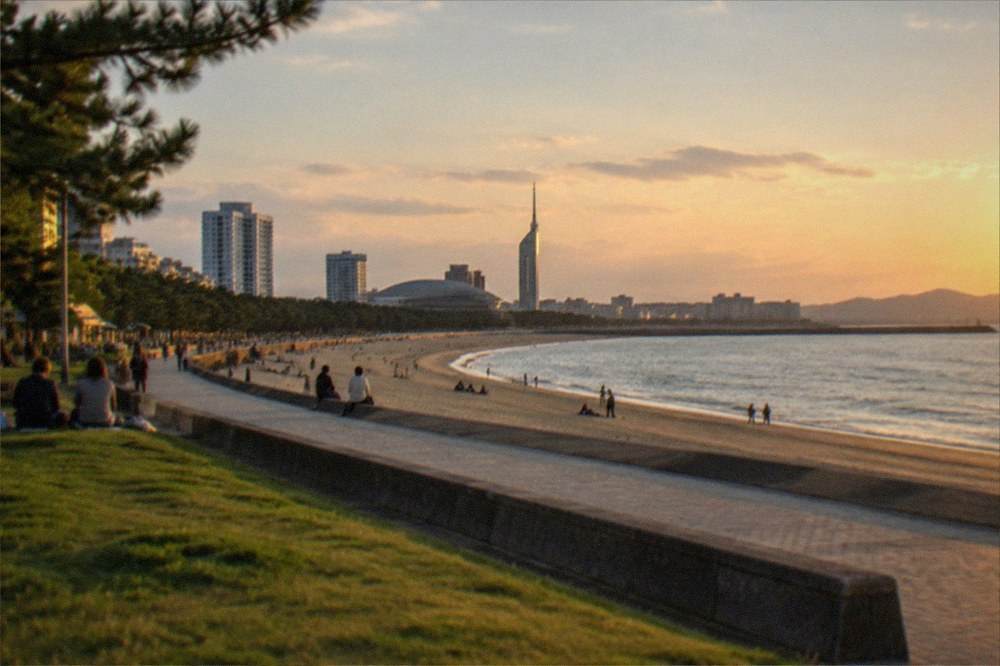
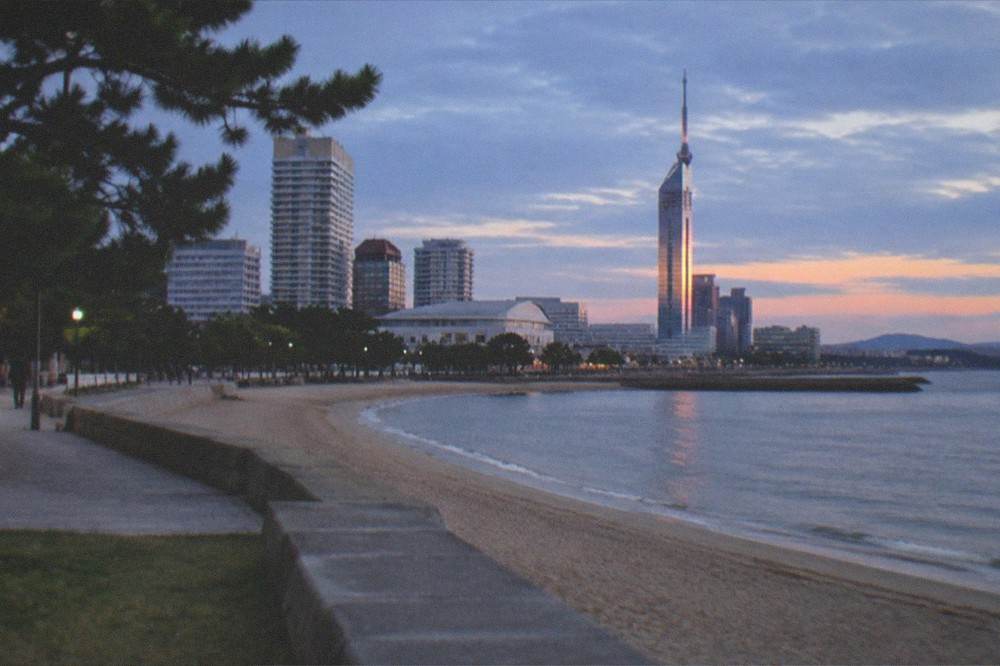
Start with the sand. Momochi Beach, properly Momochihama, is a man-made stretch facing Hakata Bay, and the swimming infrastructure, showers and lifeguard presence, appears only during the designated summer season. Outside that window the beach remains fully walkable, and it is the walking rather than the swimming that most visitors actually use it for. The promenade runs behind the sand, lined with the planted pines that give the district its sheltered, slightly stage-set character. Photographers gravitate here at sunset, when Fukuoka Tower catches the light and the bay reflects it.
The tower deserves its own section below, but the short version is that it anchors the whole district. At 234 m it is the tallest seaside tower in Japan, with observation decks at 123 m, 120 m and 116 m, and its mirrored cladding was designed to reflect the sea and sky rather than dominate them. Even visitors who never go up end up photographing it, and its base connects into the promenade network so the two are usually done together.
Inland from the sand sits the sports and entertainment layer. Mizuho PayPay Dome, home of the SoftBank Hawks, is close enough that game days flood the district with fans in team colours, and food stalls and street vendors appear around it. For a different register entirely, teamLab Forest Fukuoka operates in the same area, an immersive digital art museum built around a garden of projected flowers and a forest of moving light. A family with teenagers can realistically do teamLab in the morning, the beach and promenade at lunch, and a baseball game in the evening without leaving the district.
| Activity | What it involves | Ticketing basis |
|---|---|---|
| Beach and promenade | Sand, pine walk, sunset views over Hakata Bay | Open public space |
| Fukuoka Tower decks | Observation at 123 m, cafe and shop levels below | Adult ¥1,000, child rates below |
| Mizuho PayPay Dome | Professional baseball, Hawks home games | Per game, varies by seat |
| teamLab Forest | Immersive digital art, two themed zones | Separate timed ticket |
| Marizon area | Wedding hall on a pier-like platform over the water | Viewing from outside only |
One activity worth flagging for evening planners: the district is one of the better night-view spots in the city. The tower is lit, the bayfront is lit, and on clear evenings the reflections across the water do a lot of work. For visitors whose itinerary is otherwise shrine-and-market shaped, a Momochi evening is the easiest way to see a different Fukuoka after dark, and pairs naturally with a bay cruise, which this guide returns to near the end.
How Does Momochi Pair with Fukuoka Tower?
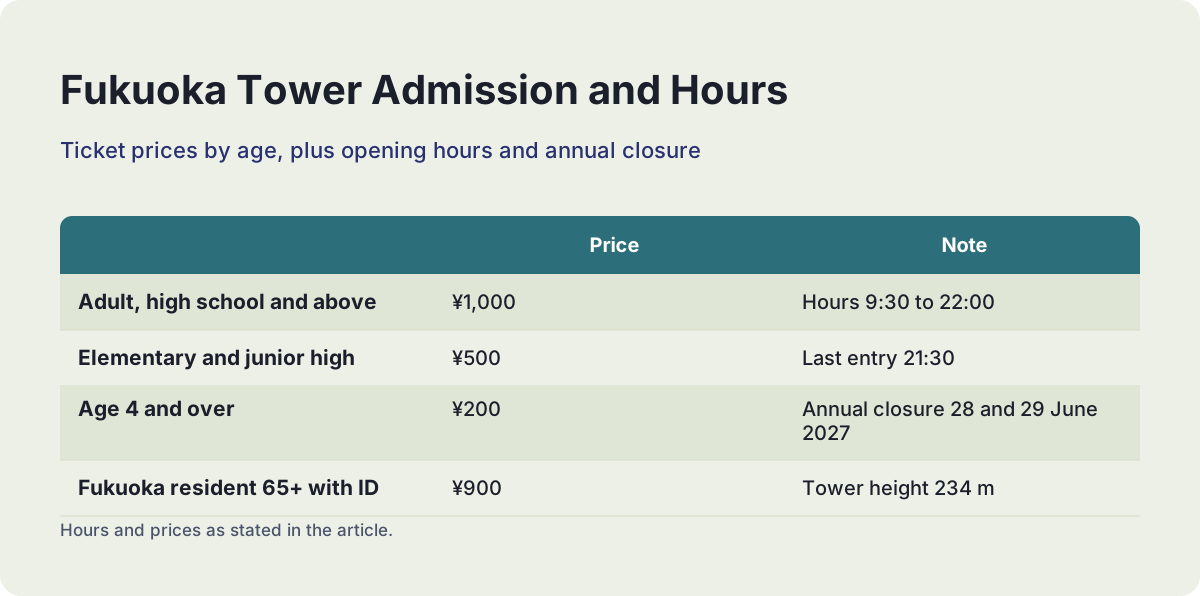
Fukuoka Tower stands directly behind the beach and is the main paid attraction in the district: hours are 9:30 to 22:00 with last entry at 21:30, admission is ¥1,000 for high school age and above, ¥500 for elementary and junior high, and ¥200 for ages 4 and over. It closes annually on 28 and 29 June 2027. The tower's 234 m height and 123 m main deck make it the highest viewpoint over Hakata Bay in the city.
The tower was built as part of the same waterfront development that produced the beach, and the two have been the district's twin anchors since. Because the decks run late, the standard play is to time a visit for the hour around sunset: you watch the light hit the bay from the promenade, then ride up and watch it leave from 123 m. Last entry at 21:30 means even a post-dinner arrival works, and the official charge page lists the full payment spread, including a ¥900 rate for Fukuoka residents aged 65 and over with ID, and reduced disability rates of ¥500, ¥250 and ¥100.
The tower takes essentially every payment method a visitor could carry: cash, Visa, Mastercard, JCB, Amex, Discover, Diners, UnionPay, plus PayPay, d払い, Rakuten Pay, au PAY, Alipay+ and WeChat Pay. That detail is worth knowing because Japan's smaller attractions are often cash-only, and Momochi is not one of them. The one annual exception to the schedule is the two-day closure at the end of June, which in 2027 falls on 28 and 29 June, so midsummer visitors in that specific window should plan around it.
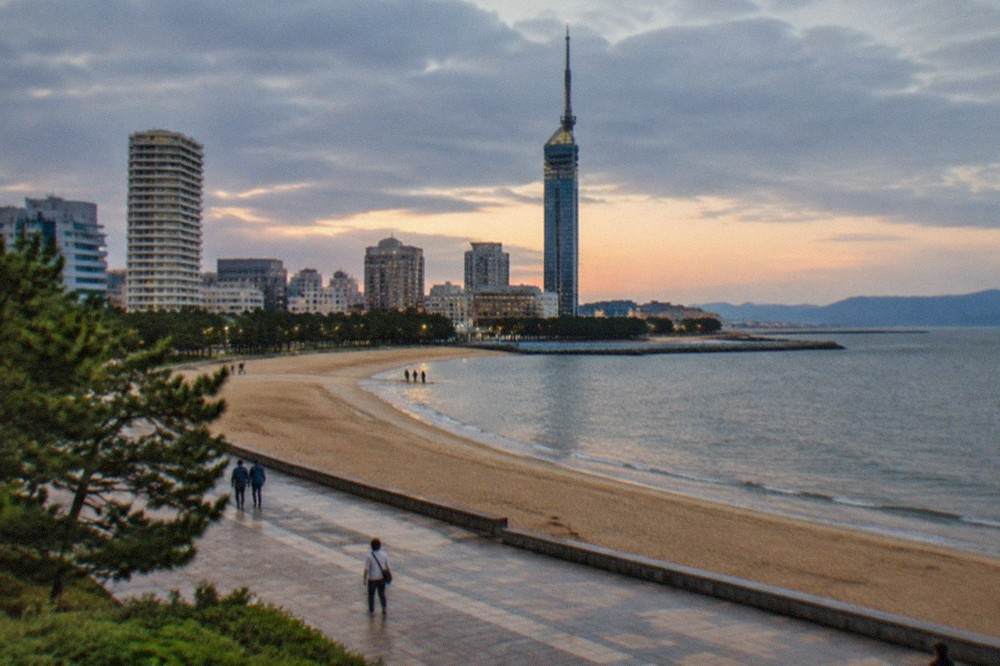
The tower also carries the district's seasonal illumination programme. Exterior displays change with the calendar, with recent patterns including an autumn moon-viewing motif of moon and rabbits, and a Christmas tree theme running from early November into December. These are decorative rather than essential, but they shape the evening character of the promenade, and anyone scheduling a Momochi evening in November or December gets a more dressed-up version of it than a February visitor does.
| Fukuoka Tower | Detail |
|---|---|
| Height | 234 m |
| Observation decks | 123 m, 120 m, 116 m |
| Hours | 9:30 to 22:00, last entry 21:30 |
| Adult, high school and above | ¥1,000 |
| Elementary and junior high | ¥500 |
| Age 4 and over | ¥200 |
| Fukuoka resident 65+ with ID | ¥900 |
| Annual closure | 28 and 29 June 2027 |
Visitors short on time often ask whether the tower alone justifies the trip out, and the fair answer is that the tower plus the promenade together do, while either alone is thinner. The deck view is genuinely good, over the bay, the city grid and the mountains behind it, but it is a single-vantage experience. Combined with an hour of beach walking and a stadium evening or a teamLab visit, the district earns a half-day without strain.
If your itinerary already includes a tower-type viewpoint elsewhere in Japan, the differentiator here is the waterfront setting: this is the view of Fukuoka's own bay from inside Fukuoka's own skyline. For more on the tower itself, including its full schedule and seasonal displays, see the dedicated Fukuoka Tower guide.
When Is the Best Time of Year to Visit Momochi?
Late spring through early autumn is the working window, with a caveat that surprises most visitors: July, not June, is Fukuoka's wettest month, at 299.1 mm against June's 249.6 mm, even though June is the tsuyu rainy season. August is both hotter and drier than July, averaging 28.4°C with 210.0 mm of rain and 200.9 sunshine hours. May is the sunniest shoulder month, at 204.1 sunshine hours with 133.7 mm of rain.
Those figures come from the Japan Meteorological Agency's 1991 to 2020 normals for the Fukuoka station, and they upend the standard guidebook framing that treats June as the month to write off and July as dependable summer festival weather. Fukuoka's biggest festival, Hakata Gion Yamakasa, runs July 1 to 15 every year, and the city's own weather statistics say that is statistically the wettest fortnight band on the calendar. Typhoon season runs roughly July through October as well, so late-summer visitors should hold plans loosely and watch forecasts rather than assume the calendar.
The practical read for Momochi specifically: May offers the best mix of sunshine and mild temperatures before the summer humidity lands. August is the real beach month, hot at a mean of 28.4°C with daily maxima averaging 32.5°C, but it is also when the swimming season, the crowds and the hotel prices all peak together. September cools to a mean of 24.7°C with 175.1 mm of rain, and the sea is still warm enough that the water is more inviting than the statistics suggest.
| Month | Mean °C | Daily max °C | Rain mm | Sunshine hours |
|---|---|---|---|---|
| May | 19.9 | 24.4 | 133.7 | 204.1 |
| June | 23.3 | 27.2 | 249.6 | 145.2 |
| July | 27.4 | 31.2 | 299.1 | 172.2 |
| August | 28.4 | 32.5 | 210.0 | 200.9 |
| September | 24.7 | 28.6 | 175.1 | 164.7 |
Winter deserves a word, because it is the season where expectations go wrong. A December day averages 9.1°C with a daily maximum of 12.6°C, which is fine for a wrapped-up promenade walk and completely wrong for beach expectations. The compensation is the illumination season: the tower's Christmas displays start in early November, and the district's light-up gives the cold months a reason to visit that the water cannot. Spring visitors get the cherry blossom window instead, typically first bloom in late March, though exact phenological dates shift yearly and should be checked against the JMA's seasonal announcements rather than a fixed calendar date.
The other time variable is the baseball calendar. Mizuho PayPay Dome hosts the SoftBank Hawks through the NPB season, roughly late March into autumn, and game days change the district's feel entirely, with vendors, fans and post-game crowds filling the walk between the dome and the beach. If a lively atmosphere is what you want, aligning a Momochi visit with a home game is the single easiest way to get it. If quiet is what you want, do the opposite.
How Do You Get to Momochi Seaside Park?
Momochi sits west of the city core and is reached by bus along the coastal road or by subway plus a walk: the nearest subway stations on the Nanakuma line are Tojinmachi and Nishijin, from which the beachfront is a substantial walk or a short onward bus hop. Subway single fares run ¥210 to ¥380 by distance zone, and a one-day subway pass costs ¥640. Nishitetsu's city-centre flat bus fare is ¥150 per ride.
The subway is the backbone of city transport in Fukuoka, and its fare table is fully published: ¥210 for journeys up to 3 km, ¥260 for 3 to 7 km, ¥300 for 7 to 11 km, ¥340 for 11 to 15 km, ¥360 for 15 to 19 km, and ¥380 beyond 19 km, with child fares at half those rates. A day of heavy sightseeing pays for the ¥640 one-day pass, sold at station machines, customer service centres and the tourist information offices at Tenjin, Hakata Station and Fukuoka Airport. The pass also carries partner-facility discounts on the day of use.
For Momochi specifically, buses along the waterfront are often the more direct choice, and the ¥150 flat fare within the central zone, covering the major stops around Tenjin and Hakata, makes hopping on simple. IC cards work across the city's subway and Nishitetsu network: local cards include Hayakaken for the subway, nimoca for Nishitetsu and SUGOCA for JR, and the standard nationwide cards are accepted alongside them. Contactless credit card tap-to-ride on the subway is daily-capped at ¥640, which effectively gives infrequent visitors pass pricing without buying a pass.
| Subway zone | Distance | Adult fare | Child fare |
|---|---|---|---|
| 1 | up to 3 km | ¥210 | ¥110 |
| 2 | 3 to 7 km | ¥260 | ¥130 |
| 3 | 7 to 11 km | ¥300 | ¥150 |
| 4 | 11 to 15 km | ¥340 | ¥170 |
| 5 | 15 to 19 km | ¥360 | ¥180 |
| 6 | over 19 km | ¥380 | ¥190 |
One pass worth knowing about for a wider itinerary: the Fukuoka Tourist City Pass, operated by the city, costs ¥2,500 for the Fukuoka City version or ¥2,800 with Dazaifu included, covers a day of unlimited subway, buses, trains and ferries, and is restricted to overseas visitors on short-stay visas, with a passport checked at the counter. Most competing guides still quote a much older price for this pass, so the ¥2,500 / ¥2,800 pair is worth holding onto. For the airport arrival itself, the Kuko line's fare from Fukuoka Airport to Hakata is ¥260, and the airport is genuinely close to the centre, though no official page confirms the widely repeated journey time in minutes.
Visitors with mobility in mind should note that the promenade itself is flat, paved and easy, and the beach sits a short step below it. A private walking tour with a local guide, rated 4.7 from 46 reviews, can fold Momochi into a personalised route if you would rather not work out the bus map alone, and the itinerary is yours to set.
What Else Is Near Momochi Seaside Park?
The immediate district holds Fukuoka Tower, the PayPay Dome and teamLab Forest, and the wider neighbourhood reaches Ohori Park's lake and its Japanese Garden, Nishi Park's hillside sakura, and the hotel and restaurant belt along the waterfront road. Ohori Park, one of the city's favourite green spaces, is a short hop inland, with its garden open 9:00 to 18:00 in the long season and adult entry at ¥250.
The strongest pairing is Momochi with Ohori Park. The park is a large lake-and-path landscape on the site of the old castle moat system, free to enter, and its attached Japanese Garden is one of the city's quietest paid sights: ¥250 for adults, ¥120 for children, free under 6 and free at 65 and over, with the long season running 9:00 to 18:00 and the short season 9:00 to 17:00, closed Mondays, per the garden's own English page. A day that does Ohori in the morning and Momochi from late afternoon through sunset is one of the better-constructed days in the city, and both halves are easy to reach from Tenjin. The full detail is in the Ohori Park guide and its Japanese Garden companion.
Baseball visitors should read the district differently. On a Hawks home game evening the area between the dome and the beach fills with food stalls and team merchandise, and the atmosphere is closer to a festival than a neighbourhood. The Mizuho PayPay Dome has its own page with the fixture-day detail, but the short version for Momochi planning is that game days raise both the energy and the crowd level along the whole waterfront.
For families, the reach extends further along the bay. Uminonakamichi Seaside Park, across the water on the sandbar enclosing Hakata Bay, is a large family park with animal areas and play zones, adult entry ¥450 with junior high and under free, and a gate that takes cash only, a detail almost nobody publishes and that genuinely catches visitors out, according to the park's official guide page. Its companion attraction, [Marine World Uminonakamichi](/attractions/marine-world-uminonakamichi/), is the city's main aquarium, adult admission ¥2,500. The full picture is in the Uminonakamichi Seaside Park guide.
Then there is the island alternative. Nokonoshima, a short ferry ride across the bay, is a hillside of seasonal flower fields with a pay-at-gate island park at its centre, and it makes an instructive contrast with Momochi's engineered beachfront: one is city-planned waterfront, the other is a rural island park an hour from the centre. That contrast shapes a real itinerary decision, which the next section takes directly.
Momochi or Fukuoka's Other Waterfronts?
Choose Momochi for convenience, tower views and baseball atmosphere; choose Uminonakamichi for a bigger, family-oriented park day at ¥450 adult entry with a cash-only gate; choose Nokonoshima for island flowers and a slower rhythm; choose the Ohori side for garden and lake calm without the sea. None of them substitutes for another, and the deciding factor is usually how much time you have versus how much city you want around you.
The comparison matters because Fukuoka is unusually rich in waterfront options for a city of 1.66 million people, and first-time visitors routinely pick one at random. Momochi's strengths are its closeness to the core, its evening illumination and its tower, all of which suit a short visit folded into a city day. Its limits are the engineered feel of the sand and the fact that the water itself, on the Genkai Sea side of Kyushu, is not the draw.
| Waterfront | Character | Entry basis | Best for |
|---|---|---|---|
| Momochi Seaside Park | Engineered city beach, tower, dome | Promenade open; tower ¥1,000 | Half-day, sunset, baseball evenings |
| Ohori Park and Japanese Garden | Lake, castle-moat history, quiet garden | Park free; garden ¥250 adult | Morning calm, garden lovers |
| Uminonakamichi Seaside Park | Large family park across the bay | Adult ¥450, junior high and under free, cash only gate | Families, full park day |
| Nokonoshima Island Park | Flower fields on a bay island | Pay at gate, no figure published | Seasonal flowers, slow island day |
Nokonoshima deserves the fuller comparison because it is the choice visitors most often miss. A guided option, the Colors of Japan excursion, combines the island park with a wagyu barbecue lunch, runs four to six hours, is rated 5.0 from 17 reviews, and starts at $152 per person. It is the difference between a self-guided promenade afternoon and a handled coastal excursion, and for travellers who want the bay without planning ferries themselves it solves the problem in one booking. The island itself is covered in the Nokonoshima Island Park guide.
For a different coast entirely, Itoshima, the peninsula west of the city, carries the region's most photographed shoreline, and a guided Itoshima hidden gems day tour, rated 4.6 from 31 reviews, runs the coastal road out to its beaches and shrines over about eight and a half hours. Where Momochi is the city's beach, Itoshima is the prefecture's, and the two serve entirely different plans: one slots between lunch and dinner in the city, the other consumes a day.
What Does an Evening at Momochi Look Like?
An evening Momochi run works the promenade at sunset, rides Fukuoka Tower before its 21:30 last entry, and finishes with the illuminated waterfront or a game-day crowd from the dome. The tower is lit thematically, from the autumn moon-and-rabbit motif through a Christmas tree pattern from early November, and the bayfront reflections carry the atmosphere after dark. For a bigger evening on the water, a night cruise departs from the bay.
The district after dark is genuinely one of the city's better night experiences, and it costs nothing beyond the tower ticket if that is how you want to play it. The walk from the beach east along the promenade toward the tower is the classic route, and the light changes fast here in the hour around sunset: the tower's mirrored faces catch the last sun first, then the illumination takes over. On clear evenings the view across Hakata Bay picks up the opposite shore and, with luck, the mountains beyond the bay's mouth.
Two evening upgrades exist. The first is a Fukuoka night cruise, a three-hour bay excursion rated 5.0 from 4 reviews, which reframes the skyline you just walked beside as a shoreline seen from the water, and includes the city's lit waterfront from a moving deck. The second is the food and drink layer: the district's restaurants and hotel bars fill the stretch between the beach and the dome, and on Hawks game nights the whole area runs late and loud.
The seasonal calendar shifts the evening again. The Nakasu Hikari Advent illuminations and the city-wide Christmas programme typically run from early November into December, and the tower's own exterior displays anchor the district's end of that programme. A November or December visitor therefore gets a more colourful evening than the statistics on temperature alone would suggest, which is exactly the kind of trade a shoulder-season traveller is looking for: colder air, warmer light.
Planning Checklist for Momochi Seaside Park
Bring sunscreen and water in summer, cash for smaller vendors, and a layer for waterfront wind at any time of year; time the tower for sunset with last entry at 21:30; check the Hawks fixture list if you want crowds or want to avoid them; and read the weather forecast rather than the calendar, because July, the festival month, is also Fukuoka's wettest at 299.1 mm. The promenade is open public space and needs no booking, and only the tower, dome and teamLab carry tickets.
A few closing observations from the desk that publishes this guide. The most common planning mistake is treating Momochi as a beach resort and arriving in a season or at a time of day where nothing beach-like is on offer. The second most common is the reverse: skipping it entirely on the assumption that a man-made beach cannot be worth a bus ride, then discovering the tower, the dome energy and the promenade sunset are worth more than the sand. The third is schedule inflexibility in late summer, when typhoon-season systems can rearrange a coastal day with little notice.
The itinerary fit is straightforward. Momochi slots into a first or second Fukuoka day alongside Ohori Park, as a morning-garden, afternoon-beach, evening-tower sequence. On a shorter visit, such as the sequences in the Fukuoka two-day itinerary, it competes with Dazaifu for the half-day slot and usually loses to it, which is a fair result: Dazaifu Tenmangu, with no entrance fee per the shrine's own FAQ, is the stronger single sight. Momochi wins the evening slot almost every time.
For a fuller account of how the pieces of the city fit together, from the yatai stalls whose prices must be posted by city ordinance to the castle ruin whose keep base is closed for an excavation into a possibly never-built keep, spend time with the wider coverage on Fukuoka Japan Travel Guide. The Momochi verdict, in one line: a district that over-delivers as an evening and a viewpoint, and under-delivers only when asked to be something it never claimed to be.
Common Questions About Momochi Seaside Park
Is Momochi Seaside Park Worth Visiting?
Yes, for most travellers, as a half-day: promenade walking, a sunset over Hakata Bay, and Fukuoka Tower, which is open 9:30 to 22:00 with adult admission of ¥1,000. It is not a tropical beach resort, and swimmers will find the season short, but as a waterfront district with a 234 m observation tower and a baseball stadium attached, it earns its half-day comfortably.
How much time should I spend at Momochi Seaside Park?
Two to four hours covers the promenade, the beach and the tower. Add teamLab Forest or a baseball game at the dome and the district easily fills a full afternoon and evening. Visitors who only want the tower view can do it in under an hour, but that misses most of what makes the area work.
Can you swim at Momochi Beach?
The beach is a man-made stretch of imported sand on Hakata Bay, and the swimming season is short, running only through the designated summer window when facilities and supervision are in place. Outside that window the beach is fully walkable but not a swimming venue. The sea here is on the Genkai Sea side of northern Kyushu and stays cool for most of the year.
What is the best month to visit Momochi Seaside Park?
May and August are the strongest picks on the Japan Meteorological Agency's 1991 to 2020 normals: May averages 204.1 sunshine hours with only 133.7 mm of rain, and August is the warmest month at a mean of 28.4°C with 200.9 sunshine hours. July is the surprise to plan around, being the city's wettest month at 299.1 mm despite the festival calendar.
How do I get to Momochi Seaside Park from Hakata or Tenjin?
Take a bus along the coastal road, or the subway to Tojinmachi or Nishijin on the Nanakuma line and continue on foot or by a short onward bus. Subway single fares run ¥210 to ¥380 by distance zone, the one-day subway pass is ¥640, and Nishitetsu's city-centre flat bus fare is ¥150. IC cards and contactless credit cards, capped at ¥640 a day on the subway, are accepted.
Is Momochi Seaside Park free?
The promenade and beach are open public space with no gate. The paid attractions are separate: Fukuoka Tower at ¥1,000 for adults, teamLab Forest on its own ticketing, and baseball games at Mizuho PayPay Dome priced per game and seat. No booking is needed to walk the waterfront itself.