Motsunabe
Motsunabe is the dish Fukuoka locals reach for when the weather turns cold: a garlicky hot pot built on beef offal, cabbage and a broth that finishes the meal as a noodle soup.
Short answer
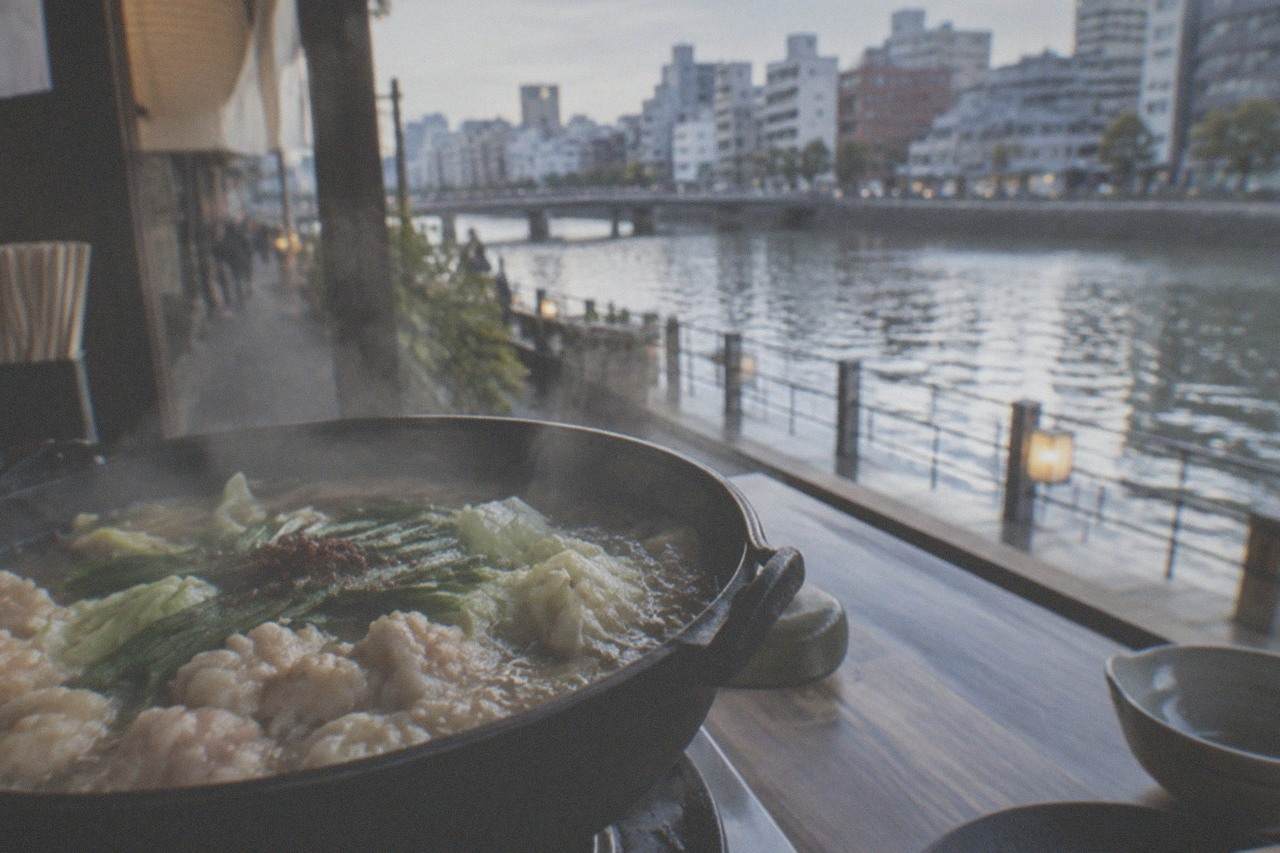
Motsunabe is a Fukuoka hot pot built on beef or pork offal, cabbage, garlic chives and a soy or miso broth seasoned with garlic and chili. The pot is simmered at the table, eaten in stages, and finished by adding champon noodles to the enriched broth. It is a winter dish at heart, though restaurants in Hakata and Nakasu serve it all year.
Fukuoka's food reputation travels on three names: tonkotsu ramen, mentaiko and motsunabe. The first two have gone global. The third, a rich offal hot pot that Fukuoka treats as its own cold-weather soul food, still mostly lives in the city that invented its modern form. You will find it on menus across Hakata and Nakasu, in basement restaurants, in dedicated specialty houses and occasionally, in adapted form, at the city's famous food stalls. This guide explains exactly what goes in the pot, how a meal unfolds at the table, where to eat it and how to order it without pointing at random menu lines. It is written for first-time eaters as much as for returning visitors who want to go deeper than the hotel recommendation.
What Is Motsunabe and What Is in It?
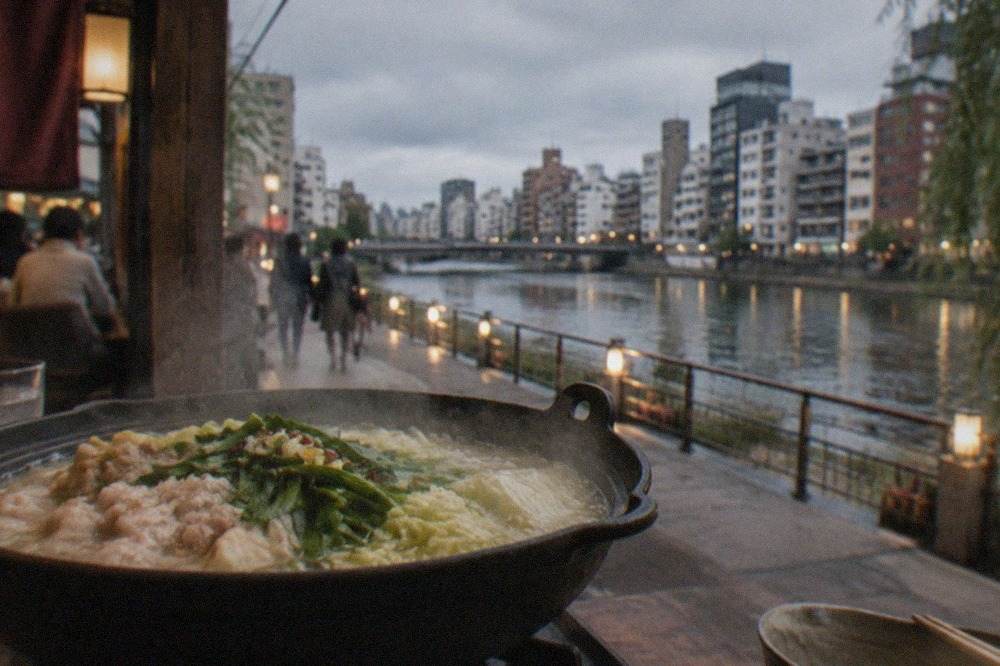
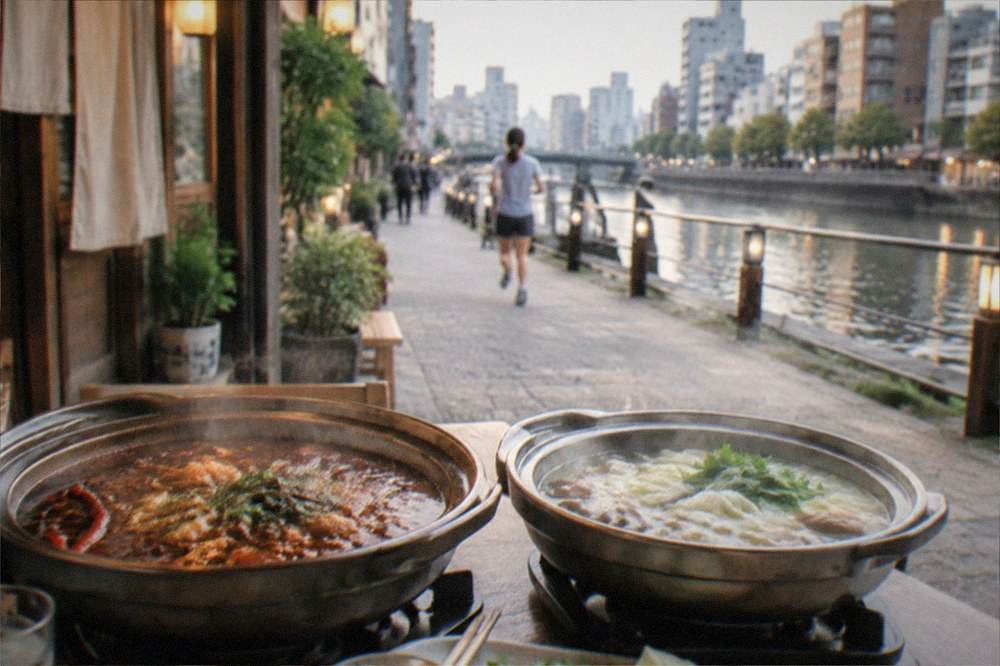
Motsunabe is a Japanese hot pot built around motsu, edible offal, usually beef in Fukuoka's famous version, simmered at the table with cabbage, garlic chives, garlic and chili. The broth is typically soy or miso based, often with a spicy kick, and the meal ends with champon noodles added to the enriched broth as a final soup course. The dish is hearty, garlicky and built for sharing, and it belongs to the same family of winter comfort food as the stews and hot pots found across Japan, with a richness that is distinctly Fukuoka's own.
The name is simpler than it sounds. Motsu means offal, and nabe means pot. Everything else on the plate is negotiable, and that is the point: this is a flexible, forgiving dish that restaurants adjust to their own recipes and diners adjust to their own appetites. The core is always the same three-part structure. First the offal, cleaned and cut into bite-sized pieces. Then the vegetables, dominated by cabbage, which wilts into the broth and sweetens it as the meal goes on. Finally the liquid, a broth that starts thin and ends up as the best part of the meal.
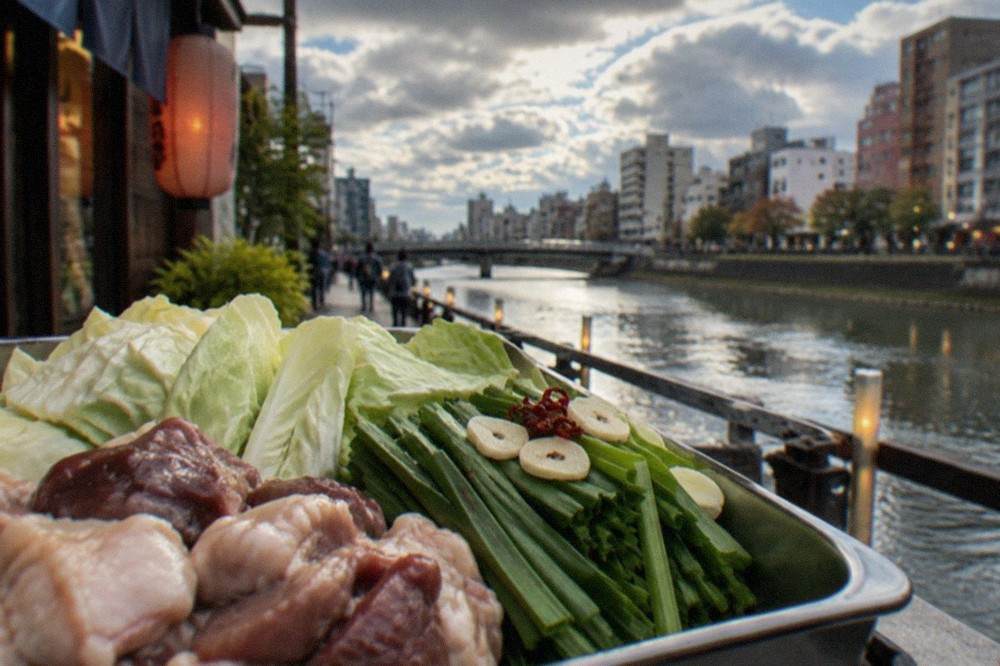
What surprises most first-time eaters is how approachable the offal actually is. Good motsu is cleaned thoroughly, pre-cut and often pre-blanched, so it arrives at the table ready to simmer. Texture is the appeal rather than any strong flavour: the pieces range from chewy and springy to soft and almost melting, depending on the cut. If you have eaten tripe in European cooking or intestine dishes elsewhere in Asia, you already have a rough idea of the experience. If you have not, motsunabe is genuinely one of the gentlest introductions to offal cooking anywhere, because the garlic and chili broth does most of the flavour work.
| Element | What it is | Role in the pot |
|---|---|---|
| Motsu (offal) | Beef intestine, stomach and other edible organs, cleaned and cut | The protein core; gives texture and enriches the broth |
| Cabbage | Cut into wedges, added in quantity | Sweetens the broth as it wilts; bulk of the vegetables |
| Nira (garlic chives) | Flat chives added near the end | Aroma and bite; cut through the richness |
| Garlic | Whole cloves or sliced, in the broth base | The signature flavour of Fukuoka motsunabe |
| Togarashi (chili) | Chili pepper or chili oil, amount varies by restaurant | Heat; often adjustable on request |
| Broth | Soy based or miso based, sometimes spicy | The cooking liquid and later the soup |
| Champon noodles | Thick noodles added at the end | The finish; turns leftover broth into soup |
A note on the word itself: menus sometimes write it as "motsu nabe" or "hakata motsunabe," and they all mean the same dish. If a menu in Fukuoka says motsunabe, it means this.
Where Did Motsunabe Come From?
Motsunabe's modern form is a postwar creation, and Fukuoka, specifically the Hakata area, is the city that standardised it, though origin stories disagree on whether the first pot was assembled in Fukuoka itself or in nearby Kurume. Offal cooking is old everywhere, and nothing about simmering intestine with vegetables is unique to one city. What Fukuoka did was combine beef offal, a garlic-heavy broth and the champon finish into a repeatable restaurant dish, then build an entire dining category around it. By the late twentieth century the city had dozens of dedicated motsunabe restaurants, and the dish had joined tonkotsu ramen and mentaiko as one of the three foods the city considers its own.
The postwar context matters. Offal was cheap protein in a period when premium cuts were out of reach, and Fukuoka's position as a port and trading city meant a steady supply. Home cooks and small restaurants worked out that a long simmer turns tough cuts tender, that garlic masks nothing but instead transforms the broth, and that nothing should be wasted, not even the cooking liquid. The champon finish, noodles added to the pot once the solids are eaten, is that last principle made visible. It is also the detail that most reliably separates a real motsunabe meal from a generic hot pot.
The dish's rise ran parallel to Fukuoka's own growth. As Hakata developed into one of Japan's great food cities, motsunabe moved from working-class eateries into polished specialty restaurants with queues, and eventually onto the tourist trail. Today it is a year-round menu item in a city that eats it mostly in the cold months, and restaurants around Hakata Station and the Nakasu entertainment district serve it to a mix of local office workers, visiting business travellers and tourists who have read that it is the thing to eat here. For a fuller picture of the city's food culture beyond this one dish, our Fukuoka food guide covers the whole landscape, from ramen to the morning-set coffee culture.
How Is Motsunabe Cooked and Served?
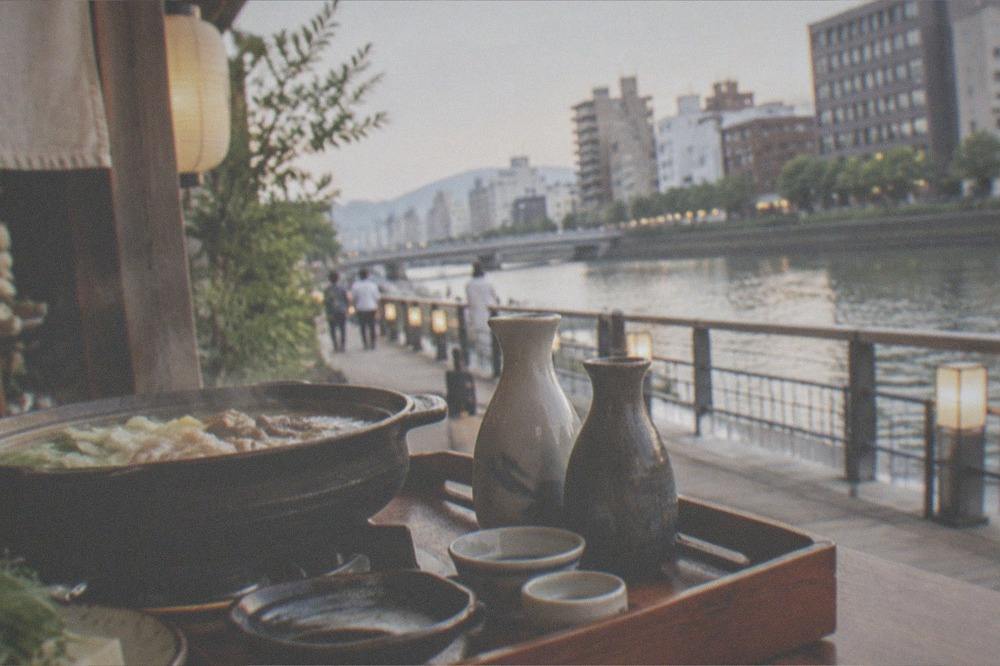
A motsunabe meal is cooked at your table in stages: the restaurant brings a portable burner, a pot of seasoned broth and trays of raw ingredients, and you or the staff simmer the offal and vegetables progressively, eating as the pot develops, then finish with noodles in the remaining broth. At a specialty restaurant the staff usually control the process, adding ingredients in the right order and telling you when to eat. At more casual places the pot arrives with everything ready and the staff light the burner for you. Either way, the meal is slow by design, and the broth improves with every stage.
The order matters more than newcomers expect. The offal goes in early because it needs time, and the rendered fat from the motsu is what builds the body of the broth. Cabbage follows in stages, since some people like it barely wilted and others like it cooked down to sweetness. Garlic chives and any delicate items go in late so they keep their aroma. The chili level is usually set when you order, and many restaurants will moderate it on request, which is worth knowing if you are eating with children or anyone sensitive to spice. Our Fukuoka with kids guide has more on eating out as a family in this city.
| Stage | What goes in | What to do |
|---|---|---|
| 1. The base | Broth, garlic, chili, motsu | Let it come to a simmer; the offal needs the longest cook |
| 2. The bulk | Cabbage wedges, other vegetables | Add as space allows; eat from the pot as pieces become tender |
| 3. The finish | Nira, tofu, any extras ordered | Quick cook; do not let the chives go limp |
| 4. The shime | Champon noodles | Added to the enriched broth; the soup course that ends the meal |
The shime, the closing course, deserves its own sentence. By the time the noodles go in, the broth has absorbed rendered fat, cabbage sweetness, garlic and chili, and it is richer than anything a kitchen could have made from scratch in the same time. Restaurants know this, which is why the noodle finish is rarely optional and often automatically included in the set price. If you are offered a choice of finish, champon is the traditional one; rice cooked in the broth is a common alternative and equally good.
Eating motsunabe is usually a group activity, and the pots are sized accordingly. Solo diners are not excluded, and many restaurants will serve a one-person pot, but the pricing structure at most specialty houses favours two or more. If you are travelling alone and want the shared-table version of the experience, a guided food crawl is the easiest route, and our Fukuoka food tours page lists the options that include local company.
Where to Eat the Best Motsunabe in Fukuoka?
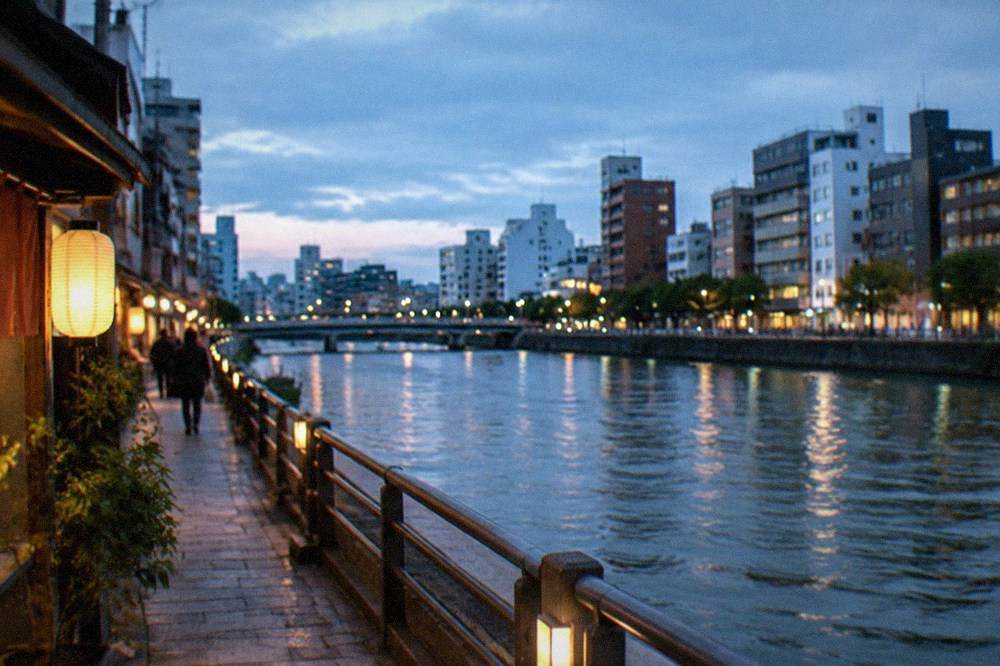
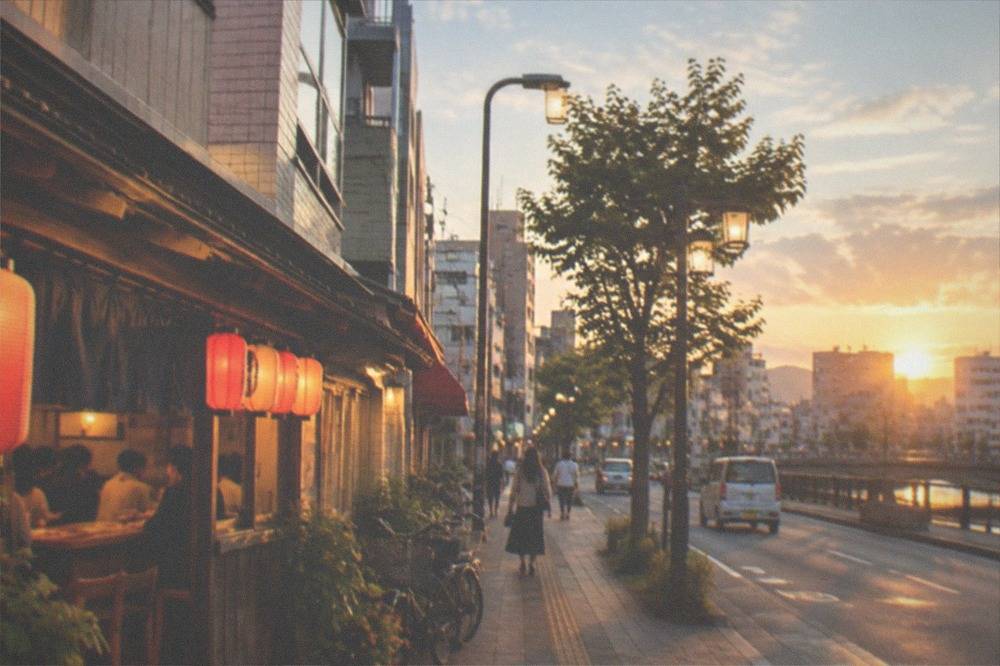
The motsunabe restaurants cluster in Hakata, around the station and the Gion district, and in Nakasu, the entertainment island across the Naka River, with Tenjin holding a smaller spread of long-running specialty houses. Hakata is where the dish was standardised, and the densest concentration of dedicated motsunabe restaurants, including several famous multi-branch houses, sits within walking distance of Hakata Station. Nakasu pairs the dish with the nightlife that follows it, which suits the meal's slow, social rhythm. Tenjin's versions tend toward quieter, older rooms frequented by people who have eaten the same pot for decades.
Choosing between areas is really choosing the kind of evening you want. Hakata station-side restaurants are efficient, used to visitors and easy to reach; Nakasu puts you in the middle of the city's brightest nightlife district, with the riverside food stalls of Seiryu Park a short walk away if you want to extend the night; Tenjin gives you a local dinner before the bars and basement venues of the business district. All three areas sit on or near the city subway, and a single adult fare runs from ¥210 for the shortest hops up to ¥380 for the longest, with a one-day pass at ¥640 if you are planning to move around more broadly. Our getting around Fukuoka guide covers the network in detail.
| Area | Character | Getting there |
|---|---|---|
| Hakata (station and Gion side) | The densest cluster of specialty motsunabe houses; visitor-friendly, reservation-wise | Hakata Station, served by the subway and JR lines |
| Nakasu | Dinner inside the nightlife district; riverside stalls nearby for afterwards | Nakasu-Kawabata Station on the Hakozaki subway line |
| Tenjin | Quieter, long-running restaurants with local regulars | Tenjin Station, the hub of the subway network |
A practical note on the food stalls: motsunabe is not really a yatai dish. The city's roughly 100 licensed stalls work from small carts with limited cooking capacity, and their menus lean toward ramen, yakitori and oden. A few stalls have adapted hot pots of their own, and if you find one, it is a fun novelty, but the classic motsunabe experience happens in a restaurant with a table burner. What the stalls offer instead is the continuation of the evening, and the pairing works well. Our Fukuoka yatai guide explains how the stall scene works, including the city rule that every stall must post its prices openly, with no "market price" wording permitted, so a stall menu never hides its costs. The count and the pricing rule both come from the city's own yatai question and answer page, which is worth a read for the recruitment system alone.
If you would rather have a local walk you into the right restaurant than gamble on a review site, the guided options below are the ones that operate in the same districts where the motsunabe houses concentrate. A private stall-and-tastings tour in Nakasu, for example, puts a guide between you and the menu, which is exactly the help a first-time offal eater wants.
The same logic applies to the evening as a whole. A guided tour that strings the food stalls, an izakaya and even karaoke into one night removes the ordering anxiety entirely, and the operators who run these evenings know which restaurants welcome visitors and which prefer regulars.
When Is the Best Time to Eat Motsunabe?
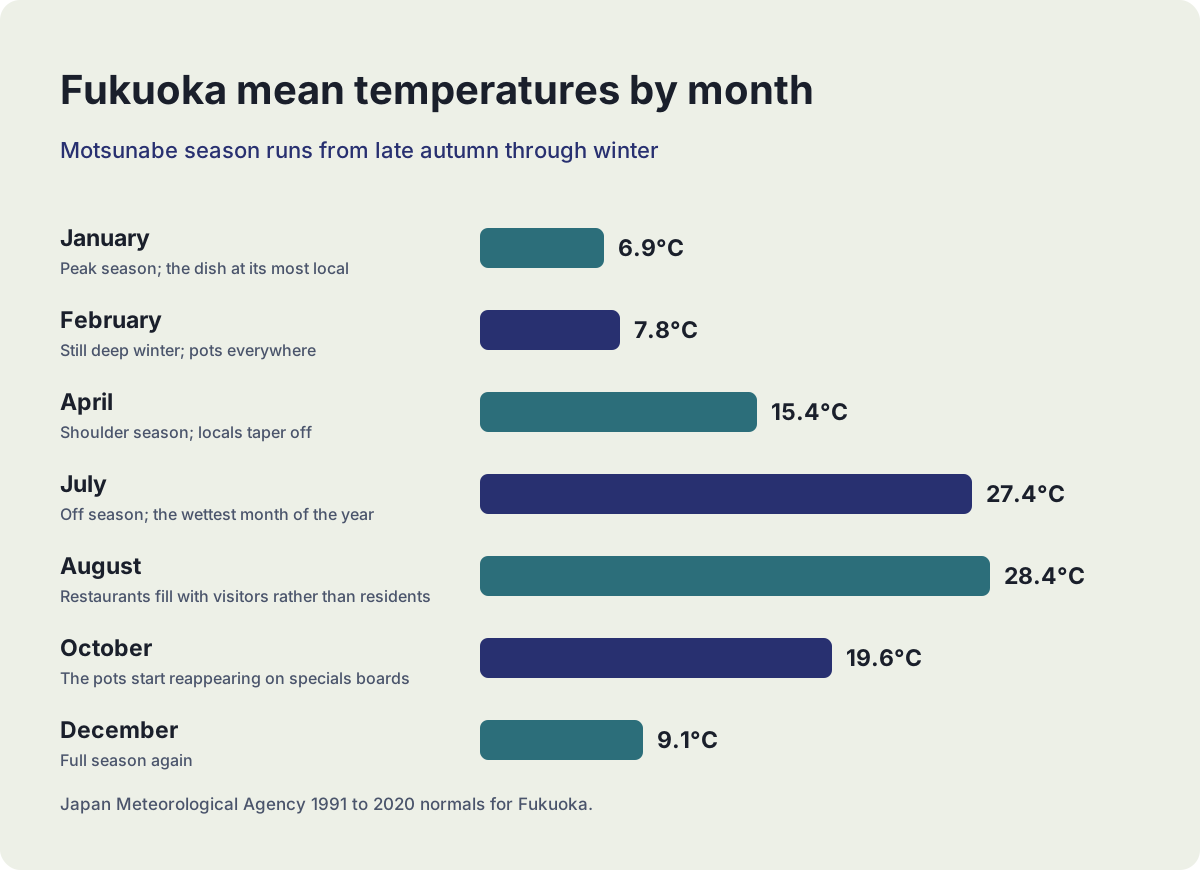
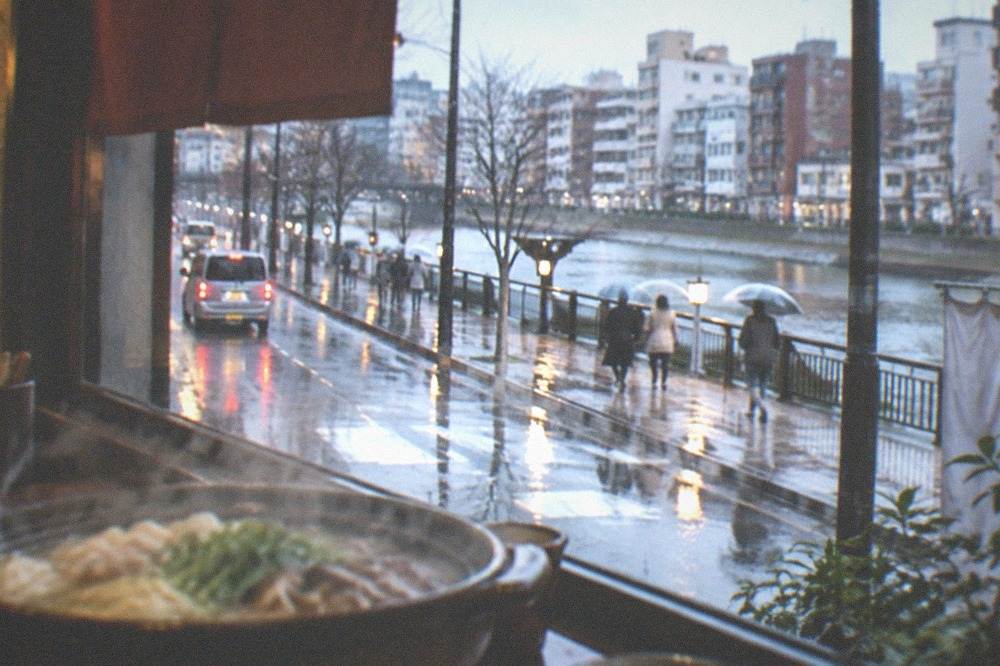
Motsunabe is a cold-weather dish by tradition, and Fukuoka's climate gives it a genuine season: the pots appear on menus from late autumn through winter, when the city's mean temperatures drop from October's 19.6°C to January's 6.9°C, though most major restaurants serve it year-round. The seasonal logic is straightforward. A boiling, garlicky, fat-rich pot is exactly what a damp Fukuoka winter evening calls for, and the city's winters are damp: January still averages 74.4 mm of rain, and the coldest months are overcast as often as they are clear. Restaurants respond by putting the dish front and centre from around November to February.
The rest of the year, the dish does not disappear. Fukuoka's big motsunabe houses are tourist businesses as much as local institutions, and air conditioning makes a hot pot survivable in any month. What changes is the local appetite. In summer, when August's mean temperature sits at 28.4°C, the restaurants fill with visitors rather than residents, and the pots feel more like a checklist item than a seasonal ritual. If you want the dish the way the city itself eats it, come between late November and early February, ideally on a night cold enough that the walk to the restaurant is part of the appetite.
| Month | Mean temperature | Rainfall | Motsunabe mood |
|---|---|---|---|
| January | 6.9°C | 74.4 mm | Peak season; the dish at its most local |
| February | 7.8°C | 69.8 mm | Still deep winter; pots everywhere |
| April | 15.4°C | 118.2 mm | Shoulder season; locals taper off |
| July | 27.4°C | 299.1 mm | Off season; the wettest month of the year |
| October | 19.6°C | 94.5 mm | The pots start reappearing on specials boards |
| December | 9.1°C | 67.5 mm | Full season again |
One climate detail worth knowing, because almost every other guide gets it backwards: July, not June, is Fukuoka's wettest month, with 299.1 mm of rain against June's 249.6 mm, despite June being the tsuyu rainy season. Those figures come from the Japan Meteorological Agency's own 1991 to 2020 normals for the Fukuoka station, which is the dataset every number in the table above is drawn from. If a summer trip coincides with a rainy evening, an air-conditioned motsunabe restaurant is one of the better places to sit it out, and our Fukuoka weather and best time to visit Fukuoka pages put the whole calendar in context.
How Much Does a Motsunabe Meal Cost?
There is no honest single number for a motsunabe meal, because the city publishes no standard price and restaurants price their own pots, sets and extras individually, so the reliable answer is that the menu in front of you is the authority and Fukuoka restaurants state their prices openly. What can be said structurally is how the bill is built. Most specialty houses charge per person for a set that includes the pot's ingredients and the noodle finish, with the broth and chili level included. Extras, typically more offal, more vegetables, tofu or a second noodle course, are priced as add-ons. Drinks are separate, and the dish pairs naturally with sake and beer, which many restaurants push as set combinations.
Per-person ordering is the default, not whole-pot pricing. A table of two orders two sets, and the kitchen builds one shared pot from them. This matters for solo travellers and uneven appetites: if one person at the table wants a large portion and another wants a small one, the sets accommodate that, and the staff will usually ask. It also means the honest way to plan a budget is to look at the per-person set price on the restaurant's menu and multiply by your table, then add drinks.
Comparing restaurants on price alone is a mistake, because the variable is the offal. A cheap pot and an expensive pot differ mainly in the quality and quantity of the motsu and the care of the preparation, and the broth differences follow from that. The famous multi-branch houses charge for consistency and name; the quiet Tenjin backstreet restaurant may serve a better pot for less. Reservations are worth making in winter, especially for weekend evenings in the Hakata station area, and the larger chains take online bookings through their own sites.
Motsunabe Versus Other Japanese Hot Pots
Motsunabe differs from other nabe dishes in three ways: its base is offal rather than sliced meat or seafood, its broth is aggressively seasoned with garlic and chili rather than kept light, and its finish is champon noodles rather than rice porridge. Japan's hot pot tradition is broad, and most visitors will meet several versions on one trip. Shabu shabu is the opposite philosophy, thin sliced beef swished in a delicate broth for seconds. Sukiyaki is sweet and soy-rich, finished with raw egg. Yosenabe is the everything-in version. Chanko nabe, the sumo wrestlers' pot, is a protein-loaded meal builder. Motsunabe sits apart from all of them by making a humble ingredient the star and building the entire flavour profile around it.
The garlic is the tell. No other major Japanese hot pot uses garlic as a primary seasoning rather than a background note, and it is what makes the dish divisive on paper and addictive in practice. The chili is the second tell: motsunabe broths are frequently, though not always, spicy, and the heat level is a house decision rather than a national standard. The third tell is the economy of the pot. Nothing is discarded, and the last course is made from what the earlier courses left behind. That structure comes straight from the dish's postwar origins, and it survives in every serious restaurant's version.
| Dish | Base | Broth character | Traditional finish |
|---|---|---|---|
| Motsunabe | Beef offal | Garlic-forward, often chili-spiced | Champon noodles |
| Shabu shabu | Thin-sliced beef or pork | Light, almost unseasoned | Rice or noodles, with dipping sauces |
| Sukiyaki | Beef | Sweet soy and sugar | Raw egg dip, then sometimes rice |
| Chanko nabe | Chicken, meatballs, vegetables | Hearty, protein-rich | Rice or noodles |
| Yosenabe | Mixed meat and seafood | Soy-based, everything cooks together | Noodles or rice porridge |
For visitors eating their way through the city, the practical comparison is with tonkotsu ramen, the other rich, garlic-adjacent Fukuoka icon. They are not competitors so much as different times of day: ramen is the late-night single bowl, motsunabe is the sit-down evening meal. Many locals would tell you the correct order is motsunabe first, ramen later, and the city's geography makes that itinerary easy, since the ramen stalls and the motsunabe restaurants share the same districts after dark.
How to Order Motsunabe Without Guesswork
Ordering motsunabe comes down to three decisions, all made at the start: the broth (soy, miso or spicy), the amount of offal, and the finish, and after that the staff guide the meal, so a first-timer only needs those three answers plus a drink order. Most restaurants with any visitor traffic have picture menus or English menus, and the big Hakata chains have full multilingual ordering. The vocabulary is small and worth learning, because it appears on every menu in the city.
| Japanese term | What it means | When you use it |
|---|---|---|
| Motsunabe | The dish itself | Ordering the pot |
| Miso / shoyu | Miso broth / soy broth | Choosing the base |
| Karai | Spicy | Adjusting the heat |
| Amakuchi | Mild, not spicy | The safe setting for first-timers |
| Nabe buai | Portion size of the pot | Scaling the meal to your table |
| Shime | The closing course | Usually champon noodles |
| Oomori | Large portion | When the first pot was not enough |
A few table manners make the meal smoother. Take from the pot with the shared serving chopsticks or the ladle provided, not your own. Eat at the pace of the pot, since the offal improves with simmering and the staff will signal when each stage is ready. Do not rush the shime; the noodles need a few minutes in the broth, and the soup is the course people remember. If anything is unclear, this is a city used to visitors, and pointing at a neighbouring table's pot is an accepted and effective ordering method everywhere in Hakata.
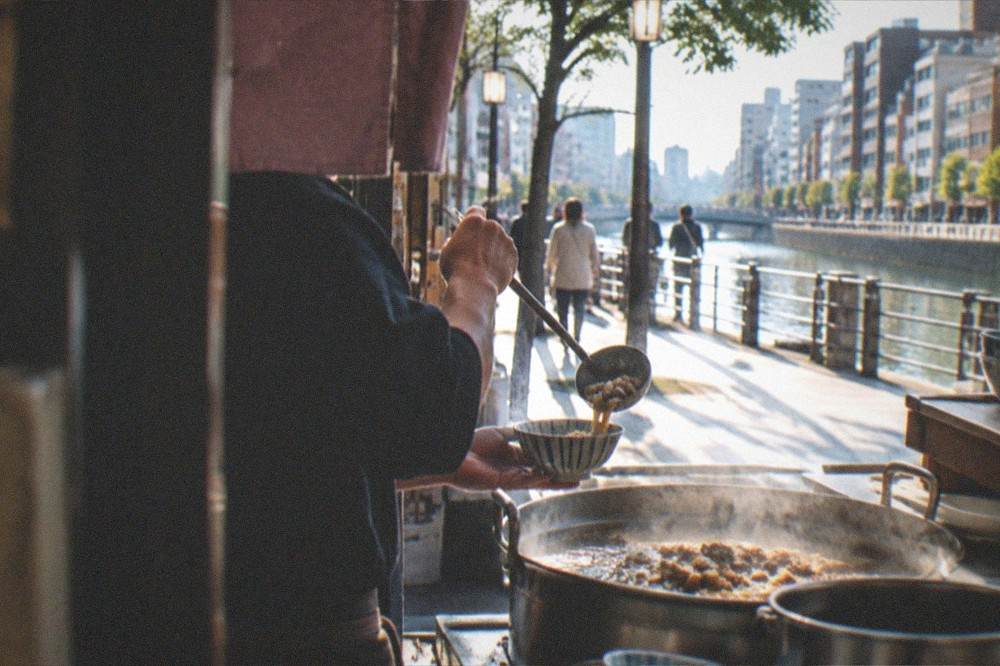
The evening around the meal matters as much as the meal. Nakasu, where many of the restaurants sit, is the city's brightest nightlife district, and the streets around it stay active late, which suits a dinner that naturally runs long. Our Fukuoka nightlife page covers what to do after the pot is empty, from the riverside stalls to the bars of the surrounding blocks. And if the whole experience sounds like more navigation than you want on a first night, a guided evening that strings the food and the district together, as described on Fukuoka Japan Travel Guide's tours coverage, removes the ordering anxiety entirely.
Common Questions About Motsunabe
What Is Motsunabe And What Is In It?
Motsunabe is a Fukuoka hot pot built on beef offal simmered at the table with cabbage, garlic chives, garlic and chili in a soy or miso broth, finished with champon noodles added to the enriched liquid. The offal is cleaned and pre-cut, the vegetables sweeten the broth as they cook, and the noodle course at the end turns the pot into a soup.
Is motsunabe the same as offal stew?
No. Stews are cooked in the kitchen to completion, while motsunabe is assembled raw at your table and cooked in stages while you eat. The broth is also lighter than most stews at the start, then builds richness during the meal, and the champon noodle finish has no stew equivalent.
Can you eat motsunabe if you do not like organ meat?
Many people who avoid other offal dishes enjoy motsunabe, because the garlic and chili broth dominates the flavour and the well-cleaned, pre-blanched offal contributes texture more than taste. Ordering a pot with a higher vegetable ratio and a mild broth is the gentlest way to try it.
Is motsunabe available in summer?
Yes. The major specialty restaurants in Hakata and Nakasu serve it year-round, since visitor demand does not follow the seasons. Locals treat it as a cold-weather dish, and the pots are most atmospheric from late November through February, when Fukuoka's mean temperatures sit in single digits Celsius.
Do you need a reservation for motsunabe restaurants?
In winter and on weekend evenings, yes, especially for the famous houses near Hakata Station. In the off season and on weekdays, walk-ins usually work. The larger chains take bookings through their own websites, and hotel concierges in the city make motsunabe reservations routinely.
What do you drink with motsunabe?
Sake and beer are the standard pairings, and many restaurants build sets around one of them. The rich, garlicky broth suits a dry sake in particular. If you want the pairing explained rather than guessed at, a guided sake tasting in Nishinakasu covers the same district where most of the motsunabe restaurants sit.