Mentaiko
Mentaiko, the chili-marinated pollock roe that Fukuoka turned into a national obsession, sits in every supermarket and souvenir counter in the city. This guide explains what it is, what it tastes like, and how to eat and buy it well.
Short answer
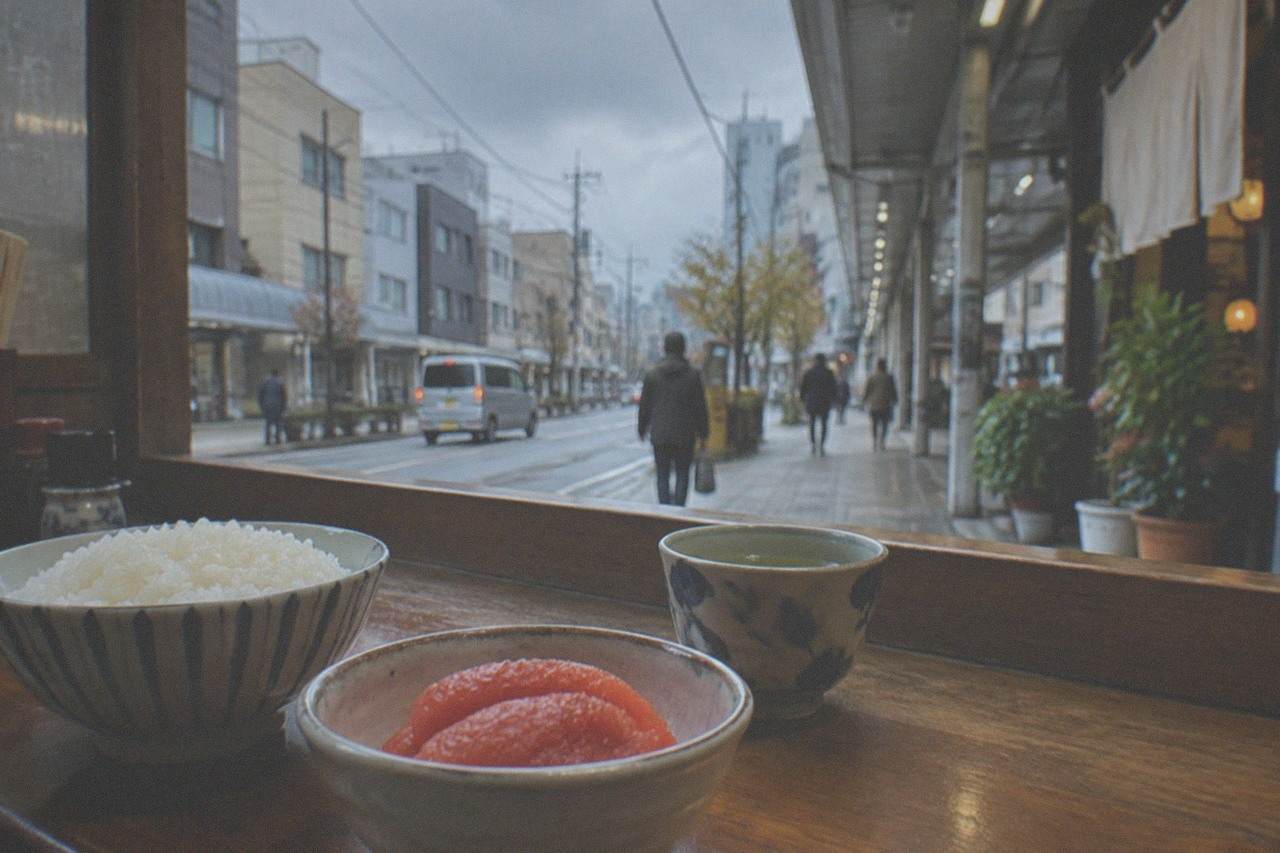
Mentaiko is Alaska pollock roe marinated in chili and dashi-seasoned brine, and Fukuoka is where it was commercialised and where most of it is still made. About 100 yatai stalls serve the city's food culture alongside it. Eat it fresh on rice in Hakata, buy it vacuum-packed at Hakata Station, and keep it chilled.
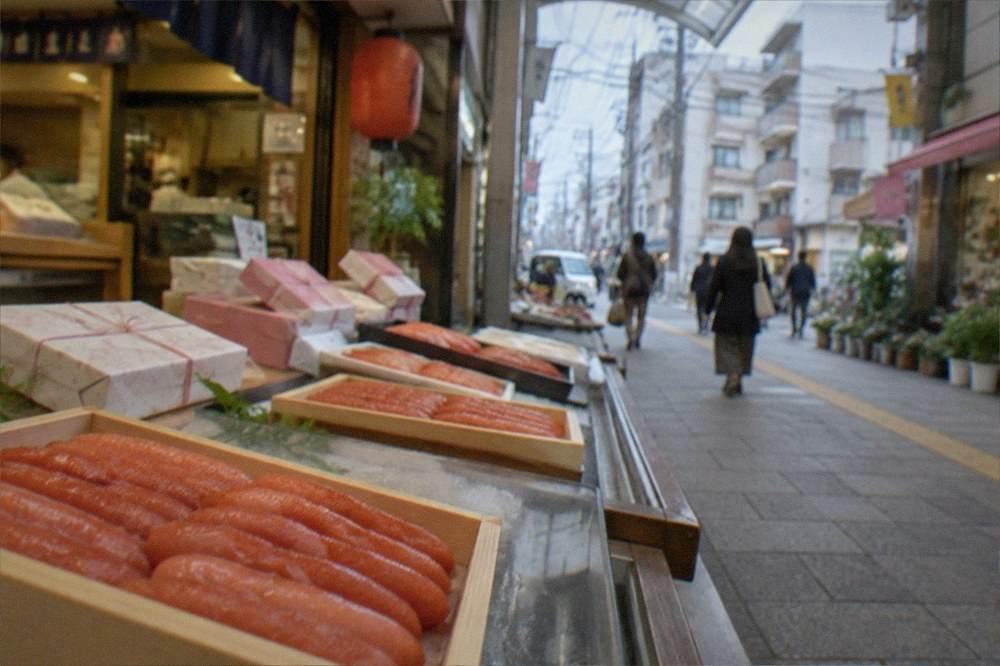
Walk down any souvenir floor at Hakata Station and you will pass rows of red-orange roe in plastic trays before you see a single box of noodles. Mentaiko is the food Fukuoka ships to the rest of Japan, the item locals buy for relatives, the ingredient chefs across the country order from Kyushu. It looks dramatic, it keeps surprisingly well, and its story is tangled up with Hakata's port past, its Korean trading connections and its modern identity as a food city. This guide, part of the wider Fukuoka Japan Travel Guide, covers what mentaiko is, how it is made, what it tastes like, and where to eat and buy the good ones.
What Is Mentaiko and Why Is It a Fukuoka Specialty?
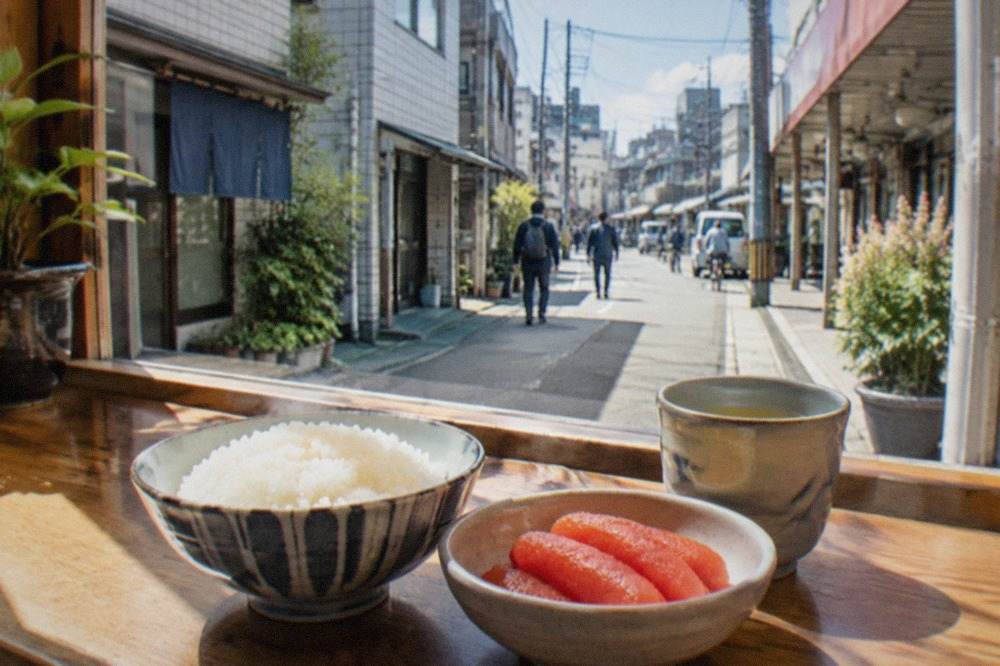
Mentaiko is the roe of Alaska pollock, brined and marinated in a chilli-infused seasoning, and Fukuoka is the city that industrialised it, branded it and put it on the national map: the name itself carries a Korean word for pollock roe, the product was developed and mass-produced here, and Hakata remains the address every Japanese shopper associates with it, which is why mentaiko, tonkotsu ramen and motsunabe are always named together as the city's three signature foods.
That is the short version. The longer version explains why a fish-roe product with a borrowed foreign name became the definitive souvenir of a Japanese port city.
Start with the fish. Alaska pollock, the same species that supplies most surimi and fish paste products worldwide, lays small eggs in sacs that hold together when handled. Those intact sacs are the raw material, sold as tarako when simply salted and as mentaiko when soaked in a marinade that includes chilli, dashi elements and often a touch of sweetness. Tarako is the pale, plain sibling; mentaiko is the red, fiery one. Both sit on breakfast tables across Japan, but only mentaiko carries a city's name in practice.
The Korean connection is real and worth stating plainly. The word mentai traces to the Korean term for pollock roe, and the seasoned style we now eat is credited to makers of Korean heritage working in Fukuoka's port district, who adapted a home-country preparation to Japanese ingredients and tastes. Hakata was the natural birthplace: a trading port with steady Korean traffic, a big fish-processing trade, and a population that already ate cured and marinated seafood daily. The city did not merely host the invention, it built the industry around it, from family workshops to the vacuum-packed gift trade that now fills station counters.
Why did it stay a Fukuoka specialty rather than spreading evenly across Japan? Partly climate, partly commerce. Kyushu's producers clustered around the same supply chains and the same local palate, and the gift-giving culture of omiyage rewarded a regional item that could not be quietly replicated elsewhere. A box of mentaiko says "Fukuoka" the way a box of Tokyo bananas says the capital. That reputational lock is why the city's souvenir economy still treats it as the default gift, ahead of the sweets and snacks most cities fall back on.
For context on the wider food culture the roe sits inside, read the full Fukuoka food guide, which covers ramen, motsunabe and the street stalls that share the same food economy as mentaiko.
How Is Mentaiko Made and What Goes Into It?
Making mentaiko means brining whole pollock roe sacs, then marinating them for one to several days in a seasoned liquid built on chilli and dashi-style flavours, with each maker's spice blend kept as a trade secret, so two trays bought side by side in Fukuoka can differ noticeably in heat, salt and sweetness, and the same brand may sell several grades depending on roe size, colour and how long it cured.
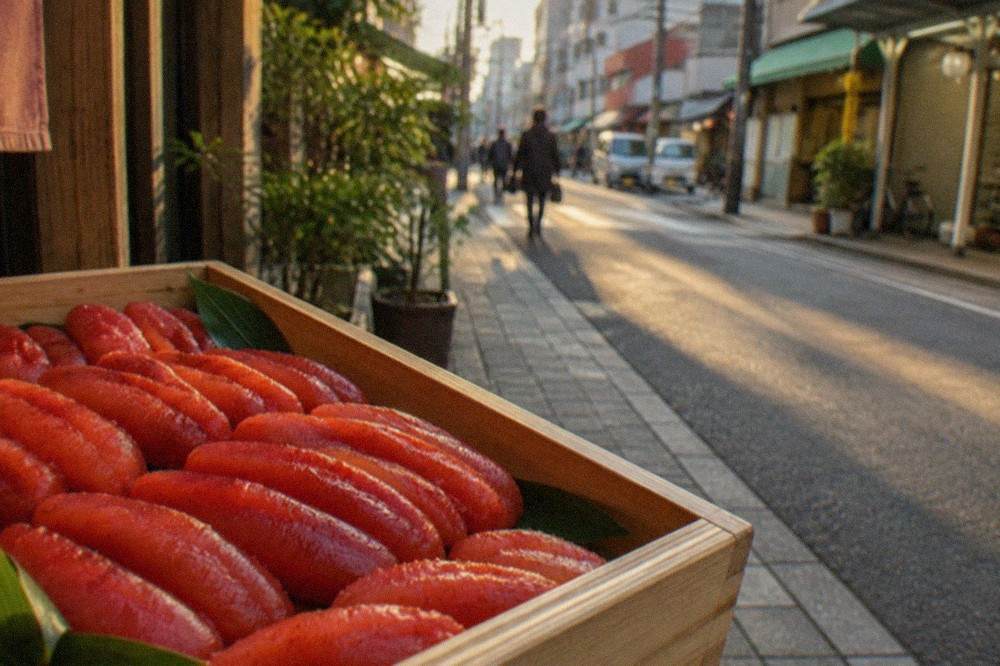
The process matters to a buyer because it explains the labels. Raw mentaiko, the kind sold chilled in fish markets and specialty counters, is the most delicate and the most perishable. It is meant for rice, onigiri and the breakfast table, and it keeps for days, not weeks. Paste-style mentaiko, squeezed from the sacs and whipped into a spreadable texture, is more convenient and more uniform. Heat-treated or vacuum-packed gift trays survive a journey home, which is exactly what the Hakata Station gift counters are selling.
Quality signals are visible on the tray. Look for intact, plump sacs with a translucent sheen rather than cloudy or broken ones; a colour that leans vivid red-orange without looking dyed; and a brine that smells of chilli and dashi rather than pure salt. Larger sacs generally grade higher because they slice cleanly and look better on rice. Makers are proud of their blends, and tasting counters at the big mentaiko shops in Hakata exist precisely because the differences are real.
| Type | Texture | Typical use | Keeping quality |
|---|---|---|---|
| Raw chilled mentaiko | Firm, intact sacs | Breakfast on rice, onigiri filling | Days, must stay chilled |
| Mentaiko paste | Soft, spreadable | Toast, pasta, cream sauces | Longer, sealed jars |
| Vacuum-packed gift mentaiko | Firm, cured harder | Gifts, travel home | Weeks unopened, chilled |
| Frozen mentaiko | Firm, thaw before use | Stocking up at home | Months, freezer |
| Spicy-topped mentaiko products | Mixed with mayo or oil | Sandwiches, convenience foods | Varies by product |
One honest note: the internet is full of confident birth-year claims for mentaiko, specific decades and named shop founders, and the sources disagree. The reliable story is the structural one, a Korean-derived seasoned roe developed by port-city makers and scaled into a gift industry, and this guide sticks to that.
If a day of guided tasting appeals beyond roe, the same region that grows the tea served alongside Fukuoka food runs its own full-day expeditions.
What Does Mentaiko Actually Taste Like?
Expect a first hit of salt and gentle ocean sweetness, then a slow chilli warmth that builds rather than burns, wrapped in a pop-and-cream texture from the individual eggs, and a savoury dashi depth that lingers after the heat fades; it is closer to a rich cured seafood than to hot sauce, and most first-timers who expect fire are surprised that the finished dish reads as savoury and comforting rather than sharply spicy.
The heat level is the variable people care about, and the honest answer is that it varies by maker and by grade within a single maker's range. Standard mentaiko is mild enough for Japanese school lunches, which tells you how tame the mainstream product is. Shops sell progressively hotter lines for people who want the chilli forward, and some blend in yuzu, kombu or curry elements. Reading the tray label in a mentaiko shop in Hakata is genuinely useful, because "mild", "medium" and "spicy" mean different things to different brands.
Texture is the other half of the experience. The roe sacs hold a firm shape that yields under the teeth, and the eggs inside give a fine, almost caviar-like pop. When mentaiko is cooked into cream or folded into butter, the sacs break down and the roe becomes a seasoning, tinting and flavouring the whole dish rather than sitting on top of it. That duality, a topping one minute and an ingredient the next, is why chefs adopted it so quickly.
Pairings follow from the flavour profile. Plain rice is the classic because mentaiko was engineered for it, the salt and heat cutting the rice's sweetness. Butter and cream work because fat carries the chilli. Dashi-adjacent things like udon broth and chawanmushi make natural partners. What mentaiko does not need is more salt; the marination has done that work.
If tasting your way through Fukuoka's kitchens sounds better than working the counters in Japanese, a guided evening removes the language barrier entirely.
Where Should You Eat Mentaiko in Fukuoka?
The best mentaiko eating in Fukuoka splits three ways: specialty counters around Hakata Station and Tenjin for tastings and rice trays, the city's breakfast scene where mentaiko on rice is a standard morning set, and izakaya and yatai stalls where the roe appears grilled, folded into dishes or served as a drinking snack; first-time visitors get the most from a specialty counter, because staff guide you through tastings, and from any morning set that pairs mentaiko with rice and miso soup.
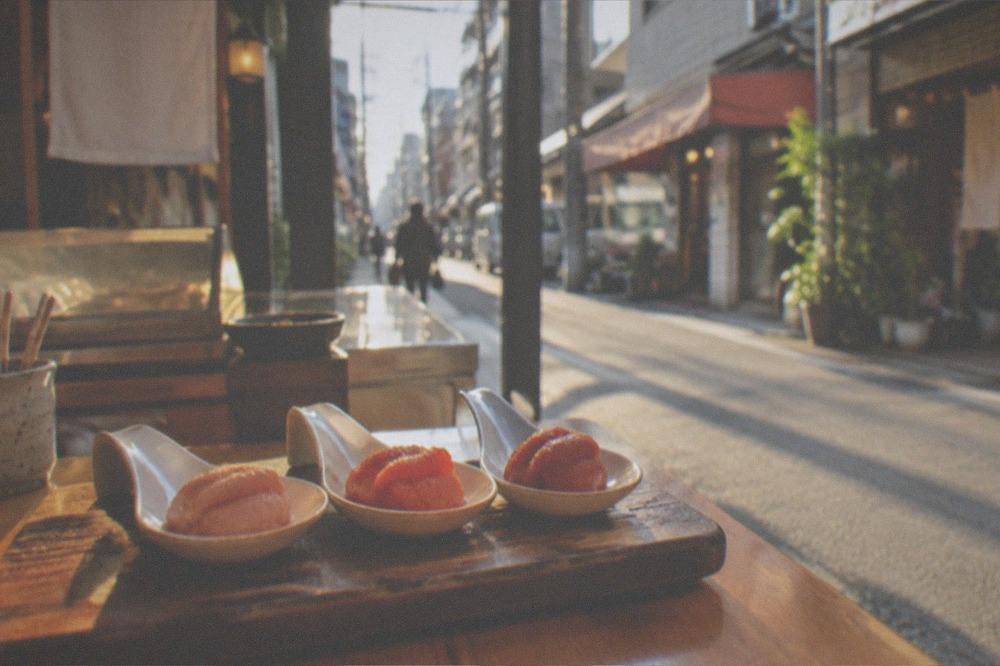
Specialty shops are the entry point. Several famous mentaiko makers run flagship counters in and around Hakata Station and in Tenjin, and the standard practice is a tasting tray, small spoonfuls of different grades so you can pick your heat level before buying. Staff are used to foreign customers and to pointing rather than talking. Buy a small tray for immediate eating rather than a gift box; the top grades are worth tasting fresh, and the counter staff will keep it chilled until you want it.
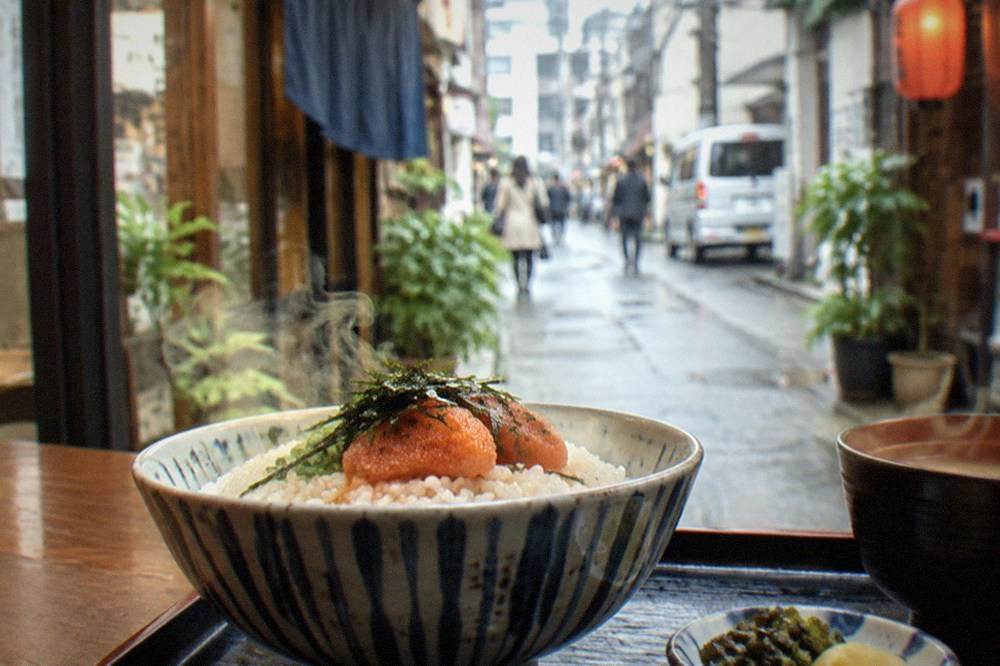
Rice-first eating is where mentaiko belongs culturally. Hotel breakfast buffets across the city stock it, neighborhood teishoku restaurants serve morning sets with a mentaiko option, and convenience stores across Japan sell onigiri with mentaiko filling because it is such a natural rice partner. If your trip only allows one sit-down mentaiko meal, pick a teishoku set: rice, miso soup, grilled fish and mentaiko is a breakfast configuration locals eat weekly.
The evening route runs through izakaya and the yatai stalls. A raw mentaiko with a drink is standard izakaya ordering, and some stalls grill roe briefly, which changes the texture and sweetens the salt. The city's roughly 100 licensed stalls each serve what they want on the night, and the city's own yatai rules require prices to be displayed where customers can easily see them, so ordering is less of a gamble than visitors expect. The stalls are walk-in by design; you cannot and should not book a seat, though guided crawls exist for groups who want an interpreter. Our Fukuoka yatai guide covers etiquette, the three stall districts and what to order when you sit down.
| Where | What you get | Best for |
|---|---|---|
| Mentaiko specialty counter | Guided tastings, fresh grades | First-timers, buying the good stuff |
| Teishoku restaurant morning set | Mentaiko with rice, soup, fish | Eating it the way locals do |
| Hotel buffet | Unlimited mentaiko on rice | Volume and convenience |
| Izakaya | Raw or grilled mentaiko with drinks | Evenings, groups |
| Yatai stall | Grilled roe, ramen with roe topping | Atmosphere, street eating |
| Convenience store | Mentaiko onigiri and bread | Cheap sampling on the go |
Evening food walks are the highest-value version of this for visitors short on time, and the guided food tour options in the city include stall crawls with tastings built in.
What Are the Classic Mentaiko Dishes?
Beyond plain mentaiko on rice, the canon runs to mentaiko cream pasta, a Fukuoka-cafeteria favourite where roe is folded into a buttery sauce, mentaiko toast under cheese in cafes, mentaiko-filled onigiri everywhere, and mentaiko mixed into udon, ochazuke and even potato salad; the common thread is that heat and fat soften the roe's salt, so the dishes that look richest on the menu are usually the ones where mentaiko performs best.
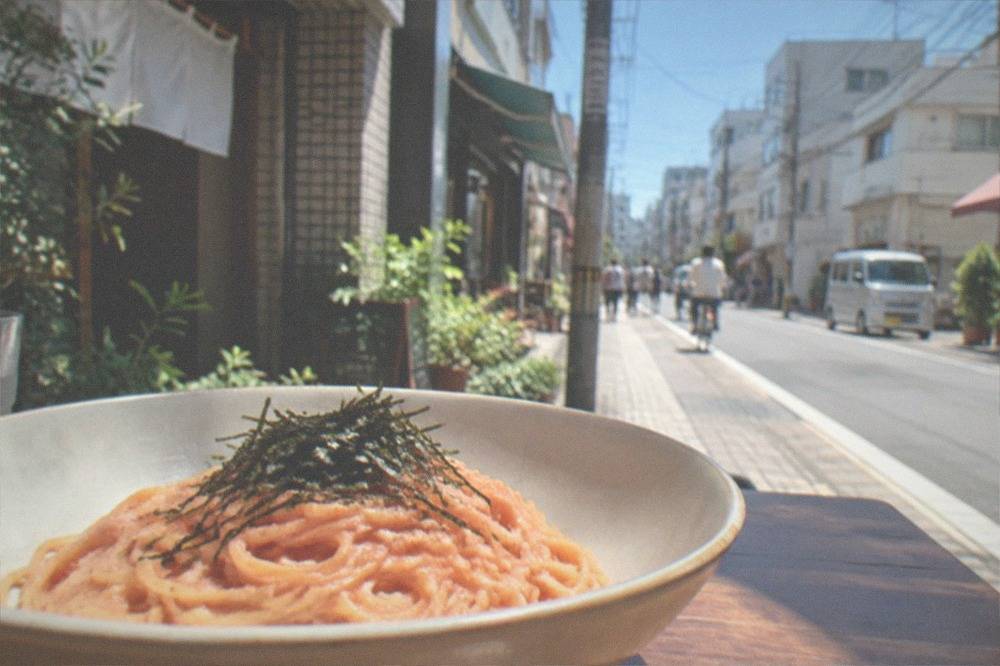
Mentaiko pasta deserves its own paragraph because it is the dish that made a Japanese ingredient feel at home in an Italian frame. The technique is simple: mentaiko, butter or cream, a splash of the pasta water, tossed off the heat so the roe does not scramble. Done well the sauce blushes pink and carries the chilli through every strand. It appears on menus from station cafeterias to serious restaurants, and it is the safest possible introduction for a traveller who is unsure about eating roe straight.
Then there is the drinking-food family. Mentaiko and shiso leaves rolled and grilled, mentaiko stuffed into chicken wings, mentaiko potato salad, mentaiko on tofu with a dash of soy: each turns the roe into a bar snack. This is the version of mentaiko you meet late at night, and it explains why the ingredient is loved as much by drinkers as by breakfast eaters. Home kitchens extend the list, mentaiko fried rice, mentaiko in tamagoyaki, mentaiko on steamed vegetables, because a tray in the fridge seasons a week of meals.
For travellers, one practical note: many of these dishes appear in restaurants with picture menus, and the word is written identically in katakana on nearly all of them. Learning to recognise three characters, the katakana for mentaiko, is enough to unlock the whole category across the city.
| Dish | What it is | Where it shows up |
|---|---|---|
| Mentaiko gohan | Roe on hot rice | Breakfast sets, buffets |
| Mentaiko pasta | Cream or butter pasta with roe | Cafeterias, Italian-Japanese restaurants |
| Mentaiko toast | Toasted bread, roe, cheese | Cafes, breakfast menus |
| Mentaiko onigiri | Rice ball with roe filling | Convenience stores, bento shops |
| Grilled mentaiko wings | Chicken wings stuffed with roe | Izakaya |
| Mentaiko udon | Udon with roe and dashi broth | Noodle shops |
How Should You Buy Mentaiko to Take Home?
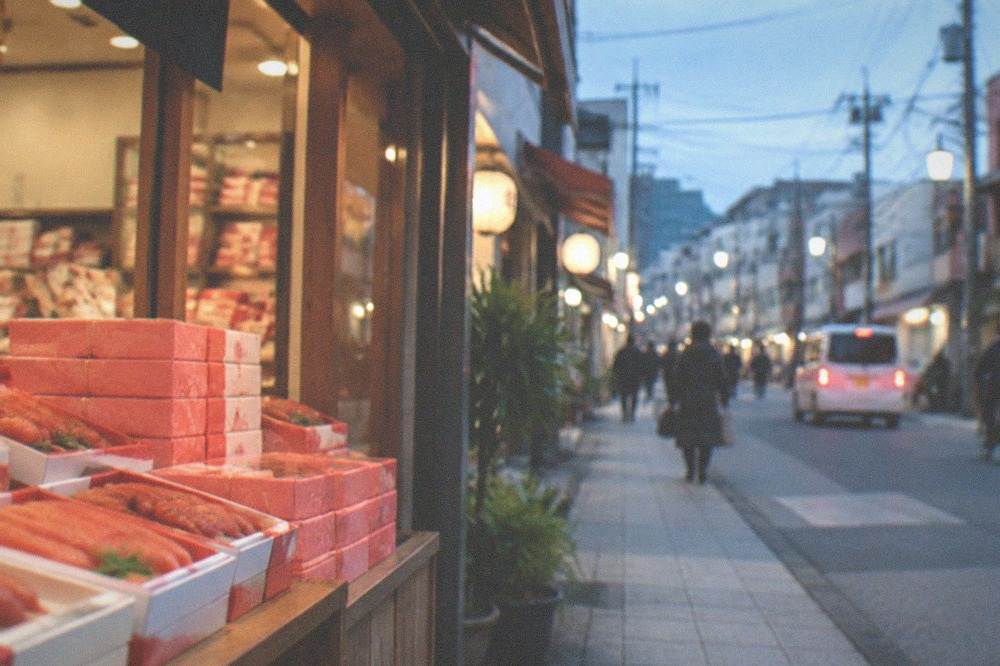
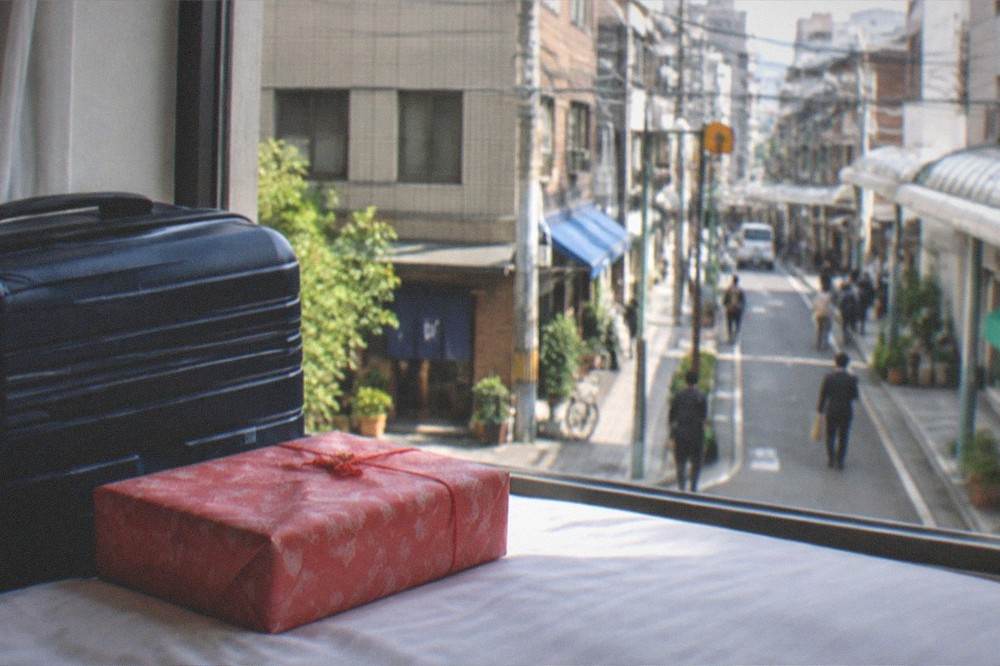
Buy heat-treated, vacuum-packed mentaiko from a proper gift counter rather than raw chilled roe, keep it cold until you fly, declare it where your country requires declaration of fish products, and treat it as a chilled product on arrival; the gift counters at Hakata Station sell exactly the right formats and pack them with cold packs, while raw trays from fish counters are for eating in Japan, and most customs regimes outside Japan will stop raw roe long before they stop a sealed, cured gift pack.
The distinction between the two products is the whole game. A raw tray from a specialty counter is a fresh food for eating within days, and it does not travel. A gift pack is cured harder, sealed, and designed for the souvenir economy, and the big makers label travel-suitable lines clearly. Airport and station counters will confirm which boxes are for export if you ask, and the same counters sell insulated bags and ice packs for the journey to the airport.
Timing the purchase is a matter of routing. If you buy at Hakata Station the morning of your departure, the roe stays cold through most flights home and a day or two in the fridge afterwards. If you buy early in your trip, plan freezer access at your hotel or buy only at the end. The where to stay in Fukuoka guide notes which neighbourhoods, Hakata Station itself being the most practical one for a purchase-heavy last day.
Customs honesty is worth a sentence of its own. Australia, New Zealand, the United States and others take undeclared fish products seriously, and mentaiko is a fish product. Declare it. Cured and sealed roe is generally admissible where raw roe is not, but the traveller, not the shop, is responsible for knowing their own country's rules, so check before you buy a large box. Traders in Fukuoka know this and increasingly label packs with English-language ingredient information, but the rule-checking is yours.
| Format | Travels? | Eating window after return | Buy where |
|---|---|---|---|
| Raw chilled tray | No | Not for travel | Fish counters, specialty shops |
| Vacuum-packed gift box | Yes, chilled | Weeks, fridge after opening | Hakata Station gift floors |
| Frozen gift pack | Yes, freezer on arrival | Months | Big-brand counters |
| Mentaiko paste jar | Yes | Weeks sealed | Supermarkets, gift floors |
| Shelf-stable mentaiko snacks | Yes freely | Months | Anywhere |
Souvenir shopping pairs naturally with a last-day tour if you want the city's crafts as well as its food. The YokaBus tasting day below includes tea and sake you can take home alongside the roe, and the guide who runs it explains what travels well.
Is Mentaiko Spicy, and What If You Do Not Handle Heat?
Mainstream mentaiko is only gently spicy, a warming tingle rather than a burn, because the chilli in the marinade seasons rather than dominates, and every major Fukuoka maker sells graded heat levels from nearly plain to genuinely hot, so a visitor who avoids spice can buy the mildest grade and still eat the city's signature food, while chilli-lovers should ask for the highest grade at a specialty counter and taste before committing.
This is the question shop staff answer most, and the answer is graded, not binary. The standard product that appears in school lunches and convenience-store onigiri across Japan sits at the low end of the scale; a child eats it without complaint. Mid grades carry a noticeable warmth that most adults enjoy with rice and beer. The top grades, usually sold in distinct packaging, are for people who actively seek heat, and they are the ones worth tasting at a counter first because the chilli quality varies more at the top.
For households where people disagree, a practical trick: buy mild and add heat at the table. A pinch of shichimi or a splash of chilli oil lifts a mild mentaiko rice bowl without changing the underlying flavour, which is the roe and the dashi marinade. Nobody in Fukuoka will judge a mild order; it is the default, not the compromise.
There is also the tarako route, described earlier. If someone genuinely cannot tolerate any chilli, plain salted tarako gives them the texture and the ocean-sweet cured flavour without the pepper, and the same counters sell both. It is a good answer for small children and for heat-averse travellers who still want to participate in the food culture.
How Does Mentaiko Fit Into a Fukuoka Food Trip?
Plan mentaiko into the structure of your days rather than making it a single stop: a tasting counter and gift purchase around Hakata Station on your last morning, a breakfast set with roe on rice mid-trip, mentaiko pasta in a cafeteria for lunch one day, and an izakaya or yatai evening where grilled roe appears beside the ramen and motsunabe that share the same food culture, so the ingredient threads through the visit instead of being a one-off souvenir.
The geography helps. Hakata Station is both the transport hub and the mentaiko retail centre, so the tasting-and-buying session can attach to a departure or an arrival without a special trip. Tenjin's department-store food floors, known as depachika, hold the widest single concentration of makers in one building, and they reward browsing with side-by-side tastings that no guide can plan for you. The getting around Fukuoka guide covers the subway and bus lines that connect these food stops cheaply, including the official fare bands and day passes.
Seasons matter less for mentaiko than for most Japanese foods because the roe is cured and sold year-round, but the trip around it varies. Summer visitors are eating their mentaiko between July festival events; the city's biggest festival, Hakata Gion Yamakasa, fills the first half of July, and the Japan Meteorological Agency's normals show July as Fukuoka's wettest month, 299.1 mm against June's 249.6 mm, so a compact umbrella belongs in the bag. The best time to visit Fukuoka guide breaks down what each month actually feels like. Winter brings the motsunabe and hot-pot season when mentaiko shows up inside richer dishes, and the Fukuoka weather guide explains the city's climate, including the fact that July, not June, is its wettest month.
A sample day reads like this. Morning: hotel breakfast with mentaiko on rice. Midday: Tenjin depachika browsing and a pasta lunch. Afternoon: sightseeing, a garden, a museum, then back toward Hakata. Evening: an izakaya or a stall crawl, where the drinking-food versions of the roe appear. Last morning: the gift counter at the station, a vacuum pack and an ice pack, and a tray of the best grade you tasted for the flight. That is a mentaiko trip in one paragraph, and it is a genuinely good food itinerary even without the roe.
| Trip moment | Mentaiko move | Neighbourhood |
|---|---|---|
| First morning | Breakfast set with roe | Any teishoku restaurant |
| Midday browsing | Depachika tastings | Tenjin |
| Lunch | Mentaiko cream pasta | Cafeterias city-wide |
| Evening | Izakaya or yatai roe dishes | Hakata, Nakasu |
| Departure day | Gift counter, vacuum pack | Hakata Station |
For a last-day plan that ends in food, a craft workshop earlier in the trip makes a good contrast to the eating, and Fukuoka's hands-on culture sessions run from doll painting to amulet making.
Common Questions About Mentaiko
What Is Mentaiko And Why Is It A Fukuoka Specialty?
Mentaiko is Alaska pollock roe marinated in a chilli and dashi-style seasoning, developed and industrialised in Fukuoka by makers of Korean heritage working in the port district. Hakata's trading history, its fish-processing industry and the city's gift culture locked the product to the city's name, and mentaiko, tonkotsu ramen and motsunabe are now named together as Fukuoka's three signature foods.
Is mentaiko very spicy?
Mainstream mentaiko is mildly spicy, a gentle warmth rather than a burn, and every major maker sells graded heat levels. Buy the mildest grade if you avoid chilli, or ask for the hottest at a specialty counter if you love it. Plain salted tarako is the zero-chilli sibling and is sold alongside it.
Can you take mentaiko home from Japan?
Take heat-treated, vacuum-packed gift mentaiko rather than raw chilled roe, keep it cold, and declare it at customs if your country requires declaration of fish products. Raw trays are for eating in Japan. Cured, sealed packs are admissible in many countries where raw roe is not, but check your own customs rules before buying.
How do you eat mentaiko?
The classic is mentaiko on hot rice, with a bowl of miso soup alongside. From there it goes into pasta with butter or cream, onto toast with cheese, into onigiri, udon and potato salad, and onto the izakaya table as a drinking snack, raw or briefly grilled.
What is the difference between mentaiko and tarako?
Tarako is plain salted pollock roe, pale and mild. Mentaiko is the same roe marinated in chilli and seasoned brine, red-orange and gently hot. The names distinguish the preparation, not the fish.
Where is the best place to buy mentaiko in Fukuoka?
The gift floors at Hakata Station for travel-ready packs, and the Tenjin depachika counters for the widest side-by-side tasting of makers. Specialty shops let you taste grades before buying, which is the single best way to find your preferred heat level.
If you are building a wider food trip, the Fukuoka food guide and the evening-focused Fukuoka nightlife guide pick up where this page ends, and the tasting day below is the easiest way to try the region's tea and sake alongside the roe.