Atago Shrine Fukuoka
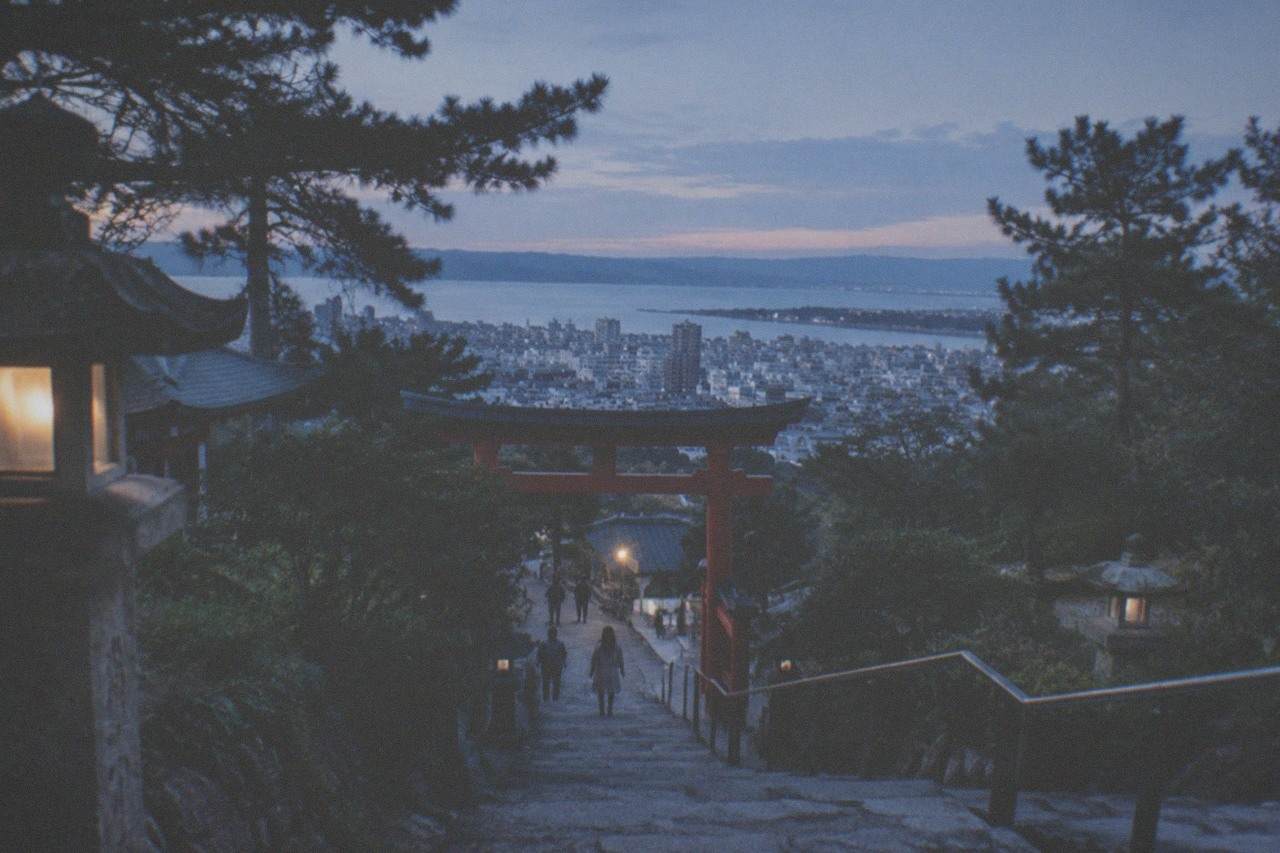
Atago Shrine sits on Atagoyama, a wooded hill in Fukuoka's Momochi area, and pairs a quiet, atmospheric approach with one of the best elevated views over Hakata Bay and the city skyline.
Short answer
Atago Shrine is a hilltop shrine in Fukuoka's Momochi area, reached by a short climb up Atagoyama. Entry to the grounds is free. It is best known for its scenery, its vermilion gate and stone steps, and its panoramic outlook over Hakata Bay, which places it alongside Fukuoka Tower and Ohori Park among west-city highlights.
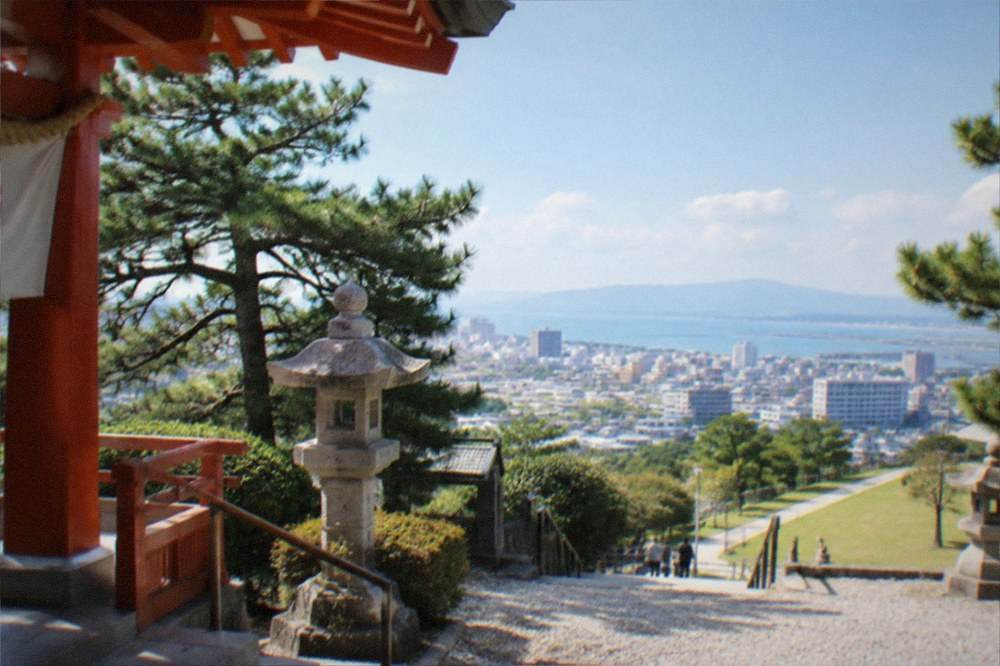
Fukuoka keeps its most atmospheric shrine approach in the west of the city. Atago Shrine stands on Atagoyama, a low, forested hill in the Momochi area, a short ride from the waterfront and a world away from the noise of Hakata Station or Tenjin. The climb is gentle, the trees are dense for most of the way, and the reward at the top is a broad terrace looking out over Hakata Bay, the Genkai Sea horizon and the towers of the Seaside Momochi district. For many visitors it is the moment the city's geography finally clicks into place: bay to the north, hills to the west, the whole sweep of northern Kyushu's largest city laid out below.
This page covers the shrine itself, the honest answer to which shrine is actually Fukuoka's most famous, how to get up the hill on public transport, what to see once you are there, and how to fold the visit into a day that takes in Fukuoka Tower, Ohori Park and the Momochi waterfront. Where a figure is verified, it is printed. Where opening hours are not published in a source this site trusts, you will be told to check the shrine's own notices rather than given a guess.
Why Atago Shrine Rewards the Short Climb
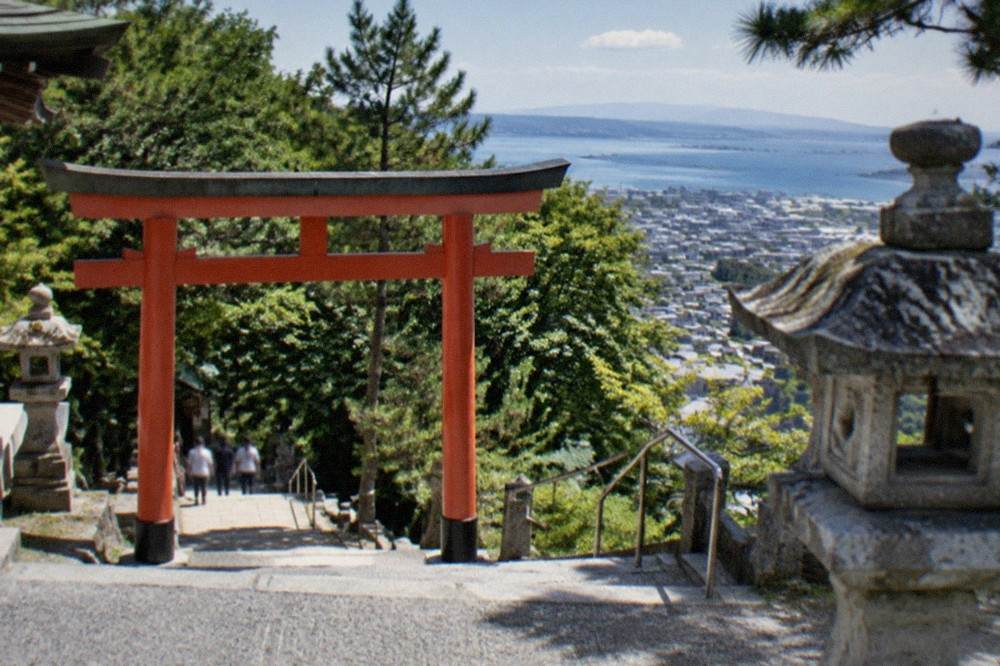
The shrine's appeal is a combination of setting and scale: a compact hilltop sanctuary wrapped in trees, a steep stone stairway under a vermilion gate, and a viewing terrace that frames Hakata Bay, the port and the Momochi skyline in a single glance. Entry costs nothing, the climb takes only minutes, and the atmosphere stays calm even on days when the waterfront below is busy. It is a viewpoint, a working shrine and a quiet walk in one visit.
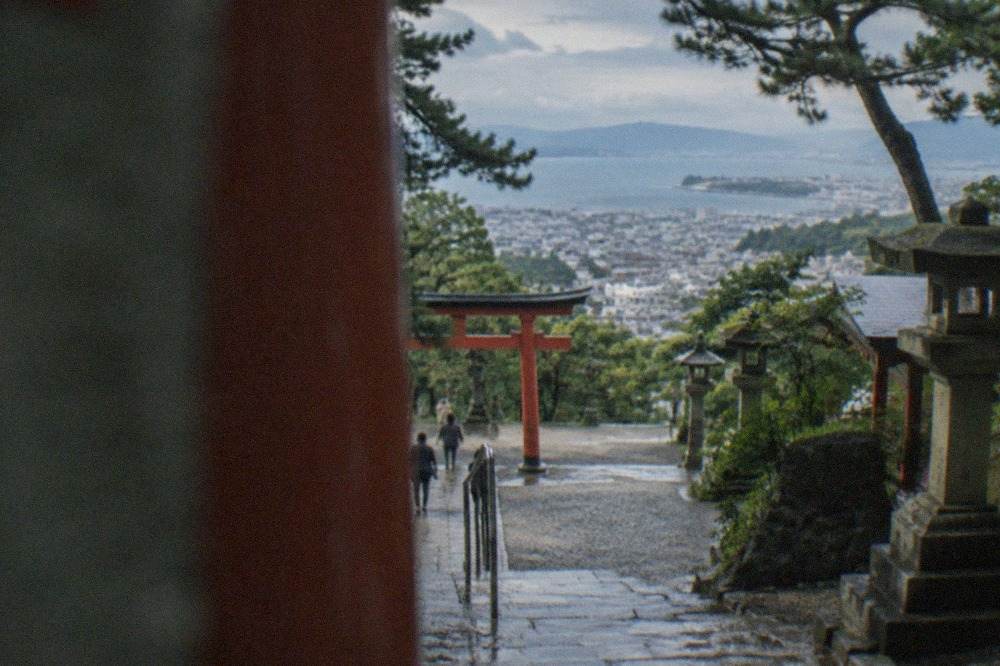
Shrines in Japan are usually flat affairs, approached along a shopping street or through a neighbourhood. Atago Shrine flips that. The approach is vertical. You arrive at the foot of Atagoyama, pass through the gate, and climb stone steps through a canopy that muffles the city almost completely. On a clear day the light comes through the leaves in shafts, and the temperature on the stairway is noticeably cooler than at the bottom, a real comfort in a Fukuoka summer when the July daily mean sits at 27.4 degrees Celsius and August at 28.4.
The shrine is a working religious site, not a museum piece. Local visitors come to pray, and the deity enshrined here is associated in the wider Atago tradition with protection from fire, a concern that made hilltop Atago shrines popular across Japan in the days when wooden cities burned. Fukuoka's version is one of several hundred Atago shrines in the country, and the hill it occupies has been a landmark of the city's west side for generations.
What the visit is not, is a half-day commitment. A slow walk up, time at the terrace, a look around the grounds and a walk back down fits comfortably inside an hour, which makes the shrine an easy pairing with the bigger sights around it. Treat it as the calm interlude in a Momochi morning or the sunset stop before dinner.
What Is the Most Famous Shrine in Fukuoka?
Honest answer: the title belongs to Kushida Shrine in Hakata, the city's tutelary shrine and the focal point of the Hakata Gion Yamakasa festival every July, with Dazaifu Tenmangu, a short train ride away, the most famous in the wider prefecture. Atago Shrine is not the most famous, but it is arguably the most scenic, and its terrace view is something neither of the big names can offer. Each shrine answers a different question.
Fame and scenery are different prizes. Kushida Shrine is the spiritual heart of Hakata, the district whose merchants and traditions shaped the city, and it anchors the Yamakasa festival that runs each year from July 1 to July 15, culminating in the Oiyama race on the morning of July 15. Dazaifu Tenmangu is one of Japan's major Tenmangu shrines, dedicated to the scholar deity Sugawara no Michizine's tradition, and draws visitors from across the country; entry to its grounds is free, and there is no entrance fee at Dazaifu Tenmangu, as the shrine itself states. You can read more in what Dazaifu Tenmangu is famous for.
Atago Shrine plays a different role. It is the shrine locals walk up on a free afternoon, the one with the photo that stops a scroll, the one where the visit is as much about the hill and the bay as about the sanctuary itself. If you want ritual weight and festival history, go to Kushida. If you want a pilgrimage-grade approach, take the Nishitetsu train to Dazaifu. If you want a view with your prayer, come here.
The comparison below is the short version. Hours for several of Fukuoka's shrines are not published in official sources this site could verify, so the table deliberately omits them rather than repeating numbers of unknown origin. Check each shrine's own notices before an early or late visit.
| Shrine | Area | Best known for | Grounds entry |
|---|---|---|---|
| Kushida Shrine | Hakata | Yamakasa festival, city's tutelary shrine | Free |
| Dazaifu Tenmangu | Dazaifu | Tenjin deity, plum trees, approach street | Free |
| Atago Shrine | Momochi | Hilltop setting, Hakata Bay view | Free |
| Sumiyoshi Shrine | Hakata bay area | Sea and travel deity tradition | Free |
| Shofukuji | Hakata | Zen temple, Japan's first of its kind | Free |
Sumiyoshi Shrine rounds out the list for completeness, and the full question of which shrine tops the city is covered in more depth at the most famous shrine in Fukuoka.
How to Get to Atago Shrine
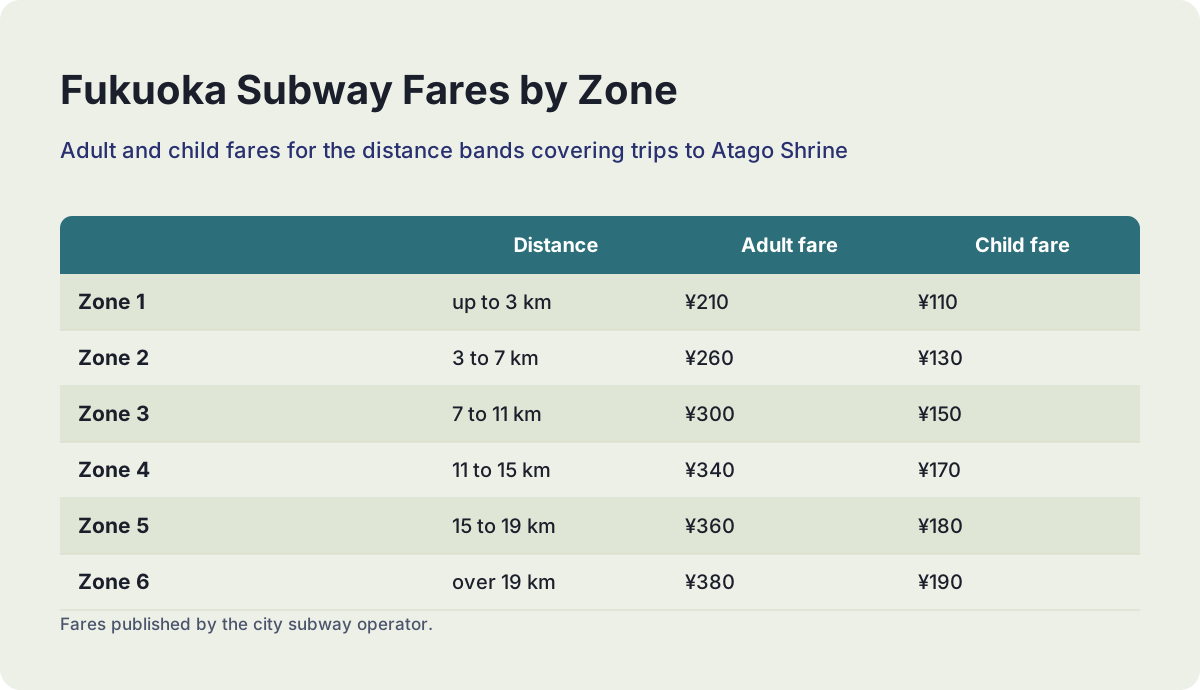
The shrine sits on Atagoyama in the Momochi area of west Fukuoka, reached by subway to the Nishijin or Ohori Koen side of the city and then a short walk and stair climb. The city subway's flat fare structure makes the trip cheap: any central ride up to 3 km costs ¥210 for an adult, and the 3 to 7 km band that covers most cross-town trips costs ¥260. Hakata and Fukuoka are the same city, so this is one ride, not a transfer between places.
Fukuoka's subway is the backbone of any west-side trip. Fares are distance-banded and published by the city: zone 1, up to 3 km, is ¥210 adult and ¥110 child; the 3 to 7 km band is ¥260 adult; the top band, over 19 km, is ¥380. If you plan a heavy day of sightseeing, the 1-day pass, sold as the Chikamaru-kun, costs ¥640 for an adult and covers all three lines from first to last train on the day of use. The official fare table is published by Fukuoka City Subway, and it is worth a look before you buy individual tickets.
From the station nearest the hill, the walk to the shrine's base is a matter of minutes through a quiet residential slope, and the stairway does the rest. Wear shoes you can climb in. The steps are well maintained but steep in stretches, and after rain the stone can be slick. There is no need to plan around a bus transfer or a taxi; the subway plus feet is the standard local route.
One point of geography that trips up first-time visitors: the station you arrive at from the airport is Hakata, and Hakata is a ward and a station within Fukuoka, not a separate destination. There is no JR Fukuoka Station, and nobody travels "from Hakata to Fukuoka". The airport itself is unusually close to the city centre, and the subway fare from Fukuoka Airport to Hakata is ¥260, a verified figure from the official fare bands.
If you would rather have someone else handle the routing, a private guide is a reasonable upgrade. The Fukuoka Customized Private Tour in 1 Day with Licensed Guide runs about 6 hours from $160 per person and can be shaped around shrine visits, while shorter walking options cover the city core. For the standard subway fare bands you will use on any of these days out, the table below is the verified reference.
| Subway zone | Distance | Adult fare | Child fare |
|---|---|---|---|
| Zone 1 | up to 3 km | ¥210 | ¥110 |
| Zone 2 | 3 to 7 km | ¥260 | ¥130 |
| Zone 3 | 7 to 11 km | ¥300 | ¥150 |
| Zone 4 | 11 to 15 km | ¥340 | ¥170 |
| Zone 5 | 15 to 19 km | ¥360 | ¥180 |
| Zone 6 | over 19 km | ¥380 | ¥190 |
What to See on the Shrine Grounds
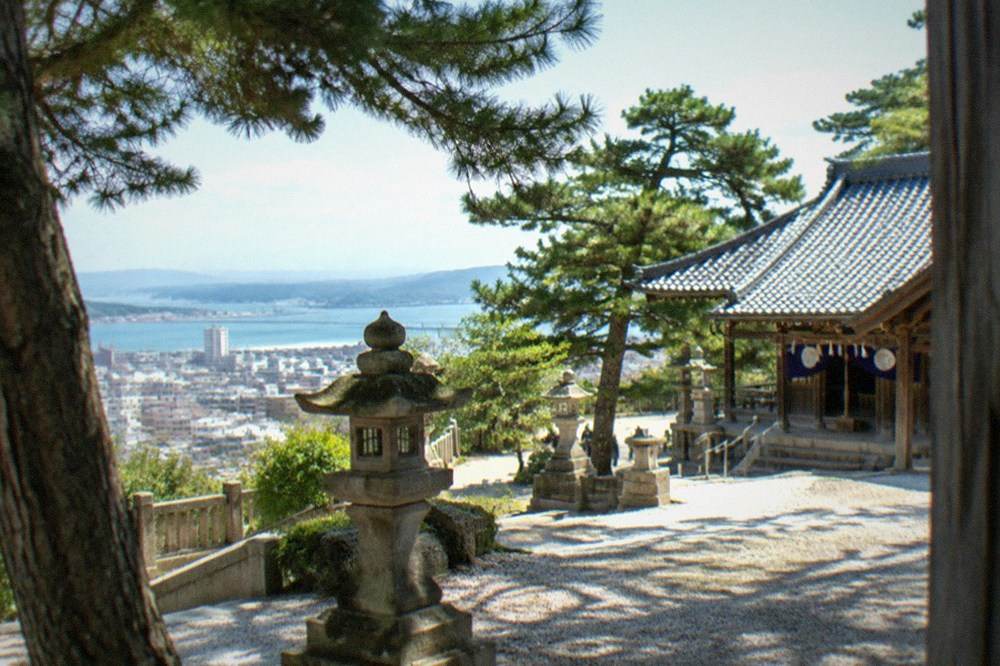
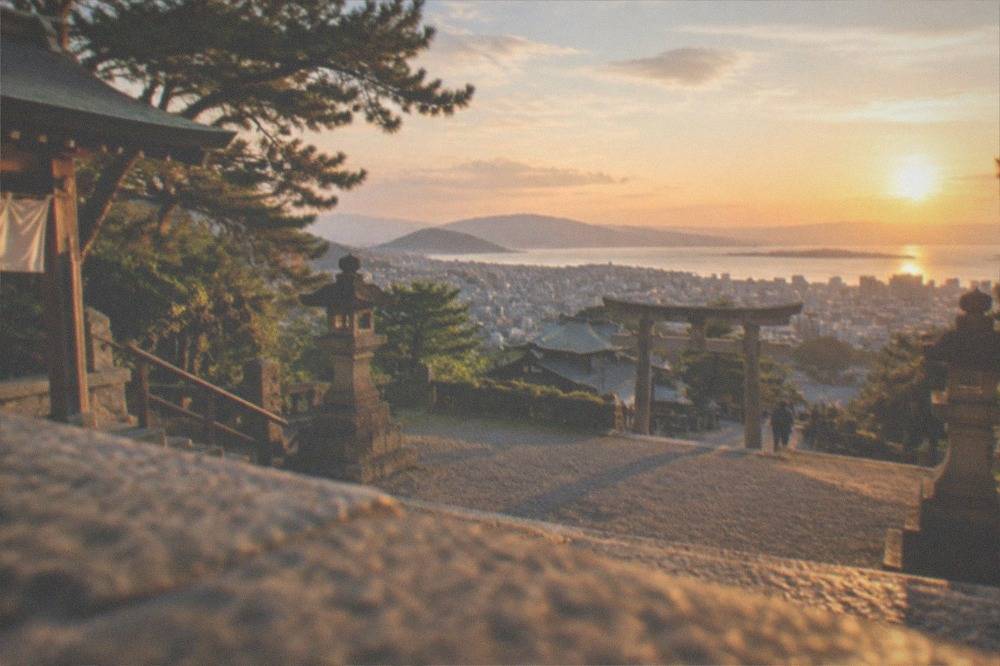
The visit has three acts: the vermilion gate and stone stairway under the trees, the shrine buildings at the summit, including the main hall where prayers are offered, and the viewing terrace where Hakata Bay opens up below. There is no admission charge, no ticket and no timed entry. Plan for the ritual etiquette of any Japanese shrine: a bow at the gate, water purification at the basin, and quiet around the hall.
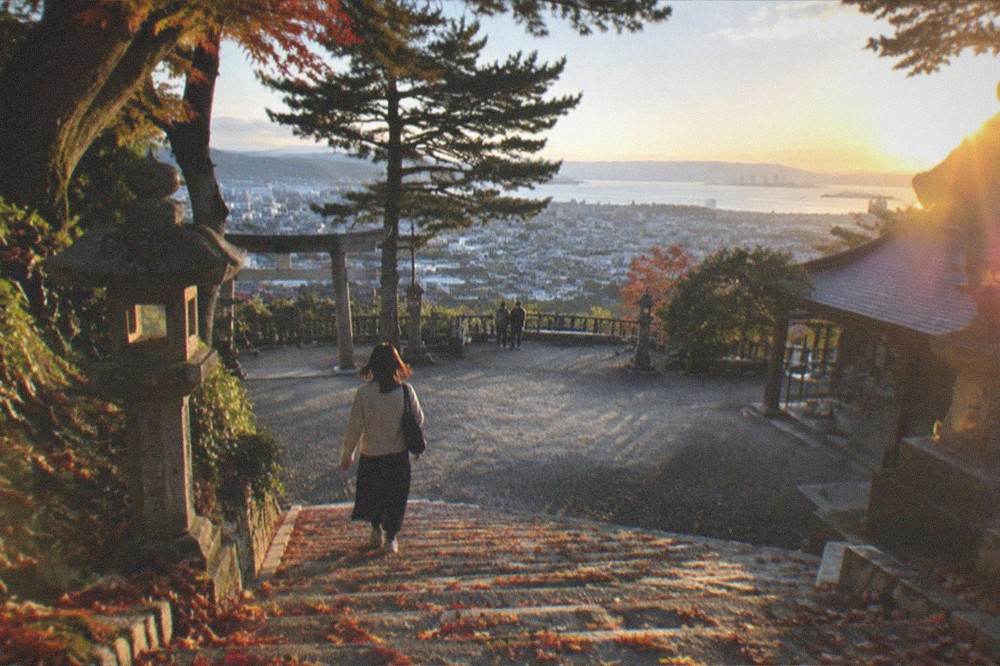
The stairway is the part people remember. It is steep enough to slow conversation and green enough to feel like real forest rather than a park planting, and the gate at its foot is one of the more photographed spots in west Fukuoka. Take the climb slowly in summer; the Japan Meteorological Agency's 1991 to 2020 normals put Fukuoka's August mean at 28.4 degrees Celsius with daily maxima averaging 32.5, and humidity makes the stairs feel warmer than the number suggests.
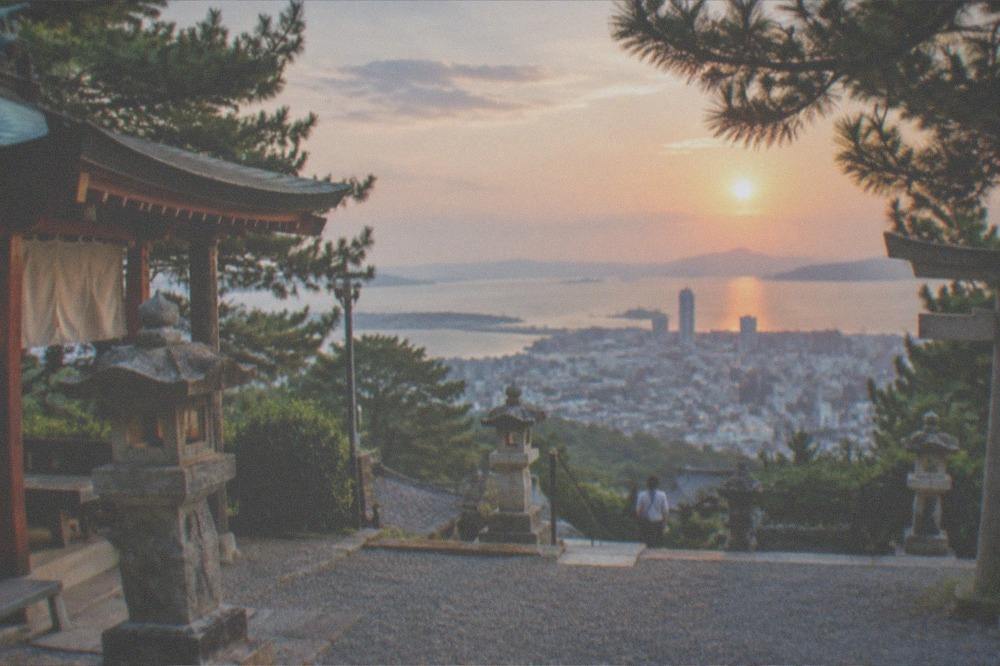
At the top, the grounds are compact and easy to read. The main hall faces the approach, with the offering box, the bell rope and the customary two bows, two claps, one bow sequence for those who choose to pray. A terrace area on the bay side delivers the view. On clear days the sightline runs across Hakata Bay toward the islands and the Genkai Sea horizon, with the Momochi towers directly below. Sunset is the classic time; the light comes in over the water and the tower glass catches it.
If shrine etiquette is new to you, the basics are simple and worth getting right: speak quietly, do not photograph people mid-prayer, and follow the lead of local visitors at the basin and the hall. This site keeps a fuller rundown at Fukuoka etiquette for visitors. The shrine does not publish hours in a source this site could verify, so check its own notices or the local tourist information desk before planning an early morning or evening visit.
The View from Atagoyama and the Best Light
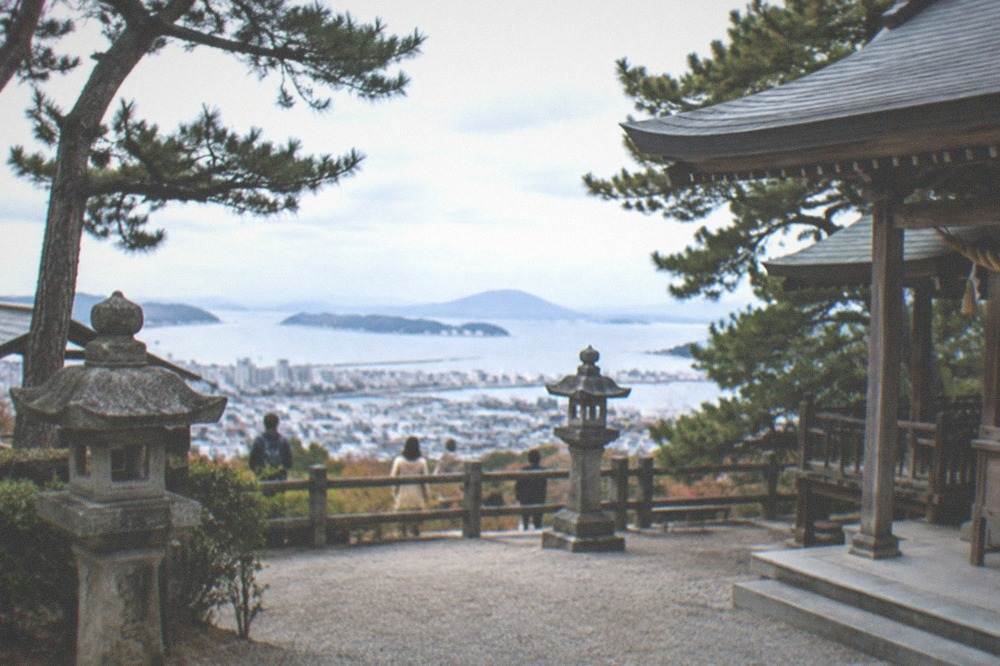
The terrace looks north over Hakata Bay, with the Seaside Momochi towers, the port and, on clear days, the islands of the Genkai Sea horizon in frame. Late afternoon into sunset is the best light for photography, when the sun drops over the water and the city's glass buildings pick up the colour. Mornings are quieter and cooler, which suits the climb itself. Bring water in summer; there is no shade on the terrace.
Fukuoka sits on Hakata Bay, on the Genkai Sea side of northern Kyushu, and the Atagoyama terrace is one of the few free, central places where you can see that geography properly. The bay curves away east toward the port, the airport lies inland to the east beyond the city, and the hill you are standing on is the western edge of the urban core. On a hazy day the horizon softens; on a clear winter day, when the air is driest, the view runs a long way out over the water. Other pages covering the same trip are gathered on Fukuoka Japan Travel Guide.
Timing matters more here than at most viewpoints. Midday in summer is the worst combination: the climb is at its hottest, the light is flat and the terrace has little shelter. Late afternoon wins on both counts, and it lines up neatly with the rest of a Momochi day, since Fukuoka Tower stays open into the evening, with hours of 9:30 to 22:00 and last admission at 21:30. The tower's observation decks sit at 123 m, 120 m and 116 m in a 234 m structure, so the comparison between the free hilltop frame and the paid tower panorama is a genuine one.
Photographers should note the two framings the terrace offers: the wide bay shot with the towers in the foreground, and the tighter composition down the stairway with the vermilion gate. The stairway shot works best in the morning when the sun comes through the canopy.
A guided option can add context to what you are looking at. The Fukuoka Essentials: History, Culture, & Charms half-day walk, from $74 per person and rated 4.9 from 48 reviews, covers the city's core sights with a local guide and pairs well with a self-directed Momochi afternoon.
Nearby Sights Around Momochi and the West City
Atago Shrine sits within a short subway or bus ride of Fukuoka Tower, Ohori Park, the Fukuoka Castle ruins and the Momochi waterfront, which makes it the anchor of a strong west-city half day. The tower charges ¥1,000 for adults, the Ohori Park Japanese Garden ¥250, and the castle ruins and Ohori Park itself are free. Uminonakamichi Seaside Park, further out on the bay, charges ¥450 for adults and its gate takes cash only.
The obvious pairing is Fukuoka Tower, a few minutes away on the Momochi waterfront. Admission is ¥1,000 for adults of high school age and above, ¥500 for elementary and junior high students and ¥200 for children aged 4 and over, per the tower's own charge page at fukuokatower.co.jp. The tower closes on 28 and 29 June 2027 for its annual maintenance, and it may close earlier on busy days, so treat the published hours as the outer limit. A prebooked tower admission ticket from $7 per person saves the queue at the gate.
Inland, Ohori Park is Fukuoka's central water park, free to enter, with a paid Japanese Garden beside it at ¥250 for adults and ¥120 for children, free for visitors 65 and over and for children under 6. Next door, the Fukuoka Castle ruins in Maizuru Park are free to walk, with one caveat worth knowing: the Tenshudai, the main keep base, is closed to entry from 26 May 2026 until the end of December 2026 for an archaeological excavation prompted by a document found in December 2024 that describes a keep which may never have been built. The rest of the park remains open.
Further along the bay, Uminonakamichi Seaside Park makes a good half-day escape, with admission of ¥450 for visitors 15 and over, free for junior high age and under, and a gate that accepts cash only, a detail almost no other guide mentions. The park closes on selected Tuesdays that vary by season, so check its official calendar rather than assuming a seven-day week.
The table below pulls the verified admission figures for the west-city cluster so you can budget the half day at a glance.
| Sight | Adult admission | Notes |
|---|---|---|
| Atago Shrine | Free | Hilltop, stairway approach |
| Fukuoka Tower | ¥1,000 | 9:30 to 22:00, last entry 21:30 |
| Ohori Park | Free | Japanese Garden ¥250 adult / ¥120 child |
| Fukuoka Castle ruins | Free | Tenshudai closed to end of December 2026 |
| Uminonakamichi Seaside Park | ¥450 | Gate is cash only; closes selected Tuesdays |
When to Visit and What the Weather Does
The best months for the climb are October and November, when daily means sit at 19.6 and 14.2 degrees Celsius and rainfall drops to 94.5 and 91.4 mm respectively, and late March into April for blossom season. July is the city's wettest month at 299.1 mm, wetter than the June tsuyu rainy season despite common belief, and typhoon season runs roughly July through October, none of which makes the city unvisitable.
The Japan Meteorological Agency's 1991 to 2020 normals for the Fukuoka station give the honest picture, and they contain a fact that contradicts nearly every guide written about this city: July, festival month, is the wettest month of the year at 299.1 mm, ahead of June's 249.6 mm. June gets the tsuyu reputation, but July delivers more water. August, by contrast, is hot, with a mean of 28.4 degrees, and comparatively dry at 210.0 mm, while banking 200.9 hours of sunshine, the second sunniest month after May.
For the shrine specifically, the climb is the constraint. In the July to September stretch, go in the morning or in the hour before sunset, carry water, and expect the stairway to feel ten degrees warmer than the terrace. From late March into early April, the city's cherry blossoms typically reach first bloom around late March with full bloom at the end of the month into the first days of April, and the west city's parks, Maizuru and Ohori among them, are the classic viewing spots. Mid to late November into early December brings the autumn colour, and the shrine's canopy is part of that show.
| Season | Conditions | Verdict for the climb |
|---|---|---|
| Spring (Mar to May) | Mild, blossom in late March to early April | Excellent; arrive early for blossoms |
| Summer (Jun to Aug) | Hot and humid; July wettest month at 299.1 mm | Climb at dawn or before sunset |
| Autumn (Sep to Nov) | Cooling, colour from mid November | Best overall; October ideal |
| Winter (Dec to Feb) | Means of 6.9 to 9.1 degrees, driest quarter | Clear-air views; dress warm |
Typhoon season deserves a plain word rather than a warning. Systems track through the western Pacific roughly July through October, and when one approaches, the sensible response is to swap the hilltop for an indoor day and check official weather feeds. The city does not shut down for the season, and September and October remain popular months to visit.
Planning a Shrine Day Around the City
A workable day pairs Atago Shrine with Fukuoka Tower and Ohori Park in the west, then crosses to Hakata for Kushida Shrine, Tochoji and an evening at the yatai stalls, with Dazaifu saved for a separate day trip on the Nishitetsu line. The subway's ¥640 day pass covers the city legs, and the yatai take walk-ins, so no booking is needed for dinner. Start west while the light is soft, end east where the food is.
The geography makes the order easy. The west city is views and greenery, best in daylight; Hakata is history and food, best in the evening. Morning: subway west, climb Atagoyama while the stairs are cool, then walk or ride to Fukuoka Tower for the panorama. Midday: Ohori Park and the Japanese Garden, or the castle ruins next door. Afternoon: subway back east to Hakata's old town for Tochoji and its Great Buddha, then Kushida Shrine, both free to enter.
Evening belongs to the yatai, Fukuoka's licensed street stalls, of which the city says there are about 100, more than any other Japanese city. They take walk-ins, you cannot book a stall, and the city's own ordinance requires each one to display its prices where customers can easily see them, banning vague "market price" listings, so the honest answer to "will I be overcharged" is that the rules are on your side. Stalls are weather-sensitive: rain and strong wind close many of them, and there is no city-mandated closing day. A guided yatai crawl is the one bookable version of the experience, or you can plan your own route with the Fukuoka food crawl itinerary.
For the city's bigger food questions, what Fukuoka is famous for covers the headline dishes, from tonkotsu ramen to motsunabe and mentaiko. If your appetite for shrines extends beyond the city, the Mount Aso and Kurokawa Onsen day tour below is the natural next step.
The From Fukuoka: Mount Aso, Kurokawa Onsen, and Shrine Tour runs about 10 hours from $58 per person, rated 4.6 from 101 reviews, and trades the city's hilltop shrine for a volcano, a famous onsen town and a mountain shrine in a single guided day. It is a different register of shrine visit, and a good use of a second or third day in the region.
Common Questions About Atago Shrine
What Is The Most Famous Shrine In Fukuoka?
Kushida Shrine in Hakata is the most famous shrine in Fukuoka city, as the tutelary shrine of the historic Hakata district and the focal point of the Hakata Gion Yamakasa festival each July. Dazaifu Tenmangu is the most famous in the wider prefecture. Atago Shrine is better known for its hilltop setting and Hakata Bay view than for national fame.
Is Atago Shrine free to enter?
Yes, entry to the shrine grounds is free, with no ticket or timed admission. The climb is on foot via a stone stairway, so the only cost is the transit to reach the Momochi area, typically a subway fare of ¥210 to ¥260 from the city centre.
How long does a visit take?
About an hour at a relaxed pace: the climb, time at the shrine hall and viewing terrace, and the walk back down. Allow more if you plan to photograph the stairway and gate, and pair the visit with Fukuoka Tower or Ohori Park nearby for a half day.
What is the best time of day to visit?
Late afternoon into sunset for the bay view and the best light on the city, or early morning in summer when the stairway is cooler and quieter. Midday in July and August is the least comfortable time to climb.
How do I get to Atago Shrine by public transport?
Take the Fukuoka City Subway west toward the Nishijin or Ohori Koen area, then walk to the base of Atagoyama in Momochi and climb the steps. The subway's flat fares are ¥210 for rides up to 3 km and ¥260 for the 3 to 7 km band, and a ¥640 day pass covers unlimited rides if you are sightseeing all day.
Is the climb difficult?
The stairway is steep in places but short, and most visitors of ordinary fitness manage it in minutes with a slow pace. Wear shoes with grip, take care after rain when the stone is slick, and carry water in summer, since the terrace has little shade.