Dazaifu Tenmangu Shrine
Dazaifu Tenmangu is the head shrine of Tenjin, the deified scholar Sugawara no Michizane, and the most visited day trip from Fukuoka. Entry is free, the grounds open early, and getting there is a short train ride.
Short answer
Dazaifu Tenmangu is free to enter and opens around 6:00, closing from 18:30 to 19:30 depending on season. It sits roughly 30 minutes from Tenjin by Nishitetsu train with one transfer. The shrine honours Tenjin, the god of learning, and draws students and travellers to its approach street of mochi shops.
Dazaifu Tenmangu charges nothing to enter. The shrine's own English FAQ page states it plainly: there is no entrance fee for the main sanctuary or the grounds, which open around 6:00 in the morning and stay open into the evening. That single fact shapes the whole visit. You can arrive early, walk the approach, eat a mochi off a griddle and still be back in Fukuoka before dark, all without buying a single ticket for the shrine itself.
The shrine is also the biggest single reason people ride a train out of Fukuoka on any given day. It is the head shrine of Tenjin, the deified spirit of the scholar Sugawara no Michizane, who is revered across Japan as the god of learning. Students come here before entrance exams, travellers come for the approach street and the plum associations, and locals come because it is one of the most pleasant half-days in northern Kyushu. This page covers the shrine itself, transport from Fukuoka, hours, food, the surrounding sights and the craft workshops nearby.
What Is Dazaifu Tenmangu Shrine Famous For?
Dazaifu Tenmangu is famous as Japan's principal shrine to Tenjin, the deified scholar Sugawara no Michizane, patron of learning and the arts. Students across the country pray here before exams. The shrine's approach is lined with mochi shops grilling Umegae Mochi, the plum associated with the shrine's most famous legend, and the whole district is built around the pilgrimage. Entry is free.
The reputation rests on more than the shrine buildings. Dazaifu is, in effect, a town that exists because of one exiled scholar. After Michizane died in Dazaifu, mourners carried his funeral procession toward the east, and according to the legend a plum tree uprooted itself and flew after him, settling beside his grave. That tree, called Tobiume, the flying plum, is still the most famous tree in the grounds, and plum motifs decorate everything from the mochi to the shrine's ema votive plaques.
What surprises many first-time visitors is the scale of the operation around the shrine. The approach street is a dense, lively row of shops selling mochi, crafts and souvenirs, and the district beyond it holds the Kyushu National Museum, several small temples and a hillside shrine network that rewards an extra hour. Most people budget half a day; almost everyone underestimates the food.
If you are still building your picture of the city this trip sits inside, the companion page on what Fukuoka is famous for covers the wider region, and the Dazaifu day trip guide expands this page with the surrounding sights and a full itinerary.
How to Get to Dazaifu Tenmangu from Fukuoka
The standard route is the Nishitetsu train from Tenjin, with one transfer at Futsukaichi, taking roughly 30 minutes in total, followed by a short walk from Dazaifu Station through the approach street. There is no direct JR service to Dazaifu, so the Nishitetsu line is the practical option. A combined Tabi Kippu ticket covers the round trip plus a mochi voucher.
Start at Nishitetsu Fukuoka (Tenjin) station. Ride toward Futsukaichi, transfer there to the Dazaifu branch line, and you arrive at a small station whose exit faces the beginning of the approach. The walk from the station to the shrine gate passes the whole shopping street, which is the point: doing it hungry is half the experience.
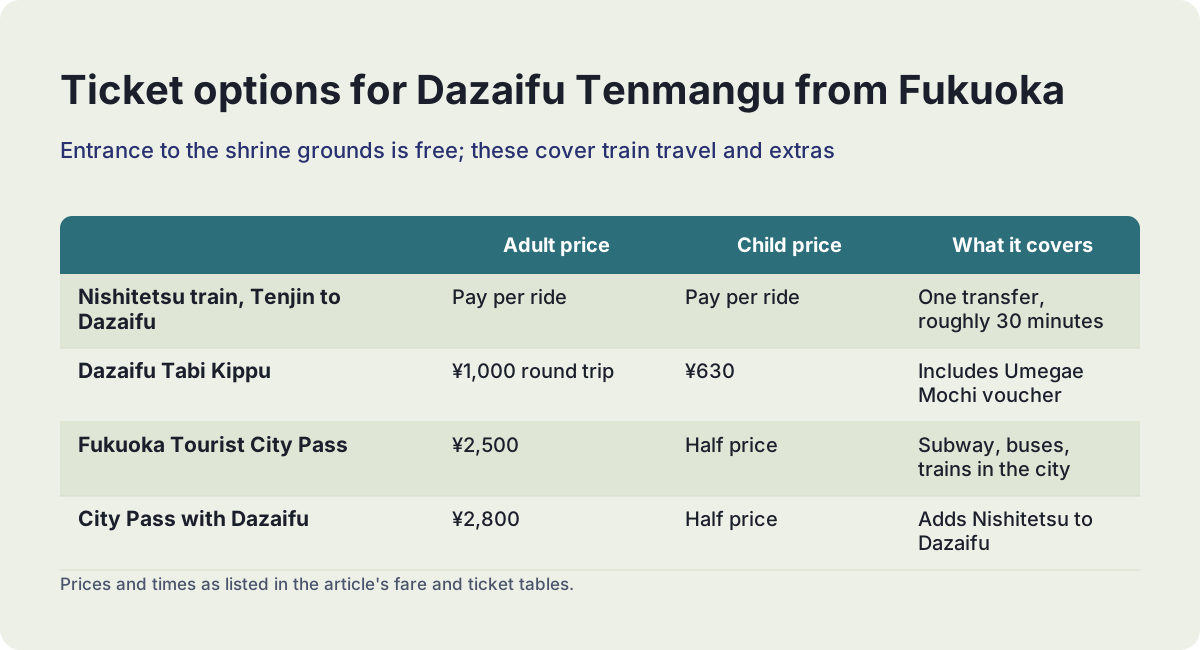
Two money-saving tickets are worth knowing before you travel. The Dazaifu Tabi Kippu bundles a round-trip Nishitetsu ticket with an Umegae Mochi voucher, at ¥1,000 for an adult and ¥630 for a child. And the Fukuoka Tourist City Pass, sold by the city's own tourism operation, comes in a Fukuoka City version at ¥2,500 and a Fukuoka City plus Dazaifu version at ¥2,800 for adults, with children at half price. The pass is restricted to overseas visitors on a short-stay visa, and a passport is checked at the counter, a detail most competing guides still miss entirely. The Dazaifu version covers the Nishitetsu trains to Dazaifu, though the Tabito liner bus is excluded. Full coverage details are on the city pass page run by the Fukuoka City tourism office.
| Option | Adult price | Notes |
|---|---|---|
| Nishitetsu train, Tenjin to Dazaifu | Pay per ride | One transfer at Futsukaichi, roughly 30 minutes |
| Dazaifu Tabi Kippu | ¥1,000 round trip | Includes an Umegae Mochi voucher; child ¥630 |
| Fukuoka Tourist City Pass | ¥2,500 | Subway, buses, trains in the city; passport required |
| City Pass with Dazaifu | ¥2,800 | Adds Nishitetsu coverage to Dazaifu; Tabito bus excluded |
For the mechanics of the network, timetables and ticket types, the Nishitetsu train guide goes through them in detail. If you would rather have someone else handle the planning entirely, the Dazaifu tours comparison covers the guided options.
If a guided day sounds appealing, these are worth a look before the sections below get into the details:
Opening Hours, Admission and What Is Free
Entry to the shrine grounds and the main sanctuary is free, confirmed on the shrine's own English FAQ page. The grounds open at 6:00 or 6:30 depending on the season and close from 18:30 to 19:30. The shrine's museum takes last admission at 16:00, far earlier than the grounds themselves. No ticket is needed to walk the approach or the grounds at any time of year.
The seasonal closing times are worth checking against your own plans, because they swing a full hour across the year. December through March closes earliest at 18:30, June through August closes latest at 19:30, and the remaining months close at 19:00. The opening time likewise shifts between 6:00 and 6:30. All of these figures come from the shrine's official FAQ page, which is the only source that matters for a schedule.
| Season | Grounds open | Grounds close | Notes |
|---|---|---|---|
| December to March | 6:30 | 18:30 | Earliest close of the year |
| April, May, September to November | 6:00 | 19:00 | Standard schedule |
| June to August | 6:00 | 19:30 | Latest close, longest evenings |
One practical consequence: a midsummer visit can run until well past 19:00, while a December visit needs to start by mid-afternoon if you want to see the grounds in daylight. The approach street shops keep their own, earlier closing hours, so food and shopping are best done on the way in, not on the way out, in winter.
One thing this article will not do is tell you the current state of the main hall. The shrine completed a long renovation programme in 2026, and reports about the temporary hall's dismantling circulated widely, but the shrine's own FAQ is silent on the details. Rather than assert something the shrine has not confirmed, we point you to the official page above, which carries the authoritative word on access. Everything else you need for planning is stable and published.
A Walk Through the Grounds, Gate to Hall
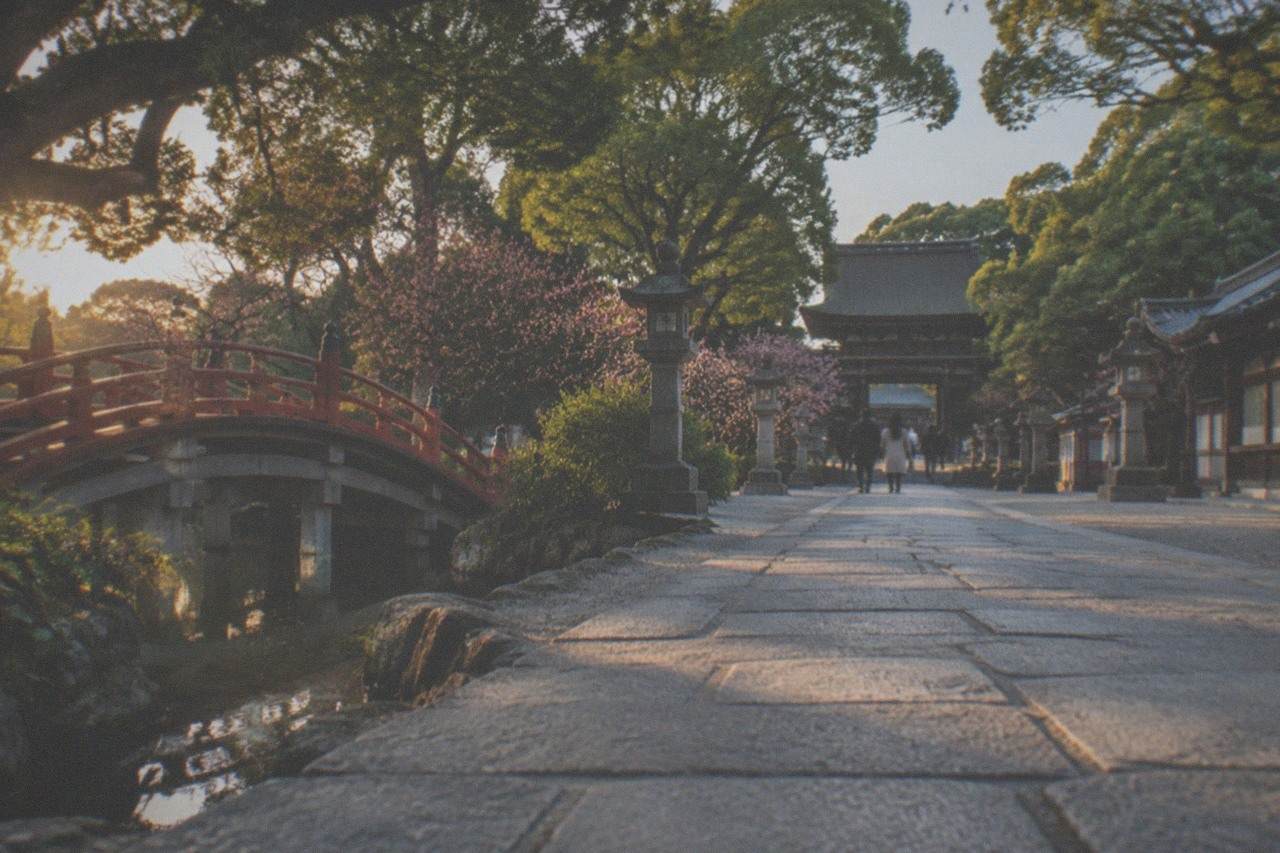
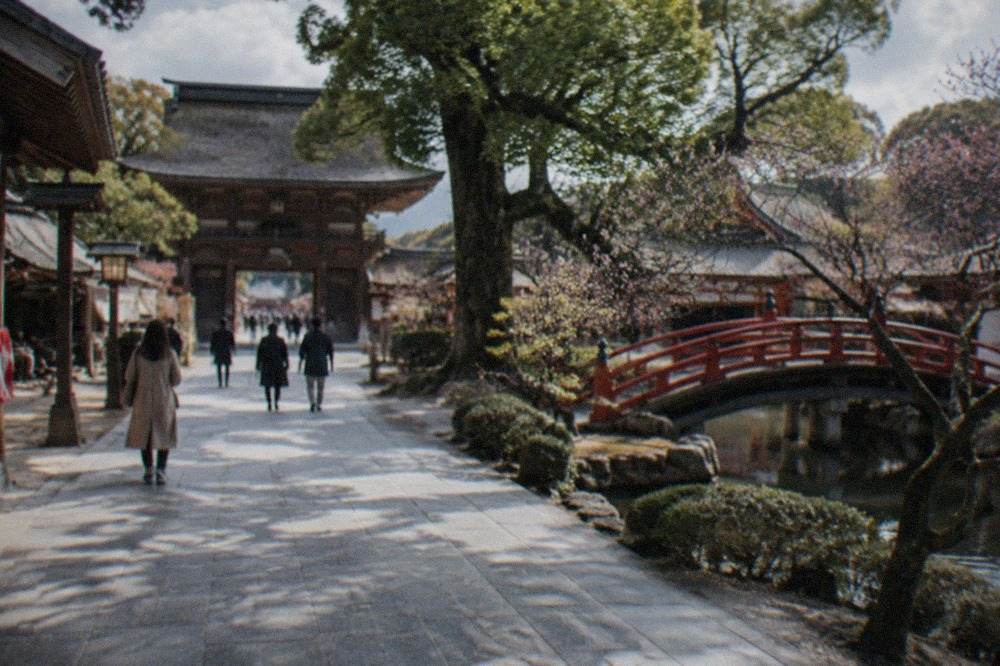
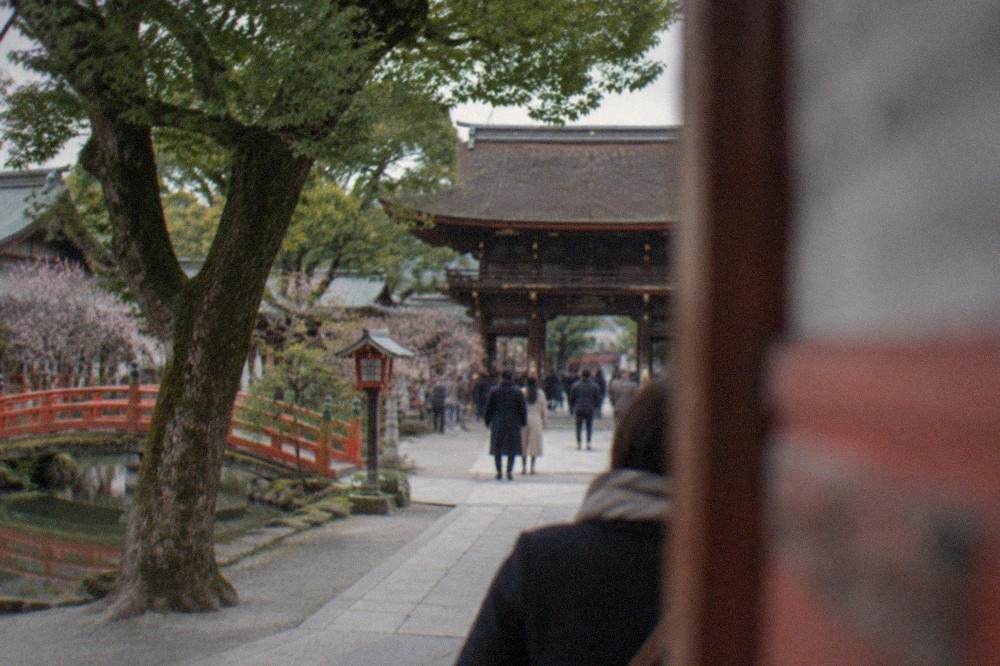
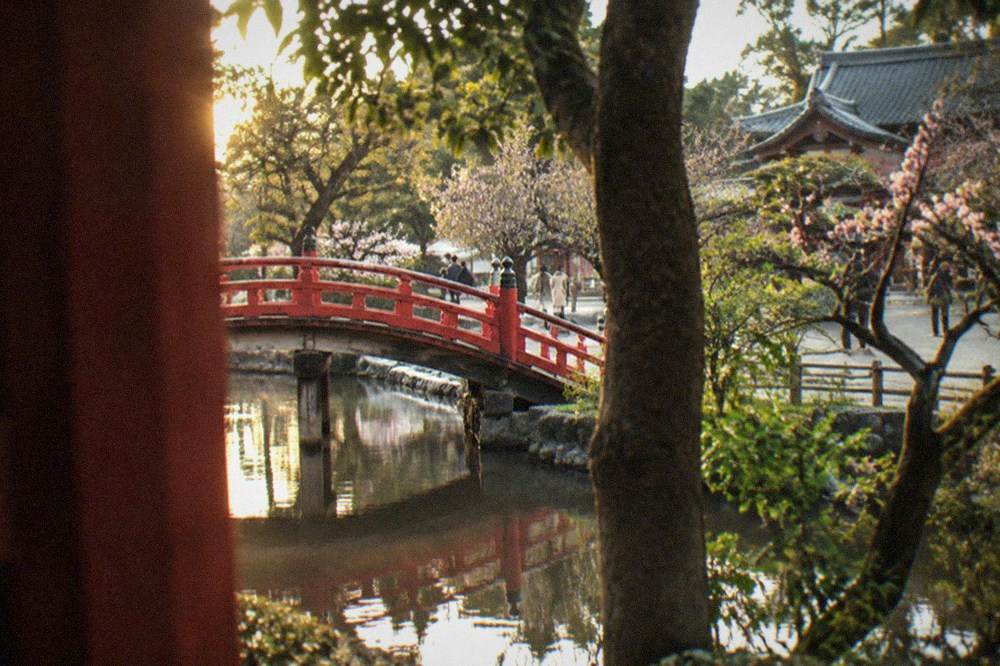
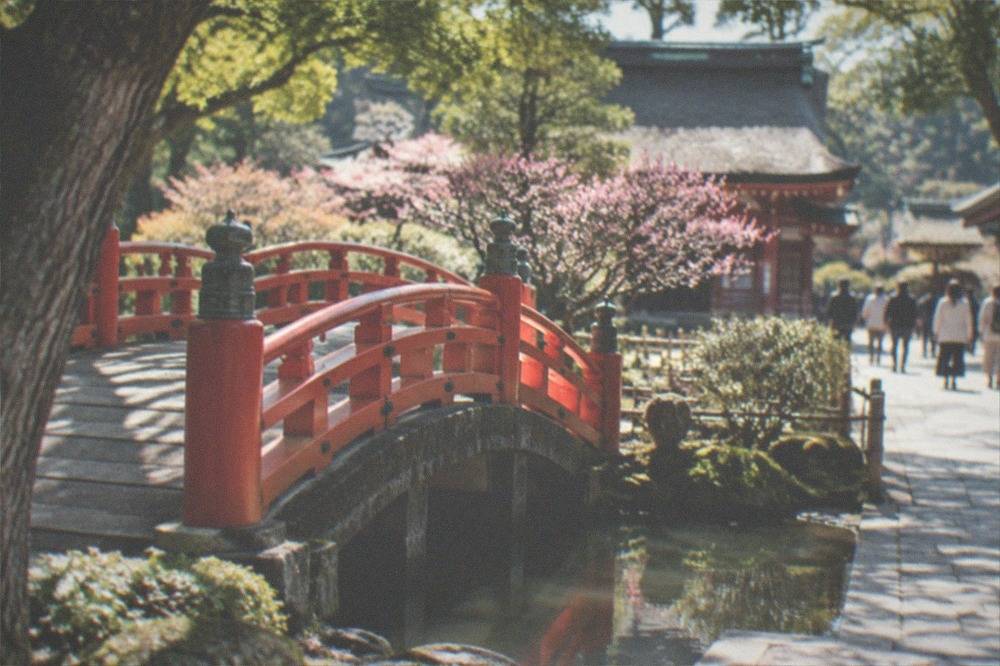
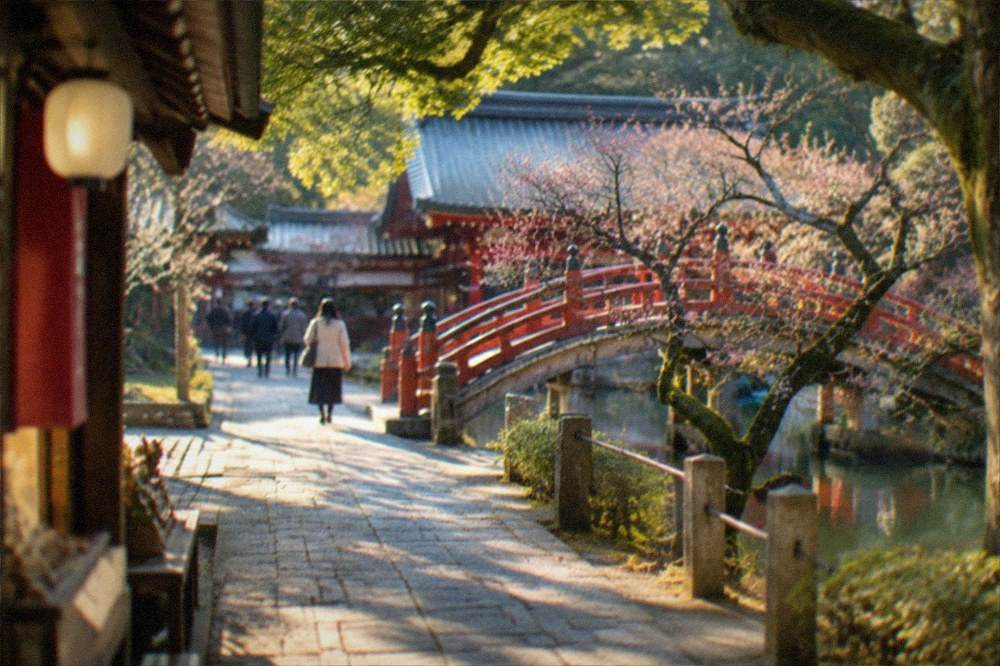
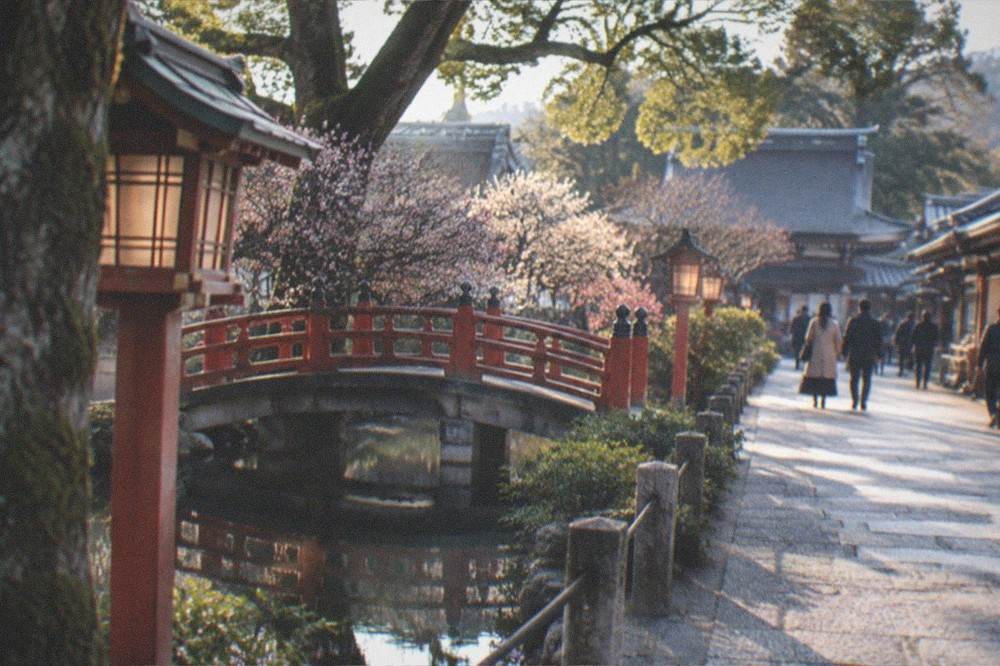
The visit unfolds as a sequence: the approach street, the torii gates, the Taiko Bridge over the pond, the courtyard and the main sanctuary. The Taiko Bridge, with its two humps, is one of the most photographed spots on Kyushu, and the pond around it is stocked with turtles and carp. Most walkers take 20 to 30 minutes from station gate to main hall without stopping to eat.
Cross the first torii at the head of the approach and the tone changes immediately. Shops give way to trees, stone lanterns and the cleaning crews who sweep the gravel paths. The Taiko Bridge sits just before the main courtyard, and photographers line up on its banks early, before the mid-morning crowds arrive from Fukuoka.
Inside the courtyard, the practical ritual machinery is all visible: the temizuya water pavilion for washing hands, the offertory box in front of the main sanctuary, the hanging ropes and bells. The Japanese etiquette guide on this site walks through the two bows, two claps, one bow pattern in detail, and Dazaifu is as good a place as any in Japan to practise it, because the crowd moves slowly and nobody rushes you.
If a craft stop would round out your shrine day nicely, this is the moment to plan it:
The God of Learning: Why Students Flock Here
Sugawara no Michizane was a court scholar and minister in Kyoto, the most learned man of his generation, who was exiled to Dazaifu in disgrace more than a thousand years ago and died here. After his death, a series of disasters in the capital was attributed to his angry spirit, and the court moved to appease him by deifying him as Tenjin, the god of learning. Dazaifu Tenmangu stands on the site of his grave.
That origin story explains everything unusual about the shrine. Most great shrines honour war gods or mountain gods; this one honours a poet, a scholar and a man wronged by politics. The appeal to students is direct. Tenjin is the patron of learning and calligraphy, and for centuries families have sent children here, and to the thousands of Tenjin shrines descended from this one, before school entrance examinations.
Walk the grounds and you see it everywhere. Ema votive plaques, instead of the usual wishes, carry crowded rows of names and exam numbers, hung by entire school classes. Vendors sell study charms by the fistful. The shrine's plum association, the flying tree legend and the god of learning add up to a coherent identity: this is a shrine about the life of the mind, one of very few in Japan whose whole personality is intellectual.
The tradition of scholarship extends outward, too. The Kyushu National Museum sits five minutes away, and the temple district around it, with Komyozenji's moss garden and maple trees, makes Dazaifu the closest thing northern Kyushu has to a classical pilgrimage town. The most famous shrine in Fukuoka is a different question with a different answer, because Kushida Shrine in Hakata is the city's own working shrine; Dazaifu is the region's destination shrine, a different animal entirely.
Crafts and Experiences Beside the Shrine
Dazaifu has a strong workshop culture, and the standout among the bookable experiences is an Okinawan-style shisa amulet making class, from $18 per person, rated 4.9 from 13 reviews, lasting about an hour. You paint and decorate your own shisa lion figure, which fits neatly between the shrine visit and lunch. Other local crafts include doll painting and calligraphy sessions in the wider Dazaifu district.
The shisa workshop deserves the attention. Shisa are the lion guardians of Okinawa, and the workshop brings that tradition to Fukuoka in a hands-on format where you finish with an amulet you painted yourself. At an hour and $18, it slots into a Dazaifu day without crowding out the shrine, the mochi or the museum. A 4.9 rating from 13 reviews is a small pool but an enthusiastic one, and reviewers repeatedly mention finishing with something they actually wanted to keep.
The broader district has more. Fukuoka's culture of craft classes includes a Hakata doll painting experience, from $28, rated 4.9 from 45 reviews, and a calligraphy session at $32, rated 5 from 7 reviews, both reachable from Dazaifu with planning. The hands-on culture scene around Fukuoka page covers the modern end of that spectrum as well.
After a paragraph like that one, the tour itself:
Umegae Mochi and Eating Around the Shrine
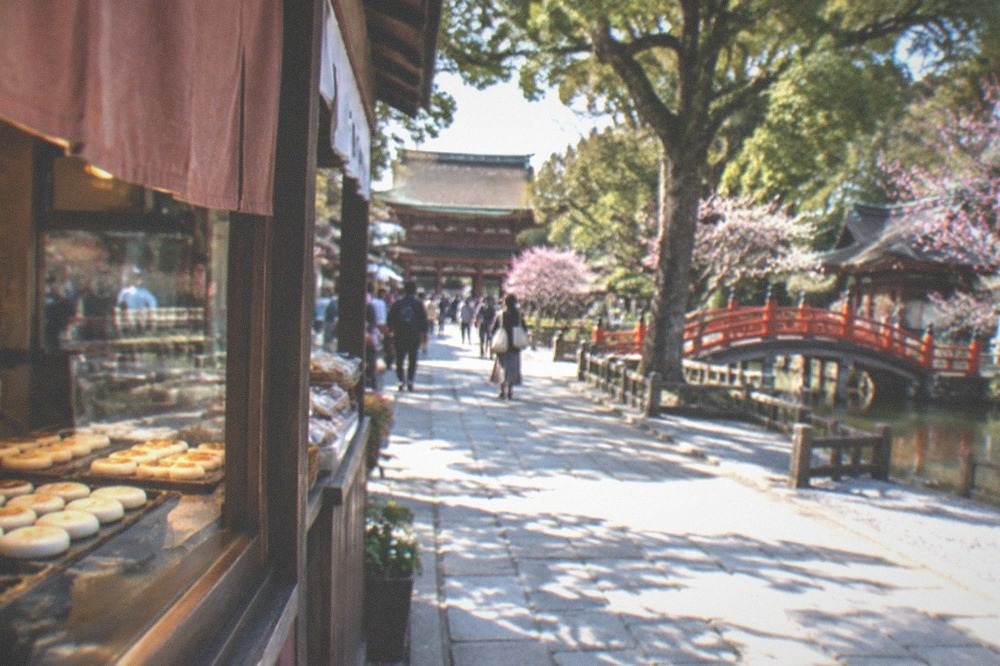
Umegae Mochi is the food of Dazaifu: a round, flat rice cake filled with sweet red bean paste and grilled on a hotplate until the outside crisps. It exists because of the plum legend, and the shops grilling it line the entire approach street. A Tabi Kippu round-trip train ticket includes a voucher for one. Elsewhere on the street you will find mentaiko, sesame mackerel and the usual shrine-town snacks.
The mochi deserves its own paragraph. Watching the griddle crews work is part of the appeal: the cakes are pressed, filled, flipped and served within minutes, and the contrast between the crisp exterior and the soft bean filling is the whole point. Buy them fresh off the griddle, not from a shelf. The Tabi Kippu voucher means your train ticket already contains one.
Beyond mochi, the food of the city travels out here with you. Goma saba, sesame mackerel, is a Kyushu raw fish classic; mentaiko, the spiced pollack roe Fukuoka is famous for, appears in pastes and on rice; and hitokuchi gyoza, one-bite dumplings, show up in the side streets. The Fukuoka food crawl itinerary maps the city versions, and the what food is Fukuoka famous for page explains the dishes themselves.
| Food | What it is | Where it shines |
|---|---|---|
| Umegae Mochi | Grilled rice cake with sweet bean filling | Approach street, fresh off the griddle |
| Mentaiko dishes | Spiced pollack roe, on rice or in pastes | Approach shops and souvenir stands |
| Goma saba | Sesame-dressed raw mackerel | Dazaifu restaurants and city markets |
| Kyushu wagyu skewers | Grilled beef from regional farms | Approach street grills |
The practical advice is simple: walk the approach street once before buying anything, then walk back on the return trip and buy from the busiest griddle. It is the closest thing to a guarantee in shrine-town eating.
Best Time of Day, and Season, to Visit
The best time of day is early morning: arrive by 9:00 and you get the grounds nearly to yourself, because the crowds from Fukuoka build through late morning. Seasonally, late March into early April brings cherry blossoms to the area, and mid to late November brings the maple colour around Komyozenji and Kamado Shrine. Midsummer keeps the grounds open until 19:30, the latest close of the year.
Crowd rhythms matter more here than at most Japanese attractions, because the approach street is narrow and the trains arrive loaded. The first arrival wave from Tenjin lands between 10:00 and 11:00; by noon the mochi queues are real. Conversely, the last hour before closing is quiet in every season, and in June through August that last hour is a pleasant summer evening, not a rush.
| Season | What you get | Trade-off |
|---|---|---|
| Late March to early April | Cherry blossoms around the district | Peak crowds at weekends |
| June to August | Grounds open until 19:30 | Hot, humid afternoons |
| Mid to late November | Maple colour at nearby gardens | Days short; arrive early |
| December to February | Quietest grounds, plum season | Closes at 18:30, dark by then |
A word on summer planning generally: the wider region sees typhoon activity roughly from July through October, and the rainy period around June is real but does not close the shrine. Neither should stop a trip. For Dazaifu specifically, the honest rule is simple: come early, in any season, and you will beat most of the crowd.
Dazaifu as a Day Trip: What Else Is Nearby
Dazaifu anchors the strongest half-day trip from Fukuoka, and the district packs the Kyushu National Museum, Komyozenji's moss and maple garden and Kamado Shrine within a short walk of the main shrine. Further out, Yanagawa's canal boats and Itoshima's coast extend the day. A combined guided tour pairs Dazaifu with Yufuin by scenic train from around $70, rated 4.7 from 54 reviews, over about eight hours.
The near sights first. The Kyushu National Museum is the big one, a striking glass-and-wood building with its own entrance policy and exhibits that change through the year. Komyozenji is famous for its moss garden framed by maples, at its best in mid to late November. Kamado Shrine, on the hillside behind the district, is the quieter local favourite with maples and ginkgo, and fewer tour groups. All of them sit within walking distance of the approach street.
If you want the district plus the scenic railway in one package, the Yufuin no Mori and Dazaifu day tour is the notable option: from $70 per person, rated 4.7 from 54 reviews, running about eight hours, pairing the famous green resort train with the shrine district. The guided selection also includes tea and sake tasting runs into the Yame tea country south of the city, and the wider day-trip selection covers Yanagawa, Itoshima and the coast.
After that overview, the tour that fits this exact plan:
Planning the Rest of the Day: A Sample Schedule
A comfortable Dazaifu half-day runs about four hours door to door from Tenjin: roughly 30 minutes of train each way, an hour on the approach street eating, an hour in the shrine grounds, and an optional hour at a museum or garden. With a morning start you are back in Fukuoka by mid-afternoon with the whole evening free for the city.
Here is how that looks laid out, assuming a 9:00 arrival at Dazaifu Station:
| Time | Stop |
|---|---|
| 09:00 | Arrive, walk the approach street while it is quiet |
| 09:45 | Shrine grounds: bridge, courtyard, main sanctuary |
| 10:45 | Umegae Mochi off the griddle, second pass on the street |
| 11:30 | Kyushu National Museum or Komyozenji garden |
| 12:45 | Train back toward Tenjin |
Back in the city, the evening is yours. Hakata's own shrine circuit is short: Kushida Shrine sits in the middle of the old town, and Tochoji with its great Buddha is minutes away on foot. For a modern contrast after a day of wood and gravel, the teamLab Forest immersive gallery at the mall by the stadium runs until late, with tickets from $27 per person, rated 3.8 from 14 reviews. After a day like this one, screens and forests make a strange and good pairing.
And if you are keeping notes for the rest of the week, the Arita and Imari pottery trip rounds out the classic short excursions from the city.
For the gallery stop after dark:
Practical Tips Before You Go
Bring cash for the mochi shops and the small museums, wear comfortable shoes for the approach, and decide your return time before the afternoon crowds build. The shrine grounds are free and need no ticket, the museum takes its last entry at 16:00, and the Tabi Kippu pays for itself on the train ride out. Weekend mornings are the busiest periods on the approach street.
A few closing notes that do not fit anywhere else. Dazaifu Station is small and the platform fills up at peak times, so on a weekend, plan your return train before you get hungry again. The city tourism office runs the pass system described above, and if you found the passport-check detail surprising, you are not alone, it is the single most useful thing to know before you queue at the counter. For everything on the wider city, the Fukuoka Japan Travel Guide site covers transport, food and the neighbourhoods, and this shrine is the standard first excursion from it.
The picture above, in one line: a free, early-opening shrine to the god of learning, 30 minutes by train, with the best mochi street in northern Kyushu attached. Arrive before 10:00, eat on the way in, and let the afternoon take care of itself.
Before the closing questions, here is the selection from across this article once more:
Common Questions About Dazaifu Tenmangu
What Is Dazaifu Tenmangu Shrine Famous For?
It is Japan's head shrine to Tenjin, the deified scholar Sugawara no Michizane and the god of learning. Students pray here before exams, the approach street grills the district's signature mochi, and the flying plum legend ties the whole place to one exiled poet. Entry to the grounds is free.
How much does it cost to enter Dazaifu Tenmangu?
Nothing. The shrine's own English FAQ states there is no entrance fee for the main sanctuary or the grounds. Museums in the district charge separately, and the food on the approach street is pay as you go.
What are Dazaifu Tenmangu's opening hours?
The grounds open at 6:00 or 6:30 depending on season and close between 18:30 and 19:30: 18:30 in December to March, 19:30 in June to August, and 19:00 the rest of the year. The shrine museum takes last admission at 16:00.
How do I get to Dazaifu from Fukuoka?
Take the Nishitetsu train from Tenjin, transfer at Futsukaichi to the Dazaifu branch line, roughly 30 minutes in total. There is no direct JR service. A Tabi Kippu round-trip ticket costs ¥1,000 and includes an Umegae Mochi voucher.
What is Umegae Mochi?
A round rice cake filled with sweet red bean paste, grilled on a hotplate until the outside crisps. It commemorates the flying plum legend, and the shops along the approach street sell it fresh. Your Tabi Kippu train ticket includes a voucher for one.
How long should I spend at Dazaifu Tenmangu?
About four hours door to door from Tenjin, covering the train, the approach street, the shrine grounds and one extra stop such as the Kyushu National Museum or Komyozenji. Add the craft workshops or the further temples and it becomes a full day.