Fukuoka Day Tours
Fukuoka sits at the top of Kyushu with fast trains and tours fanning out in every direction. This guide compares the best day tours from the city, what each one actually delivers, and how to pick the right one for your time and budget.
Short answer
The single best day trip from Fukuoka for most travellers is Takachiho Gorge, reached on a tour from roughly $48 per person, with the best-rated option scoring 4.8 from 713 reviews over 11 hours. Dazaifu is the easiest half-day, Itoshima the best coastal escape, and Yufuin and Beppu the classic onsen pairing.
Fukuoka is the natural base for exploring northern Kyushu, and it earns that reputation honestly. The city sits on Hakata Bay on the Genkai Sea side of the island, with fast rail lines and a dense roster of small-group tours reaching gorges, volcanoes, onsen towns and shrine cities within a day. One point worth settling before anything else: Hakata and Fukuoka are the same city. Hakata is the ward and the station name, Fukuoka is the city, and there is no such place as JR Fukuoka Station. Every tour and train in this guide departs from Hakata or Tenjin, inside Fukuoka itself.
The choice in front of you is not whether to leave the city for a day, but which direction to point yourself. The options split into four rough families: the big inland scenery of Takachiho and Mount Aso, the easy cultural half-days at Dazaifu and Yanagawa, the coastal escapes along Itoshima and the islands of Hakata Bay, and the onsen towns of Yufuin, Beppu and Kurokawa. This Fukuoka Japan Travel Guide page compares all four, with verified transport facts and an honest look at what the tours on this site actually include.
What Is the Best Day Trip from Fukuoka?
For most travellers the best day trip from Fukuoka is Takachiho Gorge in northern Miyazaki, roughly 11 hours door to door on a guided tour from about $48 per person, with the highest-rated option in the roster scoring 4.8 from 713 reviews. It combines a dramatic volcanic gorge, a Shinto shrine with genuine national mythology attached, and an optional boat ride on the Gokase River. If you only take one day out of the city, this is the one to take.
The reasoning is simple. Takachiho is the one destination on the list that is genuinely awkward to reach independently. There is no Shinkansen stop and no airport nearby, so a tour bus solves a real logistics problem rather than just saving you a train ticket. The gorge itself is a narrow basalt chasm where the Gokase River cuts between near-vertical walls, and the walk along the rim is short enough that a guided group loses little time and gains a great deal of it back on the road.
The mythology matters too. Takachiho is where the sun goddess Amaterasu is said to have hidden in a cave, plunging the world into darkness until other deities lured her back out. Amano Iwato Shrine and Amano Yasugawara, the beach where the gods are said to have gathered, sit a short drive from the gorge. A guide who can tell that story on the drive is worth having, and the best-rated tours build the day around it.
The practical counter-argument is duration. Eleven hours is a long day, with early departures from Hakata and a return late in the evening. Travellers with children, mobility limits or a tight schedule may be better served by Dazaifu, which is close enough to be a relaxed half-day, or by a coastal tour to Itoshima that keeps the day shorter and the roads flatter. The full comparison of destinations, and the trade-offs of each, is laid out in the sections below.
The Big Inland Scenery: Takachiho Gorge and Mount Aso
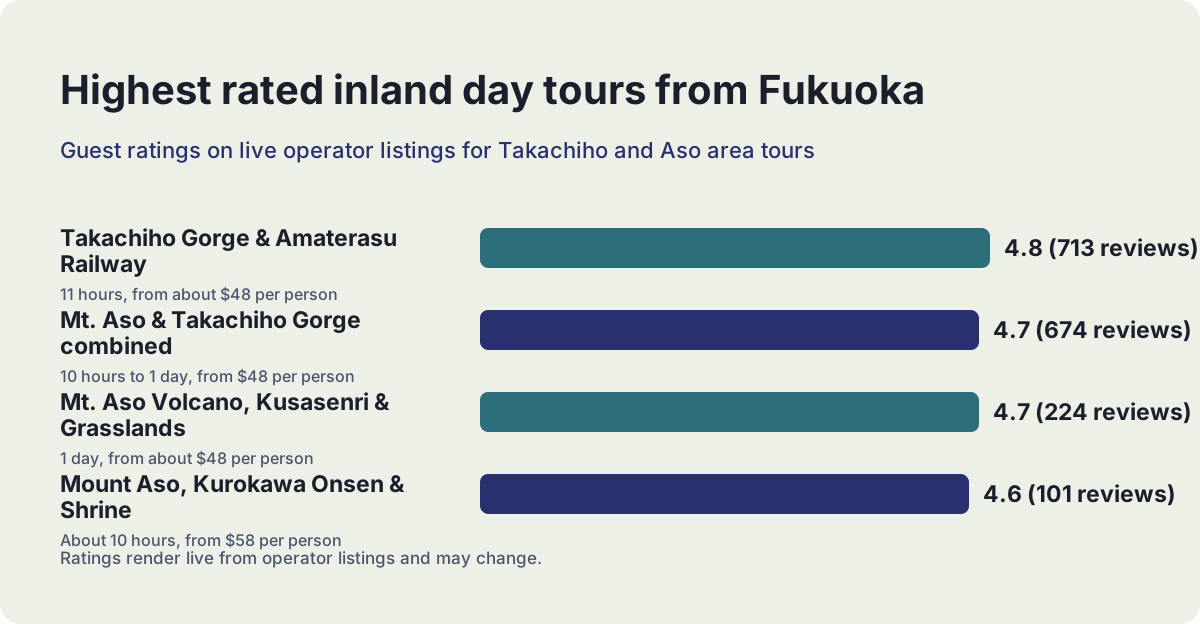
Takachiho Gorge and Mount Aso are the two big inland day tours from Fukuoka, both long days of 10 to 11 hours and both priced from about $48 per person. Takachiho delivers a gorge, shrines and mythology; Aso delivers an active volcano, sweeping grasslands and an onsen stop. The best-rated Takachiho tour scores 4.8 from 713 reviews, and the best-rated Aso day tour scores 4.7 from 224 reviews.
Mount Aso is one of the world's largest calderas, and the Kusasenri grasslands inside it look like a giant green bowl with grazing horses at the bottom. The volcano's activity level controls access to the crater itself, which closes when gas levels rise, so tours plan around the grasslands, Aso Shrine and the surrounding viewpoints rather than promising the rim. That is worth knowing before you book: any tour that guarantees crater access is promising something no operator can guarantee.
The combined option is also on the table. The Mt. Aso & Takachiho Gorge Tour with Optional Boat Ride runs 10 hours to a full day and covers both in one push, rated 4.7 from 674 reviews and priced from $48 per person. It is a big day with a lot of driving, but for a traveller with only one day free who wants the inland highlights, it is the most efficient way to see both. The boat ride at the gorge is optional and paid on the day.
| Inland day tour | Best for | Duration | Rating on the live listing |
|---|---|---|---|
| Takachiho Gorge & Amaterasu Railway | Gorge scenery, mythology, optional boat | 11 hours | 4.8 from 713 reviews |
| Mt. Aso & Takachiho Gorge combined | Both highlights in one day | 10 hours to 1 day | 4.7 from 674 reviews |
| Mt. Aso Volcano, Kusasenri & Grasslands | Volcano landscapes, grasslands | 1 day | 4.7 from 224 reviews |
| Mount Aso, Kurokawa Onsen & Shrine | Onsen town stop, quieter roads | 10 hours | 4.6 from 101 reviews |
The Aso, Kurokawa and shrine tour deserves a mention for a specific kind of traveller. Kurokawa Onsen is one of Kyushu's most atmospheric onsen towns, a wooden village of ryokan and rotenburo along a river gorge, and it is hard to reach without a car. That tour runs about 10 hours from $58 per person and is rated 4.6 from 101 reviews. It trades the gorge for a proper soak, which in winter is the better trade.
If you are weighing a self-guided alternative, be honest about the transport. Neither Takachiho nor the Aso caldera is served by a fast rail link from Hakata, and public transport to Takachiho involves multiple transfers on rural lines. The tour bus is not a convenience here, it is the difference between a feasible day and a two-day trip. For more on the wider region, see the Kyushu overview guide.
How Day Tours from Fukuoka Actually Work
Most guided day tours from Fukuoka depart from Hakata Station or a nearby central meeting point, run 8 to 11 hours, and cost from roughly $46 to $96 per person for shared-coach tours, with private options from about $160 per person. Prices, ratings and review counts on this page render live from the operator's listing, so what you see on a card is what the operator currently charges.
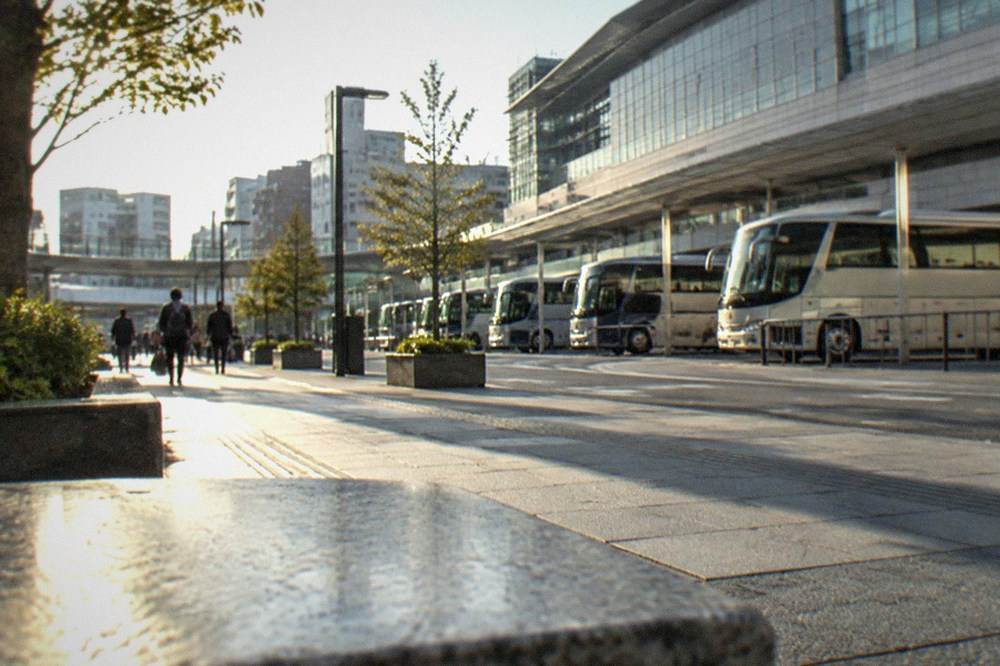
The departure point is nearly always Hakata, which is worth repeating for anyone still mapping "Fukuoka" and "Hakata" as separate places. They are not. Hakata Station is Fukuoka's main rail hub, and the bus terminals cluster around it. If your hotel is in Tenjin, budget a short subway hop to the meeting point; the subway fare falls in the official 3 to 7 km band at ¥260, per the city subway's published fare table at the official fare page.
What a tour price includes varies more than most travellers expect. On the Takachiho and Aso tours, transport and guiding are included but lunch and the optional boat ride are usually your own cost, which is why two tours to the same gorge can differ in price without one being a worse deal. Read the inclusions list on the live listing before comparing, not just the headline figure. The three cards below are the current top picks across the main tour families: the big inland scenery day, the fully private licensed-guide option, and the train-and-shrine culture day.
If the Takachiho day is the one that fits, it is worth acting on sooner rather than later. Seats on the long inland coaches are limited and the departure time is fixed early in the morning, so a same-evening decision is rarely an option once you are already in the city.
Booking ahead matters most on three kinds of days: national holidays, weekends in the autumn leaf season of mid to late November, and any day in July, when the Hakata Gion Yamakasa festival fills the city from July 1 to 15 and hotel guests stretch tour capacity. Free cancellation is standard on most listings in the roster, so the low-risk move is to book early and adjust if your plans shift. For a full list of destinations ranked by travel time, see the day trips from Fukuoka guide.
Dazaifu, Yanagawa and the Easy Half-Day Options
Dazaifu Tenmangu is the easiest worthwhile day out of Fukuoka, reached by Nishitetsu train from Tenjin with one transfer at Futsukaichi in about 30 minutes, and the shrine states plainly that there is no entrance fee. Yanagawa adds canal boat rides through an old castle town, and the two combine naturally into a single day at a relaxed pace.
Dazaifu is the cultural heavyweight of the near-city options. The shrine is dedicated to Sugawara no Michizane, the patron deity of learning, and students come from across Japan to pray before exams. The approach road, lined with shops selling umegae mochi cakes grilled on hot plates, is short and pleasant, and the shrine's own FAQ confirms free entry to the grounds and main sanctuary at the official English page. The shrine opens from 6:00 or 6:30 depending on the season and closes between 18:30 and 19:30 by month.
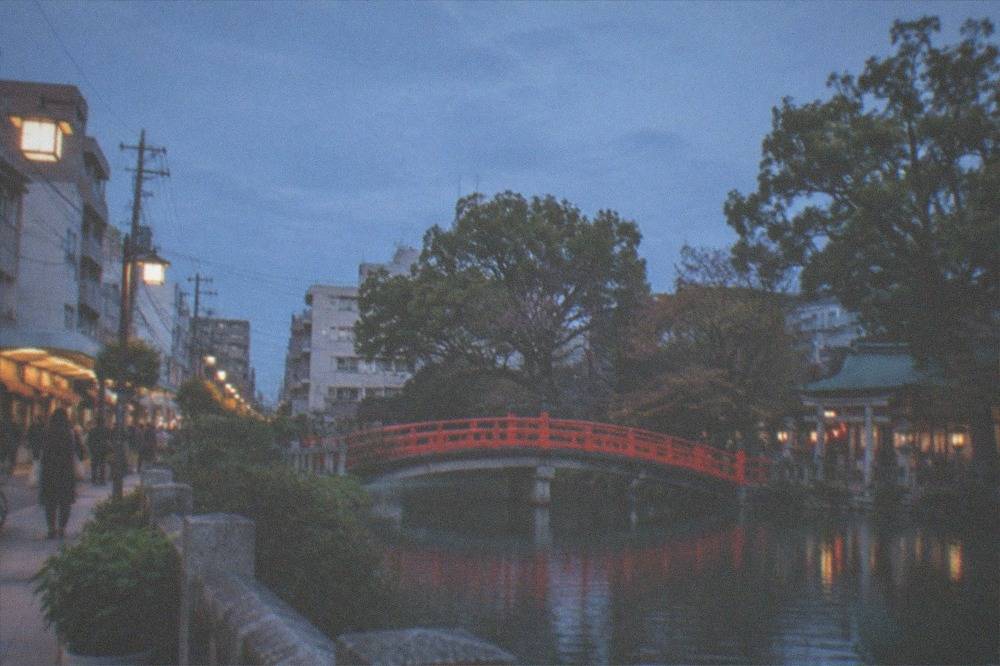
Yanagawa, 40 minutes further south on the Nishitetsu line, is a canal town where punts pole you through waterways that once formed the castle's moats. The boatmen narrate in Japanese, but the ride itself needs no translation. The two towns pair well: Dazaifu in the morning before the crowds build, Yanagawa's boats in the afternoon, and the train home in time for a yatai dinner in the city. A combined YokaBus tour covering the Yame tea fields and the Yanagawa river boat runs 9 hours 30 minutes from $92 per person, rated 4.9 from 29 reviews, if you would rather not manage the trains yourself.
For tour-based versions of this day, the Dazaifu tours guide compares what is bookable. The standout for train lovers is the Yufuin no Mori & Dazaifu Day Tour: it rides the celebrated green sightseeing train toward Yufuin in the morning and pivots to Dazaifu in the afternoon, 8 hours from $70 per person, rated 4.7 from 54 reviews.
| Easy day out | Travel from Tenjin | Entry cost | Best time of day |
|---|---|---|---|
| Dazaifu Tenmangu | About 30 min by Nishitetsu, 1 transfer | Free entry to the shrine | Morning, before tour groups |
| Yanagawa canal boats | About 70 min by Nishitetsu | Boat fare on site | Afternoon |
| Komyozenji moss garden, Dazaifu | Short walk from the shrine | Small fee at the gate | Mid to late November for maples |
| Kyushu National Museum | Next to Dazaifu's approach | Special exhibits charge | Any weather |
One caution for autumn planners: Komyozenji's moss garden with its maples is the best leaf-viewing spot near Dazaifu, but interior access can vary, so treat the garden as a bonus rather than the point of the trip. Kamado Shrine nearby is the more reliable autumn stop, with maples and a ginkgo that colour on schedule in mid to late November.
Coast and Islands: Itoshima, Nokonoshima and the Genkai Sea
Itoshima, the peninsula west of the city on the Genkai Sea, is Fukuoka's best coastal day out, with tours running 8 to 10 hours from about $69 per person and the best-rated option scoring 4.6 from 31 reviews. Nokonoshima, a 10-minute ferry from Meinohama, adds flower fields and beach views inside a half-day, and Shikanoshima offers a longer island loop for cyclists.
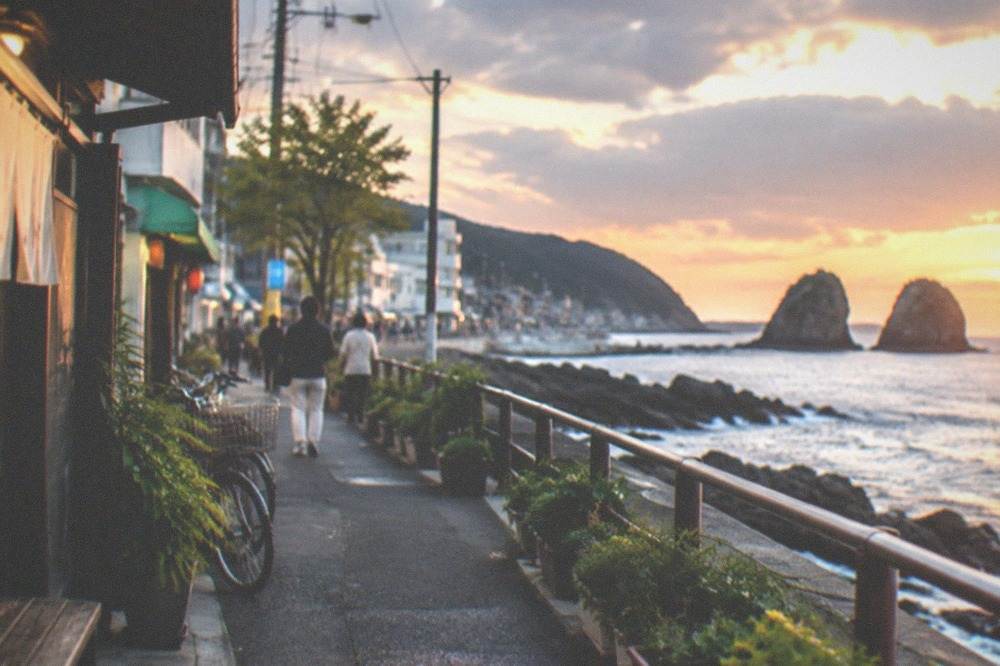
Itoshima is where Fukuoka goes at the weekend. The peninsula's coastline mixes sandy beaches, oyster shacks and the photogenic Sakurai Futamigaura, where a wedded-pair of rocks stand offshore against the sunset. Two tours cover it from the roster: the Itoshima Hidden Gems Day Tour, 8 hours 30 minutes from $69 per person rated 4.6 from 31 reviews, and the Itoshima Nature & Coastal Scenery tour, a 10-hour loop from $77 rated 4.5 from 44 reviews. The Itoshima tours guide compares both in detail.
Nokonoshima is the lazy option, and none the worse for it. The island park's flower fields cycle through rapeseed in early spring, hydrangeas in June and cosmos in autumn, with views back across Hakata Bay to the city towers. Treat the park as pay-at-gate and bring cash for the ferry. The Nokonoshima Island Park guide covers what to expect on the ground.
One planning note that applies to the whole coast: July is Fukuoka's wettest month at 299.1 mm against June's 249.6 mm in the Japan Meteorological Agency's 1991 to 2020 normals, a genuinely counterintuitive fact that most guides miss by assuming the tsuyu rainy season makes June the wet one. August is hotter and drier, banking 200.9 sunshine hours. For beach planning, the Fukuoka beaches guide has the seasonal detail.
Onsen Towns: Yufuin, Beppu and Kurokawa
Yufuin and Beppu are the classic onsen pairing from Fukuoka, with tours running about 9 to 10 hours from $48 to $96 per person, and the best-rated combined option scoring 4.7 from 285 reviews. Yufuin is the genteel inland town of boutiques and lake views; Beppu is the steamy spectacle of boiling ponds and hell-tour spectacle. Kurokawa is the quiet wooden-village alternative.
Beppu's "hells" are the draw: a circuit of steaming ponds in extraordinary colours, from the cobalt Umi Jigoku to the blood-red Chi-no-Ike, that you view rather than bathe in. The tours that include hell tickets save you the queueing arithmetic at each gate, which is the main practical advantage of a guided version. The Beppu Hells, Frog Temple & Yufuin day trip runs 10 hours from $96 per person, rated 4.4 from 106 reviews, while the Nyoirinji Temple and Beppu Hells option includes tickets and runs a full day from $48, rated 4.7 from 285 reviews.
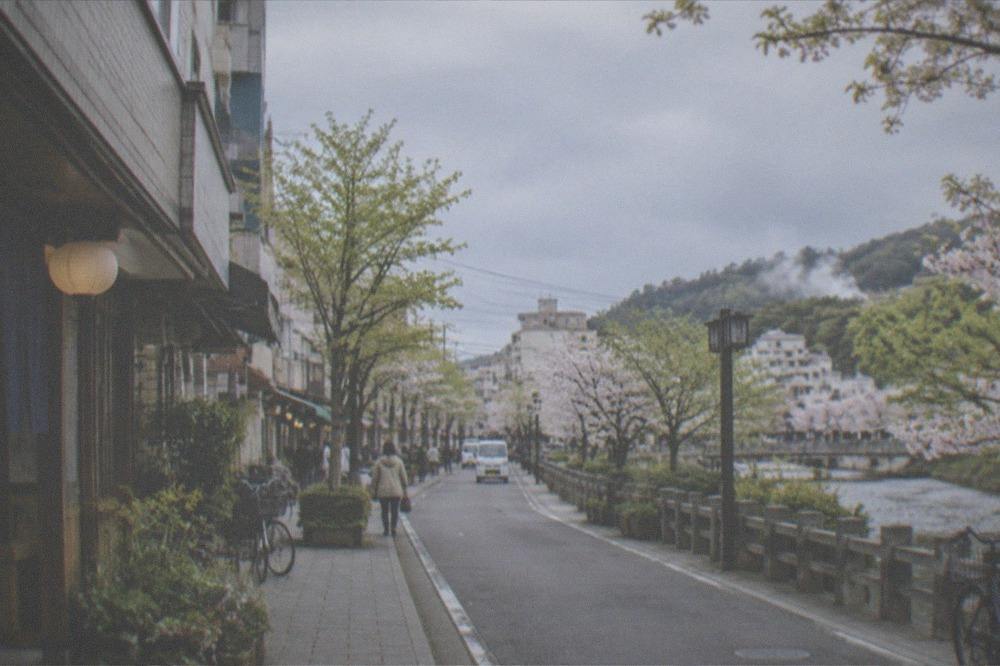
Yufuin is the gentler half of the pair. The town runs along a short main street of cafes and craft shops to Kinrin Lake, where hot spring water meets cold lake water in a morning mist that photographers chase. It is also the terminus of the Yufuin no Mori sightseeing train, the green-and-cream limited express that is a destination in itself. Two roster tours ride it or drive it: the Yufuin & Beppu Tour with Sapporo Brewery and AoT Museum, 9 hours 30 minutes from $55 rated 4.7 from 51 reviews, and the day trip to Yufuin, Beppu Hell Onsen and an animal park, 10 hours from $59 rated 5 from 7 reviews.
Kurokawa Onsen, reached on the Mount Aso, Kurokawa Onsen and Shrine tour from $58 per person rated 4.6 from 101 reviews, is the connoisseur's pick. The village bans the neon and signage of bigger resorts, so the experience is wooden ryokan, riverside rotenburo and lantern-lit lanes. It is a long way from Fukuoka for a day, but the tour structure makes it work. For a full breakdown of the region, see the Beppu day trip guide.
Farther Afield: Nagasaki, Kumamoto and Kitakyushu
Nagasaki, Kumamoto and Kitakyushu are all reachable as full days from Fukuoka, with Nagasaki the longest at 12 to 13 hours on a private tour from $858 per person, and Kitakyushu the shortest thanks to the Shinkansen link to Kokura. These are ambitious days, and only Nagasaki genuinely justifies a private guide over a train ticket and a guidebook.
The Nagasaki private tour is the outlier in the roster: 12 to 13 hours, from $858 per person, rated 5 from 12 reviews. That price reflects a fully private vehicle and guide for the day, and the destination rewards it. Nagasaki's history, from Dejima's Dutch trading post to the Peace Park and the basilica at Oura, is dense enough that a guide earns their fee. Whether a private 12-hour day beats an overnight stay is a fair question, and for most travellers the honest answer is that it does not; if you can spare the night, take the train and stay.
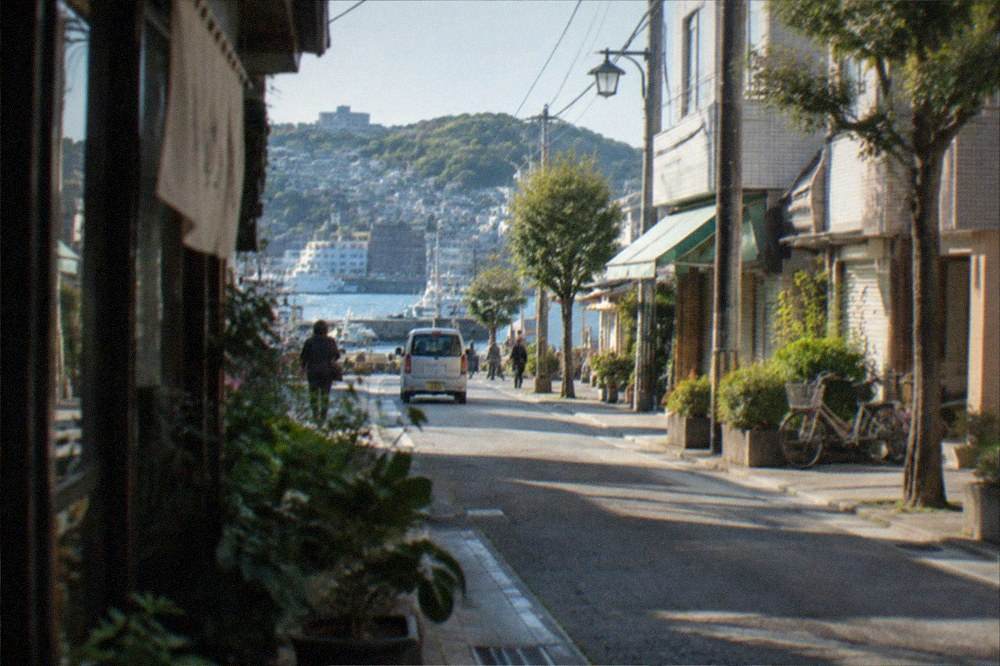
Kumamoto works as a day trip through the Aso tours that add Kumamoto Castle to the itinerary, and Kitakyushu is close enough that the Shinkansen from Hakata to Kokura makes it feel suburban. The Mojiko retro port district and the Kanmon Bridge walk to Honshu are the highlights, and the Kitakyushu day trip guide covers the logistics. Karatsu and the Arita and Imari pottery towns sit further west in Saga, a slower and less touristed day out, covered in the Saga day trip guide.
| Far day trip | Realistic day length | Best format | Verdict |
|---|---|---|---|
| Nagasaki | 12 to 13 hours | Private tour or overnight | Overnight is better |
| Kumamoto | 10 hours | Aso tour with castle stop | Pairs well with the volcano |
| Kitakyushu and Mojiko | 6 to 8 hours | Shinkansen to Kokura, self-guided | Easy, no tour needed |
| Takachiho Gorge | 11 hours | Guided coach | Best single-day tour |
| Yufuin and Beppu | 9 to 10 hours | Guided coach or Yufuin no Mori train | Best onsen day |
The pattern across the whole roster is worth stating plainly. Tours earn their fee where public transport is slow or absent: Takachiho, the Aso caldera, Kurokawa, Itoshima's scattered coastline. Where the Shinkansen or a Nishitetsu train already runs, Dazaifu, Kokura, even Yufuin if you ride the sightseeing train, the self-guided version is often the better day. Spend the tour budget on the places the trains do not reach.
How to Choose: Matching the Tour to Your Day
Match the tour to your energy, your season and your transport reality: Takachiho for the single best scenery day, Dazaifu for a short cultural half-day, Itoshima for coast and calm, Yufuin and Beppu for onsen, and a private licensed-guide tour when the day needs to bend around you rather than the reverse. Book the long inland tours ahead; leave the close ones flexible.
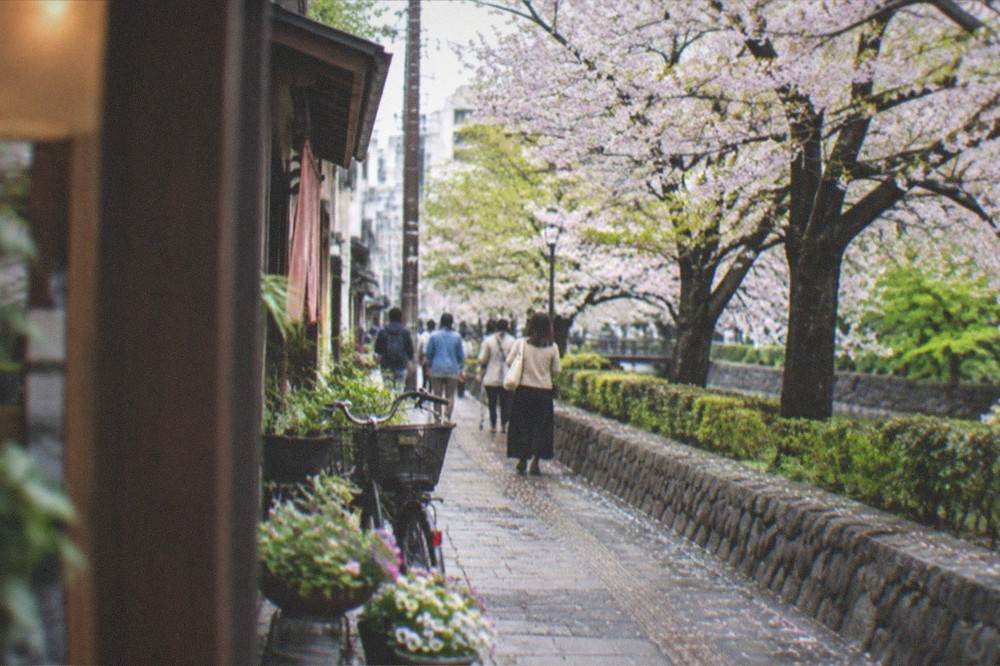
Season should steer the choice as much as destination. Spring means cherry blossoms in the city from late March into early April, and a Dazaifu or city-based day pairs well with the blooms at Maizuru Park, where the castle ruins hold roughly 1,000 trees. Note that the Tenshudai, the main keep base, is closed from May 26 until the end of December 2026 for an archaeological excavation prompted by a document found in December 2024 describing a keep that may never have existed, so plan sakura viewing around the park's other viewpoints this year.
Summer changes the arithmetic. July brings the Hakata Gion Yamakasa, the city's great float festival from July 1 to 15, and it also brings the year's heaviest rain at 299.1 mm in the monthly normals. A long coach day in a typhoon-adjacent month is a gamble; the July through October typhoon season runs through the region, and while it makes no destination unvisitable, it makes refundable bookings worth having. Autumn, mid to late November into early December, is the sweet spot: leaves at Komyozenji and Kamado Shrine near Dazaifu, clear air over the Aso grasslands, and comfortable walking at the gorge.
| If you want | Pick this day tour | Length | From, per person |
|---|---|---|---|
| The one unmissable day | Takachiho Gorge & Amaterasu Railway | 11 hours | $48 |
| Volcano and grasslands | Mt. Aso Volcano, Kusasenri & Grasslands | 1 day | $46 |
| Culture without a long drive | Yufuin no Mori & Dazaifu | 8 hours | $70 |
| Coast, beaches and sunsets | Itoshima Hidden Gems | 8 hours 30 minutes | $69 |
| Steam, colour and onsen | Beppu Hells tickets included | 1 day | $48 |
| A day built around you | Customized private tour, licensed guide | 6 hours | $160 |
For travellers stringing several days together, the 3-day Fukuoka itinerary shows how one tour day, one city day and one easy half-day fit into a balanced first visit. The private tours guide covers the fully customizable options, and the food tours guide handles the evenings, when the yatai stalls open along the Naka River. Wherever you land, the three picks below are the strongest current options across the main families: the inland scenery day, the private licensed-guide day, and the train-and-shrine culture day.
Common Questions About Fukuoka Day Tours
What Is The Best Day Trip From Fukuoka?
For most travellers, Takachiho Gorge. It is the one headline destination that is hard to reach independently, the tours are priced from about $48 per person, and the best-rated option scores 4.8 from 713 reviews over 11 hours. If you want an easier day, Dazaifu is the best half-day option, and Itoshima is the best coastal escape.
Can you do Takachiho Gorge as a day trip from Fukuoka?
Yes, comfortably on a guided tour. The Takachiho tours run about 11 hours from Fukuoka and include the gorge, the Amaterasu Railway and an optional boat ride on the Gokase River. Self-guided is possible but slow, involving multiple rural train and bus transfers each way.
Is Dazaifu worth a day trip?
Yes, and it does not even need a full day. Dazaifu Tenmangu has no entrance fee, the train from Tenjin takes about 30 minutes with one transfer, and the umegae mochi shops along the approach make the walk worthwhile. Pair it with Yanagawa's canal boats for a full day.
Which is better, Yufuin or Beppu?
They do different jobs. Yufuin is the genteel town of boutiques, cafes and lake mist, best for a relaxed day. Beppu is the spectacle, with steaming hell ponds in vivid colours. Most tours from Fukuoka combine both in one 9 to 10 hour day, which is the efficient answer if you have one day.
Do I need to book Fukuoka day tours in advance?
Book ahead for the long inland tours, Takachiho, Aso and Kurokawa, especially on weekends, national holidays and in the autumn leaf season. The close-in options like Dazaifu can be decided on the day. Most listings in the roster carry free cancellation, so booking early is low risk.
Is Mount Aso worth the long day from Fukuoka?
Yes if you want volcano landscapes. The Kusasenri grasslands inside the caldera are among Kyushu's signature views, and the tours run a full day from about $46 per person. Access to the crater rim depends on the volcano's live gas levels, so treat any crater visit as a bonus rather than the point of the day.