Dazaifu Tours
Dazaifu is the easiest famous day trip from Fukuoka, which is exactly why the tour question is worth asking properly: the train is simple, but the guided options add things the train cannot.
Short answer
A Dazaifu tour costs roughly the same as the DIY train day once you add lunch and museum stops, and it removes every transfer decision. The shrine grounds are free to enter, the Nishitetsu day pass is ¥1,200, and the overseas-visitor Tourist City Pass covering Dazaifu is ¥2,800 with a passport check.
Dazaifu sits about 30 minutes south of Fukuoka by private rail, and it is the day trip most visitors to the city take first. The town is built around Dazaifu Tenmangu, the shrine dedicated to Sugawara no Michizane, the deity of learning, and the approach to it is a stretch of shops selling umegae mochi rice cakes straight off the griddle. Students come in their thousands before exam season, and the shrine itself states plainly on its own FAQ page that there is no entrance fee. The question this page answers is narrower and more useful: with a train this easy, what does a guided Dazaifu tour actually buy you, and when is it worth paying for?
What Does a Dazaifu Tour Actually Include?
Most Dazaifu tours from Fukuoka bundle three things the train does not: a seat on a vehicle that door-steps the shrine town, a guide who explains what you are looking at, and a second or third stop, often Yanagawa, Yufuin or Itoshima, folded into the same day. The shrine visit itself is always free, so what you are paying for is logistics, context and time. Formats range from a half-day private walk with a licensed guide to full-day coach trips that reach deep into Kyushu before returning you to Hakata or Tenjin in the evening.
The roster on this site splits into three rough families. Private and customisable tours let you set the route, which suits travellers who want Dazaifu as one leg of a personal itinerary rather than the whole day. Group day trips pair Dazaifu with another headline destination, which is the best value if you want maximum sightseeing per hour. Culture-category tours add a specific hook, such as the sightseeing train or a brewery stop, for travellers who want the journey itself to be part of the attraction.
What no tour can sell you is the shrine. Dazaifu Tenmangu's grounds and main sanctuary are open to everyone at no charge, and the shrine's own frequently asked questions page confirms this directly. A tour that lists "shrine entry" as an inclusion is describing something you already have for free, which is worth knowing when you compare prices.
Why Book a Dazaifu Tour Instead of Taking the Train from Tenjin?
Book the tour if you want Dazaifu combined with somewhere harder to reach, if you want a guide's context, or if you are travelling in a group with mixed energy levels. Take the train if Dazaifu is your only stop, you are comfortable with one transfer, and you would rather keep the day flexible. The train from Tenjin involves a change at Futsukaichi and is well within the abilities of any first-time visitor to Japan. The Nishitetsu guide on this site walks through the line in full.
The honest case for the train is strong. The Nishitetsu Tenjin Omuta Line runs frequent trains toward Dazaifu, the transfer is a simple cross-platform affair at Futsukaichi for most services, and the station at Dazaifu empties directly onto the approach road. Overseas visitors on a short-stay visa can buy the Fukuoka Tourist City Pass in its Dazaifu version for ¥2,800, which covers subway, Nishitetsu trains and buses for a day, though the Tabito liner bus is excluded and a passport is checked at the counter, as the official city pass page makes clear.
The equally honest case for the tour is that Dazaifu alone is a half-day. A guided day that continues to Yanagawa's canal boats, the Yufuin onsen town or the Itoshima coast turns a short shrine visit into a full Kyushu loop without you planning a single connection. That matters more than it sounds: the best stops beyond Dazaifu sit on slow rural lines and bus routes where a wrong transfer costs an hour.
| Factor | Guided Dazaifu tour | DIY train from Tenjin |
|---|---|---|
| Getting there | Door-to-door or one central pickup | Train with one transfer at Futsukaichi |
| Shrine visit | Included, free entry either way | Free entry, no ticket needed |
| Guide and context | Included on guided formats | None unless you hire one |
| Second destination | Often bundled (Yanagawa, Yufuin, Itoshima) | Your own research and connections |
| Flexibility | Fixed schedule and pickup time | Leave and return whenever you like |
| Best for | First visitors, groups, longer Kyushu days | Confident travellers, short visits |
Which Dazaifu Tour Fits Your Day?
Choose a combined day trip if Dazaifu is one of two or three things you want from the day, a private customisable tour if the route should be yours, and a culture-focused trip if the journey itself, such as the Yufuin no Mori sightseeing train, is part of the point. The roster covers all three, and the differences are bigger than the price gaps between them. Durations range from about two hours for a short private walk to full days of ten hours or more for the deep-Kyushu loops.
The combined day trips are where Dazaifu tours earn their keep. One option pairs the shrine town with the Yufuin no Mori sightseeing train, a green-and-gold retro express that is itself a destination, in a single eight-hour package; it is popular with 54 reviews behind a 4.7 rating and has its own page on this site. Another folds Dazaifu into an Itoshima, Shiraito Falls and Yanagawa loop for travellers who want coast and canals in the same day. A third pairs the shrine with tea country and a Yanagawa river boat on a long day that suits travellers staying only a few nights in Fukuoka.
Private formats work differently. A customisable private tour with a local guide, from $59 per person on the roster, lets a family or a small group set Dazaifu as the centrepiece and add the spots between it and the city. A full-day version with a licensed guide, from $160 per person, suits travellers who want a deeper historical briefing at the shrine and the museums around it. Both are described in more detail in the site's private tours overview.
The culture-category option is the one to pick if you have read about the sightseeing train and want it without booking rail seats yourself. It runs about eight hours, moves a large group efficiently, and lands the shrine visit in the morning before the approach gets crowded. If your priority is a quiet, slow Dazaifu morning instead, the private walking format does that better.
| Tour format | Typical duration | What it adds over the train | Best for |
|---|---|---|---|
| Combined day trip | 8 to 10 hours | Second destination, transport, guide | First-time visitors |
| Private customisable walk | 2 to 6 hours | Your route, personal guide | Families, repeat visitors |
| Full-day licensed-guide tour | About 6 hours | Deep historical context | History and culture seekers |
| Sightseeing-train culture trip | About 8 hours | Scenic rail journey included | Train enthusiasts, photographers |
How Do You Get to Dazaifu Without a Tour?
Take the Nishitetsu Tenjin Omuta Line from Nishitetsu Fukuoka (Tenjin) station toward Dazaifu, change at Futsukaichi where the branch line splits, and the whole trip is a short, cheap and comfortable ride on a private railway that runs every few minutes. There is no JR service to Dazaifu at all, which surprises travellers holding a Japan Rail Pass: the shrine town is served exclusively by Nishitetsu trains and buses, so rail passes do not help here. Hakata and Fukuoka are the same city, so there is no "Hakata to Fukuoka" leg to plan, only the walk or subway hop from Hakata Station to the Nishitetsu Tenjin terminal.
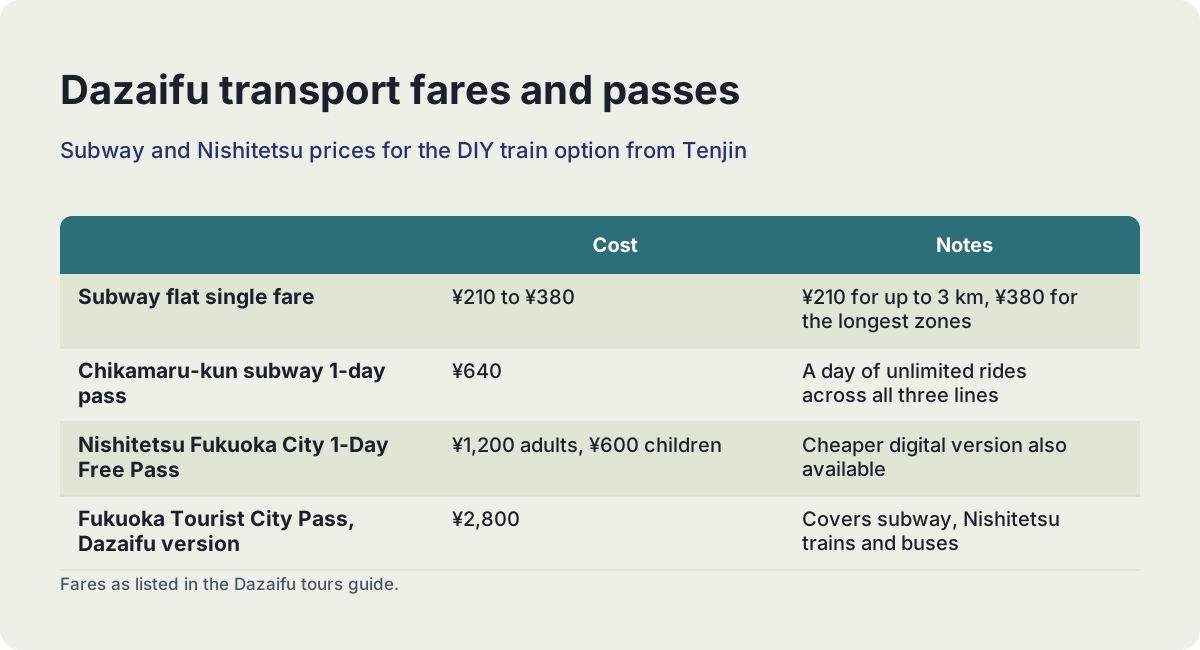
Fares are straightforward. The subway's flat single fares run from ¥210 for up to 3 km to ¥380 for the longest zones, and the subway 1-day pass, the Chikamaru-kun, is ¥640 for a day of unlimited rides across all three lines. The Nishitetsu Fukuoka City 1-Day Free Pass is ¥1,200 for adults and ¥600 for children, with a cheaper digital version also available. Overseas visitors can instead buy the Tourist City Pass, ¥2,500 for the city version and ¥2,800 for the Dazaifu version, with a passport check at the counter and sales limited to short-stay visa holders.
The Dazaifu day trip guide on this site covers the DIY version in full, including the transfer detail and the umegae mochi stops on the approach. If you are weighing the train against a tour, the deciding facts are these: the train wins on cost and flexibility, the tour wins on everything that sits beyond the shrine, and the shrine itself, the thing you came for, is free either way.
What Should You Actually See Once You Are in Dazaifu?
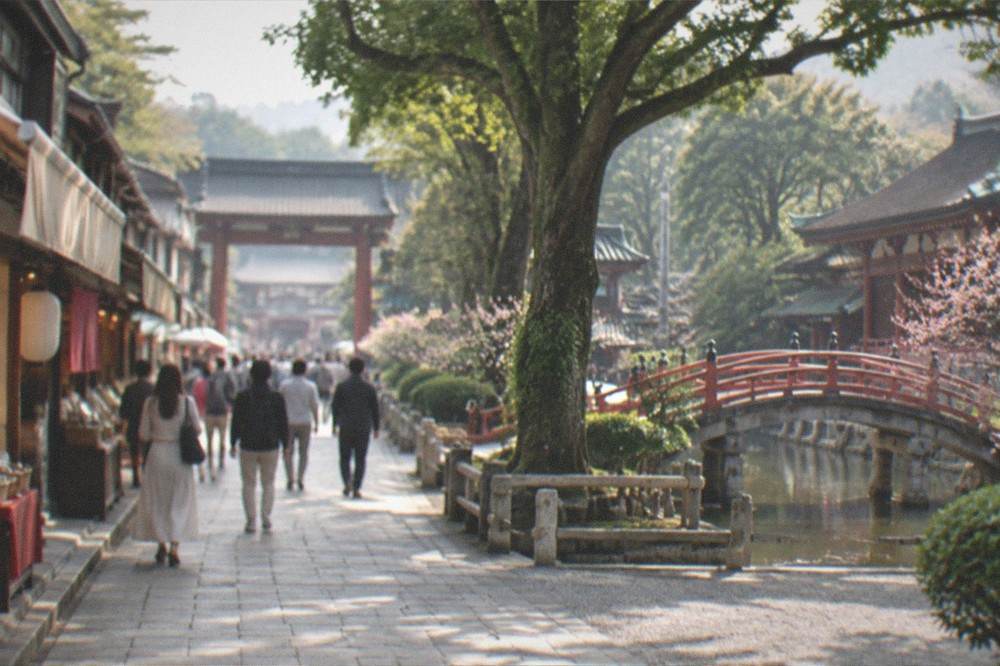
Walk the approach from the station to the shrine, which takes ten unhurried minutes and is lined with mochi shops, cross the arched bridges over the pond into the sanctuary, then decide between the Kyushu National Museum, the Komyozenji moss garden or the hillside path to the ridges behind the shrine. The core walk is compact enough that a half-day covers it comfortably, which is why so many tours bolt a second destination onto the afternoon.
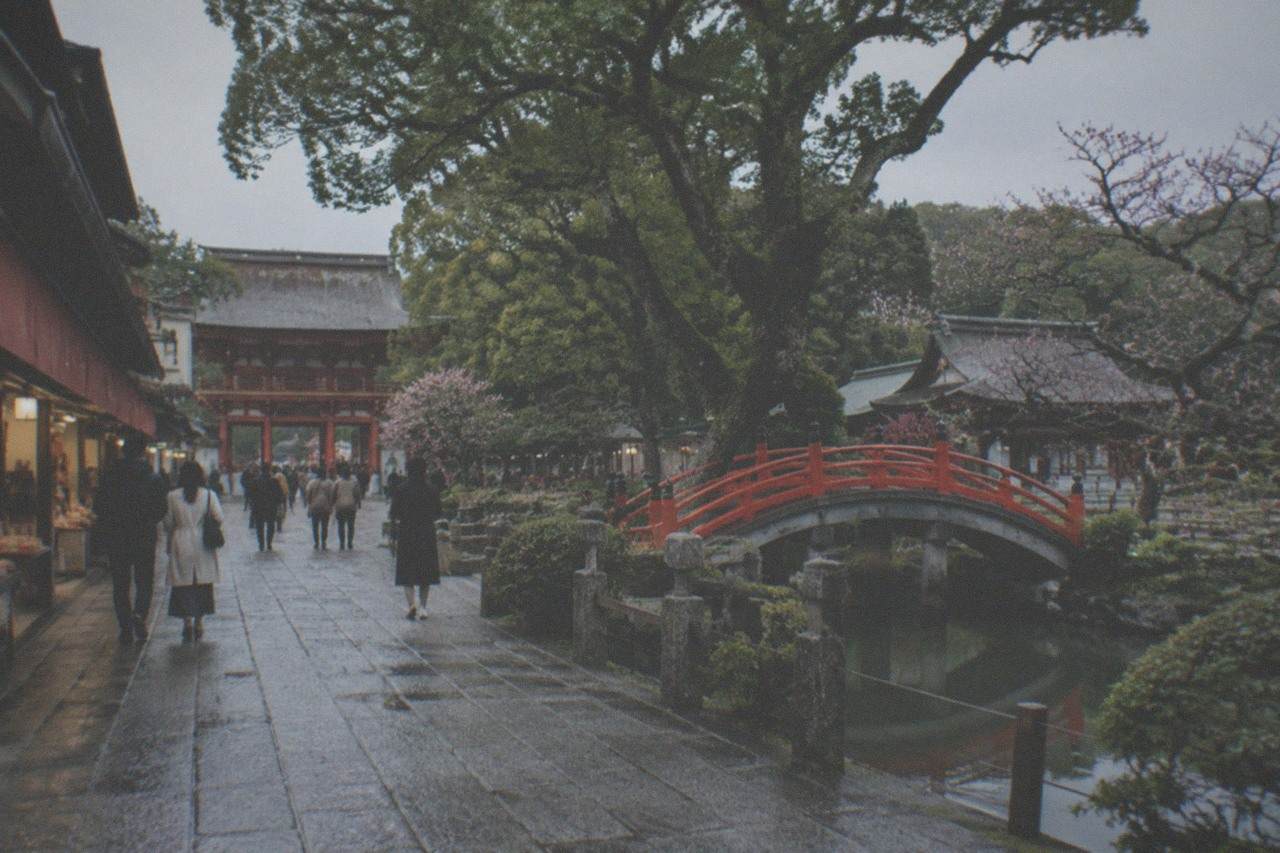
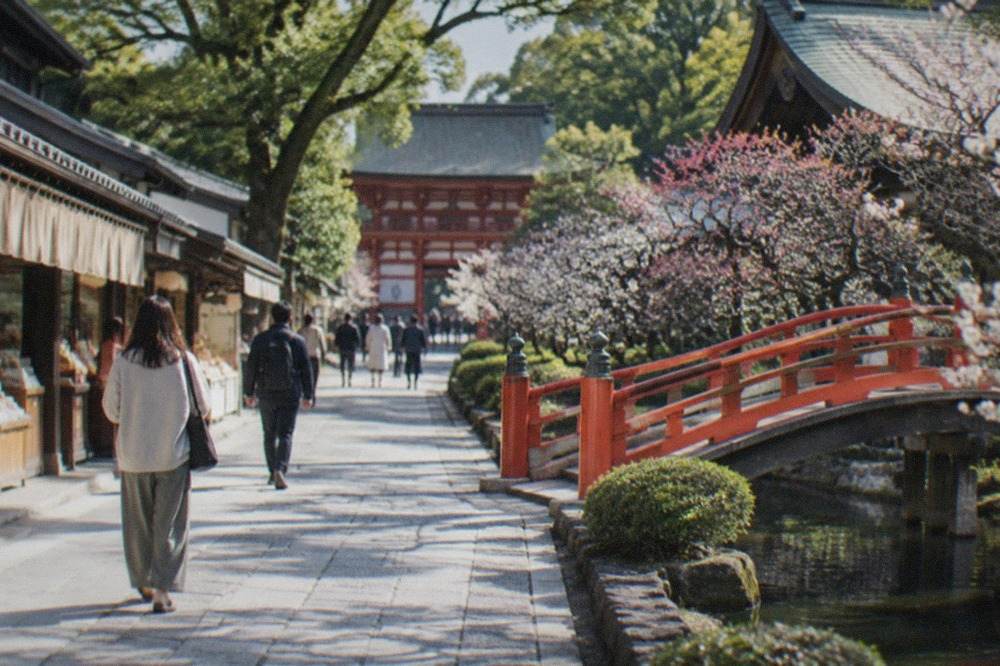
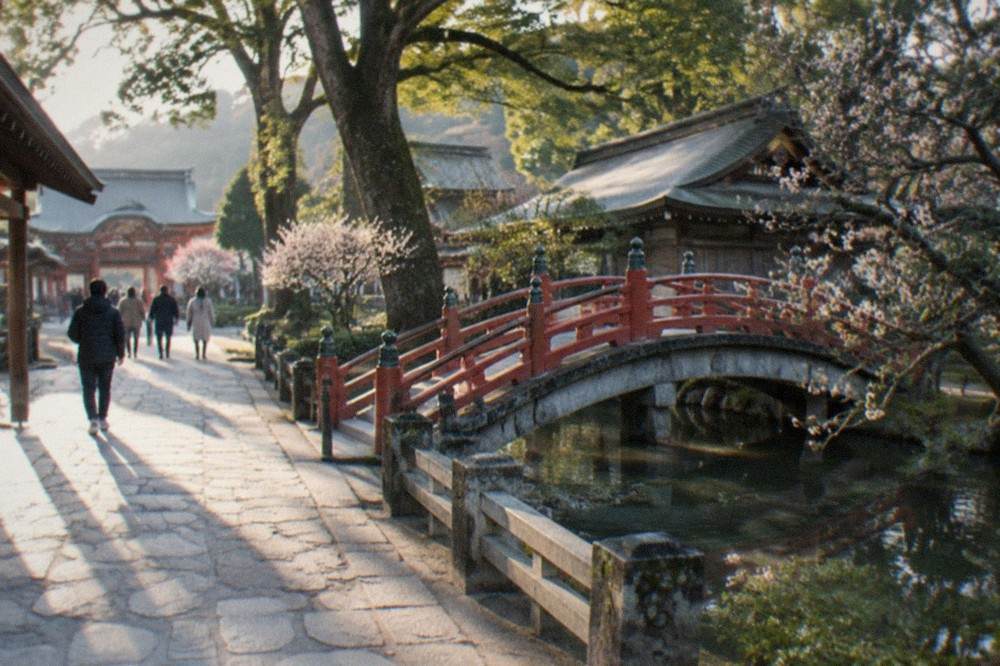
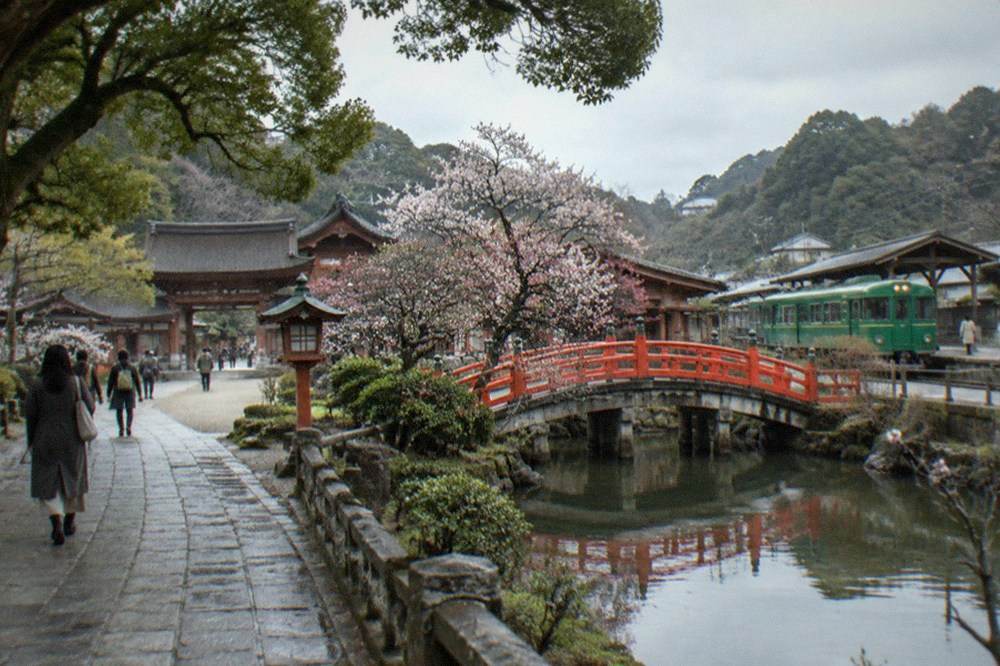
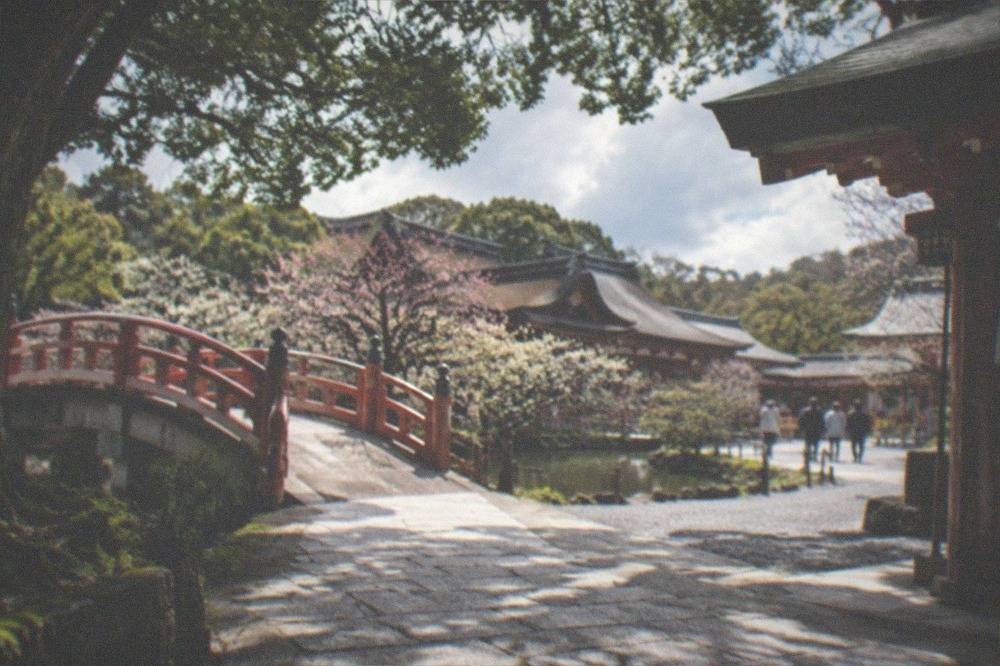
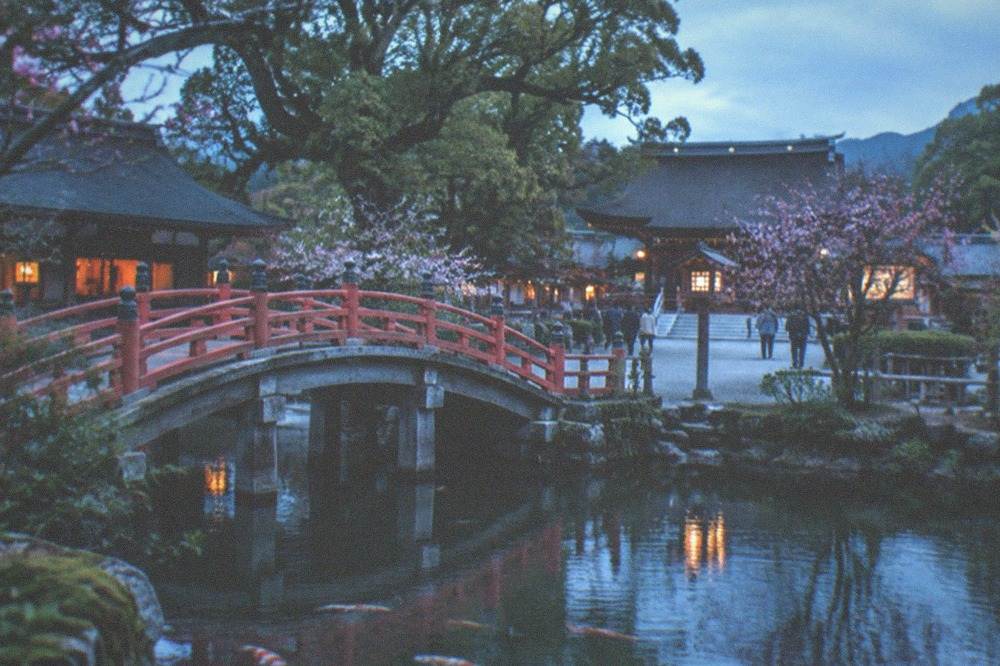
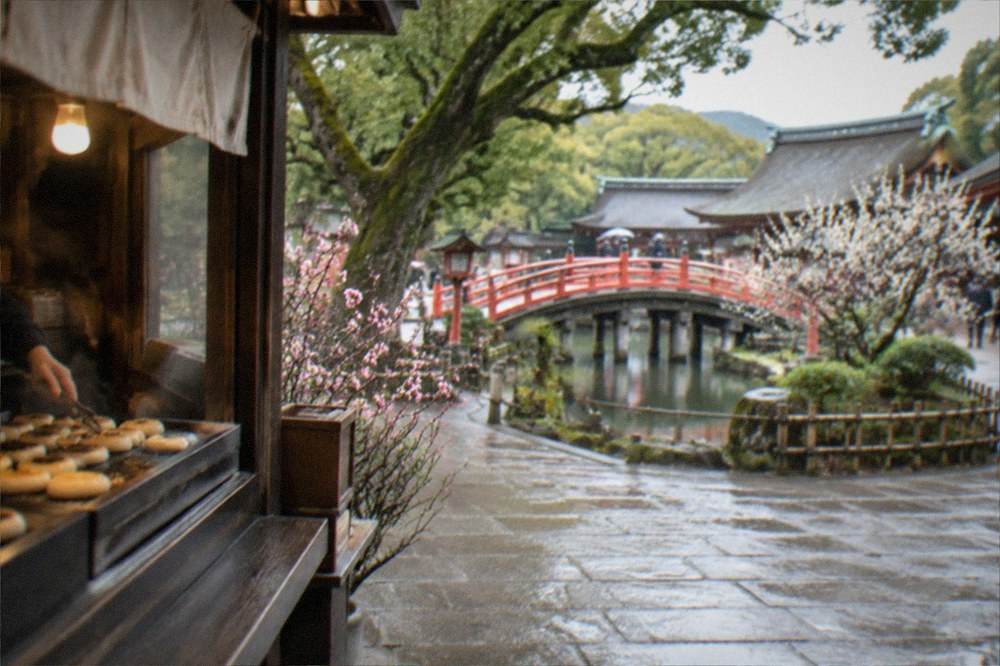
The approach road is the part most visitors remember. Shops grill umegae mochi, the local sweet rice cake, in front of you, and the smell reaches the station. Two arched bridges, Taikobashi and a second span, cross a pond stocked with koi before the main sanctuary, and the shrine's grounds hold the famous flying plum tree, said to have flown from Kyoto overnight to follow Michizane into exile. The shrine opens at 6:00 or 6:30 depending on the season and closes between 18:30 and 19:30 through the year.
Beyond the shrine, the Kyushu National Museum sits a short walk through the woods and is one of only four national museums in Japan. Komyozenji, a small Zen temple with a moss and rock garden, sits just off the approach and is at its best when the maples turn. The hillside behind the shrine carries a trail to a ridge with views back over the town, which most day-trippers never climb and most tours never schedule.
| Stop | What it is | Notes for visitors |
|---|---|---|
| Shrine approach | Shop-lined road from the station | Umegae mochi grilled in view |
| Taikobashi bridges | Arched crossings over the shrine pond | Most photographed spot in town |
| Dazaifu Tenmangu grounds | Main sanctuary and gardens | Free entry, no ticket needed |
| Kyushu National Museum | National museum of Kyushu history | Separate admission, short forest walk |
| Komyozenji | Zen temple with moss garden | Maple colours in late November |
| Hillside trail | Path to the ridge behind the shrine | Adds an hour, quiet, good views |
When Is the Best Time of Year for a Dazaifu Tour?
Late March to early April for the cherry blossoms, mid to late November for the maples at Komyozenji, and the cooler months of October through December overall, because summer days in Dazaifu are hot, humid and, in July, the wettest of the year in Fukuoka. The Japan Meteorological Agency's 1991 to 2020 normals for the Fukuoka station put July at 299.1 mm of rain against June's 249.6 mm, a fact that inverts what most guides tell you about the rainy season. August is hotter still, with a mean daily maximum of 32.5 °C.
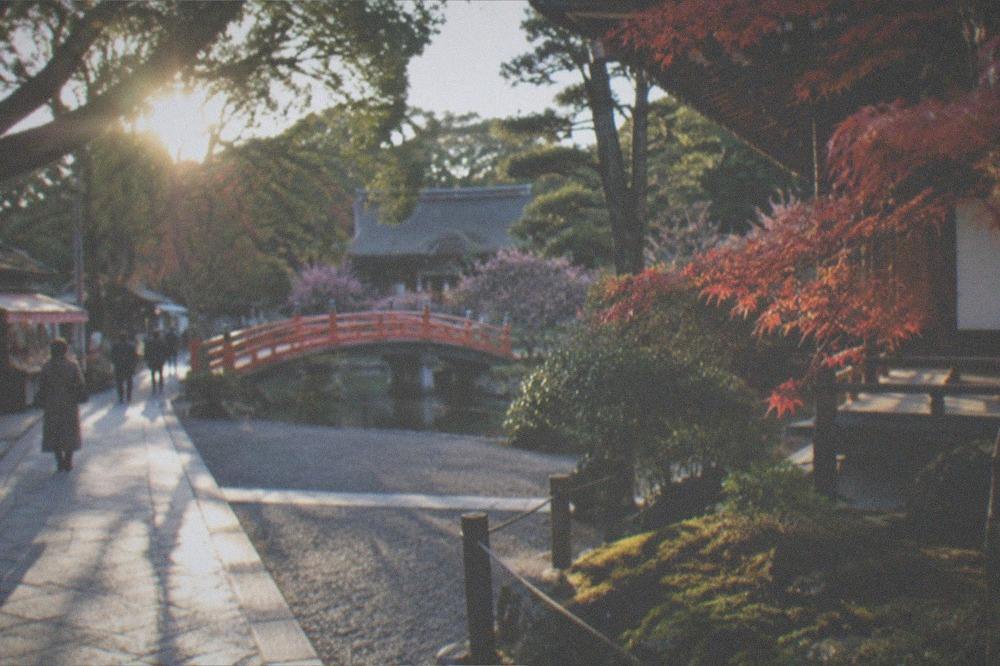
Autumn is the sweet spot for a guided day. The mean October temperature is 19.6 °C with 175.9 sunshine hours, November cools to a mean of 14.2 °C, and the maples around Dazaifu and Komyozenji peak mid to late November, when the moss garden turns red and gold. Spring runs a close second: first bloom in Fukuoka typically lands in late March, with full bloom from the end of March into the first days of April, and the plum trees at Dazaifu itself, the shrine of the flying plum, flower even earlier.
Summer tours are not a write-off, but they need different planning. Tsuyu, the rainy season, sits roughly across June, and typhoon season runs roughly July through October; neither makes the city unvisitable, and both are reasons to prefer morning departures and to keep a cancellation-friendly booking. Winter is genuinely cold rather than mild: January's mean is 6.9 °C with a daily minimum of 3.9 °C, and the shrine's approach in December, with its closing time of 18:30, makes a short, atmospheric afternoon.
| Period | Mean temp | Rain | Tour planning note |
|---|---|---|---|
| Late March to early April | 10.8 to 15.4 °C | 103.7 to 118.2 mm | Cherry blossom, book early |
| June | 23.3 °C | 249.6 mm | Tsuyu rainy season, indoor stops help |
| July | 27.4 °C | 299.1 mm | Wettest month, morning departures |
| August | 28.4 °C | 210.0 mm | Hottest, high heat on the approach |
| Mid to late November | 14.2 °C | 91.4 mm | Maple season, the best colour |
| December to January | 6.9 to 9.1 °C | 67.5 to 74.4 mm | Cold, quiet, early shrine closing |
How Much Does a Dazaifu Day Cost Either Way?
Count the shrine as free, the train as a few hundred yen each way on Nishitetsu, lunch and mochi on the approach as the main variable, and the guided tours on this roster as covering transport, the guide and a second stop in one price. The Tourist City Pass Dazaifu version at ¥2,800 is the ceiling a solo traveller should pay for a DIY transport day, and the Nishitetsu city bus pass at ¥1,200 covers the buses if you stay inside the city. What the comparison really turns on is whether the second destination matters to you.
A DIY day's costs are easy to list. The shrine is free. The mochi on the approach is a per-piece purchase you can watch being made. The Kyushu National Museum charges separately, and the Komyozenji garden asks a small maintenance fee at the gate. None of these are tour inclusions you are paying twice for, with the single exception of transport: on a guided trip, the coach or the booked rail seats are genuinely part of what you bought.
The guided options on this site start well below what many travellers expect for a full-day tour with transport, and the combined Dazaifu-and-Yufuin trip sits in the middle of the roster's price range. What you should compare is not tour price against train fare, which the train always wins, but tour price against train fare plus a second destination's transport plus the value of a guide. If the second destination is Yufuin, Itoshima or Yanagawa, that sum closes fast.
What Are the Practical Tips for Tour-Goers?
Arrive early or book a morning-departure tour, because the approach road and the shrine bridges fill with visitors by late morning; wear shoes you can walk in for an hour or more; carry some cash for the mochi shops; and check the shrine's seasonal closing time before you plan an evening. Dazaifu is compact but not flat, and the hillside trail behind the shrine adds real distance. Most tours give you free time on the approach, so a small amount of yen in coins goes further than a card.
Weather is the other practical factor. The approach offers little shade in high summer, and rain closes some of the outdoor mochi griddles. A guided day has one advantage here that matters: the schedule is set in advance, so a wet afternoon still delivers the museum or the covered boat ride that a DIY plan might have improvised badly. In typhoon season, roughly July through October, keep an eye on the forecast and prefer bookings that can be cancelled.
For travellers building a wider plan, the site's Fukuoka day tours overview compares every guided day out from the city, and the two-day itinerary slots Dazaifu into a first visit efficiently. If you are staying near the station rather than in Tenjin, the Hakata versus Tenjin comparison settles where the Nishitetsu terminal sits relative to your hotel.
| Situation | Better choice | Why |
|---|---|---|
| First visit, one full free day | Combined day trip | Two destinations, no planning |
| Second visit to Fukuoka | Train, or private walk | You know the approach already |
| Travelling with children | Private customisable tour | Rest stops and pace you control |
| Hot summer day | Morning tour with indoor stops | Avoids the midday approach |
| Cherry blossom or maple season | Any format, book early | Peak dates sell out first |
| Short layover or half-day free | Train, DIY | A tour's fixed hours rarely fit |
What Do Reviews Say About Dazaifu Tours?
Review patterns across the Dazaifu-inclusive roster are consistent: travellers rate the combined day trips highly for packing two destinations into one stress-free day, and the private formats highly for flexibility, while the common complaint on any group tour is limited free time at each stop. The sightseeing-train trip carries a 4.7 rating from 54 reviews, the Itoshima-and-Yanagawa loop a 4.6 from 28, and the tea-fields-and-river-boat day a 4.9 from 29. One recent review of the combined trip calls the train ride itself the highlight, ahead of the shrine.
The private options tell a different story in their reviews. The fully customisable private tour with a local guide holds a 4.9 from 106 reviews, with guests repeatedly crediting guides who adjusted the route on the fly. The licensed-guide full-day version carries a 4.9 from 71 reviews. These are small pools compared with the big group tours, and the site prints the counts beside every rating so you can judge the weight of each number yourself.
What the reviews do not say is also informative. Almost nobody complains about the shrine, because it is free, walkable and photogenic in any season. The complaints cluster around time pressure and around the gap between a coach tour's photo stop and the slower shrine visit a private guide can give. Match the format to your temperament and the reviews stop mattering.
Dazaifu Tours: The Short Verdict
Take the train if Dazaifu is your only destination and you want a slow morning; book a combined tour if you want the shrine plus Yufuin, Yanagawa or Itoshima in one day; and book a private guide if the history is the point. The shrine is free, the town is easy, and the only real mistake is treating Dazaifu as a full day when it is a rich half-day, or as a half-day when you actually wanted the rest of Kyushu too. This Fukuoka Japan Travel Guide site covers the DIY version in depth if you decide the train is your answer.
Common Questions About Dazaifu Tours
Why book a Dazaifu tour instead of taking the train from Tenjin?
Because the tour buys the second destination. The train from Tenjin reaches Dazaifu easily with one transfer at Futsukaichi, and the shrine is free to enter, so a tour's value sits in the coach or booked rail seats, the guide's context, and the afternoon stop in Yufuin, Yanagawa or Itoshima that would otherwise cost you hours of planning.
Is Dazaifu Tenmangu free to visit?
Yes. The shrine's own FAQ page states there is no entrance fee for the grounds and main sanctuary. The museums around the shrine charge separately, and the Komyozenji garden asks a small maintenance fee, but the shrine itself costs nothing.
Can you visit Dazaifu with a Japan Rail Pass?
Not by rail. Dazaifu has no JR service; it is reached on the Nishitetsu Tenjin Omuta Line, a private railway, with a transfer at Futsukaichi. Rail passes do not cover it, which is one reason guided coach tours of the town are popular with pass holders.
How long do you need in Dazaifu?
Half a day covers the approach, the shrine grounds and one museum or garden at a relaxed pace. That compactness is exactly why most tours pair Dazaifu with a second destination and run eight hours or more door to door.
What is the best month for a Dazaifu tour?
Mid to late November for the maples at Komyozenji, or late March into early April for cherry blossom. July is Fukuoka's wettest month at 299.1 mm of rain, ahead of the June rainy season, so summer visits favour morning departures.
Do Dazaifu tours include lunch?
Most group day trips build in free time on the shop-lined approach rather than a set lunch, so budget for umegae mochi and a bowl of the local udon. Private tours can be customised to include a restaurant stop, and the tour's listing states exactly what is covered before you book.