Fukuoka Airport Transfers
Fukuoka Airport sits closer to its city centre than almost any other major airport in Asia, which makes the transfer question unusually simple. Here is what each option costs, what a private transfer includes, and when the subway beats everything else.
Short answer
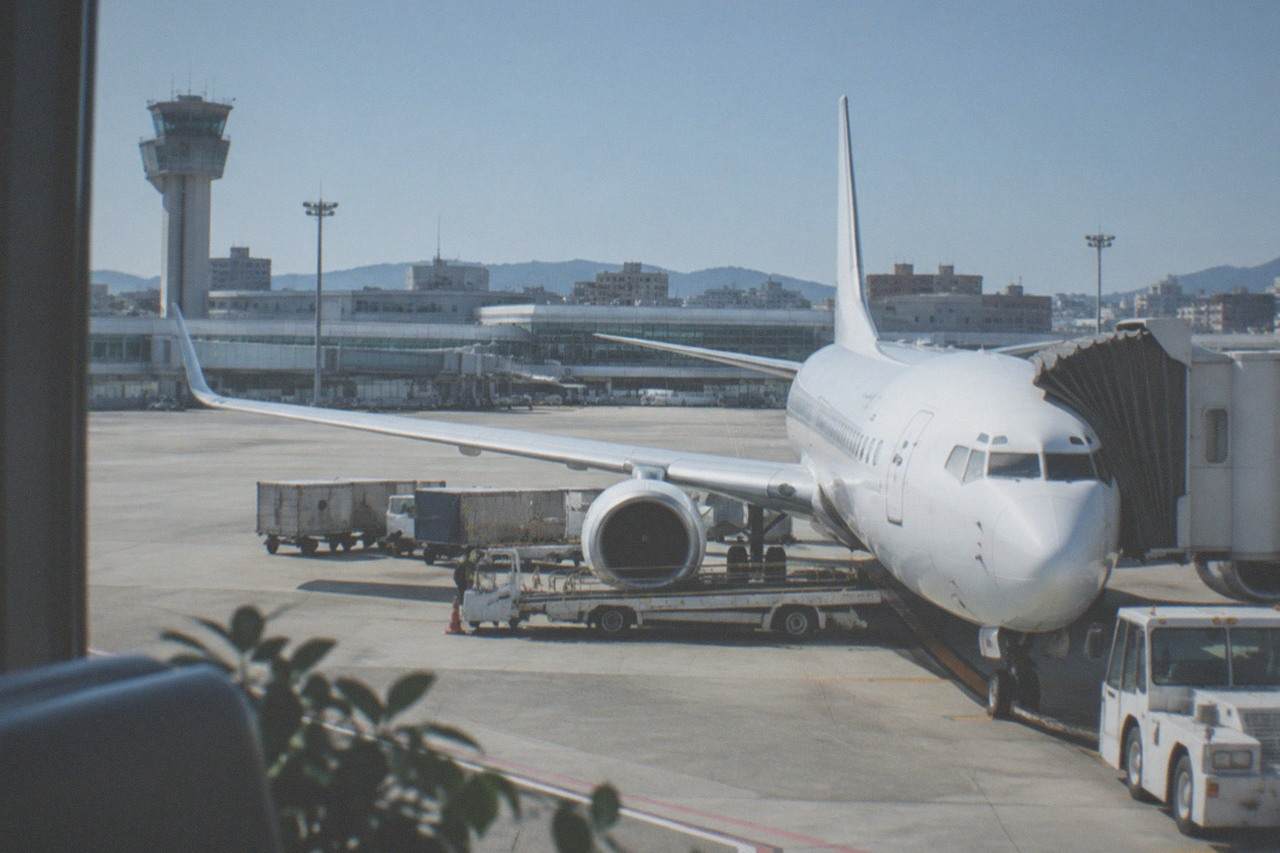
The subway from Fukuoka Airport to Hakata costs ¥260 and runs on the Kuko line, and a private arrival transfer starts from $149 per person for a 30 minute to 1 hour door-to-door service. Buses and taxis also run from both terminals, and the whole journey is short because the airport lies within the city itself.
Fukuoka Airport is one of the very few major airports in the world that sits inside the city it serves. The terminal buildings sit in Hakata Ward, a few kilometres from the commercial core, and the subway's Kuko line connects them directly to Hakata Station and Tenjin. That geography changes the transfer calculus completely: in most cities the airport transfer is a project, here it is a short hop with several good ways to do it. This guide compares them all, states only the fares that are verified, and answers what a private transfer actually includes for the price.
Why Fukuoka Airport Is So Close to the City Centre
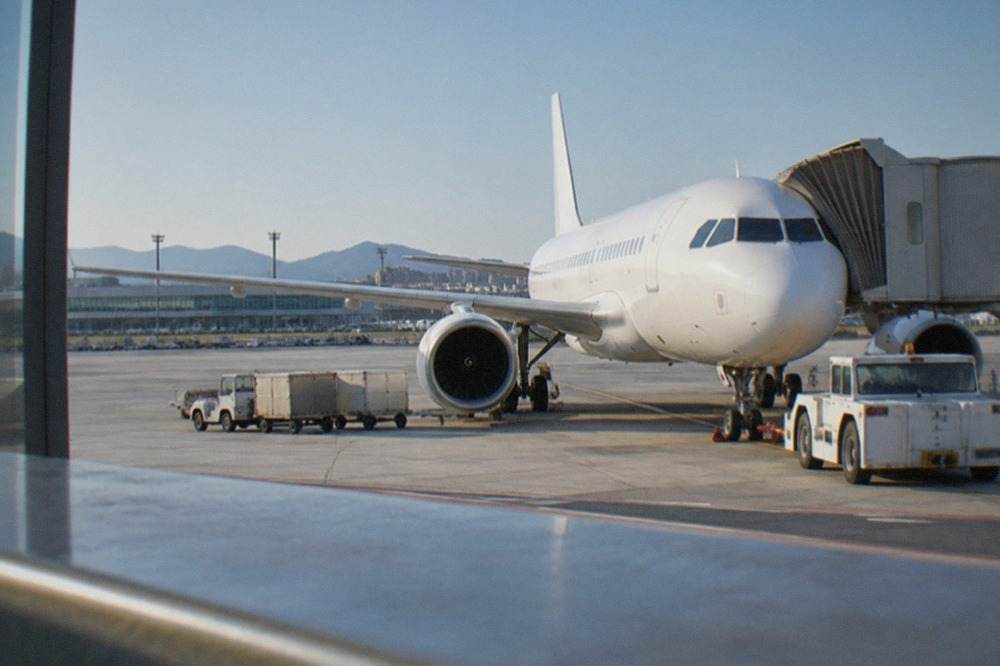
Fukuoka Airport sits within the city boundaries, on the subway's Kuko line, roughly a handful of kilometres from Hakata Station, which makes it one of the closest major airports to its own downtown anywhere in Japan and turns the airport transfer into a short, cheap hop rather than the expedition it is elsewhere. The airport handled about 28.38 million passengers in 2025, a record year, with roughly 9.12 million of those on international routes. A second runway, 2,500 m long, entered service on 20 March 2025, adding capacity without moving the airport an inch further away.
The closeness is not a marketing line. The airport's own access pages and the subway's official fare tables place the airport inside the standard fare zones of the city network, which is why the ride to Hakata costs the same as any other short subway trip. Many competing guides print a journey time in minutes for the airport-to-Hakata leg, but no official page verifies that figure, so this guide states the fare and the distance band instead and leaves the stopwatch claims to everyone else.
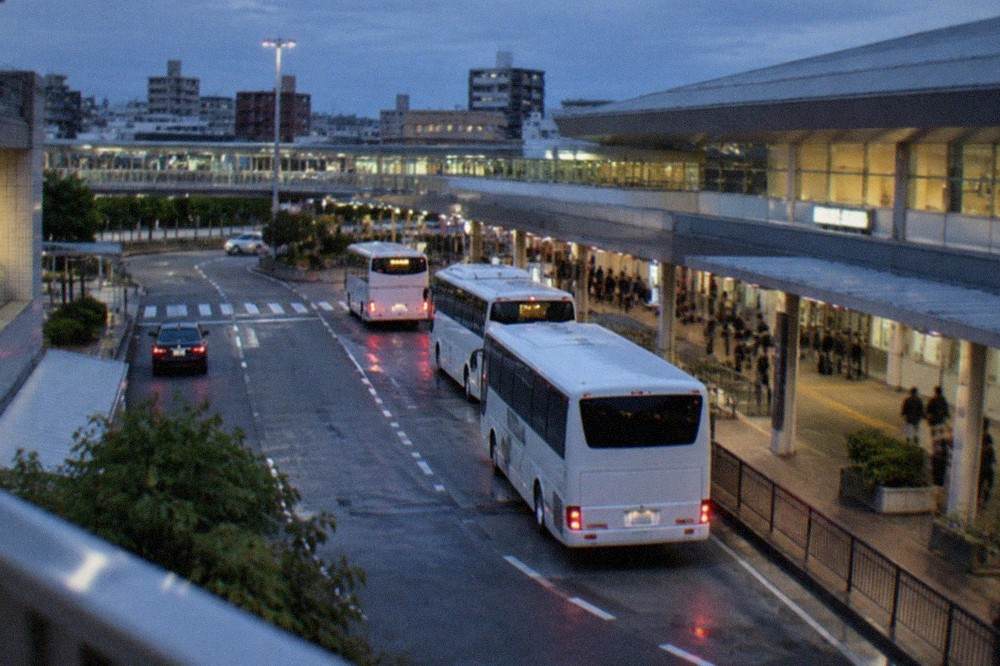
One thing genuinely worth knowing before you land: the airport has separate domestic and international terminals, and a free shuttle bus runs between them, with the airport stating a 10 minute transfer. If you are arriving internationally and connecting onward, or meeting someone on a domestic flight, budget for that shuttle leg. The official airport access page covers the current terminal layout.
For a fuller picture of the airport itself, see the Fukuoka Airport guide, and the Fukuoka Airport to city guide walks through the same journey with more detail on each transport mode.
Subway, Bus and Taxi: Your Transfer Options Compared
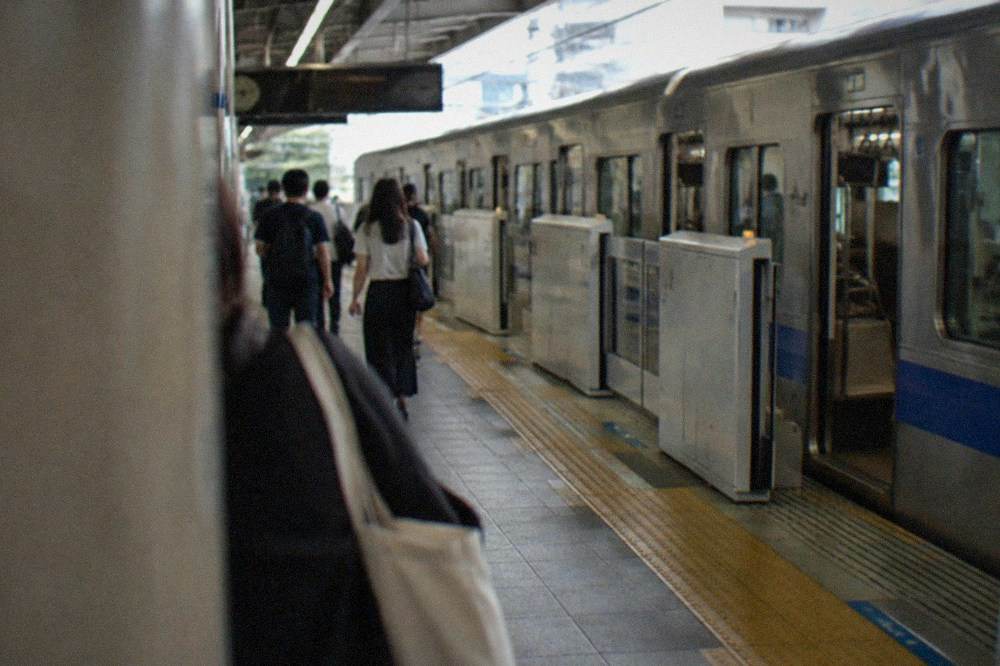
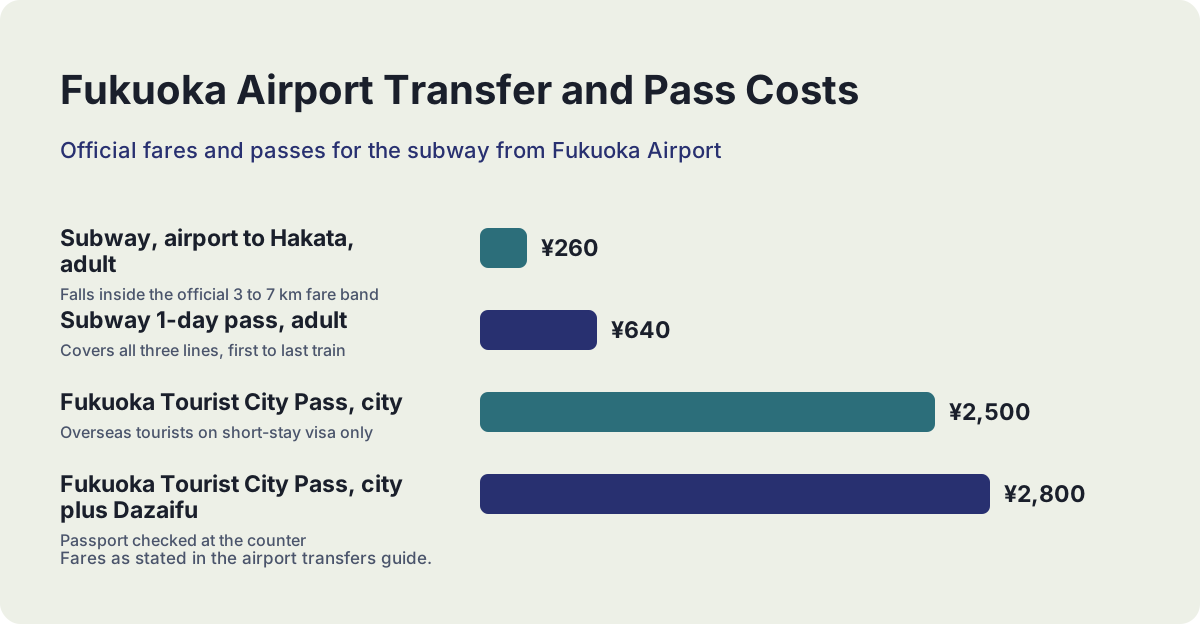
The subway is the cheapest and usually the fastest option, costing ¥260 from Fukuoka Airport to Hakata Station, while buses and taxis run from the terminal forecourts and a private transfer starts from $149 per person, so the right choice depends mostly on your luggage, your arrival time and where your hotel sits. The subway fare is not an estimate: the airport-to-Hakata leg falls inside the official 3 to 7 km distance band, which carries a flat ¥260 adult fare on the city subway's published fare table. Child fares are half.
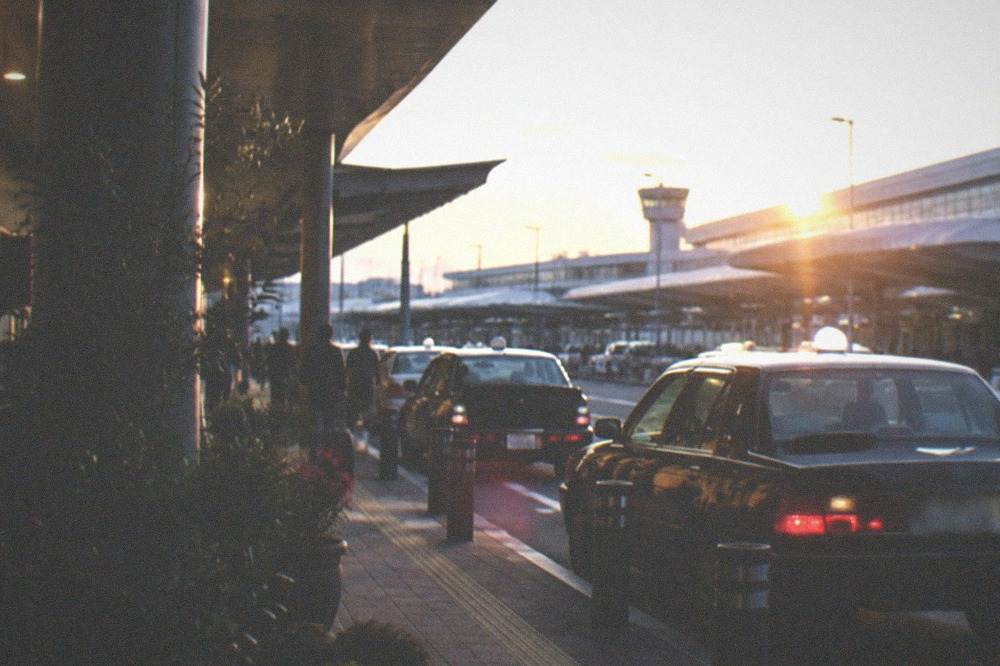
Taxis wait at ranks outside both terminals. No official flat fare to the city centre is published, so treat any number a third-party site quotes as unverified. Buses, including Nishitetsu services, connect the airport with Hakata, Tenjin and other parts of the city, and the central flat-fare zone makes short bus hops simple once you are inside the city proper.
| Option | Typical cost | Where you catch it | Best for |
|---|---|---|---|
| Subway (Kuko line) | ¥260 adult to Hakata | Airport Station, under the domestic terminal | Solo travellers, light luggage, speed |
| Bus | Central-zone flat fare once in the city | Terminal forecourts | Specific destinations not on the subway |
| Taxi | Metered, no official flat fare published | Ranks outside arrivals | Late arrivals, families, door-to-door |
| Private transfer | From $149 per person | Driver meets you in arrivals | Fixed price, no navigation, group arrivals |
If you plan to use the subway repeatedly during your stay, a 1-day pass costs ¥640 for adults and covers all three lines from first to last train on the day of use. There is also the Fukuoka Tourist City Pass, which costs ¥2,500 for the city version and ¥2,800 for the city plus Dazaifu version, but note it is restricted to overseas tourists on a short-stay visa and a passport is checked at the counter. Most competing guides still quote the old, much lower prices for this pass, so ignore any figure you see elsewhere.
For travellers with a long connection, the Fukuoka layover itinerary shows what is reachable in a few hours, which is a great deal more than at most airports precisely because the city is right there.
What Does a Private Airport Transfer from Fukuoka Airport Include?
A private arrival transfer from Fukuoka Airport includes a driver who meets you in the arrivals hall, assistance with your luggage, and a door-to-door ride to your accommodation anywhere in Fukuoka City, running 30 minutes to 1 hour and starting from $149 per person, with the fixed price agreed before you fly. The service in this site's roster is rated 5 from 2 reviews, which is a very small review pool, so treat that as an early signal rather than a settled verdict. What you are buying is not speed, the subway will usually win that race, but certainty: no ticket machines after a long flight, and no dragging suitcases up subway stairs.
The details that matter in a transfer of this kind are the ones the listing spells out: whether the driver tracks your flight and waits if you are late, what happens if your flight is cancelled, how much waiting time is included after you land, and whether child seats are available. Each operator sets these terms, so read the inclusions on the operator's live listing before booking rather than assuming. The price is per vehicle in some cases and per person in others, and that difference changes the maths for a family of four completely.
A transfer also removes the last-mile problem. The subway gets you to Hakata Station or Tenjin, but if your hotel is in Nakasu, Daimyo or up towards Ohori, there is still a walk or a taxi leg at the end. A private transfer ends at the actual address. For late-night arrivals, when the subway's last trains have gone and taxi ranks have queues, that certainty is worth the most.

How Much Does an Airport Transfer in Fukuoka Cost?
Counting every option, an airport transfer in Fukuoka costs from ¥260 by subway, from $149 per person as a private arrival transfer, and a metered amount by taxi for which no official flat fare is published, so the honest comparison is total cost for your whole party rather than a single headline number. The subway figure is the only one that is fixed and officially derivable: the airport-to-Hakata leg sits in the 3 to 7 km band of the subway's fare table, which carries the ¥260 adult fare. Everything above that is a question of what you are paying for beyond the ride itself.
The honest way to compare is by total cost for your party, not per person. A solo traveller with a backpack pays ¥260 and needs nothing else. A couple with two large suitcases arriving at 23:00 weighs a taxi or transfer against the subway's closing hours. A family of five may find that a per-vehicle transfer price, where offered, undercuts five taxi fares, while a per-person price does not. Check which structure your transfer uses before comparing.
| Traveller profile | Cheapest sensible option | Approximate cost | Why |
|---|---|---|---|
| Solo, one bag | Subway | ¥260 | Direct, frequent, trivial cost |
| Couple, two bags, daytime | Subway | Two short adult fares | Two cheap rides beat any car |
| Family with children, evening arrival | Private transfer or taxi | From $149 per person (transfer) | Door-to-door, no stairs, fixed price |
| Group of 5 or more | Per-vehicle transfer if offered | See operator's listing | Per-person fares multiply fast |
| Late arrival after last train | Taxi or transfer | Metered / from $149 | Subway has finished for the night |
One cost that catches nobody out in Fukuoka but is worth stating: there is no JR Fukuoka Station. The station you will see on every sign and map is Hakata Station, and Hakata is a ward of Fukuoka, not a separate city. Guides that tell you to travel "from Hakata to Fukuoka" are describing a journey inside one city. The Hakata Station guide covers the station itself, and getting around Fukuoka explains the wider network.
Meeting Points, Terminals and Where Your Driver Waits
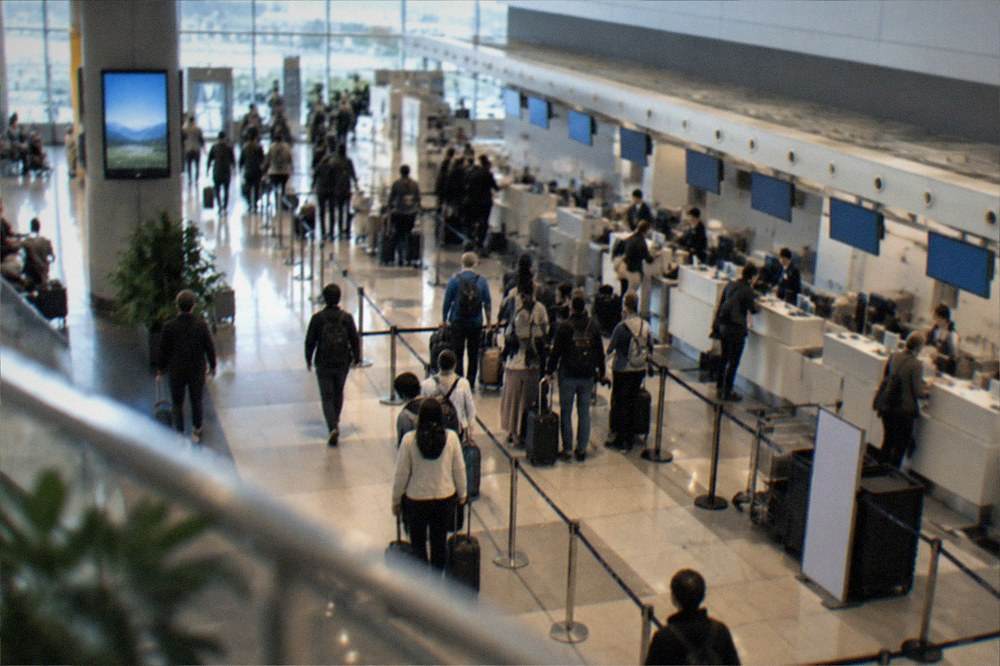
Transfer drivers meet arriving passengers inside the arrivals hall of the correct terminal, normally at the exit from customs, holding a name sign, and because the domestic and international terminals are separate buildings linked by a free shuttle bus, confirming which one your flight uses is the single most useful thing you can do before you land. If you book a transfer, confirm which terminal your flight arrives at, because international and domestic operations are split, and a driver waiting at the wrong one adds a shuttle leg to your journey. The airport's free inter-terminal shuttle is stated by the airport to take 10 minutes.
For subway travellers, Airport Station sits at the domestic terminal, so international arrivals walk to the station or take the shuttle first. Signs are in English throughout, and the station is on the Kuko line, which runs through Hakata and on towards Meinohama. The Fukuoka Subway guide maps the whole network, and the answer page how you get from Fukuoka Airport to Hakata covers this exact leg in step-by-step form.
Taxi ranks are kerbside at both terminals, marked and obvious. If you take a taxi, have your hotel's name and address written or ready on your phone, because not every driver will read roman-lettered addresses fluently. This is the one friction point the subway avoids entirely, since Hakata and Tenjin are announced destinations on every train.
Transfer or Train: When Each One Makes Sense
Take the subway when you travel light, arrive during operating hours and your hotel sits near a station; take a transfer when you arrive late, carry heavy luggage, travel with children, or simply want a fixed price and a driver waiting, and take a taxi when you fall somewhere between the two. Fukuoka's geography makes the train genuinely competitive in a way it is not in Tokyo or Seoul, so the honest answer here is less flattering to private transfers than most transfer guides would be. The subway is direct, cheap and frequent.
The cases where the transfer wins are still real. Flights landing in the late evening, families with sleeping children, travellers with mobility constraints, and anyone whose accommodation is far from a station all get real value from door-to-door service. There is also the tiredness factor: after eleven hours in the air, ¥260 saved matters less than arriving without a navigation task. That is a judgement, not a fact, and it is yours to make.
| Situation | Better choice | Reasoning |
|---|---|---|
| Daytime arrival, backpack, hotel near Hakata | Subway | ¥260, direct, no waiting |
| Midnight arrival | Transfer or taxi | Last trains have run |
| Two adults, four suitcases | Transfer | No luggage hauling on escalators |
| Hotel in Daimyo or Ohori area | Transfer, or subway plus short taxi | Last-mile distance from stations |
| Cruise or group arrival | Transfer (per-vehicle if offered) | One vehicle beats five taxi fares |
| Solo budget traveller | Subway | The cost difference is decisive |
A transfer can also be paired with what you do next. Some travellers book a private transfer and then, the following day, a private guide for the city itself, which turns the same operator relationship into a two-day arrangement. The Fukuoka private tours guide surveys that whole category, and the where to stay in Fukuoka guide helps you pick a base that minimises transfer pain in the first place.
Arriving from Other Cities and Connecting Through Fukuoka
Fukuoka Airport connects domestically to Tokyo, Osaka and most major Japanese cities, and internationally across East Asia, and because the airport sits so close to Hakata Station, the western terminus of the Sanyo Shinkansen, same-day connections from a flight onto a long-distance train are unusually practical here compared with almost any other Japanese city. Domestic flights from Tokyo Haneda and Narita, and from Osaka's Itami and Kansai airports, feed the domestic terminal, while international arrivals land at the international terminal. Because the subway ride into the city is one short leg, a connection window that would be fatal at a remote airport is workable here.
If you are building a longer Japan route, the Tokyo to Fukuoka guide and the Osaka to Fukuoka guide compare flights with rail. For onward travel into the region, the Kyushu guide lays out the wider region, and the JR Kyushu Rail Pass guide covers the pass options once you are based in the city.
One connection worth flagging: Hakata Station is the hub for JR Kyushu's lines, so an airport-to-Hakata transfer doubles as the first leg of almost any Kyushu itinerary. Travellers heading to Kumamoto, Nagasaki or Kagoshima by rail all pass through the same station the subway delivers you to.
What to Do with Your First Evening After You Land
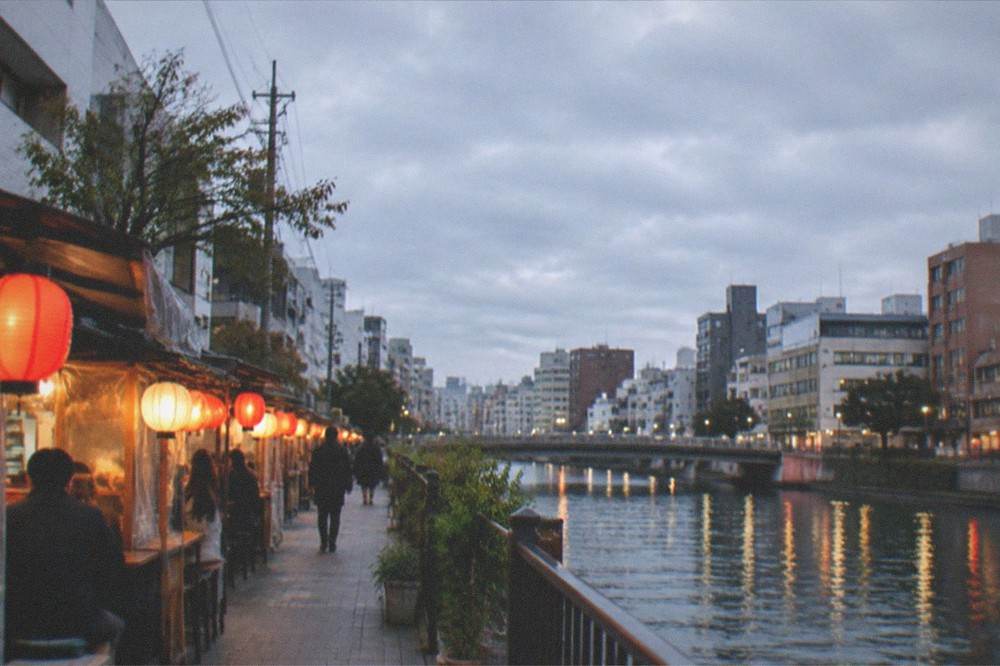
Most arrivals at Fukuoka Airport reach the city centre with daylight or at least dinner time to spare, and the two things first-time visitors should do with that evening are eat tonkotsu ramen where it was invented and walk the yatai stalls along the Naka River, both of which sit minutes from the stations your transfer delivers you to. Because the transfer is short, your first evening is not a write-off. Hakata is the birthplace of tonkotsu ramen, and the stalls and shops around the station serve it late.
The yatai, Fukuoka's licensed food stalls, number about 100 across the city and cluster in Nakasu, Tenjin and Nagahama. City ordinance requires every stall to post its prices visibly, so there is no guessing at the bill. This is the kind of detail this Fukuoka Japan Travel Guide exists to verify, because the yatai scene is where most competing guides drift into folklore.
If jet lag has other plans, even a short walk from a Hakata or Tenjin hotel covers the shrine grounds at Kushida or the lit-up canal at Canal City, both free and both minutes from the station your transfer or train delivered you to. This is the quiet advantage of an airport inside the city: your first evening is a real part of the trip, not a recovery operation.
A guided evening can also compress the introduction. A private local highlights tour, from $65 per person and rated 4.9 from 164 reviews, can be scheduled for the day after arrival to orient you fast, and a Nakasu food stall tour with tastings, from $94 per person and rated 4.7 from 70 reviews, turns the yatai scene into a guided meal. Both are on the cards below.
The private highlights option suits a first morning: a local guide routes you through Hakata's temples and the castle ruins while you are still fresh, and the itinerary can be shaped around whatever your transfer evening left untouched. For travellers who want the food but not the logistics, the guided stall option below is the other strong pick, pairing the riverside stalls with a local who knows which ones are worth the queue.
Common Questions About Fukuoka Airport Transfers
What Does A Private Airport Transfer From Fukuoka Airport Include?
A driver who meets you in arrivals with a name sign, luggage assistance, and a door-to-door ride to your accommodation in Fukuoka City, running 30 minutes to 1 hour and starting from $149 per person. Flight tracking, waiting time and child seat policies vary by operator, so confirm the inclusions on the operator's live listing before you book.
How much does the subway from Fukuoka Airport cost?
The ride from Fukuoka Airport to Hakata Station costs ¥260 for an adult, derived from the official 3 to 7 km fare band on the city subway's published fare table. Child fares are half. A 1-day pass for the whole subway network costs ¥640 if you plan to ride more than twice in a day.
Is there a flat taxi fare from Fukuoka Airport to the city?
No official flat fare is published. Taxis run on the meter from ranks outside both terminals, and any flat figure quoted by a third-party site should be treated as unverified. For a fixed price agreed in advance, a private transfer is the option that guarantees one.
How far is Fukuoka Airport from Hakata Station?
The airport sits within the city, inside the subway's 3 to 7 km fare band, which is the verified way to express the distance. Many guides print a journey time in minutes, but no official page verifies that figure, so this site states the fare band and the direct Kuko line connection instead.
Do I need to book a transfer, or can I just turn up?
You can absolutely turn up: the subway, buses and taxi ranks all work without any advance booking. A private transfer is for certainty rather than necessity, and it earns its price on late arrivals, heavy luggage, family travel and door-to-door convenience, not because the alternatives are difficult.
Which terminal will my flight arrive at?
Domestic flights use the domestic terminal and international flights use the international terminal, which are separate buildings linked by a free shuttle bus that the airport states takes 10 minutes. Airport Station, on the Kuko line, sits at the domestic terminal, so international arrivals should allow for the shuttle before catching the subway.