Osaka to Fukuoka
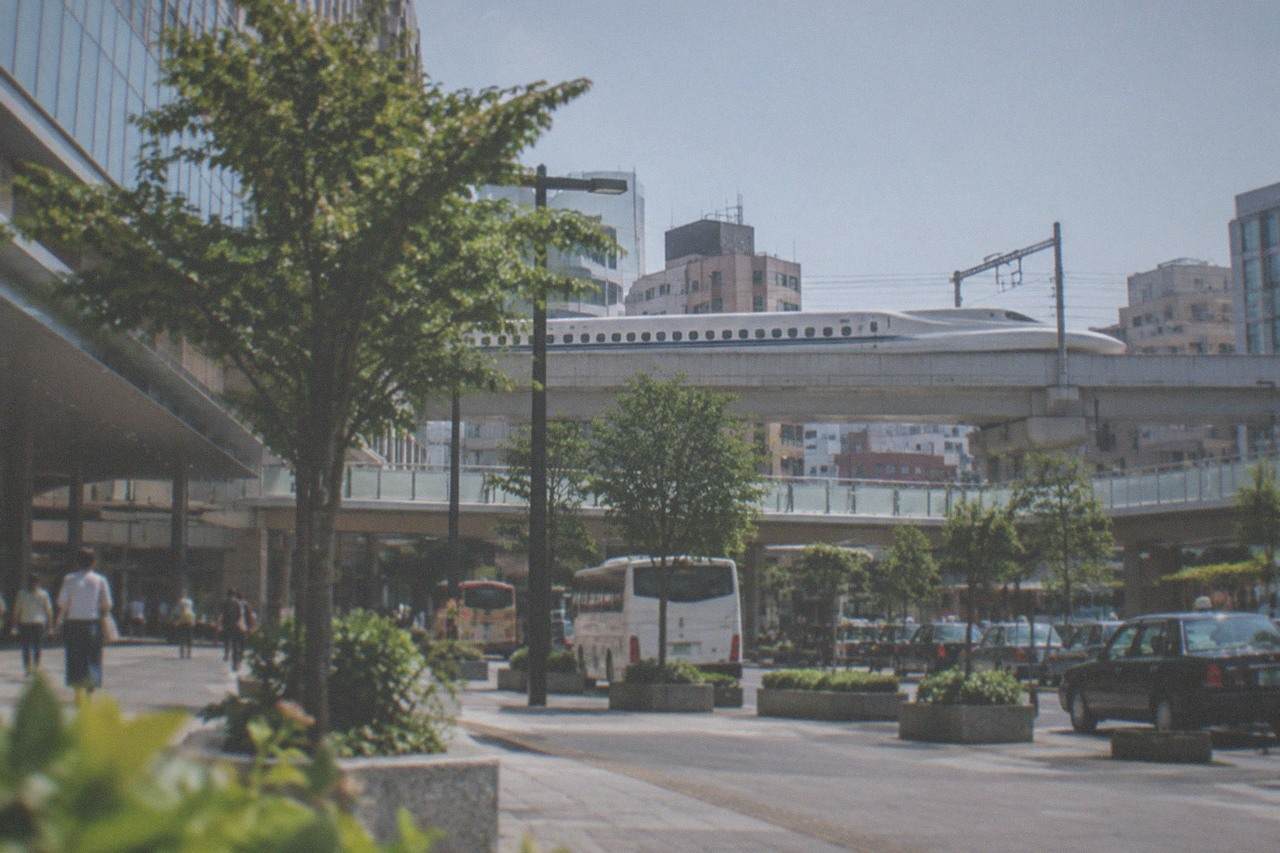
The Osaka to Fukuoka run is one of the great rail journeys in western Japan, a straight shot down the Sanyo corridor that ends at Hakata, the station that anchors Fukuoka itself.
Short answer
The fastest Nozomi services link Shin-Osaka and Hakata in about two and a half hours, with trains running frequently through the day. Hakata is Fukuoka's main station and the city's centre is unusually close to it. From the airport into town the subway fare is a verified ¥260.
The Osaka to Fukuoka run is the western half of Japan's busiest rail corridor, a line that threads Osaka, Kobe, Okayama, Hiroshima and Kokura before pulling into Hakata, the station that serves Fukuoka. It is a journey a lot of travellers make in one hop, often on the same day they land at Kansai, and it rewards a little planning. This page covers the trains, the realistic timings, the cost picture, the flying alternative, and what actually matters once you step off at Hakata, because the arrival is where most guides stop and where your trip really starts.
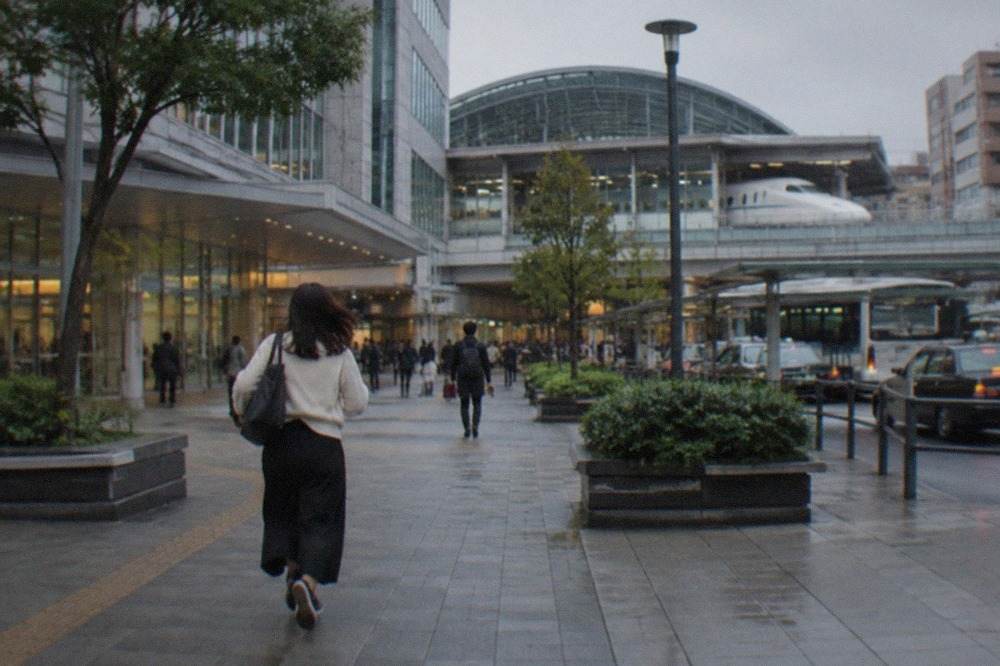
One point worth fixing before anything else, because competitor guides get it wrong constantly: Hakata is not a separate destination from Fukuoka. Hakata is a ward of Fukuoka city and the name of its principal station. There is no JR Fukuoka Station. You do not travel "from Hakata to Fukuoka", you travel from Osaka to Hakata, and Hakata is Fukuoka. Getting that right is the first sign a guide was written by somebody who has actually looked at a map, and it is the first thing Fukuoka Japan Travel Guide checks in any competing article before trusting the rest of it.
How Long Does the Nozomi Shinkansen Take from Osaka to Fukuoka?
The fastest Nozomi services cover the run between Shin-Osaka and Hakata in about two and a half hours, with the quickest runs of the day shaving a little off that and busier departures adding a few minutes. Trains leave frequently through the day, so the journey is more a question of which departure you pick than of whether a seat exists. Exact timings shift with the timetable, so confirm your specific train on the operator's live schedule before you commit to a connection.
The route is the Sanyo Shinkansen, run by JR West from Shin-Osaka through to Hakata. Note the station name carefully: most bullet trains serving Osaka use Shin-Osaka, one stop north of Osaka Station on the JR line, and only some services continue into Osaka itself. Building in the transfer time from Osaka Station to Shin-Osaka is the single most common mistake travellers make on this corridor, and it is a mistake that costs people their reserved seat.
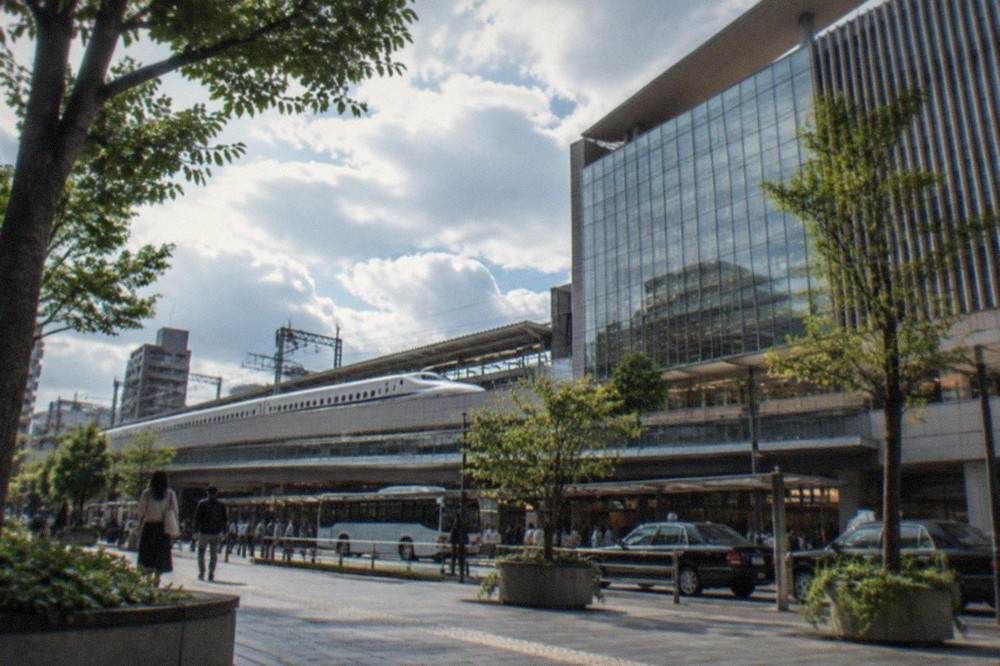
The journey itself is a pleasant one and genuinely useful for orientation. The line hugs the Seto Inland Sea coast for long stretches, so the right-hand side of the train travelling west gives you water views between the tunnels, and the mountains around Kokura and into Kyushu give the final hour some drama. If you are choosing between this and flying, remember that the train deposits you in the middle of the destination rather than at an airport on its edge.
| Service | Typical character | Stops between Shin-Osaka and Hakata | Notes |
|---|---|---|---|
| Nozomi | Fastest, fewest stops | Shin-Kobe, Okayama, Hiroshima, Kokura and a small number of others | The default choice for this route |
| Mizuho | Fast, similar pattern to Nozomi | Comparable stop pattern | Runs on the same corridor, check the timetable |
| Hikari | Mid-speed, more stops | More frequent intermediate stops | Slower, sometimes cheaper |
| Sakura | Kyushu-oriented service | Serves the western end of the corridor | Useful if continuing past Hakata |
Approximate timings above describe the general pattern of the timetable rather than any single departure, and the operator adjusts the schedule periodically. The practical advice is simple: the Nozomi is the train you want, the Mizuho is its equal when one is timed better for you, and anything else adds time you probably do not need to spend unless the fare saving matters.
Which Trains and Tickets Should You Book for the Osaka to Fukuoka Run?
Book a reserved seat on a Nozomi or Mizuho, and book it as early as your plans allow, because the Osaka to Fukuoka leg is one of the busiest long-distance rail segments in the country and unreserved cars fill first. Seat reservations on this corridor can be made well in advance, and the price difference between classes is modest enough that a green car seat is worth considering for a journey this long. The base fare and the limited express supplement are charged together when you buy.
The ticketing structure is simpler than it first appears. Every Shinkansen journey in Japan is priced as a base fare plus an express supplement, and on this corridor the Nozomi and Mizuho carry a small supplement premium over the Hikari and Sakura. If you are holding a Japan Rail Pass, check the current rules before you travel, because pass coverage of Nozomi and Mizuho services has changed over the years and the pass's own official page is the only source worth trusting on whether your train is included and what the surcharge is.
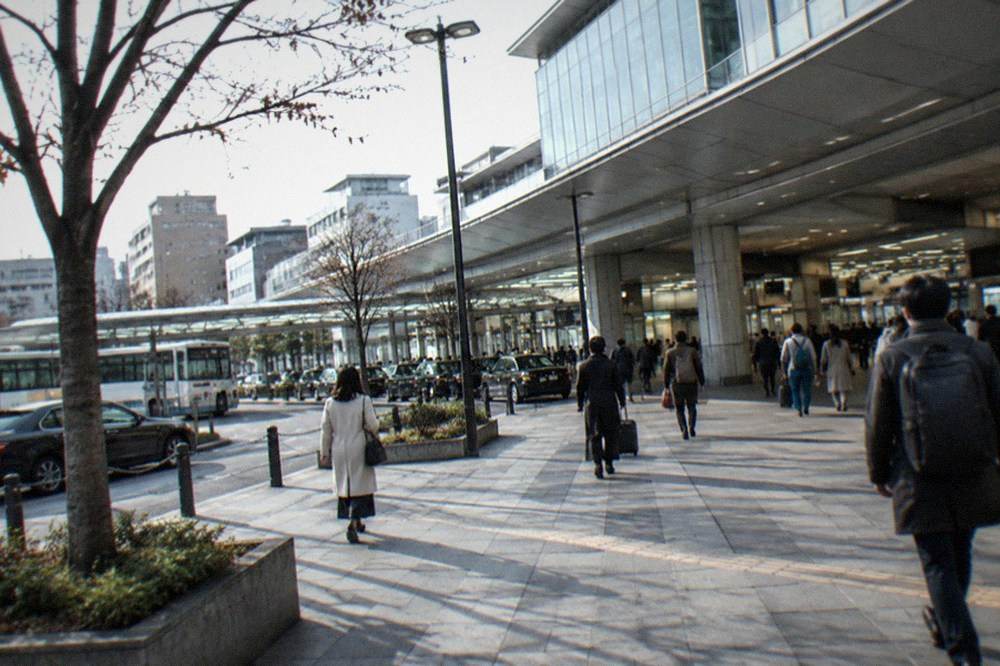
For travellers connecting from Tokyo or elsewhere first, our Tokyo to Fukuoka rail guide covers the eastern half of the corridor, and the Kyoto to Fukuoka route is the same line with a different starting point, since Kyoto sits one stop beyond Shin-Osaka. If you are still weighing whether Fukuoka deserves the trip at all compared with more time in Kansai, the Osaka or Fukuoka comparison is the honest place to start, because the two cities genuinely suit different travellers and different trip lengths.
A few practical notes make the booking smoother. Luggage rules on the Shinkansen limit oversized bags to designated storage areas, and a bag larger than the official dimensions requires a reserved seat with luggage space when you book. Eat before you board or buy a bento at the station, because the onboard trolley service is thin on this stretch. And if your plans might shift, buy the ticket in a form you can change, because the flexibility is worth more on a long corridor like this than on a two-stop hop.
How Much Does the Osaka to Fukuoka Trip Cost?
The full-flex Nozomi fare from Shin-Osaka to Hakata sits in the mid-teens of thousands of yen, and the exact figure depends on the day, the train and the seat class, so treat any single number you read online with caution and price your own departure on the operator's site. Cheaper advance-purchase fares exist on this corridor and can cut the cost meaningfully if your timing is fixed. The Hikari and Sakura alternatives are marginally cheaper and noticeably slower.
The reason this guide does not print a precise fare is that the number moves with the season and the booking channel, and a stale figure is worse than none. What is stable and worth knowing is the shape of the pricing: a base fare scaled to distance, an express supplement that varies by train speed, a small extra for a Nozomi or Mizuho, and a larger one for green car seats. Discounted advance tickets typically trade flexibility for price, which suits a fixed itinerary and punishes a loose one.
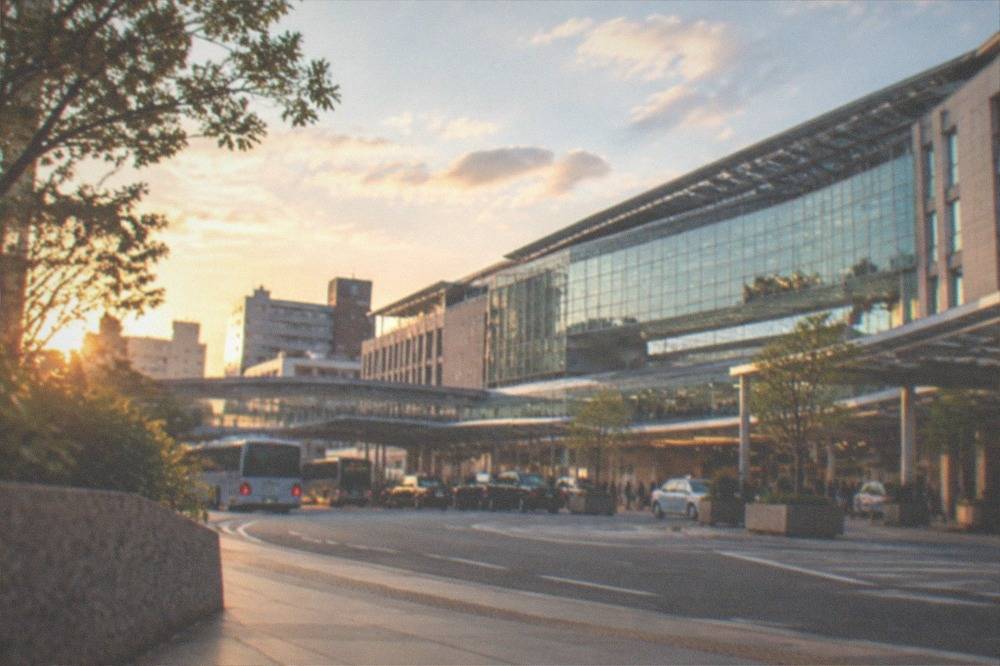
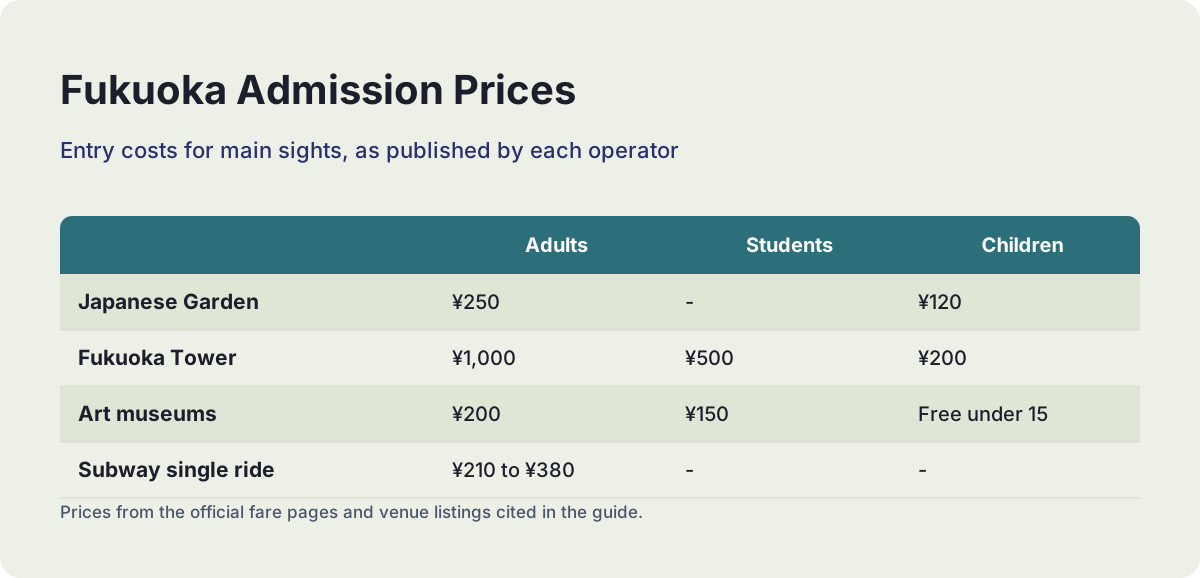
Once you arrive, the local money picture is much easier to state with confidence, because Fukuoka's own operators publish it. The Fukuoka City Subway charges by distance band, from ¥210 for up to 3 km up to ¥380 for the longest trips, per the official fare table at the subway's fare page. A one-day subway pass costs ¥640 for adults and covers all three lines from first to last train. For overseas visitors on a short-stay visa, the Fukuoka Tourist City Pass costs ¥2,500 for the city version and ¥2,800 with Dazaifu included, with a passport checked at the counter, per the official city pass page. Most competing guides still quote the old, much cheaper prices, so being told the real pair before you budget is genuine information gain.
Budgeting the whole trip, not just the fare, is where a little reading pays off. Fukuoka eats cheap in a way Kansai visitors sometimes find surprising, with the street food stalls doing most of the heavy lifting, and the mid-range costs of a stay here sit below the bigger Kansai and Kanto cities. Building a realistic daily spend before you leave stops the last two days of a trip from turning into an exercise in rationing, and the verified local fares above are the numbers to anchor that budget to.
Should You Fly from Osaka to Fukuoka Instead of Taking the Train?
Flying beats the train only when the train is full or your timing is extreme, because the Shinkansen's two and a half hours station-to-station competes with a flight once you count the transfers, security and waiting that airports add at both ends. Fukuoka Airport is unusually close to the city centre, which is its genuine advantage, and the subway fare from the airport into town is a verified ¥260. For most travellers the train wins on comfort and usually on total door-to-door time.
The flight itself is short, but the honest accounting includes getting to Itami or Kansai Airport from wherever in Osaka you actually are, the check-in window, the flight, baggage, and then the transfer from Fukuoka Airport into the city. Fukuoka Airport sits on the subway's Kuko line, only a handful of stops from Hakata, and the fare from the airport into the centre falls in the official 3 to 7 km band at ¥260. Plenty of guides claim the airport-to-city run takes five minutes; no official page verifies that figure, so this guide will not print one, and you should not plan around it. What is verifiable and true is that the airport is closer to its city centre than almost any other major airport in Japan.
| Factor | Shinkansen | Flying |
|---|---|---|
| Station-to-station time | About 2.5 hours | Longer door to door once transfers count |
| Airport or station transfer | None; Hakata is the destination centre | ¥260 subway fare from Fukuoka Airport into the centre |
| Luggage handling | Carry it on; oversized bags need reserved luggage seats | Standard checked-baggage allowances apply |
| Weather disruption | Typhoons can suspend service on the corridor | Flights often recover before tracks do |
| Booking flexibility | Reserved seats changeable per ticket rules | Fare classes vary widely by airline |
The case for flying is real in a few situations. Early morning departures can put you in Fukuoka before the first through-trains have done their work, and if a typhoon has suspended rail service on the corridor, the airports often recover faster than the tracks. Typhoon season runs roughly July through October and is a genuine planning factor for any western Japan itinerary, though it is a reason to build flexibility, not a reason to stay home. Our typhoon season guide explains how to plan around it without alarm.
If you do fly, the arrival is the part worth arranging in advance. Fukuoka Airport is compact and well signed, but after a long travel day a car that meets you at the terminal removes the last friction, especially with a family or with luggage that exceeds the subway's comfort.
For everything else about the airport itself, the Fukuoka Airport guide covers terminals, transfers and the subway connection in detail, and both the airport and the station pages are worth a skim before you land rather than after, when you are tired and standing in the wrong queue.
What Should You Expect When You Arrive at Hakata Station?
Hakata Station is a city within a city, with the subway, the JR platforms and a major bus terminal stacked within a few minutes' walk of each other, plus a department store, a rooftop garden and enough restaurants to feed a small nation. The subway from Hakata to Tenjin costs ¥260 and takes a handful of stops. Everything a first-time visitor needs, including the main hotel districts, sits within one transit hop of the concourse.
The station's layout rewards a minute with a map. The Shinkansen exits feed into the central concourse, the Fukuoka City Subway's Hakata station sits directly beneath it, and the bus terminal wraps around the east side. Tenjin, the shopping and nightlife core, is two subway stops away, and Nakasu, the entertainment district on the Naka River, sits between the two. If you are choosing where to sleep, the where to stay in Fukuoka guide compares Hakata, Tenjin and the waterside options honestly, and the short answer is that Hakata wins for convenience and Tenjin wins for atmosphere.
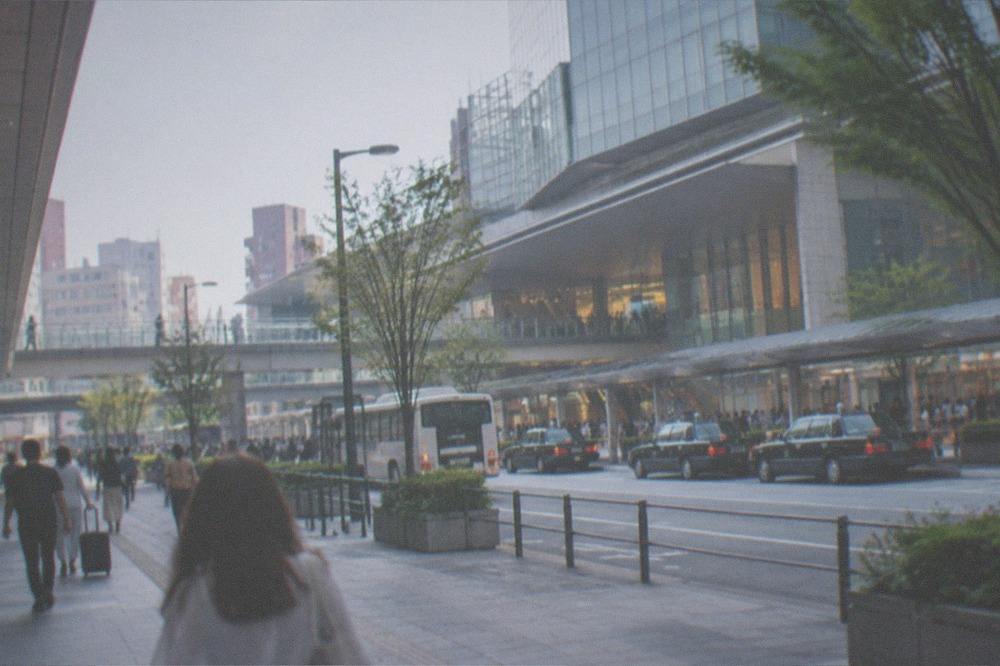
Your first evening deserves the walk from Hakata to the river. Fukuoka is famous across Japan for its yatai, the licensed street food stalls that set up along the Naka River and around Tenjin and Nagahama from early evening, and there are about 100 of them across the city, more than anywhere else in Japan. A municipal ordinance requires every stall to post its prices where customers can see them, and bans vague market-price items outright, so the anxiety some visitors bring to street food does not really apply here. The yatai guide maps the main rows and explains the handful of customs, like ordering a drink and not lingering all night, that keep the seats turning.
If you would rather have a local steer you straight to the good stalls on your first night, a guided crawl solves the where-to-start problem, and a private transfer waiting at your arrival point removes the last of the day's logistics.
For the broader food picture, the Fukuoka food guide covers tonkotsu ramen, motsunabe and mentaiko in full, and takes over where the stalls pack up around midnight. Fukuoka's food reputation is not marketing, it is the reason a lot of people make this train journey at all, and the station's own ramen floors are a decent audition for what the city does better elsewhere.
How Should You Spend Your First Days in Fukuoka?
Plan on at least two full days beyond your arrival day: devote the first to the city itself, taking in Ohori Park, the castle ruins, Kushida Shrine and the Momochi waterfront, and the second to a day trip, with Dazaifu, Yanagawa or the Itoshima coast all under an hour away. Because the main sights sit close together and most cost nothing to enter, a first day moves quickly. Spring and autumn are the kindest seasons, and the best time to visit guide walks through the trade-offs month by month.
A first day walks well. Ohori Park's lake loop is a flat two-kilometre circuit with the Japanese Garden beside it, entry ¥250 for adults and ¥120 for children, and the castle ruins sit immediately east in Maizuru Park. Note one current closure if you visit in 2026: the castle's Tenshudai, the main keep base, is closed from 26 May until the end of December 2026 for an archaeological excavation prompted by a document found in December 2024 that describes a keep historians are not sure ever existed. The dig is the most interesting thing to happen to the ruins in decades, and the rest of the park stays open around it.
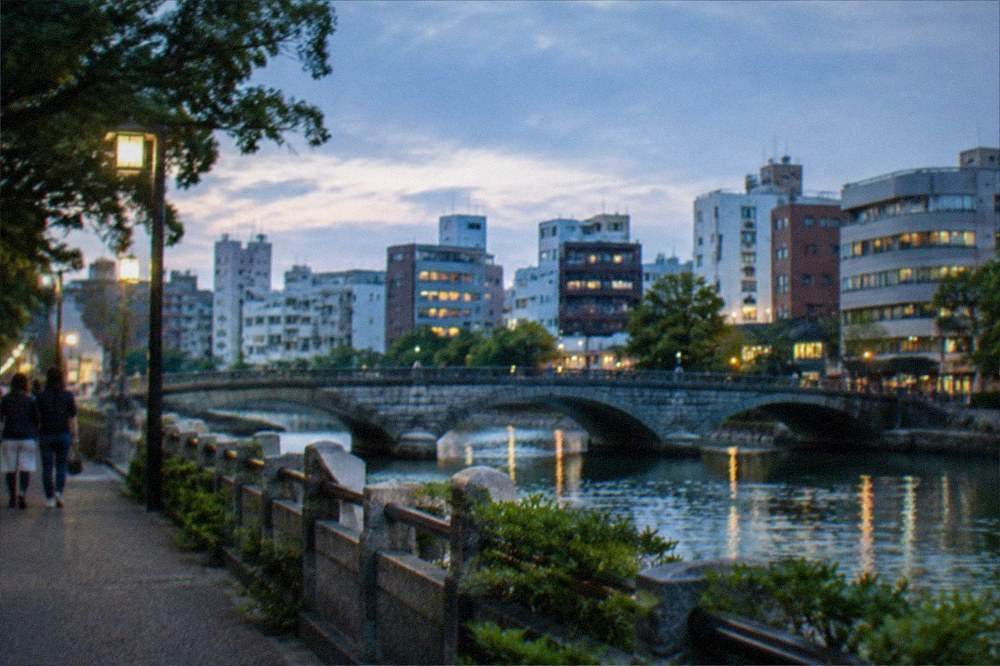
For the view from above instead, Fukuoka Tower is the city's signature landmark, standing 234 metres tall on the Momochi waterfront. Admission is ¥1,000 for adults, ¥500 for elementary and junior high students and ¥200 for children aged four and over, the observation decks sit at 123 metres and below, and the tower keeps long hours, 9:30 to 22:00 with last entry at 21:30. It closes for two days at the end of June each year, 28 and 29 June in 2027, so check the calendar if your trip brushes that week.
The city's museums round out a rainy afternoon, and both art museums charge just ¥200 for adults and ¥150 for students, with free entry for children under 15 and for residents over 65. The Fukuoka Asian Art Museum is free to enter outright, with only the Asia Gallery charging, and it holds a collection of about 5,000 works from 23 Asian countries and regions, which makes it the only museum of its kind in the world. Between the parks, the tower and the museums, a first full day fills without ever riding more than a stop or two on the subway.
Which Day Trips Are Worth Adding Once You Are Based in Fukuoka?
Dazaifu Tenmangu shrine and the Yanagawa canal boats are the classic half-day and full-day pair, both under an hour from the city by train, and the Itoshima coast gives you beaches and oyster shacks in the same radius. Beyond those, Fukuoka is the natural base for the whole of northern Kyushu, with Nagasaki, Kumamoto and the Aso country all doable as full days. The mistake to avoid is treating Kyushu like a detour, because it is the destination.
The near and far options sort cleanly, and the table below shows how they stack up for a trip built around a Fukuoka base.
| Excursion | Reach from Fukuoka | Trip character |
|---|---|---|
| Dazaifu | Easy half day by Nishitetsu train | Shrine, museum, approach streets |
| Yanagawa | Easy half or full day | Canal boats, historic town |
| Itoshima | Easy full day | Coast, beaches, food shacks |
| Nokonoshima and Shikanoshima | Easy half day | Island parks, short ferry rides |
| Beppu and Yufuin | Full day | Onsen towns, hot spring hells |
| Mount Aso and Takachiho | Full day | Volcano, grasslands, gorge |
| Kumamoto | Full day | Castle and city |
| Nagasaki | Full day | History, harbour, heavy but rewarding |
The Dazaifu day trip guide covers the Nishitetsu route and the Umegae mochi stops. The Nagasaki day trip is a full day and a heavy, rewarding one. The Kyushu overview frames the whole island if you have a week rather than a weekend, and it is the right page to read before deciding how many of the rows above to attempt.
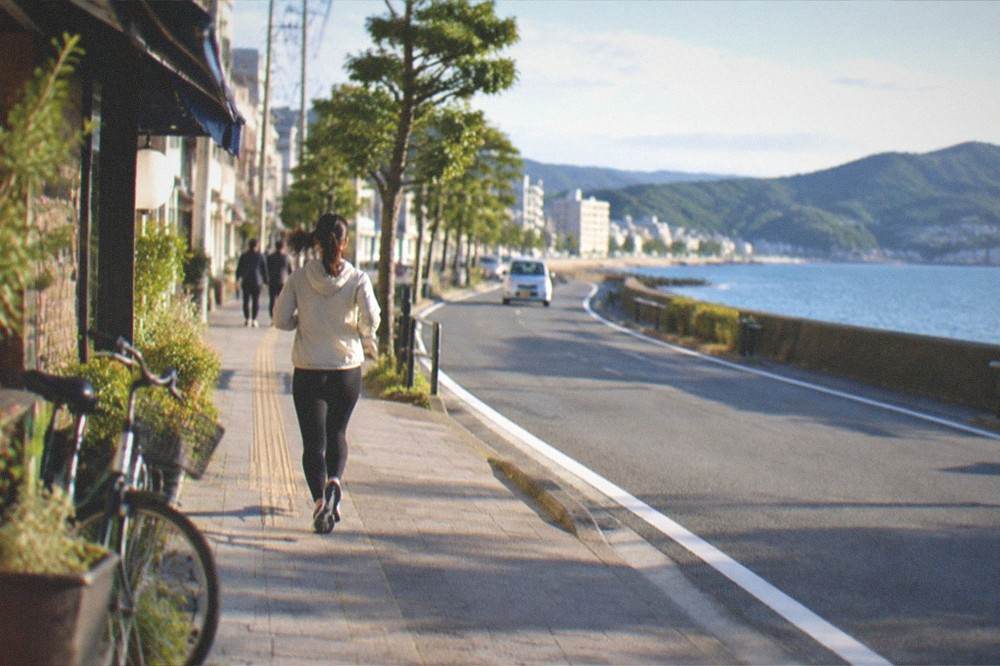
One excursion earns a special mention because it sits almost exactly on the route you have just travelled. The Motonosumi Inari shrine, with its vermilion torii gates running down a cliff to the Sea of Japan, lies in Yamaguchi on the way to Kitakyushu, and a guided day tour pairs it with the Kanmon Strait crossing and the million-dollar view of the strait from the walkways above. It is the kind of place that photographs better than the famous gates everyone has already seen, and it makes an easy argument for one extra day in the region.
Common Questions About Travelling from Osaka to Fukuoka
How Long Does The Nozomi Shinkansen Take From Osaka To Fukuoka?
About two and a half hours on the fastest Nozomi services between Shin-Osaka and Hakata, with the exact time depending on the specific departure and its stop pattern. Confirm the timing of your chosen train on the operator's live timetable, because the schedule is adjusted periodically and the fastest runs are clustered at certain times of day.
Do you depart from Osaka Station or Shin-Osaka?
Most bullet trains on this corridor use Shin-Osaka, which is one stop north of Osaka Station on the local JR line, and only some services continue into Osaka Station itself. Check your ticket carefully and allow transfer time between the two if your journey starts at Osaka Station, because this is the most common missed connection on the route.
Is there a Fukuoka Station?
Not on the JR network. The city's main JR and Shinkansen station is Hakata, and there is no JR Fukuoka Station. Hakata is also the name of the ward around the station, and Hakata and Fukuoka are the same city, not two places you travel between. The Nishitetsu railway has a separate terminal called Fukuoka Station in Tenjin, which is a different line entirely.
Is flying faster than the train from Osaka to Fukuoka?
Usually not, once you count transfers and airport time at both ends. The train takes about two and a half hours station to station, while the flight adds check-in, security and the transfer from Fukuoka Airport into the city. The airport is unusually close to the centre and the subway fare from it is ¥260, but for most travellers the train wins on total door-to-door time and comfort.
How much does the Shinkansen from Osaka to Fukuoka cost?
The full-flex Nozomi fare sits in the mid-teens of thousands of yen, varying by day, train and seat class, so price your own departure on the operator's site rather than trusting a single number from any guide. Advance-purchase discounts can cut the cost if your timing is fixed, and the slower Hikari and Sakura services are marginally cheaper.
How many days should I stay in Fukuoka once I arrive?
Two full days is the honest minimum: one for the city's parks, shrines, waterfront and food stalls, and one for a day trip to Dazaifu, Yanagawa or the Itoshima coast. Three or four days lets you add a second excursion and a slower pace, and the itinerary pages break down day-by-day options for every trip length.