Miyazaki from Fukuoka
Miyazaki sits on Kyushu's southeastern coast, and the fastest way to taste it from Fukuoka is a guided day tour that threads the mountains through Takachiho Gorge. Here is how the timing, the costs and the tour options actually stack up.
Short answer
A guided Miyazaki and Takachiho day tour from Fukuoka runs about 10 hours door to door, from $59 per person, with the best-rated option scoring 4.6 from 384 reviews. Independent travel to Miyazaki City takes most of a day each way, so nearly every visitor books a tour or stays overnight.
Miyazaki is the prefecture most Fukuoka visitors never quite reach. It sits on Kyushu's southeastern Pacific coast, a long diagonal from Fukuoka across the island's mountainous spine, and it holds some of the most photogenic scenery in Japan: Takachiho Gorge, the shrines and mythology sites of the Takachiho highlands, and a coastline that feels closer to subtropical than anything northern Kyushu can offer. The distance is the whole story. Fukuoka is the natural base for exploring Kyushu, and Miyazaki is one of the longer reaches from it, which is why the question of timing matters more here than on almost any other day trip on this site.
The honest headline is this: you can do Miyazaki's inland highlights from Fukuoka in a single, well-run day, and thousands of travellers do it every year through guided coach tours. Reaching Miyazaki City itself, on the coast, is a different proposition that eats most of a day in each direction. This page lays out both, with real prices, real ratings and the trade-offs nobody else spells out. If you are still building your overall plan, start with the master list of day trips from Fukuoka, then come back here for the eastern run.
How Long Does It Take to Get to Miyazaki from Fukuoka?
The realistic answer for a day visitor is about ten hours round trip, and that is only achievable on a guided coach tour. The best-documented option, a Miyazaki, Takachiho Gorge and shrines day tour, runs a scheduled 10 hours from pickup to drop-off, costs from $59 per person, and carries a 4.6 rating from 384 reviews. Independent travel to Miyazaki City takes substantially longer in each direction, which is why almost nobody does it as a same-day return.
The geography explains the timing. Fukuoka sits on Hakata Bay on the Genkai Sea side of northern Kyushu; Miyazaki's headline scenery clusters around Takachiho in the island's mountainous centre-east. There is no high-speed rail line serving the Takachiho area at all, so a coach threading the mountain roads is the practical option, and the tours that run this route are built around the drive itself. The 10-hour figure on the listing is not padding; it reflects real kilometres of two-lane mountain road between Fukuoka and the gorge.
For Miyazaki City, the coastal capital, the arithmetic gets worse. Rail and highway bus routings from Hakata run down through the centre of the island or around it, and the journey in each direction consumes the better part of a day. A same-day return leaves you almost no time in the city itself. If Miyazaki City is the goal, treat it as an overnight trip and use Fukuoka as your arrival and departure hub. The practical split, then, is simple: Takachiho and the inland shrines as a day tour, Miyazaki City as an overnight.
That split is exactly what the tour market has converged on. Every Miyazaki-branded day tour in the roster from Fukuoka is really a Takachiho-area tour with the Miyazaki name on it, because the gorge and the surrounding mythology sites are what fit inside one day. The coastal city appears on itineraries only as a multi-day or self-planned extension. When a listing promises "Miyazaki in a day," read the itinerary carefully: the stops will be Takachiho Gorge, the Amaterasu Railway, and shrines in the Miyazaki-side highlands, not the city's seaside parks.
Which Miyazaki Day Tour Should You Book?
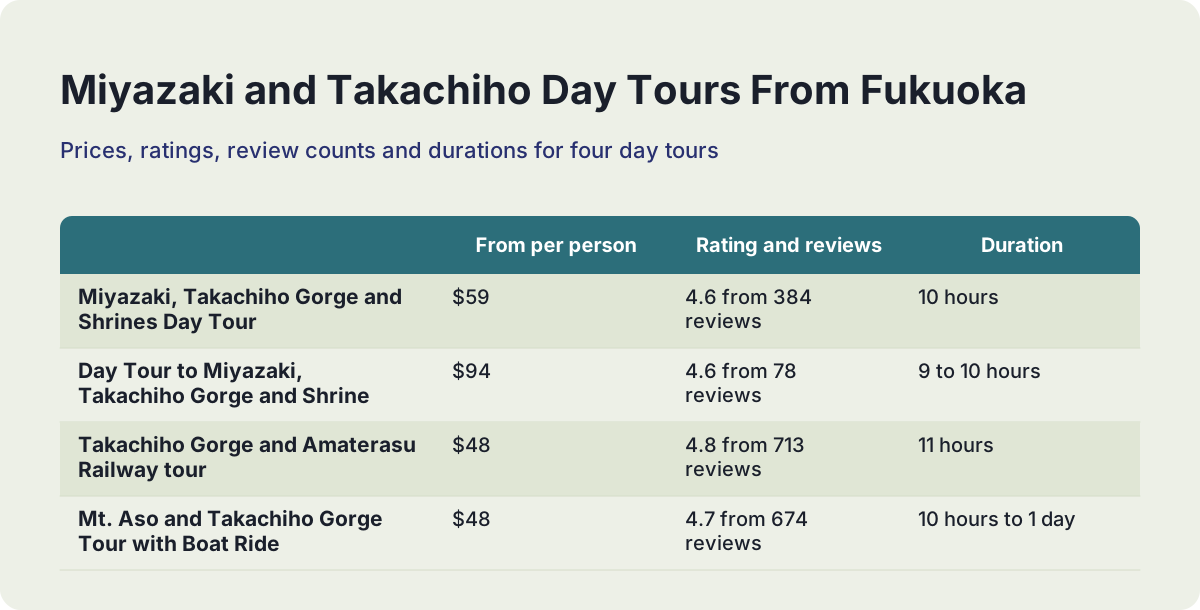
The strongest all-round pick is the From Fukuoka: Miyazaki, Takachiho Gorge and Shrines Day Tour, from $59 per person, rated 4.6 from 384 reviews over a 10-hour day. The closest alternative is the Day Tour to Miyazaki, Takachiho Gorge and Shrine, from $94 per person, rated 4.6 from 78 reviews, and the highest-rated option in the wider family is the Takachiho Gorge and Amaterasu Railway tour, 4.8 from 713 reviews, from $48 per person.
Those three numbers tell most of the story, but the differences between the tours matter more than the headline prices. The 384-review option is the volume leader precisely because it balances the widest itinerary with the lowest price, and a review pool that large is meaningful: 4.6 across 384 reviews is a stable signal, not a fluke of a handful of travellers. The $94 alternative runs 9 to 10 hours and covers the gorge plus a major shrine with a similar shape but a smaller review pool of 78. The 713-review Takachiho tour is the most reviewed day trip in the entire Fukuoka roster and runs 11 hours, the longest of the three, which buys a more relaxed pace at the gorge itself.
| Tour | From (per person) | Rating and reviews | Duration | Own page |
|---|---|---|---|---|
| From Fukuoka: Miyazaki, Takachiho Gorge and Shrines Day Tour | $59 | 4.6 from 384 reviews | 10 hours | Miyazaki and Takachiho day tour |
| Day Tour to Miyazaki, Takachiho Gorge and Shrine | $94 | 4.6 from 78 reviews | 9 to 10 hours | Card only |
| Fukuoka: Takachiho Gorge and Amaterasu Railway with Optional boat | $48 | 4.8 from 713 reviews | 11 hours | Takachiho Gorge and Amaterasu Railway tour |
| Mt. Aso and Takachiho Gorge Tour with Optional Boat Ride | $48 | 4.7 from 674 reviews | 10 hours to 1 day | Mt. Aso and Takachiho Gorge tour |
Two things in that table deserve a second look. First, the optional boat: on both Takachiho tours the rowing-boat ride inside the gorge is an add-on, not an included item, so budget for it separately when you compare prices. Second, the Mt. Aso variant swaps Miyazaki-side shrines for the Aso volcano region, which is a genuinely different day; if the gorge is your priority and the shrines are a nice-to-have, the Aso combination gives you a second iconic landscape instead. Choose by what you want to remember, not by the few dollars between them.
Cancellation policy is worth checking on whichever listing you look at, because mountain weather moves these itineraries around. The operator's live listing states the current terms, and the coach tours in this family generally run rain or shine with the boat segment as the weather-dependent piece. If you are travelling in typhoon season, roughly July through October, build a flexible day around the booking rather than a fixed hour-by-hour plan.
What Do You Actually See in Takachiho?
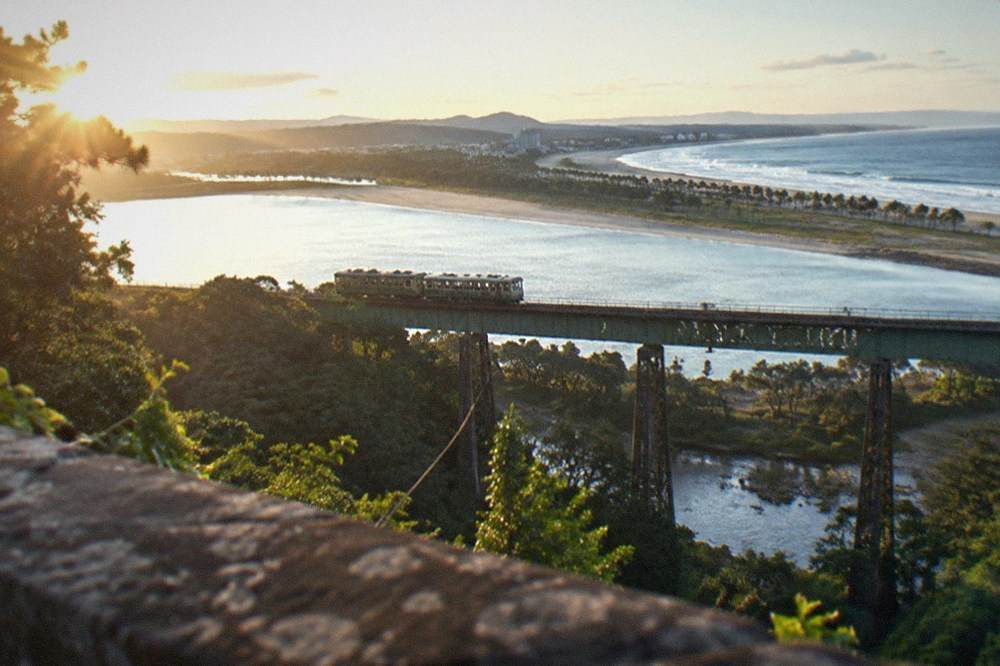
Takachiho Gorge is a narrow basalt canyon where the Gokase River runs between near-vertical columned cliffs, and the day tours pair it with the Amaterasu Railway, a sightseeing train that rolls slowly across a high bridge above the gorge, plus Shinto shrines tied to the Amaterasu sun-goddess mythology that gives the region its name. The gorge walk and the viewpoints are free to access; the boat and the railway are paid add-ons.
The mythology is the reason this corner of Miyazaki matters. Japanese tradition places the cave where the sun goddess Amaterasu hid, plunging the world into darkness, in the Takachiho highlands, and the shrines in the area are built around that story. It is one of the few places in Japan where a specific national myth has a street address, and the tours treat it accordingly: shrine visits are scheduled stops, not drive-bys. For a visitor coming from Fukuoka's own shrine city, this is a useful contrast with Dazaifu Tenmangu, which centres scholarship and plum blossoms rather than creation myth.
The gorge itself is the visual payoff. The cliffs are stacked basalt columns, the kind of geology that photographs dramatically in morning light, and a paved walkway runs along the rim so the viewing requires no hiking fitness. The rowing boats below put you on the water directly under the cliffs, and that is the segment most reviews single out. It is optional on every tour that offers it, which keeps the base price down but means the headline figure is not your all-in cost.
The 10-hour Miyazaki, Takachiho Gorge and Shrines day tour is the one that spreads the day thinnest but sees the most: the gorge, the railway bridge viewpoint and the mythology shrines in a single loop from Fukuoka. At from $59 per person with a 4.6 rating from 384 reviews, it is the default choice for a first visit, and the review pool is large enough that the score means something. Check availability alongside the tour's own page if you are comparing dates.
Food on these tours is another thing to plan rather than assume. The listings vary on whether lunch is included, and the mountain route has limited options for buying your own once you leave the main towns, so read the inclusions line on the operator's live listing before you skip breakfast. Most tours build in a stop where bento or local noodles are available, but the timing is the tour's, not yours.
Takachiho Gorge, Amaterasu Railway and the Boat Option
The Amaterasu Railway is a slow open-sided sightseeing train that crosses a high bridge directly over the gorge, and the rowing boats put you on the Gokase River underneath the cliffs. Both are paid extras on the Takachiho tours, and the 11-hour tour that includes the railway, from $48 per person, is the highest-rated day trip in the entire Fukuoka roster at 4.8 from 713 reviews.
That 713-review figure deserves emphasis under this site's own honesty rules: this is not a niche product with a lucky score, it is the most-reviewed day tour from Fukuoka, full stop. A 4.8 across that pool is about as strong a signal as the regional tour market produces. The trade is the itinerary: this tour goes deep on Takachiho rather than wide across Miyazaki, so if the shrines were your main draw, the 10-hour Miyazaki tour above is the better fit.
The optional boat ride is the decision most travellers agonise over, and the honest framing is this: the rim walkway gives you the classic postcard view for free, the boat gives you the view looking up, and the railway gives you the view from above all of it. Reviews on the live listing consistently describe the boat as the highlight when the weather cooperates and as a skip when the water is high, so treat it as a decision you make on the day with the tour guide's advice, not in advance from home.
Can You Reach Miyazaki City Itself in a Day?
Not sensibly. Miyazaki City sits on the coast, well beyond the Takachiho highlands, and the journey from Hakata consumes most of a day in each direction by rail or highway bus. Every Miyazaki-branded day tour from Fukuoka in the current roster is in fact a Takachiho-area itinerary, which tells you what the market has learned: the gorge fits in a day, the city does not.
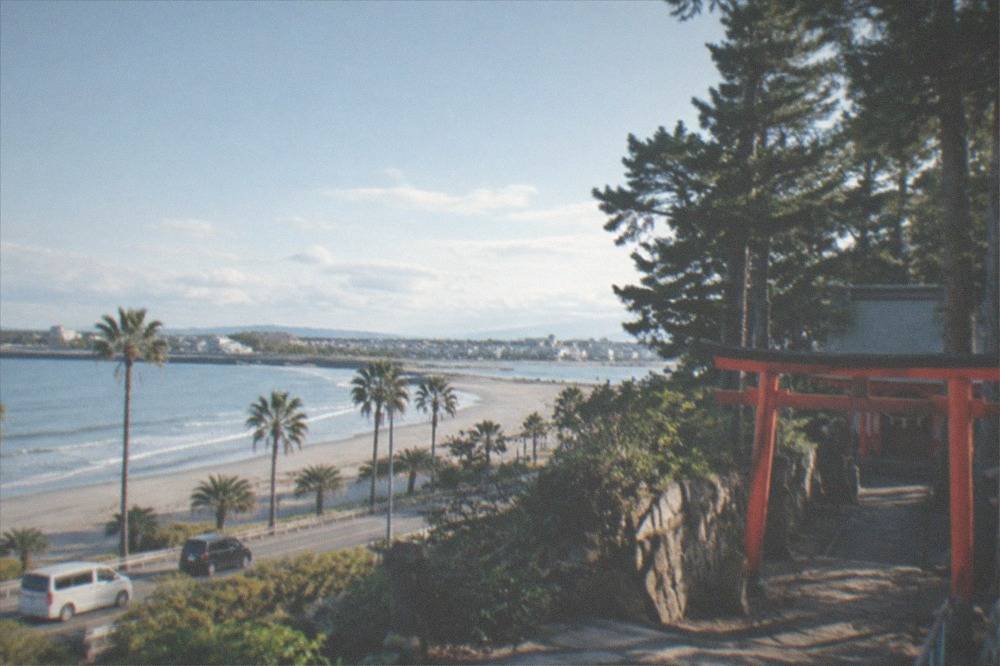
If Miyazaki City is genuinely your goal, plan an overnight. The city offers a relaxed Pacific-coast atmosphere, wide avenues and the Aoshima shrine island, and it rewards a slower pace that a dash-in-dash-out visit destroys. A practical pattern is to take a Takachiho day tour first as a taster, then decide whether the coast justifies a second night. Alternatively, fold it into a wider Kyushu circuit: the island's other headline overnight destinations from Fukuoka include Beppu, Kumamoto and Nagasaki, and Miyazaki slots naturally onto the eastern leg of that loop.
The same logic applies to the neighbouring prefectures' headline sights. Travellers who enjoy the long-drive format of the Takachiho tours often graduate to the North Kyushu Tour covering Akiyoshido Cave and Motonosumi Inari Shrine, from $65 per person, rated 4.8 from 56 reviews over 10 hours, which runs the opposite direction up the coast toward Yamaguchi. The two tours share a design philosophy: pick two unmissable sights that no train line connects, and let a coach do the stitching.
One naming trap to avoid while researching: some listings use "Miyazaki" loosely for anywhere in the prefecture, and Takachiho is in Miyazaki Prefecture even though it feels like mountain country rather than seaside. Read the stop list, not the title. A tour that lists Takachiho Gorge and a shrine is giving you the inland Miyazaki; a tour that lists the city's coastal parks does not exist in the day-trip format from Fukuoka, and any listing implying otherwise deserves a careful second read.
What Does the Trip Cost?
The tour itself runs from $48 to $94 per person depending on the itinerary, and the realistic add-ons are the optional gorge boat, lunch where it is not included, and your transport to the Fukuoka pickup point. Getting to the pickup from the airport costs a verified ¥260 on the subway, and a day of unlimited city transport for overseas visitors is ¥2,500 on the Fukuoka Tourist City Pass, or ¥2,800 with Dazaifu included, with a passport check at the counter.
The tour price is therefore only part of the budget. Here is how the pieces typically stack up for a visitor flying in and touring out:
| Cost item | Typical figure | Notes |
|---|---|---|
| Takachiho and Amaterasu Railway tour | from $48 per person | 4.8 from 713 reviews, 11 hours |
| Miyazaki, Takachiho Gorge and Shrines day tour | from $59 per person | 4.6 from 384 reviews, 10 hours |
| Airport to Hakata subway fare | ¥260 adult | Official 3 to 7 km fare band |
| Subway 1-day pass (city only) | ¥640 adult | All three subway lines, one day |
| Fukuoka Tourist City Pass | ¥2,500 adult | Overseas short-stay visitors, passport checked |
| City Pass with Dazaifu | ¥2,800 adult | Adds the Dazaifu rail corridor |
Two of those figures are worth dwelling on because most competing guides get them wrong. The airport subway fare of ¥260 is the verified figure, derived from the official fare table's 3 to 7 km band, and the airport's unusual closeness to the city centre is one of Fukuoka's genuine advantages; the widely repeated journey-time claim for that ride is not officially published, so this site prints the fare and leaves the minutes alone. The Tourist City Pass prices are the other correction: plenty of guides still quote a stale ¥820, when the verified current pair is ¥2,500 and ¥2,800, restricted to overseas tourists on short-stay visas with a passport check, per the city's official pass page at gofukuoka.jp. The subway fare bands come from the city subway's official fare table.
For the tour day itself, the practical budgeting note is cash. Mountain-area stops are thinner on card terminals than Fukuoka's city centre, and while Japan's payment landscape has moved a long way from cash-only, a day in the Takachiho highlands is not the day to test it. The general money picture for the city, including IC cards and what to carry, is covered in the guide to cash and payments in Fukuoka.
Best Time of Year for the Run Down to Miyazaki
Late March to May and October to early December are the sweet spots: mild temperatures, lower rainfall and good light in the gorge. July is the single month to treat with care, because it is statistically Fukuoka's wettest, 299.1 mm against June's 249.6 mm in the 1991 to 2020 normals, and typhoon season runs roughly July through October, which can move or cancel the boat segment.
That July figure surprises people, and it is this site's most useful piece of climate information: the JMA's 1991 to 2020 normals for the Fukuoka station show July wetter than June, even though June is the tsuyu rainy season on the calendar. July is also Yamakasa month in Hakata, so a July visit trades festival energy in Fukuoka against the wettest statistical month of the year. The mountain roads to Takachiho add their own weather layer on top of the city's numbers, and the gorge's water level is what decides whether the boats run.
Autumn is the connoisseur's window. The Takachiho highlands colour up through November, the gorge photographs well in low-angle light, and Fukuoka's own autumn foliage peaks from mid to late November into early December, so a late-autumn tour day can combine the gorge with colour on the drive down. Summer has the counter-argument of the river: the boat ride is at its best when the water is warm and full, and the 200.9 sunshine hours Fukuoka banks in August make it the second sunniest month of the year. If a summer trip is already fixed, book the tour early in your stay so a weather cancellation leaves room to retry. The seasonal detail for the city end is in the Fukuoka in summer guide.
Planning the Day: Times, Food and What to Bring
Plan a very early start: these tours leave Fukuoka in the morning and run 10 to 11 hours, so the day is effectively consumed by the trip. Bring layers for the highlands, cash for the mountain stops, and decide in advance only what must be decided in advance, which is the tour itself; the boat and lunch choices can wait for the guide's advice on the day.
The shape of the day is worth internalising before you book. A 10-hour tour that leaves mid-morning returns after dark; the listings state their own departure windows, and the pickup points cluster around Hakata and the city centre, so staying near the station minimises the early-morning friction. The question of where to base yourself in Fukuoka has its own answer page, and the getting around Fukuoka guide covers the subway, bus and rail pieces you will use on either side of the tour day.
| Planning item | What to do | Why it matters here |
|---|---|---|
| Departure point | Stay within a short subway ride of Hakata or Tenjin | Tours leave early; the ¥210 to ¥380 subway fare bands cover any city start |
| Footwear | Comfortable walking shoes | The gorge rim walkway is paved but long |
| Weather layer | Light shell or layers year-round | Highland temperatures run below Fukuoka's |
| Cash | Carry yen for mountain stops | Card acceptance thins outside the city |
| Boat decision | Decide on the day with the guide | Water levels and weather govern it |
| Backup plan | Book early in your stay | Allows a retry if weather cancels a segment |
Food is the item people forget. Check the inclusions line on the listing for lunch, and if it is not included, the tours stop where food is available but on the tour's clock. Eating a proper breakfast before a 10-hour coach day is the single cheapest comfort upgrade available. For the evenings before and after, Fukuoka's own food scene is one of Japan's best, and the yatai stalls, about 100 of them under a city ordinance that requires prices to be posted where customers can see them, are the classic way to end a long tour day; the etiquette and the stall-by-street breakdown are in the Fukuoka yatai guide.
The $94 alternative earns its keep for travellers who want a slightly smaller group format and a shrine-focused itinerary, with a 4.6 rating from 78 reviews over 9 to 10 hours. The review pool is a fraction of the volume leader's, so read the recent reviews on the live listing for the current state of the operation rather than relying on the aggregate alone.
Finally, the sequencing question: should Miyazaki or Takachiho come first in a longer Kyushu trip? The answer this site gives consistently is that Fukuoka is the hub and the day trips radiate from it, and the eastern radiance is the longest. If you are touring the whole island, the Kyushu itinerary from Fukuoka sequences all of these, and the Miyazaki side pairs naturally with an overnight in Kurokawa Onsen if you want hot springs on the same eastern loop. The whole picture of what fits in a day, from Kitakyushu to Kagoshima, is laid out in the day trips overview, and this site, Fukuoka Japan Travel Guide, keeps every figure on it verified against official sources.
Common Questions About Miyazaki from Fukuoka
How Long Does It Take To Get To Miyazaki From Fukuoka?
A guided day tour covering Takachiho Gorge and the Miyazaki-side shrines runs about 10 hours round trip, from $59 per person. Independent travel to Miyazaki City on the coast takes most of a day each way, so it is an overnight trip rather than a day trip.
Can you see Takachiho Gorge in one day from Fukuoka?
Yes, comfortably. The dedicated tours run 10 to 11 hours and include the gorge rim walk, with the rowing boat and the Amaterasu Railway as optional paid add-ons. The highest-rated option scores 4.8 from 713 reviews.
Is the boat ride at Takachiho Gorge worth it?
Reviews consistently describe the boat as the highlight when the weather and water level cooperate, and as skippable when they do not. Decide on the day with the guide's advice rather than pre-booking it from home.
Do any tours actually visit Miyazaki City?
No same-day tour from Fukuoka reaches Miyazaki City. Every Miyazaki-branded day tour in the roster is a Takachiho-area itinerary, because the coastal city is too far for a day return. Treat the city as an overnight destination.
What is the best time of year for this trip?
Spring and late autumn offer mild weather and the best light. July is statistically Fukuoka's wettest month at 299.1 mm, and typhoon season runs roughly July through October, so book early in your stay in summer to leave room for a retry.
How much does a Miyazaki day tour from Fukuoka cost?
From $48 to $94 per person depending on the itinerary, plus optional costs for the gorge boat and lunch where it is not included. Your transport to the Fukuoka pickup point is extra; the airport-to-Hakata subway fare is a verified ¥260.