What Is Fukuoka Famous For?
Discover what Fukuoka is famous for, from its legendary tonkotsu ramen and yatai street stalls to ancient shrines, the Hakata Gion Yamakasa festival, and modern landmarks like Fukuoka Tower.
Fukuoka is not a city that shouts. It sits on the northern shore of Kyushu, closer to Seoul than to Tokyo, and for decades it was known mostly as a convenient entry point, a place you passed through on the way to somewhere else. That has changed. In the last ten years, Fukuoka has become one of Japan's most talked-about cities, and the reasons are specific, concrete, and easy to list: a food scene built on pork-bone broth and open-air stalls, a shrine that is the head of an entire tradition, a summer festival that stops the city for two weeks, and a growing reputation as one of the most liveable big cities in the country. This is what Fukuoka is famous for, and it is worth understanding before you arrive.
What Is Fukuoka Famous For?
Fukuoka is most famous for its food, specifically Hakata-style tonkotsu ramen and the yatai street stalls that serve it alongside grilled skewers and local sake. It is also known for Dazaifu Tenmangu, a nationally important shrine dedicated to the god of learning, the Hakata Gion Yamakasa festival with its dawn float race, and Fukuoka Tower, the tallest seaside observation tower in Japan. It is also a gateway to Kyushu's volcanic landscapes and the host of the November sumo tournament.
That is the short answer. The longer one is that Fukuoka Japan Travel Guide readers consistently name the same layers: the food, the shrines, the festivals, and the modern landmarks. Each of these has its own history and its own season. What follows is a look at each layer, with enough detail to turn a list of names into a plan.
The Food That Made Fukuoka a Culinary Capital
Fukuoka's food fame rests on a handful of specific dishes, each with a clear local lineage. Hakata tonkotsu ramen, with its opaque pork-bone broth and thin, firm noodles, is the city's best-known export. It sits alongside yatai street stalls, the largest concentration in Japan, and mentaiko, the spicy pollock roe invented here. Motsunabe, a winter hot pot, and goma saba round out the list of dishes that define the city's culinary identity.
The ramen is the anchor. Hakata-style tonkotsu is defined by a milky, opaque broth made from pork bones boiled for hours until the collagen dissolves. The noodles are thin and straight, cooked firm, and the standard bowl is small enough that ordering a second serving of noodles, called kaedama, is part of the ritual. Stalls and shops across the city serve it, from standing counters near Hakata Station to the yatai that set up every evening in Nakasu, Tenjin, and Nagahama.
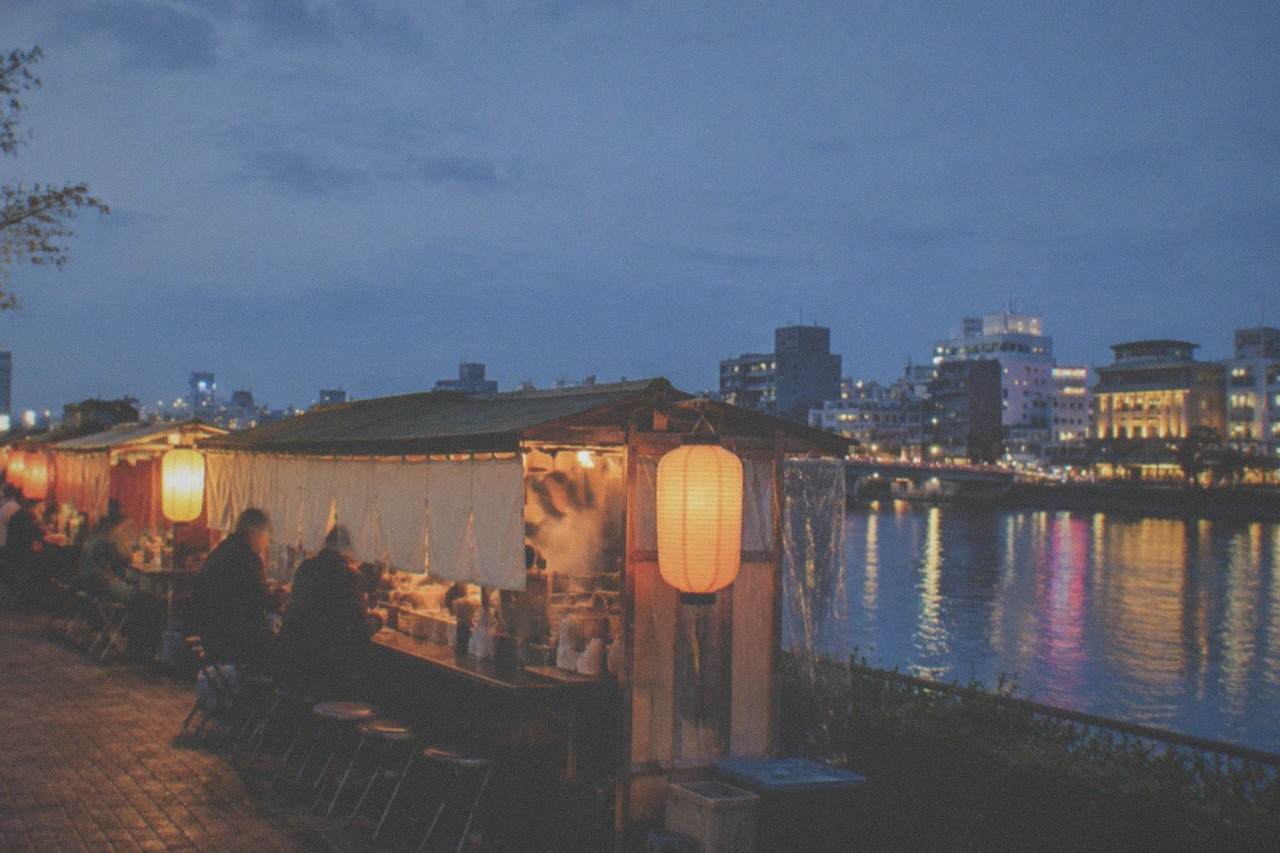
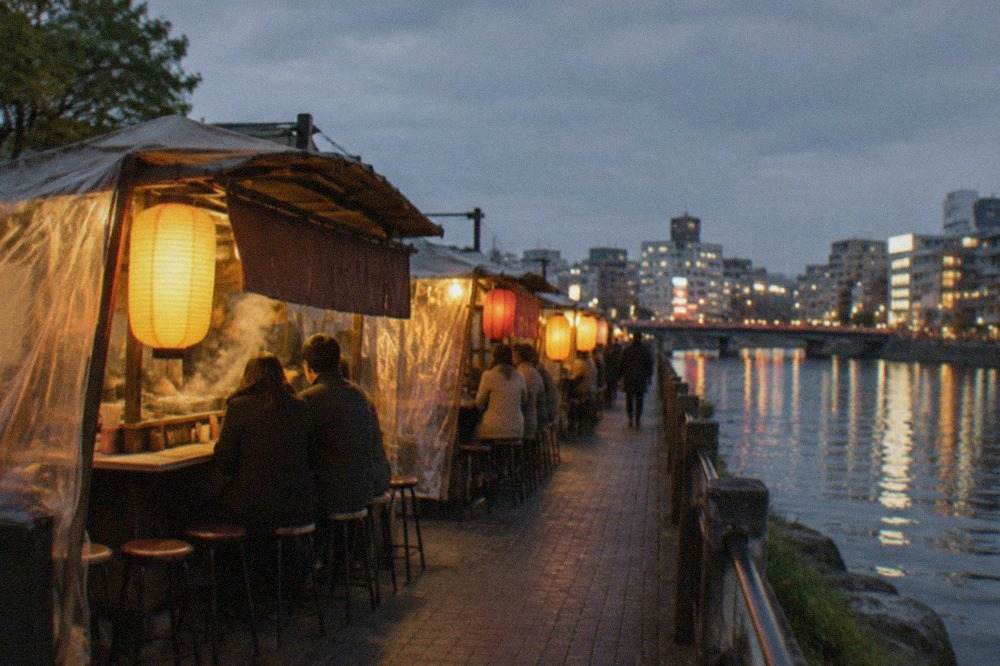
The yatai themselves are a Fukuoka institution. About 100 licensed stalls operate across the city, more than in any other Japanese city, and they are governed by a municipal ordinance that requires every stall to display its prices clearly. The city's own yatai FAQ page explains that prices must be posted where customers can easily see them, and that a stall cannot simply write "market price" for a dish whose cost changes daily; it must show the actual price for that day. This is a genuinely useful thing to know, and it is one of the reasons the yatai remain a welcoming entry point for visitors rather than a gamble.
The other famous foods are equally specific. Mentaiko, the marinated pollock roe that appears on everything from rice balls to pasta, was invented in Fukuoka and is sold in dedicated shops in Hakata Station. Motsunabe, a hot pot of beef or pork offal simmered with cabbage and garlic chives, is a winter staple that has spread across the country. Goma saba, mackerel dressed in sesame and soy, is a local speciality that appears on izakaya menus and at the yatai. A deeper dive into each dish is on our page about what food Fukuoka is famous for, which covers the full culinary landscape.
| Famous Food | What It Is | Where to Try It |
|---|---|---|
| Hakata tonkotsu ramen | Pork-bone broth, thin noodles, kaedama refills | Yatai stalls, ramen shops near Hakata Station |
| Yatai street food | Grilled skewers, oden, ramen, sake at open-air stalls | Nakasu riverside, Tenjin, Nagahama |
| Mentaiko | Spicy marinated pollock roe | Specialty shops in Hakata Station, department stores |
| Motsunabe | Offal hot pot with cabbage and garlic chives | Izakaya and specialist restaurants citywide |
| Goma saba | Sesame-dressed mackerel | Izakaya, yatai, seafood restaurants |
If you want to experience the food scene with someone who knows where the best stalls are, a private walking tour with a local guide is the most direct way in. The live listing offers a two-hour walk that covers both the famous spots and the ones you would not find on your own.
For a broader look at what the city offers beyond the plate, the same local-led approach works for landmarks and neighbourhoods, and a day trip into Kyushu's volcanic interior is the natural next step once you have eaten your fill.
Historic Shrines and Temples That Draw Visitors
Fukuoka's religious sites punch well above their weight. Dazaifu Tenmangu, dedicated to the deified scholar Sugawara no Michizane, is the head shrine of Tenmangu across Japan and draws millions of visitors each year, especially during exam season. Inside the city, Kushida Shrine anchors the Yamakasa festival, Tochoji houses Japan's largest seated wooden Buddha, and Shofukuji holds the title of the country's first Zen temple. All are free to enter.
Dazaifu Tenmangu sits about half an hour from central Fukuoka by train, and it is the most important shrine in the region by any measure. Dedicated to Sugawara no Michizane, the Heian-era scholar and poet who was deified after his death, it is the premier Tenmangu shrine in the country. Students visit in January to pray for exam success, and the approach from Dazaifu Station is lined with shops selling umegae mochi, a grilled rice cake filled with sweet bean paste that has become synonymous with the shrine. The grounds are free, open from around 6:00 depending on the season, with closing times that shift from 18:30 in winter to 19:30 in summer. The plum trees bloom in late February, ahead of the city's cherry blossoms.
Within Fukuoka city, Kushida Shrine in Hakata is the spiritual centre of the Hakata Gion Yamakasa festival and displays towering decorative floats year-round. A short walk away, Tochoji Temple houses the largest seated wooden Buddha in Japan, carved in the 13th century. Shofukuji, Japan's first Zen temple, sits quietly in the same district, its grounds open to the public even though the interior halls are not. Together, these three sites form a compact walking route through Hakata's old town.
For a deeper dive into the city's sacred spaces, a local guide can connect the history to the streets you are walking. The same private walking tour that covers the food scene also includes stops at shrines and temples, and it is the easiest way to understand why these places matter.
If you are curious about which shrine holds the top spot, our page on the most famous shrine in Fukuoka goes into more detail on Dazaifu Tenmangu and its rivals.
Modern Landmarks and City Views
Fukuoka Tower, a 234-metre mirrored observation tower on the Momochi waterfront, is the tallest seaside tower in Japan. Admission is ¥1,000 for adults, and the observation deck stays open until 22:00, making it a rare after-dark viewpoint. Nearby, Canal City Hakata draws visitors with its canal-side fountain shows and a fifth-floor ramen stadium. The city's two art museums, both charging ¥200 for collection entry, round out the modern side of Fukuoka's appeal.
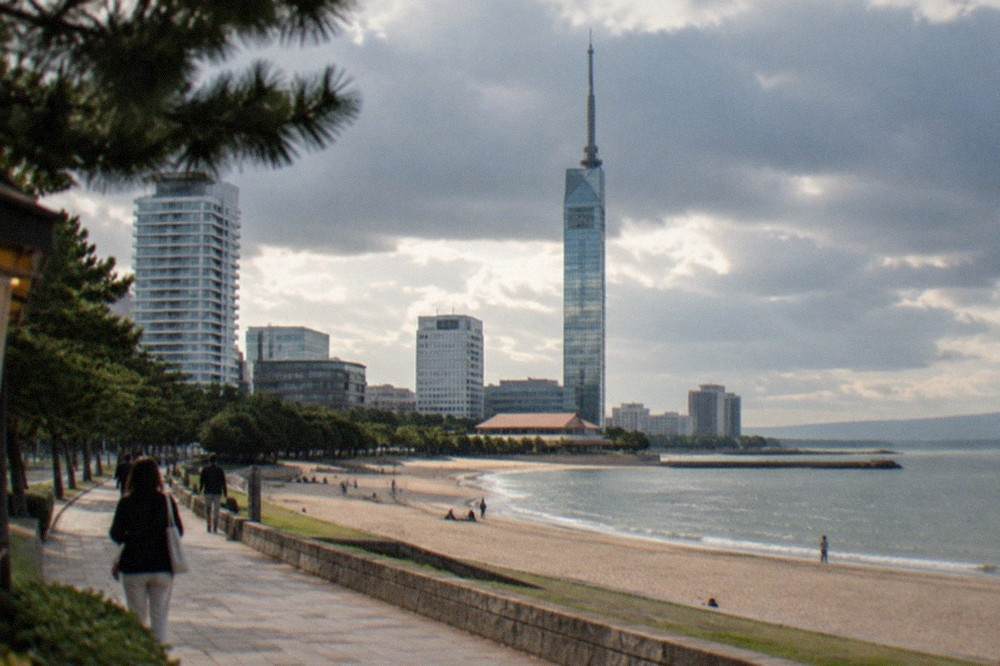
Fukuoka Tower dominates the Momochi waterfront, its triangular mirrored exterior reflecting the sky and the Genkai Sea. The observation decks sit at 116, 120, and 123 metres, and the tower is lit seasonally: a moon and rabbit motif in September, a Christmas tree from early November, and a countdown display at New Year. As listed on the tower's official charge page, admission is ¥1,000 for adults, ¥500 for elementary and junior high students, and ¥200 for children aged four and over. The tower closes on two days each year for maintenance, the last Monday and Tuesday of June; in 2027 those dates are June 28 and 29.
Nearby, Canal City Hakata is a sprawling shopping and entertainment complex built around a man-made canal, with a fountain show that runs every half hour, a theatre, and a ramen stadium on the fifth floor where eight regional ramen shops compete for attention. Entry is free, and the complex is open every day of the year, with shops from 10:00 to 21:00 and restaurants until 23:00.
The city's art museums are another draw. The Fukuoka Art Museum, in Ohori Park, charges ¥200 for its collection exhibition, with free entry for junior high students and younger and for residents over 65. The Fukuoka Asian Art Museum, near Nakasu, is free to enter the building; only the Asia Gallery charges, at the same ¥200 rate, and its collection of around 5,000 works from 23 countries is the only one of its kind in Japan. Both museums close on different weekdays, so checking the schedule before you go is essential.
A ticket to the observation deck is an easy way to orient yourself before exploring the neighbourhoods below. The listing for the tower admission ticket is simple: a single-entry pass that takes about 30 to 40 minutes, and it is one of the few attractions in the city that stays open late.
For a broader look at what to prioritise on a first visit, our guide to what is a must-do in Fukuoka covers the full range, from the tower to the temples.
Festivals, Sumo, and the Seasonal Calendar
Fukuoka's festival calendar is dominated by two major events. The Hakata Gion Yamakasa, held July 1 to 15, culminates in a dawn float race at 4:59 a.m. on the final day, with teams carrying one-ton floats through Hakata's streets. Hakata Dontaku, staged during Golden Week on May 3 and 4, is a city-wide parade with over 30,000 participants. The November Kyushu Basho sumo tournament and July's surprising rainfall peak of 299.1 millimetres also shape the seasonal rhythm.
The Yamakasa is the festival that most people associate with Fukuoka. The decorative kazariyama floats go on display from July 1, and the carrying events intensify from around July 10. The Oiyama finale, on July 15 at 4:59 a.m., sends teams racing roughly five kilometres through the streets of Hakata, carrying floats that weigh about a ton. It is a religious event rooted in Kushida Shrine, not a tourist spectacle, and the start time is fixed by tradition. The official site at hakatayamakasa.com publishes the schedule each year.
Hakata Dontaku is the other major event. Held during Golden Week, it is a city-wide parade and performance festival with stages across central Fukuoka. The finale, the So Odori dance, is open to anyone who wants to join. Unlike Yamakasa, Dontaku is a civic celebration, and it gives the city a completely different energy in spring.
Sumo adds another layer to Fukuoka's fame. The November Kyushu Basho, held at the Fukuoka Kokusai Center, is the last of the six annual grand sumo tournaments and the only one staged in Kyushu. Outside of November, morning sumo practice visits are available at local stables, offering a quieter look at the sport. The seasonal calendar also includes cherry blossoms in late March and early April, with Maizuru Park and Nishi Park among the best viewing spots, and autumn leaves from mid-November into early December, especially around Dazaifu. July, despite being the month of Yamakasa, is also Fukuoka's wettest month, a fact that surprises most visitors and is worth planning around if you are coming for the festival.
If you are still weighing whether the city is right for your trip, our page on whether Fukuoka is worth visiting walks through the pros and cons across every season.
Common Questions About What Fukuoka Is Famous For
What Is Fukuoka Famous For?
Fukuoka is famous for its tonkotsu ramen, yatai street food stalls, Dazaifu Tenmangu shrine, the Hakata Gion Yamakasa festival, Fukuoka Tower, and its role as Kyushu's gateway.
What food is Fukuoka most famous for?
Hakata-style tonkotsu ramen, with its creamy pork-bone broth and thin noodles, is the city's signature dish. Mentaiko, motsunabe, and the yatai street food culture are also widely associated with Fukuoka.
Is Fukuoka worth visiting?
Yes. Fukuoka offers a compact, walkable city centre, a nationally important food scene, historic shrines, and easy access to Kyushu's volcanic landscapes. It is often described as Japan's most liveable large city.
What is the most famous shrine in Fukuoka?
Dazaifu Tenmangu, dedicated to the god of learning, is the most famous. It is the head shrine of Tenmangu across Japan and attracts millions of visitors annually.
What is Hakata Gion Yamakasa?
Hakata Gion Yamakasa is a two-week festival held every July in Fukuoka, culminating in a dawn float race on July 15. It is one of Japan's most famous summer festivals.
Is there a Fukuoka Station?
No. The city's main rail station is Hakata Station. Fukuoka and Hakata refer to the same city; Hakata is a ward and the station name, not a separate destination.