Is Fukuoka Friendly to Foreigners?
An honest answer to whether Fukuoka is friendly to foreign visitors, based on verified city statistics, transport facts and the real friction points.
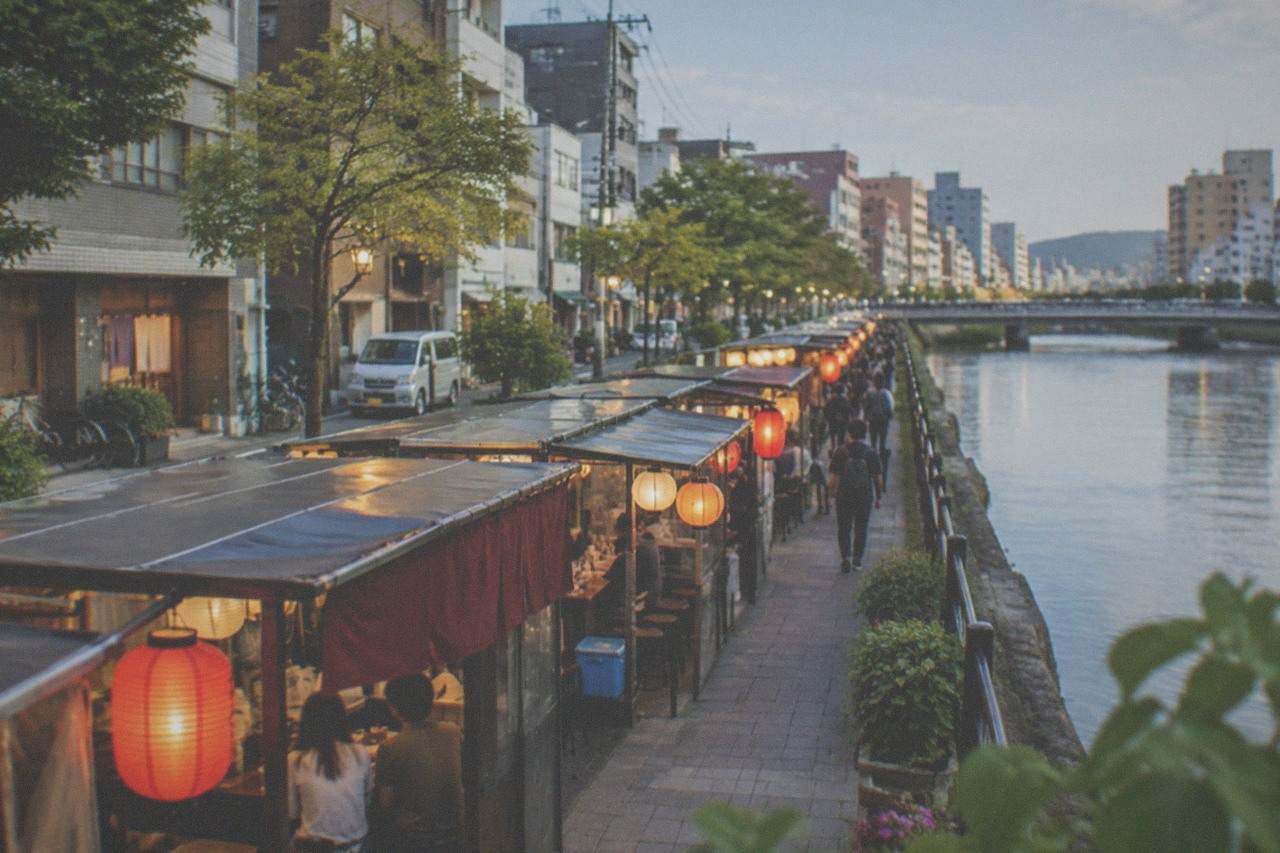
Fukuoka has spent the last few years absorbing foreign visitors at a pace very few Japanese cities can match, and it has done so without the tourist-saturation friction that now defines parts of Tokyo and Kyoto. The city counted roughly 4.33 million foreign entrants arriving through Fukuoka Airport and Hakata Port in 2025, a two-year record high according to the city's own tourism statistics. That figure counts arrivals through the airport and the port rather than overnight visitors, but the direction is unmistakable: a lot of foreigners are choosing this city, and a lot of them are coming back.
Is Fukuoka Friendly to Foreigners?
Yes, in the practical sense that matters most: Fukuoka is compact, walkable, unusually well connected to the rest of Asia, and its headline attractions are either free or cheap. Foreign arrivals through the airport and port hit a record in 2025, the famous yatai stalls must post their prices by city ordinance, and the whole tourist core sits within a few kilometres. Friendliness here is a city that is genuinely easy to be a foreigner in.
The honest way to answer this question is to separate warmth from function. Warmth is subjective and varies stall to stall, waiter to waiter. Function is measurable: how hard is it to arrive, eat, travel and pay as someone who does not speak Japanese. On function, Fukuoka scores remarkably well, and the reasons are structural rather than accidental.
The city's population reached 1,663,892 in the 2025 census quick report, up 51,500 people and 3.2 percent since the previous census, the highest growth rate among Japan's ordinance-designated cities. Growth of that kind does not happen in a place that is hostile to newcomers, foreign or domestic. Fukuoka has spent a decade marketing itself to startups, students and international arrivals, and the infrastructure has followed.
If you are still weighing the city against other destinations, the deeper case is laid out in is Fukuoka worth visiting, and the practical question of timing is covered in how many days in Fukuoka is enough.
How Many Foreign Visitors Does Fukuoka Actually Get?
About 4.33 million foreign entrants passed through Fukuoka Airport and Hakata Port in 2025, the city's own statistics show, a two-year record high. Hakata Port logged more than 200 cruise ship calls in 2025, and Fukuoka Airport handled roughly 28.38 million total passengers across domestic and international routes. A city of 1.66 million residents is receiving foreign arrivals at a scale that rivals destinations several times its size.
Those numbers matter for a visitor deciding whether Fukuoka is friendly, because volume drives accommodation. Restaurants in the tourist core are used to non-Japanese speakers. Hotels have check-in processes built for international guests. The airport operates direct international routes across Asia, and the second runway, opened in March 2025, added capacity on top of that.
There is a caveat worth stating plainly. The 4.33 million figure counts entrants through the airport and the port, and a cruise passenger who spends six hours in the city is counted the same as a traveller who stays a week. It is an arrivals figure, not a visitor-nights figure, and it should not be repeated as "4.33 million tourists visited Fukuoka" because that is not what the city measured.
Even allowing for that, the port traffic is itself a friendliness signal. Cruise ports live or die on how easily thousands of foreigners can walk off a ship and into a city, and Hakata's terminal sits minutes from the centre by subway, with a ¥260 fare from the airport into Hakata Station on the Kuko line. The airport's closeness to the city centre is one of Fukuoka's genuine structural advantages, and unlike most competing guides, this site will not print a journey time in minutes for that ride, because no official page states one.
Does Anyone Speak English in Fukuoka?
English support is thinner than in Tokyo but broader than the city's size suggests, and the gaps sit exactly where you would expect: small restaurants, taxi ranks and neighbourhood shops. Subway signage and fare machines carry English menus, the tourist information desks at Tenjin, Hakata Station and the airport sell passes in English, and major sights post multilingual guidance. You can run a full trip on English at the transport and hotel level, and you will hit Japanese-only at street level.
That street-level gap is smaller in Fukuoka than in most regional Japanese cities because the tourist core is so concentrated. Kushida Shrine, Canal City Hakata, the Nakasu yatai stalls and Tenjin's shopping district all sit within a few kilometres of one another, so the number of separate Japanese-only interactions you need to survive is low. Translation apps close most of the rest.
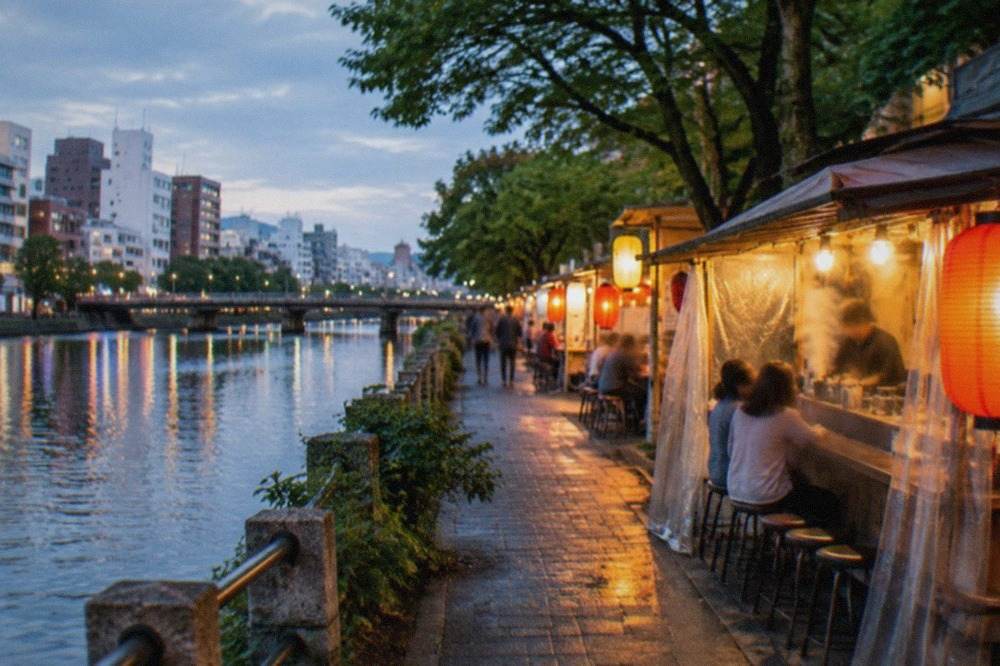
The yatai deserve a specific mention here, because they are the interaction many visitors worry about most. About 100 licensed stalls operate across the city, concentrated in Nakasu, Tenjin and Nagahama, and seating is communal by design. You will sit next to strangers, often locals, often after their second beer. The city's yatai ordinance requires every stall to display its prices where customers can easily see them, and it bans the "market price" dodge: any dish priced on the day's market must show that day's actual price. A foreigner at a yatai is not gambling on the bill, which is a better protection than most street-food scenes anywhere offer.
Stalls are weather-sensitive and close at the operator's discretion, so a stall you read about online may simply not be open the night you walk past. That is normal, not a slight.
Is the City Easy to Get Around Without Japanese?
Yes, and this is where Fukuoka outperforms cities twice its size. The subway's three lines carry English signage and fares from ¥210 for up to 3 km to ¥380 beyond 19 km, a one-day pass costs ¥640, and the Fukuoka Tourist City Pass gives overseas visitors a day of unlimited travel for ¥2,500, or ¥2,800 with Dazaifu. Hakata and Fukuoka are the same city, and the main rail hub is Hakata Station, because there is no JR Fukuoka Station.
The fare structure is simple enough to plan around, and the official subway fare table publishes the bands openly. The pass situation is where Fukuoka is genuinely generous to foreigners, and where most competing guides are years out of date.
| Ticket | Adult price | What it covers | Who can buy it |
|---|---|---|---|
| Subway single fare | ¥210 to ¥380 | One journey, zone-based | Anyone |
| Subway 1-day pass | ¥640 | All three subway lines, first to last train | Anyone, at machines and info desks |
| Fukuoka Tourist City Pass | ¥2,500 | One day of subway, Nishitetsu buses and trains, some JR lines and ferries, plus attraction discounts | Overseas tourists on a short-stay visa, passport checked |
| City Pass + Dazaifu | ¥2,800 | The above plus Nishitetsu coverage to Dazaifu, Tabito liner excluded | Same passport requirement |
Two things in that table are worth underlining. The Tourist City Pass requires a passport check at the counter, because it is restricted to overseas visitors on a short-stay visa, and most international guides still quote the old prices, which are years stale. The official city pass page states the current figures and the sale points, which include the airport and both subway customer centres.
For arrivals specifically, the subway is usually all you need, but the Private Arrival Transfer from Fukuoka International Airport to Fukuoka City is the option that removes every variable at once: a driver meets you at the terminal and takes you to your accommodation, from $149 per person for 30 minutes to an hour. It suits late arrivals, families with luggage and anyone whose first Japanese sentence of the trip should not be a taxi negotiation.
Where Do Foreigners Run Into Friction?
The friction points are few but real: cash remains king at some gates, opening hours are not always published in English, and the yatai experience assumes you can read a posted menu in Japanese. Uminonakamichi Seaside Park's entrance gate takes cash only, many smaller shrines and temples publish no official hours at all, and card acceptance at food stalls varies stall to stall. None of these are hostility; they are a mid-sized Japanese city being a mid-sized Japanese city.
The cash-only gate at Uminonakamichi Seaside Park is the single most useful thing to know in this section, and almost nobody mentions it. The park's own guidance states that admission at the gate is cash only, so a traveller who has gone fully cashless arrives at a family attraction and cannot enter. Carry some yen. The subway, by contrast, accepts nationwide IC cards and contactless credit cards, so the cash need is patchy rather than universal.
| Situation | What actually happens | Practical answer |
|---|---|---|
| Yatai payment | Varies by stall, some take cards and QR, many do not | Carry cash for stalls |
| Uminonakamichi gate | Cash only, stated on the park's official page | Withdraw yen before going |
| Small shrine and temple hours | Often unpublished in any language | Go in daytime and expect access |
| Museum closed days | Fukuoka Art Museum closes Mondays, Asian Art Museum closes Wednesdays | Check the day of the week before you walk |
| Tourist City Pass purchase | Passport checked, short-stay visa required | Bring the passport, buy paper at the counter |
One more honest note: the city's famous food stalls take walk-ins and cannot be booked, so no amount of planning secures a seat at a specific stall. Guided yatai and food-stall tours exist precisely because a guide solves the language and menu problem at the counter, not because a stall requires a reservation.
What Makes Fukuoka Easier Than Tokyo or Osaka?
Scale. Fukuoka's airport sits unusually close to the city centre with a verified ¥260 subway fare into Hakata Station, its main sights cluster within a few kilometres, and its headline attractions are mostly free: Kushida Shrine's grounds, Tochoji, Shofukuji, Ohori Park, the castle ruins at Maizuru Park and Dazaifu Tenmangu all charge nothing to enter. Tokyo and Osaka reward visitors who plan hard; Fukuoka forgives visitors who do not.
The free-entry list is longer than most travellers expect. Dazaifu Tenmangu's own FAQ states there is no entrance fee. The Fukuoka Asian Art Museum's building is free to enter, with only the Asia Gallery charging, and both city art museums admit visitors under 15 free and residents over 65 free. Fukuoka Tower, at ¥1,000 for an adult, is one of the few headline sights that charges at all, and the Ohori Park Japanese Garden asks ¥250 for the best corner of the city's best park.
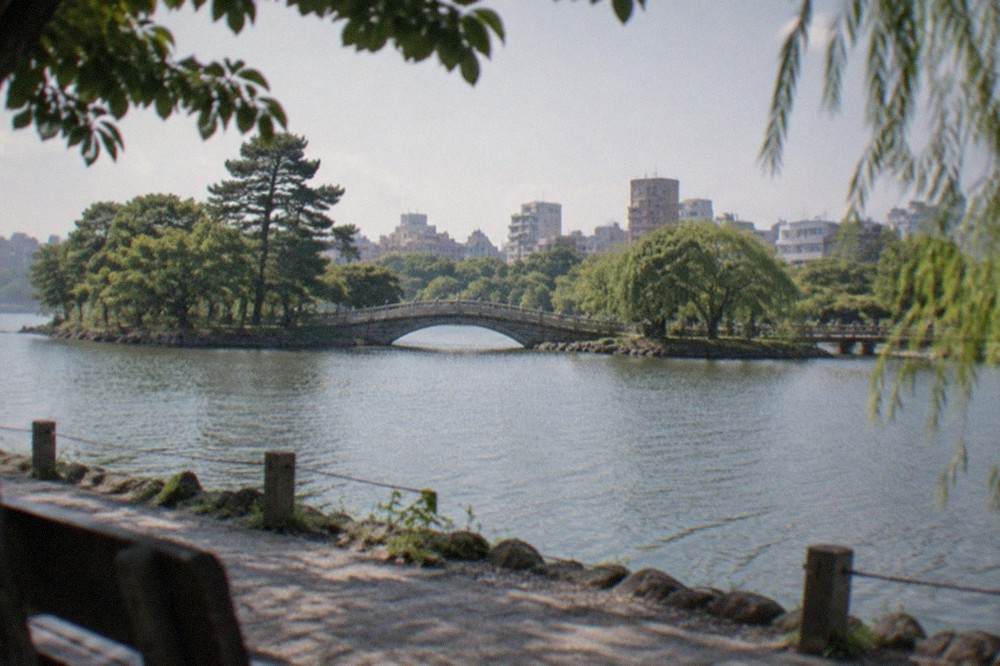
Day trips widen the net without adding difficulty. Dazaifu, Yanagawa, Itoshima, Nokonoshima and Shikanoshima all sit within easy reach of the city, and full-day trips run to Yufuin, Beppu, Mount Aso, Takachiho, Kumamoto and Nagasaki. A foreign visitor with a week does not need to change hotels to see a serious slice of Kyushu, and questions like is Fukuoka cheaper than Tokyo and what is the best area to stay in Fukuoka both come out in the city's favour for the same reason: a compact core keeps transport costs and transit time low.
The city's character helps too. Fukuoka is on Hakata Bay on the Genkai Sea side of northern Kyushu, and its food culture, tonkotsu ramen, motsunabe, mentaiko and the yatai themselves, is built around informal, counter-side eating where a foreigner with a translation app is a normal customer, not a curiosity. The Fukuoka Japan Travel Guide covers each of these in detail, but the short version is that the city's most famous experiences happen at counters and on benches, which are the most forgiving formats a non-Japanese speaker can encounter.
Common Questions About Fukuoka for Foreign Visitors
Is Fukuoka Friendly To Foreigners?
Yes. The city received about 4.33 million foreign entrants through its airport and port in 2025, its transport system carries English signage, its headline sights are largely free, and its yatai ordinance requires prices to be posted visibly. The friction that exists, cash-only gates and Japanese-only menus, is logistical rather than unwelcoming.
Is Fukuoka safe for foreign tourists?
Fukuoka is generally regarded as a low-crime city, and no official source this site could verify publishes visitor-specific safety statistics, so no number is printed here. The practical risks travellers actually encounter are weather-related: typhoon season runs roughly July through October, and the rainy season falls around June.
Do I need to speak Japanese in Fukuoka?
No, but Japanese-only situations will arise at small restaurants and neighbourhood shops. The subway, major hotels and the big sights all function in English, and the international tourist information desks at Tenjin, Hakata Station and the airport handle pass purchases and questions in English.
Is Fukuoka expensive for foreigners?
No, by Japanese big-city standards. Subway fares start at ¥210, a day pass is ¥640, the Tourist City Pass is ¥2,500 with a passport check, and most major sights, including Dazaifu Tenmangu and the castle ruins, are free to enter. Fukuoka Tower at ¥1,000 and the Ohori Park Japanese Garden at ¥250 are among the few paid headline sights.
Is Fukuoka a big city or a small one?
Big, and growing. The 2025 census quick report puts the population at 1,663,892, up 3.2 percent since the previous census, the fastest growth rate of any of Japan's designated cities. It is the largest city in Kyushu and its economic centre.
How do I get from Fukuoka Airport to the city centre?
Take the subway's Kuko line. The fare from the airport to Hakata Station is ¥260, and the airport is unusually close to the centre, though this site does not print a journey time in minutes because no official page states one. There is no JR Fukuoka Station; the main rail hub is Hakata Station, and Hakata is a ward of Fukuoka, not a separate city.