How Many Days in Fukuoka Is Enough?
A practical answer to how many days Fukuoka needs, from a tight two-day city stay to five days with Kyushu day trips, with verified fares, timings and what to skip.
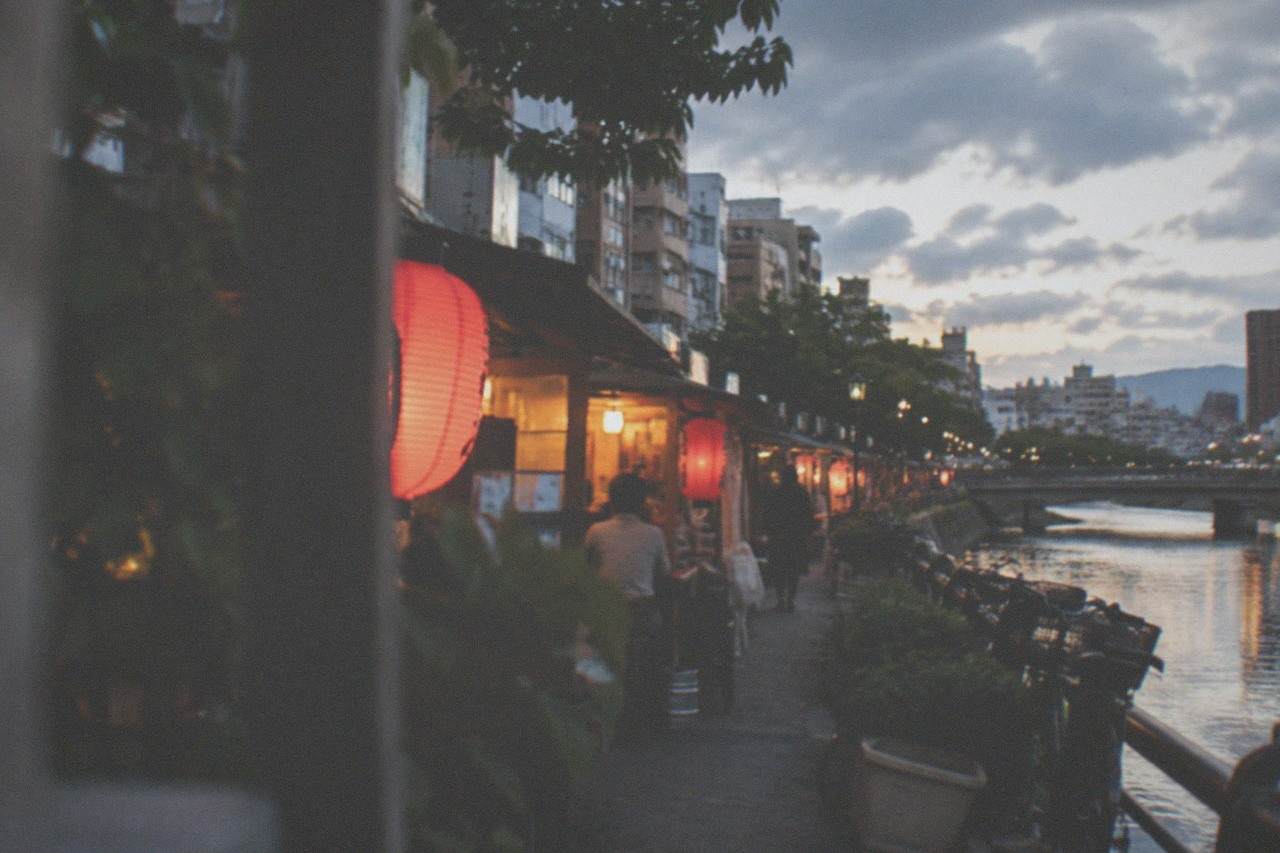
Fukuoka rewards a shorter trip than almost any other Japanese city of its size. The airport sits unusually close to the centre, the subway ride into Hakata costs a verified ¥260, and the headline sights, Kushida Shrine, Ohori Park, the yatai stalls and Dazaifu, sit within an hour of one another. That compression is why the honest answer to the days question is lower than most visitors expect. This page works through the arithmetic for two, three, four and five days, using verified fares and opening facts rather than guesswork, so you can match the length of your stay to what you actually want to see.
How Many Days in Fukuoka Is Enough?
Three days is enough for the overwhelming majority of visitors: two full days cover the city's core sights and eating scenes, and the third absorbs either Dazaifu or a slower morning plus the Nakasu yatai at night. Travellers adding Kyushu day trips, Beppu, Yufuin, Takachiho or Mount Aso, should budget four or five days, one base day per trip plus travel slack. Anything under two days means choosing between the food culture and the shrines, and the food usually wins.
The reason three works so well is geography. Fukuoka is a compact city on Hakata Bay, and its main sightseeing clusters, Hakata's temples and shrine quarter, the Ohori Park and castle area, and Tenjin's shopping and eating districts, sit on three subway lines that all cross at Hakata and Nakasu-Kawabata. A single subway fare runs from ¥210 for up to 3 km to ¥380 for the longest zones, and a one-day pass costs ¥640 for adults, which pays for itself on a four-ride day, per the city subway's official fare page. There is no equivalent of Tokyo's hour-long cross-city haul here.
One correction worth making early, because it changes how you plan: Hakata and Fukuoka are the same city. Hakata is the ward and the name of the main station, not a separate destination you travel to. Guides that treat them as two places produce itineraries with imaginary transfers. The station you will arrive at by Shinkansen or subway is Hakata, and it sits inside the city whose sights you are here to see. If you are arriving by air, the airport to city guide covers the transfer in detail.
What Does Two Days Actually Cover?
Two days covers Hakata's temple and shrine quarter, Ohori Park and the castle ruins, Tenjin and Canal City Hakata, one proper yatai evening in Nakasu, and either the Fukuoka Tower and Momochi waterfront or the Asian art museums, but not both. It is a real itinerary, not a rushed one, because Fukuoka's sights cluster tightly. What two days cannot absorb is Dazaifu done well plus a Kyushu day trip plus a second evening food crawl.
Day one belongs to Hakata. Kushida Shrine, Tochoji with its Great Buddha, and Shofukuji, Japan's first Zen temple, sit within a short walk of Hakata Station, and all are free to enter. The old town around them is compact enough to walk in a morning. Canal City Hakata is open every day of the year, with shops from 10:00 to 21:00, and makes a natural afternoon stop before the stalls open. If you are weighing a short stay, the is 2 days enough in Fukuoka answer goes deeper on the trade-offs.
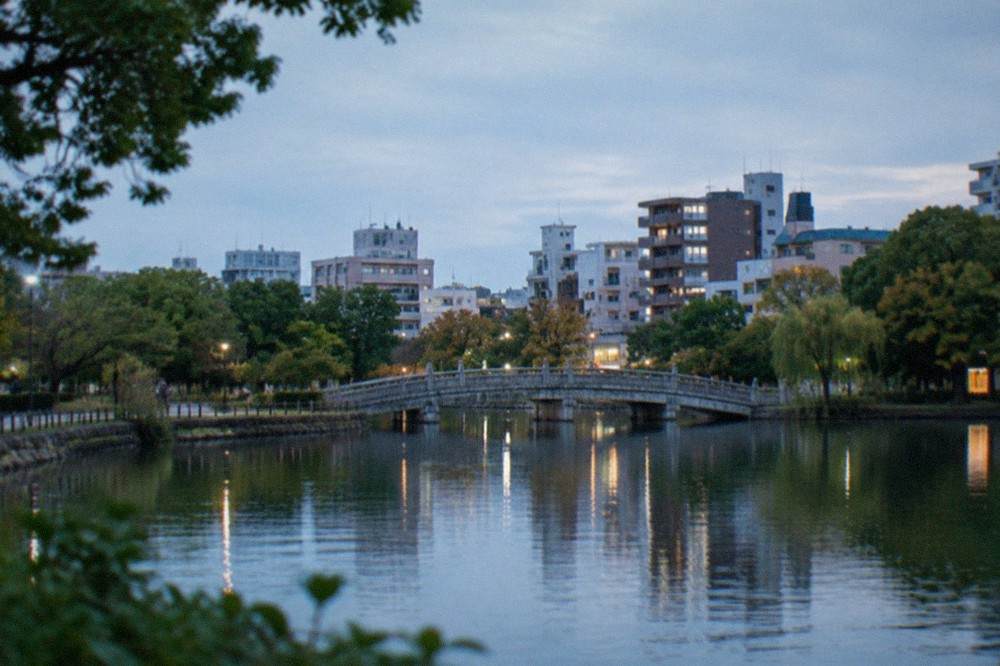
Day two goes west. Ohori Park is free and open, and its Japanese Garden charges a modest ¥250 for adults, closing Mondays. The Fukuoka Castle ruins in Maizuru Park are also free, though note that the main keep base, the Tenshudai, is closed from 26 May 2026 until the end of December 2026 for an archaeological excavation prompted by a document describing a keep that may never have existed, per the park's own notice. Finish at Fukuoka Tower, ¥1,000 for adults and open until 22:00, or at the Fukuoka Asian Art Museum, where building entry is free and only the Asia Gallery charges ¥200.
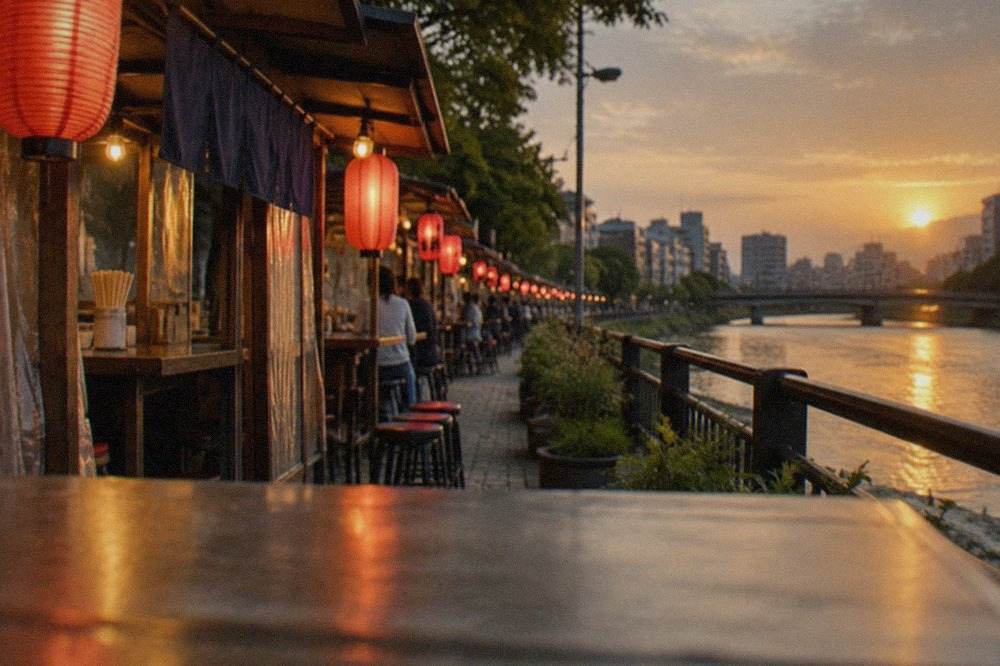
For the evenings, the yatai are the point. The city has about 100 licensed food stalls, more than any other Japanese city, and the ordinance that governs them bans vague "market price" menus, so every stall must post its prices where customers can see them. Stalls typically open around 18:00 to 18:30 and pack up in the small hours, weather permitting. Rain closes many of them, which is worth knowing before you stake an evening on one.
Is Three Days the Sweet Spot?
Three days is the sweet spot for most first visits, and the third day is best spent in Dazaifu, thirty minutes and a ¥480 Nishitetsu fare from Tenjin with one transfer, or as a slower city day that adds the markets and a second evening district. Dazaifu Tenmangu has no entrance fee, opens from 6:00 to 6:30 depending on season, and closes between 18:30 and 19:30 by month. A three-day stay also buys the option of a guided experience without feeling squeezed.
Dazaifu is the standard third-day answer for good reason. The shrine, dedicated to the god of learning, draws students from across Japan, and the approach street with its umegae mochi stalls is half the pleasure. The Kyushu National Museum sits fifteen minutes' walk on if you want depth. The Nishitetsu run from Tenjin takes about thirty minutes with a transfer at Futsukaichi, and the Tourist City Pass in its Dazaifu version, ¥2,800 for adults with a passport check at the counter, bundles a day of subway, bus and train travel for overseas visitors on a short-stay visa. Everything else covered here is indexed on Fukuoka Japan Travel Guide.
If a second city day appeals more, spend the morning at a market, then the afternoon in Tenjin's underground mall or the Daimyo boutiques, and the evening back among the stalls you missed on night one. The 3-day itinerary lays this out hour by hour, and the is 3 days enough for Fukuoka answer goes deeper on the trade-offs.
A guided half-day can also slot into a three-day plan without costing you a day. The Hakata guided bike ride, from $73 per person and rated 4.7 from 22 reviews, covers the city and the Hakata district in three and a half hours, which is an efficient way to compress day one's ground if you would rather spend the afternoon eating than walking.
When Do You Need Four or Five Days?
Four or five days stops being about Fukuoka city and becomes about Kyushu: with a fourth day you can add one full-day trip, Beppu and Yufuin, Mount Aso, Takachiho Gorge or Nagasaki, and a fifth day buys a second trip or a relaxed coastal day on Itoshima or Nokonoshima. The city itself does not need four days. Anyone telling you it does is padding, or has not noticed how close the sights sit to one another.
The day trips are where the extra days earn their keep. Mount Aso tours run around ten hours from Fukuoka and start from $46 per person. Takachiho Gorge trips run eleven hours and up. Beppu and Yufuin combinations run about ten hours. These are full days, not half-day excursions, and treating them as anything less is the commonest planning error in the region. The 4-day itinerary and 5-day itinerary build the trips in.
| Stay length | City coverage | Day trips realistic | Best for |
|---|---|---|---|
| 1 day | Hakata quarter only | None | Layovers, cruise stops |
| 2 days | Full city core, one yatai evening | None, or Dazaifu rushed | Short Japan routes |
| 3 days | Full city core plus Dazaifu | One, at a squeeze | Most first visits |
| 4 days | City plus buffer day | One full-day trip | Kyushu-focused trips |
| 5 days | City plus buffer day | Two full-day trips | Slow travel, repeat visitors |
Season matters more than length. July is Fukuoka's wettest month at 299.1 mm against June's 249.6 mm, a reversal of what most guides claim, even though June is the tsuyu rainy season and July is Yamakasa festival month. Typhoon season runs roughly July through October. Neither makes the city unvisitable, but a two-day trip booked blind in July carries more schedule risk than a three-day one, and the best month to visit Fukuoka answer breaks the calendar down.
How Do Day Trips Change the Math?
Day trips change the math because they are full days that return you to the same bed, so a four-day stay with two trips is really a two-city-days trip plus two excursions, and that is a genuinely different holiday from four days in Fukuoka itself. Budget one base city day per two day trips, and never schedule a trip on your arrival or departure day. The rail and bus networks make the returns reliable, but the days are long.
The practical rule is simple: protect your first full day for the city, because the yatai evenings and the shrine mornings are what Fukuoka is, and spend the later days out. A Mount Aso and grasslands tour runs about ten hours and starts from $46 per person, rated 4.7 from 224 reviews. The Aso volcano, Kusasenri grasslands tour covers similar ground with a shrine stop. Beppu's hells and Yufuin run as a combined day from $48. For families, Marine World Uminonakamichi sits on the eastern edge of the bay with e-tickets from $16 per person, and pairs with the seaside park next door, whose gate is cash only, a detail almost no guide mentions.
| Day trip | Travel each way | Tour length | Starting price |
|---|---|---|---|
| Dazaifu | About 30 min by train | Half day | Train fare ¥480 |
| Beppu and Yufuin | Long road transfer | About 10 hours | From $48 |
| Mount Aso | Long road transfer | About 10 hours | From $46 |
| Takachiho Gorge | Long road transfer | About 11 hours | From $48 |
| Nagasaki | Private tour, door to door | 12 to 13 hours | From $858 private |
If five days sounds like too much city, remember the fifth day can be coastal rather than cultural. Itoshima's beaches and Sakurai Futamigaura sit under an hour from town, and Nokonoshima is a short ferry ride across the bay. A five-day plan that pairs two city days, one Dazaifu day and two Kyushu excursions is the fullest version of a Fukuoka trip most travellers will ever need.
Common Questions About How Many Days in Fukuoka
How Many Days In Fukuoka Is Enough?
Three days is enough for most visitors: two city days plus Dazaifu or a slower third day. Add a fourth and fifth day only for Kyushu day trips such as Beppu, Mount Aso or Takachiho, which are full ten-hour days from the city.
Is 2 days enough in Fukuoka?
Yes, for the city core. Two days cover the Hakata shrine quarter, Ohori Park, the castle ruins, Tenjin, Canal City and one yatai evening, but not Dazaifu and a day trip together.
Is 4 days in Fukuoka too much?
Not if you use the fourth day for a Kyushu trip such as Beppu and Yufuin or Mount Aso. Four days inside the city alone is more than the sights need.
Can you do Dazaifu as a half day?
Yes. The Nishitetsu run from Tenjin takes about thirty minutes with one transfer at Futsukaichi, and the shrine has no entrance fee, so a half day covers the approach and main grounds comfortably.
How many days do you need for Fukuoka and Kyushu day trips?
Five. Two to three days for the city, then one day per full-day trip, with buffer for weather, since typhoon season runs roughly July through October and July is the city's wettest month at 299.1 mm.