Which Is Closer to Fukuoka, Tokyo or Osaka?
Osaka is closer to Fukuoka than Tokyo, and the gap shapes how most travellers route their trip. Here is how distance, rail and flights compare.
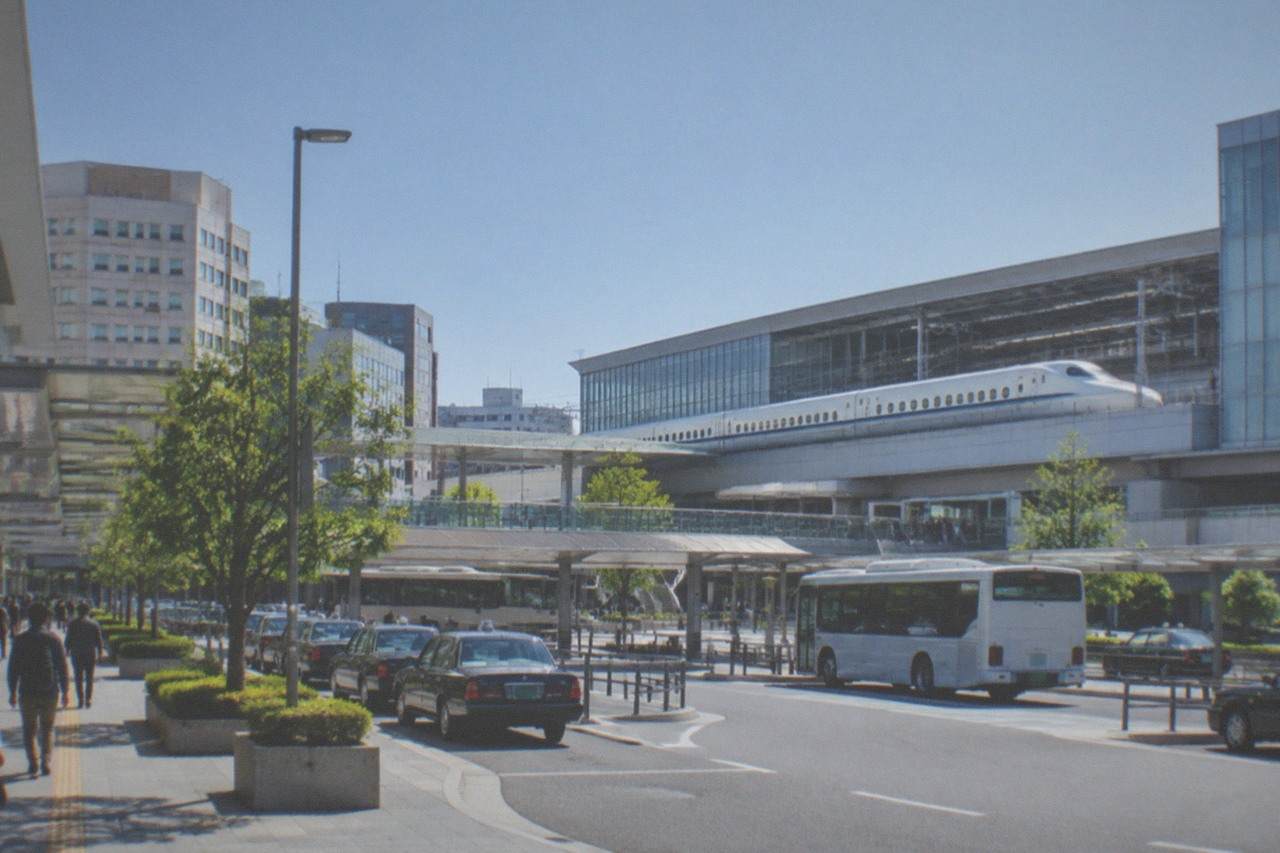
Fukuoka sits on Hakata Bay, on the Genkai Sea side of northern Kyushu, which puts it firmly in western Japan. That geography answers this question before any timetable is opened: Osaka, on Honshu's Inland Sea coast, is the closer of the two, and by a wide margin. Tokyo sits at the far end of the country's main island, while Osaka is the first major Kansai stop on the bullet train line that runs out of Fukuoka's Hakata Station. The gap between the two journeys is large enough that it shapes entire itineraries, not just a single booking.

Which Is Closer to Fukuoka, Tokyo or Osaka?
Osaka is closer to Fukuoka than Tokyo, and it is not a close call. The Shinkansen ride from Hakata Station to Osaka covers roughly half the distance of the run to Tokyo, which is why Osaka is the standard first or last stop for travellers pairing Fukuoka with the main Honshu corridor. Tokyo remains reachable in a single seated journey, but it demands most of a day in each direction, while Osaka is a comfortable half-day hop. Every rail pass calculation and itinerary decision flows from that difference.
The reason is simple map logic. Fukuoka anchors the northern coast of Kyushu, and the Sanyo Shinkansen line runs east from Hakata along the Seto Inland Sea coast, hitting Hiroshima, Okayama and then Osaka in sequence before continuing to Nagoya and Tokyo. Osaka is the natural gateway between Kyushu and the rest of Japan, and the rail spine between the two cities is one of the busiest in the country. Tokyo, by contrast, sits past the entire Chugoku and Kansai region, at the end of the corridor.
This is also why so many first-time visitors misjudge Fukuoka's position. Guides that treat it as a distant outpost tend to describe it as hard to reach, when in practice it is the largest city on the Shinkansen line west of Osaka. Travellers weighing the two cities against each other can dig into the comparison in is Osaka or Fukuoka better, and the fuller head-to-head lives in the Fukuoka versus Osaka guide. Neither comparison changes the underlying answer: Osaka is the nearer neighbour.
One naming point worth settling here, because it confuses itineraries constantly. Hakata and Fukuoka are the same city. Hakata is the ward and the name of the main station, Fukuoka is the city, and there is no JR Fukuoka Station anywhere in Japan. When a timetable says Hakata, it means Fukuoka. The is there a Fukuoka Station page unpacks this in full, because it is the single most common routing error travellers make when connecting from Osaka or Tokyo.
How Does the Shinkansen Change the Maths?
The bullet train compresses the Tokyo gap far more than the Osaka gap, which is why the distance difference matters less than the timetable suggests. From Hakata, the fastest trains to Osaka cover the run in a single morning, while the fastest trains to Tokyo still take the better part of a day. Neither journey requires an overnight stop, but only the Osaka leg leaves you with a useful afternoon on arrival. For anyone building a multi-city Japan route, that asymmetry decides the order in which cities are visited.
The practical pattern most travellers land on is a west-to-east or east-to-west chain: Tokyo, then Nagoya or Kyoto, then Osaka, then Hiroshima, then Fukuoka, or the reverse. Because Osaka sits mid-chain, it pairs naturally with Fukuoka as a two-city trip. Tokyo pairs with Fukuoka too, but usually with Kyoto and Osaka slotted between them, since almost nobody rides past Osaka without stopping. Planning a route that starts in the capital is covered in the Tokyo to Fukuoka guide, and the reverse direction in the Osaka to Fukuoka guide.
There is a second consequence of the distance gap that few guides mention: day-trip geography. Fukuoka's own day-trip range runs to Dazaifu, Yanagawa, Itoshima, Nokonoshima and Kitakyushu, with Yufuin, Beppu and Kumamoto reachable as full days. Osaka and Tokyo are firmly outside that range, so a traveller based in Fukuoka should plan them as relocation legs, not excursions. The region itself contains far more than most visitors expect, and a week spent inside Kyushu is a week that never needs a long-distance ticket at all.
The direction of travel also affects which rail products make sense. JR Kyushu's passes cover the network within Kyushu, including the run into Hakata, but the Sanyo Shinkansen east of Hakata is JR West territory, so a pass bought for Kyushu does not carry you to Osaka or Tokyo. Travellers chaining the full corridor usually rely on a nationwide pass or point-to-point tickets, and the split happens exactly at Hakata Station. That makes Fukuoka the natural place to change products, and often the natural place to pause for a day or two, which is the argument the Fukuoka versus Tokyo guide makes in more detail.
Is Flying a Better Option Than the Train?
Flying beats the train to Tokyo on total journey time once airport transit is counted, and roughly matches it to Osaka, but the train wins on city-centre convenience in both cases. Fukuoka Airport is unusually close to the city centre, with a verified subway fare of just ¥260 into Hakata, which shortens the door-to-door calculation on any flight. Domestic flights to Tokyo's Haneda are frequent, while the Osaka air corridor is short enough that most travellers simply take the train instead.
The airport's proximity is Fukuoka's quiet structural advantage. The subway's Kuko line connects the airport to Hakata Station for ¥260, a fare derivable from the operator's official 3 to 7 km fare band, and the airport is one of the few in Japan sitting effectively inside the city it serves. The official fare table is published by the city subway operator. What almost every competing guide prints as a journey time in minutes is unverified by any official page, so the honest statement is the plainer one: the airport is unusually close, and the fare is small.
For travellers arriving from overseas rather than flying domestically, the arrival question is the same one. A private transfer from the international terminal to the city removes the need to decode the subway with luggage in hand, and the private airport arrival transfer covers that first leg for a fixed per-person price. This site, Fukuoka Japan Travel Guide, treats the arrival leg as part of the distance question, because a smooth transfer is what turns a long-haul flight into a workable first day.
The transfer is a small luxury rather than a necessity, and the subway handles the same leg well for the price of a coffee. Where it earns its keep is on late arrivals, with children, or with more luggage than a rush-hour train car welcomes. Either way, the airport-to-city leg is the shortest link in any Tokyo or Osaka comparison, which is worth remembering when the rest of the itinerary involves hours in a seat.
The comparison also depends on where your trip ends. A traveller finishing in Tokyo usually flies out of Tokyo and flies into Fukuoka, or the reverse, using the two airports as bookends and the Shinkansen in one direction only. A traveller whose trip centres on Kansai often skips the Fukuoka flight entirely and rides the train, since the Osaka leg is short enough that the airport overhead erases the advantage. Budget airlines serve both corridors, but the rail option between Fukuoka and Osaka is fast and frequent enough that the decision usually comes down to price on the day rather than time saved.
How Should You Split a Trip Between Them?
Split the trip by corridor, not by count: pair Fukuoka with Osaka for a short western-Japan trip, and add Tokyo only when you have a full week or more. A five-day itinerary comfortably covers Fukuoka and Osaka with a stop in Hiroshima, while adding Tokyo pushes the same trip toward eight days or a domestic flight. The distance answer is not trivia, it is the constraint that decides how many cities fit. Most travellers who try to do Tokyo, Osaka and Fukuoka in under a week end up seeing mainly train platforms, and the honest fix is to cut a city.
A reasonable split looks like this, with the distances expressed as travel effort rather than a fixed timetable, since exact minute counts vary by service:
| Route | Direction | Best mode | Notes |
|---|---|---|---|
| Fukuoka to Osaka | East or west | Shinkansen | Roughly half the distance of the Tokyo run; most travellers ride rather than fly |
| Fukuoka to Tokyo | East or west | Shinkansen or flight | Flight wins on total time once airport transit is counted |
| Fukuoka to Hiroshima | East | Shinkansen | Natural midpoint stop on the Osaka corridor |
| Fukuoka within Kyushu | Day trips | Train or bus | Dazaifu, Yanagawa, Itoshima, Kitakyushu all fit as day trips |
The table's message is that Fukuoka is not remote. It is the western terminus of Japan's most important rail corridor, and its own region, Kyushu, contains enough volcanoes, onsen towns and coastlines to fill the days that a Tokyo pairing would otherwise consume in transit. Travellers curious whether the city justifies the detour will find the case made on its own merits across this site's city and region guides, from the food stalls of Nakasu to the day trips into the Kyushu interior.
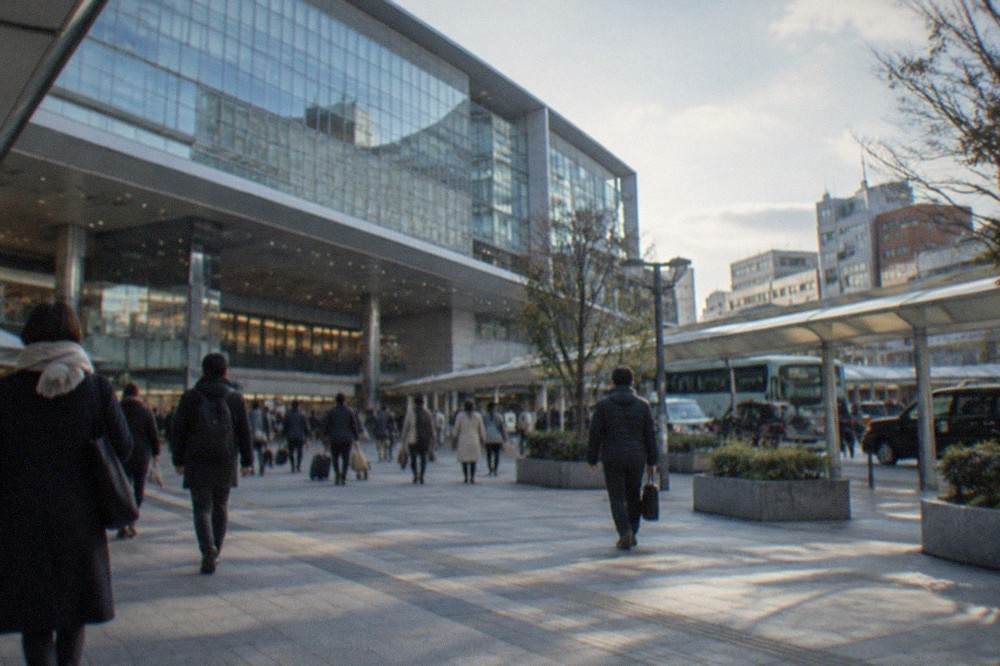
Cost follows the same pattern as distance. The Tokyo leg costs meaningfully more than the Osaka leg by rail, and the is Fukuoka cheaper than Tokyo comparison extends that gap to accommodation and food once you arrive. Travellers on a fixed budget often find that the closer city is also the cheaper pairing, which makes Osaka the default answer twice over. None of this makes Tokyo a bad partner for Fukuoka, it just means the two belong on a longer itinerary, ideally with Kyoto and Osaka absorbing the distance in between.
Common Questions About Distance and Travel from Fukuoka
Which Is Closer To Fukuoka, Tokyo Or Osaka?
Osaka is closer to Fukuoka than Tokyo, by roughly half the distance. The Shinkansen from Hakata Station reaches Osaka in a comfortable half-day ride, while the Tokyo run takes most of a day. This is why Osaka is the standard pairing for shorter trips that include Fukuoka, and Tokyo usually appears on longer itineraries with Kyoto and Osaka in between.
Is there a JR Fukuoka Station?
No. The main station in Fukuoka is Hakata Station, and Hakata is also the name of the ward around it. Hakata and Fukuoka are the same city, not two destinations, so a timetable listing Hakata is listing Fukuoka. This is the most common routing error travellers make when connecting from Osaka or Tokyo.
How do I get from Fukuoka Airport to the city centre?
The subway's Kuko line connects Fukuoka Airport to Hakata Station for a verified fare of ¥260, which falls within the operator's official 3 to 7 km band. The airport is unusually close to the city centre, which is true and officially sourced, though the widely quoted journey time in minutes is not verified by any official page. A free shuttle runs between the international and domestic terminals.
Should I fly or take the train to Tokyo?
Flying generally wins on total journey time to Tokyo once airport transit is counted, because the rail run takes most of a day. To Osaka, the train is usually the better choice, since the corridor is short and frequent and the flight overhead erases any time advantage. In both cases the train delivers you directly to a city-centre station.
Can I visit Osaka as a day trip from Fukuoka?
Not realistically. Osaka is outside Fukuoka's day-trip range, which extends to Dazaifu, Yanagawa, Itoshima, Nokonoshima and Kitakyushu, with Yufuin, Beppu and Kumamoto as full-day options. Osaka and Tokyo should both be planned as relocation legs with an overnight stay, not as excursions from a Fukuoka base.
Does a JR Kyushu pass cover travel to Osaka or Tokyo?
No. JR Kyushu passes cover the network within Kyushu, including the run into Hakata, but the Sanyo Shinkansen east of Hakata is operated by JR West. A nationwide pass or point-to-point tickets are needed for the Osaka and Tokyo legs, which makes Hakata Station the natural point to switch products.