Hakata Dontaku
Hakata Dontaku is Fukuoka's biggest Golden Week festival, two days of parades and street performance held every May 3 and 4 in the city centre.
Short answer
Hakata Dontaku is a two-day festival held every May 3 and 4 in central Fukuoka, with parades along Meiji-dori, dance performances on multiple stages and a finale that anyone can join. It is free to watch, needs no ticket and draws crowds measured in the millions, so the practical planning questions are all about transport, timing and where to stand.
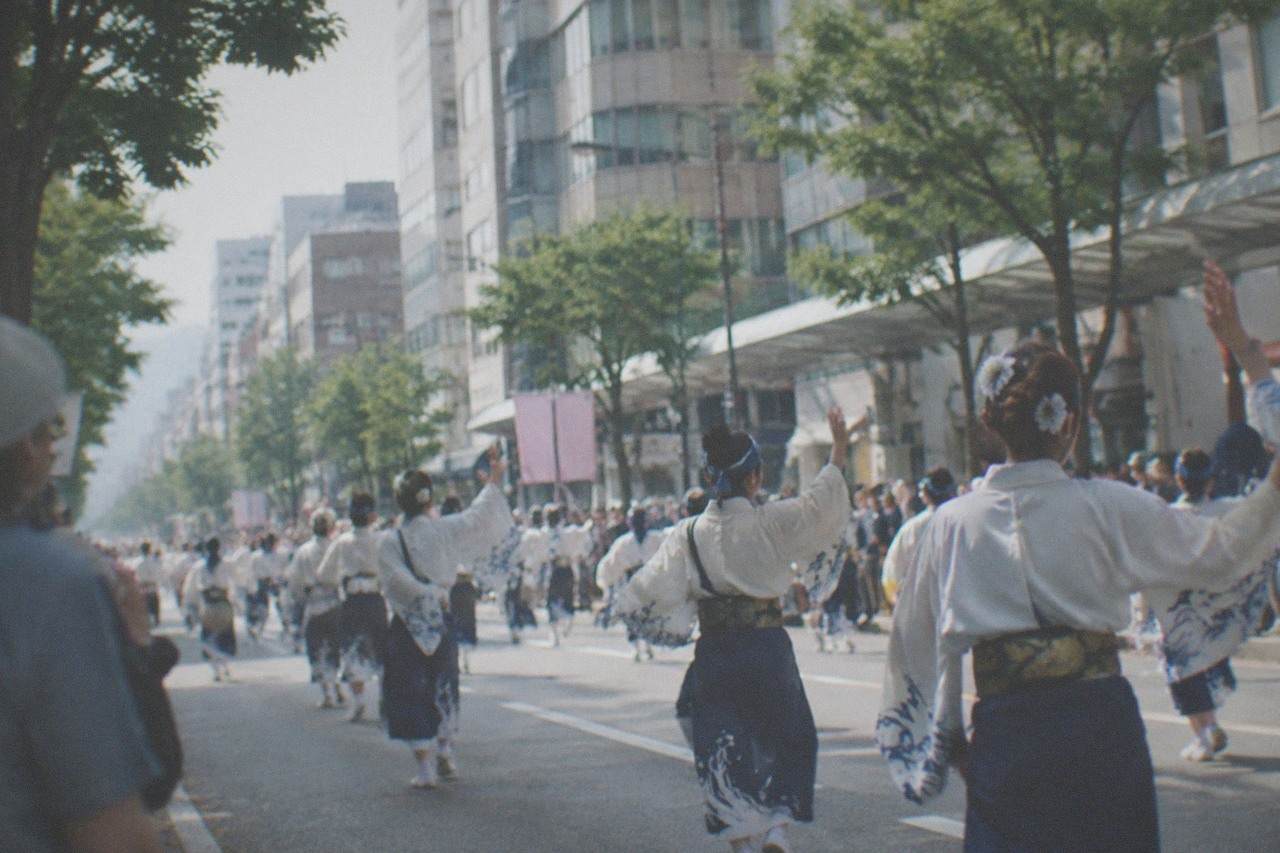
Hakata Dontaku turns the centre of Fukuoka into a two-day stage every May 3 and 4. Dancers in costume fill Meiji-dori, flower-decorated cars crawl past Hakata Station and Tenjin, and the whole thing ends with an open dance that spectators are invited to join rather than just watch. It is one of the largest street festivals in Japan, it costs nothing to attend, and it has no ticketing of any kind: you simply turn up.
The name trips people up. "Dontaku" is a Japanese rendering of the Dutch word zondag, meaning holiday, a leftover from the port city's centuries of trade with the Netherlands. The festival's roots run back to a merchants' procession called Hakata Matsubayashi, which dates to the Edo period, when the townspeople of Hakata paraded to greet the local lord. That tradition still forms the core of the modern event, now staged during Golden Week when much of the country is already on holiday. This page, published by Fukuoka Japan Travel Guide, covers what the festival is, where to stand, how to move around a packed city centre, and what the whole thing looks like in practice.
What Is Hakata Dontaku?
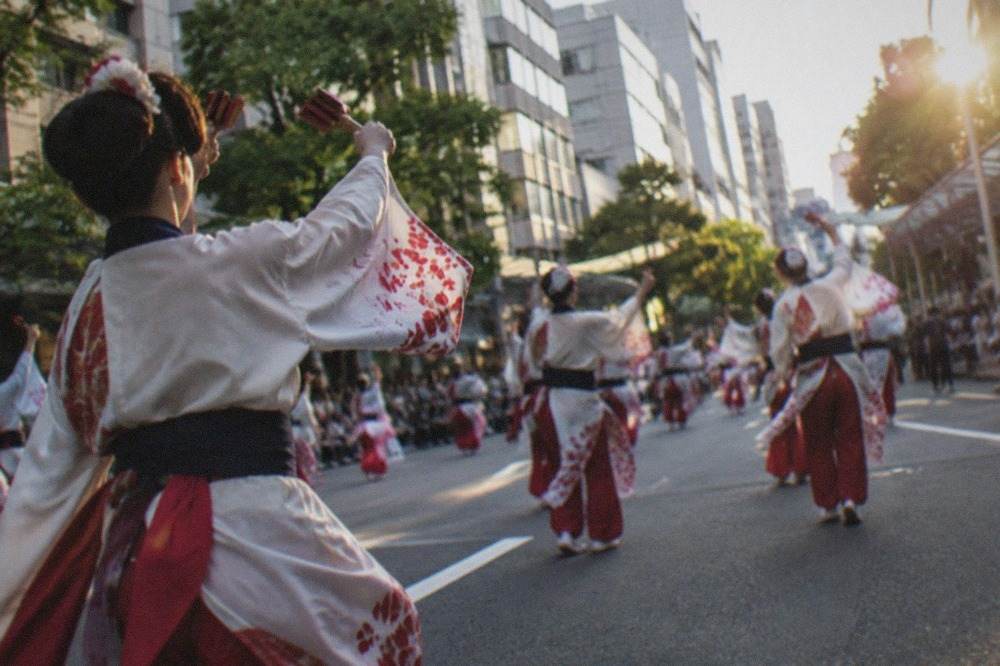
Hakata Dontaku Minato Matsuri is Fukuoka's largest annual festival, held every May 3 and 4 with eve events on May 2, centred on Meiji-dori between Hakata Station and Tenjin. It features parades of costumed dancers, decorated hana jidosha cars and mounted performers, plus stages of music and dance across the district, and a participatory finale dance called So Odori. Attendance is free, there is no ticket and no booking, and the festival is organised by the city's citizens' festival association.
The festival is run by the Fukuoka Citizens' Festival Promotion Association, and its official home online is the festival's own site. "Minato Matsuri" in the full name means port festival, a nod to Hakata's history as one of Japan's great trading harbours. The modern format stitches together several older traditions: the Matsubayashi parade of masked figures and musicians, the flower cars, and the port celebration.
What makes Dontaku unusual among Japanese mega-festivals is how much of it is performed by ordinary residents. Office teams, school groups, neighbourhood associations and company clubs all spend months preparing costumes and routines. The result is less a polished spectacle and more a city throwing a party for itself, with visitors welcome to watch from the pavement. Tens of thousands of people take part as performers, and the crowd watching them is counted in the millions over the two days, which makes timing and positioning the real planning challenge.
When and Where Does Hakata Dontaku Take Place?
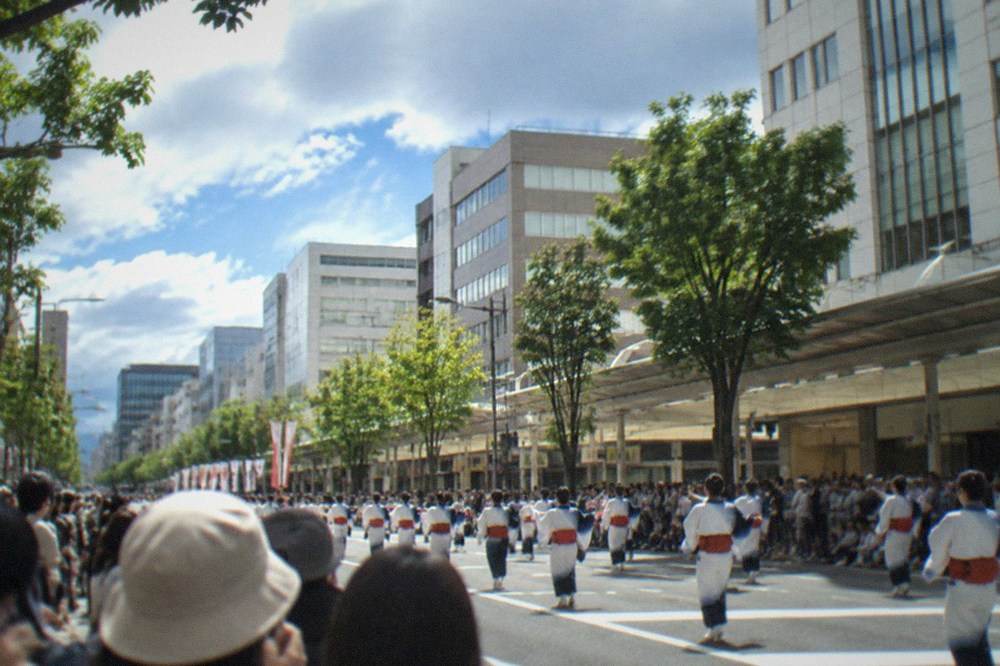
Hakata Dontaku runs annually on May 3 and 4, with eve festivities on the evening of May 2, along Meiji-dori and the surrounding streets of central Fukuoka, roughly from Hakata Station through Tenjin. Parades move along the main avenue during the day, performance stages are set up at several points around the route, and the So Odori finale dance happens at the end of each day. The full schedule is published on the festival's official site each spring.
The route is not a single venue but a corridor through the city centre. Meiji-dori is the spine: a wide, tree-lined avenue that connects Hakata Station in the east with the Tenjin commercial district in the west. Viewing is from the pavement, free, and first-come. The best-known viewing spots are around Hakata Station's front, along Watanabe-dori, and in front of the Tenjin core, where the parade has the most theatrical backdrop of department stores and big screens.
Because the festival sits inside Golden Week, one of Japan's busiest holiday periods, the whole city is crowded regardless of the parade. Trains and hotels run full, and the practical advice is to book accommodation months ahead and to expect every restaurant near the route to have a queue. Eve events on May 2 are smaller and calmer, a good option for anyone who wants the atmosphere without peak-day density. A sensible base is either side of the route; the Hakata Station area guide covers the eastern end, and the Hakata versus Tenjin comparison helps with choosing between them.
A rough shape of the two days looks like this:
| Element | What it is | When it happens |
|---|---|---|
| Eve events | Smaller warm-up performances and stage shows | Evening of May 2 |
| Matsubayashi parade | Masked figures, musicians and dancers in the old merchants' style | May 3 and 4, daytime |
| Hana jidosha | Flower-decorated cars carrying performers | May 3 and 4, daytime |
| Performance stages | Live music and dance at multiple points around the route | May 3 and 4, through the day |
| So Odori finale | Open participatory dance, spectators invited in | End of each day |
The parade itself is the thing most visitors come for, but the stages are where the festival's local character shows most clearly, and they are far less crowded. If you would rather have a guide make sense of the geography before the streets fill, a private walk of the festival district is the most efficient way to do it, and the trio below covers that plus two very different ways to spend the rest of a Fukuoka trip.
The first of those three, a private and personalized walking tour with a local, is built exactly for days like this: a two-hour route that can be steered toward the parade corridor, the shrine streets and the back lanes most visitors never find, with a guide who knows which crossings stay passable when the crowds build.
What Can You Actually See and Do at Dontaku?
Expect a rolling parade of costumed dancers, masked Matsubayashi figures, flower cars and mounted riders, plus dozens of stages with music, dance and comedy along the route, and a finale each day where the crowd is invited to dance. There is no paid seating, no ticketed area and nothing to book: the festival is watched from public streets, and the main decisions are where along Meiji-dori to stand and how early to claim a spot.
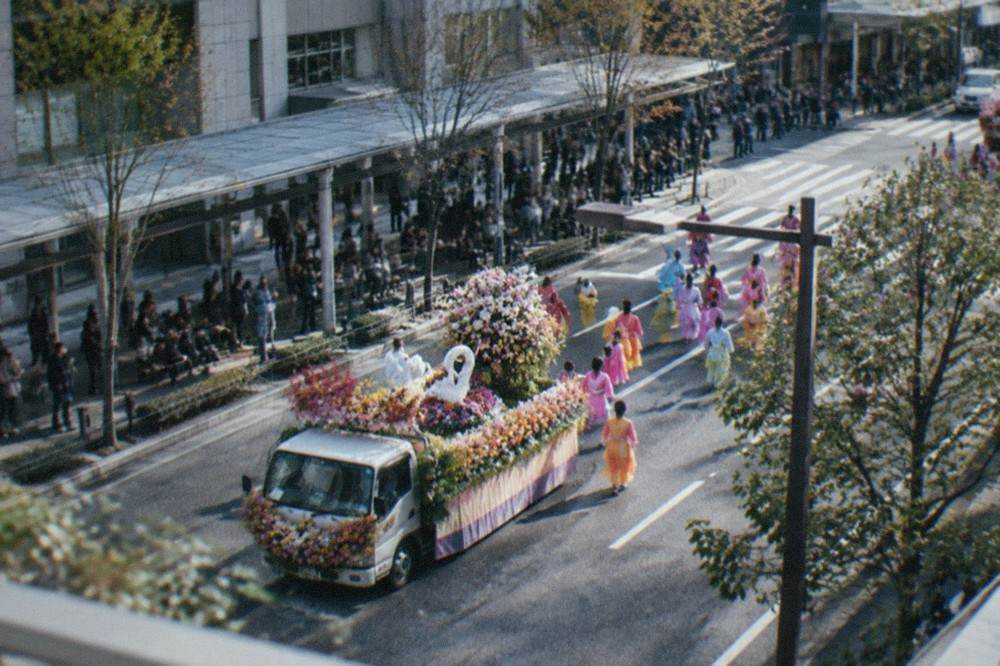
The Matsubayashi is the historical heart. Performers wear the masks of legendary figures from Hakata's merchant past, including the three old men of good fortune, the god of wealth and a female figure with a rice bale on her head, all accompanied by flute and drum. Groups compete to be selected for the parade, so the standard is high and the costumes are genuinely elaborate. Between parade units come the hana jidosha, cars plastered with flowers and carrying musicians and local celebrities, and mounted teams that give the procession an old-procession feel.
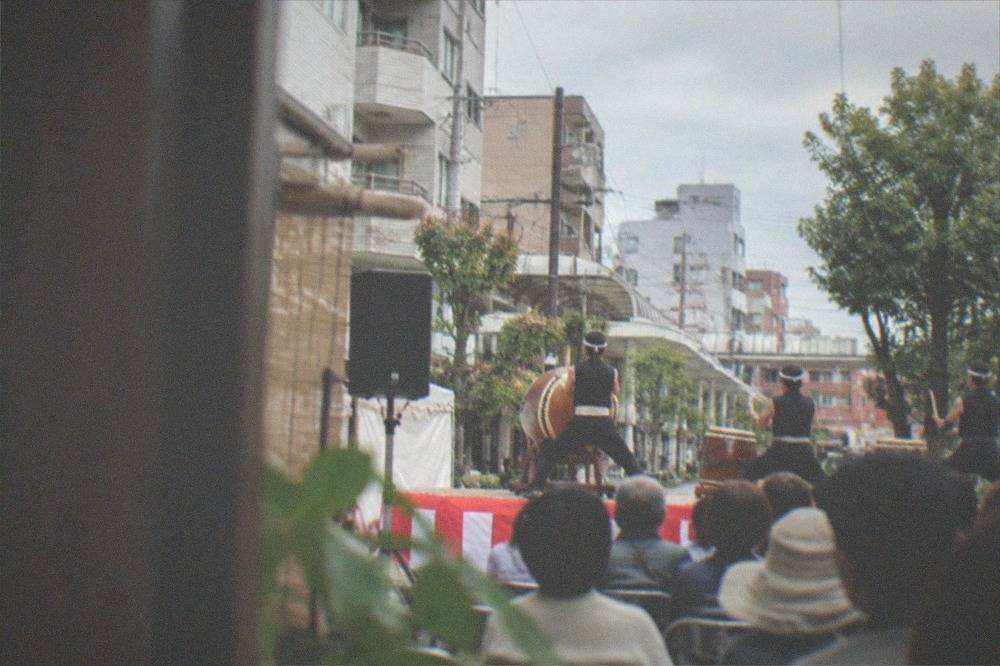
The stages matter more than most first-time visitors expect. Scattered around Hakata Station, Tenjin and the streets between, they host taiko drumming, dance troupes, brass bands and idol groups from morning until the finale. They are also where you can sit down, which after hours of standing on pavement counts for a lot. Food is a festival in itself: stalls and surrounding restaurants serve yakitori, yakisoba, hitokuchi gyoza and the local mentaiko on everything, and the street-food culture around the route is covered in depth in the Fukuoka street food guide.
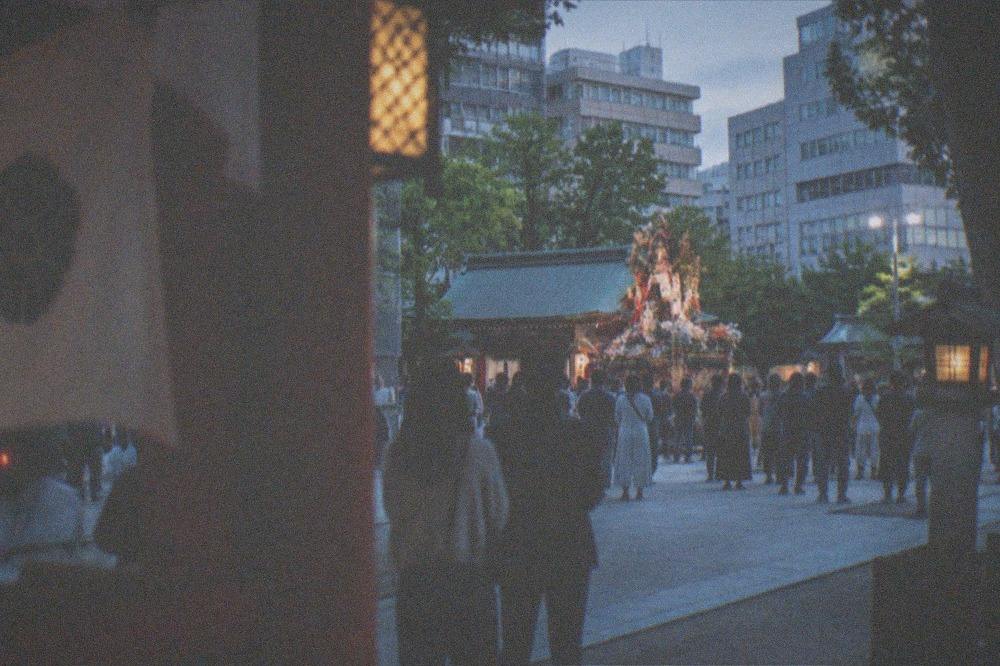
The So Odori finale is the moment that defines Dontaku's character. At the end of each day, performers and spectators dance together in a simple repeated routine, taught on the spot, in front of the main stage. No costume is needed and nobody checks whether you learned the steps. It is the clearest expression of what separates this festival from a spectator event: Dontaku wants the crowd inside it.
For visitors who want the city explained rather than just seen, the half-day Fukuoka Essentials tour covers history and culture with a guide, from $74 per person, rated 4.9 from 48 reviews, and can be timed to finish before an afternoon parade.
How Do You Get to the Festival and Move Around It?
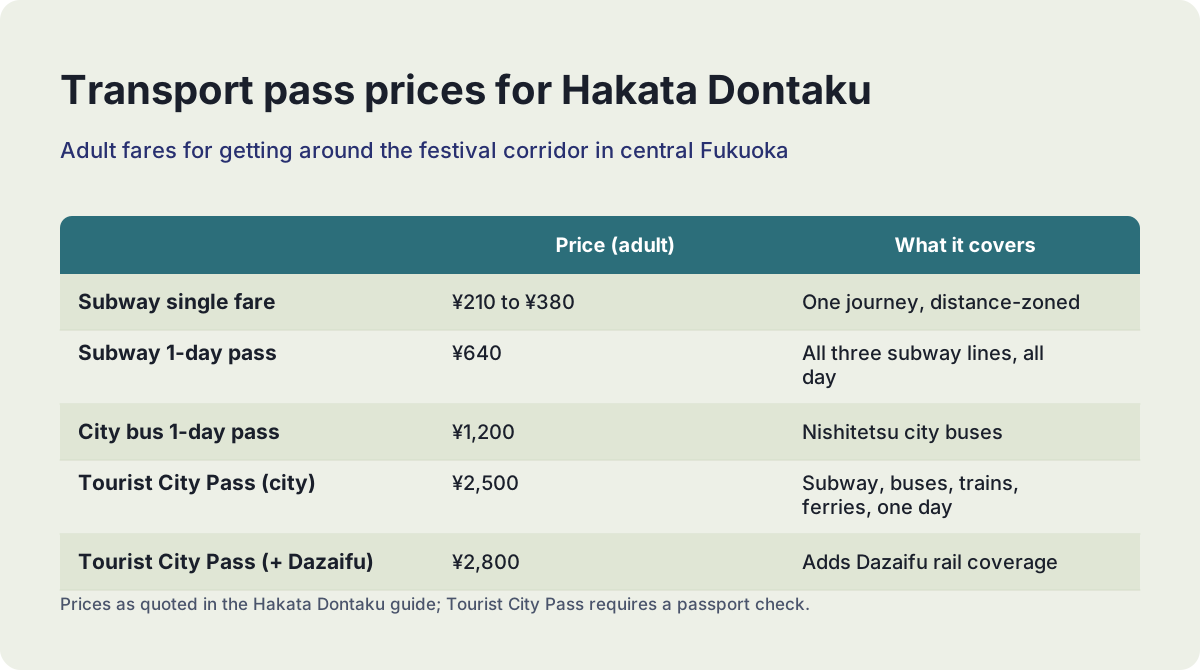
The festival route sits on top of central Fukuoka's transport network: Hakata Station at the east end, Tenjin at the west, and subway stations under the whole corridor. A subway day pass costs ¥640 for adults, the city bus day pass is ¥1,200, and the overseas-visitor Tourist City Pass is ¥2,500 for the city version with a passport check. During the parade, surface streets along Meiji-dori are closed or heavily restricted, so the subway is the reliable way to move along the route.
Fukuoka's subway is unusually well matched to this festival. The Kuko, Hakozaki and Nanakuma lines all touch the city centre, and stations like Gion, Nakasu-Kawabata and Tenjin sit within a short walk of the parade corridor. A one-day pass, ¥640 adult and ¥320 child, covers all three lines from first to last train on the day of use, and contactless credit card tap-to-ride is capped at the same daily figure at the blue gates. Fares are distance-zoned, from ¥210 for up to 3 km to ¥380 beyond 19 km, per the official subway fare table.
Visitors flying in for the festival should read the airport to city guide: the subway fare from Fukuoka Airport to Hakata is ¥260, the airport is unusually close to the centre, and the station is Hakata, not Fukuoka. There is no JR Fukuoka Station, a point that catches many visitors and is explained in the answer to whether there is a Fukuoka Station. One more Golden Week note: luggage storage fills early, so the luggage storage guide is worth reading before arrival day.
| Option | Price (adult) | What it covers | Notes for Dontaku |
|---|---|---|---|
| Subway single fare | ¥210 to ¥380 | One journey, distance-zoned | Best for one or two trips |
| Subway 1-day pass | ¥640 | All three subway lines, all day | The practical choice during the parade |
| City bus 1-day pass | ¥1,200 | Nishitetsu city buses | Slower on closed, crowded streets |
| Tourist City Pass (city) | ¥2,500 | Subway, buses, trains, ferries, one day | Passport check at the counter, short-stay visitors only |
| Tourist City Pass (+ Dazaifu) | ¥2,800 | Adds Dazaifu rail coverage | Tabito liner bus excluded |
The Tourist City Pass deserves a special note because most competing guides quote prices that are years out of date. The verified figures are ¥2,500 for the city version and ¥2,800 with Dazaifu included, and the pass is restricted to overseas tourists on a short-stay visa, with a passport checked at the counter. If you are only moving along the parade corridor, the plain ¥640 subway pass is usually the better buy; the Tourist City Pass earns its price when you add buses, ferries or the Dazaifu line to the day.
If you would rather have a local handle the logistics of a crowded festival day, a private guide changes the equation: routes get adjusted on the fly, and the meeting point can be set wherever the crowd is thinnest.
How Does Dontaku Compare with Hakata Gion Yamakasa?
Dontaku is Fukuoka's May festival: parades, stages and a city-wide party over Golden Week. Hakata Gion Yamakasa is the July festival: teams racing one-ton floats through Hakata's streets at dawn, centred on Kushida Shrine. Dontaku is broad, bright and participatory; Yamakasa is loud, physical and over in a sprint. Both are free to watch and neither has any ticketing, and a trip can reasonably be planned around either.
The two festivals belong to different traditions. Dontaku grew from a merchants' greeting procession and a port celebration; Yamakasa is a shrine rite of Hakata's old town, run by neighbourhood teams who train for weeks. Dontaku's climax is a communal dance at the end of the day, while Yamakasa's is the Oiyama race on July 15, when the floats leave Kushida Shrine before five in the morning and cover roughly 5 km at a dead run. Spectators for Yamakasa stand in the dark at 4 a.m.; Dontaku spectators stand in spring sunshine at midday.
| Hakata Dontaku | Hakata Gion Yamakasa | |
|---|---|---|
| Dates | May 3 and 4, eve events May 2 | July 1 to 15, climax July 15 |
| Focus | Parades, stages, city-wide celebration | Float races by neighbourhood teams |
| Climax | So Odori participatory dance, each evening | Oiyama race, pre-dawn on July 15 |
| Centre | Meiji-dori, Hakata Station to Tenjin | Kushida Shrine and Hakata's old streets |
| Energy | Bright, family-friendly, all day | Loud, physical, concentrated at dawn |
| Tickets | None, free to watch | None, free to watch |
Choosing between them is mostly a question of calendar. May visitors get Dontaku plus Golden Week energy and spring weather; July visitors get Yamakasa plus Fukuoka's summer heat, with mean July temperatures around 27.4 °C and the city's heaviest monthly rainfall, 299.1 mm, more even than the June rainy season. Anyone weighing the two should read the Hakata Gion Yamakasa guide in full, and note that July is also Yamakasa month, which is why the two festivals anchor Fukuoka's festival calendar at opposite ends of summer.
What Should You Eat Around the Festival Route?
The streets around the Dontaku route are some of the best eating territory in Japan: Hakata ramen counters, yakitori stalls, hitokuchi gyoza shops and the mentaiko specialists of the Hakata Station and Tenjin districts. Festival days add street stalls along the route, but the permanent food culture is the real reason to eat here, and the strongest options are tonkotsu ramen, motsunabe and the one-bite gyoza that originated in this city.
Hakata ramen is the signature: a rich tonkotsu pork-bone broth with thin noodles, served fast at tiny counters, and famously refillable a half-portion at a time under the kaedama system. The full story, including how to order a refill, is in the Hakata ramen guide. On festival days, ramen counters near the route run queues from late morning, so eat early or eat far from Meiji-dori.
| Dish | What it is | Where to find it near the route |
|---|---|---|
| Hakata ramen | Tonkotsu broth, thin noodles, kaedama refills | Counters throughout Hakata and Tenjin |
| Hitokuchi gyoza | One-bite pan-fried dumplings, a Fukuoka invention | Specialist shops east of the station |
| Motsunabe | Beef offal hot pot, a Hakata winter-to-spring dish | Nakasu and Hakata izakaya |
| Mentaiko | Spicy pollack roe, served on rice or onigiri | Delicatessens and station food halls |
| Yakitori and yakisoba | Standard festival street food | Stalls along the parade corridor |
For a sit-down experience of the local food culture rather than grab-and-go, the evening food tours are the natural fit. The Fukuoka Evening Tours option, from $99 per person and rated 5 from 29 reviews, moves through yatai stalls, izakaya and karaoke over three to four hours, which pairs well with a day spent standing at a parade.
What Practical Tips Make Dontaku Easier?
Arrive before mid-morning to claim pavement space, use the subway rather than surface streets, carry cash for stalls, and treat May 4 as the calmer second day. Wear comfortable shoes, plan restaurant meals off-route or off-peak, and check the festival's official site for the stage schedule, which is published each spring. There is no ticket to buy, so every bit of planning effort goes into timing, transport and positioning.
A few specifics earn their place here. Meiji-dori's pavements fill well before the parade's mid-morning start, and the widest viewing room tends to be at the eastern end near Hakata Station, where the avenue opens out, rather than in the narrower Tenjin blocks. The Hakata district overview helps with orienting the whole area. Cash remains king at street stalls, though the city's restaurants and stores widely accept cards. And because Golden Week compresses the country's travel into the same few days, reserve seats on the Shinkansen or flights well in advance, and expect hotel prices across the city to peak.
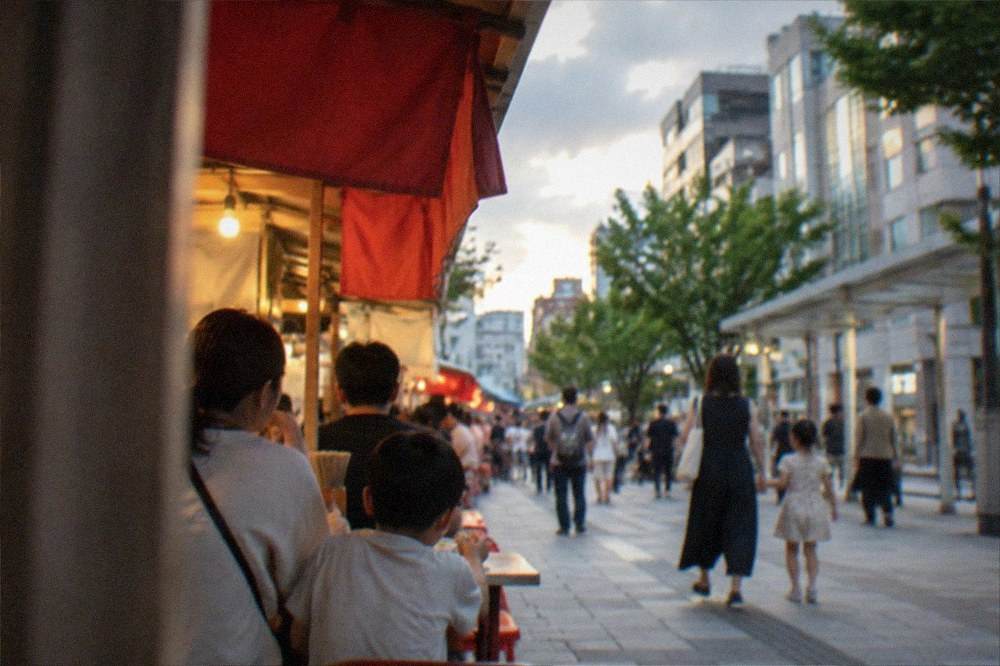
Weather in early May is on Fukuoka's side. May averages a daily high around 24.4 °C with about 133.7 mm of rain across the whole month, making it one of the driest and sunniest months of the year, with 204.1 hours of sunshine. That is the statistical case for Dontaku being one of the most comfortable big-festival weekends in Japan, though a light rain layer is still sensible for a full day outdoors.
For travellers pairing the festival with deeper exploration, Dontaku days are long and the evenings are free, and the surrounding region rewards a spare day. A guided excursion into Kyushu's shrine country is one way to use it, and the selection below rounds out the options.
Common Questions About Hakata Dontaku
What Is Hakata Dontaku?
Hakata Dontaku is Fukuoka's largest annual festival, held every May 3 and 4 during Golden Week, with parades of costumed dancers, flower-decorated cars and multiple performance stages along Meiji-dori between Hakata Station and Tenjin. It grew out of a centuries-old merchants' greeting procession and a port festival, and it is free to watch with no ticketing at all.
Is Hakata Dontaku free to attend?
Yes. There is no ticket, no paid seating and no booking of any kind for Hakata Dontaku. The parades and stages are watched from public streets. The only costs are transport, food and accommodation, and Golden Week hotel prices in central Fukuoka should be expected to peak.
When is Hakata Dontaku held each year?
Every May 3 and 4, with smaller eve events on the evening of May 2. The dates are fixed by tradition and fall inside Golden Week, Japan's biggest holiday period, which is why transport and hotels across the city run at their fullest of the year.
Where is the best place to watch the Dontaku parade?
The widest viewing room is around the Hakata Station end of Meiji-dori, where the avenue opens out; the Tenjin blocks are narrower and more crowded. Arriving before mid-morning matters on both days, and the stages scattered along the route offer a less crowded alternative with seating.
Can visitors join the dancing at Hakata Dontaku?
Yes. The So Odori finale at the end of each day is a participatory dance, and spectators are invited to join in. The steps are simple and taught on the spot, and no costume or registration is needed.
How does Hakata Dontaku compare with Hakata Gion Yamakasa?
Dontaku is the May festival: daytime parades, stages and a communal dance over Golden Week. Yamakasa is the July festival: neighbourhood teams racing one-ton floats roughly 5 km through Hakata's streets before dawn on July 15, centred on Kushida Shrine. Both are free to watch and neither has ticketing.