Marine World Uminonakamichi
Marine World Uminonakamichi is Fukuoka's main aquarium, sitting on the narrow sandbar that shields Hakata Bay from the Genkai Sea. This guide covers tickets, hours, the shows, and how to combine a visit with the seaside park next door.
Short answer
Marine World Uminonakamichi charges ¥2,500 for adults and high school students, ¥1,200 for junior high and elementary, and ¥700 from age three, with senior tickets at ¥2,200. Hours vary by calendar date, so check the official site before you go. It is a compact, well-run aquarium best paired with the seaside park around it.
Fukuoka faces the Genkai Sea across Hakata Bay, and the aquarium that explains that relationship sits on the sandbar in the middle of it. Marine World Uminonakamichi occupies the narrow strip of land called Uminonakamichi, a spit of dunes and pine that shelters the bay's eastern side, and its exhibits are built around the waters literally outside the building: the bay, the tidal flats, and the deep currents of the sea beyond. It is not a giant complex on the scale of Osaka or Okinawa's aquariums. It is a focused, mid-sized one, and for most visitors it works best as half of a day that also includes the enormous seaside park sharing the same sandbar.
Where Is Marine World Uminonakamichi?
The aquarium stands at the eastern end of the Uminonakamichi sandbar, inside Hakata Bay, roughly a 30 to 40 minute trip from Hakata Station by train along the JR Kashii Line to Uminonakamichi Station, which sits beside the park entrance. That geography is the whole point of the place. Uminonakamichi is a long, narrow peninsula of dunes and woodland that curls out from near Fukuoka Airport's runways and shields the bay from the open Genkai Sea. The aquarium sits at the far end of it, next to Uminonakamichi Seaside Park, with water on both sides. On a clear day the view back across the bay takes in the city skyline and the hills beyond, which is why many visitors end up taking as many photographs outside as inside.
Hakata and Fukuoka are the same city, so do not plan a "transfer between them": Hakata is the ward and the station name, Fukuoka is the city, and the aquarium is simply on the far side of the bay from the station. The sandbar is also home to a marina, campsites, cycling paths and a swimming beach, so the area reads as a day-out destination rather than a single-attraction stop. If you are deciding how it fits a wider plan, our one day Fukuoka itinerary keeps the city centre compact and leaves room for exactly this kind of half-day excursion.
The setting matters for weather too. The sandbar is exposed, and summer days here feel the full force of the sun off the water, while typhoon season, which runs roughly July through October across western Japan, can shut the whole area down when a storm tracks toward Kyushu. Check the forecast, not just the calendar, before committing to a Uminonakamichi day.
What Do Tickets and Prices Look Like?
Adult and high school admission is ¥2,500, junior high and elementary is ¥1,200, ages three and up are ¥700, and seniors 65 and over pay ¥2,200, with disability certificate holders and one carer admitted at half the individual rate. Those are the official individual rates. Groups pay less: adult groups are ¥2,200 per person, and school groups start from ¥1,500. An e-ticket sold through the operator's live listing starts from $16 per person and covers the standard gate price, currently rated 4.8 from 9 reviews on that listing.
The e-ticket option is worth a sentence of its own. The ticket machines at the entrance can queue badly on weekends and during school holidays, and a pre-bought e-code lets you walk straight to the turnstiles. For a family of four the arithmetic is simple: the ticket covers exactly what the gate charges, and the saving is time rather than money.
| Ticket type | Price |
|---|---|
| Adult and high school | ¥2,500 |
| Junior high and elementary | ¥1,200 |
| Age 3 and over | ¥700 |
| Senior 65 and over | ¥2,200 |
| Group adult rate | ¥2,200 |
| School group rate | from ¥1,500 |
| Disability certificate holder and carer | half the individual rate |
One thing to plan around carefully: Marine World's opening hours vary by calendar date, and the aquarium does not publish a single year-round figure. On the day this site's research was conducted the listed hours were 9:30 to 17:30 with last entry at 16:30, but that is an example, not a rule. Always confirm the day's hours on the official fees and hours page before you travel, because seasonal and holiday calendars shift the times.
What Can You See Inside the Aquarium?
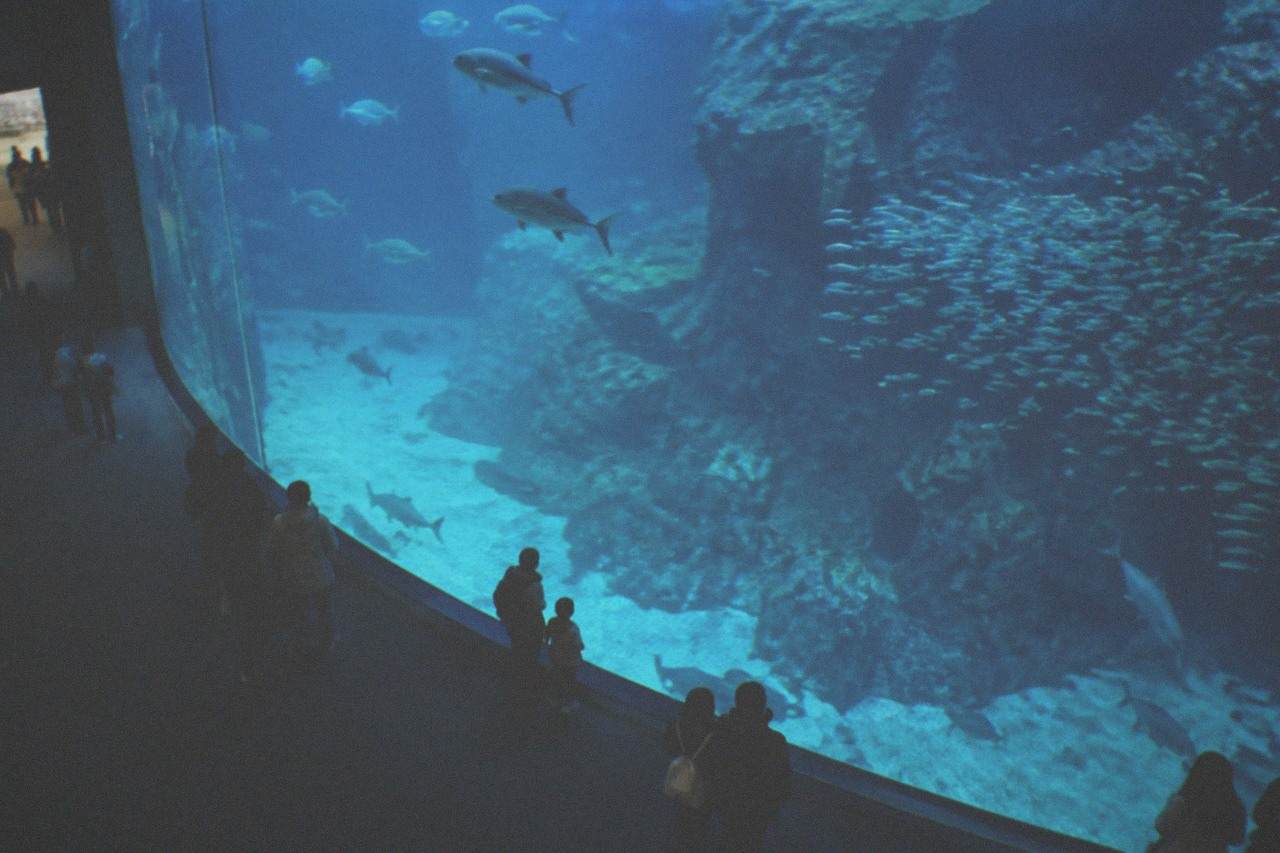
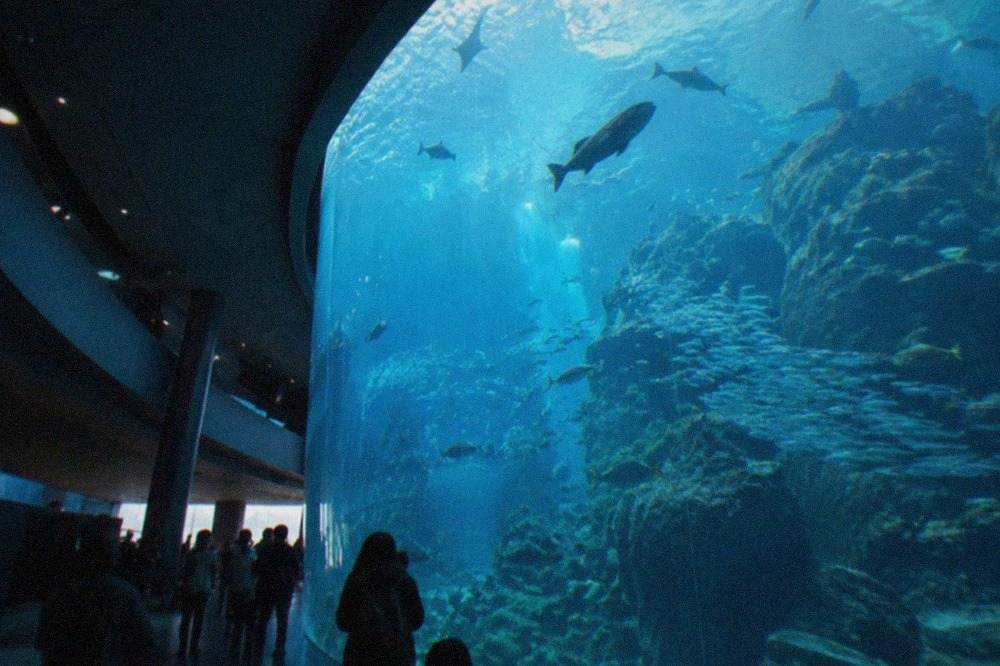
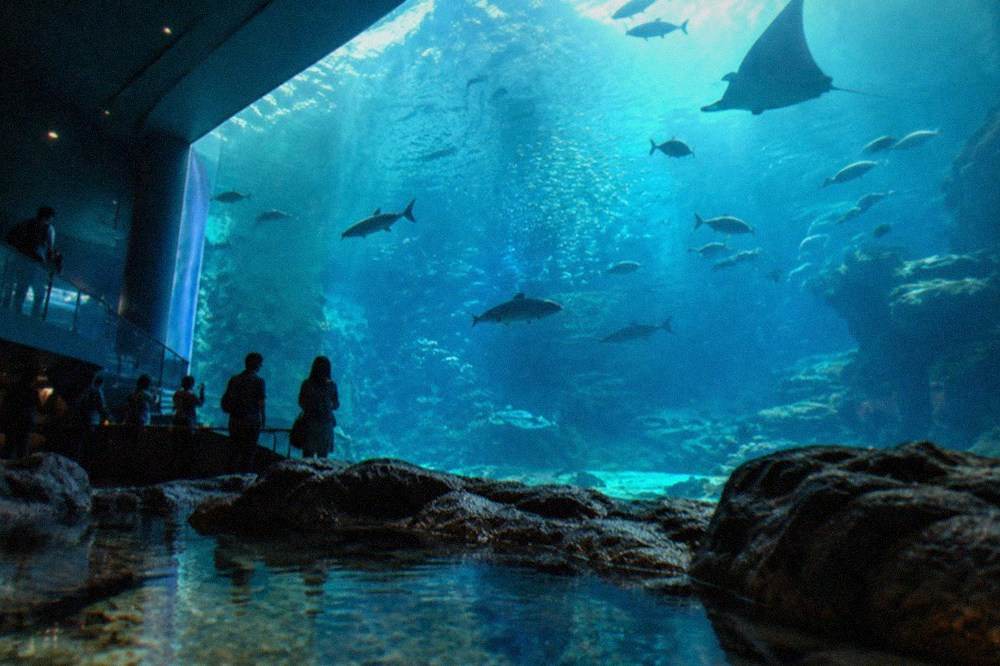
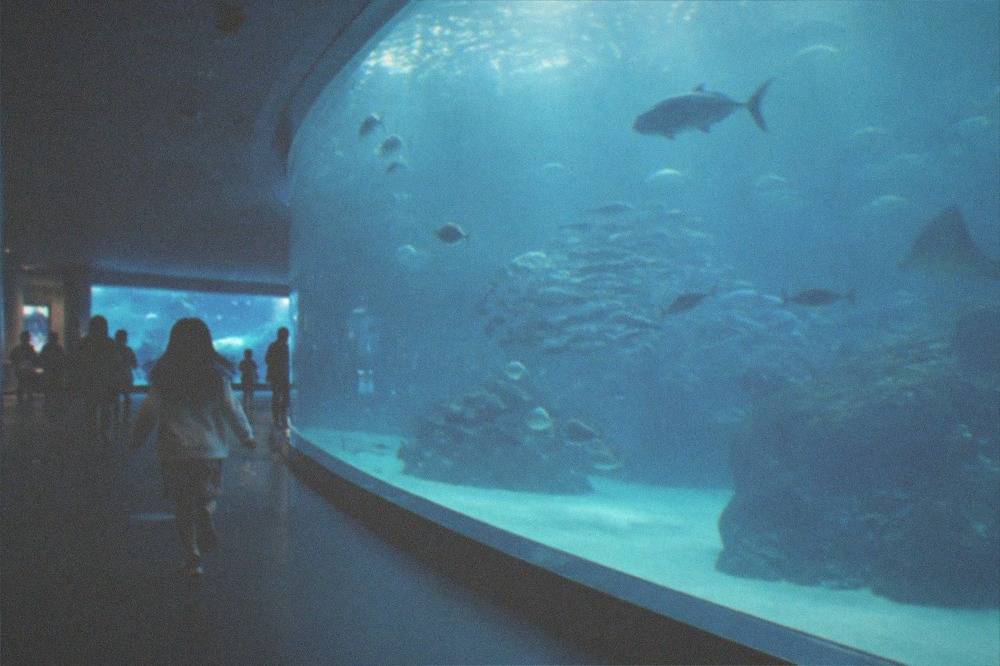
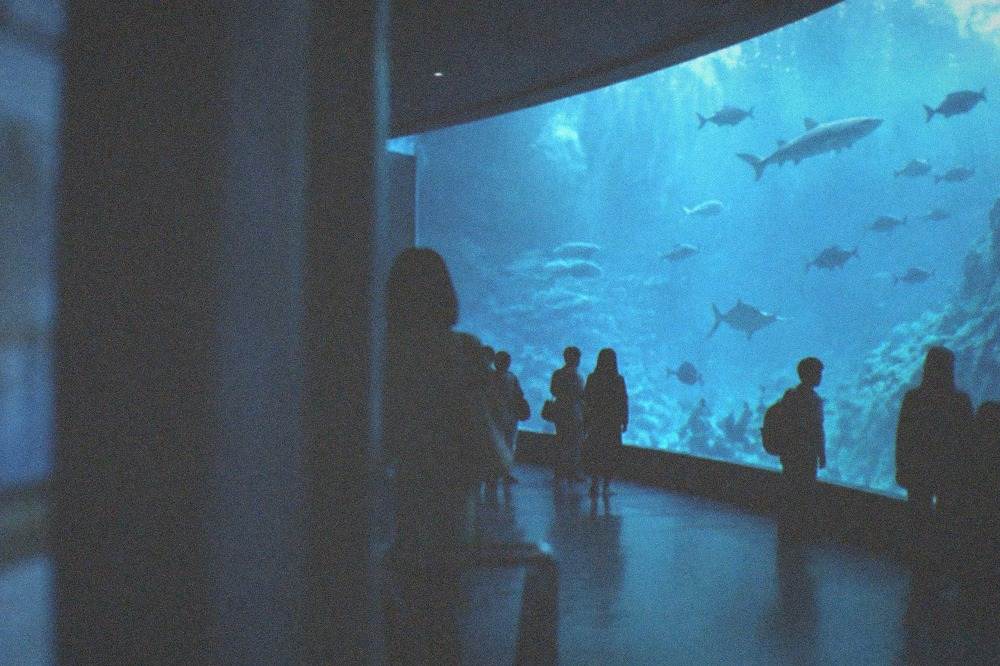
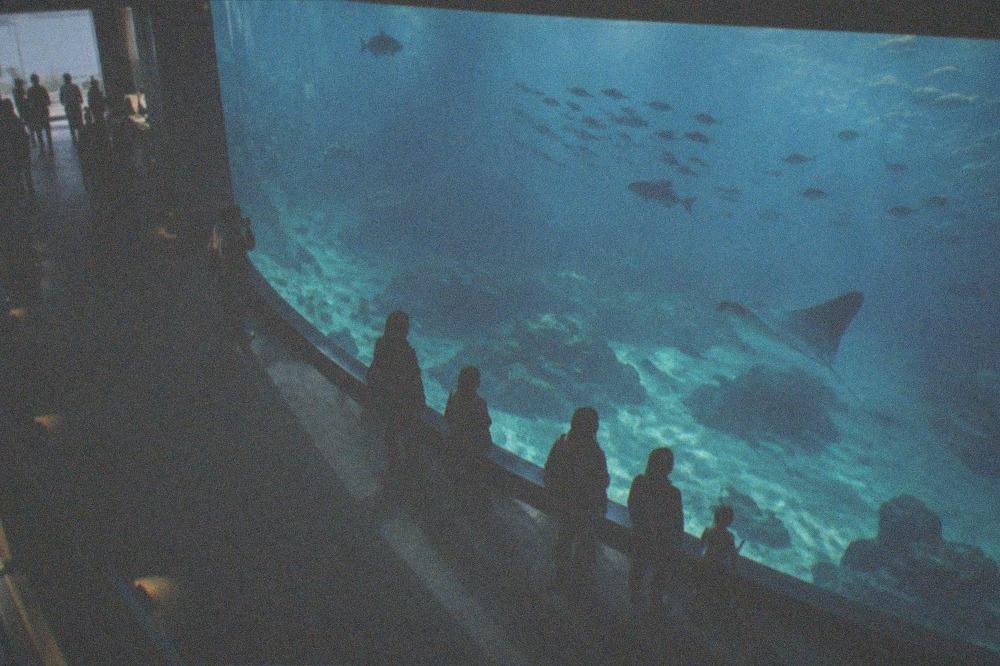
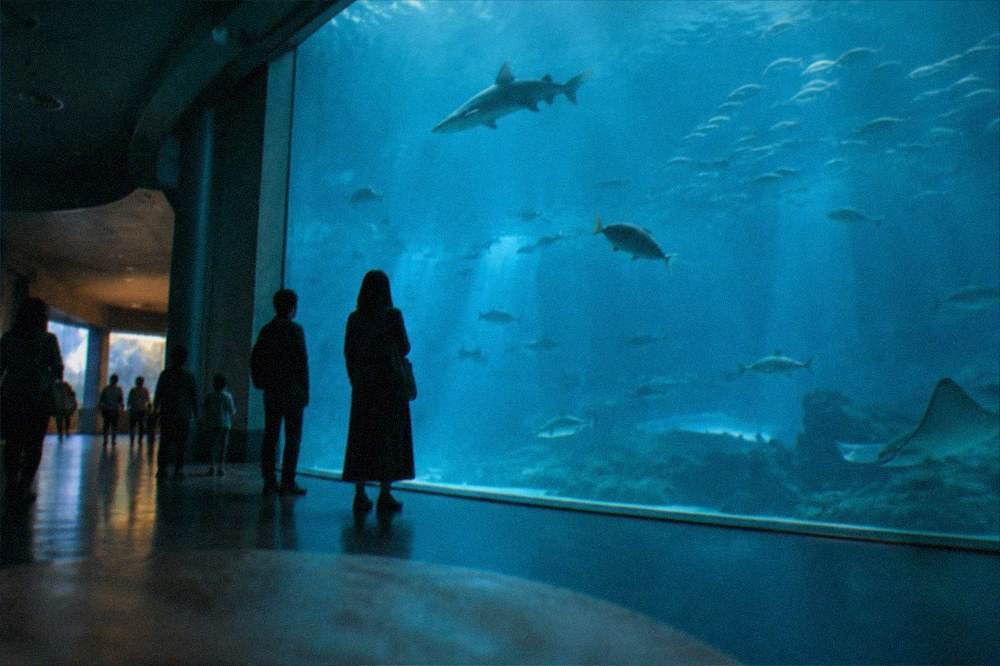
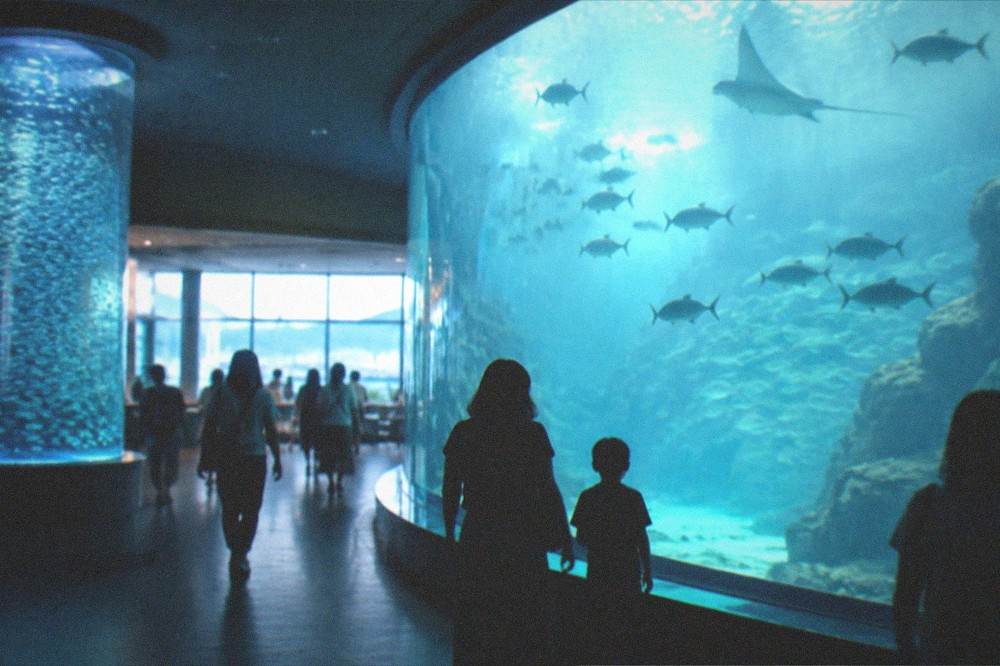
The exhibits are organised around the waters of the Genkai Sea and Hakata Bay rather than around generic ocean themes, with a large main tank, a dolphin stadium, and tidal-flat and reef zones that mirror the habitats visible from the building itself. The main tank is the centrepiece, a deep, curved display holding the larger species of the region, and the dolphin show in the outdoor stadium is the scheduled event most families build their visit around. Show times are set daily and posted at the entrance, so photograph the board when you arrive and work backwards from it.
Beyond the headline tank, the aquarium leans into local ecology. The tidal flat exhibits display the creatures of the bay's shallows, the sort of marine life a careful walker could find a few hundred metres away at low tide, and the reef and deep-sea sections carry the story out through the bay mouth into the Genkai Sea. Touch pools run at set intervals and are popular with younger children, and the indoor zones are fully air-conditioned, which matters in a Fukuoka August when the mean daily maximum is 32.5°C and the sandbar outside offers very little shade.
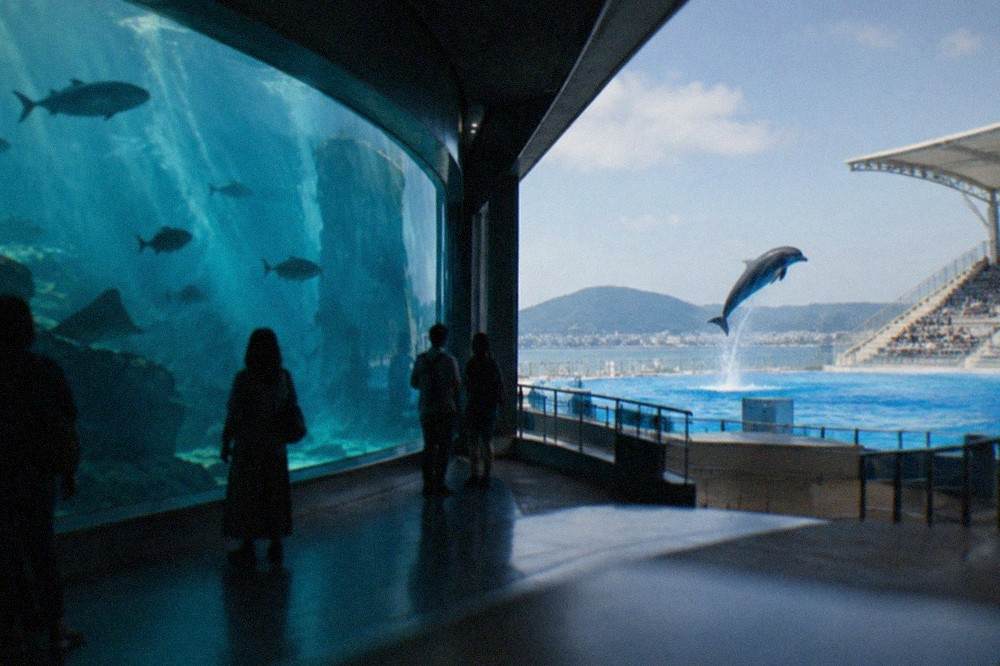
Visitors consistently describe the show schedule as the thing to plan around rather than the exhibits themselves, and the compact footprint means you can see the whole aquarium in a relaxed half-day. If marine life is your main reason for travelling, it is also worth knowing that the exhibits are interpreted mostly in Japanese, with enough signage and visual layout that non-readers can follow the flow without a guide.
Is Marine World Uminonakamichi Worth Visiting with Kids?
Yes, for families it is one of the most reliable half-days in the city, because the aquarium is compact, indoors, and sits directly beside a park with playgrounds, animal areas and open lawns, so one trip covers two very different activities. The sweet spot is roughly ages three to ten. Below that, the touch pools and tank heights still work but the show may be a long sit. Above that, the exhibits skew a little young, though the dolphin stadium and the main tank hold attention well.
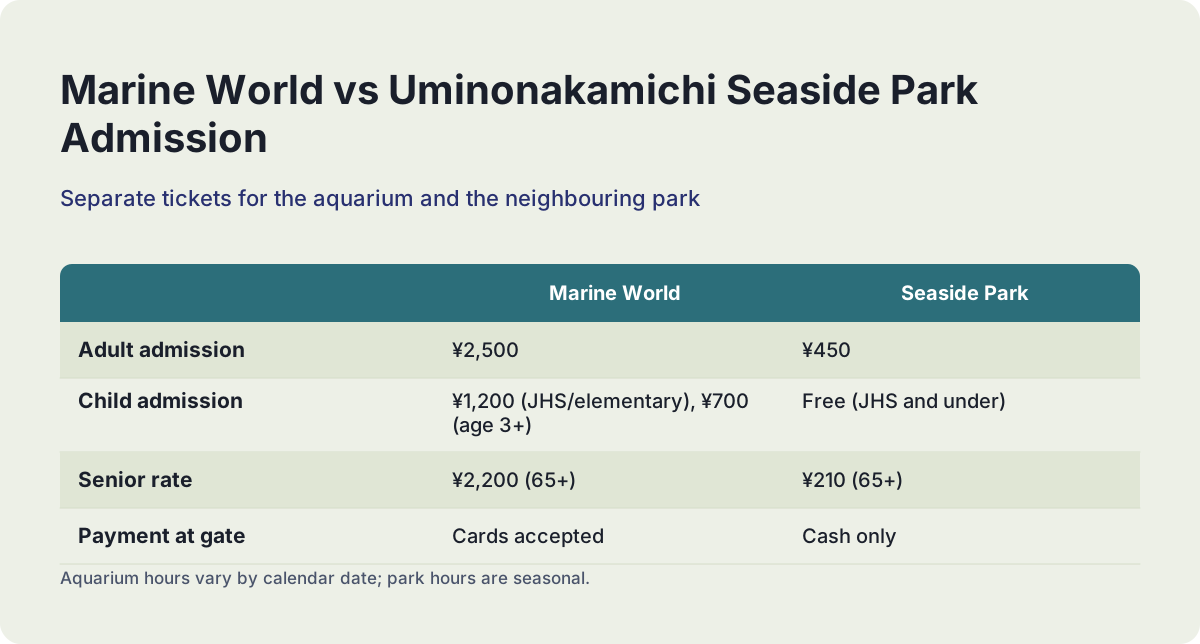
The practical detail that makes or breaks a family visit is the gate at the neighbouring park, and it is a genuinely useful thing almost nobody mentions: Uminonakamichi Seaside Park's entrance takes cash only. The aquarium itself accepts the usual cards, but if you plan to walk from the aquarium into the park, bring yen notes for the park gate. Junior high school age and under enter the park free, and adults pay ¥450, so the combined cost of aquarium plus park for a family is far lower than most visitors expect.
For rainy days, the aquarium pairs naturally with other indoor options in the city. The teamLab Forest immersive art experience is the other major indoor attraction families combine with a Fukuoka trip, and the two make a good wet-weather pair if the sandbar weather turns. Our Fukuoka with kids itinerary slots the aquarium into a full family plan.
How Do You Combine It with Uminonakamichi Seaside Park?
The aquarium sits at the edge of Uminonakamichi Seaside Park, a vast city-run park covering the sandbar, with separate admission, so the standard plan is aquarium first in the morning, lunch, then the park's playgrounds, animal forest and lawns through the afternoon. The two share the sandbar but not a ticket. Park admission is ¥450 for adults 15 and over, ¥210 for those 65 and over, and free for junior high age and under, and a two-day ticket is available at ¥500 and ¥250 if you want to split the visit.
| Item | Aquarium (Marine World) | Seaside Park |
|---|---|---|
| Adult admission | ¥2,500 | ¥450 |
| Child admission | ¥1,200 (JHS/elementary), ¥700 (age 3+) | Free (JHS and under) |
| Senior rate | ¥2,200 (65+) | ¥210 (65+) |
| Payment at gate | Cards accepted | Cash only |
| Hours | Vary by calendar date | Mar-Oct 9:30-17:30, Nov-Feb 9:30-17:00 |
| Best for | Tanks, dolphin stadium, touch pools | Lawns, Animal Forest, dog run, cycling |
The park's own hours are seasonal: 9:30 to 17:30 from March to October and 9:30 to 17:00 from November to February, with entry until one hour before closing. The Animal Forest and Dog Run close 30 minutes earlier than the rest of the park. The park is closed on December 31 and January 1, on a mid-January block covering the third Monday through that Friday, and on selected Tuesdays scattered across the June to mid-July, September, November-to-December and winter periods, so the honest advice is to check the official park calendar for the specific date you plan to visit. Never assume the park is open daily, because on a good number of Tuesdays it is not.
Cycling is the smart way to cover the sandbar once you are on it. The park and the peninsula are flat, the paths are separated from traffic, and rental cycles are available in the area, which makes the distance between the station, the park and the aquarium feel trivial. Our Fukuoka cycling guide covers the city end of that network for anyone planning to ride out from the centre.
What Are the Opening Hours and Closures?
Marine World's hours vary by calendar date, so there is no single published opening time to quote; on the date this site checked, hours ran 9:30 to 17:30 with last entry at 16:30, and the official site is the only reliable source for the day you plan to visit. This is a deliberate design choice by the operator, aligning the schedule with seasonal daylight, show calendars and school-holiday demand, and it is why this guide refuses to print one year-round figure.
The surrounding park's closure pattern is the bigger planning trap, because a visitor who nails the aquarium's hours can still arrive to find the park shut. The table below summarises what is verified about both.
| Closure or seasonal rule | What it means for your visit |
|---|---|
| Park closed Dec 31 and Jan 1 | New Year visits need a different plan |
| Mid-January closure block | Third Monday of January through that Friday |
| Selected Tuesdays | Park only; dates shift by season, check the calendar |
| Animal Forest and Dog Run | Close 30 minutes before park closing |
| Aquarium hours | Change by date; confirm on the official site |
| Typhoon season (roughly July-October) | Storms can close the exposed sandbar area entirely |
Weather deserves its own word. The sandbar is one of the most exposed pieces of ground in the city, and when a typhoon approaches Kyushu between July and October, the aquarium and park close early or entirely. The Japan Meteorological Agency's live typhoon feed is the source to watch in those months, and our typhoon season planning guide explains how to read a forecast week without cancelling a whole trip.
How Do You Get There from Hakata?
The standard route is the JR Kashii Line from Hakata Station to Uminonakamichi Station, which sits beside the park and a short walk from the aquarium entrance, with the whole trip across the bay taking well under an hour and no transfers at any point along the way. The station is the reason the sandbar works as a casual half-day: no transfers, no buses, and the aquarium is essentially at the end of the line. Trains run on a regional schedule rather than a subway-frequency one, so check return times when you arrive rather than assuming a train every few minutes.
There is a second way in that many visitors never consider: the ferry across Hakata Bay. Boats connect the Bayside Place Hakata terminal area on the city side with the Uminonakamichi coastline, turning the journey itself into a bay crossing with the city skyline behind you. It is worth checking the day's sailing schedule in advance, because services are weather-dependent and less frequent than the train.
| Access option | What it involves | Best for |
|---|---|---|
| JR Kashii Line to Uminonakamichi Station | Direct ride from Hakata, station beside the park | Most visitors, families |
| Ferry across Hakata Bay | Bay crossing from the city-side terminal | The scenic option, fair-weather days |
| Car | Parking available on the sandbar | Visitors combining Itoshima or Shikanoshima |
| Bicycle | Flat, separated paths across the peninsula | Active travellers, good weather |
If you are staying on the city side, the Hakata old town guide and our getting around Fukuoka overview cover the rail network in detail. A Fukuoka Tourist City Pass, which costs ¥2,500 for the city version and ¥2,800 with Dazaifu included for overseas tourists on a short-stay visa with a passport check, is worth comparing against individual fares if you plan to move around a lot on the day, though the JR line out to the sandbar is not necessarily inside every pass's coverage, so read the pass terms before relying on it.
What Else Is on the Uminonakamichi Sandbar?
Beyond the aquarium and the park, the peninsula holds a marina, campsites, cycling routes, a swimming beach and open lawns, which is why the area rewards a full day even though the aquarium itself only needs half of one, and why most visitors end up staying far longer than they planned. The beach season is obviously summer, but spring and autumn are when the sandbar is at its most comfortable, with the May mean maximum at 24.4°C and October's at 23.7°C against August's 32.5°C, and the sea breeze doing work that the city centre's pavement does not.
The sandbar also sits inside Hakata Bay alongside two other water-bound escapes that get compared with it. Nokonoshima Island Park, across the bay to the west, is the flower-field island reached by ferry, a half-day of its own with seasonal blooms rather than marine life. Shikanoshima, at the sandbar's northern neighbour, is a quieter island with shrines and shoreline walks. All three are in the bay, which opens onto the Genkai Sea, and none of them is a Pacific or tropical destination, whatever a brochure photograph implies.
For visitors building a bigger day out, the aquarium pairs less naturally with the city's inland sights. If you have already seen Ohori Park and the castle ruins, or you simply want a contrast to the temples and shopping arcades of Canal City Hakata, the sandbar is the city's best change of register: salt air, open sky and very little concrete. The Fukuoka Tower observation deck, at ¥1,000 for adults, is the other family-friendly ticketed sight on the bay's city side, and the tower's own admission is sold as a simple e-ticket as well.
Is Marine World Uminonakamichi Worth Visiting?
For most travellers, yes, with one condition: treat it as the anchor of a half-day on the sandbar rather than as a standalone attraction, because the aquarium alone is modest while the aquarium plus park plus bay setting is one of Fukuoka's better-value family days. The verdict differs by visitor type. Families with children between roughly three and ten get the most from it, and the combined cost, ¥2,500 aquarium admission plus a ¥450 park gate, undercuts most big-city aquarium days by a wide margin. Solo travellers and couples with no interest in marine life will find the Nanzoin reclining Buddha or a Dazaifu day trip a better use of the same hours.
The honest weaknesses are worth stating plainly. The exhibit signage is mostly Japanese, the facility is smaller than the famous aquariums of Osaka, Okinawa and Kanazawa, and the hours-by-date policy means a careless visitor can arrive at a closed gate. None of those is a dealbreaker, but all three reward the ten minutes of planning this guide has just saved you.
That planning layer is what this site exists for, and the wider Fukuoka Japan Travel Guide covers the rest of the city, from Kushida Shrine to the yatai stalls of the Nakasu riverside. If the sandbar day has sold you, the e-ticket below covers the gate and the trio of options shows how the visit slots into bigger plans, whether that is a customised private tour of the city or a full-day run out to Mount Aso and Takachiho Gorge.
Common Questions About Marine World Uminonakamichi
Is Marine World Uminonakamichi Worth Visiting?
Yes for most families and for travellers who want a half-day out of the city centre, especially combined with the seaside park next door. It is a mid-sized, locally focused aquarium rather than a mega-attraction, so visitors expecting Osaka-scale exhibits should adjust expectations.
How much does Marine World Uminonakamichi cost?
Adult and high school admission is ¥2,500, junior high and elementary is ¥1,200, ages three and up are ¥700, and seniors 65 and over pay ¥2,200. Groups pay ¥2,200 per adult, and school groups start from ¥1,500.
What are Marine World's opening hours?
Hours vary by calendar date, so there is no single year-round figure. On a recent checked date the aquarium ran 9:30 to 17:30 with last entry at 16:30. Confirm the day's hours on the official site before travelling.
Can you combine the aquarium with Uminonakamichi Seaside Park?
Yes, and that is the recommended plan. The park charges separate admission of ¥450 for adults and is free for junior high age and under, but note that the park gate takes cash only, and the park closes on selected Tuesdays and on December 31 and January 1.
How do you get to Marine World from Hakata Station?
Take the JR Kashii Line from Hakata Station to Uminonakamichi Station, which sits beside the park and a short walk from the aquarium. A ferry across Hakata Bay from the city side is a scenic alternative in good weather.
Is Marine World good for young children?
Yes. The touch pools, tidal-flat exhibits and dolphin stadium suit roughly ages three to ten, the indoor zones are air-conditioned, and the neighbouring park adds playgrounds and lawns to the same trip.