What Is Kyushu Best Known For?
Kyushu is known for active volcanoes, onsen towns like Beppu and Yufuin, food from tonkotsu ramen to mentaiko, and history from Dejima to Dazaifu. Here is what the island actually delivers.
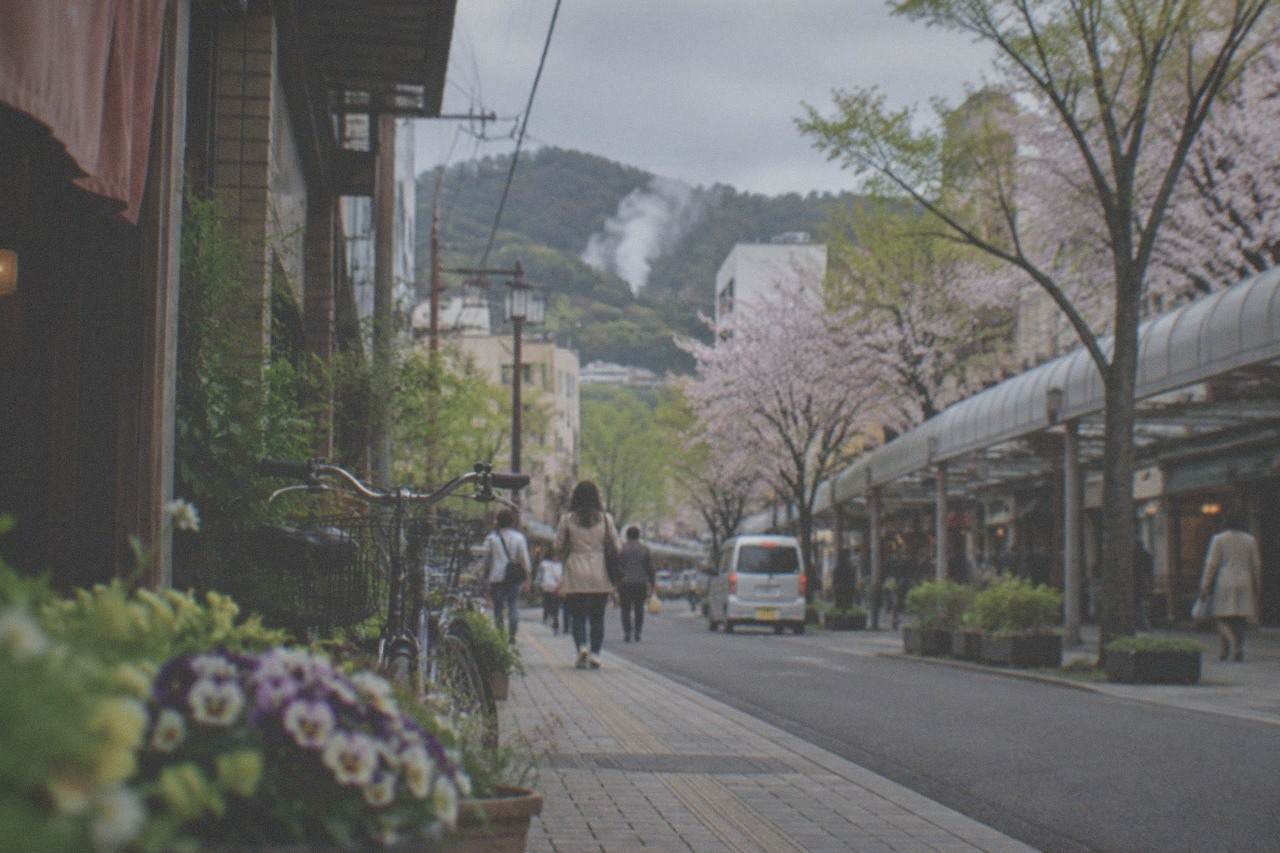
Kyushu is the island at the bottom left of the map of Japan, and most first-time visitors arrive through Fukuoka, its biggest city and the transport hub of the entire region. The island is known for things the main Honshu corridor cannot match: live volcanoes you can stand beside, onsen towns where steam pours out of the ground, a pork-bone ramen culture that spread across the whole country, and shrines and trading ports that carry a genuinely different history from Kyoto's. This page breaks down what Kyushu is actually famous for, sight by sight and plate by plate, and how to reach the highlights from Fukuoka.
What Is Kyushu Best Known For?
Kyushu is best known for four things: active volcanoes and the onsen culture they feed, a food identity built on tonkotsu ramen, mentaiko and pork dishes, some of Japan's most visited shrines and temples including Dazaifu Tenmangu, and its role as Japan's historic gateway for foreign trade, from Dejima in Nagasaki to the port city that became Fukuoka. Few international visitors build a trip around Kyushu alone, which is part of the appeal. The crowds are thinner than on the Golden Route, and the island rewards travellers who base themselves in Fukuoka and fan out on day trips.
Start with the geography, because it explains everything else. Kyushu sits on the Genkai Sea side of Japan, facing Korea and China across the water, and that position shaped its food, its festivals and its history of trade. The island has seven prefectures: Fukuoka, Saga, Nagasaki, Kumamoto, Oita, Miyazaki and Kagoshima, and you can read a full breakdown in what are the 7 prefectures of Kyushu. Volcanically it is one of the most active corners of Japan. Mount Aso in Kumamoto holds one of the world's largest calderas, and the steam fields of Beppu in Oita exist because magma sits close to the surface across the whole eastern side of the island.
The regional overview on the Kyushu guide covers how the prefectures fit together for trip planning, and a map of the island helps before you commit to a route. The short version: Fukuoka in the north is the entry point, Oita and Kumamoto hold the famous onsen and volcano country, Nagasaki and Saga carry the trading and pottery history, and Miyazaki and Kagoshima in the south are the slower, greener half most visitors never reach.
Why Is Kyushu Famous for Hot Springs and Volcanoes?
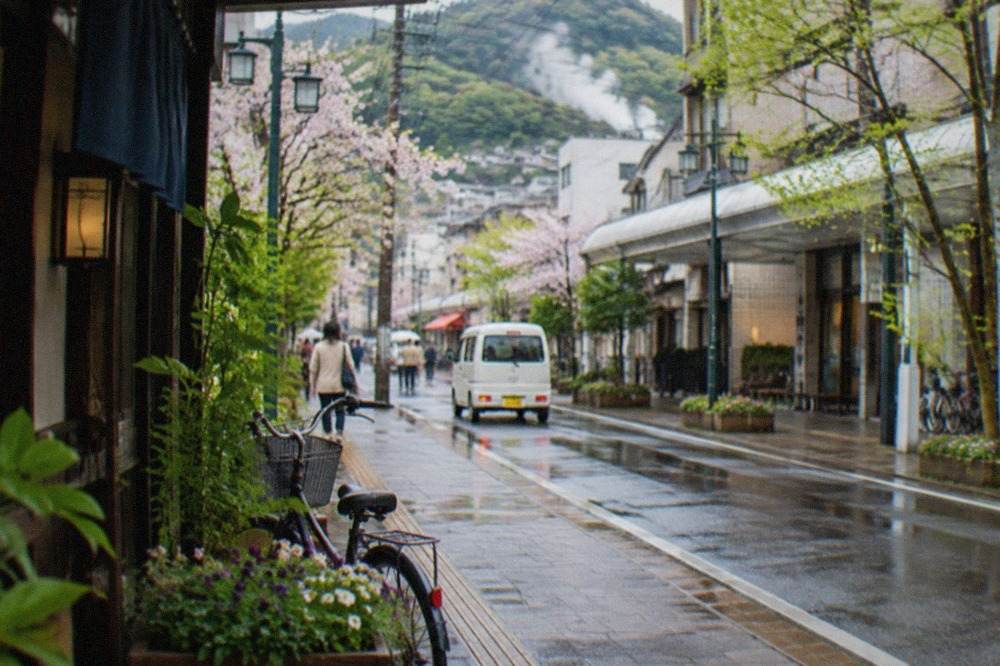
Kyushu is famous for hot springs and volcanoes because the island sits on an active volcanic belt: Mount Aso's caldera dominates central Kyushu, and Beppu on the east coast is one of the most productive hot spring cities on earth, venting steam through neighbourhoods, "hell" ponds and ryokan baths alike. Yufuin, a smaller onsen town in the hills above Beppu, trades Beppu's intensity for a calmer, museum-like streetscape under Mount Yufu. Kurokawa Onsen in Kumamoto is the third name in the set, a riverside village of traditional inns that many Japanese travellers rate above anything on Honshu.
Beppu's "hells", the jigoku, are the crowd-puller: a circuit of dramatically coloured hot ponds, including one famous for the cobalt blue of its surface, that have been showpieces for well over a century. They are viewing ponds rather than bathing springs, which surprises some visitors, so the standard pattern is to see a few hells in the morning and bathe at a sento or ryokan afterwards. Yufuin, by contrast, is about the view: the town's main street looks straight at Mount Yufu, and the lake at its centre reflects it on still mornings.
Aso is the volcano itself. The grasslands of Kusasenri inside the caldera give you a walkable, almost alpine landscape with grazing horses, and on clear days the smoking crater rim is visible from the viewing decks, though volcanic gas levels close access regularly and the decision is made daily. If you want all three faces of volcanic Kyushu without hiring a car, organised day tours from Fukuoka cover Aso, Beppu and Yufuin in a single long day, and the roster includes several options in the day-trip category.
The three tours above show the range. One is a full-day run at Miyazaki and Takachiho Gorge in the southeast, one pairs Yufuin and Beppu with a brewery museum visit, and one is a private walking tour of Fukuoka itself for the day you stay in the city. All three are booked seats on a set route, which matters in Kyushu: the onsen towns and the gorge are reachable by train and bus, but the connections are slow and the rural lines are infrequent, so a tour buys back hours.
What Food Is Kyushu Known For?
Kyushu is known for tonkotsu ramen above all, the rich pork-bone broth that was born in Fukuoka's yatai stalls and noodle shops, along with mentaiko (spiced pollack roe), motsunabe (offal hot pot), and distinctive regional bowls that change prefecture by prefecture, from Kumamoto's garlic-heavy ramen to Kagoshima's pork broth. The island's food identity is arguably stronger than Tokyo's, because so many of its dishes started here and are still eaten here in their original form.
Tonkotsu is the headline. The broth is made by boiling pork bones for many hours until it turns milky white, and the Hakata version, served with thin, straight noodles and the option of kaedama (a noodle refill dropped into your remaining broth), is the style copied by ramen shops across Japan and abroad. The story of the style and where to eat it is covered in the Kyushu ramen guide. Motsunabe, a hot pot of beef or pork offal with cabbage and garlic in a soy or miso broth, is Fukuoka's other signature winter dish, and mentaiko, the salted and spiced roe, is the souvenir most visitors end up carrying home.
The yatai food stalls are the institution that ties it together. Fukuoka has about 100 licensed yatai, more than any other Japanese city, concentrated in Nakasu, Tenjin and Nagahama, and the city's own ordinance requires every stall to display its prices where customers can easily see them, with no vague "market price" items allowed. That posted-price rule is the honest answer to the question every visitor asks about getting overcharged at a stall. The stalls take walk-ins, there is no booking system for a stool, and the Nakasu area guide covers where the riverside rows sit.
A guided food crawl is the one exception to the walk-in rule worth considering, because a guide translates the menu board and the etiquette at the counter, and the roster carries several evening tours built around stalls, izakaya and karaoke. Beyond Fukuoka, each prefecture adds its own entry: Saga is beef country, Nagasaki contributes its chinpon noodles and castella cake from its trading history, Miyazaki is famous for chicken nanban, and Kagoshima's black pork and shochu distilleries anchor the southern table.
Which Famous Sights and History Define Kyushu?
Kyushu's defining sights are Dazaifu Tenmangu, the shrine to the god of learning that draws millions of students a year, Kumamoto Castle, one of Japan's three great castles, the Dejima trading island and Peace Park in Nagasaki, and the volcanic landscapes of Aso and Takachiho Gorge, with the November Grand Sumo tournament in Fukuoka as the region's single biggest annual event. The history layer runs deeper than most visitors expect: this is where Japan first received continental culture, and where the country's only window on the outside world operated for two centuries.
Dazaifu Tenmangu, a short Nishitetsu train ride from Fukuoka, is dedicated to Sugawara no Michizane, the scholar deified as the god of learning, and students across Japan come to pray before exams. The shrine's own FAQ states plainly that there is no entrance fee, and the approach street of teahouses serving umegae mochi is half the experience. The shrine's page is the source for entry: the shrine's official FAQ. Nagasaki's story runs the other way: Dejima, the fan-shaped island where Dutch traders were confined during the isolation era, and the Peace Park and museum commemorating the atomic bombing, make it the most sobering and most rewarding day trip from Fukuoka.
Kumamoto Castle is the third pillar. Its stone ramparts and reconstructed keep rank it alongside Osaka and Himeji in the national imagination, and repairs from the 2016 earthquakes have progressively reopened more of the grounds. In Fukuoka itself, the historic layer is Hakata's: Kushida Shrine, the starting point of the Hakata Gion Yamakasa festival each July, and the temple streets of Hakata Old Town. The city's stall culture is documented by Fukuoka City's official yatai Q&A, which is also where the "about 100 stalls" figure comes from.
The table below puts the headline sights against their prefecture and what each is actually known for:
| Sight | Prefecture | What it is known for |
|---|---|---|
| Dazaifu Tenmangu | Fukuoka | Shrine to the god of learning; free entry; umegae mochi approach street |
| Kumamoto Castle | Kumamoto | One of Japan's three premier castles; massive stone ramparts |
| Mount Aso and Kusasenri | Kumamoto | One of the world's largest calderas; grassland walks; daily crater access decisions |
| Beppu's "hells" and Yufuin | Oita | Coloured hot ponds; onsen ryokan under Mount Yufu |
| Takachiho Gorge | Miyazaki | Columnar basalt gorge; rowboat rentals; Shinto mythology sites |
| Dejima and Peace Park | Nagasaki | Isolation-era trading island; atomic bombing memorials |
One correction worth the detour: Takachiho Gorge sits in Miyazaki Prefecture, and the basalt gorge where the Gokase River cuts between cliff walls is tied to some of Japan's founding Shinto myths, including the cave where the sun goddess Amaterasu is said to have hidden. It is a long way from Fukuoka for a day trip, roughly 11 hours door to door on a tour, but it is the single most requested Kyushu highlight after the onsen towns.
The day tour from Fukuoka to Miyazaki and Takachiho Gorge covers the gorge, a shrine and Miyazaki's sights in one booked seat, rated 4.6 from 78 reviews and running 9 to 10 hours from $94 per person. Check availability if the gorge is on your list, because the DIY train routing is genuinely awkward from Fukuoka.
When Is the Best Time to Visit Kyushu?
The best time to visit Kyushu is late March to early April for cherry blossoms, and October to November for autumn colour and settled weather, with the caveat that July and August are hot, humid and busy with festivals, and the typhoon season runs roughly July through October as a real planning factor rather than a reason to stay away. Fukuoka's climate data has a surprise in it: July, not June, is the city's wettest month, with 299.1 mm of rain against June's 249.6 mm, even though June is the tsuyu rainy season on the calendar.
That July figure matters for two reasons. First, it means the rainy-season month is not the one to avoid on rainfall alone. Second, July is when Fukuoka stages Hakata Gion Yamakasa, the festival in which teams race roughly one-ton floats over a 5 km course from Kushida Shrine in the small hours of July 15, with events building through the first half of the month. If you want the festival, you accept the rain risk. The planning detail is covered in [the typhoon season guide](/guides/typhoon-season-fukuoka/), which explains what a typhoon day actually looks like in practice.
Autumn is the quiet winner. Temperatures ease from September, the summer festival crowds have gone, and the autumn colour in the city parks and around Dazaifu peaks in mid to late November. Winter is mild by Japanese standards, with Fukuoka's January mean at 6.9 degrees Celsius, and it is motsunabe and hot pot season, which is exactly when you want to be eating it. Sumo offers a seasonal hook too: the November Kyushu Basho in Fukuoka is the only Grand Sumo tournament staged in the region each year, and it fills the city.
How Do You Plan a Kyushu Trip from Fukuoka?
You plan a Kyushu trip from Fukuoka by using the city as a base and radiating out on day trips: Dazaifu, Yanagawa and Itoshima are half-day to full-day reaches by local train, Beppu, Yufuin, Kumamoto and Nagasaki are comfortable full days by rail or tour bus, and Takachiho, Mount Aso and Kagoshima are long days that work best with an early start or an overnight. Hakata Station is the rail hub for the whole island, and there is no JR Fukuoka Station, the station is simply called Hakata.
The rail passes deserve a note. The JR Kyushu Rail Pass covers the northern or full island network and pays off if you are stringing together Beppu, Kumamoto and Nagasaki across several days, but the Shinkansen between Hakata and Kokura runs on JR West's line and is not covered by JR Kyushu's passes, a detail that catches people out. For a single big day out, a booked tour is often the better arithmetic: the fare stack for a DIY Takachiho routing is not cheap and the connections are tight.
A sensible first itinerary is three to four days in Fukuoka itself, eating at the stalls and walking the shrine and temple streets of Hakata Old Town, then two or three day trips. The full regional route is laid out in the Kyushu itinerary from Fukuoka, which sequences the prefectures so you are not backtracking. The honest verdict on the island as a whole, including where it beats the Golden Route and where it does not, is in is Fukuoka worth visiting. This Fukuoka Japan Travel Guide covers every leg of that plan, from the subway fares to the onsen towns, in dedicated pages.
Common Questions About Kyushu
What Is Kyushu Best Known For?
Active volcanoes and onsen towns like Beppu, Yufuin and Kurokawa; the birthplace of tonkotsu ramen and yatai stall culture; major shrines and castles including Dazaifu Tenmangu and Kumamoto Castle; and Japan's historic trading gateways at Nagasaki and Hakata.
How many prefectures does Kyushu have?
Seven: Fukuoka, Saga, Nagasaki, Kumamoto, Oita, Miyazaki and Kagoshima. Fukuoka, in the north, is the largest city and the usual entry point.
Is Kyushu worth visiting compared to Tokyo and Kyoto?
Yes, if you want onsen, volcanoes and a food scene with clearer local roots than the main Honshu route. The sights are more spread out, so plan on day trips from Fukuoka or a multi-day rail pass rather than a single base with everything walkable.
What food should you try in Kyushu?
Tonkotsu ramen at a yatai stall or Hakata noodle shop, motsunabe hot pot, mentaiko, and the regional bowls beyond Fukuoka, including Kumamoto and Kagoshima ramen. Stalls take walk-ins, and Fukuoka's ordinance requires every stall to post its prices visibly.
Can you visit Beppu, Yufuin and Mount Aso from Fukuoka in a day?
Yes, as a long booked day trip. Independent travel between the three is possible by train and bus but slow, so most visitors either take a tour or split the region across two days with an overnight in an onsen town.
When is the sumo tournament in Kyushu?
The November Kyushu Basho in Fukuoka is the only Grand Sumo tournament staged in the region each year. Outside November, morning practice visits and sumo-stable shows in Hakata run at other times of year.