What Is Fukuoka the Capital Of?
Fukuoka is the capital city of Fukuoka Prefecture on Kyushu, and the region it anchors is the political, transport and economic centre of the island. Here is what that actually means for a visitor.
What Is Fukuoka the Capital Of?
Fukuoka is the capital city of Fukuoka Prefecture, on the northern coast of Japan's Kyushu island, and it is also the largest city on Kyushu and the seat of the Kyushu regional bureaus of the national government, which makes it the de facto capital of the entire island in everything but name. The city sits on Hakata Bay, on the Genkai Sea side of northern Kyushu, facing Korea across the water.
That single sentence carries several distinctions that competitors blur, and the blurring is worth unpacking because it changes how a visitor understands the place. Fukuoka is not the capital of Kyushu in any formal sense. Japan has no "capital of Kyushu" designation. What it is, concretely, is the seat of Fukuoka Prefecture's government, the largest municipality on the island, and the transport hub through which almost every Kyushu rail journey passes.
The title question usually comes from a specific confusion, and the confusion is reasonable. People arrive at Hakata Station, see signage for both "Hakata" and "Fukuoka", and reasonably wonder whether they are in a place called Hakata or a place called Fukuoka, and which one is the capital of what. The answer is that they are the same city. Hakata is a ward of Fukuoka and the name of the city's main station; Fukuoka is the city. Treating them as two separate destinations is the single most common error in competing guides, and it propagates because the station and the ward carry the older name.
There is also a naming trap in the other direction. Because the prefecture and the city share a name, a search for "Fukuoka" can return hotel listings in Kitakyushu, rail tickets for the Chikugo region or weather forecasts for the Itoshima peninsula, all of them inside Fukuoka Prefecture but well outside the capital city. Keeping the two levels straight, prefecture and city, is the difference between booking a hotel near Hakata Station and booking one an hour down the coast.
Is Fukuoka the Capital of Kyushu?
No, and yes in practice. There is no formal capital of Kyushu, because Japan administers the island through seven prefectures rather than as a single region. Fukuoka functions as the island's capital in practice because it is the largest city, the busiest transport node, and the seat of the national government's Kyushu regional bureau, which supervises all seven prefectures from here.
Seven prefectures cover the island: Fukuoka, Saga, Nagasaki, Kumamoto, Oita, Miyazaki and Kagoshima, plus Okinawa as the seventh in most counting. Each has its own capital city. Fukuoka Prefecture's capital is Fukuoka City, Kumamoto Prefecture's is Kumamoto City, and so on. The prefecture boundary matters for practical reasons. A day trip from Fukuoka to Dazaifu or another Kyushu destination can cross prefectural lines without any obvious sign, and nobody stops a train to check a passport at the border, because there is no border in any sense a visitor would notice.
| Prefecture | Capital city | Notes for a visitor |
|---|---|---|
| Fukuoka | Fukuoka City | Largest city on Kyushu; main Shinkansen and airport gateway |
| Saga | Saga City | Arita and Imari pottery towns draw day-trippers west |
| Nagasaki | Nagasaki City | Full-day trip from Fukuoka; strong foreign-visitor history |
| Kumamoto | Kumamoto City | Castle town; reached by limited express or Shinkansen |
| Oita | Oita City | Gateway to Beppu's hot springs and Yufuin |
| Miyazaki | Miyazaki City | Southern coast; Takachiho Gorge sits near its border |
| Kagoshima | Kagoshima City | Southern tip; active volcano at Sakurajima |
The bureau point is the one almost nobody mentions. National ministries operate regional bureaus outside Tokyo, and the Kyushu bureau of the Ministry of Land, Infrastructure, Transport and Tourism sits in Fukuoka, which is why the city hosts decision-making that formally belongs to the entire island. That, more than population, is what gives Fukuoka its claim to being Kyushu's working capital. For more on the island as a destination, see the site's Kyushu overview.
Is Fukuoka a Prefecture or a City?
Both, and this is the part that trips people up. Fukuoka Prefecture is the administrative division covering northern and central Kyushu, with a population concentrated in its two major cities. Fukuoka City is the prefecture's capital, sitting on the coast, and Kitakyushu, the prefecture's second city, sits at the island's northern tip near the Kanmon Strait.
The prefecture is not a thin ring around the city. It stretches from the Genkai Sea coast down to the Chikugo river basin in the south, and it contains both the island's densest urban corridor and some of its most rural corners, including the Yame tea hills and the Itoshima peninsula. Fukuoka Airport handled about 28.38 million passengers in 2025, roughly 9.12 million of them international, which tells you the scale of the gateway role the city plays for the whole island. More of these guides are collected on Fukuoka Japan Travel Guide.
Population is the clearest illustration of the capital's dominance. The 2025 census quick report put Fukuoka City at 1,663,892 residents, up 51,500 and 3.2 percent from the previous census, the highest growth rate of any of Japan's designated cities. A prefecture whose capital is growing faster than every other major Japanese city is a prefecture that pulls visitors, students and jobs toward itself, and the visitor sees this in the density of the Hakata and Tenjin districts.
Those numbers also explain the physical city. A capital that keeps adding residents while most Japanese cities shrink builds apartment towers, extends subway lines and fills its station with hotels, and that is exactly what the visitor finds on arrival.
Why Do People Call the City Hakata?
Because Hakata is the city's older name, the name of its main ward, and the name of its station, its port and its airport's international terminal designation. Hakata and Fukuoka are the same city, not two places a traveller moves between, and no one travels "from Hakata to Fukuoka" or the reverse.
The two-name situation has a traceable history. The merchant town of Hakata and the samurai town of Fukuoka sat side by side for centuries, and when they merged into a single municipality in the late nineteenth century, the combined city took the newer name, Fukuoka, while the older name survived on the station, the port, the bay and the ward. The station is named Hakata Station, and there is no JR Fukuoka Station, a point the site's dedicated answer on whether a Fukuoka station exists covers in detail. The Shinkansen, the airport's code FUK, and the famous Hakata doll craft all carry the older name too.
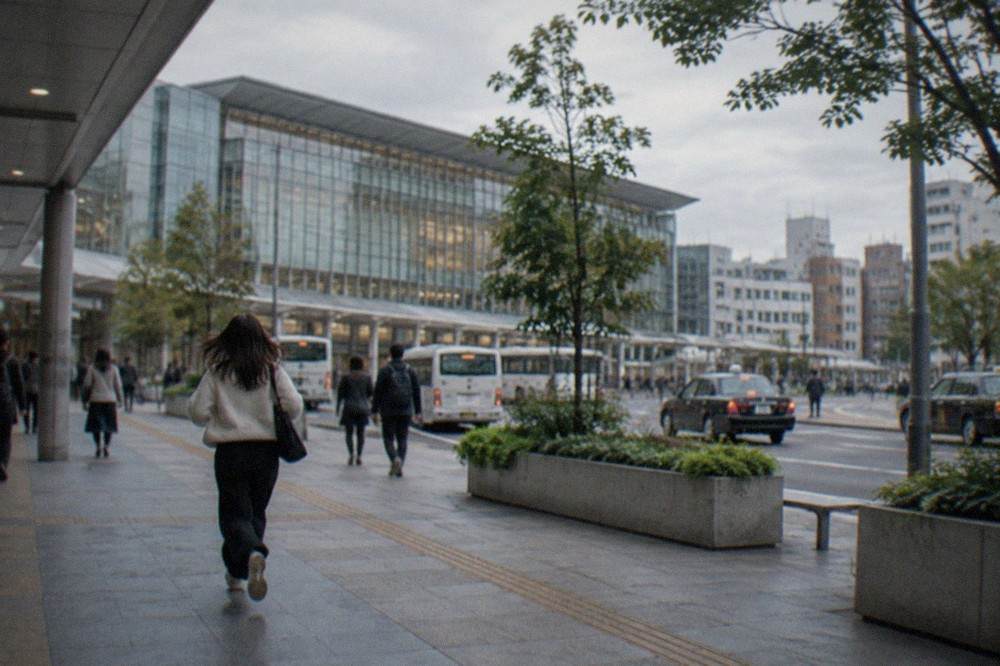
The practical consequence for a visitor is simpler than the history. Hotel listings, train tickets and food names juggle both words, and all of them refer to one continuous urban area. Hakata ramen is the tonkotsu ramen of this city, named for the ward most associated with it, not a dish from a separate town.
What Was Fukuoka Before It Was a Prefecture?
Fukuoka City in its current form dates from the late nineteenth century, when the merchant town of Hakata and the castle town of Fukuoka merged into a single municipality. The prefecture itself is one of the early Meiji-era prefectures, created when Japan replaced its feudal domains with a modern administrative system in the 1870s.
Before that, the area was the Kuroda family's Fukuoka domain, ruled from a castle whose ruins still stand in Maizuru Park, and the story of that castle is currently producing one of the city's more unusual sights. A document discovered in December 2024 described a keep that may never have existed, the city began an archaeological excavation in 2025, tripled the excavation area in 2026, and the Tenshudai, the main keep base, is closed to entry until the end of December 2026 while the dig runs. Whether the "phantom keep" was real remains an open question. The site's Fukuoka Castle ruins guide covers what you can still see.
The older layers run deeper still. Hakata was a major port for trade with China and Korea for centuries, which is why the ward name carries so much weight in the region's history, and why what Fukuoka is famous for reads differently once you know the city grew around two distinct towns rather than one.
Does Fukuoka's Capital Status Matter for a Trip?
Not for sightseeing, but a little for transport and timing. The capital status is why almost every Shinkansen and limited-express line on Kyushu starts or terminates at Hakata Station, why the island's main airport sits here, and why a trip planned around Kyushu as a whole almost always begins and ends in this city.
The one airport fact worth getting right, because so many guides get it lazily wrong, is the connection to the city centre. The subway fare from Fukuoka Airport to Hakata Station is ¥260, derivable from the official 3 to 7 km fare band, and the airport sits unusually close to the city centre by Japanese standards. The widely repeated claim that the ride takes five minutes has no official page behind it, so this site does not print a journey time. The airport's own access pages, including the city's official airport information, state distance and fare rather than minutes.
Two further implications are practical. First, the concentration of government and corporate offices in the city explains the density of good hotels around Hakata and Tenjin, covered in the site's guide to where to stay. Second, the island's tourism economy funnels through here, which is why day tours to Takachiho Gorge, Mount Aso and Beppu depart from Hakata Station rather than from the destinations themselves.
A final note on weather, because it follows from geography rather than administration. The capital sits on the Genkai Sea, and the Japan Meteorological Agency's 1991 to 2020 normals for the Fukuoka station show July as the city's wettest month, 299.1 mm against June's 249.6 mm, despite June being the tsuyu rainy season. July is also Yamakasa month, when the city stages its biggest festival. Anyone planning a summer trip around the capital's calendar should expect the two to collide.
Common Questions About Fukuoka's Capital Status
What Is Fukuoka The Capital Of?
Fukuoka is the capital city of Fukuoka Prefecture on Kyushu, and it functions as the practical capital of the whole island because the national government's Kyushu regional bureau sits here. It is also the largest city on Kyushu and the island's main transport hub.
Is Fukuoka the capital of Japan?
No. Japan's capital is Tokyo. Fukuoka is the capital of Fukuoka Prefecture, one of 47 prefectures, and the administrative centre of the Kyushu region in practice.
Is Fukuoka or Kitakyushu the capital of the prefecture?
Fukuoka City is the prefectural capital. Kitakyushu is the prefecture's second major city, sitting at the northern tip of Kyushu near the Kanmon Strait, and it is a designated city in its own right, but the prefectural government sits in Fukuoka City.
Is Hakata a different city from Fukuoka?
No. Hakata is a ward of Fukuoka City and the name of its main station, its port and its bay. The two names refer to one city, formed when the towns of Hakata and Fukuoka merged in the late nineteenth century. Nobody travels between them.
What is the capital of Kyushu?
There is no formal capital of Kyushu. The island is divided into seven prefectures, each with its own capital city. Fukuoka serves as the regional centre because it is the largest city and hosts the national government's Kyushu regional bureau.
Is Fukuoka close to the airport?
Yes. Fukuoka Airport sits unusually close to the city centre by Japanese standards, on the subway's Kuko line. The fare to Hakata Station is ¥260. Journey-time claims of five minutes circulate widely but have no official page behind them, so no time figure is printed here.